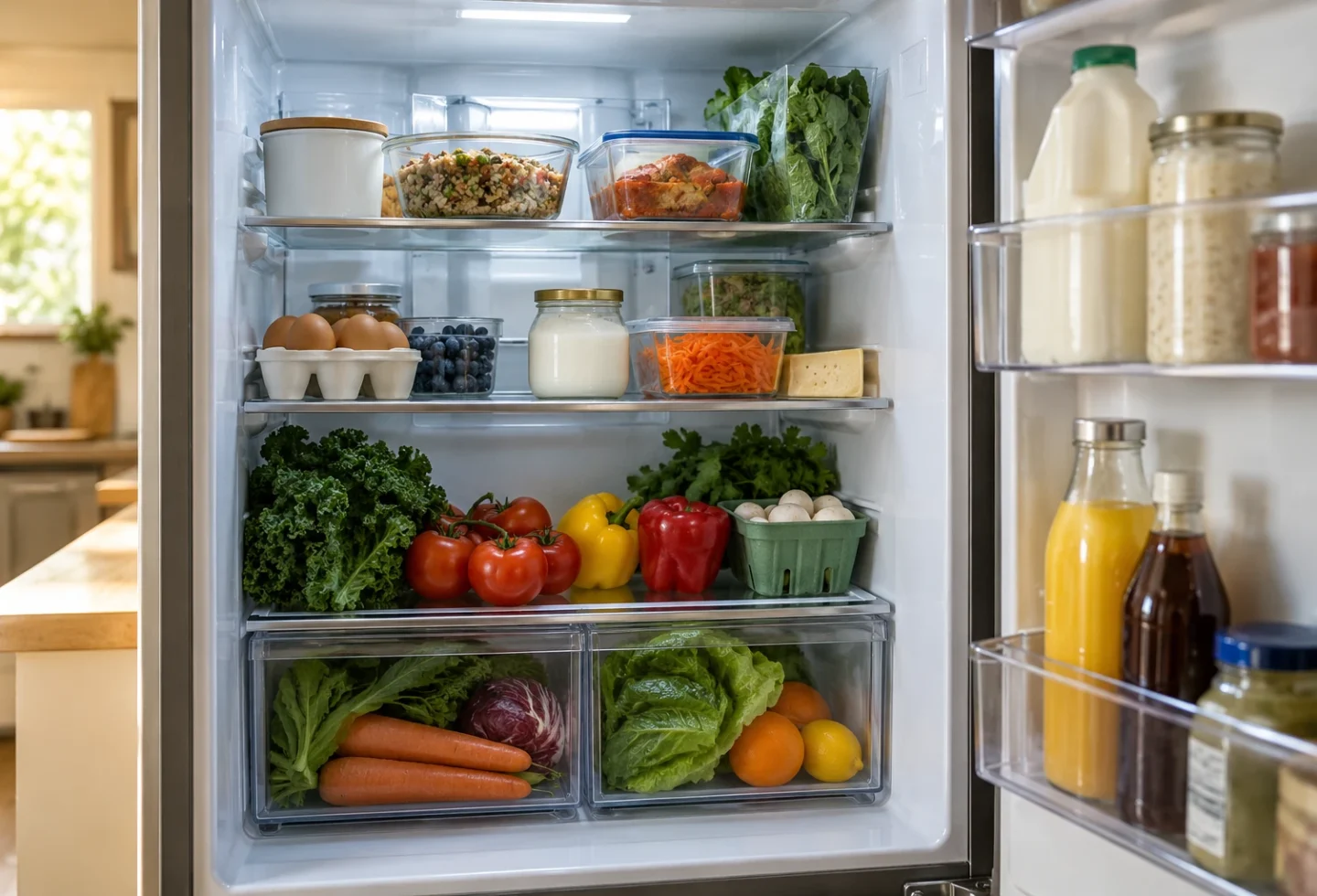
A crowded refrigerator can hide tomorrow’s lunch behind a fresh grocery haul. You do not need matching bins to fix that. Keep the fridge at a safe temperature, contain raw foods, and make the food that needs using soon easy to see.
This reset uses the shelves, door compartments, and crisper drawers already in your refrigerator. It is a way to find food and plan meals, not a promise that rearranging food will extend its safe storage time.
Start with a short, safe reset
Clear one shelf at a time rather than leaving every perishable on the counter. Put refrigerated food back promptly. If a spill is present, wipe and clean the affected surface before you reload it. The FDA advises refrigerating perishables within two hours, or within one hour when the temperature is above 90°F (32°C).
As you return food, group it by what you will do with it: ready-to-eat items, leftovers to use soon, raw ingredients that need containment, and produce suited to the built-in drawers. Leave space for cold air to circulate. If you already have clean, food-safe covered containers, use those; buying new organizers is not part of the reset.
1. Check the temperature before changing the layout
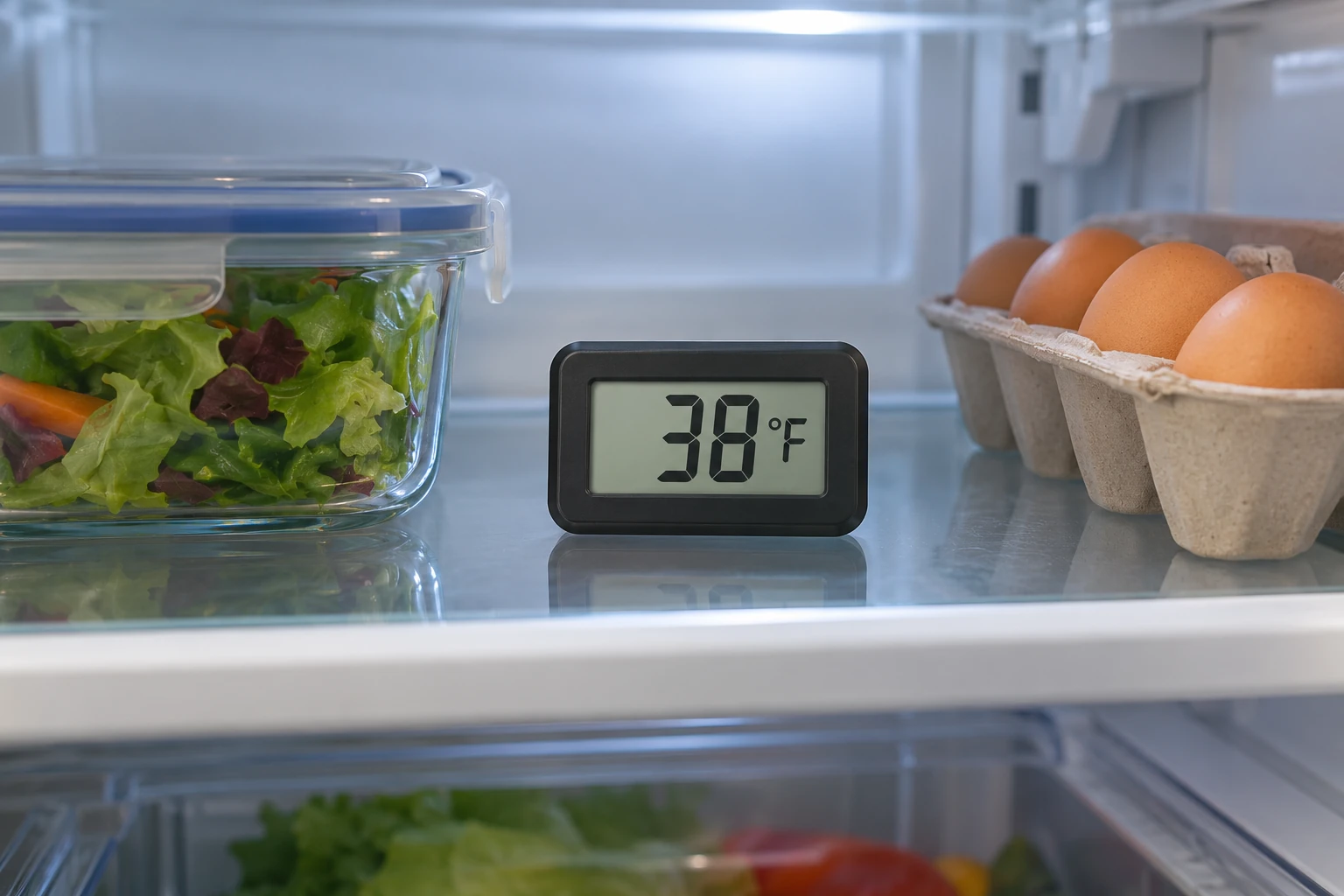
Place an appliance thermometer inside the fridge and check it after the temperature has stabilized. The FDA says to keep a refrigerator at 40°F (4°C) or below. A setting number on the control is not a direct reading of the air temperature. If the thermometer reads too warm, adjust the control and recheck according to your appliance instructions.
Do not pack shelves edge to edge. The FDA cautions that cold air needs room to circulate around stored food. If the fridge is overloaded, first plan a meal from food you already have rather than forcing in more groceries.
2. Make the food you can eat now visible
Put covered, ready-to-eat foods where you can see and reach them. Give frequently used items a consistent place, but use the compartments your particular appliance provides rather than treating a universal shelf diagram as a safety rule. Keep food covered or sealed, and follow its package storage directions.
Use the crisper drawers for produce that benefits from them. If your fridge has humidity controls, follow its manual; the USDA explains that many crispers offer different humidity settings for vegetables and fruit. Produce needs vary, so check item-specific guidance instead of moving every fruit and vegetable into the same drawer. For a broader produce check, see our guides to storing leafy greens and storing apples.
3. Contain raw meat, poultry, and seafood
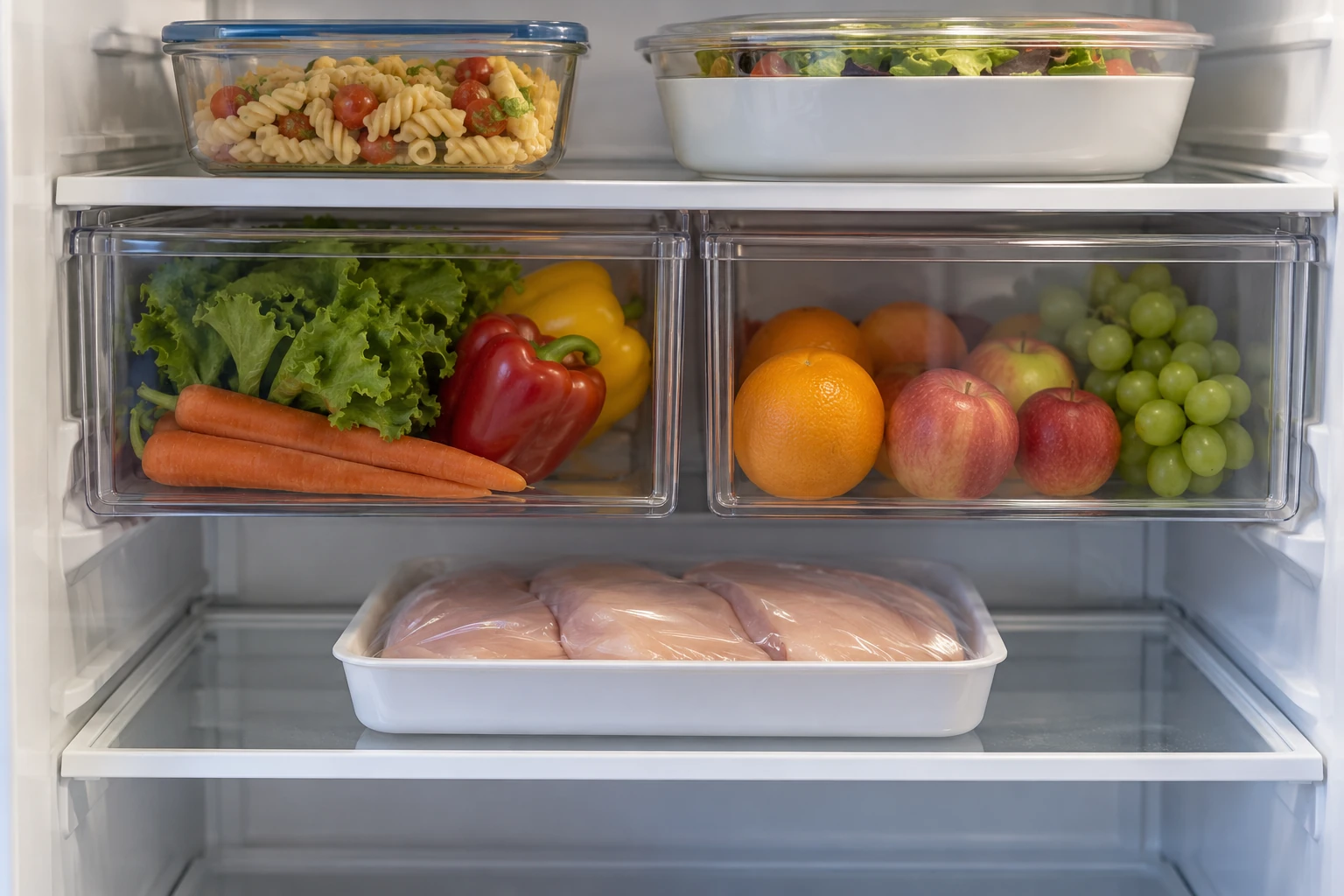
Place raw meat, poultry, or seafood in a leak-resistant container or tray so juices cannot reach other foods. A low shelf is a practical place for the tray, but the crucial protection is the secure containment. The USDA says any refrigerator location can be safe at 40°F or below when raw foods are contained and their juices cannot drip onto other food.
Do not use a tray that previously held raw juices for ready-to-eat food until it has been cleaned. Follow the package date and the appropriate FoodSafety.gov cold-storage guidance; organization does not reset the clock. If you cannot use the food within its safe refrigerator window, freeze it while it is still safe.
4. Bring usable leftovers to the front
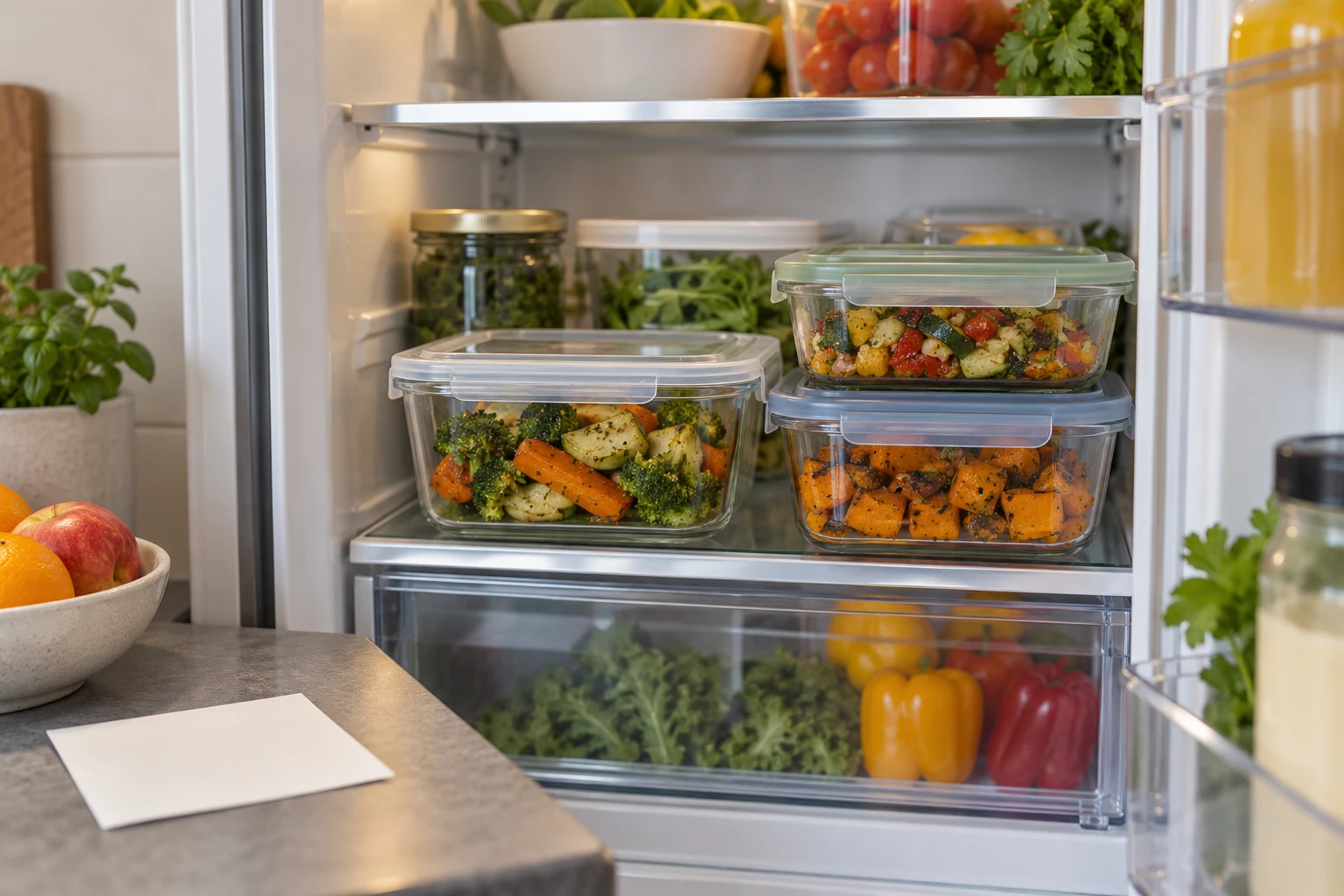
Divide large batches into shallow covered containers so they cool quickly, then place the containers where you will notice them. Put the older safe portion ahead of a newer one. You can add a date to the container itself if that helps your household; do not rely on memory alone when several meals look similar.
FoodSafety.gov lists three to four days for many cooked leftovers in a refrigerator at 40°F or below. That is a safety limit, not a target to reach. If a leftover was handled or stored unsafely, moving it to the front will not make it safe. For food you will not eat in time, use our freezer organization guide to keep frozen portions findable.
Keep the system working in five minutes
Before your next grocery trip, look through the fridge and choose one safe food to use soon. Move it into view and decide on a meal. The EPA recommends checking the refrigerator, freezer, and pantry before shopping so you do not buy what you already have. Our grocery-list method starts with exactly that check.
During the same reset, wipe new spills, check containers for leaks, and leave gaps between items. If you keep finding forgotten food, reduce the amount stored at the back rather than adding another layer of bins. A clear sightline matters more than a picture-perfect refrigerator.
Common questions
Does raw meat have to be on the bottom shelf?
The USDA emphasizes preventing raw juices from reaching other foods. A sealed package inside a leak-resistant tray on a low shelf is an easy way to do that, but the actual safety requirement is containment in a refrigerator at 40°F or below.
Should every leftover be kept for four days?
No. The three-to-four-day guidance applies to many properly handled cooked leftovers kept cold enough. Discard food that was not cooled and stored safely, and follow more specific guidance for the food in question.
Do I need special refrigerator organizers?
No. Start with the shelves and drawers you own, a working thermometer, and clean covered containers. Use a tray for raw foods if needed to contain drips. A purchasing decision can wait until you know what specific problem remains.