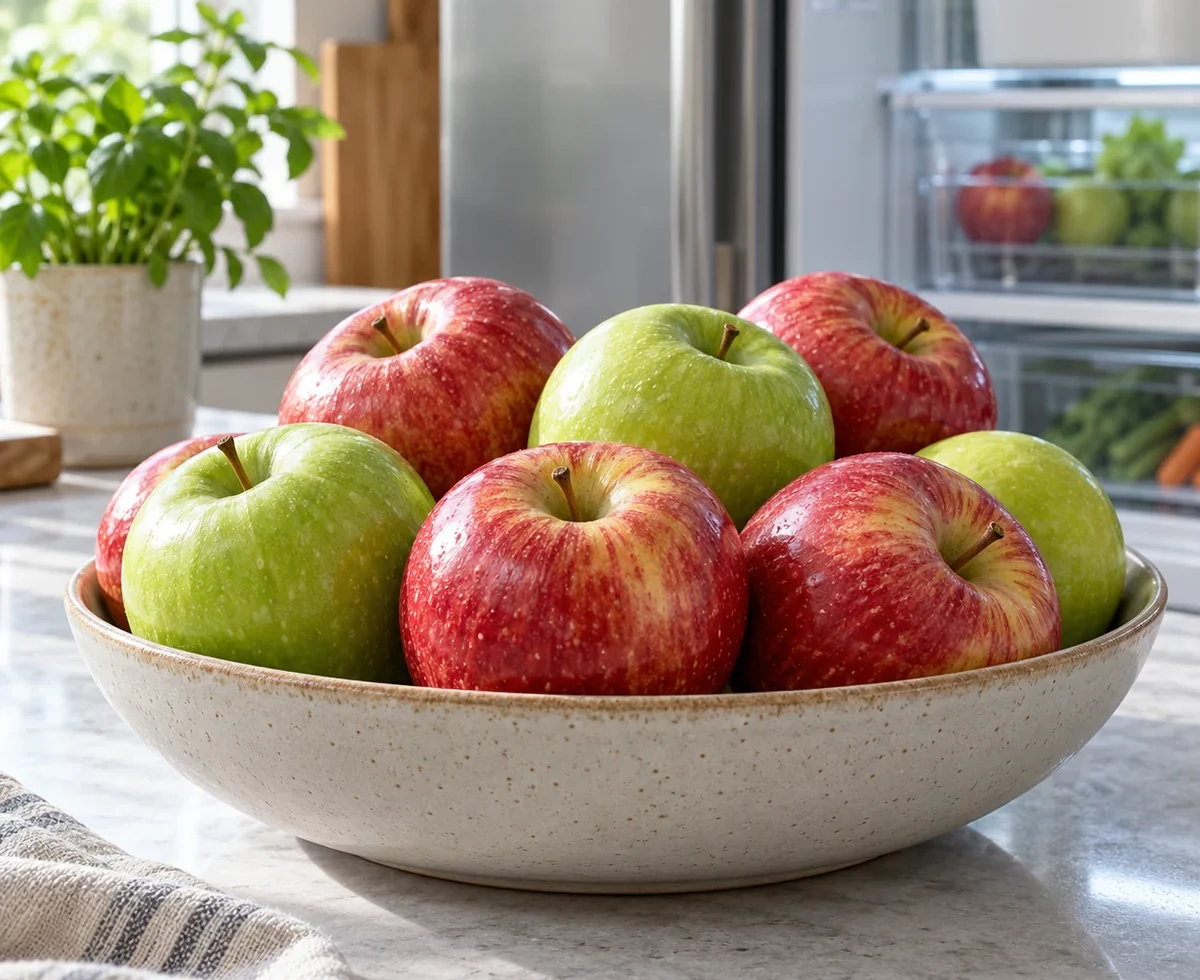
A bowl of apples can look inviting on the counter, but a large bag often loses its crunch before the last few are eaten. The fix is simple: keep a small amount where you will reach for it and give the rest a cool, visible place in the refrigerator. Check for bruises at the start, rather than finding a soft apple at the bottom of the bag later.
The quick answer: For longer storage, put sound whole apples in a clean refrigerator, ideally in a fruit drawer or an open container where you can inspect them. Keep them separate from delicate vegetables where possible. Leave only the apples you expect to eat soon on the counter. Wash each apple under running water just before eating or cutting it, and discard any fruit that looks rotten.
Sort the bag before you store it
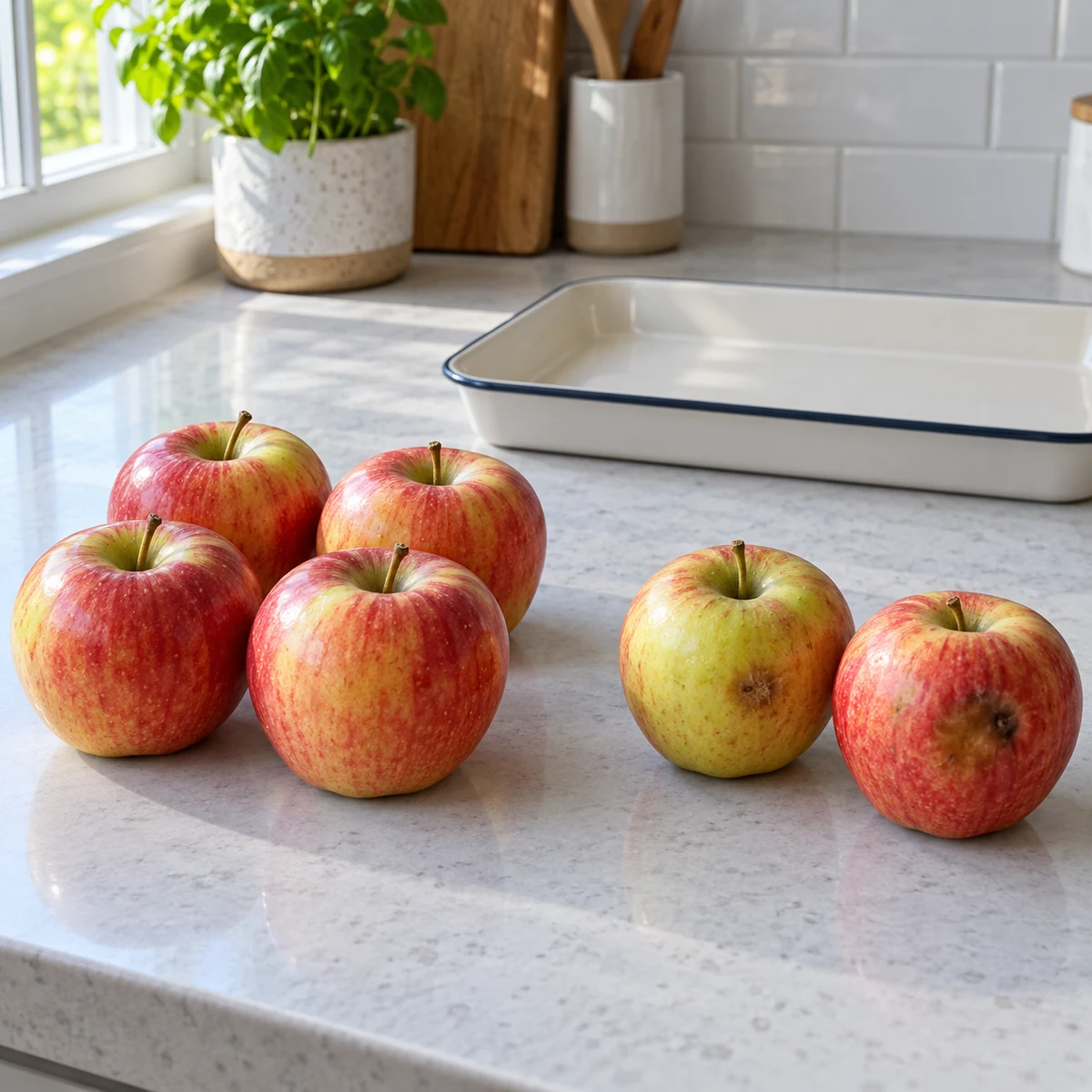
Take the apples out of the shopping bag and look at each one. Set firm, unbroken fruit aside for longer storage. Put bruised or softer but otherwise sound apples in a clearly visible use-first group. An apple that is moldy, leaking, or rotten does not belong in a cooking pot or beside good fruit; discard it and clean any surface it touched.
Fruit that was damaged before you brought it home will not regain crispness in the refrigerator. A quick sort protects the rest of the batch and gives you an easy plan for snacks or cooking over the next day or two.
Give the main batch a cool place
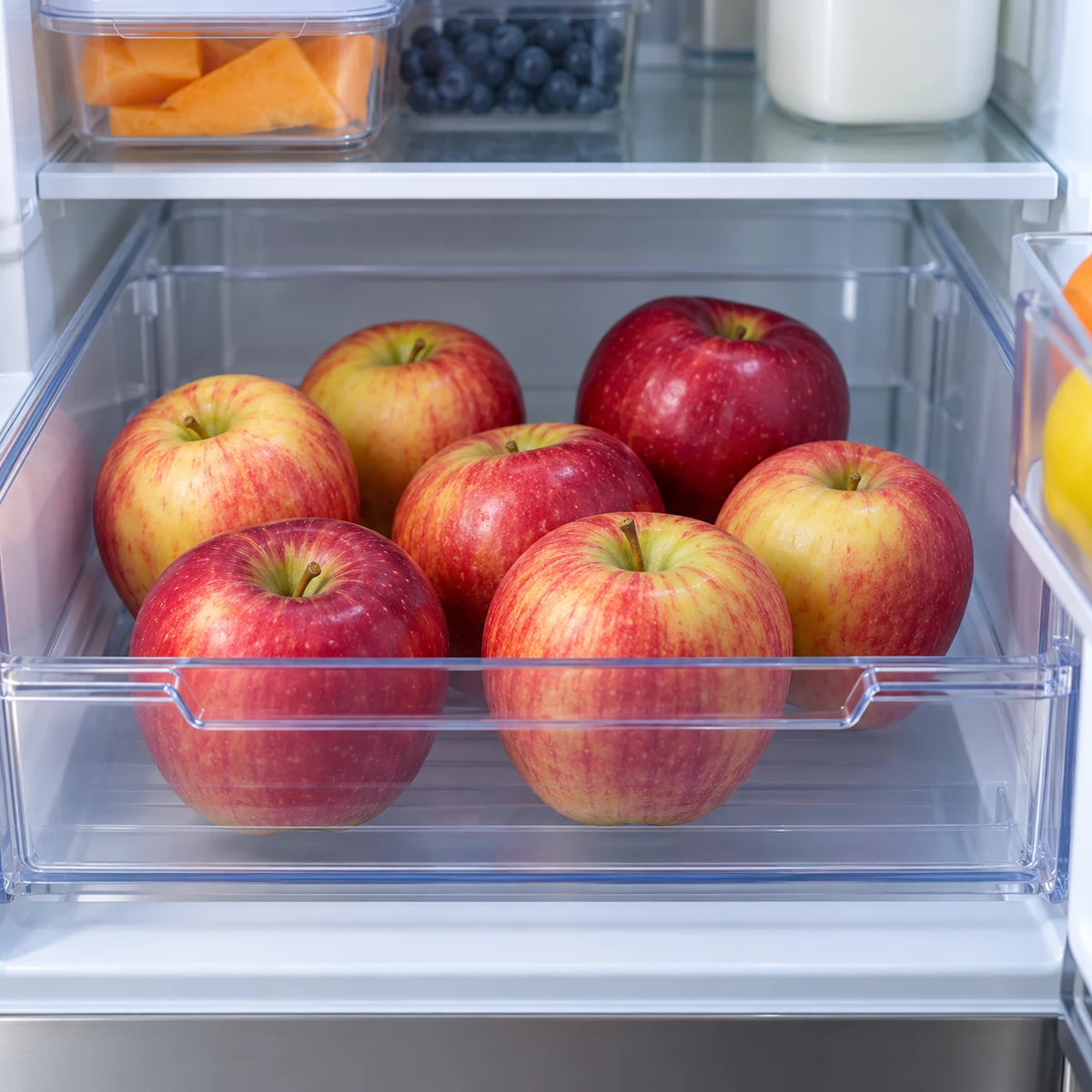
Put the sound whole apples in a clean refrigerator. A fruit drawer or shallow open container makes them easier to see than a deep bag. Avoid cramming them under heavy packages that could bruise them. Check your refrigerator temperature with a thermometer; the U.S. Food and Drug Administration recommends 40°F / 4°C or below for refrigerated produce that needs cold storage.
The FDA’s FoodKeeper examples list a longer quality window for refrigerated apples than for pantry-stored apples, but those ranges are estimates, not guarantees. Variety, ripeness at purchase, and prior handling matter. Check the fruit regularly and eat the earliest-softening apples first instead of waiting for a calendar date.
Keep apples away from delicate vegetables
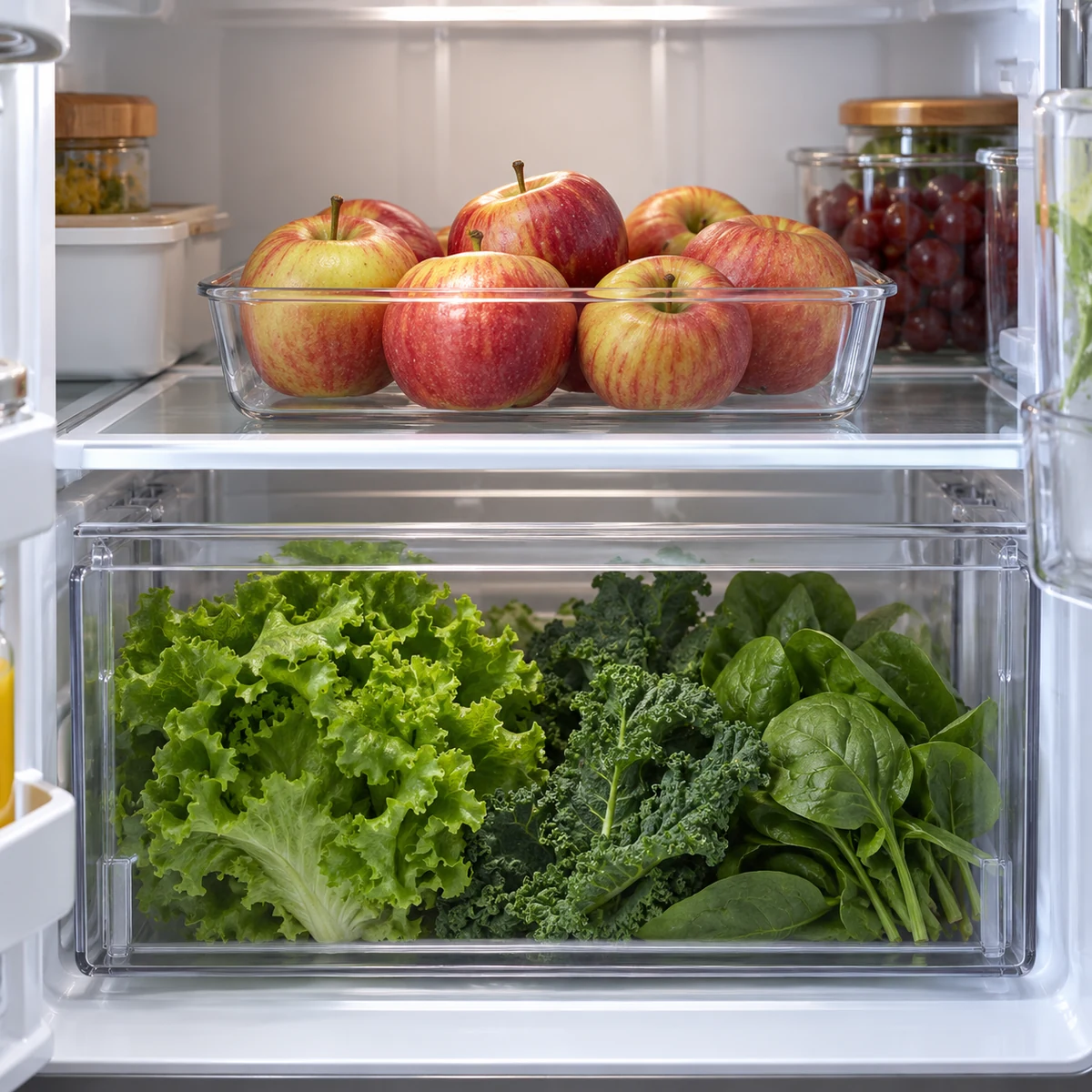
Apples release ethylene as they ripen. Some vegetables are sensitive to it, so a shared, tightly packed drawer is a poor place for apples and leafy greens. UC Davis advises separating fruits from vegetables when possible—one drawer for each group is an easy home version. If you have only one drawer, use separate shelves or containers and give fragile greens priority for their short storage life.
Do not seal apples into an airtight container with damp produce. The goal is a clean, cool, inspectable space, not a complex storage system. For greens, see our separate leafy-green storage guide.
Use a small counter bowl for near-term snacks
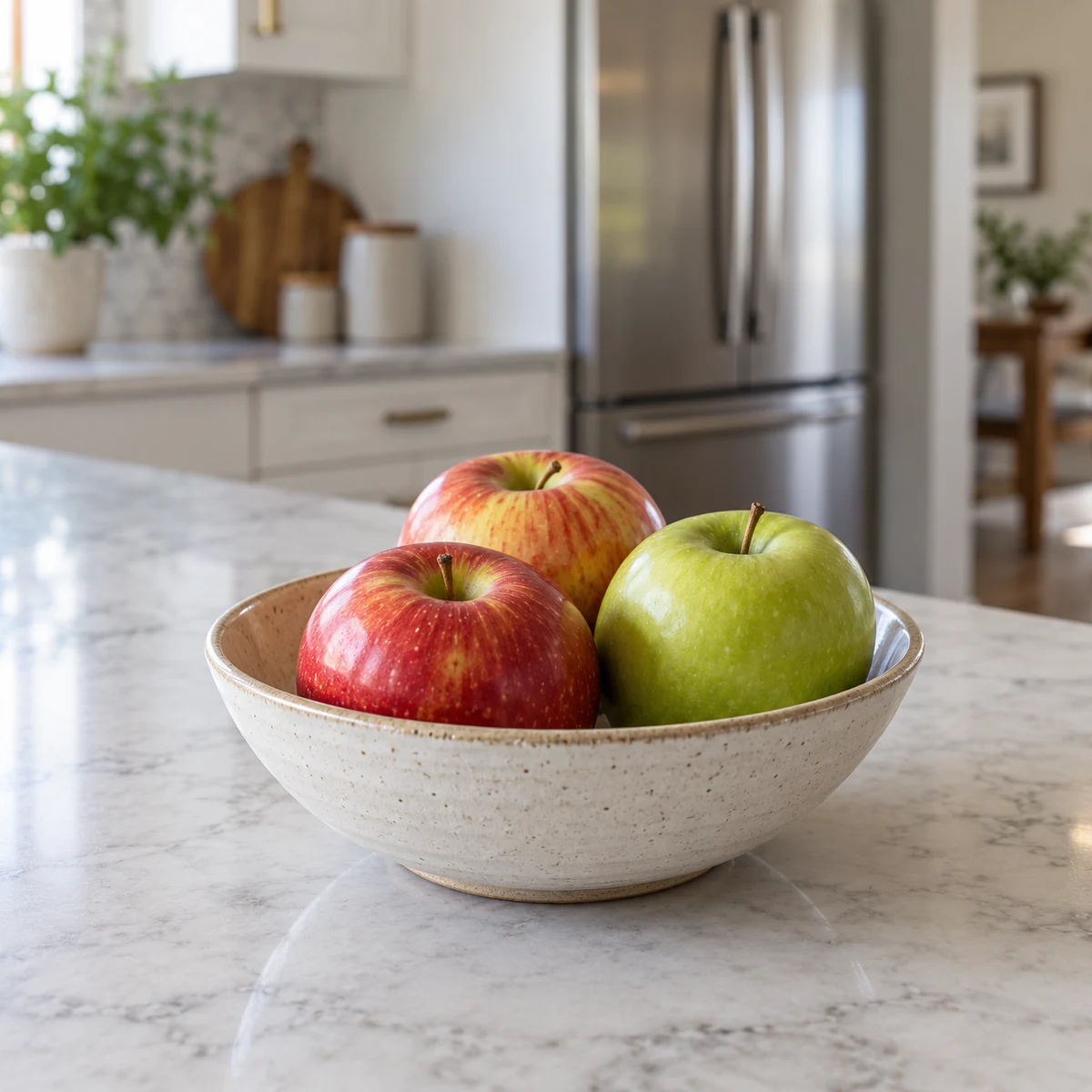
If a fruit bowl reminds your household to eat apples, keep a few there and replenish it from the refrigerator. Put the bowl away from a hot window, stove, or direct sun. This keeps the cue that makes apples easy to grab without making the entire bag depend on room-temperature storage.
Wash an apple under running water just before eating or cutting it. The FDA advises against soap, detergent, or commercial produce wash. Dry it with a clean cloth or towel after washing. If you will peel or slice it, wash the whole apple first so a knife does not carry surface dirt into the flesh.
Make the use-first apples useful
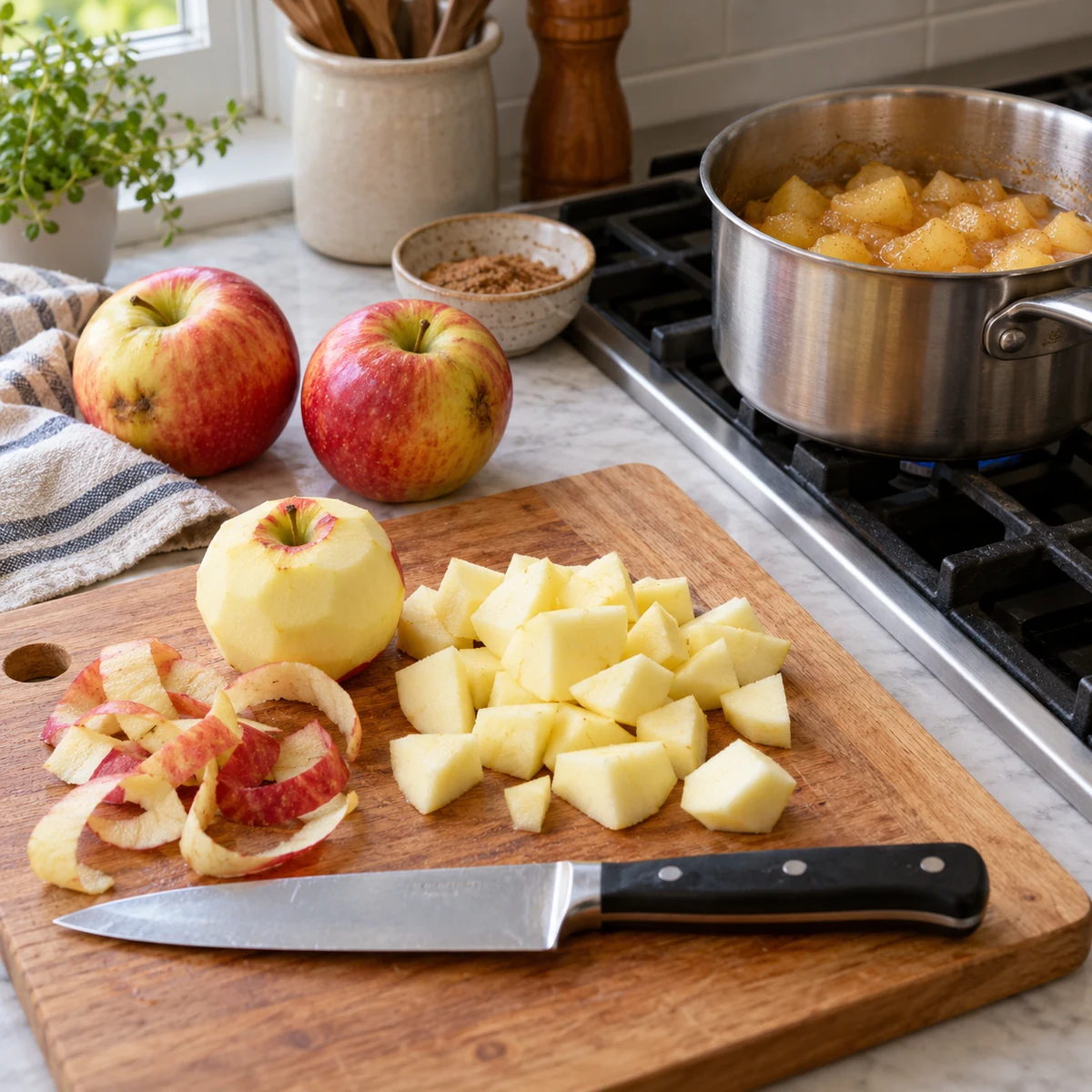
A sound apple with a small bruise may be less appealing for a crisp snack but still useful in a cooked dish. Wash it, cut away the bruised area, and add the rest to oatmeal, a pan of cooked apples, or another meal you already plan to make. The FDA advises cutting away bruised or damaged areas during preparation and discarding produce that looks rotten.
Do not turn “use first” into a second forgotten drawer. Put those apples at the front of the refrigerator or on a small plate you will see today. If you cook more than one meal’s worth, refrigerate the prepared food promptly in a covered container or freeze portions you will use later. Our freezer organization guide can help keep them findable.
A five-minute apple check each week
- Look through the refrigerated apples and move the earliest-softening fruit to the front.
- Remove any rotten apple promptly and clean nearby surfaces if needed.
- Replenish the small counter bowl only with what you expect to eat soon.
- Plan one use for the bruised but sound apples, then follow through.
- Check the refrigerator temperature if produce is repeatedly deteriorating too quickly.
This routine works best when you buy an amount your household actually eats. Our guide to comparing unit prices without overbuying can help when a large bag looks cheaper at the store.
Questions people ask
Can I leave apples on the counter?
Yes, especially a few you will eat soon. Refrigeration is useful for maintaining the quality of a larger batch over longer storage. Check the fruit rather than relying on a fixed number of days.
Should I wash apples before putting them in the fridge?
Wash under running water before eating or preparing them. If an apple is wet when it goes into storage, dry it thoroughly first. Avoid soap or produce detergent.
Can I keep apples with leafy greens?
Separate them where possible. Fruit-produced ethylene can affect sensitive vegetables, and greens benefit from their own suitable storage space.
Sources
- U.S. Food and Drug Administration: How to Cut Food Waste and Maintain Food Safety — FoodKeeper examples for apple storage and shopping to avoid waste.
- U.S. Food and Drug Administration: Selecting and Serving Produce Safely — washing, bruises, rotten produce, and refrigerator temperature.
- UC Davis Postharvest Research and Extension Center: Storing Fresh Fruits and Vegetables for Better Taste — separating fruits from ethylene-sensitive vegetables.