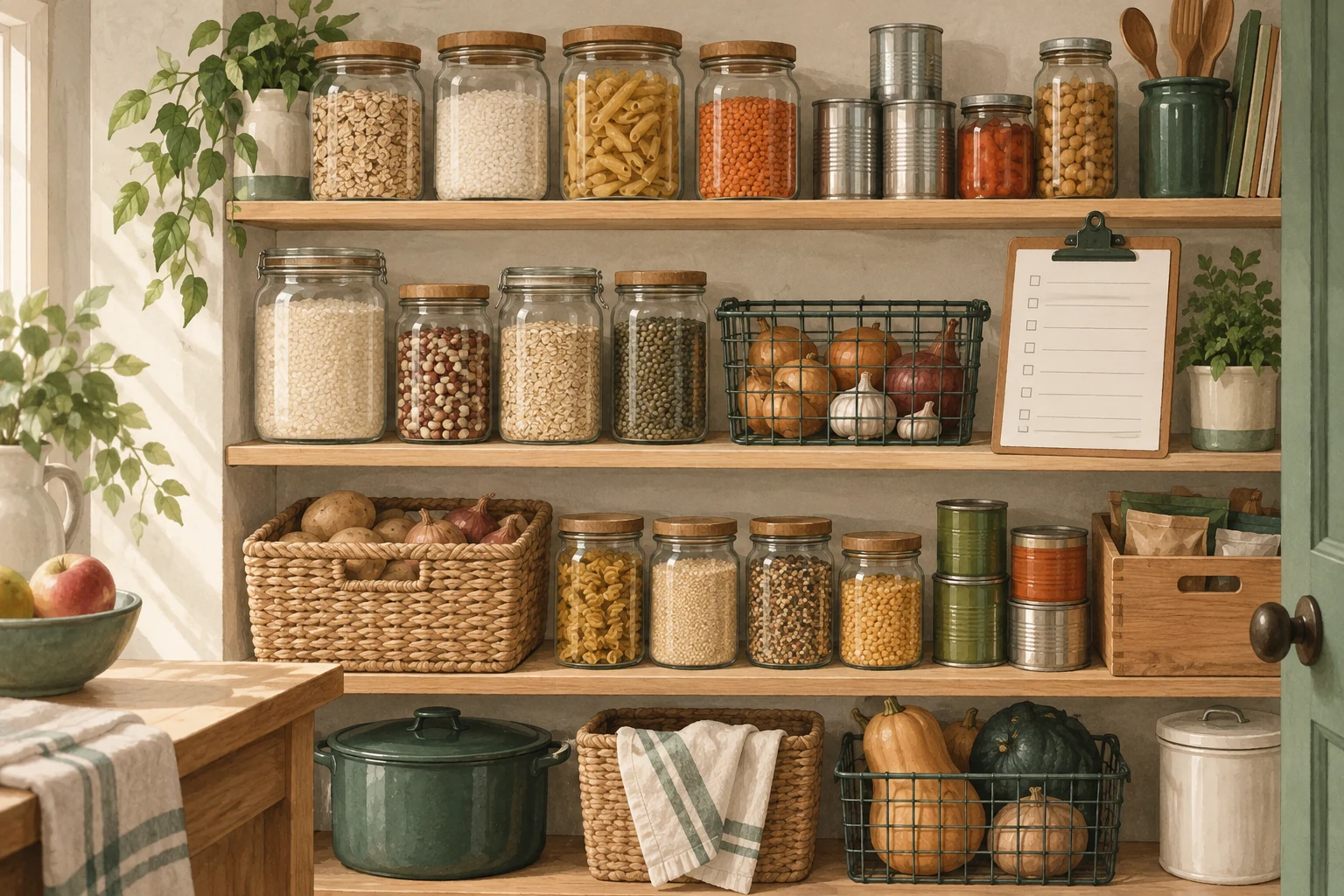
A low-waste pantry does not need matching containers, a large walk-in space, or a complete weekend makeover. It needs one simple thing: a setup that helps you see what you have before you buy more.
The most useful pantry system makes everyday decisions easier. You can spot ingredients that need to be used, check quantities before a grocery run, and put new purchases away without losing older food at the back of a shelf. The goal is not a picture-perfect pantry. It is a pantry that helps food get eaten.
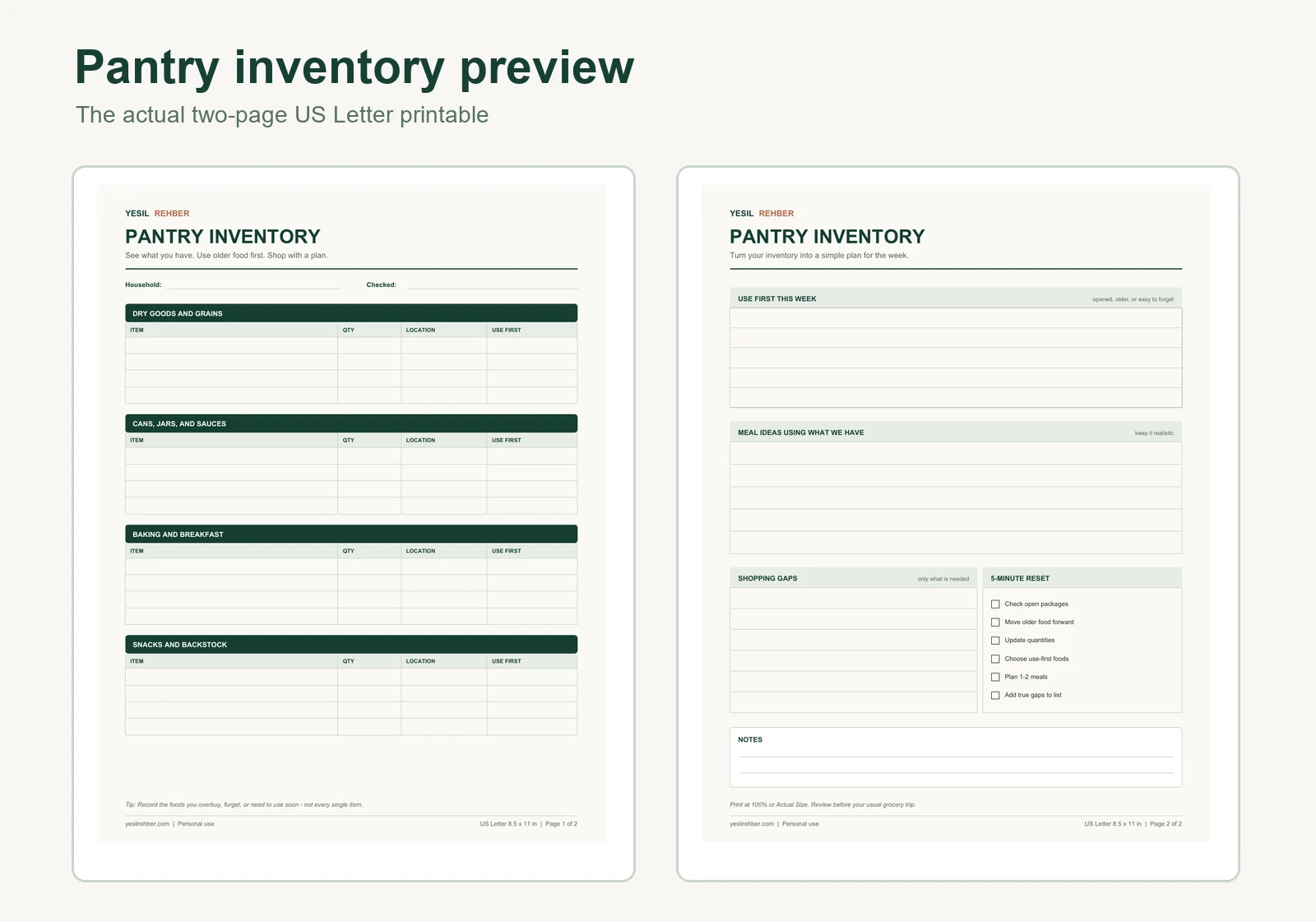
Free Pantry Inventory Printable
Download the two-page, printer-friendly pantry inventory and weekly use-first plan. Choose the size that matches your paper and print at 100% or Actual Size.
This guide walks you through a practical reset using the shelves, boxes, jars, and baskets you already own. Set aside about 45 to 60 minutes for a small pantry or one kitchen cabinet. If your pantry is large, work one shelf at a time so the project stays manageable.
Start with a quick pantry inventory
Before you move anything, take five minutes to look through every shelf. Write down the foods you regularly forget, the items you have in duplicate, and anything that should be used soon. The free pantry inventory included with this guide gives you space to record the item, quantity, location, and a “use first” note.
This step matters because organization alone does not prevent waste. A neat row of cans can still hide five more cans behind it. An inventory connects the physical pantry to your meal plan and shopping list.
The U.S. Environmental Protection Agency recommends checking the refrigerator, freezer, and pantry before shopping. It also suggests keeping a weekly list of food that needs to be used and planning meals around those items. Your inventory does not have to record every spice or tea bag. Focus on foods you tend to overbuy, forget, or let expire.
Remove food one shelf at a time
Emptying the entire pantry can create a large pile that becomes tiring to sort. Instead, clear one shelf or cabinet section. Wipe the surface, review the food from that section, and put it back before moving on.
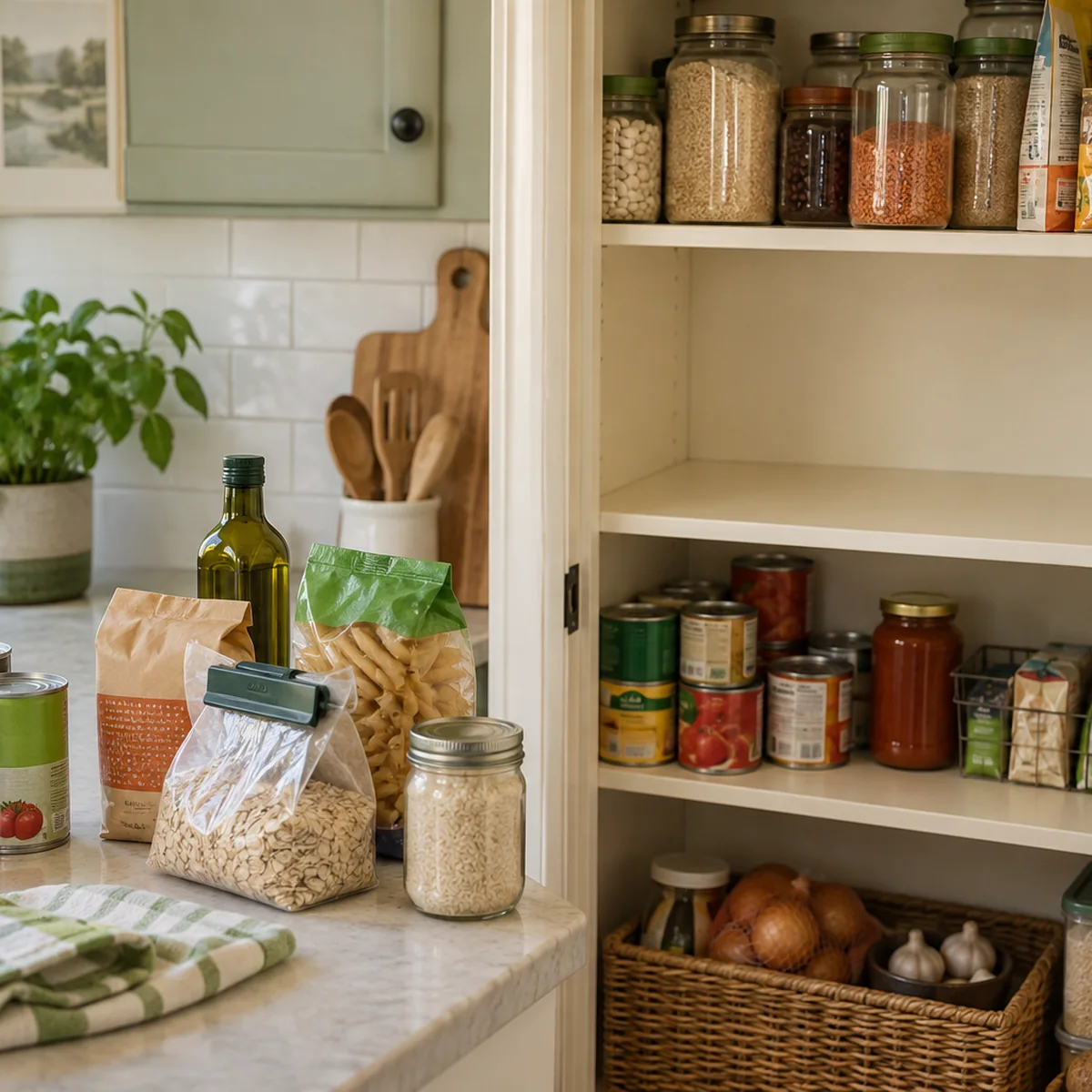
As you work, make four groups:
- Keep here: food you use and want in this pantry.
- Use first: opened packages, older items, or foods approaching their quality date.
- Move: food that belongs closer to where you prepare it or in a cooler, darker location.
- Remove: damaged, spoiled, recalled, or unwanted items.
Do not taste food to decide whether it is safe. Discard cans that are leaking, bulging, badly rusted, or deeply dented, and follow official recall instructions when they apply. For storage questions, use the USDA-developed FoodKeeper resource rather than guessing.
Understand dates before throwing food away
Many dates on U.S. food packages describe quality rather than safety. USDA explains that, except for infant formula, federal law generally does not require food date labels and those dates are not automatically a sign that food is unsafe. “Best if Used By” usually describes when a product is expected to have its best flavor or quality.
That does not mean every old package should stay. Check whether the package is intact, whether the food was stored as directed, and whether there are signs of spoilage. Follow special safety instructions for infant formula and any product with handling directions. When you are unsure about a specific food, consult FoodKeeper or another official food-safety source.
On your inventory, write the package date only when it will help you choose what to use first. A simple note such as “open” or “use this week” is often more useful than copying every printed date.
Create zones based on how you cook
Broad zones make a pantry easier to maintain than many narrow categories. Choose labels that match your household. A practical starting point is:
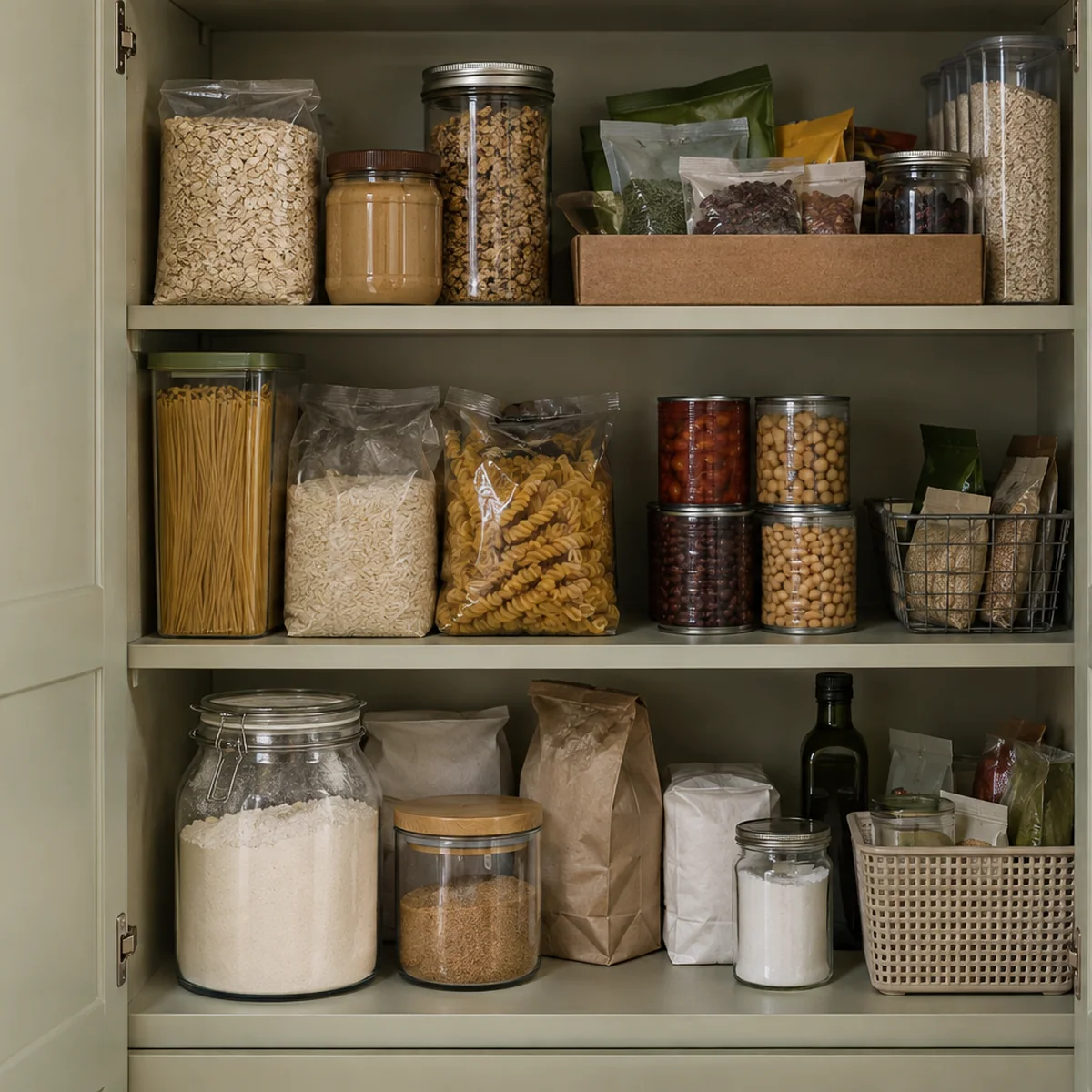
- Breakfast: oatmeal, cereal, nut butter, coffee, and tea
- Quick meals: pasta, rice, boxed meals, broth, and canned beans
- Canned and jarred foods: tomatoes, vegetables, sauces, and fruit
- Baking: flour, sugar, baking soda, chocolate, and decorating supplies
- Snacks: crackers, popcorn, nuts, and dried fruit
- Backstock: unopened extras that do not fit in the main row
Keep daily foods between waist and eye level when possible. Put heavy items on a lower shelf. Store occasional items higher up, but avoid placing food where you cannot see it at all. If you use a deep shelf, a shoebox, low-sided bin, or reused cardboard tray can act like a drawer. Pull it forward to see everything inside.
Do not buy containers before you know what problem they need to solve. A clear container may help with an opened bag of rice, but moving every food into a new jar creates extra work and can separate the food from its cooking directions, allergen information, lot code, or date. Keep that information with the food when it matters.
Put older food in front
Use the basic “first in, first out” idea: place older packages in front and newer packages behind them. You do not need to rearrange the entire pantry after every grocery trip. When you put away a replacement item, move the older one forward.
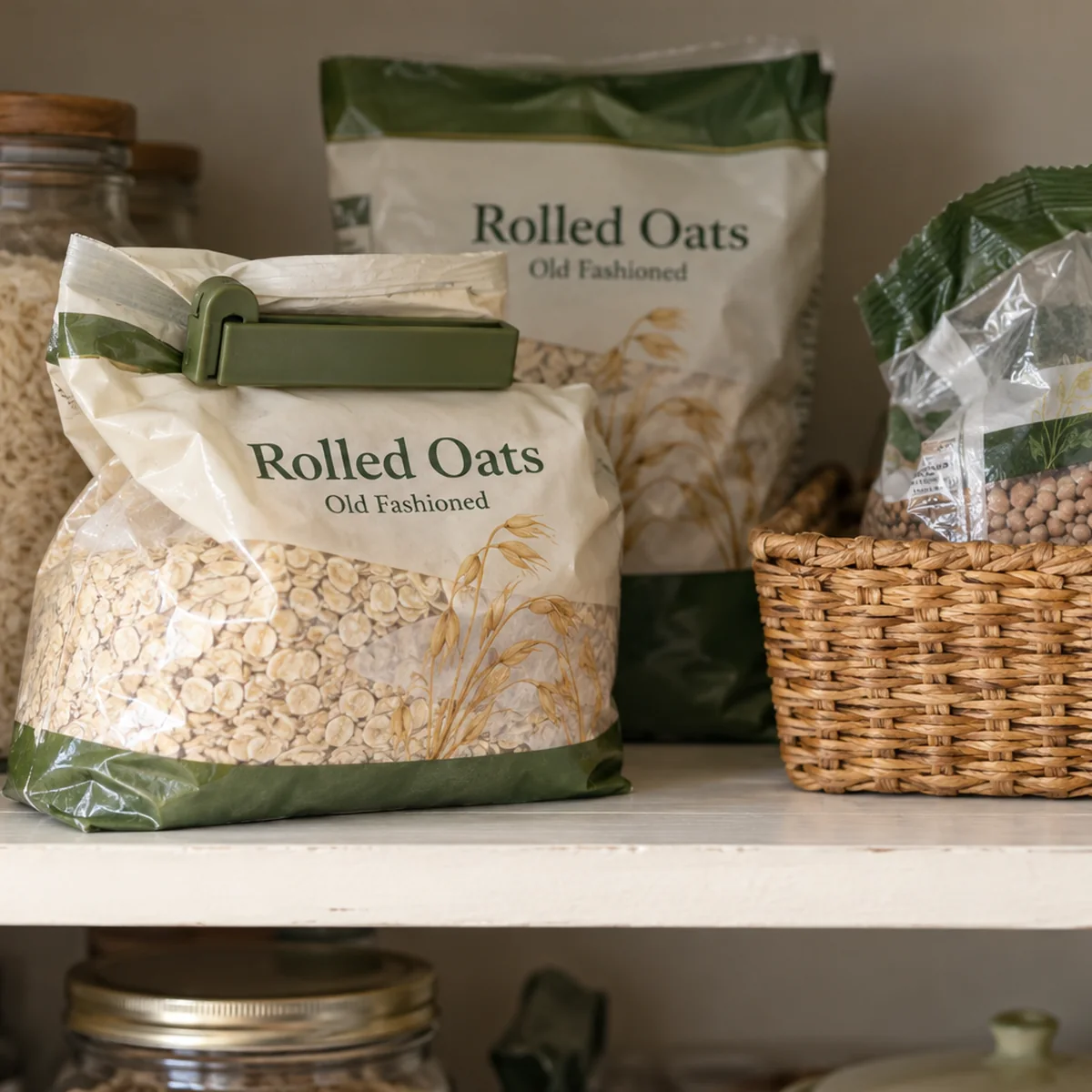
Give your “use first” foods one visible home. This can be a small basket, the front-right corner of a shelf, or a clearly labeled section. Keep the area small. If it becomes a second pantry, it stops helping.
Review this section when you plan meals. A half box of pasta, an open jar of sauce, and a can of beans might suggest an easy dinner. A nearly empty bag of oats can become breakfast before a new package is opened.
Track quantities in useful units
An inventory works best when it is quick to update. Use simple quantities such as “2 cans,” “1 open bag,” “about 8 oz,” or “low.” Exact weights are rarely necessary for a home pantry.
For staples you buy often, decide on a restock level. For example, add rice to the shopping list when you reach one unopened bag, or add canned tomatoes when you have two cans left. The right level depends on how often you shop, how many people you feed, and how much storage you have.
Avoid treating a sale as automatic savings. EPA notes that buying a large quantity only saves money when the food is used before it spoils. Record backstock separately so a sale item does not disappear behind the everyday supply.
Build a five-minute weekly pantry check
Choose one repeatable time, such as the evening before your usual grocery trip. Bring the inventory sheet to the pantry and ask:
- What is already open?
- What should be used in the next few meals?
- What is actually running low?
- Which planned meals use food already here?
- Is anything stored in the wrong place?
Update only the items that changed. Circle or highlight the foods to use first, then move those ingredients into your meal plan. This is faster than rebuilding the inventory every week.
After shopping, put groceries away with older food in front. Combine packages only when the foods are the same and you can preserve any important label information. Recycle or discard packaging according to your local program; recycling rules vary by community.
Make the system easy for everyone to follow
A pantry system fails when only one person understands it. Use large, plain category labels. Leave a little open space so food can be returned without rearranging a shelf. If children prepare their own snacks, keep approved choices at a reachable height. If someone in the household has food allergies, use a storage plan that prevents mix-ups and cross-contact.
Post the inventory on a clipboard, inside a cabinet door, or near the grocery list. Keep a pencil nearby. If your household prefers a digital list, use the printable for the reset and transfer the final quantities to your usual app.
What not to do
Do not make the project depend on buying a complete set of bins. Do not hide food in opaque containers without labels. Do not create so many categories that putting groceries away becomes a sorting project. Do not keep unwanted food just because it is technically usable; unopened, shelf-stable food that meets a local organization’s rules may be more useful as a donation.
Most importantly, do not confuse a clean pantry with a safe pantry. Follow package directions, keep food in appropriate conditions, and use official guidance for uncertain items.
Download the free pantry inventory
The printable includes two pages: a pantry inventory table and a weekly “use first” planning sheet. Download the US Letter PDF (8.5 × 11 inches) or the A4 PDF (210 × 297 mm). Print at 100% or “actual size” for the intended margins.
Start with the foods you most often lose track of. A useful inventory is better than a complete one you never update. Keep it visible, review it before shopping, and let it guide one or two meals each week. That small routine can make a bigger difference than a perfect set of containers.
Sources
- U.S. Environmental Protection Agency, Preventing Wasted Food at Home
- USDA Food Safety and Inspection Service, Food Product Dating
- FoodSafety.gov, FoodKeeper App