A bag of greens can look generous on shopping day and wilt before you have made a second salad. The fix is usually less about buying a new storage gadget and more about three conditions: keep the leaves cold, prevent puddles, and leave a little airflow. The details change depending on whether you bought a whole head, loose unwashed leaves, or a package labeled ready-to-eat.
This guide gives you a practical low-waste routine for lettuce, spinach, and mixed salad greens. It also keeps food safety in view. No storage method makes contaminated or spoiled greens safe, and a printed date or a suggested storage window is not a promise that every batch will last that long.
Start with the greens you can actually use
Choose crisp leaves without obvious slime or decay. Buy an amount you expect to use within roughly a week rather than the largest box by default. Oregon State University Extension notes that a whole lettuce head may cost less than ready-to-eat greens or a salad kit, while a small mixed container can offer variety without leaving excess. Price per serving matters more than price per package when half the package goes uneaten.
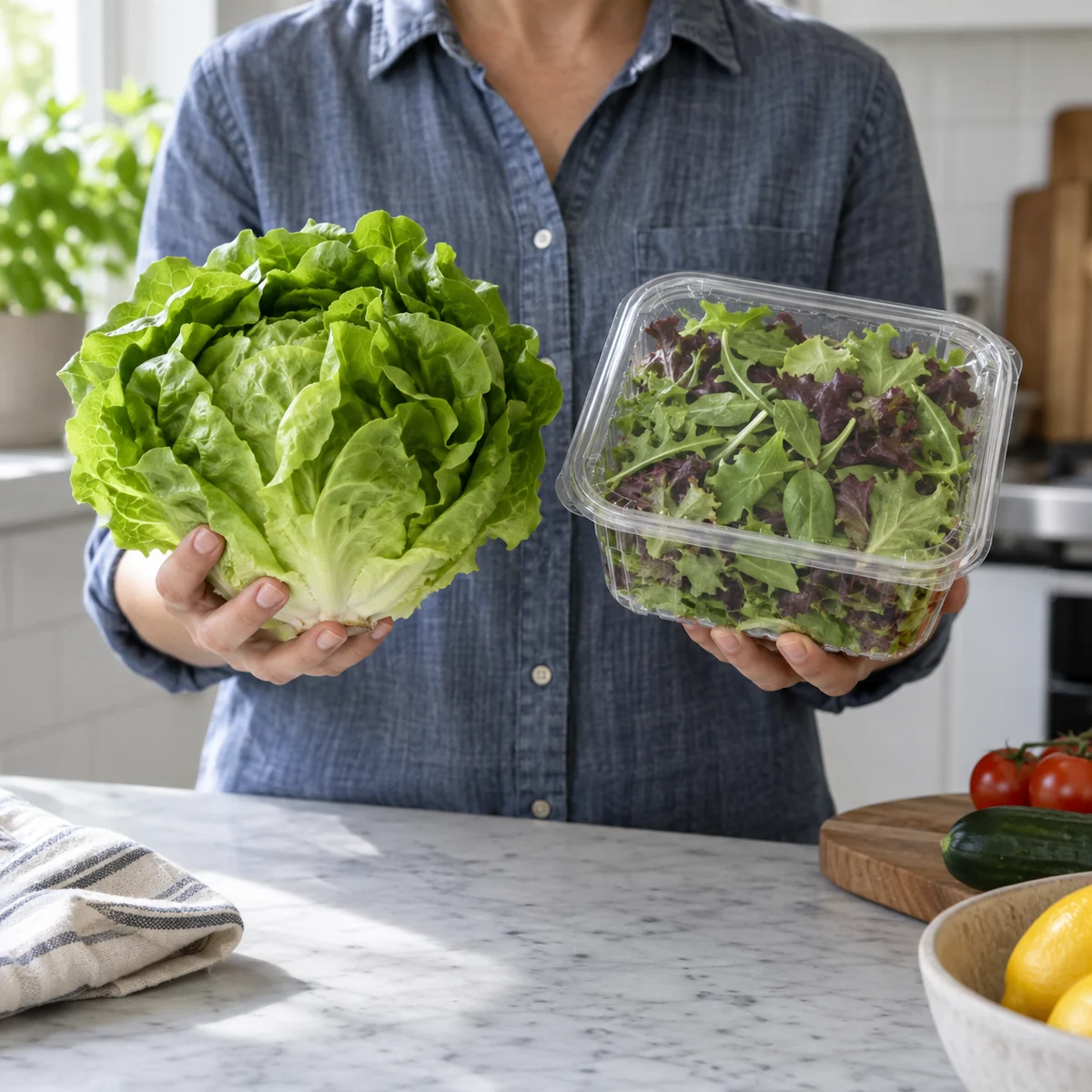
If you buy pre-cut, bagged, or packaged greens, the U.S. Food and Drug Administration says to choose packages that are refrigerated or surrounded by ice at the store. Put them in your refrigerator promptly when you get home. Keep raw meat, poultry, and seafood separate from greens you plan to eat raw, both in shopping bags and in the fridge.
Keep the refrigerator at 40°F (4°C) or below
The FDA recommends storing perishable produce such as lettuce in a clean refrigerator at 40°F (4°C) or below. A refrigerator thermometer gives you a better answer than the dial setting alone. Keep greens away from any place where raw meat juices could drip onto them. A crisper drawer or another clean, cold area can work as long as air can circulate and the produce is protected from contamination.
Do not leave cut greens on the counter while you reorganize the kitchen. Cold storage matters for safety as well as texture. A leaf that still looks crisp is not proof that it has been stored safely.
Know when to wash—and when not to rewash
If a package says pre-washed, triple-washed, or ready-to-eat, you can use it without another wash. The FDA warns that rewashing ready-to-eat produce can bring it into contact with unclean surfaces or utensils. Keep the package refrigerated and follow any instructions printed on it. There is no benefit to emptying a clean package into a questionable sink just for the appearance of doing more.
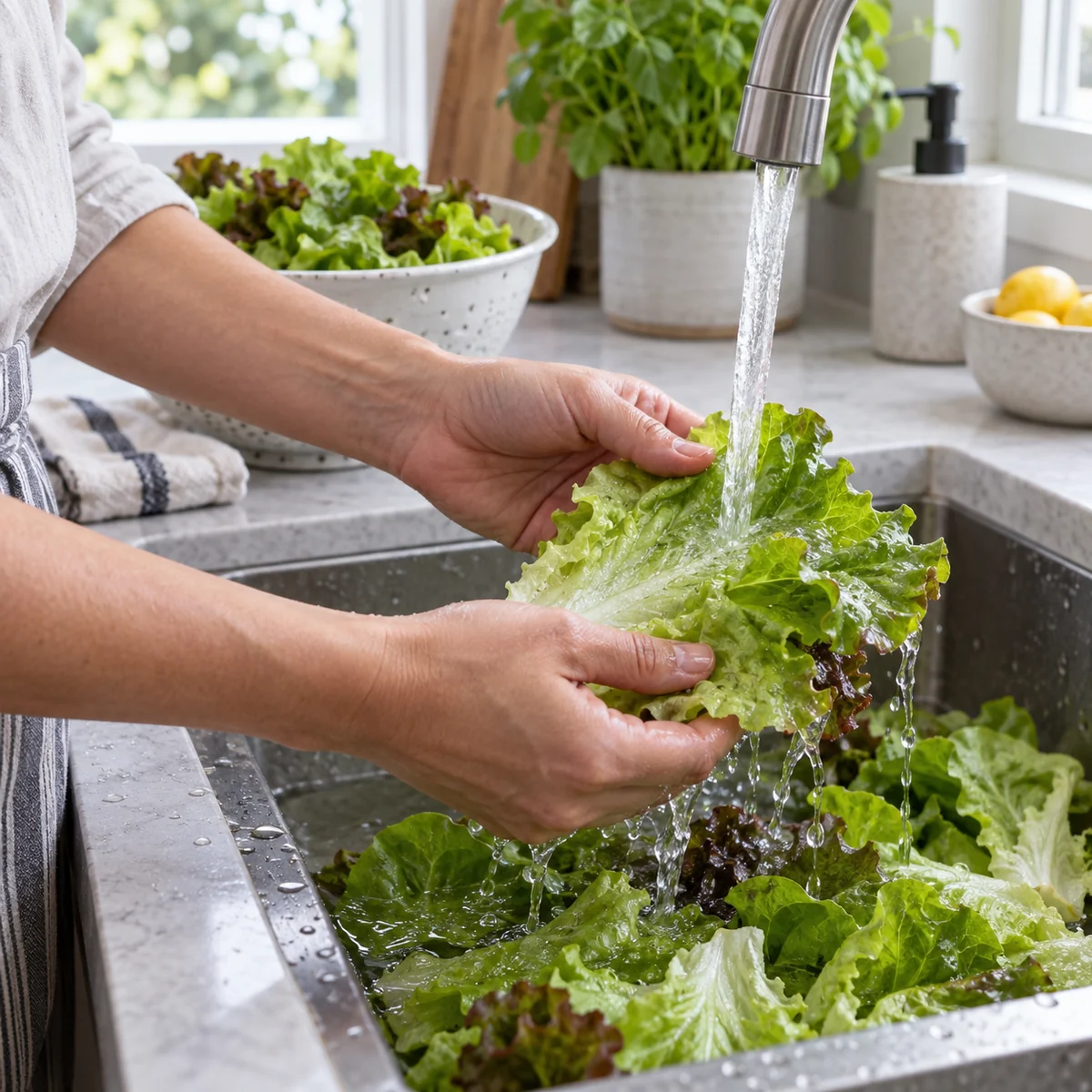
For loose greens that are not labeled washed, clean your hands and food-contact surfaces first. Remove damaged outer leaves from a head. Rinse the leaves under cool running water before eating or preparing them, separating leaves to reach grit. The FDA advises against soap, detergent, or commercial produce wash. If you wash loose greens ahead for convenience, drain and dry them carefully before storing; otherwise, wash shortly before use.
Remove standing water without drying leaves to a crisp
Water collecting in the bottom of a container can make leaves deteriorate quickly. After washing loose greens, drain them in a clean colander or salad spinner. A clean, dry reusable cloth can gently absorb excess drops; use a cloth reserved for clean food handling and launder it between uses. You want the leaves drained, not crushed or left sitting in water.
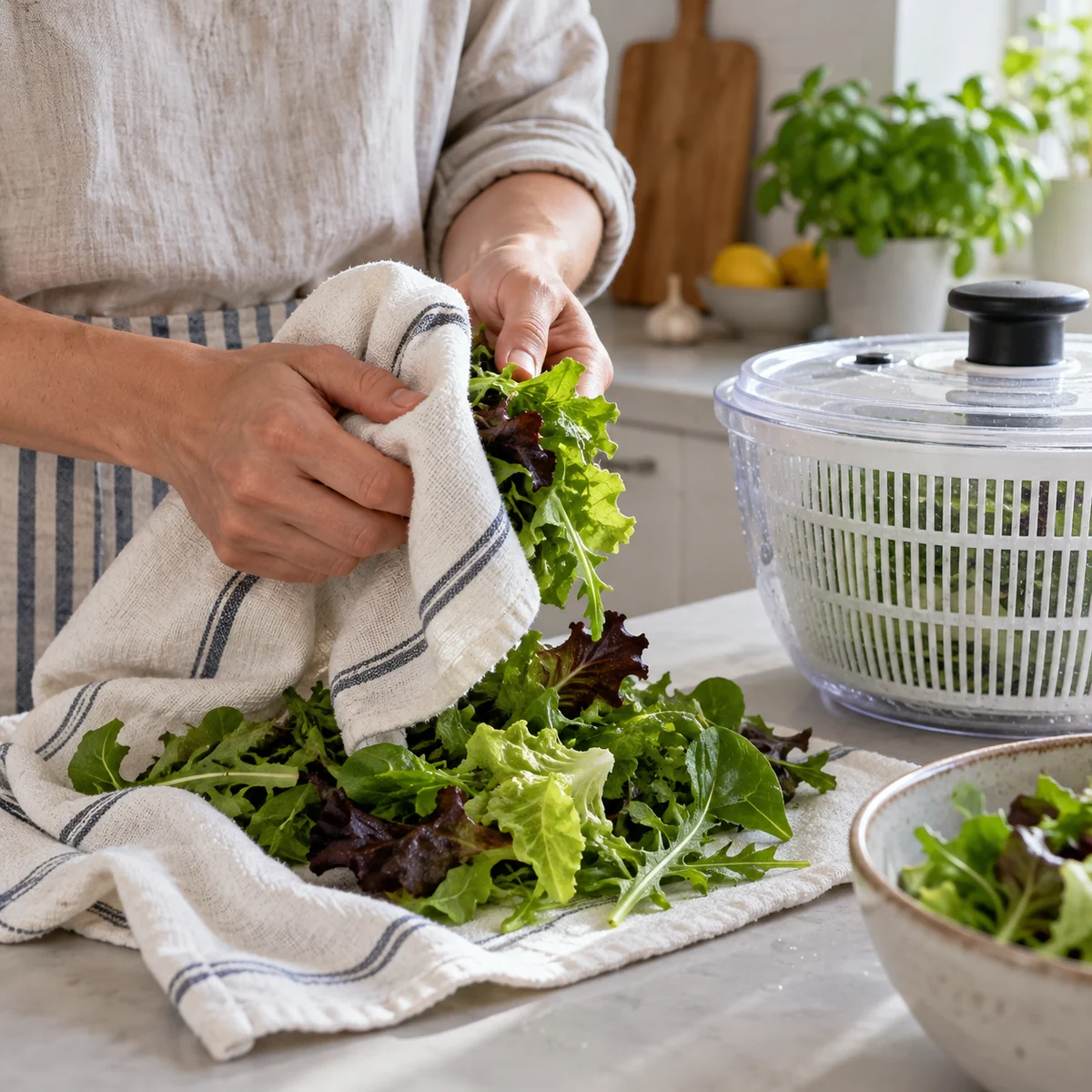
Oregon State University Extension recommends a little moisture and airflow for salad greens. That is a balance, not a precise recipe: if a cloth is dripping, wring it out; if leaves dry out and wilt, they may need a slightly more humid setup. Avoid overpacking the container so the lower leaves are not crushed.
Use the container you already own
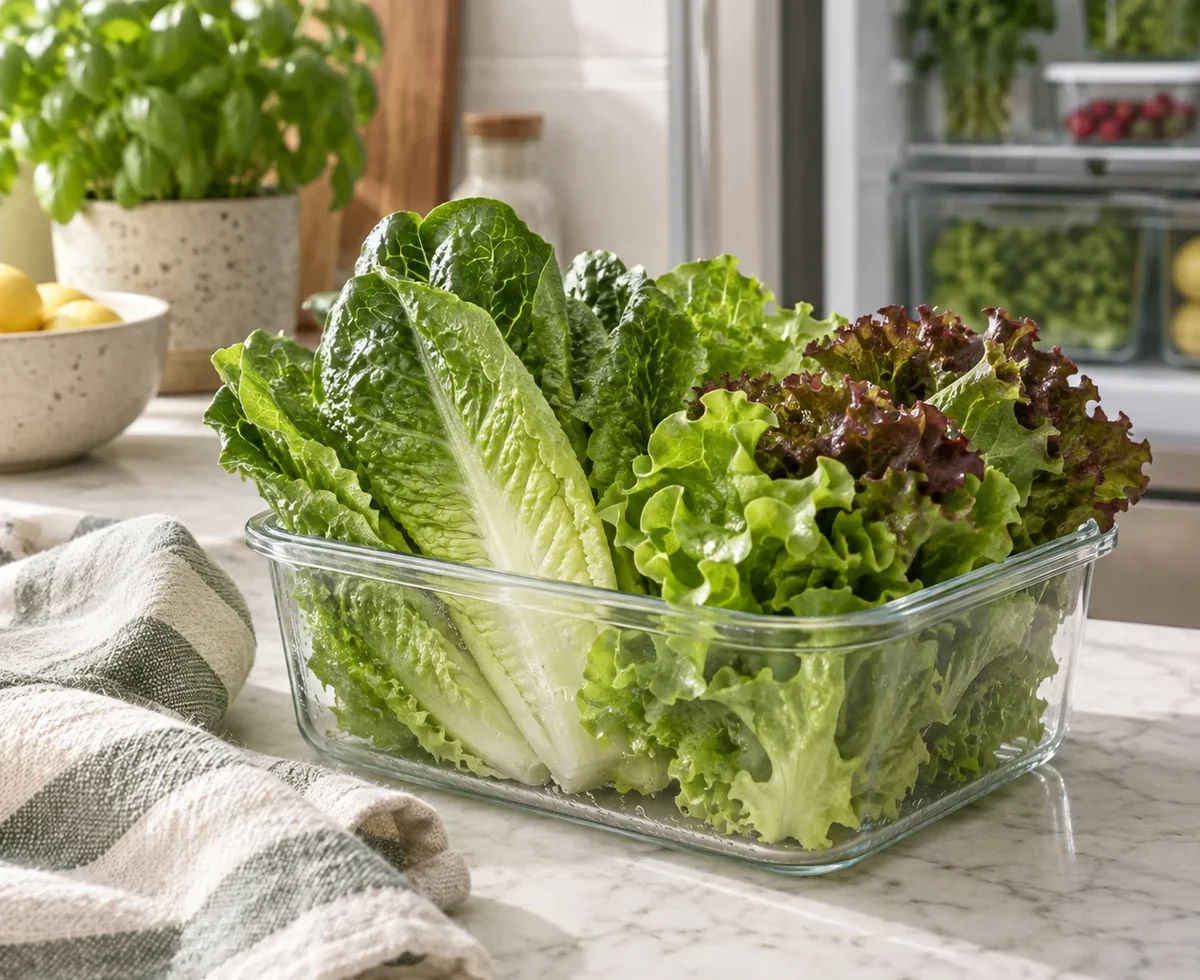
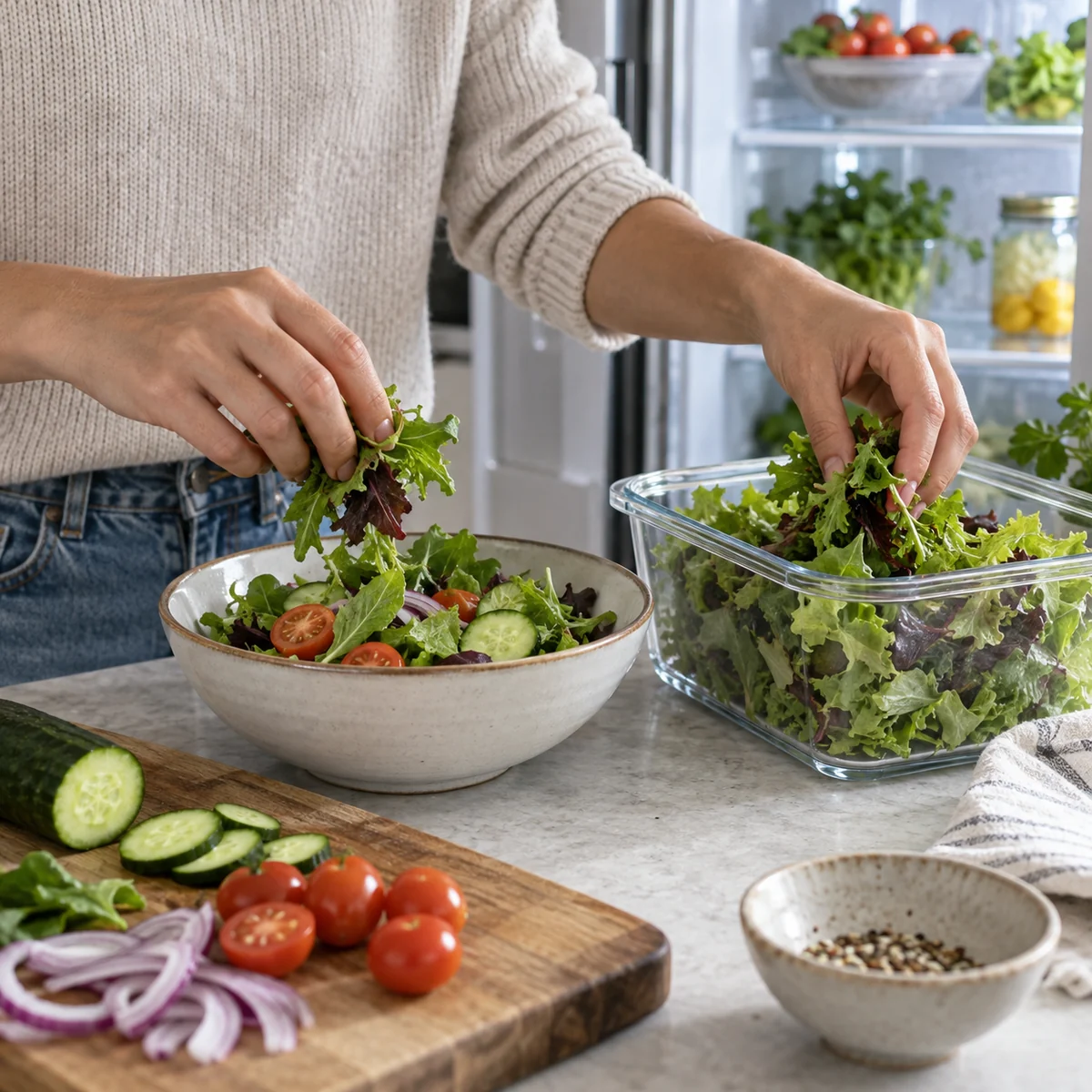
Place greens loosely in a clean container with a slightly damp, clean cloth, or use a clean bag with airflow. OSU Extension suggests an open container with a damp towel or a bag with holes. You do not have to buy a special lettuce keeper. If the original produce box is clean and allows airflow, it may already do the job. Keep the container where it will not be crushed by heavier groceries.
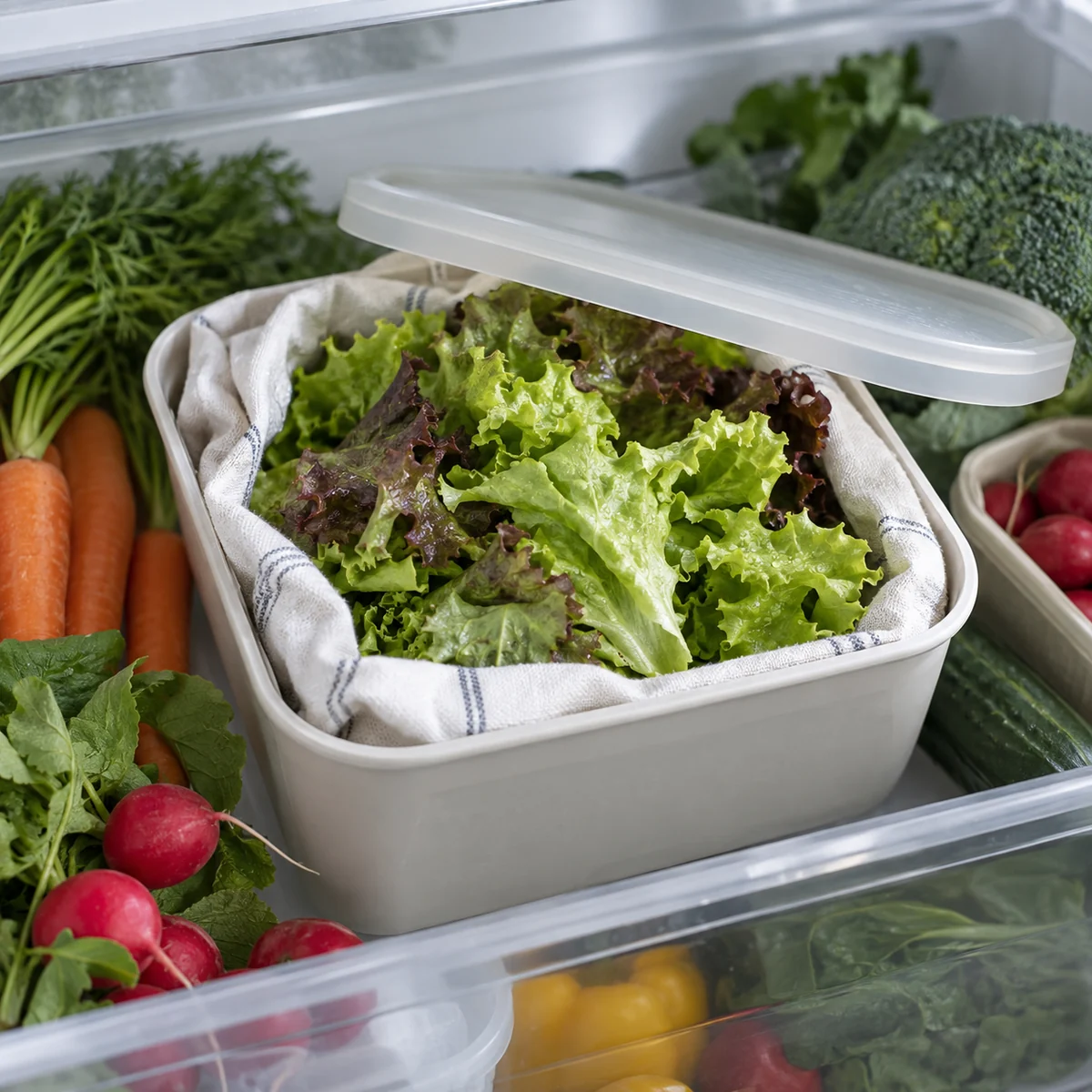
For a whole head, keep the leaves mostly intact until you need them. For a ready-to-eat package, follow its storage directions and keep it cold; after opening, check the leaves and container for excess moisture and use it promptly. If you move greens into another container, make sure it is clean and do not mix an older batch with a new one in a way that hides which needs using first.
Check the greens before planning dinner
OSU Extension gives about seven to ten days as a best-quality guide for salad greens stored well, but actual life varies by type, freshness at purchase, package, and fridge conditions. Check them regularly rather than waiting for a calendar date. Move the older batch to the front and plan a meal around it while it is still good. Dress a salad just before serving to preserve texture.
If leaves are limp but otherwise sound, use them promptly in a cooked dish suited to that green rather than expecting a perfect crisp salad. If you see extensive slime, mold, an off odor, or signs of contamination, discard the affected produce. Do not cook obviously spoiled greens as a salvage method. If a product is subject to a recall, follow the recall instructions regardless of how it looks.
Three quick setups
- Whole lettuce head: Refrigerate it cleanly, keep the head intact until needed, then remove outer leaves and wash the leaves you will use.
- Loose unwashed leaves: Keep them cold; rinse before use, or wash ahead and drain very well before storing loosely with a little moisture and airflow.
- Ready-to-eat greens: Buy them chilled, refrigerate promptly, and use without rewashing unless the package directs otherwise.
At the next shop, look at what remained in the fridge this week. If you repeatedly discard half a large tub, a smaller amount can be the lower-waste choice. For a broader plan for produce already nearing its end, see our vegetable rescue guide.
Sources
- U.S. Food and Drug Administration, Selecting and Serving Produce Safely.
- Oregon State University Extension, Salad Greens: Store Well Waste Less.
- University of Minnesota Extension, Washing fresh fruits and vegetables safely.