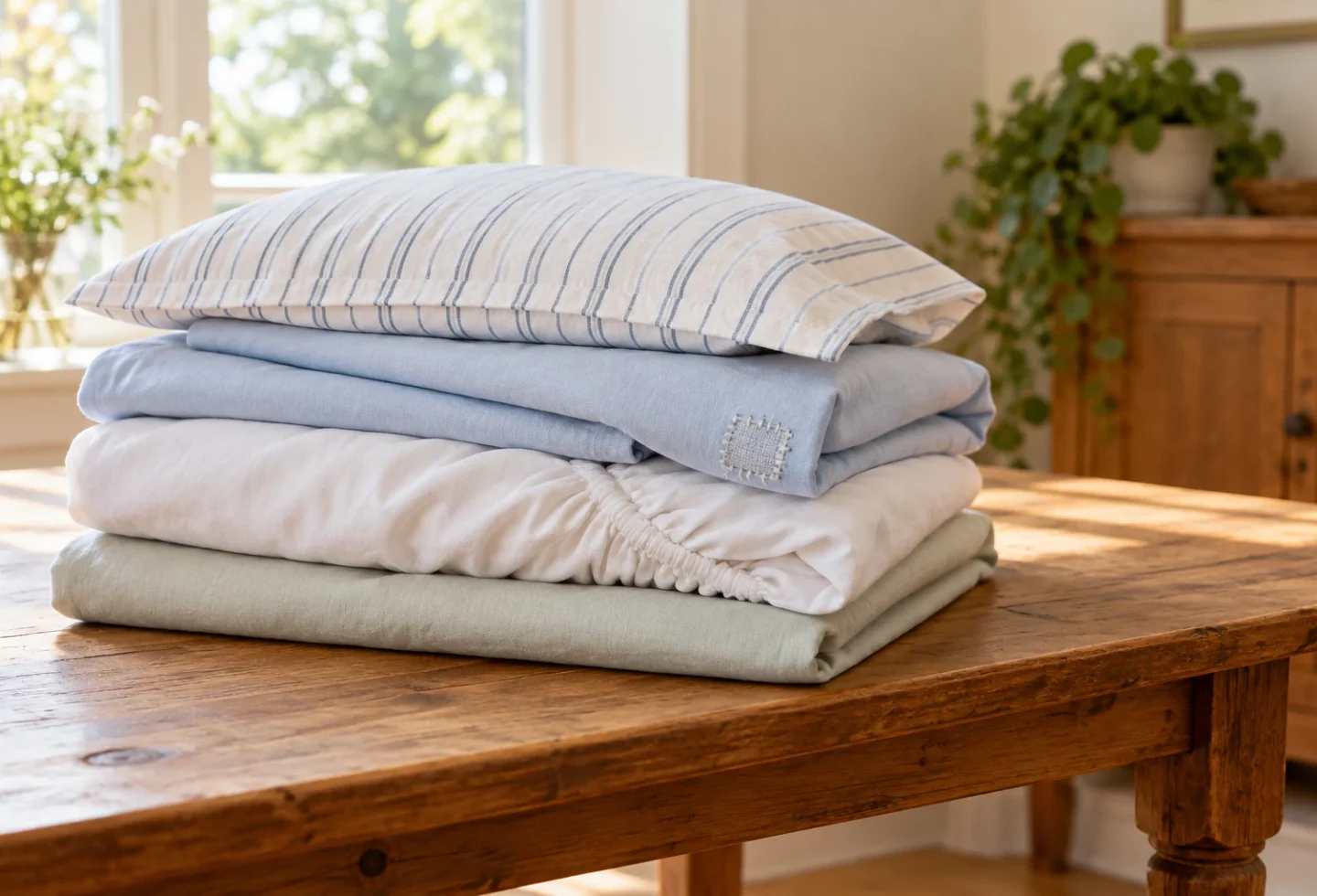
An old sheet does not have to become a permanent pile of “maybe useful” fabric. Its next step depends on its condition: keep one with a real job, pass along bedding someone can use, or find a textile program that accepts worn fabric.
Quick answer: A clean, comfortable sheet can be kept as a spare or repaired. A clean sheet in good usable condition may be donated after you confirm a recipient accepts bedding. A worn but clean and dry sheet may qualify for a local textile collection program. Check the program’s rules before you bag it; do not assume ordinary curbside recycling takes textiles.
1. Sort each sheet by condition
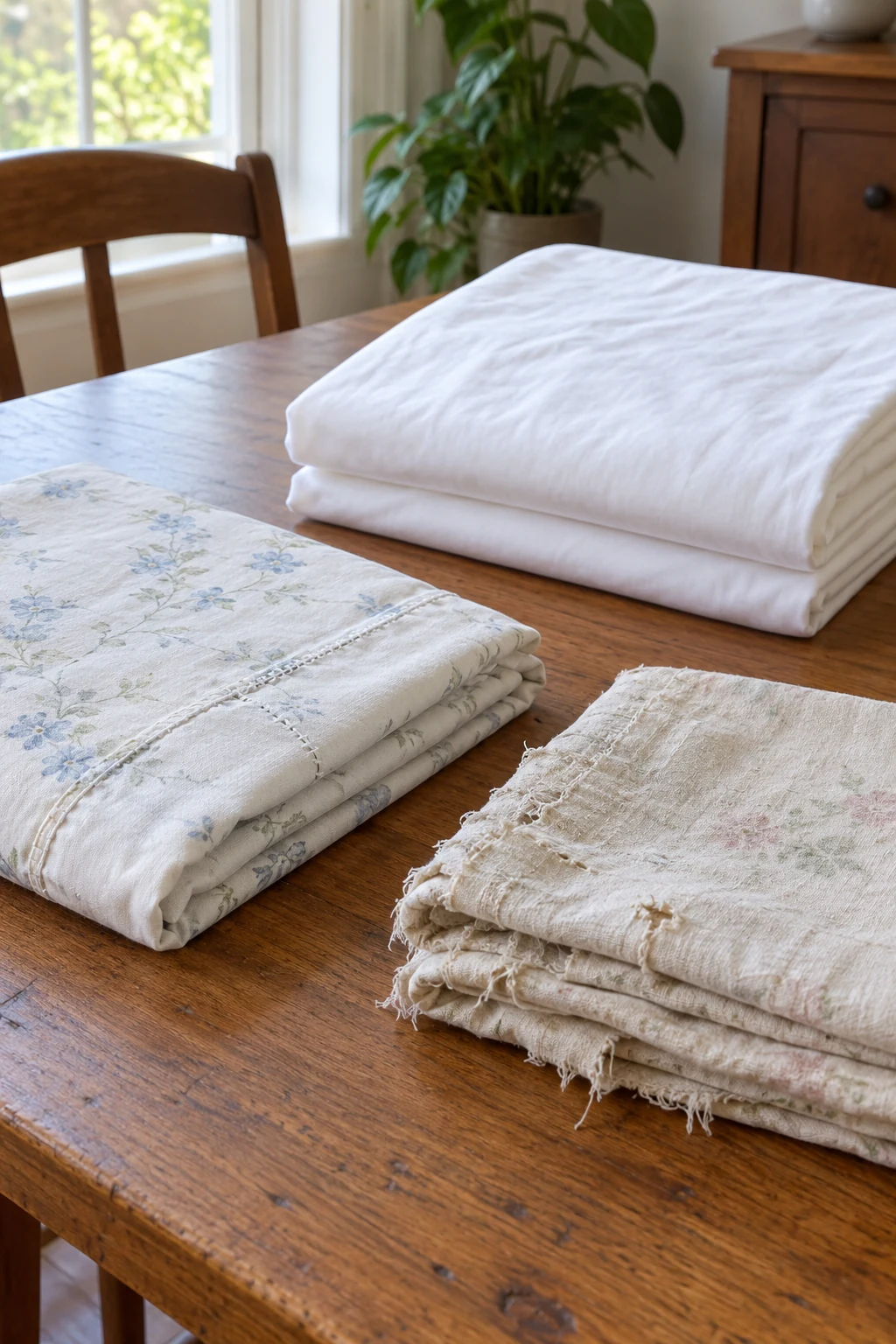
Spread out the flat sheet, fitted sheet and pillowcases. Check for thinning fabric, stretched elastic, tears, stains and odors. A small tear in otherwise comfortable fabric may be worth repairing. A sheet with life left in it can remain in bedding rotation, especially if it fits a bed you still use.
Make three piles: keep for a named use, offer for reuse, and check for textile collection. Do not turn “keep” into unlimited storage. If you cannot identify the job and storage spot, the sheet belongs in one of the other piles. The US EPA recommends reuse and repair before checking recycling options.
2. Give one old sheet a specific job
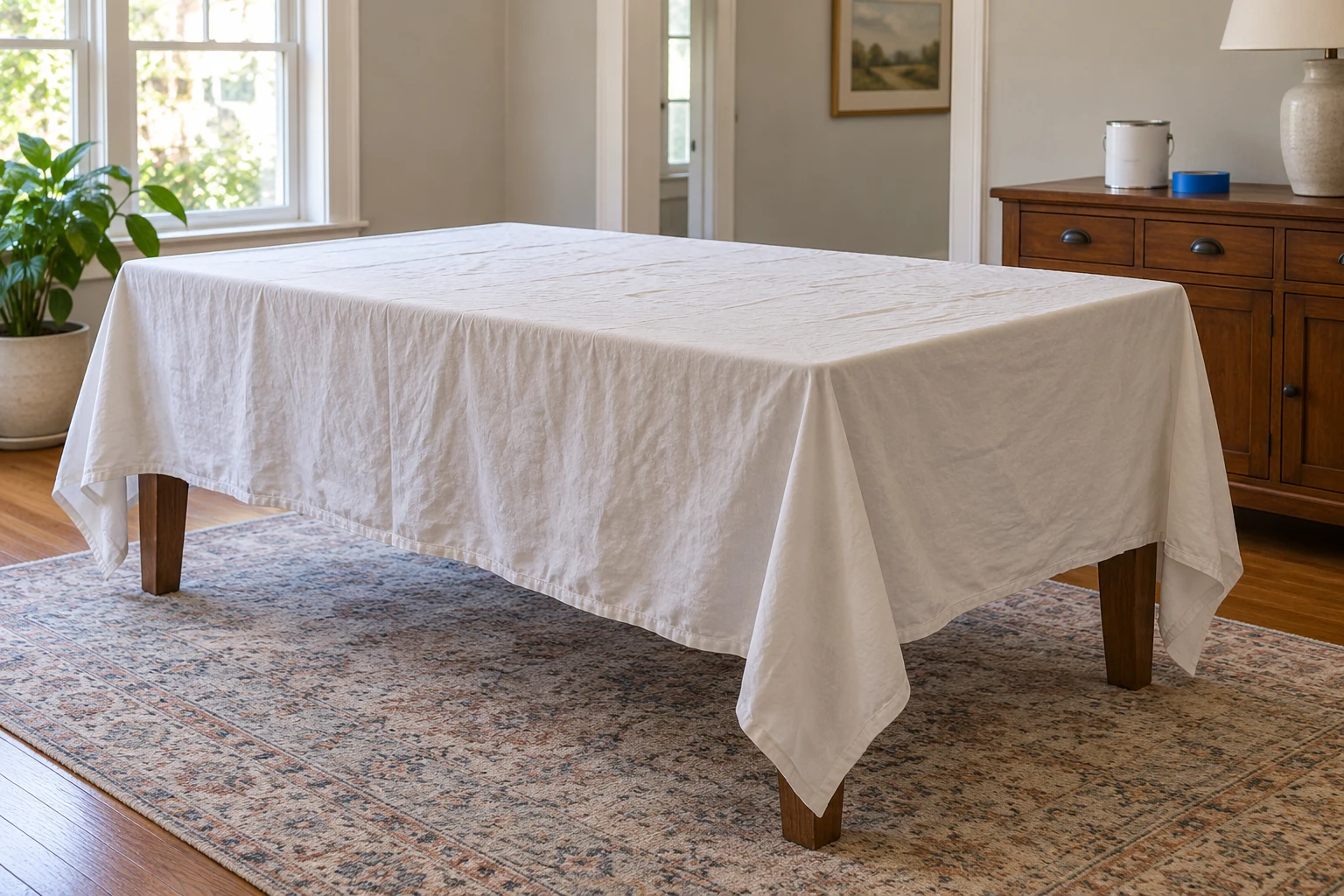
A clean flat sheet can serve as a temporary dust cover over a table or other cool, stable furniture. Fold it afterward and keep it with the supplies for that job. It is not a waterproof paint barrier: use a purpose-made protective layer for wet paint or solvents, and keep fabric away from heaters, stoves and other hot equipment.
Other practical uses are a clearly labeled spare for guests, a sewing project you have already planned, or a washable cover for items in storage. A fitted sheet whose elastic has failed may be less useful as bedding, but the broad fabric panel can still work for a project if you will actually make it. Pick one or two uses that match your home; keeping a whole stack “just in case” only moves the clutter.
3. Donate bedding someone can actually use
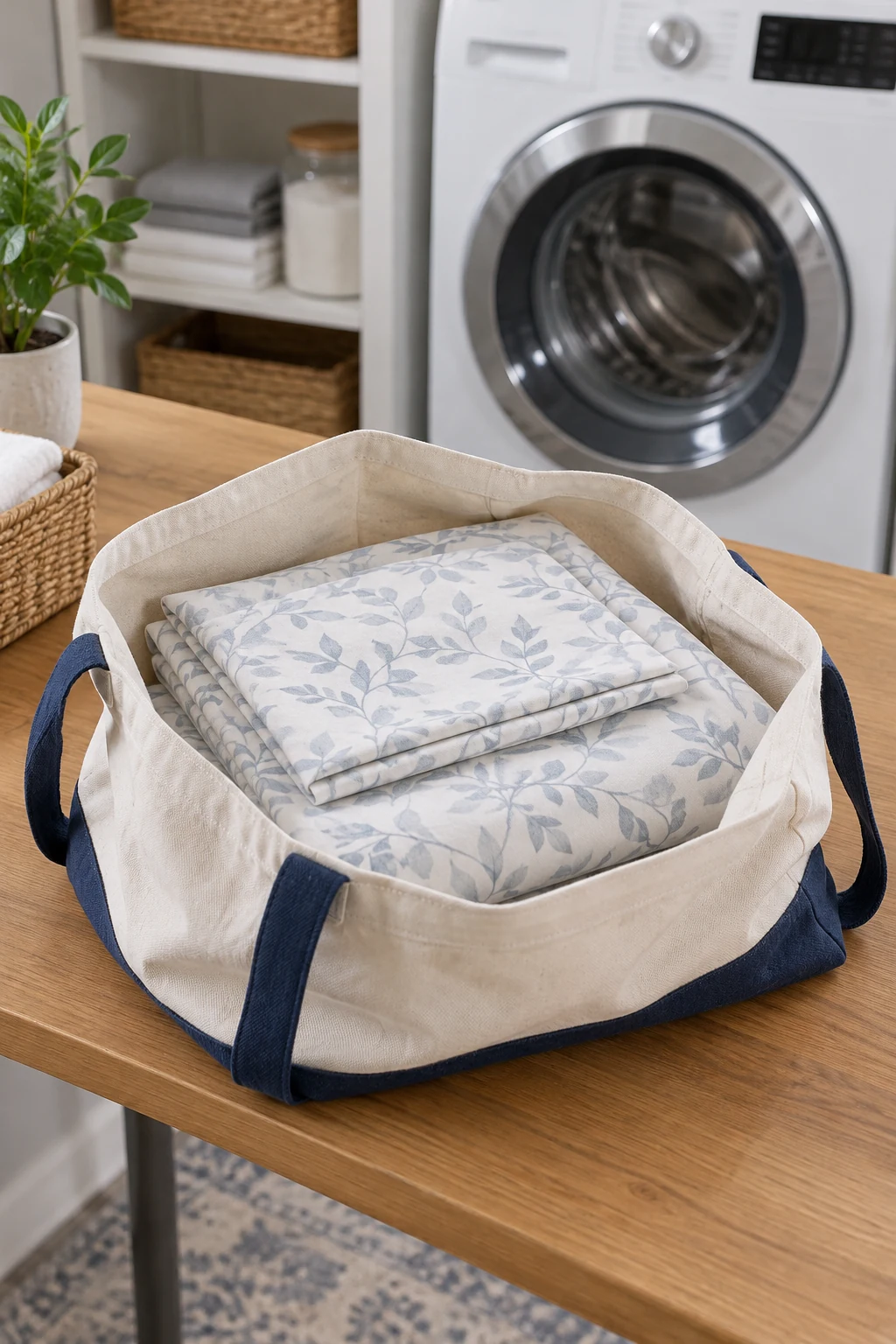
Wash and dry usable sheets and pillowcases, then inspect them again. Offer items that are clean and in good condition. Ask a nearby charity, reuse group or donation center whether it currently accepts sheets and pillowcases, what sizes it needs, and how it wants sets packed. Acceptance can change by location. Goodwill lists bedding among possible household donations, while its donation guidance encourages checking item condition and local rules.
Fold a set together and identify its size if known. Do not label a worn or stained sheet as “donation” and hope a recipient can repair or clean it. Do not leave bags outside a closed center. If the recipient cannot use the item, move to a textile route that explicitly accepts its condition.
4. Find a textile route for worn fabric
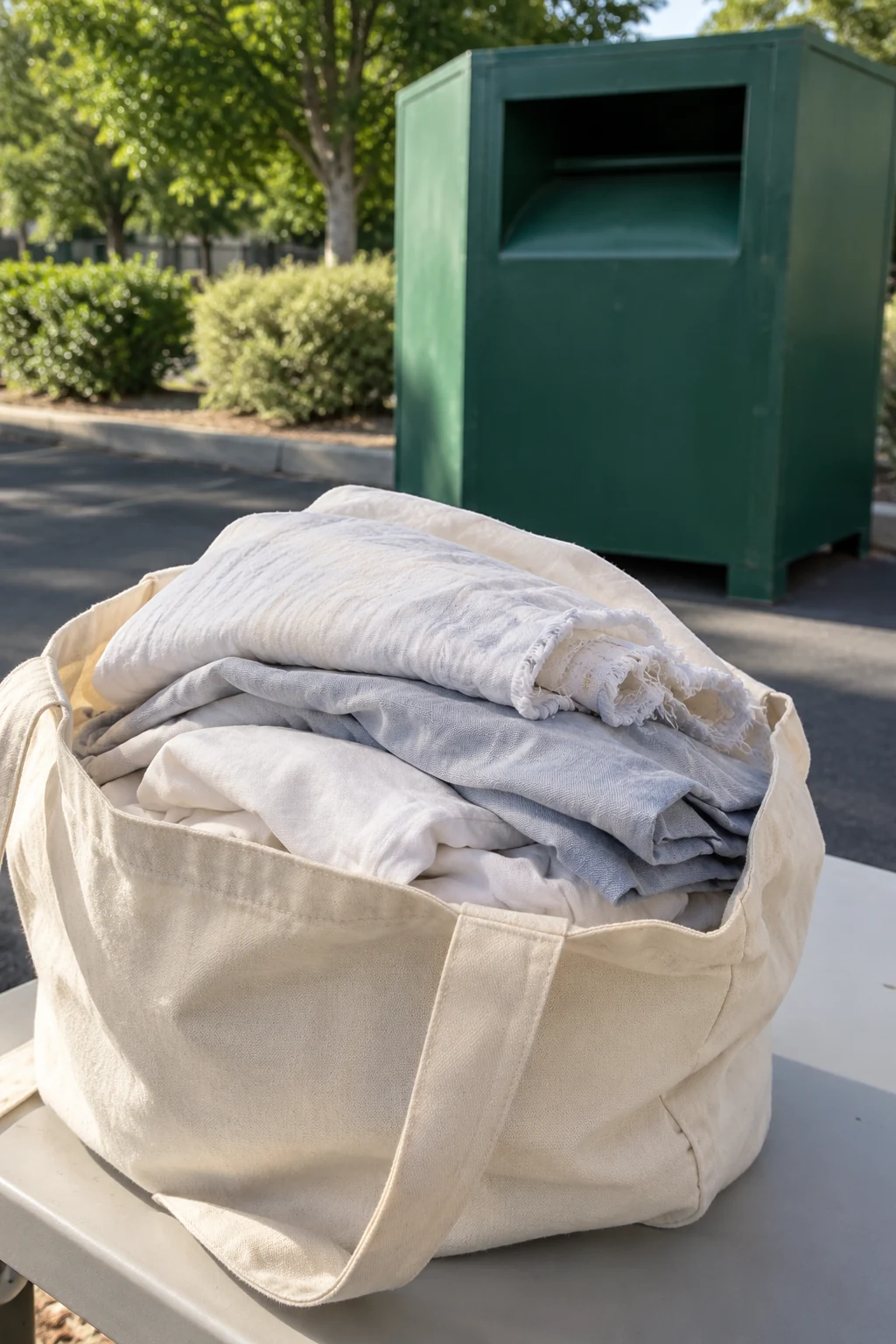
Start with your city or county waste website or a textile recycler’s accepted-items list. Ask specifically about bed sheets, pillowcases, fitted-sheet elastic and damaged fabric. Keep accepted items clean and dry, and use the site’s requested bag or drop-off method. New York City’s sanitation department lists bedding among household textiles and tells residents to check individual sites; its community events can accept ripped or damaged textiles when they are clean and dry. These are examples of one locality’s rules, not a promise that every program accepts the same material.
Do not put sheets in a curbside recycling cart unless your local program specifically says to do so. If the fabric is wet, heavily soiled, moldy or otherwise rejected, follow local waste guidance rather than leaving it at a collection point. If a program cannot clearly confirm acceptance, keep looking for a suitable route before making the trip.
Common questions
Can I donate a sheet with a small tear?
Repair it first if it will remain useful, then ask the recipient about its condition standards. Do not assume a donation center will mend it.
Do animal shelters take old sheets?
Some may, but needs and hygiene rules differ. Call the particular shelter and ask about sheets, sizes and condition before delivering anything.
Can a worn sheet go in normal recycling?
Only if your local recycling authority explicitly accepts textiles in that collection. A designated textile drop-off is often a different program from ordinary curbside recycling.