Trying to avoid plastic at the grocery store can turn a quick shop into a search for perfect packaging. A simpler goal is to bring home food you will use while skipping disposable packaging where you have a practical choice. You can start with the store you already visit and the bags you already own.
The quick answer: Check what you need before shopping, take a reusable carry bag, choose loose produce when it suits your meal plan, and compare packaging only after checking quantity, price, and shelf life. Keep raw meat, poultry, and seafood separate from ready-to-eat food. A useful low-waste trip still has to be a safe, affordable one.
Start with the food you will actually use
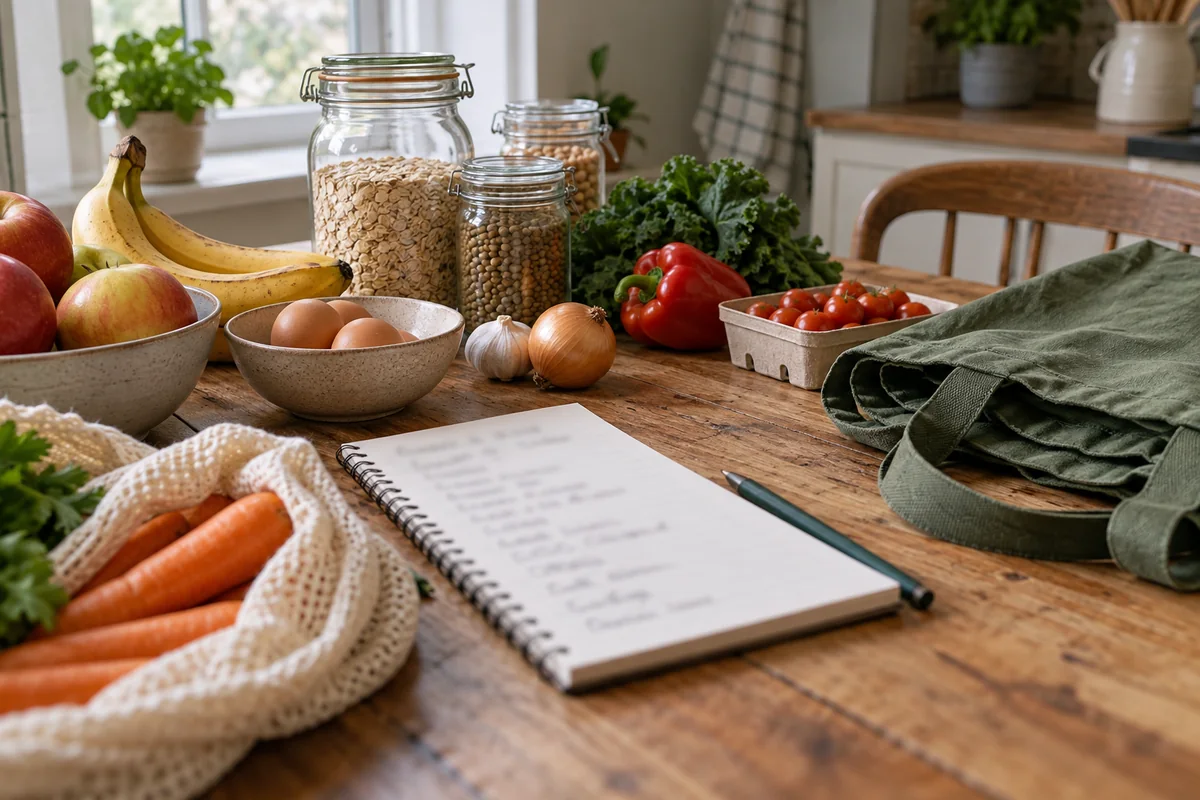
Look in the refrigerator, freezer, and pantry before you leave. Write a short list for the meals you expect to cook and note the amounts you need. If you only need two peppers, buying a larger wrapped pack may create both packaging waste and food waste. If the larger pack is a staple you reliably finish, it may be the sensible choice. Match the purchase to your household rather than a picture of an ideal shopping basket.
Our grocery-list guide gives you a quick way to check existing food first. The U.S. EPA includes buying only what you need among its advice for reducing waste.
Use the carry bags you already have
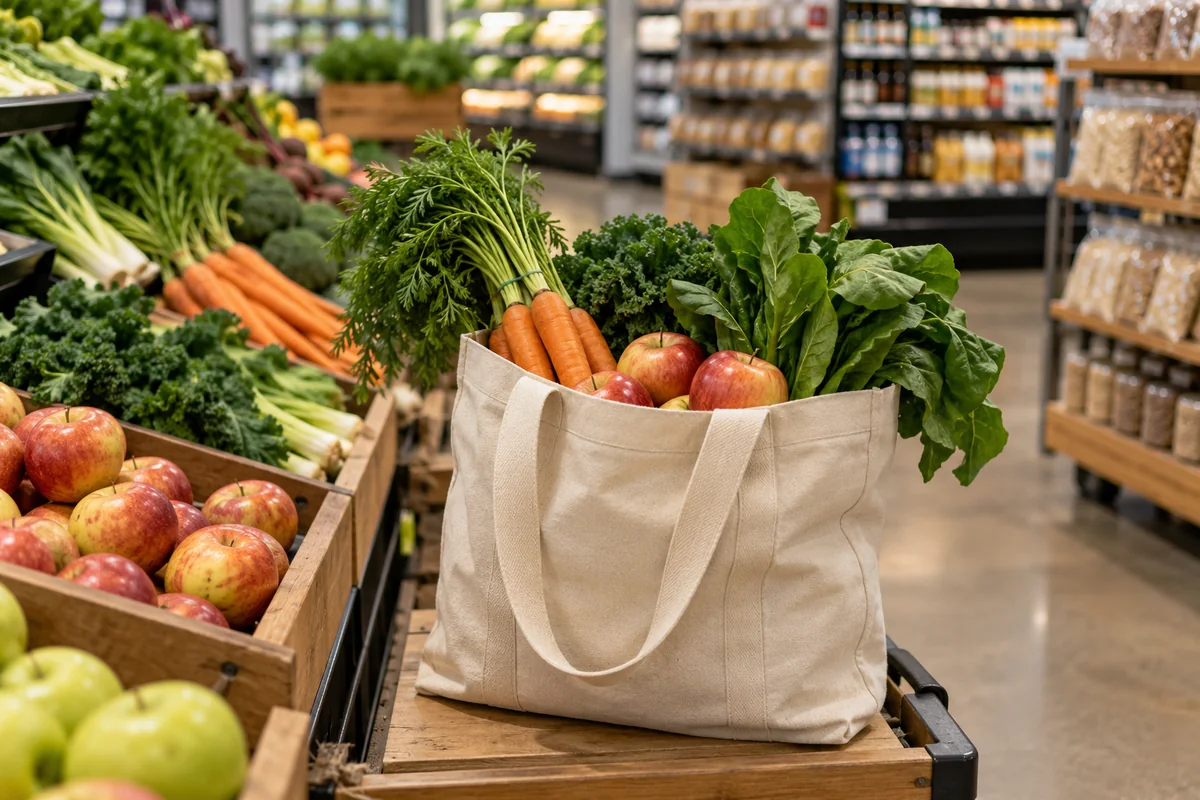
Bring a sturdy tote that you can carry comfortably and keep clean. You do not need to buy a matching set of new bags for a lower-waste trip. For a few items, you may not need a bag at all. Keep a compact backup in the bag you usually take out; our reusable-bag organization guide shows how to make that habit easy to repeat.
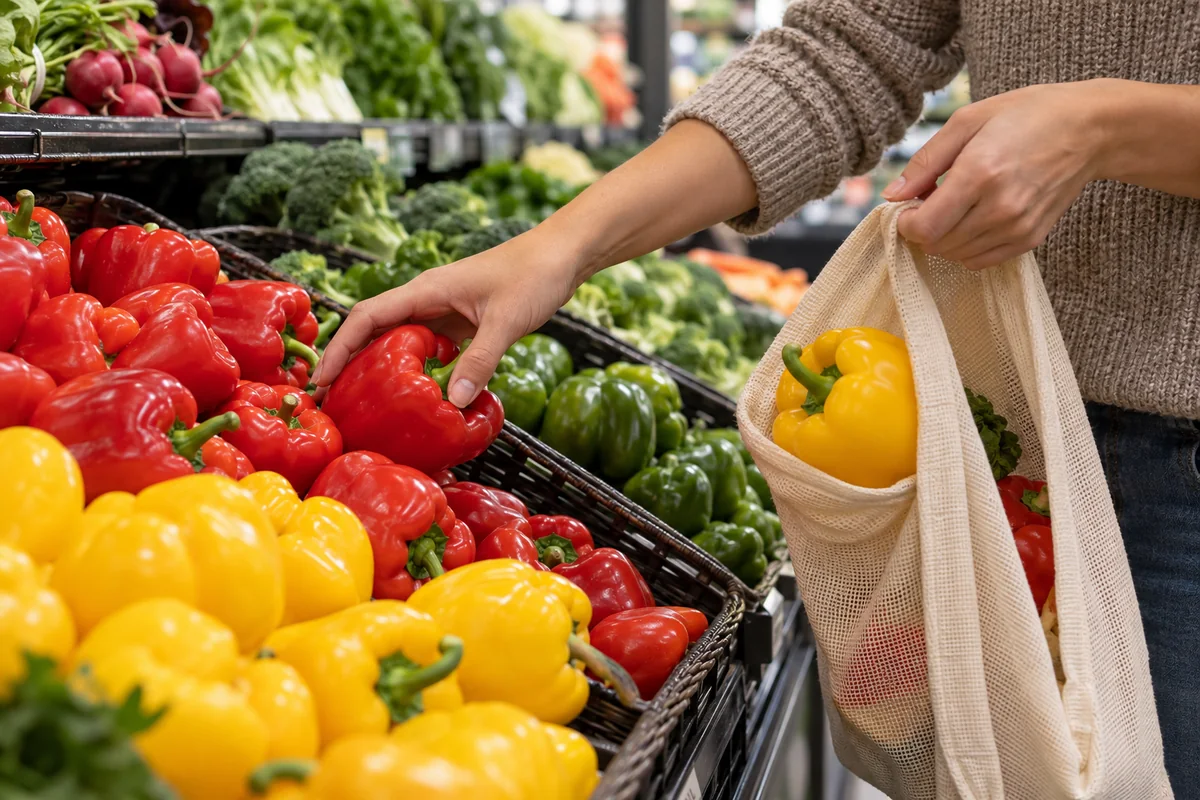
Check store rules before bringing your own containers to a bulk or deli counter. Do not assume every store can accept them. For produce, use a clean reusable produce bag if you already have one and it suits the item; a sturdy fruit or vegetable may also travel loose to the checkout. Wash produce under running water at home before preparing or eating it.
Compare the whole purchase, not just the wrapper
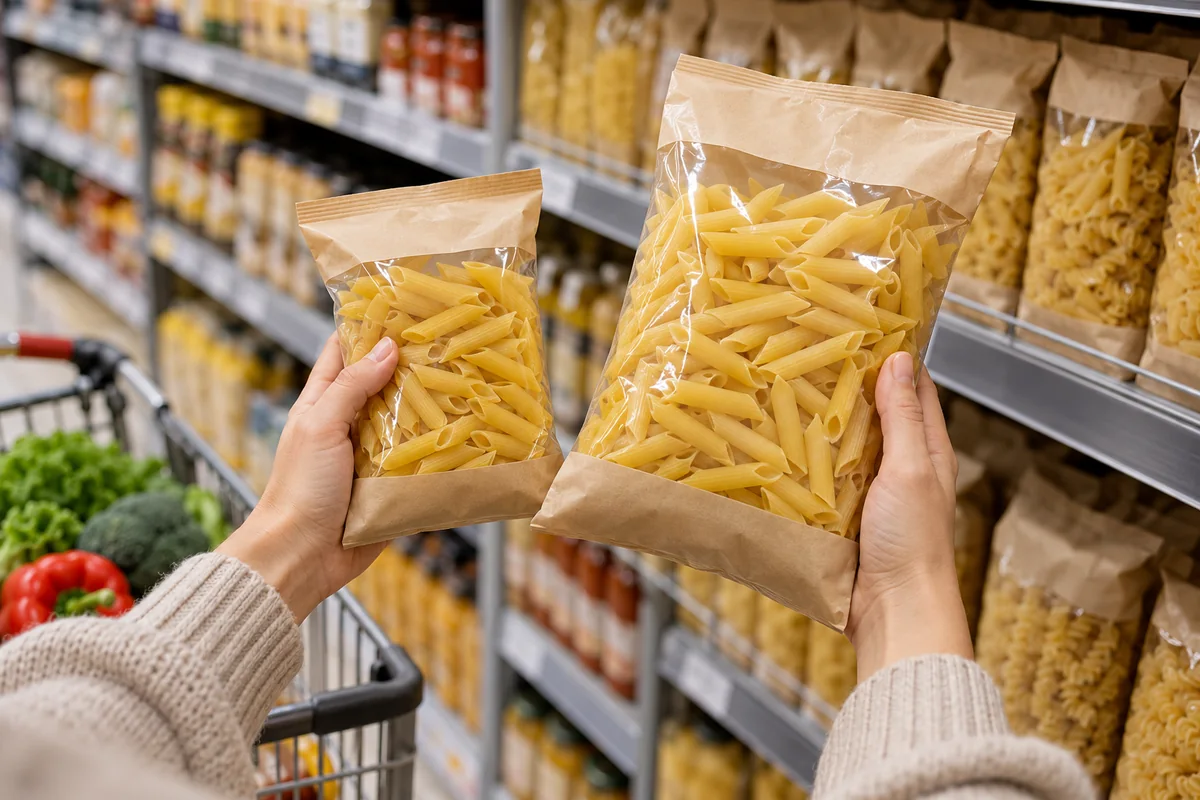
For an item you buy often, compare a few options you can actually use. Ask: How much food is inside? Will I finish it before it spoils? Can I store it properly? Is there an option with less unnecessary packaging at a price I can afford? A large package is not a win if half its contents go bad. A different wrapper is not automatically lower impact across production, transport, use, and disposal.
United Nations Environment Programme reviews of supermarket packaging show why material swaps need a full life-cycle view. Use less packaging as a practical preference, not a promise that paper, glass, or a compostable-looking package is always best. If prices differ, compare the unit price alongside the amount you will realistically finish.
Keep food safety ahead of a plastic-free rule
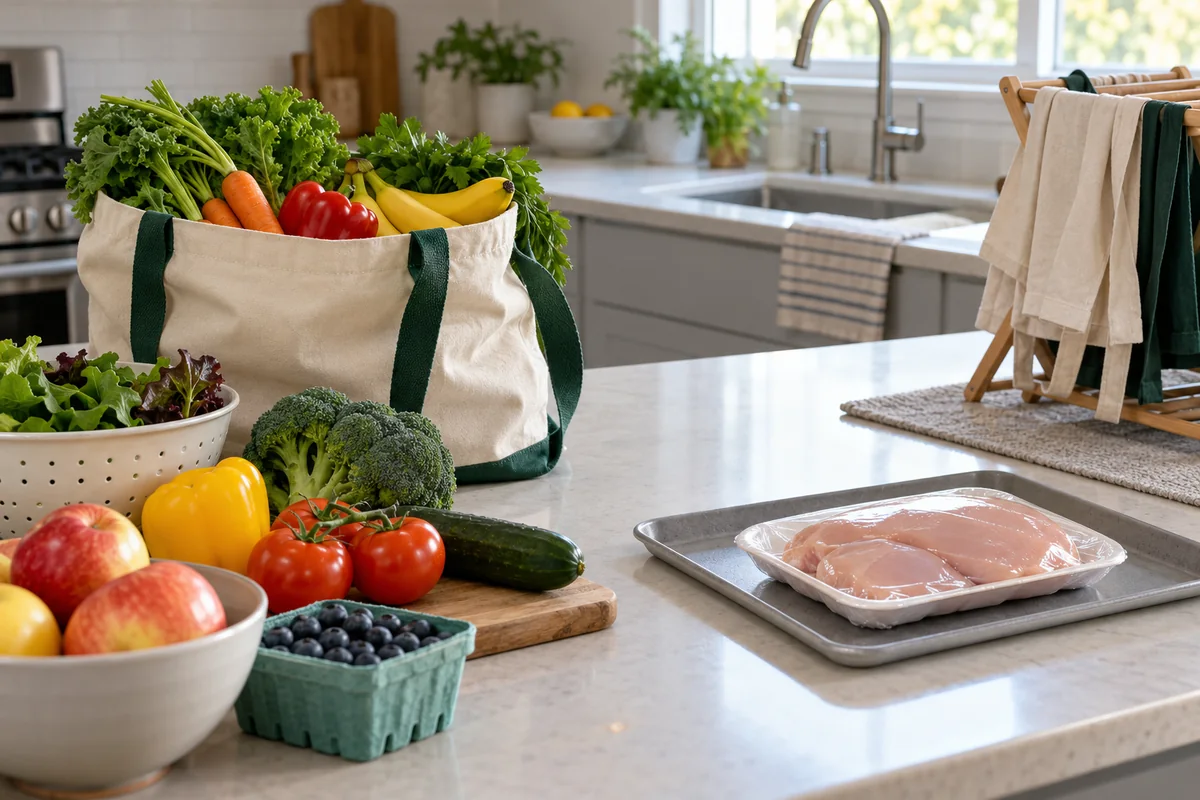
Keep raw meat, poultry, and seafood separate from produce and ready-to-eat foods in the cart and in your bags. Use a leakproof barrier or dedicated washable bag where needed, and clean it after use. Do not put food safety at risk to avoid one piece of packaging. The FDA advises separating produce from raw animal foods during shopping and transport.
Choose chilled or pre-cut produce from refrigerated displays, and get perishables into the refrigerator promptly. Once home, empty and clean reusable bags according to their care labels; our bag-cleaning guide covers common materials. Reuse works best when the bag is maintained and ready for the next trip.
A simple five-minute checkout check
- Did I buy food for meals I will actually make?
- Could I choose the amount I need without an extra produce bag?
- Can I carry these items safely in bags I already own?
- Are raw animal foods separated from ready-to-eat items?
- Will I store perishables promptly when I get home?
You do not need to answer every question perfectly. Pick one repeatable change for the next trip, such as bringing your existing tote or buying loose produce for one meal. Consistency matters more than a single completely package-free basket.
Common questions
Is buying in bulk always less wasteful?
No. A larger pack can use less packaging per serving, but only if you can store and finish the food. Compare the usable amount, price, and shelf life before choosing it.
Should I buy new reusable produce bags?
Start with what you own. For sturdy produce, a separate produce bag may be unnecessary; store rules and checkout methods vary. If you repeatedly need a bag, choose one you will carry, wash, and reuse.
Is paper packaging always better than plastic?
No single material is best in every situation. Environmental impacts depend on the product, how packaging is made and used, and what happens after disposal. Preventing food waste and unnecessary purchases deserves attention alongside packaging.
Sources
- U.S. EPA: What You Can Do to Reduce Plastic Waste — reusable carry bags and minimal packaging.
- U.S. EPA: Sustainable Management of Food Basics — food waste across its life cycle.
- UNEP: Single-use Supermarket Food Packaging and its Alternatives — comparing alternatives through life-cycle assessment.
- U.S. FDA: Selecting and Serving Produce Safely — produce selection and separation from raw animal foods.