A sofa can fit perfectly against a living-room wall and still fail to make it through the front door. Online photos rarely show the narrow hallway, stair landing, or drawer space that decides whether a piece will work in your home. A few measurements before checkout can prevent a costly return and a piece of furniture you cannot use.
The quick check: Measure the place where the furniture will sit, the full route it must travel, and the product in the form it will arrive. Compare all three. If any turn or clearance is uncertain, ask the seller for the packed dimensions and delivery requirements before ordering.
1. Start with the job the furniture needs to do
Write down what is missing from the room. Do you need two comfortable seats, a desk that leaves room to walk, or a dresser whose drawers open fully? This stops an attractive product photo from becoming the whole decision. Check whether you can rearrange or use what you already own before buying a new piece.
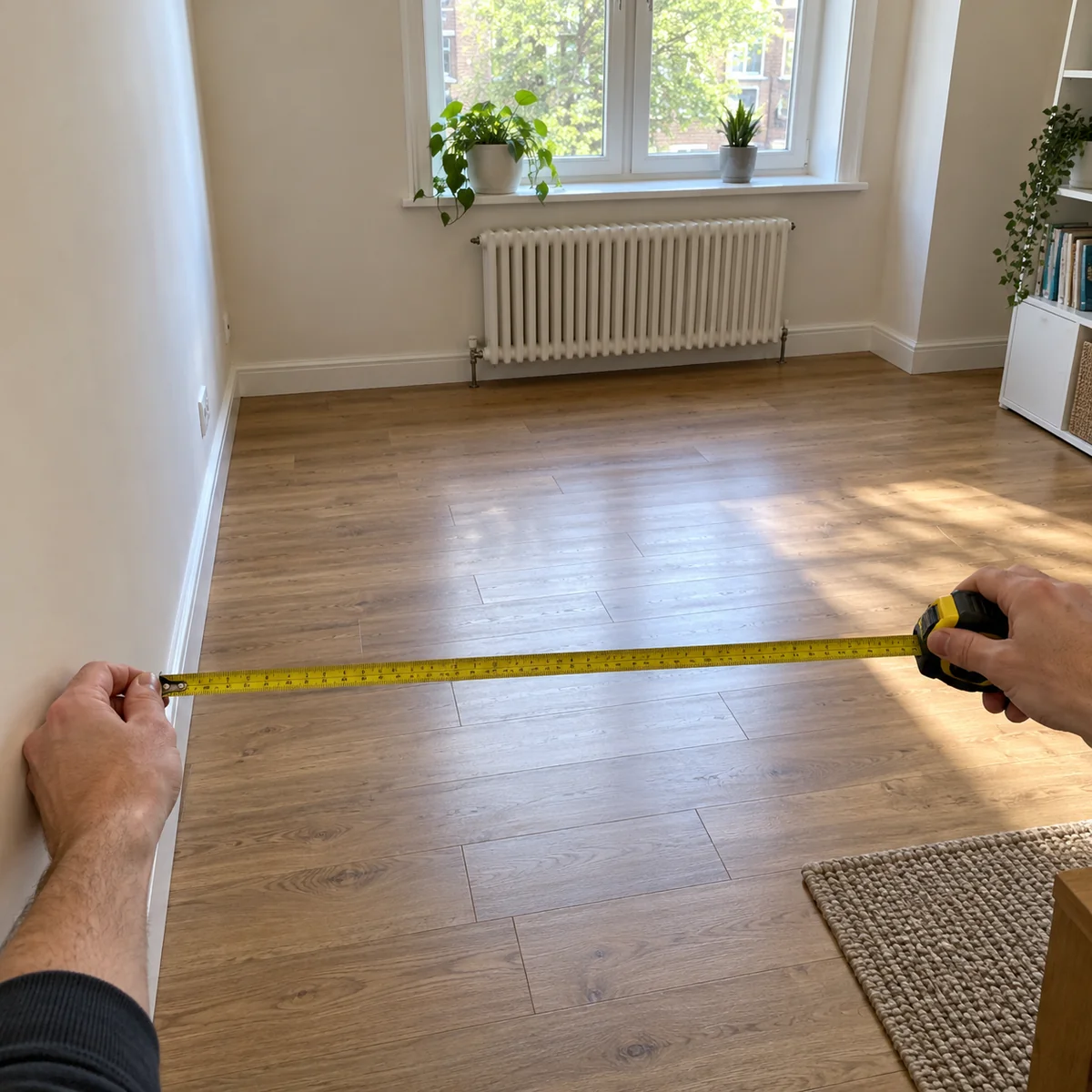
Identify the exact spot where the item would live. Move small objects out of the way, then measure the clear floor area, wall length, and any height limit beneath a window, shelf, or sloping ceiling. Note baseboards, radiators, outlets, vents, and doors that swing into the space. IKEA’s room measurement guide likewise calls attention to protruding obstacles when planning furniture placement.
2. Record the room dimensions in one consistent unit
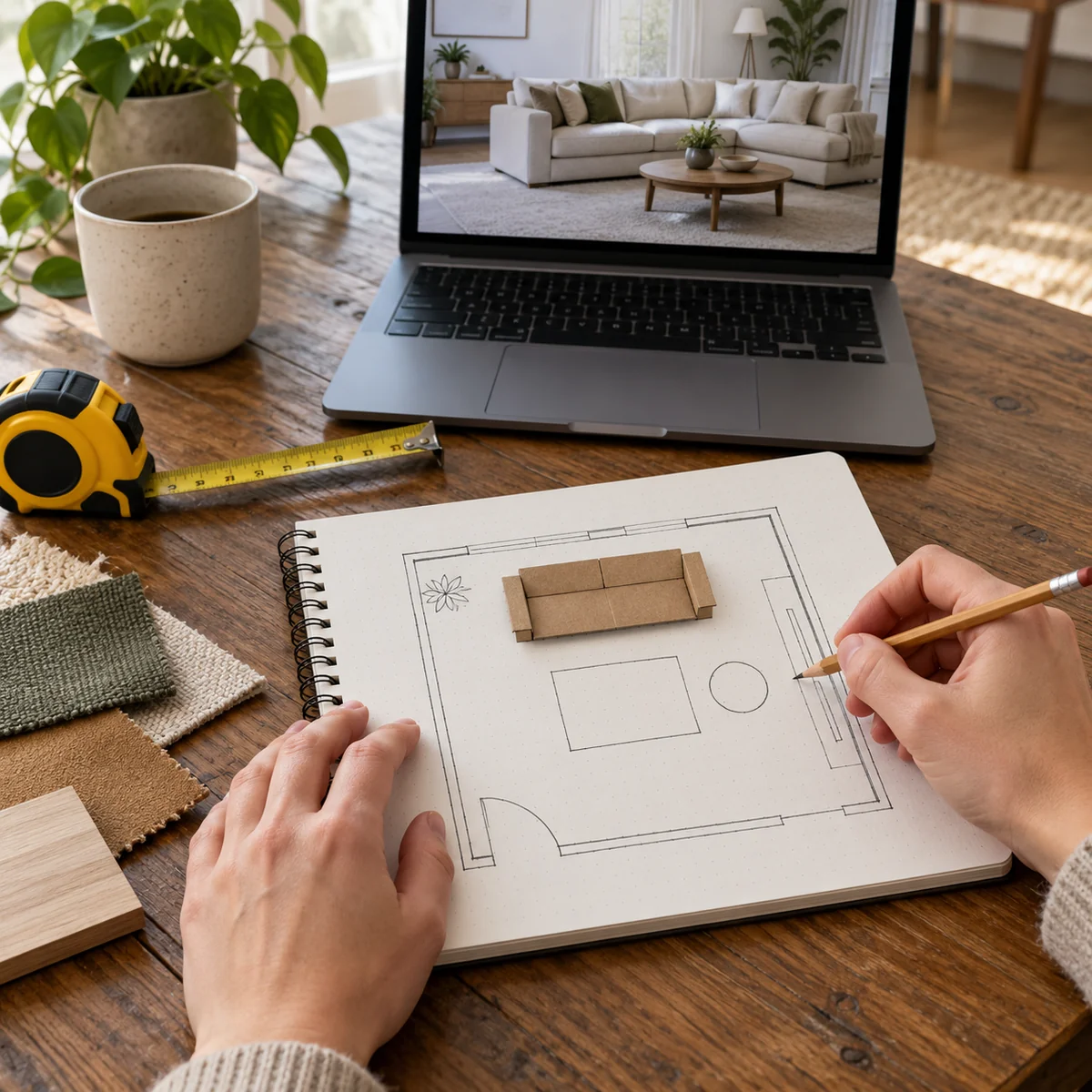
Choose inches or centimeters and use the same unit for every measurement. Record the available width, depth, and height of the placement area. Measure at more than one point if a wall or floor is uneven. A quick sketch with doors and fixed features marked is easier to compare with a product listing than three numbers in a phone note.
Do not make the furniture exactly the same size as the open floor. You still need room to walk, sit down, open drawers, pull out a chair, or reach an outlet. The useful clearance depends on the way you use the room and the people who use it. Check those movements with your existing furniture and record the space that actually feels workable.
3. Trace the whole delivery route
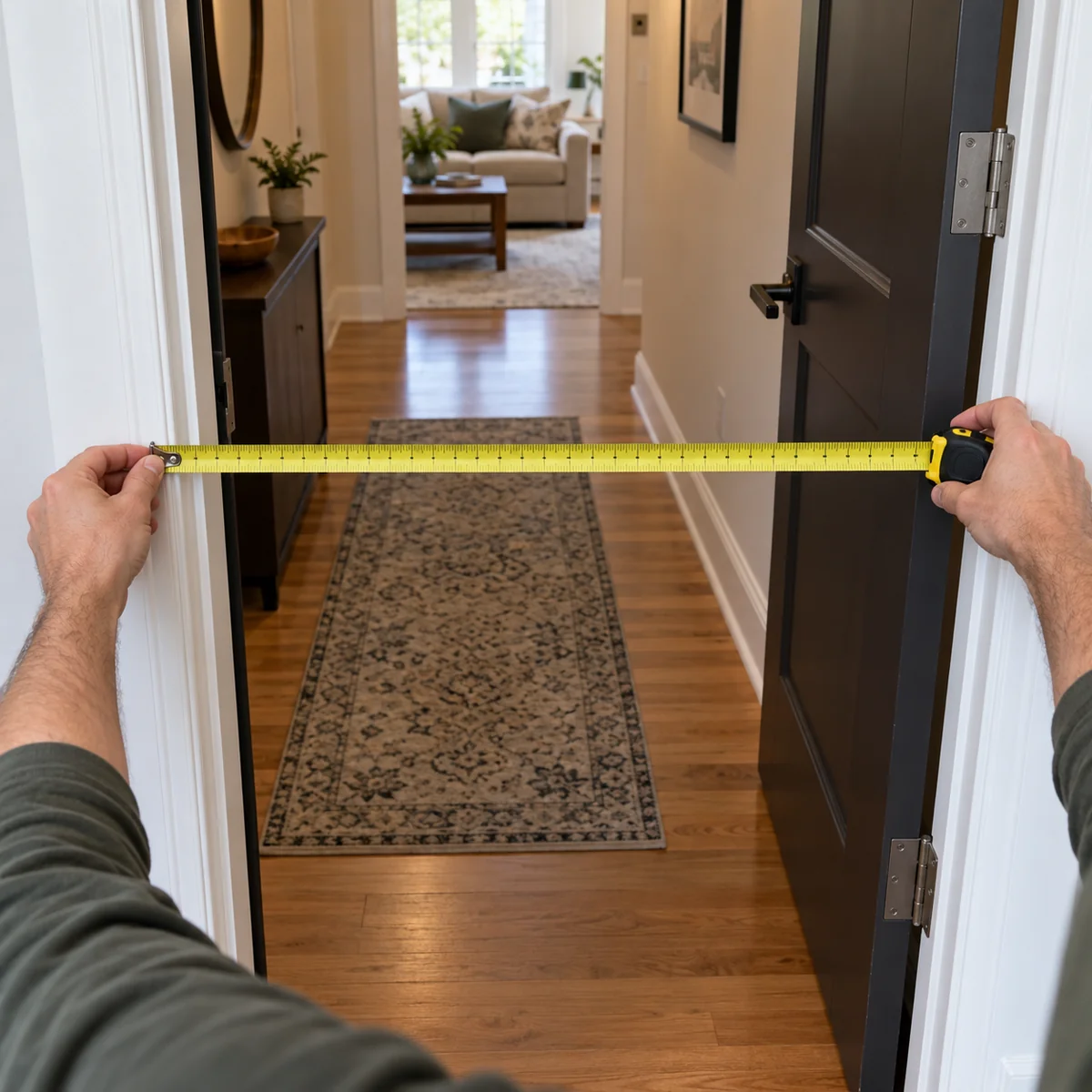
Walk from the building entrance to the final spot. Measure the clear opening of each door, the narrowest hallway, and any elevator or stairwell. For stairs, note low ceilings, handrails, landings, and the space needed to turn a long item. An open door’s handle or a fixed railing can reduce the usable width. Wayfair’s delivery measurement guide specifically recommends checking entry clearance, turns, stair landings, and elevator interiors, not just the width of the destination room.
Write down the tightest point. If a hallway makes a sharp turn, a simple comparison of doorway width with sofa width is not enough. The item may need room to rotate or tilt. Ask the retailer or delivery team about that exact turn when the fit is close; avoid relying on a guessed diagonal calculation.
4. Read both assembled and package dimensions
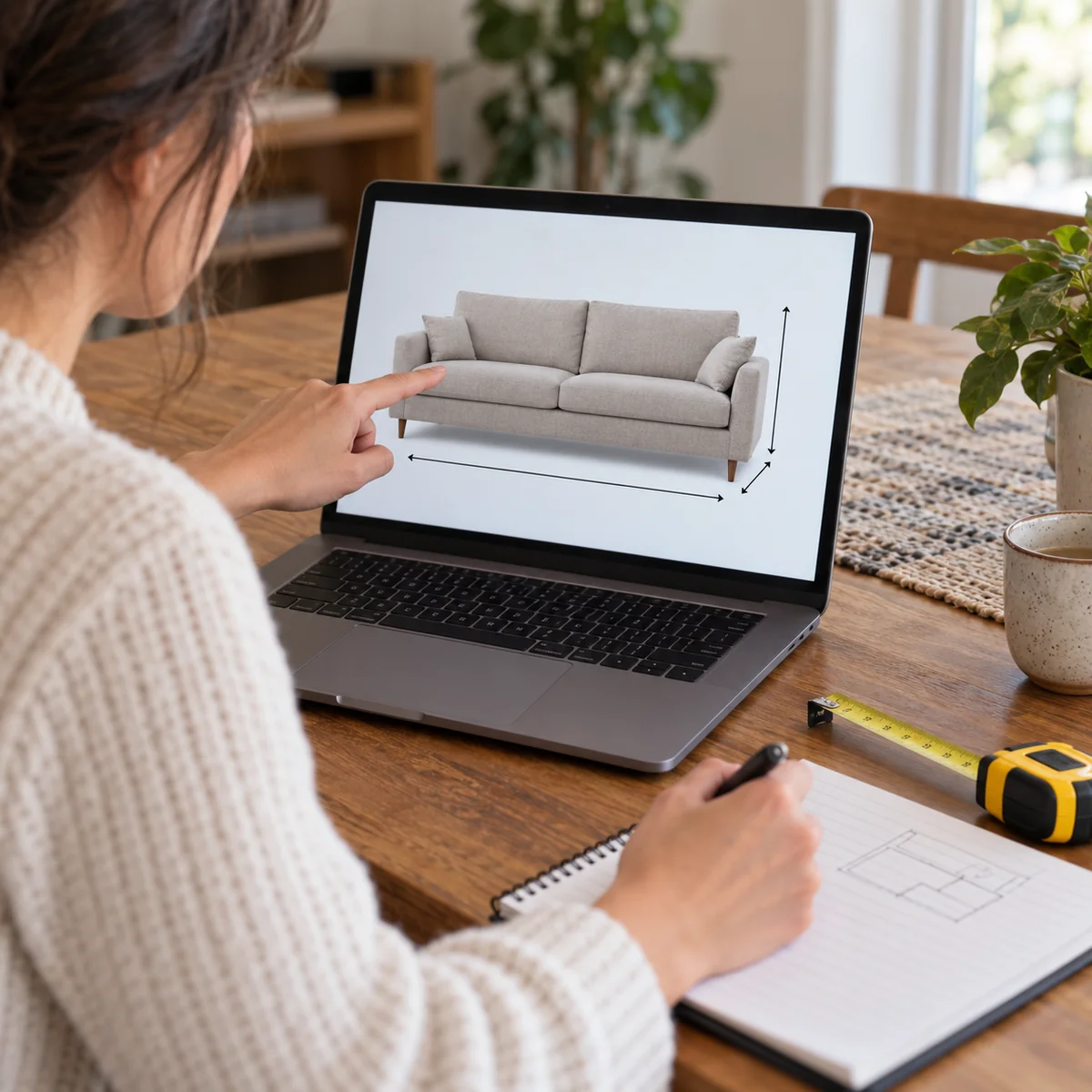
On the product page, look for the furniture’s assembled width, depth, and height and the size of each delivery package. A flat-pack table may arrive in long boxes, while an upholstered chair may arrive nearly full size. Count the packages and note the weight, especially if you must carry them upstairs. IKEA advises checking package size against building entrances, corridors, stairs, and elevators for large items.
For a sofa, confirm whether the legs, cushions, or sections can be removed and whether those parts will arrive attached. For a bookcase, confirm whether it must be assembled upright or can be built on the floor and lifted into position. If a listing omits package dimensions, ask for them. The finished object’s dimensions alone may not predict delivery.
5. Mark the footprint before you buy
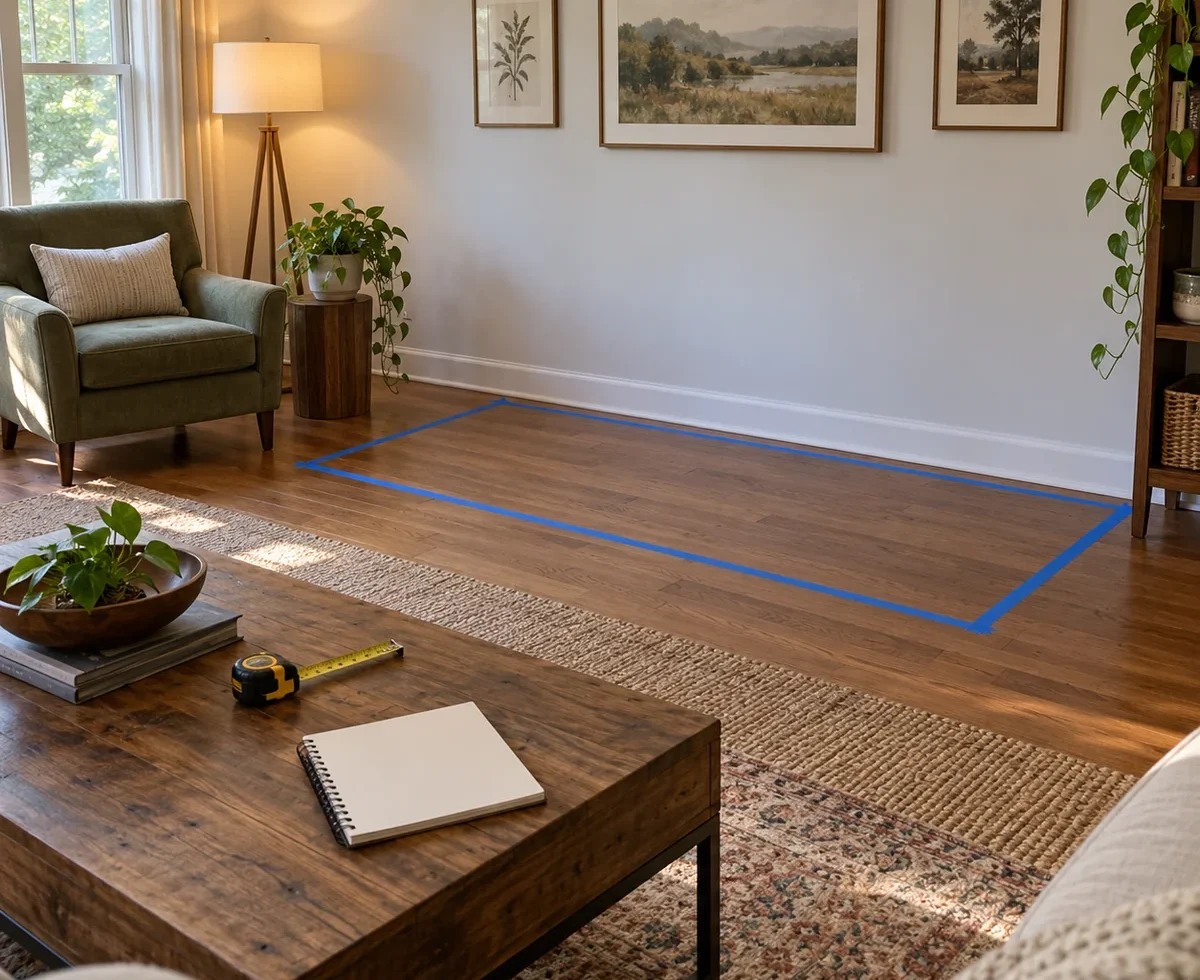
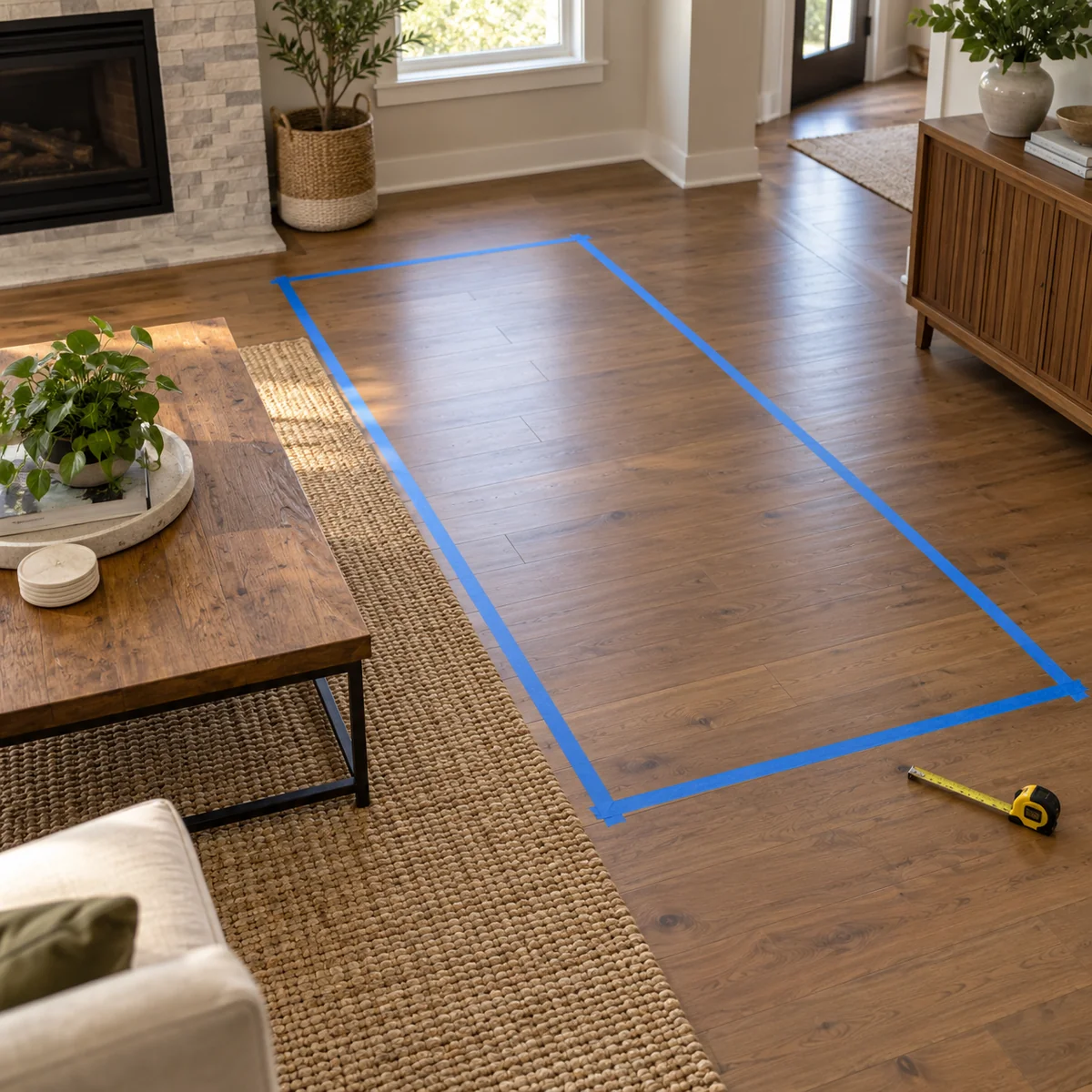
Use removable painter’s tape, if safe for your floor, to mark the item’s width and depth where it would stand. A piece of cardboard or an existing rug can work too. Walk around it. Open nearby doors and drawers. Try sitting in the surrounding chairs. You may find that a table technically fits but interrupts the path you use every day.
For tall furniture, hold a tape measure up to its planned height or mark the height on paper against the wall without damaging the finish. Check sightlines, windows, shelves, and ceiling clearance. If the piece needs wall anchoring, account for the manufacturer’s installation instructions and the wall type before ordering.
6. Resolve the uncertainties before checkout
Put the room sketch, narrowest route measurements, assembled size, and package sizes next to one another. A measurement that is only barely smaller than an opening deserves a closer check because handles, trim, packaging, and turning space matter. Ask the seller whether delivery includes carrying the item to your room, and confirm any building access limits with the delivery service.
Read the return and failed-delivery terms for the particular store and item before paying. The terms can differ for oversized or assembled furniture. Also check photos and reviews for real-world scale, but use the published dimensions and answers from the seller for the final fit decision. Our guide to reading online reviews can help you separate useful detail from vague praise. If you are buying used, the secondhand furniture checklist covers condition questions as well.
Common questions
Is measuring the room enough?
No. Measure the route from the delivery entrance, including doors, hallways, stairs, and elevators. The piece also needs room to turn at tight corners.
Should I compare the package or the assembled size?
Both. The package must reach the room, and the assembled furniture must fit and function once it is there.
What if a listing has no package dimensions?
Ask the seller for each package’s dimensions and whether major parts detach. Hold the order until you can compare that information with your tightest access point.
Sources
- Wayfair: How to Measure for Furniture Delivery — access points, turns, stairs, and elevators.
- IKEA: What to Check When Ordering Large Products — package size and entryway measurements.
- IKEA: Measurement Guide — recording room obstacles.