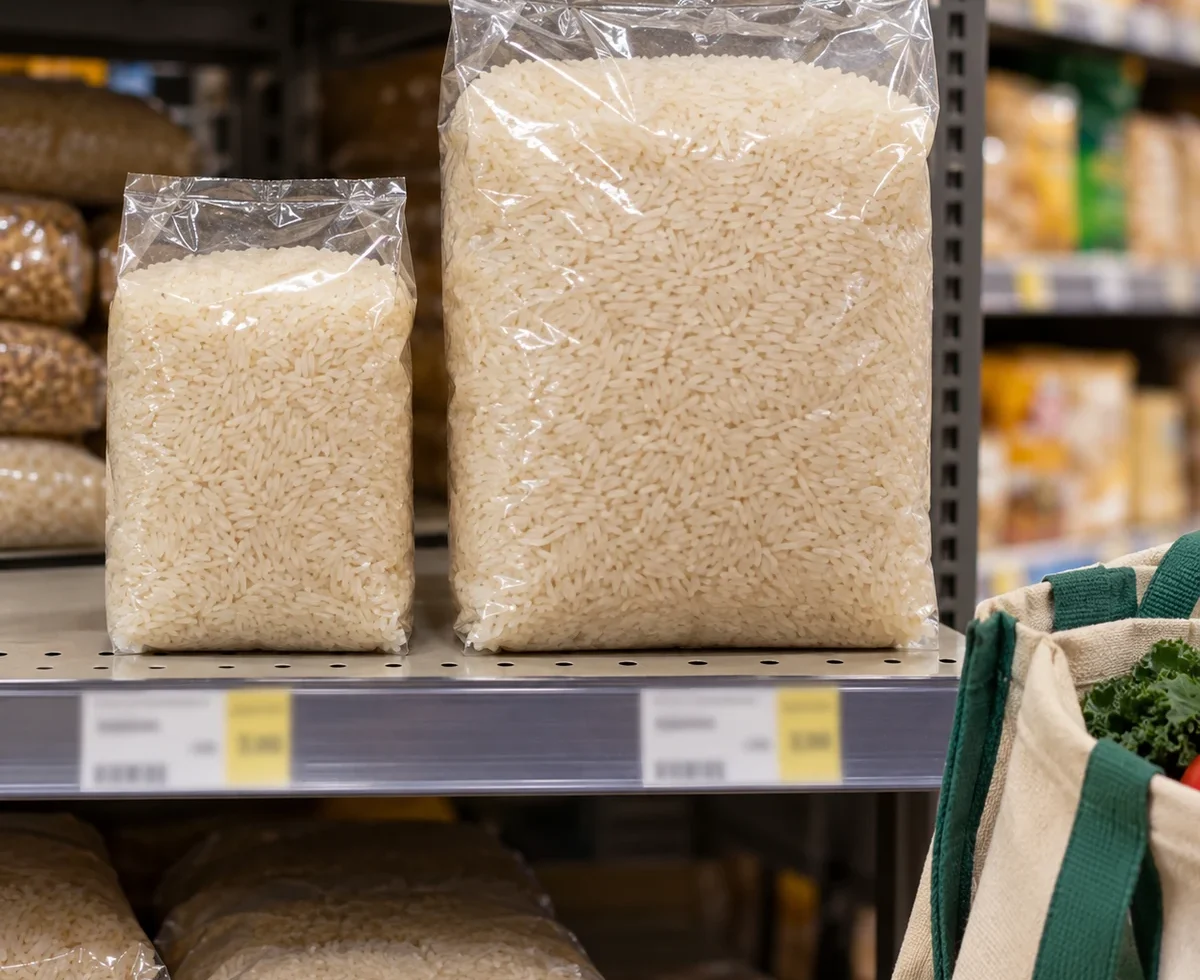
The bigger package often has a lower price per ounce. That does not automatically make it the cheaper purchase for your household. If half of it spoils or sits unused, the shelf label was comparing a quantity you never consumed. A useful shopping decision needs two checks: the price per equal unit and the amount you can realistically use.
The quick method: compare like products using the same unit, check the total you must pay today, then ask whether you can use the package before its quality declines. A bulk deal only saves money when the usable amount and your available storage make sense.
Check your kitchen before comparing prices
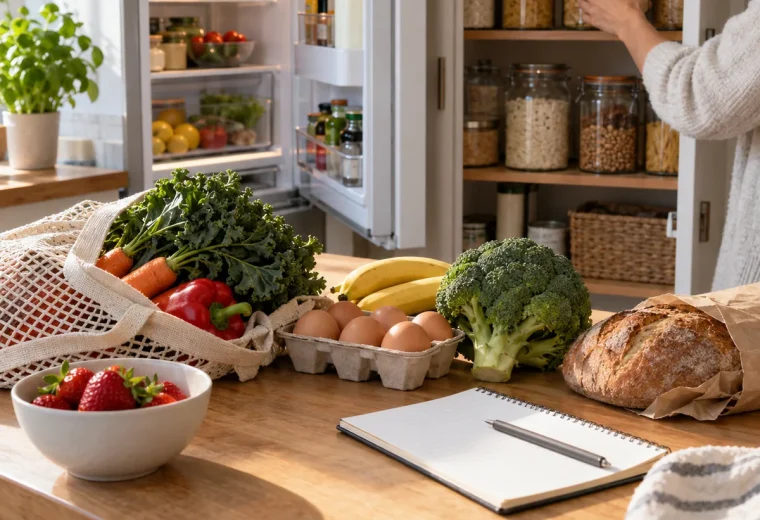
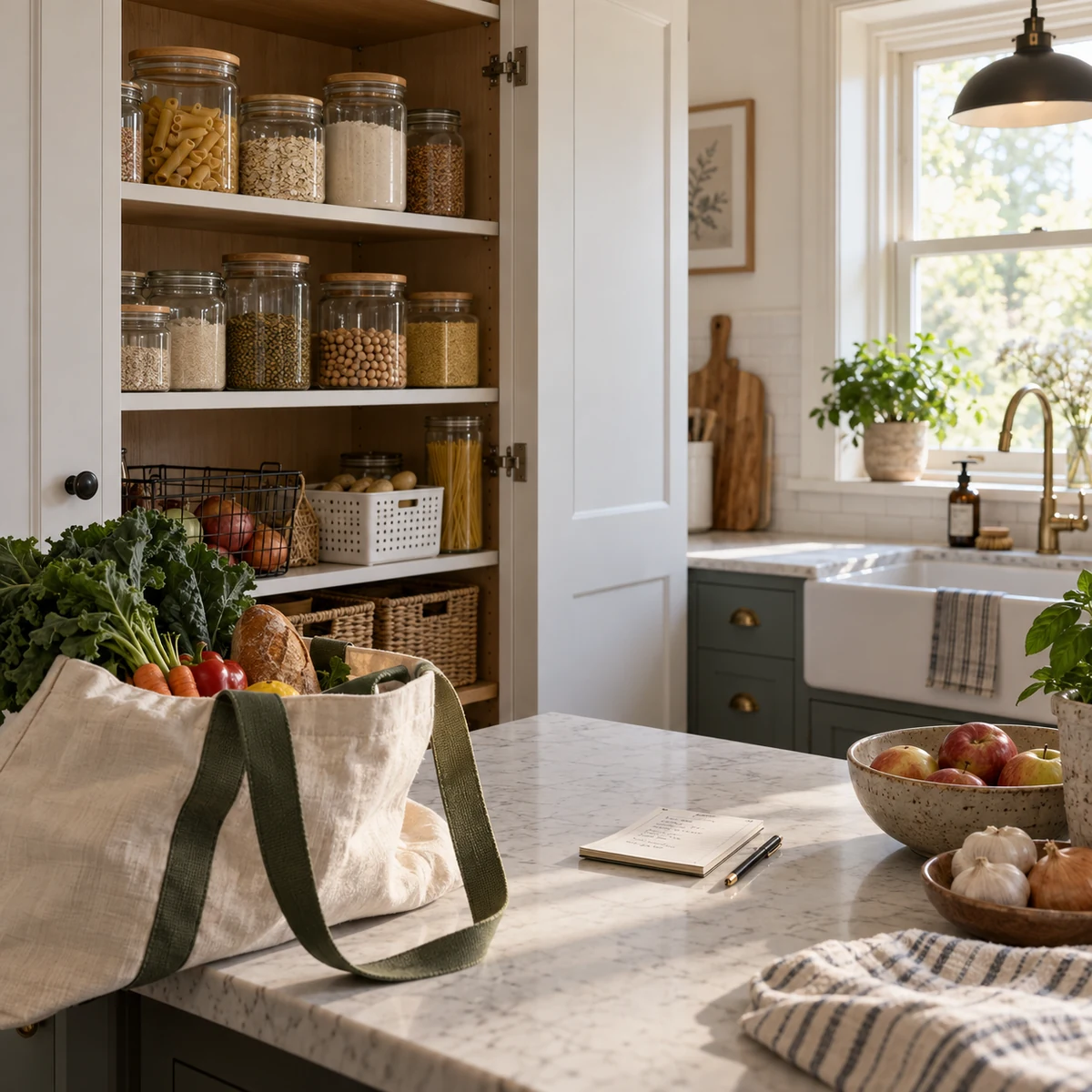
Look at the pantry, refrigerator, and freezer before shopping. Note what is already open, what needs using soon, and how many meals you expect to make at home. Add quantities to your list: “two lunches of salad greens” is more useful than “greens.” The U.S. Environmental Protection Agency recommends shopping from a meal plan and including quantities so you do not overbuy.
This quick check also keeps a lower unit price from persuading you to buy a second jar while the first is still full. If you regularly lose track of what you own, our pantry organization guide offers a simple use-first system.
Find the price per equal unit
A shelf or online listing may show both the package price and a price per ounce, pound, 100 grams, kilogram, fluid ounce, or liter. The National Institute of Standards and Technology (NIST) describes unit pricing as a tool for comparing value across different pack sizes. Compare the same kind of measure: price per ounce with price per ounce, or price per kilogram with price per kilogram. Do not compare a weight unit with a volume unit as if they were interchangeable.
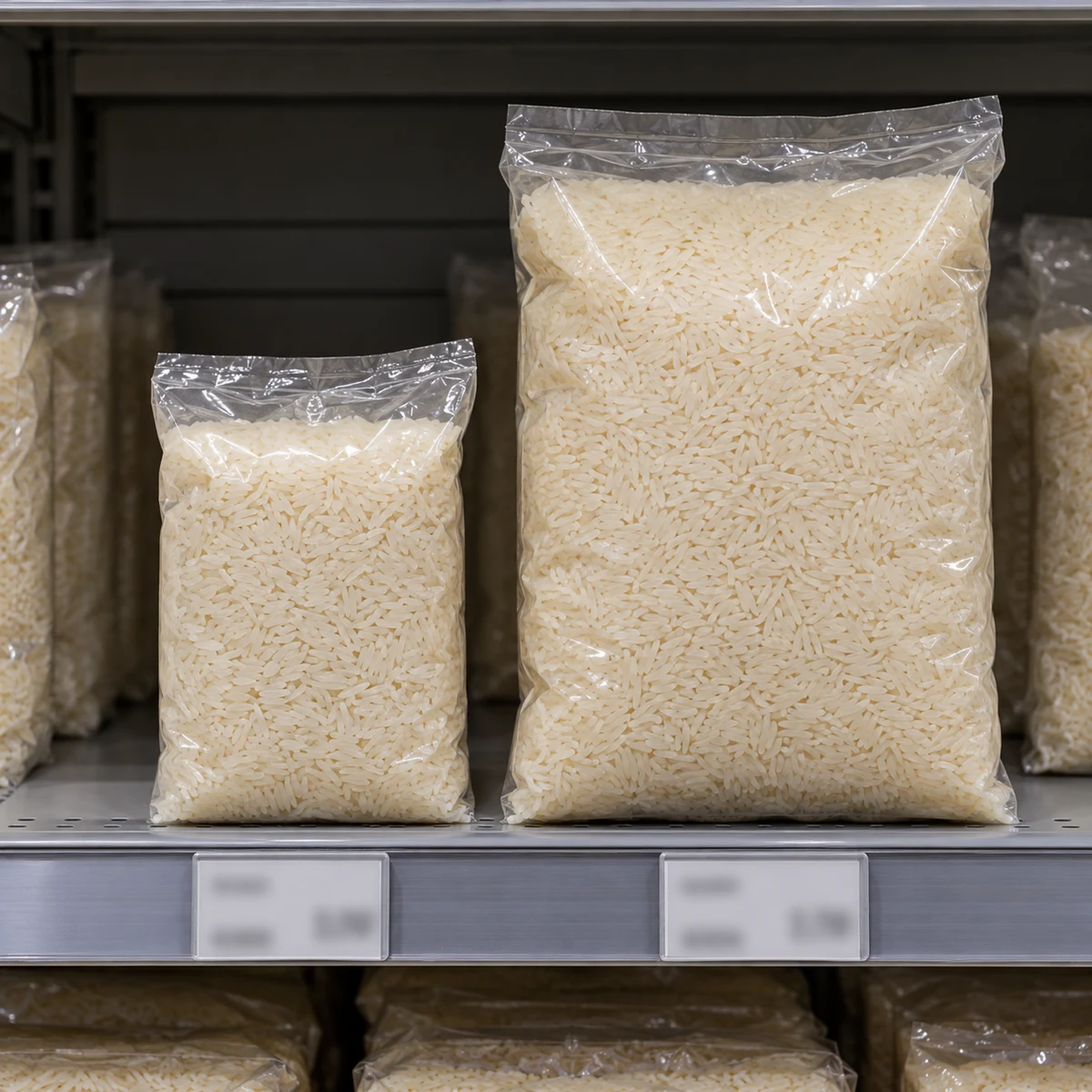
If the shelf labels use different units or one is missing, divide the package price by its stated quantity. For example, a $3.00 12-ounce pack costs $0.25 per ounce. A $4.50 20-ounce pack costs $0.225 per ounce, about $0.23 per ounce. The larger pack has the lower unit price, but it also costs $1.50 more at checkout and contains eight more ounces you must use or store.
Ask what the unused portion will cost you
Imagine buying the 20-ounce pack above and using only 12 ounces before the rest spoils. You paid $4.50 for 12 usable ounces: an effective $0.375 per ounce. The smaller $3.00 pack would have cost $0.25 per usable ounce if you used it all. This is a hypothetical example, not a prediction about a particular food, but it shows why the lowest shelf unit price can lose its advantage.
For shelf-stable goods you use often, the larger pack may still be sensible. For fresh foods, ask when you will eat the extra portions and whether you have a realistic freezing or cooking plan. The EPA cautions that large-quantity and buy-one-get-one offers only save money if you use all the food before it spoils.
When a bigger package is worth it
- You use it regularly: it is already part of meals you make, rather than a new habit you hope to start.
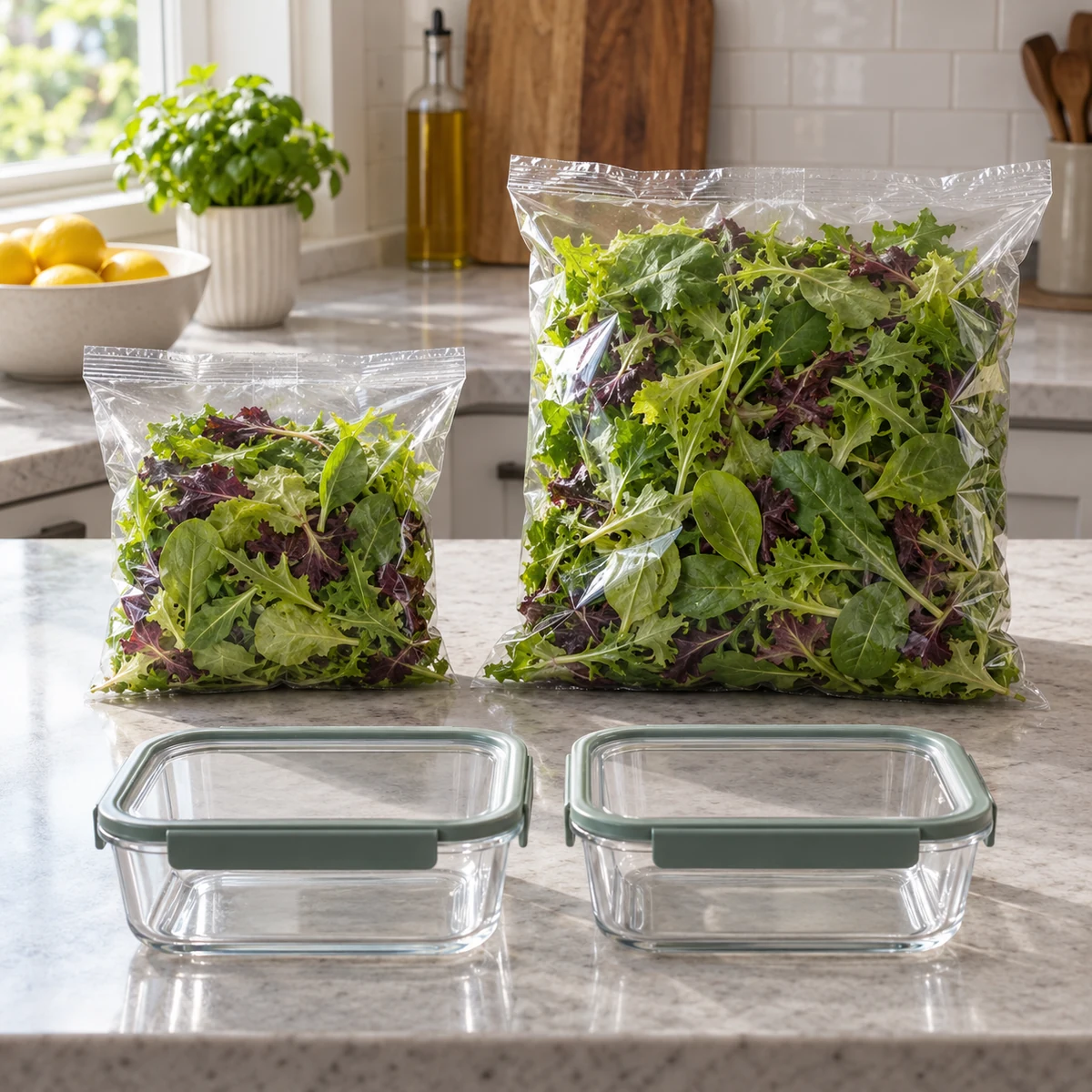
- You can store it well: the package fits a dry pantry, refrigerator, or freezer without crowding food that needs using first.
- The total cost fits today: a lower unit price does not help if the larger checkout amount strains your budget.
- You have a plan for all of it: divide a freezable item into practical portions, or share an unopened multi-pack with someone who wants it.
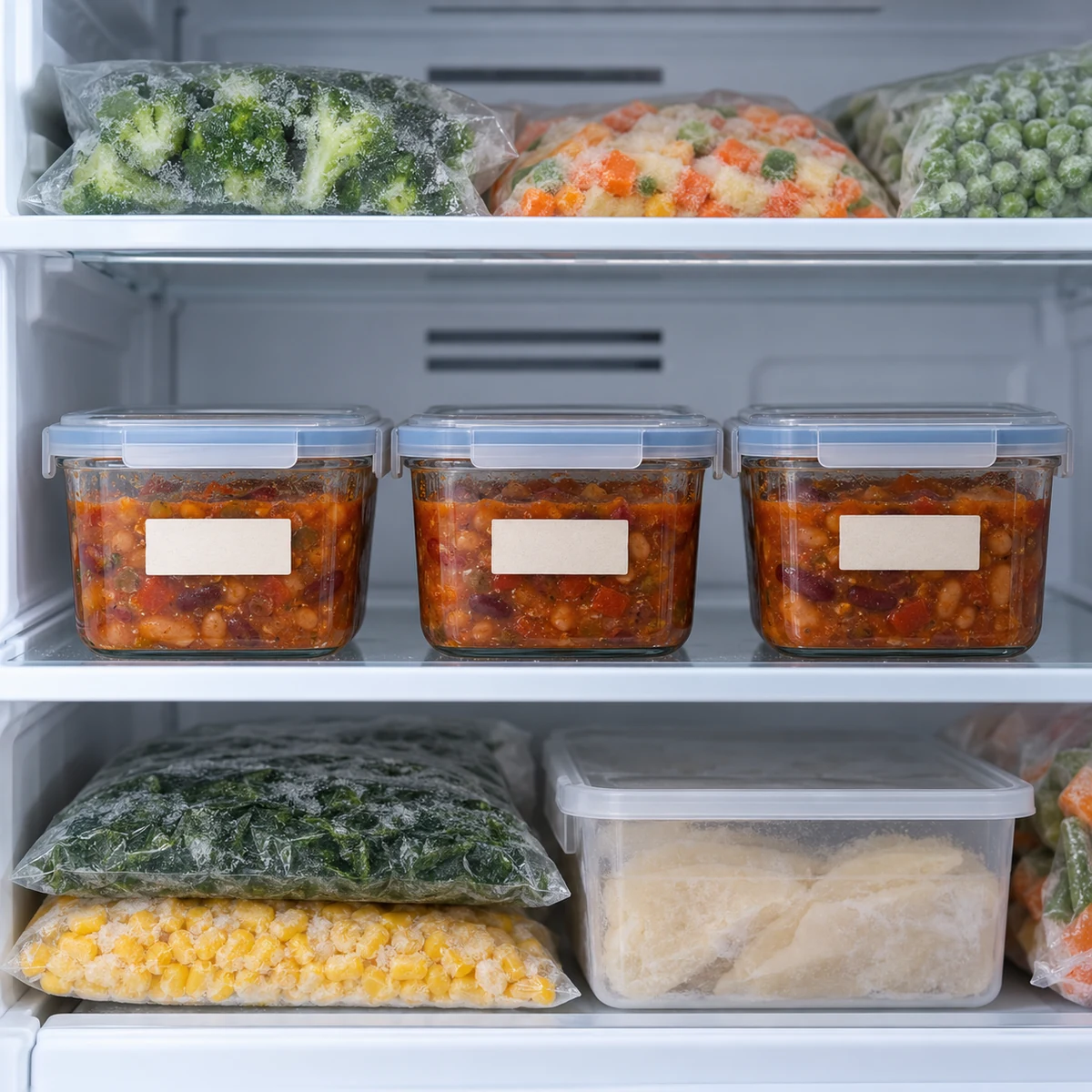
For freezer-bound purchases, label portions with what they are and when you stored them. Our freezer guide explains how to keep those portions visible. Do not buy a large refrigerated pack on the assumption that every food freezes equally well; check the specific product first.
When the smaller package wins
Choose the smaller pack when you need only a little, the ingredient is new to your household, storage is tight, or the food is likely to spoil before you can use the rest. This is especially true for delicate produce, fresh herbs, and unfamiliar sauces. A small pack with a higher unit price can still have the lower total cost and less waste.
A bulk bin can also let you buy an exact amount instead of a large sealed pack, where the store offers one and you can transport the food hygienically. Check the price and follow the store’s container rules. The EPA notes that buying the amount you need from bulk bins can reduce both excess food and packaging.
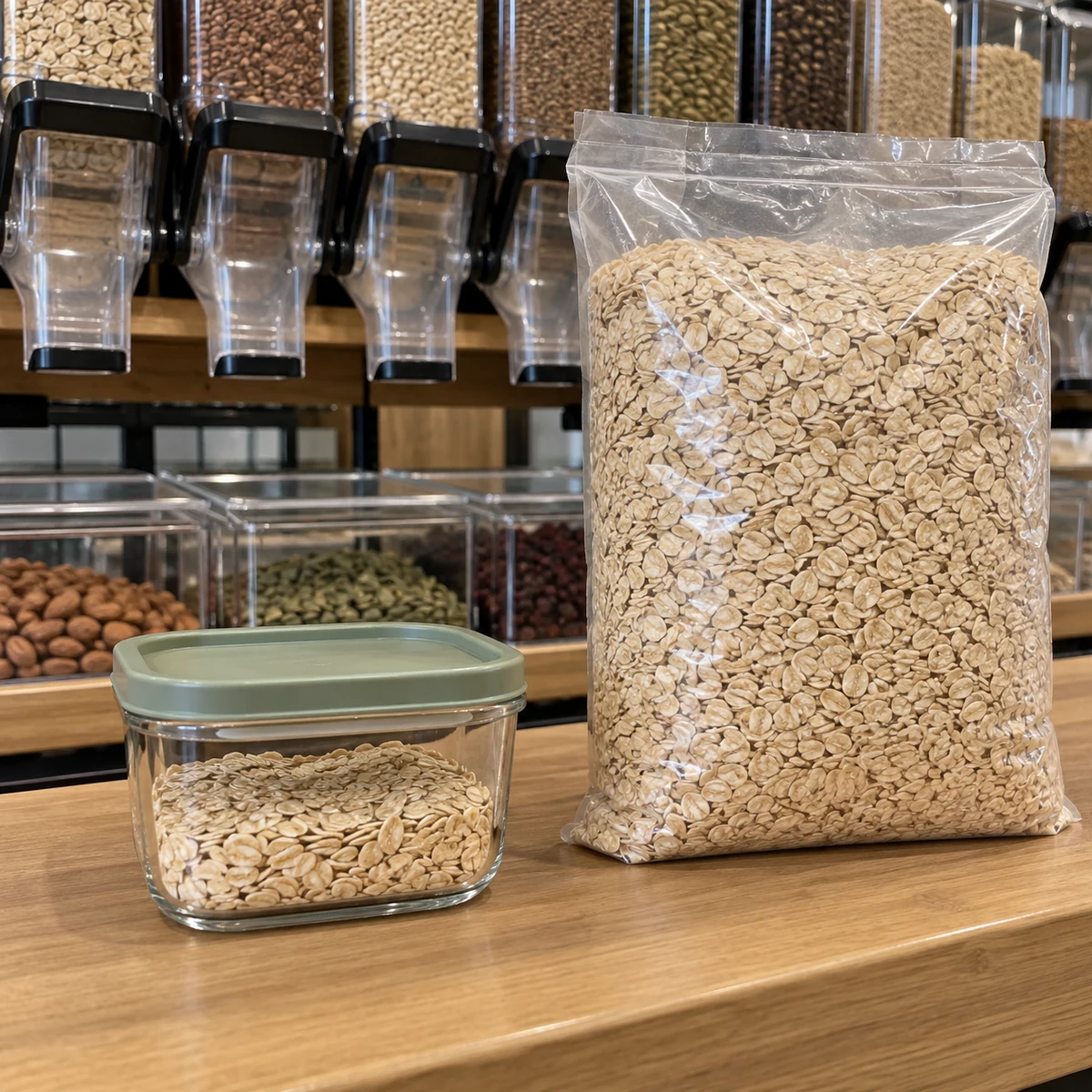
A 20-second decision at the shelf
- Same item? Compare products that serve the same purpose and check the actual quantity.
- Same unit? Match weight with weight, volume with volume, or count with count.
- Total price? Note what leaves your wallet today, not just the displayed unit price.
- Usable amount? Name the meals, uses, or storage plan for the extra quantity.
- Still worthwhile? If the answer is unclear, buy the amount you know you need.
Unit prices help you see through pack-size changes, but they do not replace judgment about quality, ingredients, and how much you will use. For a broader pause before an online purchase, see our impulse-buying guide.
Questions people ask
Is the lowest unit price always the best deal?
No. It compares the package price per unit, not the amount you will use. Check the total price, shelf life, and storage space.
How do I compare ounces with grams?
Convert both packages to one unit before dividing. One ounce is about 28.35 grams. Many store labels already show a common unit, which is quicker and less error-prone.
Do “buy one, get one” offers save money?
Only if you can use both items, the final price is favorable, and buying them fits your budget. Check the offer terms and compare the effective price per unit.
Sources
- NIST: Unit Pricing Guide — comparing prices using consistent units of measure.
- U.S. Environmental Protection Agency: Preventing Wasted Food at Home — shopping quantities, bulk deals, and buying the amount needed.