A reusable grocery bag is easy to remember at the store and easy to forget after you unpack it. Crumbs, produce moisture, and spills can stay in the seams until the next trip. A short cleaning routine keeps a useful bag in service and helps prevent one food package from contaminating another.
The quick answer: Empty and inspect each bag after shopping. Wash washable fabric bags with soap and water according to their care labels; clean coated or insulated bags as their makers direct. Rinse away soap where appropriate and let every bag dry fully before folding it. Keep raw meat, poultry, and seafood packages separate from produce and ready-to-eat food during the next trip.
Empty the bag and check its material
Take everything out, including receipts and loose produce leaves. Turn out accessible corners and shake crumbs into the bin. Check for damp patches, stains, torn seams, and a care label. A cotton tote, a laminated bag, and an insulated cooler bag may need different cleaning methods. Do not assume that a bag with a stiff insert or insulation can go through the washing machine.
If raw food juices leaked into a bag, set it aside for prompt cleaning. If you cannot thoroughly clean the material or it is damaged, do not put ready-to-eat food in it. The U.S. Department of Agriculture advises washing reusable grocery bags after each use with hot water and soap to help prevent germ spread.
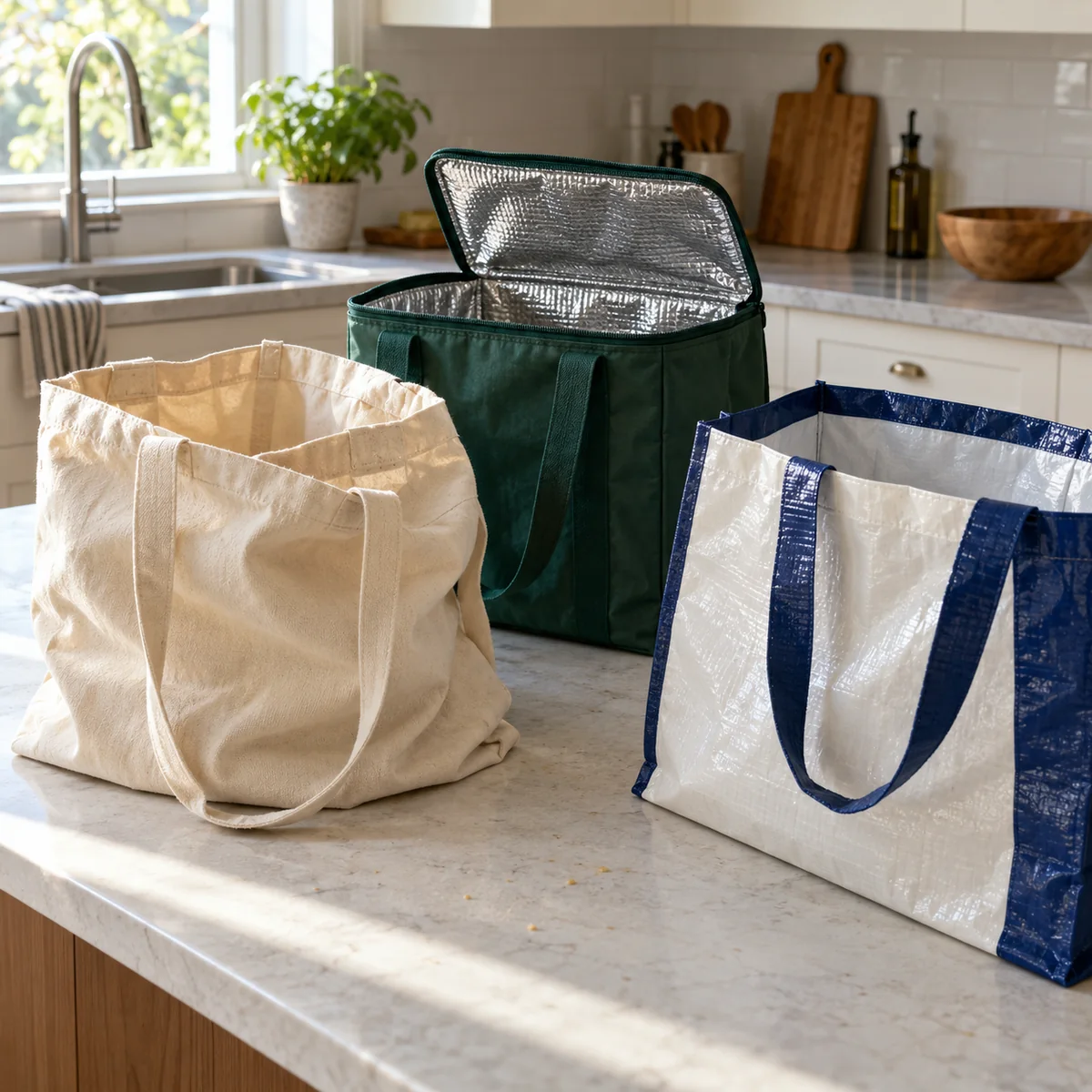
Wash a washable fabric tote
Follow the care label for a machine-washable cotton or canvas tote. If hand washing is required, use warm soapy water and work over the bottom, handles, and seams where grime collects. Rinse thoroughly. Use the hottest water the bag’s care instructions safely permit rather than guessing that every fabric or printed bag can tolerate the same cycle.
Do not wash groceries themselves with soap. This step is for the bag, after the food has been unpacked. Keep a washable bag away from clean food preparation surfaces while it is still dirty or wet.
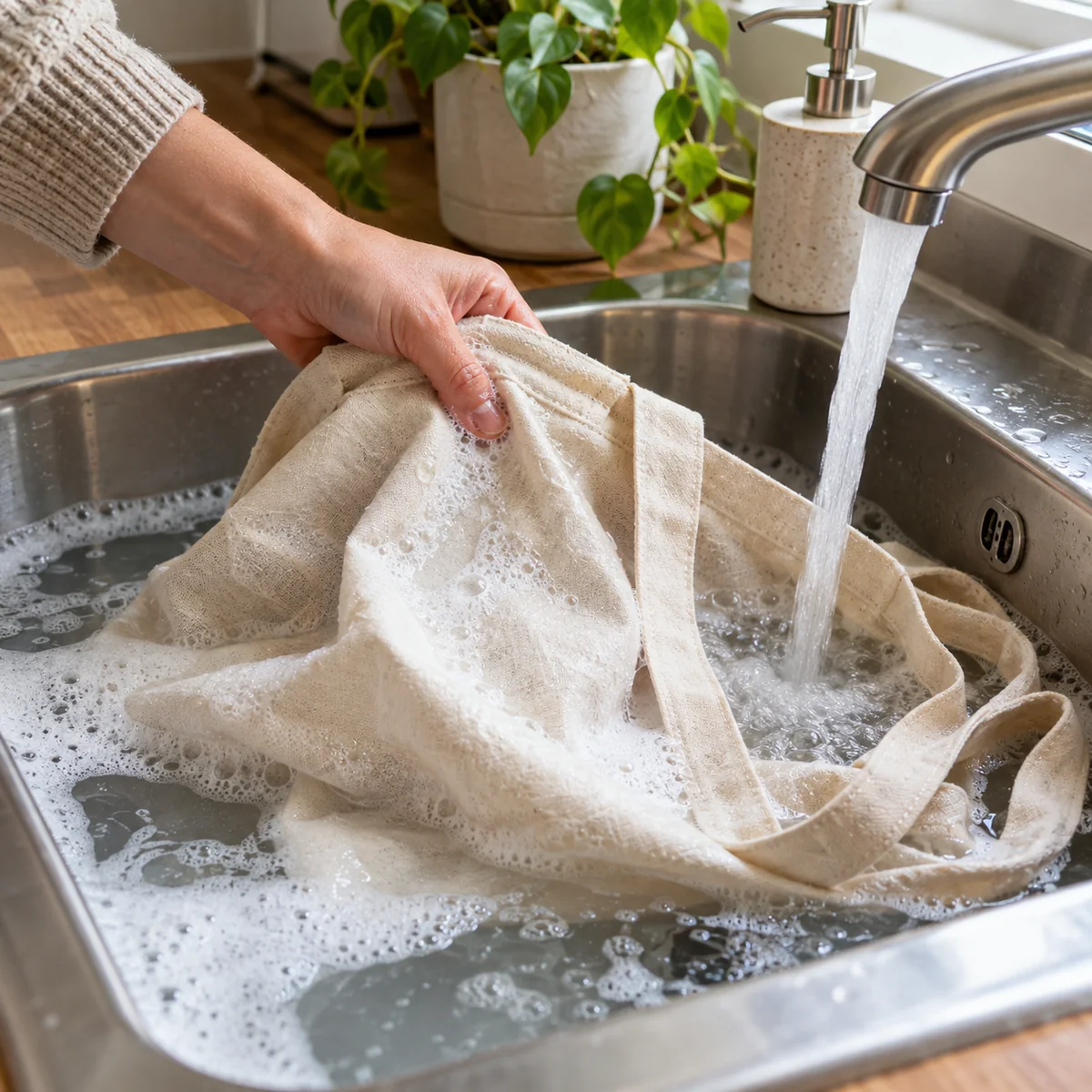
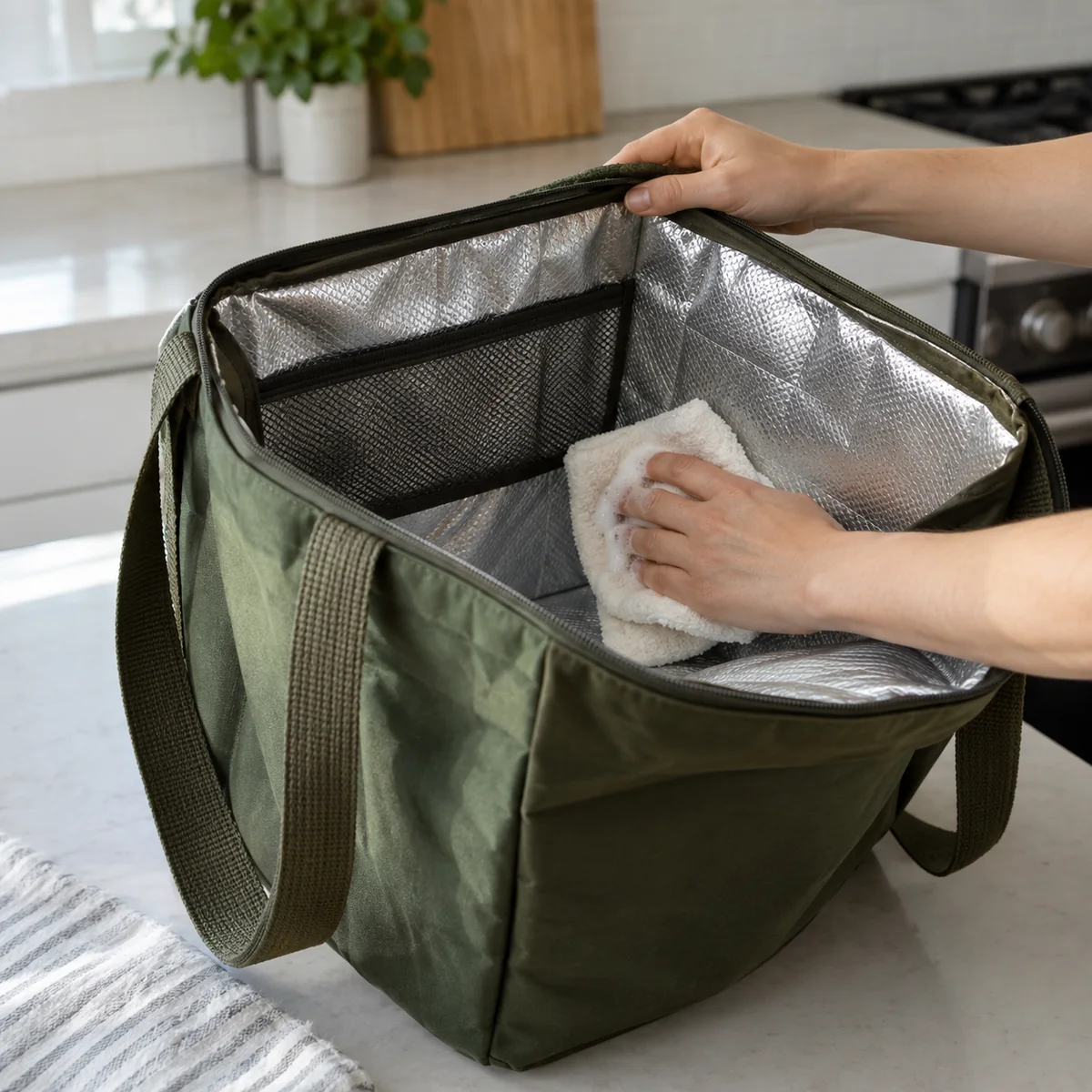
Wipe coated and insulated bags carefully
For a bag that should not be submerged or machine washed, use the maker’s cleaning instructions. Typically, you can remove loose debris, wipe reachable interior and exterior surfaces with a soft cloth and soapy water, and follow with a clean damp cloth. Keep water out of foam layers, cardboard stiffeners, and openings that cannot dry. If a liner is removable, clean it only as its label permits.
Pay attention to handles and the bottom, which touch carts, counters, and car trunks. A bag used for a package that leaked needs more than a quick dry wipe. If the lining stays damp or cannot be cleaned, use a different bag for groceries.
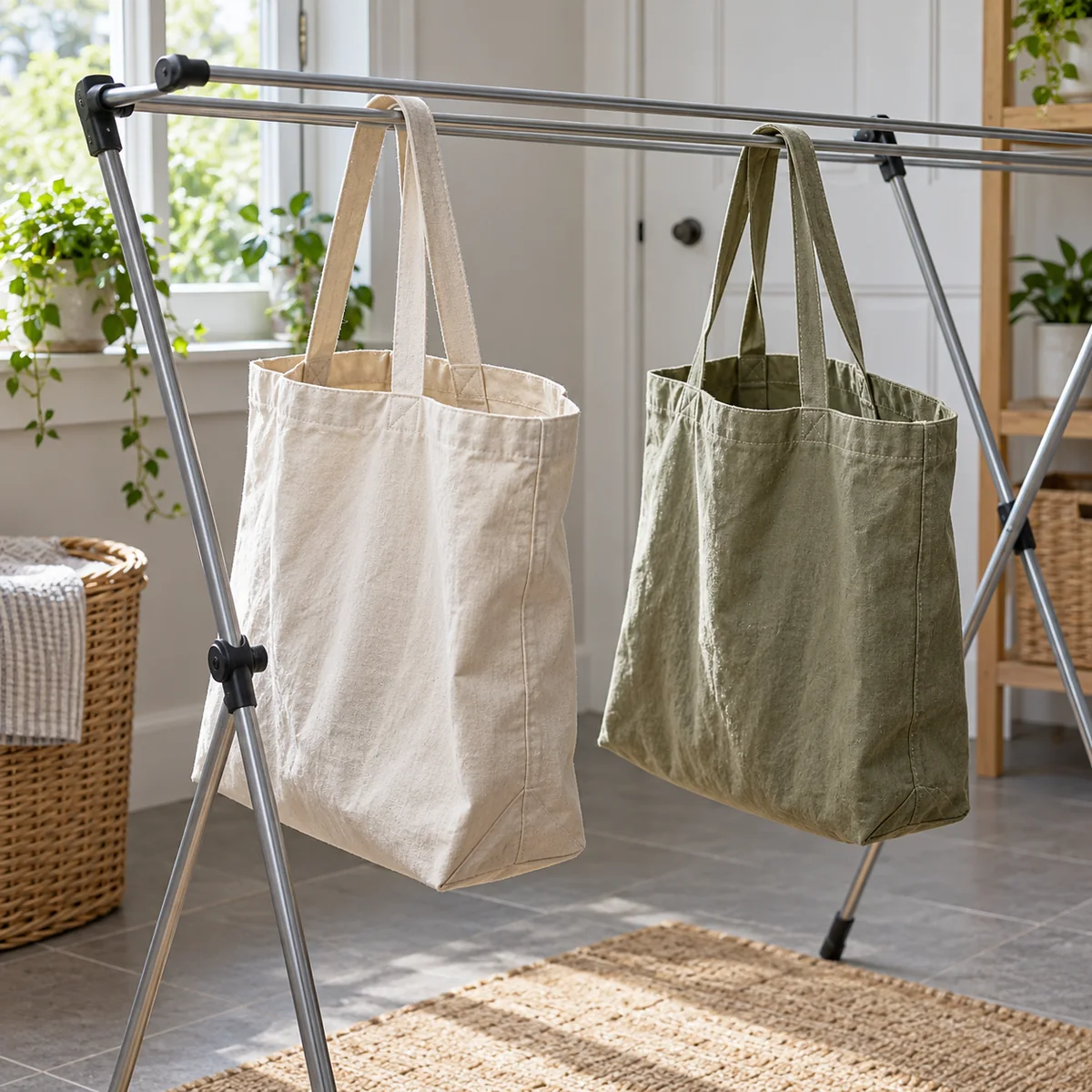
Dry completely before folding and storing
Open the bag wide and let air reach the inside, bottom corners, and handles. Hang washable totes where they can drain and dry; prop coated bags open if their construction allows. Do not put a damp bag straight into a closed cupboard or the car trunk. Check the seams by touch before you fold it.
Store clean, dry bags in a place you will remember for the next trip. A small set you can keep clean is more useful than a large collection of forgotten, dirty bags. If a bag has a persistent odor after proper cleaning and drying, inspect for trapped material or damage rather than masking the smell.
Use separate bags for foods that must stay apart
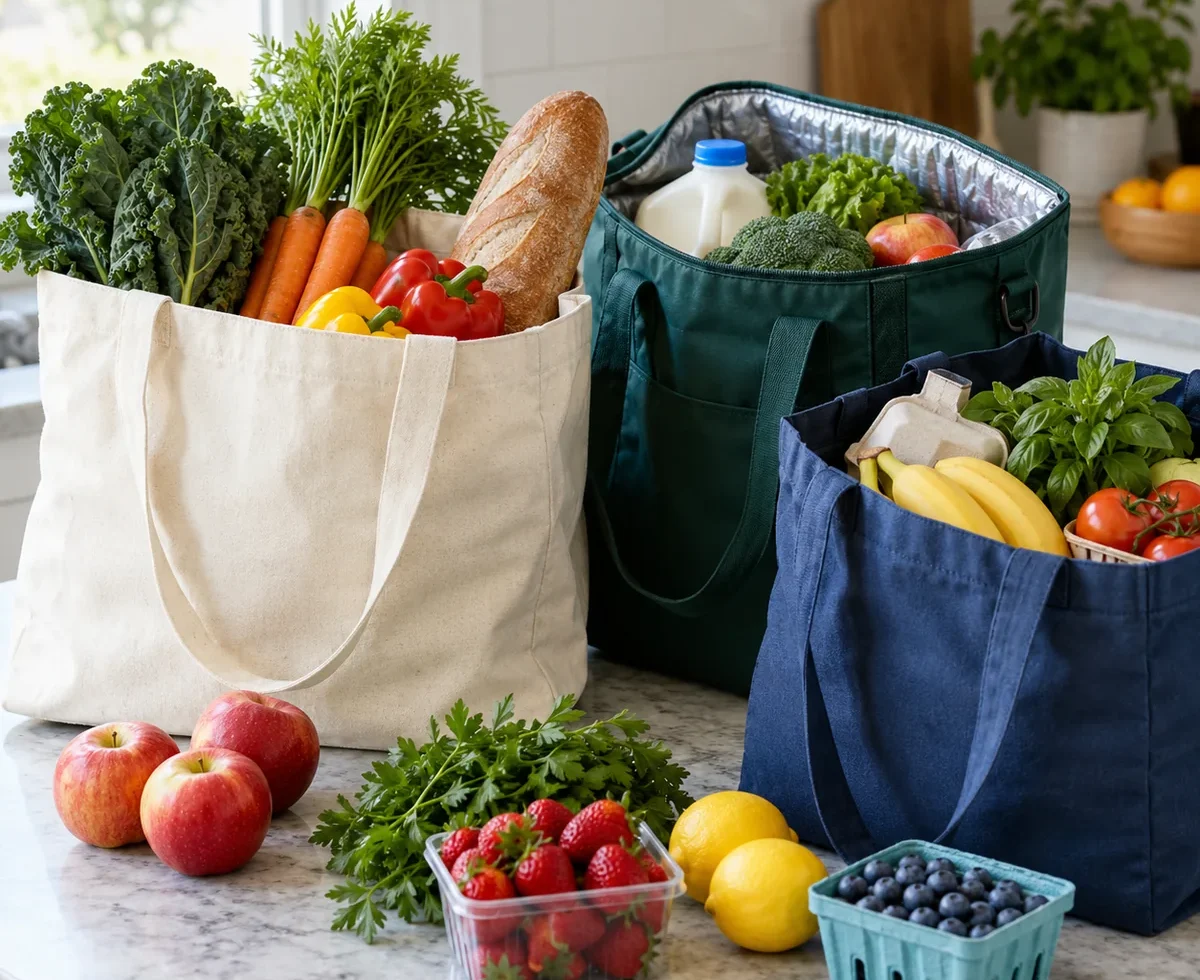
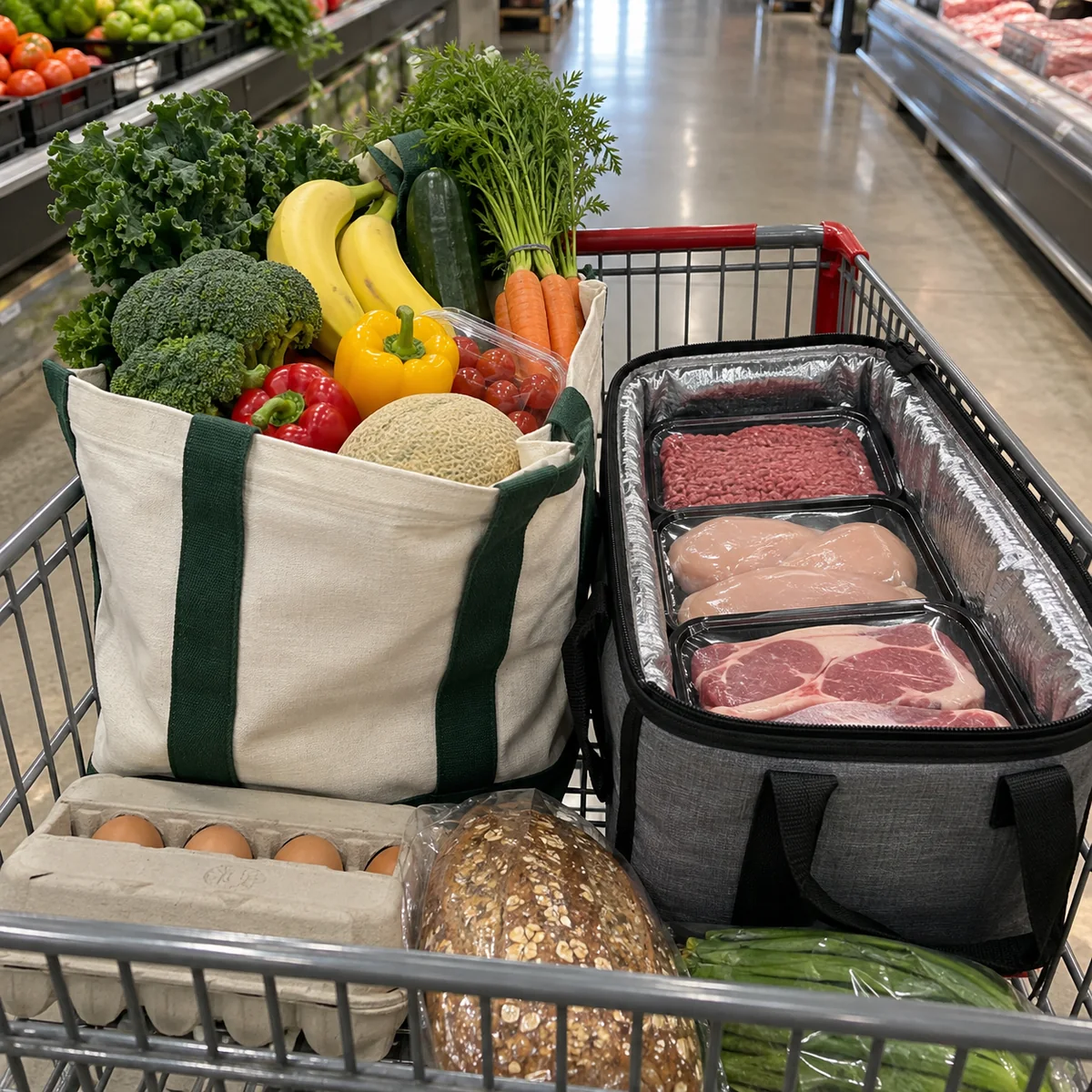
At the store, keep raw meat, poultry, and seafood packages separate from produce and ready-to-eat foods. A leakproof carrier or secondary bag helps contain package juices; do not rely on a fabric tote alone if a package may leak. USDA and FoodSafety.gov both advise separation in the cart as well as at home. Clean any reusable carrier that was exposed to leaking juices before using it again.
A simple routine is to reserve one easy-to-clean carrier for packaged raw animal foods and other clean bags for produce and pantry items. The separation is a handling rule, not a claim that a particular colored bag is automatically safe. When you get home, unpack perishable food promptly, then empty and clean the bags. Our grocery-list guide helps plan quantities before the next trip.
Questions people ask
How often should reusable grocery bags be cleaned?
USDA recommends washing reusable grocery bags after each shopping use. Follow the bag’s care instructions for the cleaning method and address any spill immediately.
Can an insulated bag go in the washing machine?
Only if its manufacturer says so. Many have insulation or stiffeners that may not tolerate a machine cycle. Wipe and dry it according to its care instructions.
Can I use one bag for raw meat and fresh produce?
Keep them separate to reduce the chance that package juices contact produce. Use a separate leakproof carrier for raw animal foods and clean it if a package leaks.
Sources
- USDA Food Safety and Inspection Service: Washing Food: Does it Promote Food Safety? — washing reusable grocery bags and separating raw animal foods from produce.
- FoodSafety.gov: 4 Steps to Food Safety — separation of raw meat, poultry, and seafood during shopping.