Reusable shopping bags are easy to forget when they live in a kitchen drawer you never open before leaving. A simple fix is to give them two homes: one ready-to-go set by the exit you actually use, and one compact backup in the bag you carry most days. This system uses the totes you already own and takes about 15 minutes to set up.
The quick answer: Gather your bags, keep roughly one grocery trip’s worth, fold the soft ones, and place that set in a sturdy tote near the door. Put one spare in your everyday bag. After shopping, empty, clean, dry, and return them to those same spots.
Gather and check the bags you own
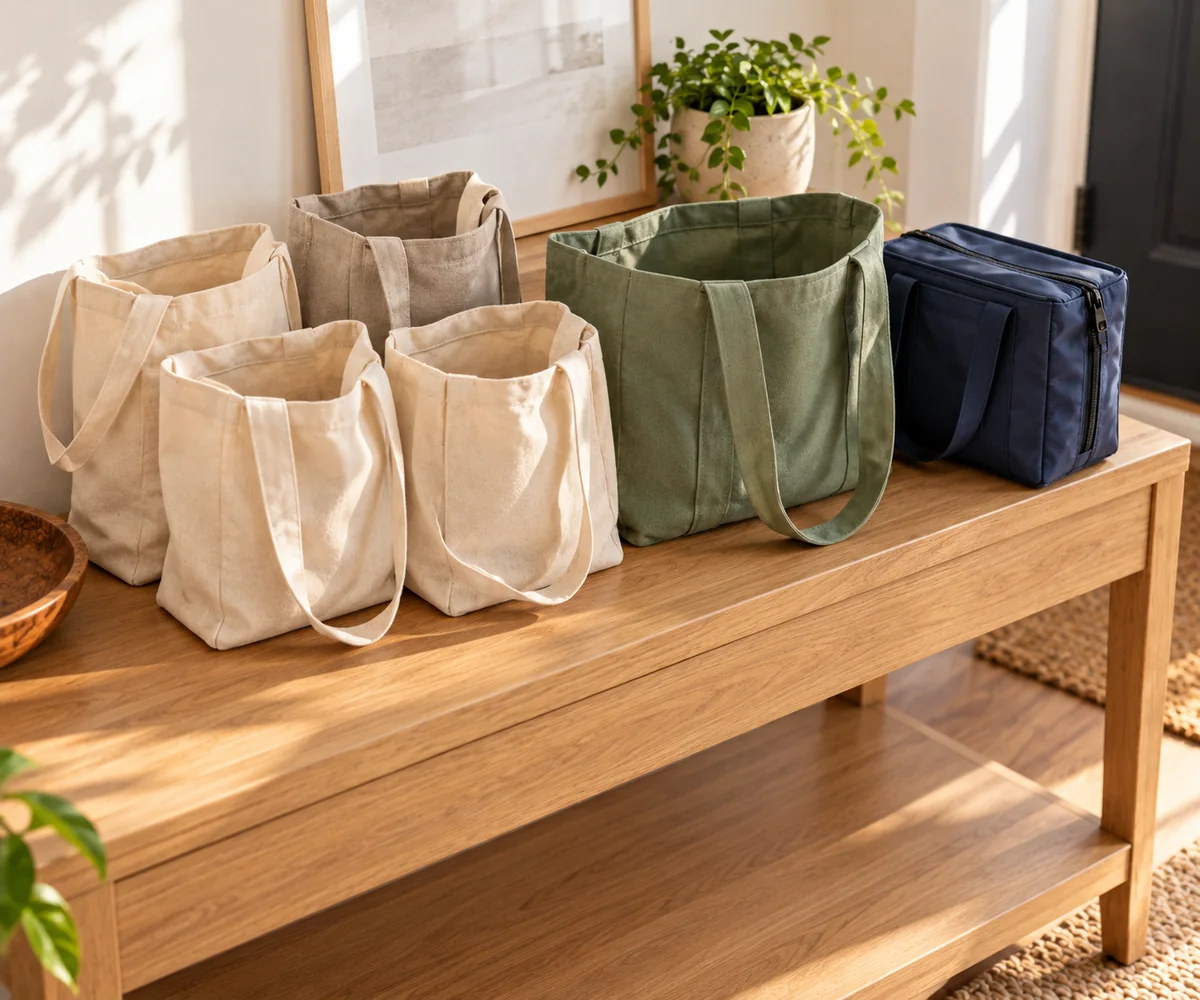
Bring every reusable shopping bag to one surface: canvas totes, thin foldable bags, and insulated bags. Seeing them together tells you whether you need storage or simply have more bags than you use. Start with the number your household needs for a typical grocery run, plus one portable spare. There is no universal ideal count; a family buying a week of groceries needs a different set from someone who walks to the store for a few items.
Check handles, seams, zippers, and insulation. Set aside damaged bags for repair or appropriate disposal rather than relying on them for a heavy shopping trip. Empty receipts and crumbs. If a bag needs cleaning, follow its care label and let it dry completely before folding. Keep a washable bag used for raw meat, poultry, or seafood separate from bags for produce or ready-to-eat food. The FDA recommends separating raw animal foods from other foods in grocery bags.
Fold soft bags into a repeatable shape
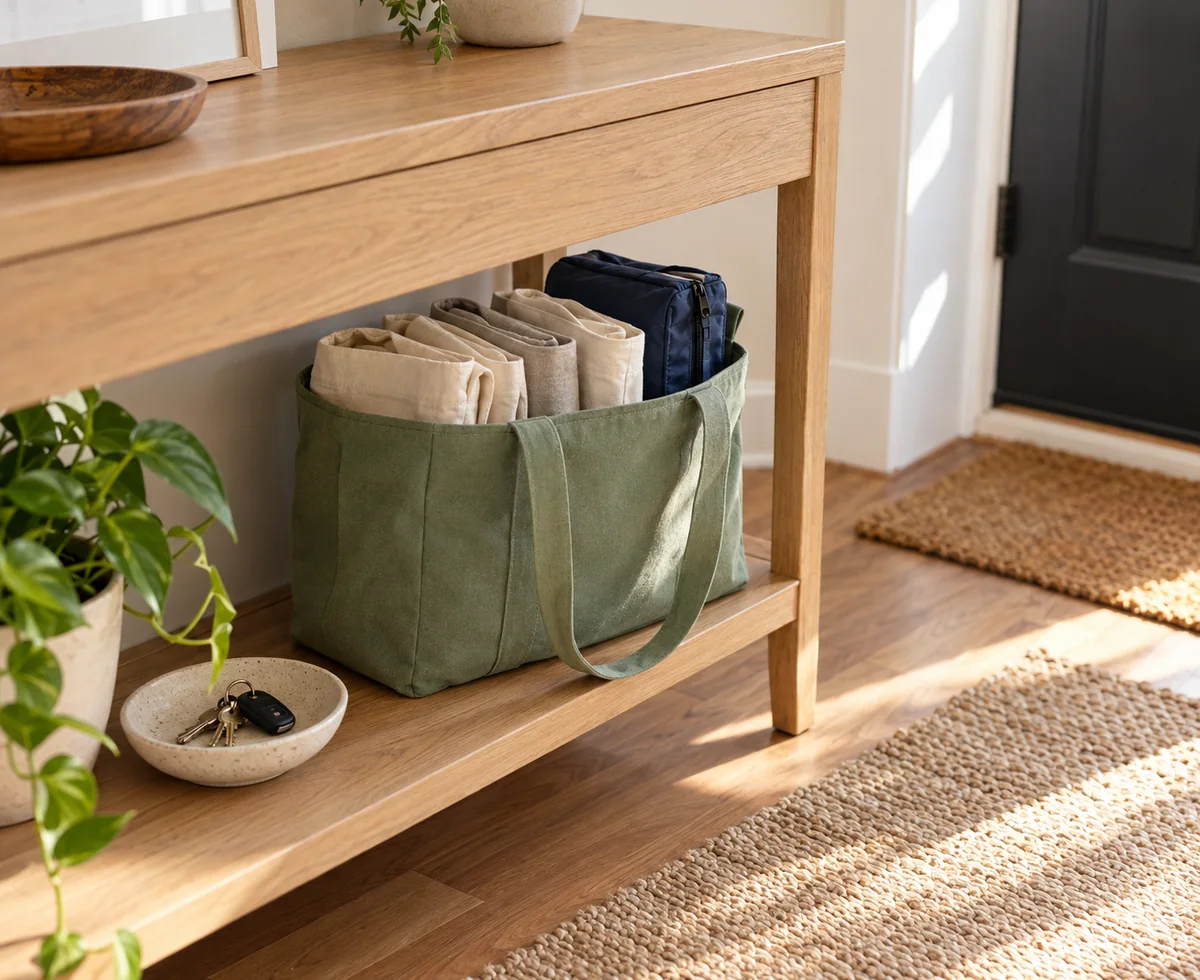
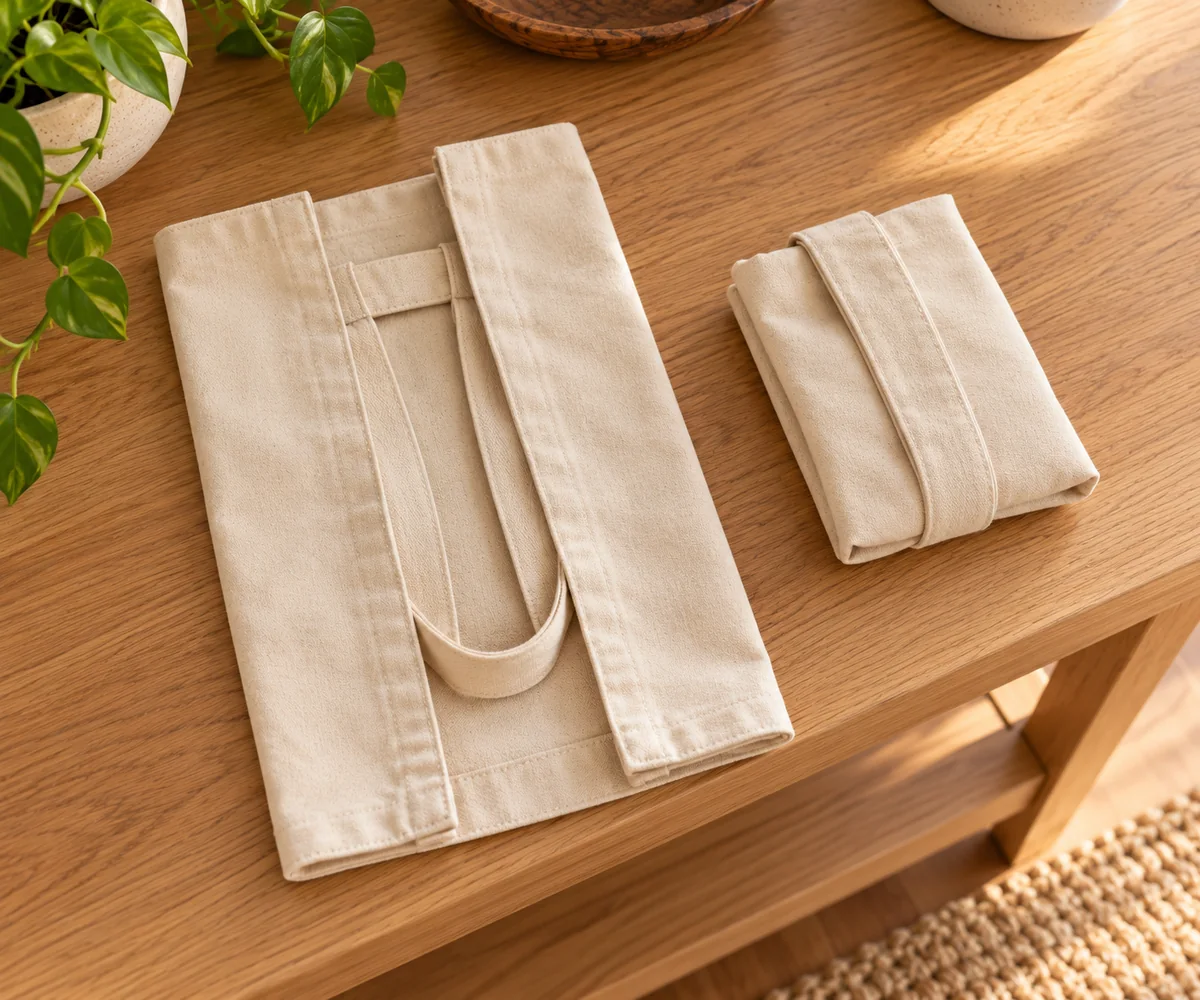
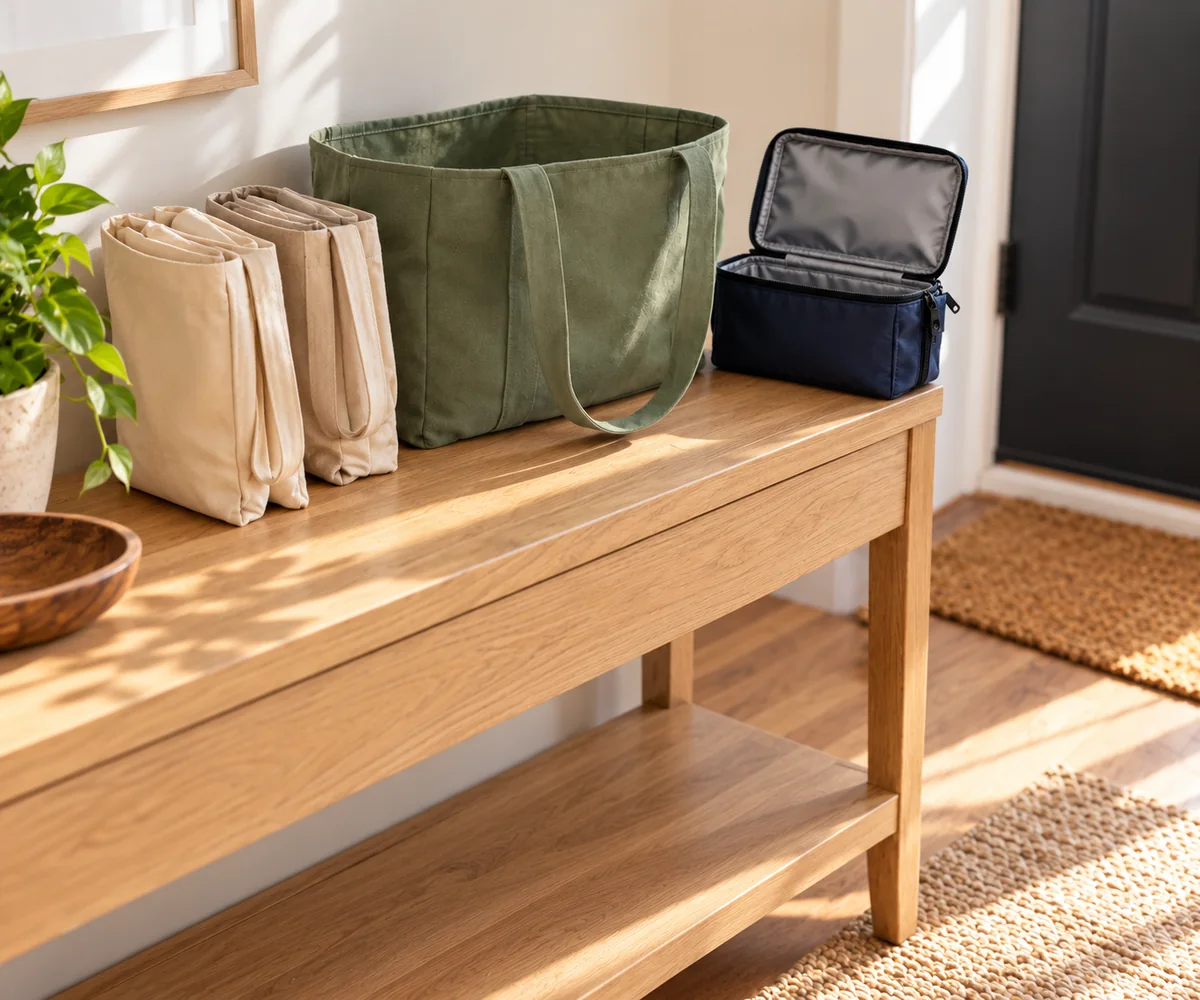
A fold only helps if you will do it again after a long shopping trip. For a soft cotton tote, flatten the empty bag, tuck both handles onto the body, fold the sides toward the center, then fold the long strip in half or thirds. Aim for a loose rectangle that fits upright inside your carry tote. You do not need a precise, tiny packet.
Stiff laminated bags may only need to be flattened and stored upright. Do not force sharp creases into insulated linings or crush a zipper to make every bag match. Keep the insulated bag loosely folded or standing beside the other totes. This makes its job visible when you plan a trip with chilled food.
Build one grab-and-go set by the door
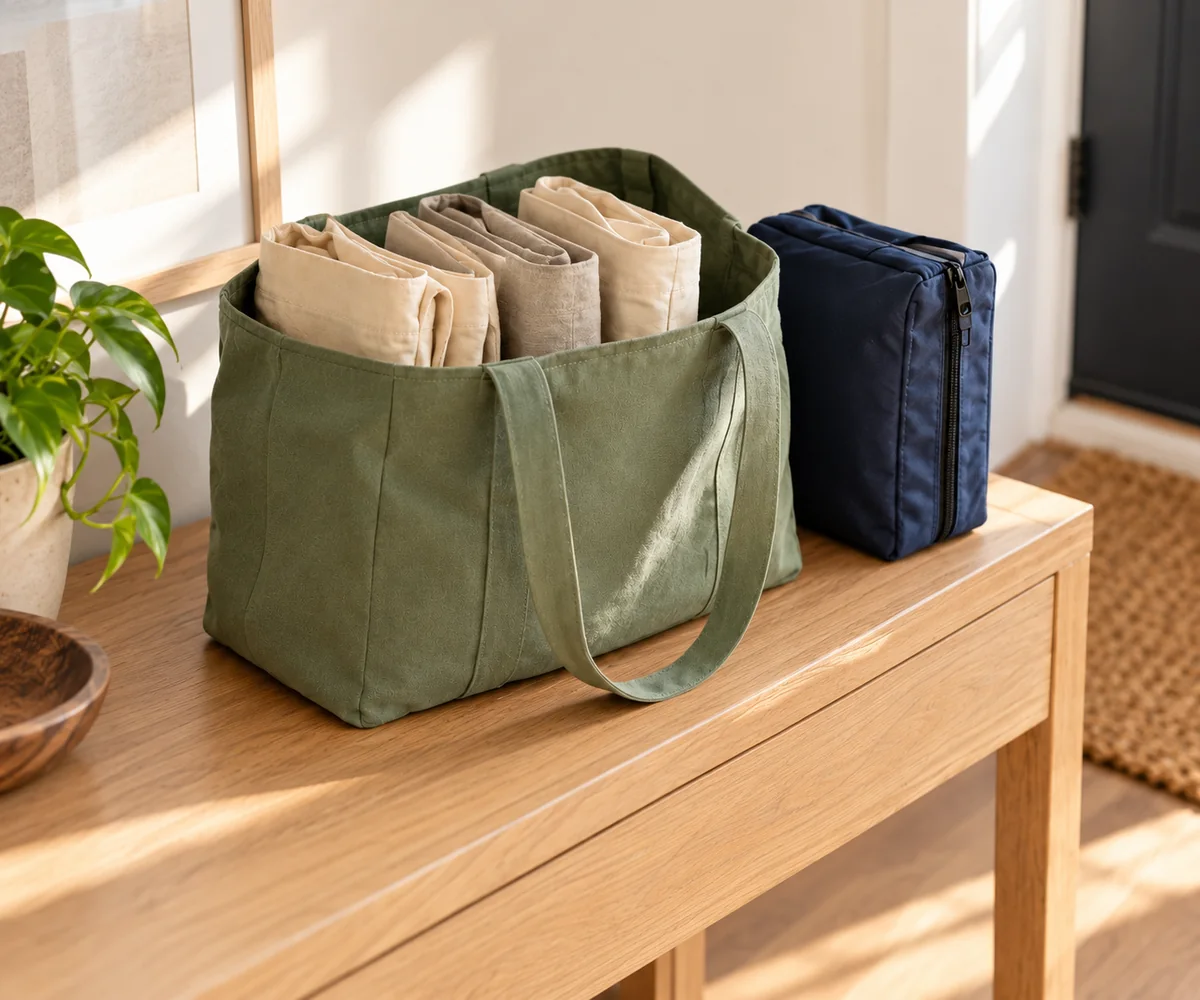
Put the folded bags for a normal shopping trip inside your sturdiest existing tote. Add the insulated bag if you use one regularly, or keep it directly beside the set. Place the carry tote near the exit you actually use: on a console shelf, a closet shelf at hand height, or an existing sturdy hook that supports its weight. Keep the walking path and door swing clear.
The container is the limit. If the set no longer fits without stuffing, return extra bags to a small back-stock spot or pass along clean, usable extras where accepted. Do not buy a new organizer until you have tried the bags you already have. If your entry is cramped, our small-entryway guide can help you make room without adding storage products.
Keep one backup where you will use it
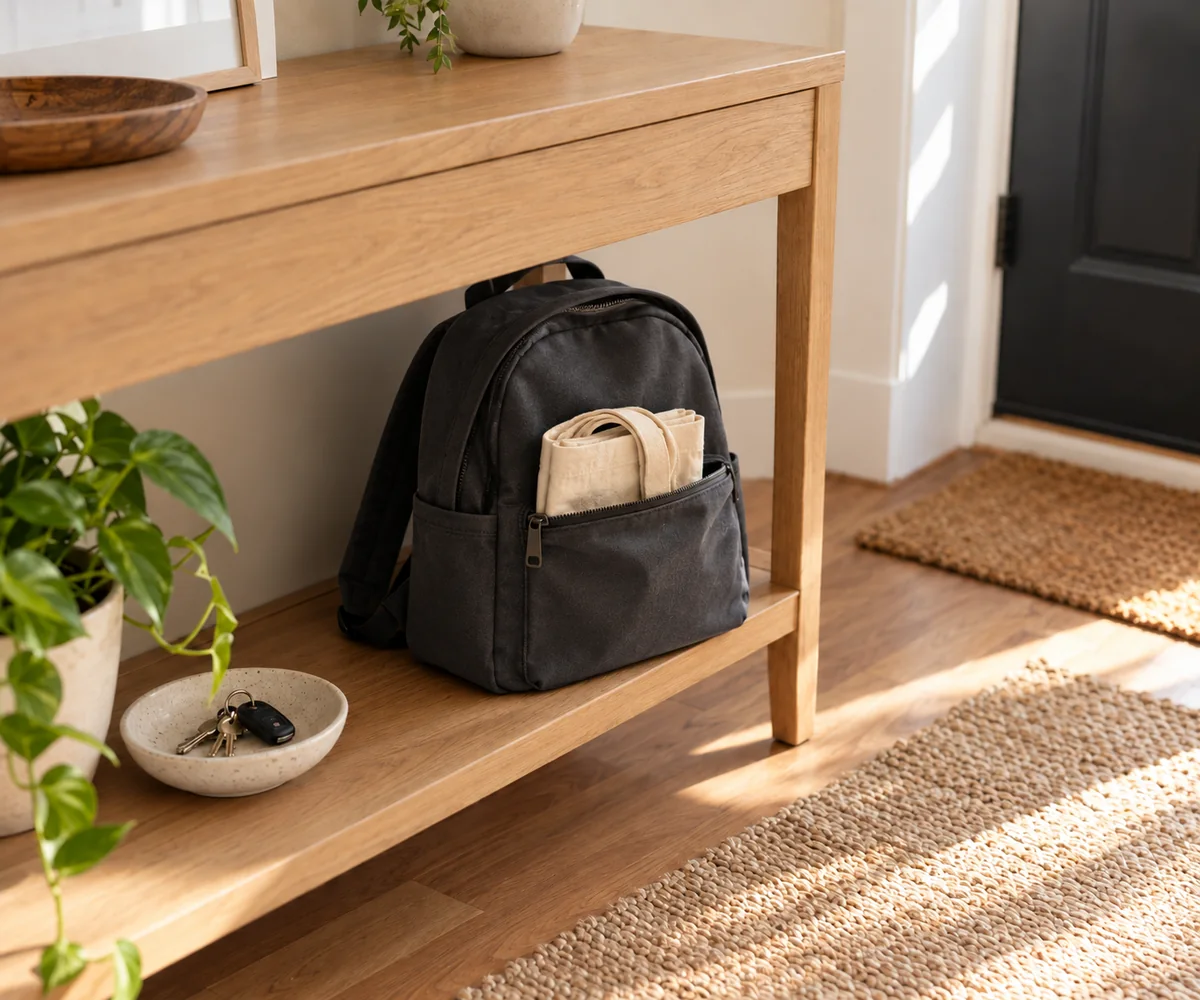
Place one compact, clean tote in your everyday backpack, handbag, or the vehicle you usually take shopping. Choose a spot that will not crush the bag or hide it under unrelated items. A backup is for an unexpected errand; it does not need to hold a full grocery trip.
Connect the bag to an existing cue. If you check a grocery list before leaving, keep the main set near that list or your keys. If you walk to shops after work, put the backup in your work bag. A bag in a car you rarely drive is not a useful backup. Choose the location from your routine, not from a picture-perfect storage idea.
Reset the bags after unpacking
The system works only if the bags return. After unloading groceries, check for crumbs, leaks, and damp spots. Clean bags according to their care labels; let fabric and insulated bags dry fully with pockets and zippers open before storing them. The USDA advises washing reusable bags frequently because they can hold dirt and bacteria. Our bag-cleaning guide covers different materials in more detail.
Once clean and dry, refold the soft totes, put the main set back by the exit, and replace the portable spare if you used it. Make this the last step of putting groceries away. It takes less effort than hunting for bags before the next trip.
What if the system keeps failing?
The bags still pile up in the kitchen: Move the ready set closer to the exit you actually use. If folding is the sticking point, flatten the bags and stand them upright instead.
You forget the bags at the door: Put the carry tote beside an existing departure cue, such as your keys or shoes. Keep the backup in a bag that leaves with you.
The tote is too full: Keep one normal trip’s worth rather than every bag you own. Store a small number of clean spares elsewhere, and reconsider the rest. For a wider low-waste approach to letting things go, see our decluttering guide.
Common questions
Where should reusable shopping bags be stored in a small home?
Use a narrow place along your real exit route: an existing shelf, a closet shelf you can reach easily, or a sturdy hook that does not block the door. A single filled tote takes less space than loose bags scattered across several rooms.
Should I keep reusable bags in the car?
A compact backup in a car you use for shopping can help. Keep the main set in a location that lets you notice and clean it after each trip. If you walk, cycle, or use different vehicles, an everyday backpack or handbag is a better backup location.
How many reusable grocery bags do I need?
Keep enough for your usual shopping trip and one spare for an unplanned stop. Test that number over two or three trips and adjust it to your household and how you travel. More bags are not automatically more useful.
Sources
- U.S. Food and Drug Administration: Food Safety at Home — separating raw foods in grocery bags.
- USDA Food Safety and Inspection Service: Shopping at the Farmers Market — cleaning reusable bags.
- U.S. Environmental Protection Agency: What You Can Do About Waste — reuse as a waste-reduction practice.