A small entryway has an outsized job: it handles shoes, keys, bags, mail, and everything you intend to take out tomorrow. When those things all land on the floor, the front door starts to feel like a storage closet. You can make the space work without buying another rack or basket by giving each daily item a specific place and moving everything else out of the doorway.
The quick answer: Keep the door swing and walking route clear. Give your most-used shoes one parking spot, choose one existing surface for keys, and reserve one small place for things leaving the house. Store occasional items elsewhere. A two-minute reset each evening keeps the system useful.
Start with the path, not the storage
Open the front door fully and walk through the entryway as you would with groceries in your hands. Notice where the door travels and where your feet naturally land. Those areas should stay free of shoes, bags, and low furniture. A beautiful arrangement that makes you step around it every day is the wrong arrangement for a small space.
Take a photo at standing height before you move anything. It helps you spot the floor pile you have stopped noticing. Then remove the loose items and make three groups: things used every day, things that belong elsewhere, and things that need to leave the house. If a shoe or bag has been waiting there for weeks, it probably does not need prime entryway space.
Park the shoes you actually wear
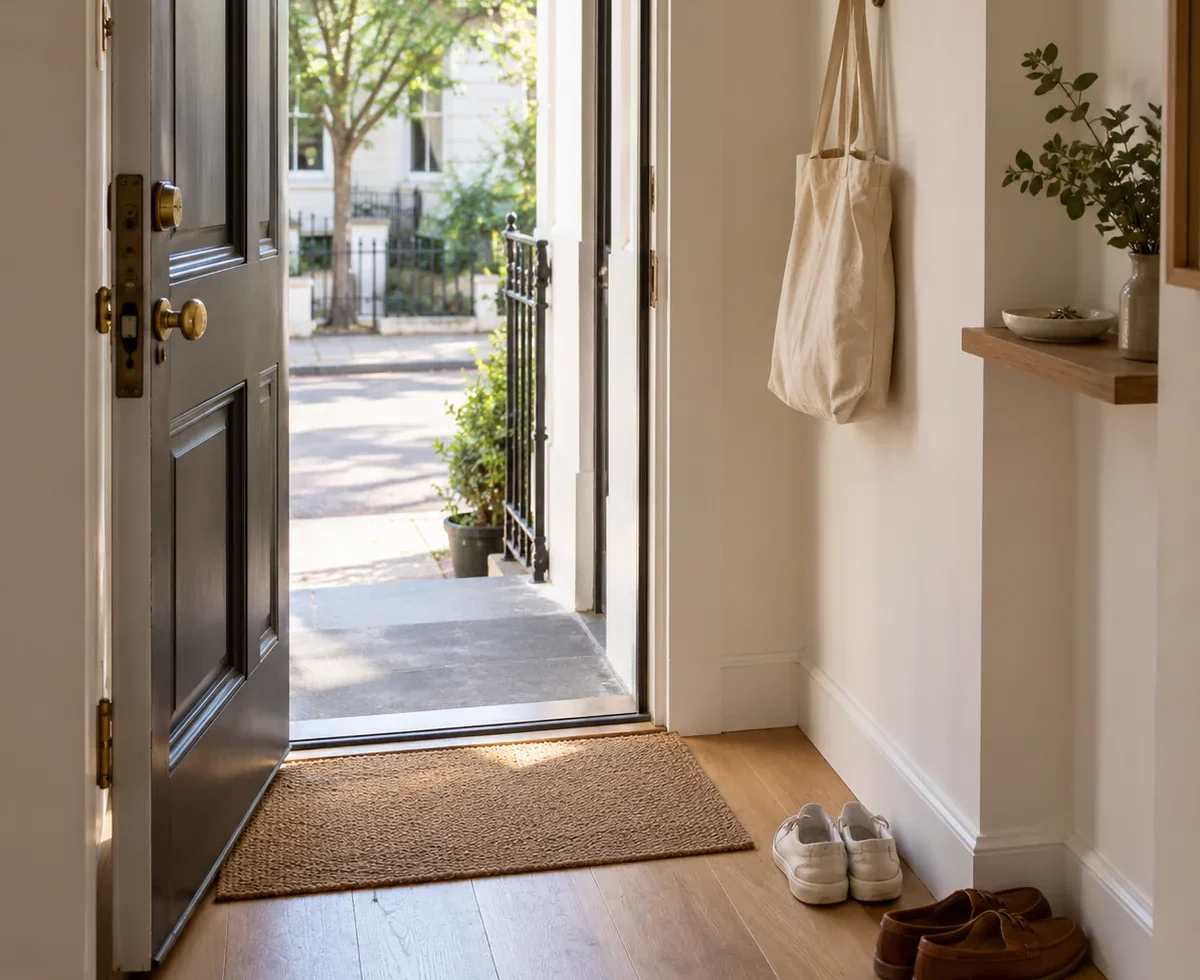
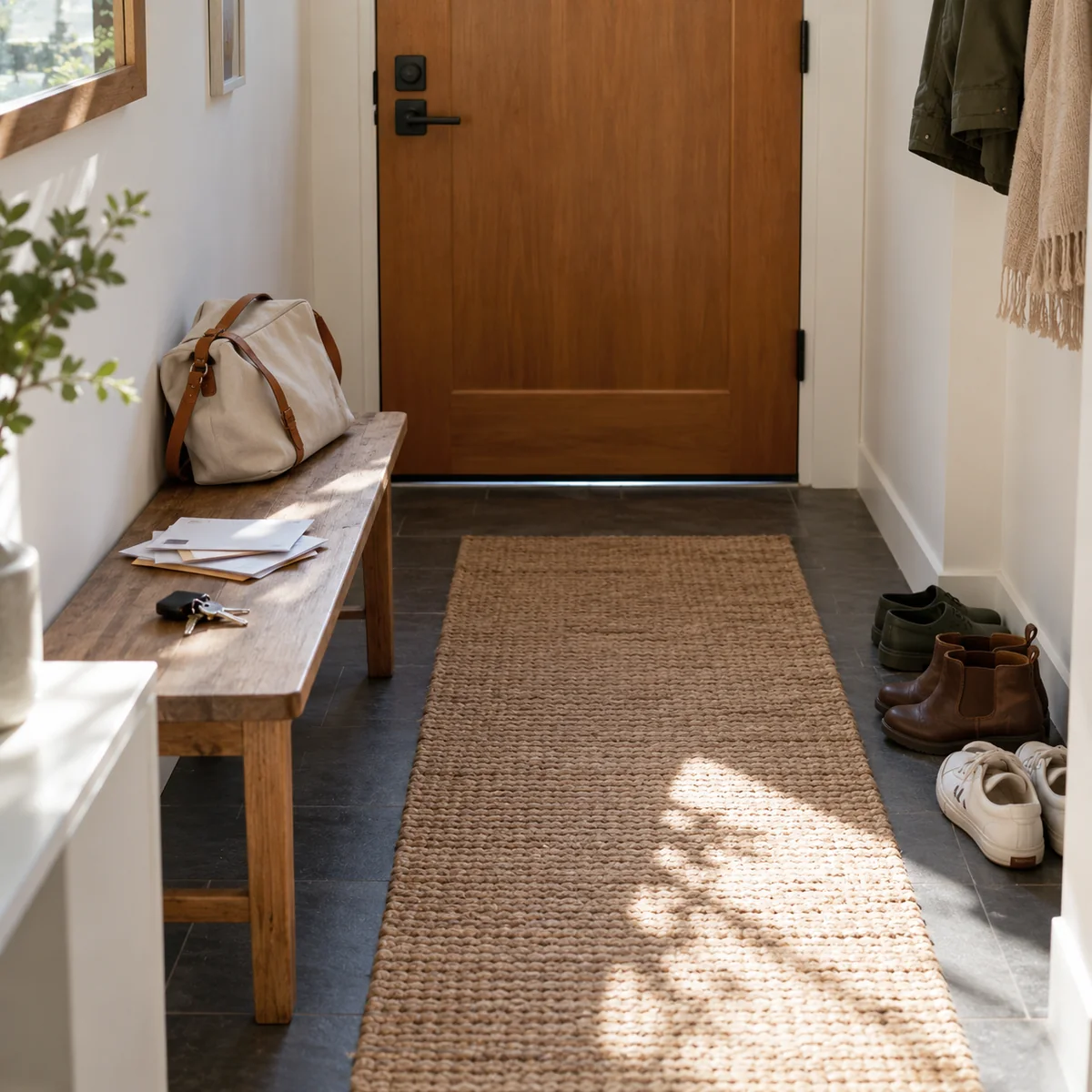
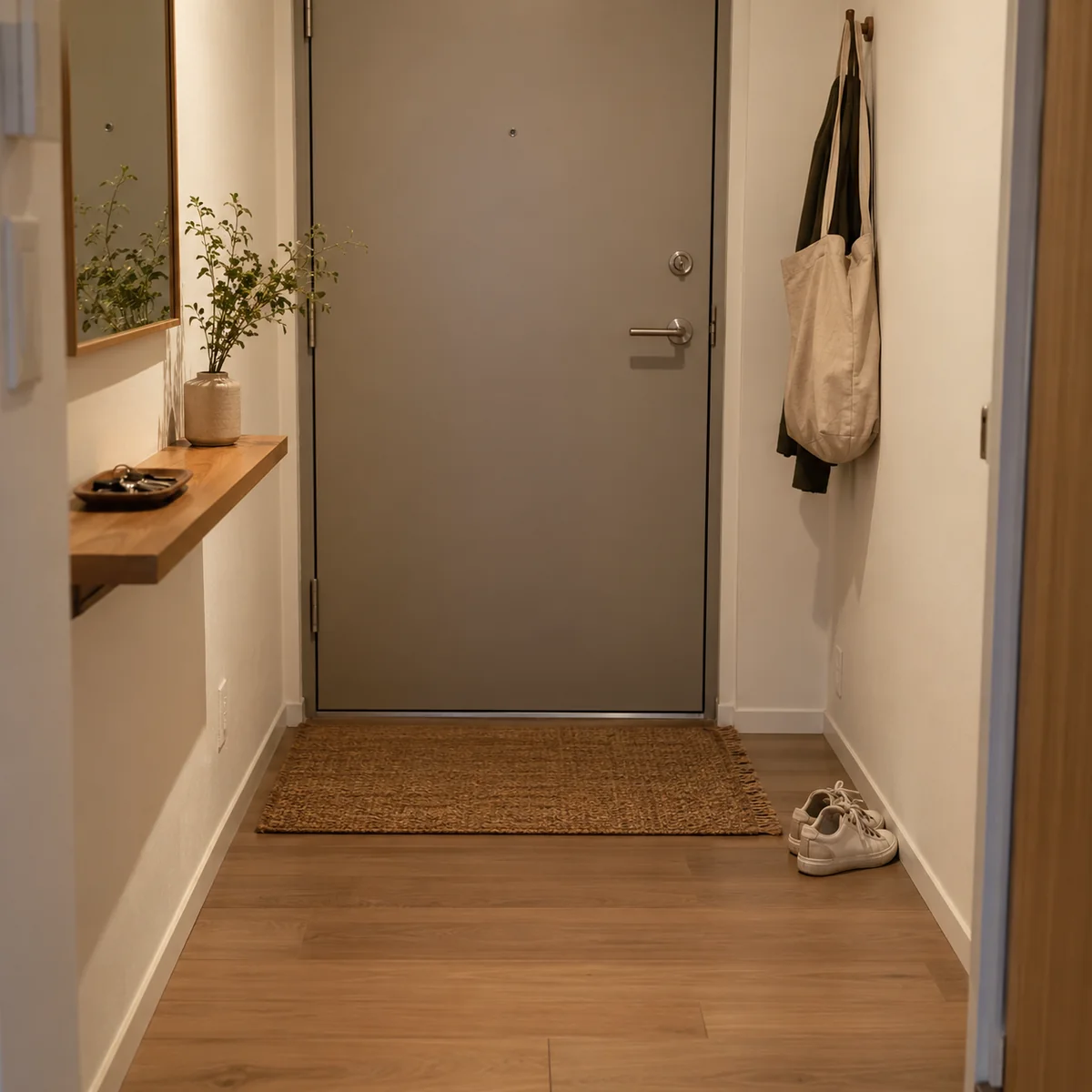
Choose a spot against a wall for the one or two pairs each person currently wears most. The exact number depends on the width of your entryway; the rule is that everyone can still pass comfortably. Move dress shoes, out-of-season footwear, and spare pairs to an existing closet. If that closet is crowded, our small-closet guide offers a way to reclaim space there.
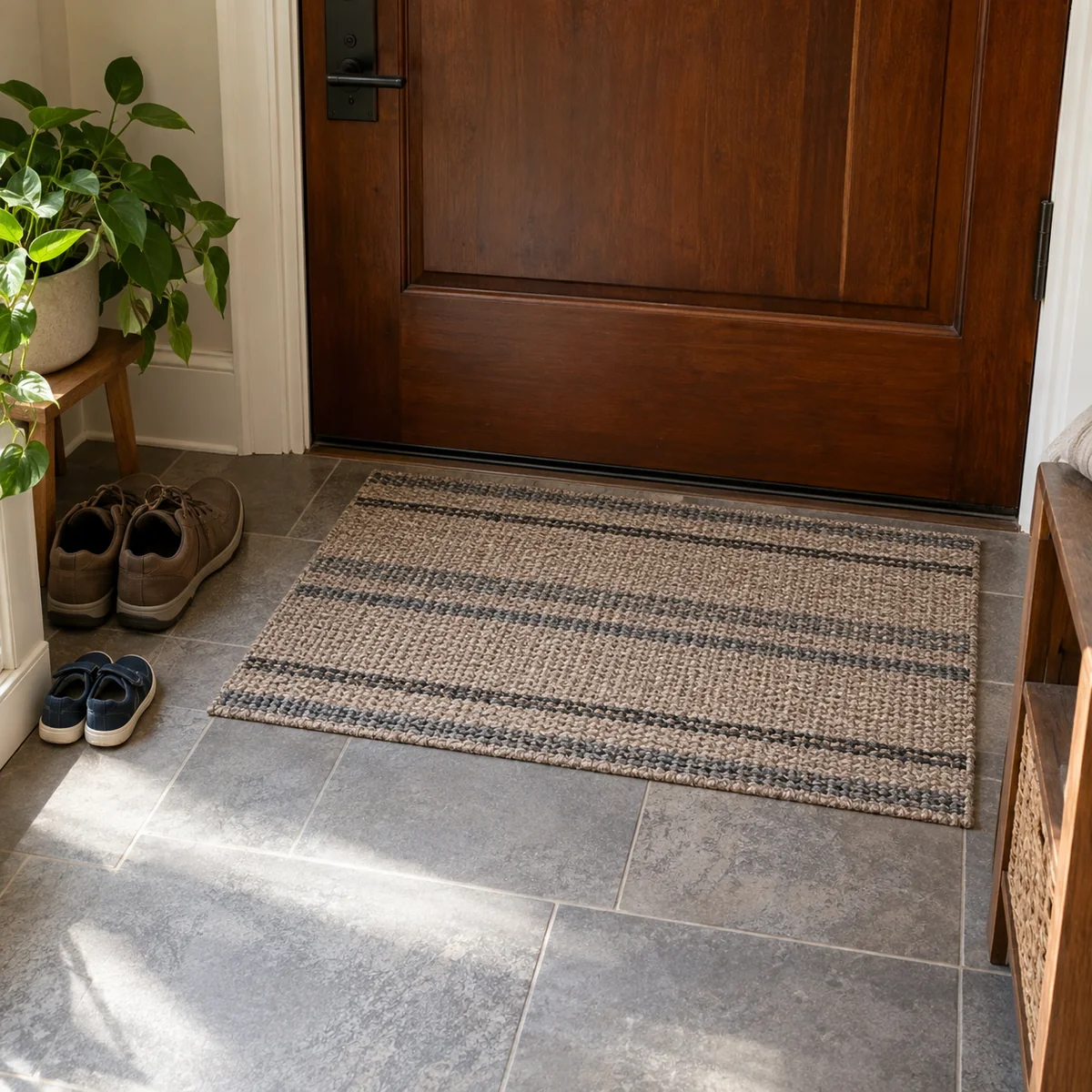
A flat mat at the entrance gives shoes a defined landing point and makes tracked-in dirt easier to manage. The U.S. Environmental Protection Agency recommends a doormat at exterior doors and leaving shoes at the door as ways to reduce dust and dirt brought inside. A mat is a boundary, though, not permission to fill the whole threshold with shoes. If footwear is wet, let it dry in a suitable open spot before putting it in a closed cupboard.
Give keys and bags one landing place
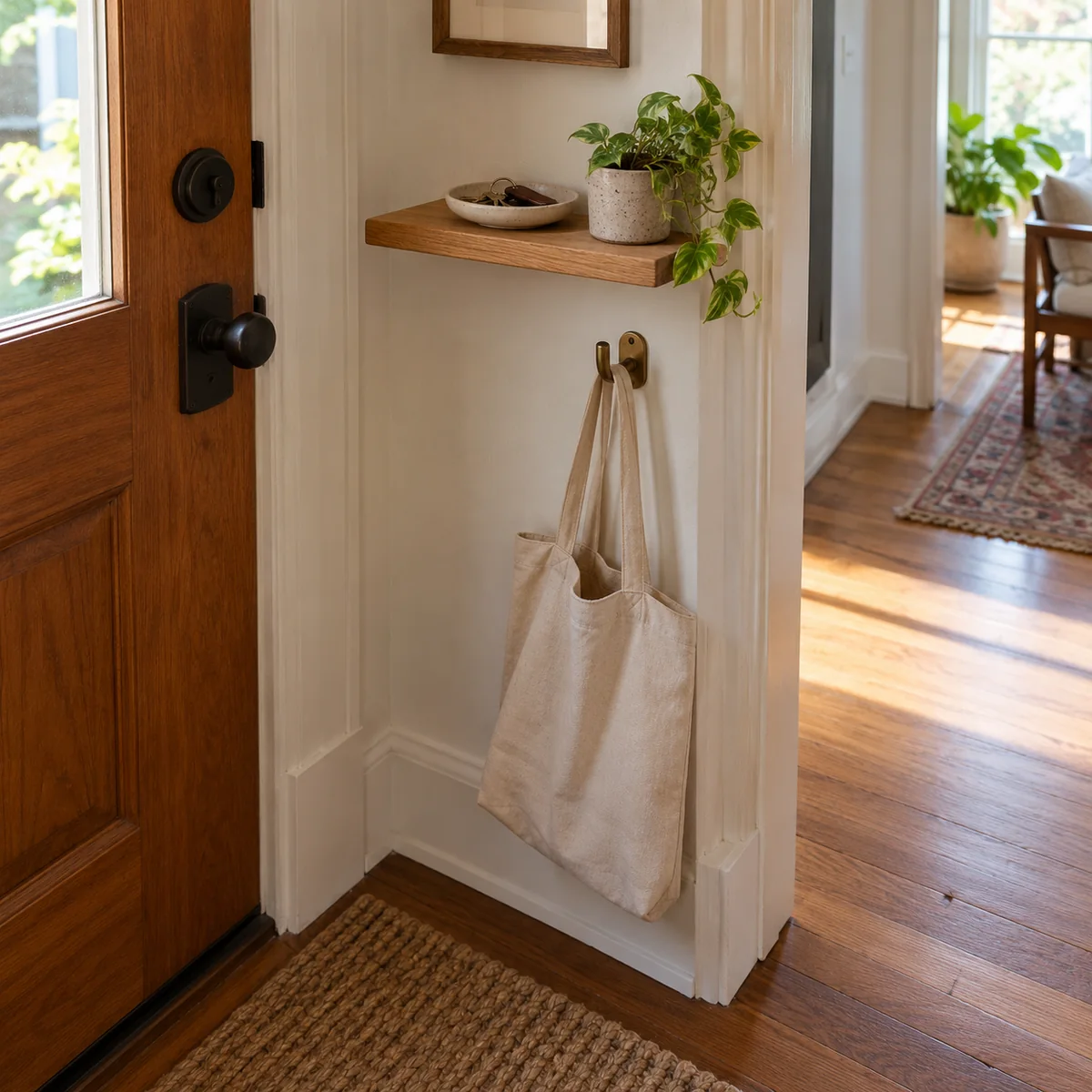
Use an existing shelf, side table, wall hook, or dish for the things you touch on every trip out. Put keys in the same small dish every time. Hang one regularly used bag on a secure hook if its weight suits the fixture; otherwise place it on an existing shelf. Avoid stacking bags on the door handle or placing them where the door will catch them.
Mail deserves a different decision. Open it or move it to the place where you process papers; do not let the key dish become a paper archive. If papers are the recurring problem, use the paper-clutter guide to set up a separate process.
Create a tiny outgoing station
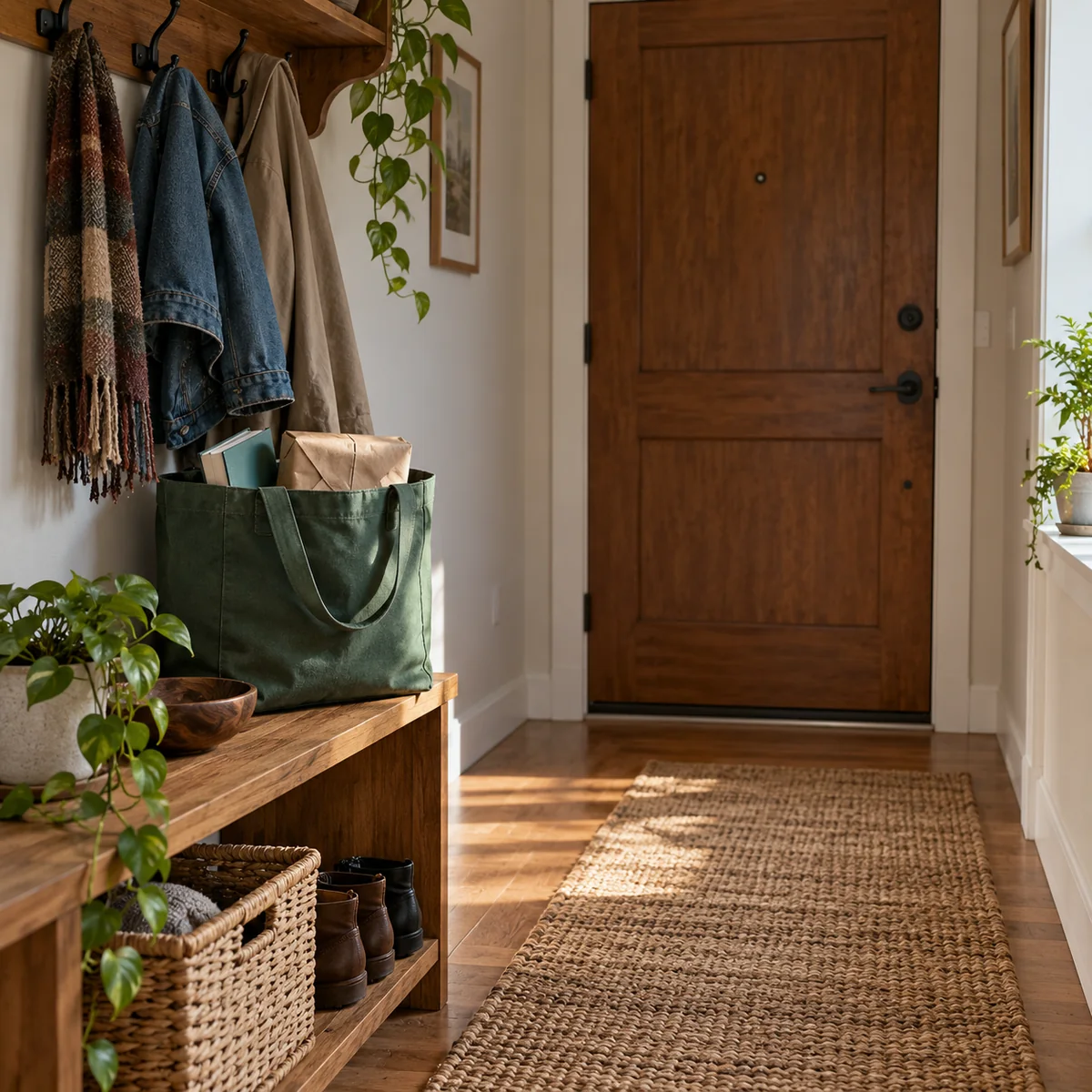
Returns, library books, and items for a friend need a place near the exit, but an unlimited “take out later” pile simply becomes new clutter. Use one bag or one small section of an existing shelf. Put only items with a real next step there, such as “return on Tuesday” or “hand to Maya this weekend.” When the bag is full, finish those errands before adding more.
Keep donations separate from daily outgoing items if they will take longer to arrange. Check that a recipient actually accepts what you plan to give away; our decluttering guide explains how to choose a useful route for each item.
Make the two-minute reset easy
At the end of the day, put keys back, return extra shoes to their usual home, and take papers to the paper-processing spot. Check the outgoing bag against your next trip. Wipe or shake out the mat as needed. The reset is short because the system contains only items you regularly use.
When the season changes, swap the daily footwear and outerwear. If the entryway fills up again, ask which item has lost its job there before looking for more storage. The goal is a reliable arrival and departure routine, not an empty-looking photograph.
Questions people ask
What if I have no entryway closet?
Keep only daily items beside the door and move extras to whatever existing storage is closest. A shelf or hook can help, but the most effective change is limiting how many items get permanent space at the entrance.
Should every pair of shoes stay by the door?
No. Keep the pairs being worn now and store occasional or out-of-season shoes elsewhere. Leave enough floor space to open the door and walk normally.
How do I stop mail from piling up?
Keep mail out of the key spot. Carry it to a separate place to open, recycle, file, or act on it. The entryway should serve as a brief handoff point, not a long-term paper store.
Sources
- U.S. Environmental Protection Agency: Biological Contaminants and Indoor Air Quality — doormats and leaving shoes at the door to reduce tracked-in dust and dirt.
- U.S. Environmental Protection Agency: A Brief Guide to Mold, Moisture and Your Home — moisture control and drying damp materials.