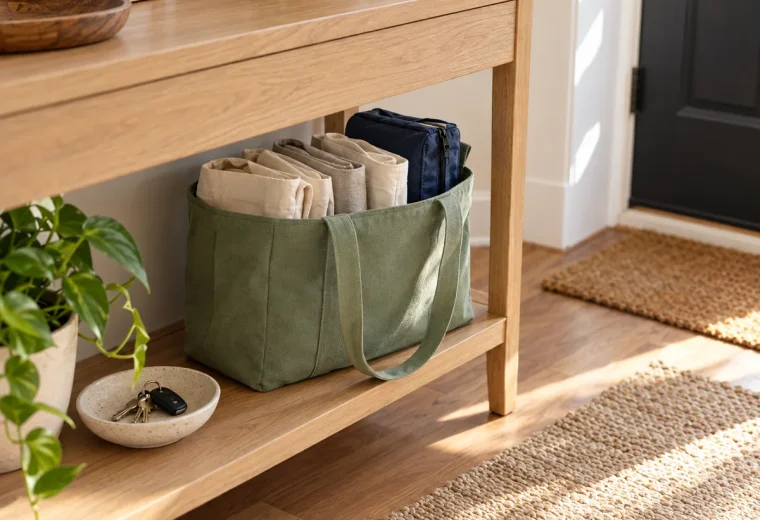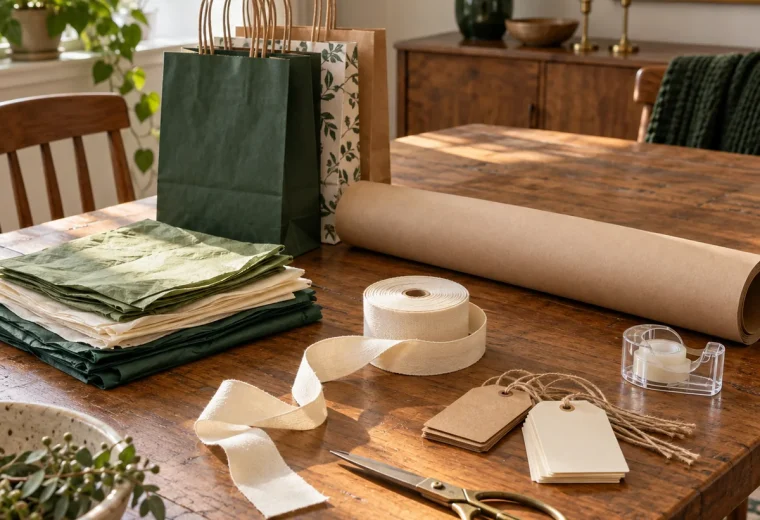
Seasonal decorations often go back into storage in a hurry: one box of tangled lights, another with crushed ornaments, and a few pieces left behind in a drawer. The next celebration then begins with buying replacements for things you already own. You can make the collection easier to find and reuse with the boxes, paper, and fabric already at home.
The quick method: Gather the decorations, sort by how fragile they are and where they are used, inspect lights, remove batteries from items going into long storage, and pack each group in an existing sturdy box. Separate delicate pieces, wind lights loosely around scrap cardboard, label the outside, and put the boxes somewhere dry and accessible.
1. Gather one season’s decorations before packing
Bring together the pieces from the mantel, windows, table, doors, and any other places you decorated. Include the hooks, cords, and small parts needed to use them again. If you pack room by room without seeing the whole collection, duplicate items and stray pieces are easy to miss.
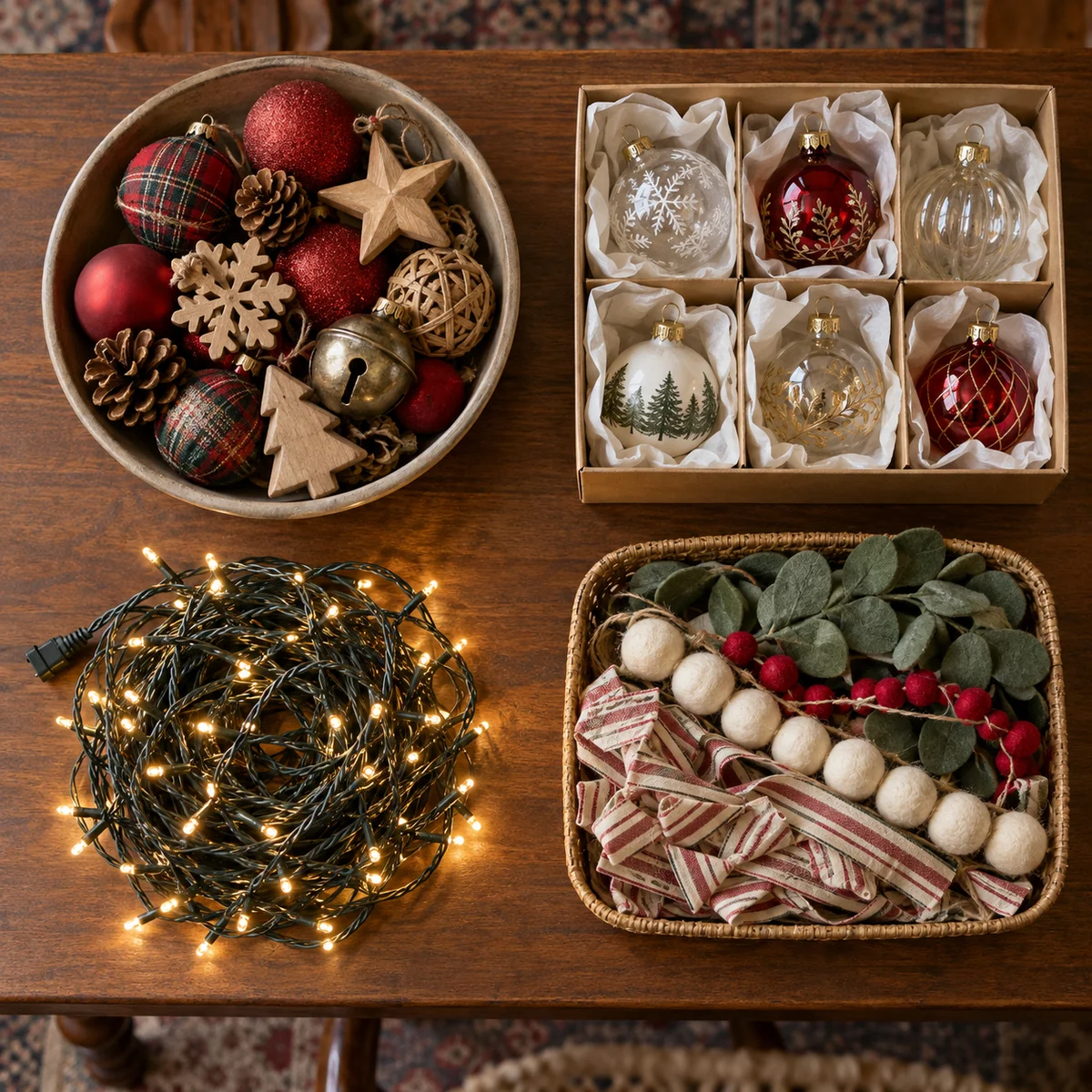
Sort into a few useful groups: sturdy pieces, fragile ornaments, lights, fabric or paper decorations, and small accessories. Set aside anything broken or no longer wanted. If it is safe and usable, consider offering it to someone who will use it rather than keeping it “just in case.” Our guide to decluttering without throwing everything away helps with those decisions.
2. Protect fragile pieces with dividers you already have
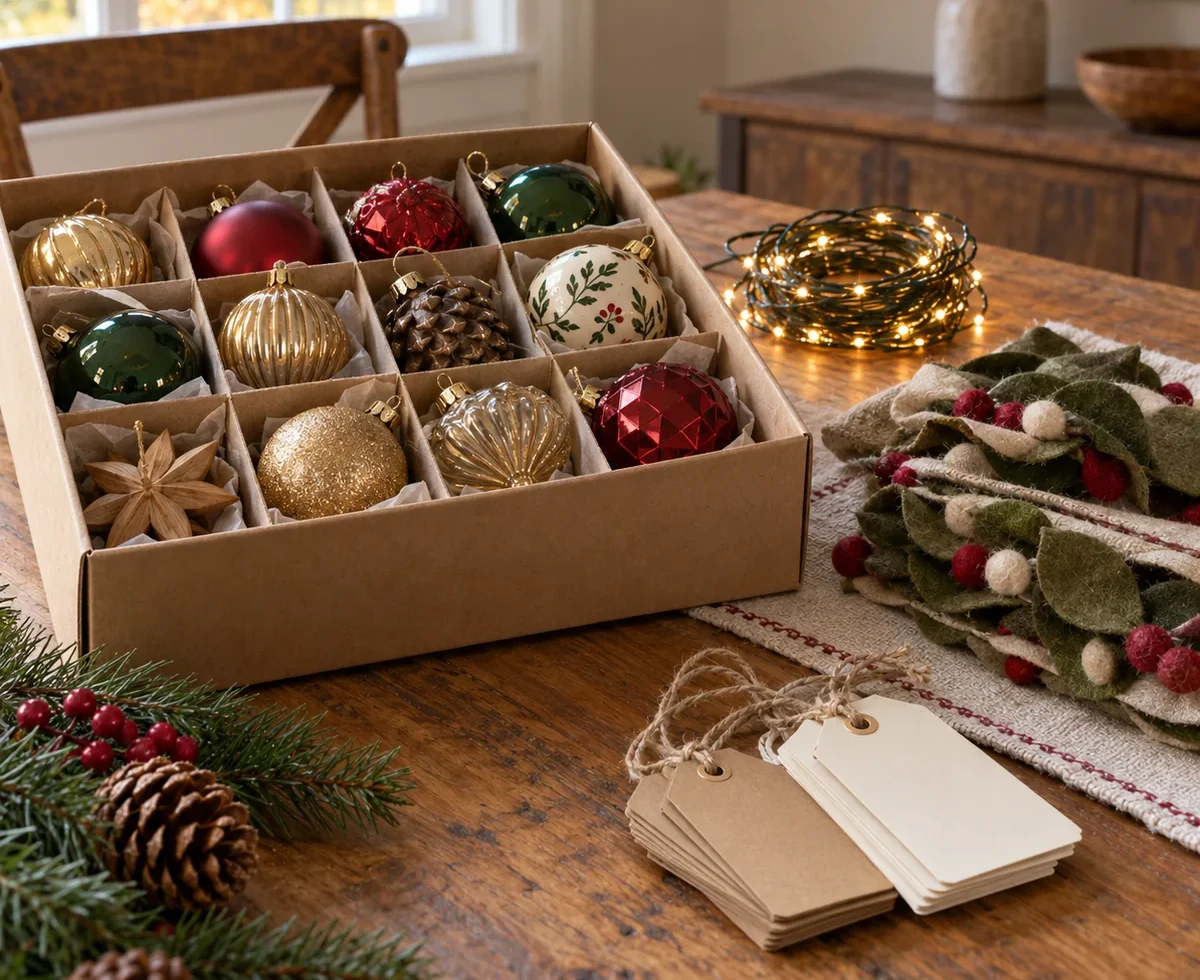
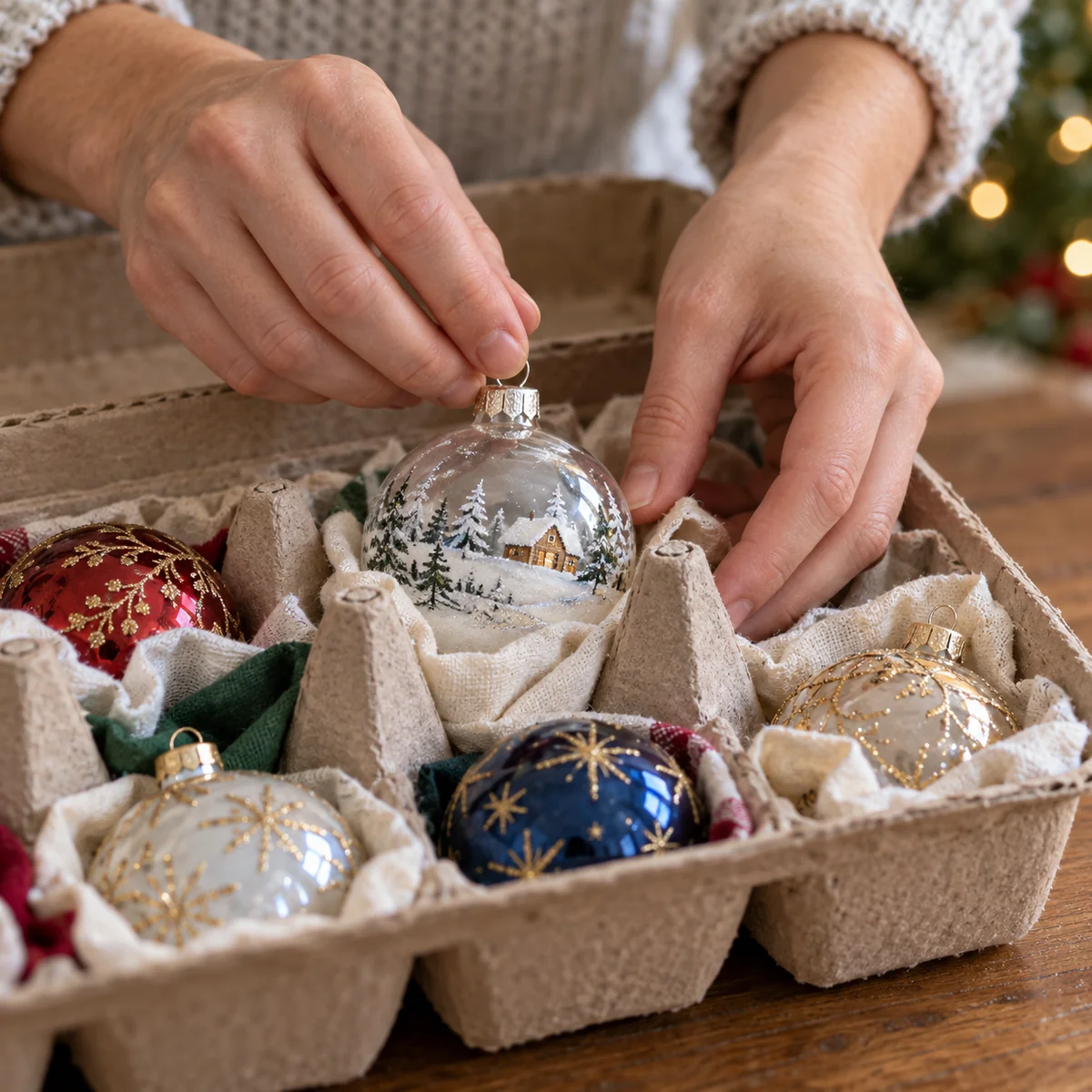
Use the original packaging if it still protects the item. Otherwise, make compartments from a small cardboard box, cardboard strips, or a clean egg carton for ornaments that genuinely fit. Place soft scrap fabric or reused tissue between delicate surfaces. Do not force a large ornament into a small compartment or stack heavy items on top of thin glass.
Keep the most fragile box small enough to lift without crushing its contents. Put a simple description on the outside, such as “fragile ornaments,” so nobody has to open and unpack it to know what is inside. If one piece has a loose cap or hook, keep those parts with it in a small envelope rather than dropping them into the bottom of the box.
3. Check lights before winding them
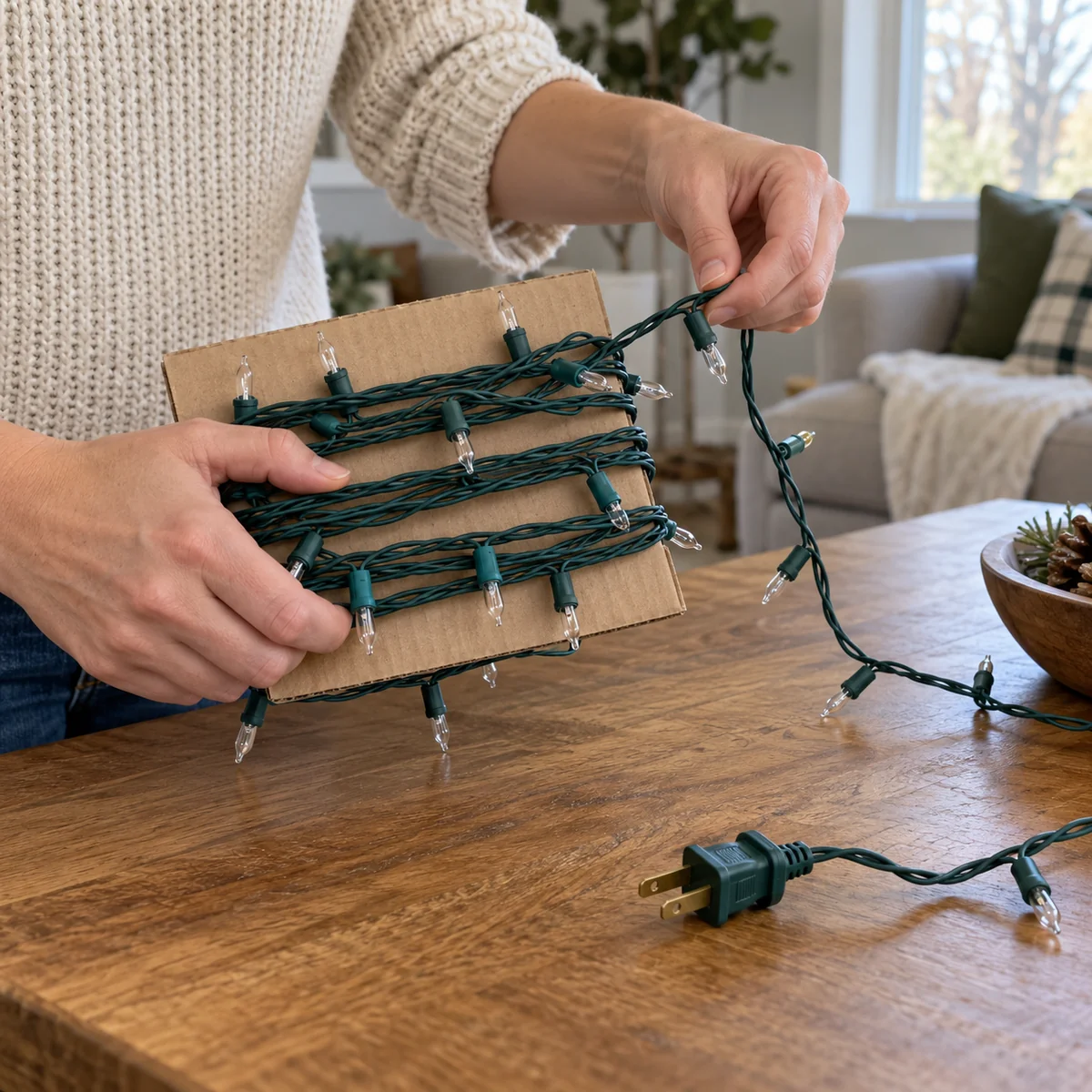
Unplug a light strand before handling it. Look for frayed wires, cracked sockets, loose connections, or other visible damage. National Fire Protection Association holiday guidance advises replacing strings with worn or broken cords or loose bulb connections. Do not pack a damaged strand for another year and hope it will work later.
For sound lights, wind the strand loosely around a flat piece of reused cardboard, leaving the plug accessible. Avoid tight bends at the plug and sockets. Place each strand in its own box section or reusable bag so it does not tangle with hooks and garlands. Add a short note if it belongs to a particular window or tree; that saves guesswork next time.
4. Remove batteries from items stored for months
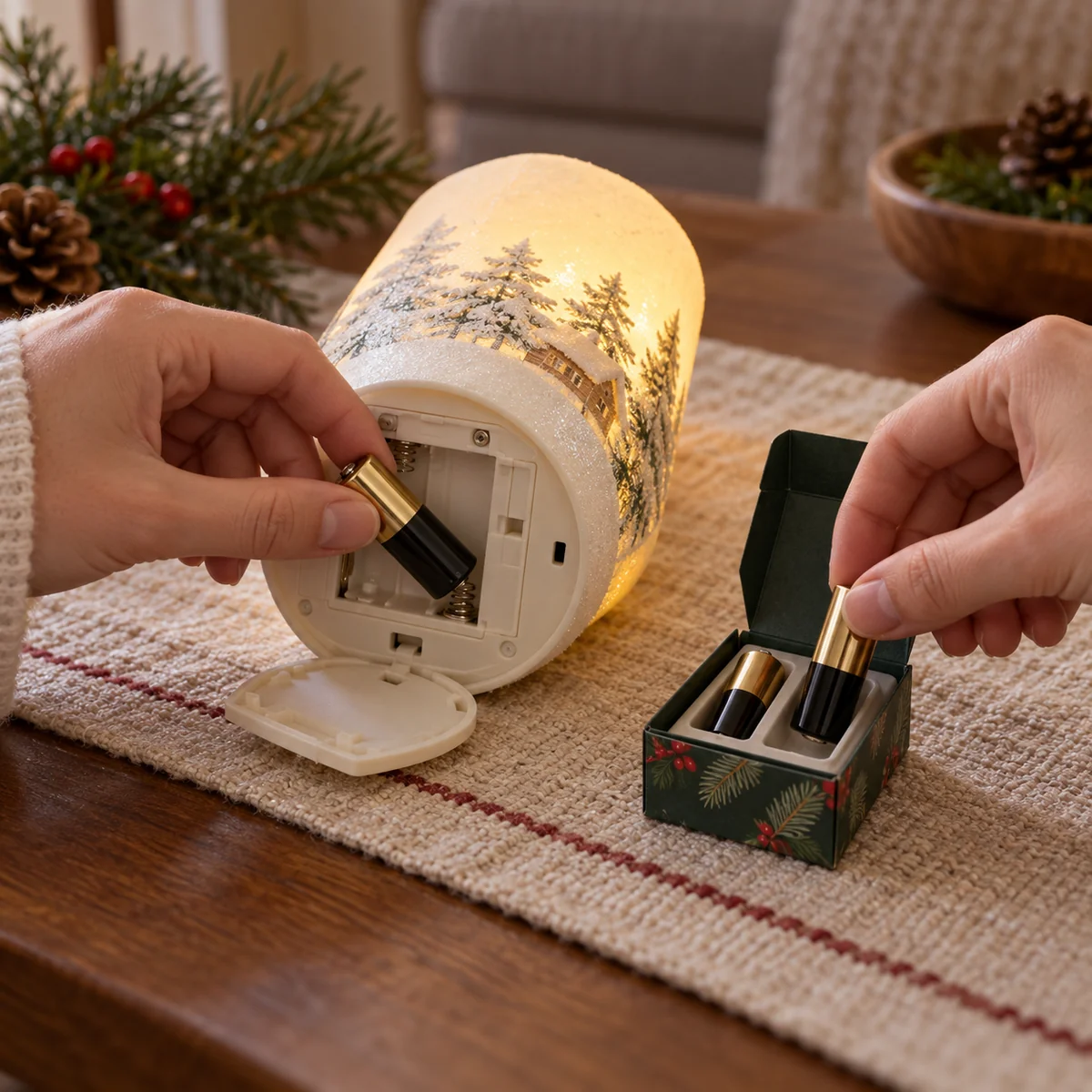
Check battery-powered candles, small light strings, musical decorations, and remote controls. Switch them off and remove the batteries if they will sit unused for a long time. Energizer advises removing batteries from devices that will not be used for an extended period and storing batteries in a cool, dry place at normal room temperature.
Keep removed batteries in suitable packaging with their contacts protected, away from loose metal objects and out of children’s reach. Do not mix old and new batteries when you use the decoration again. If a compartment shows leakage or corrosion, follow the device and battery makers’ handling guidance instead of simply putting the item back into storage.
5. Pack by use, then label the box
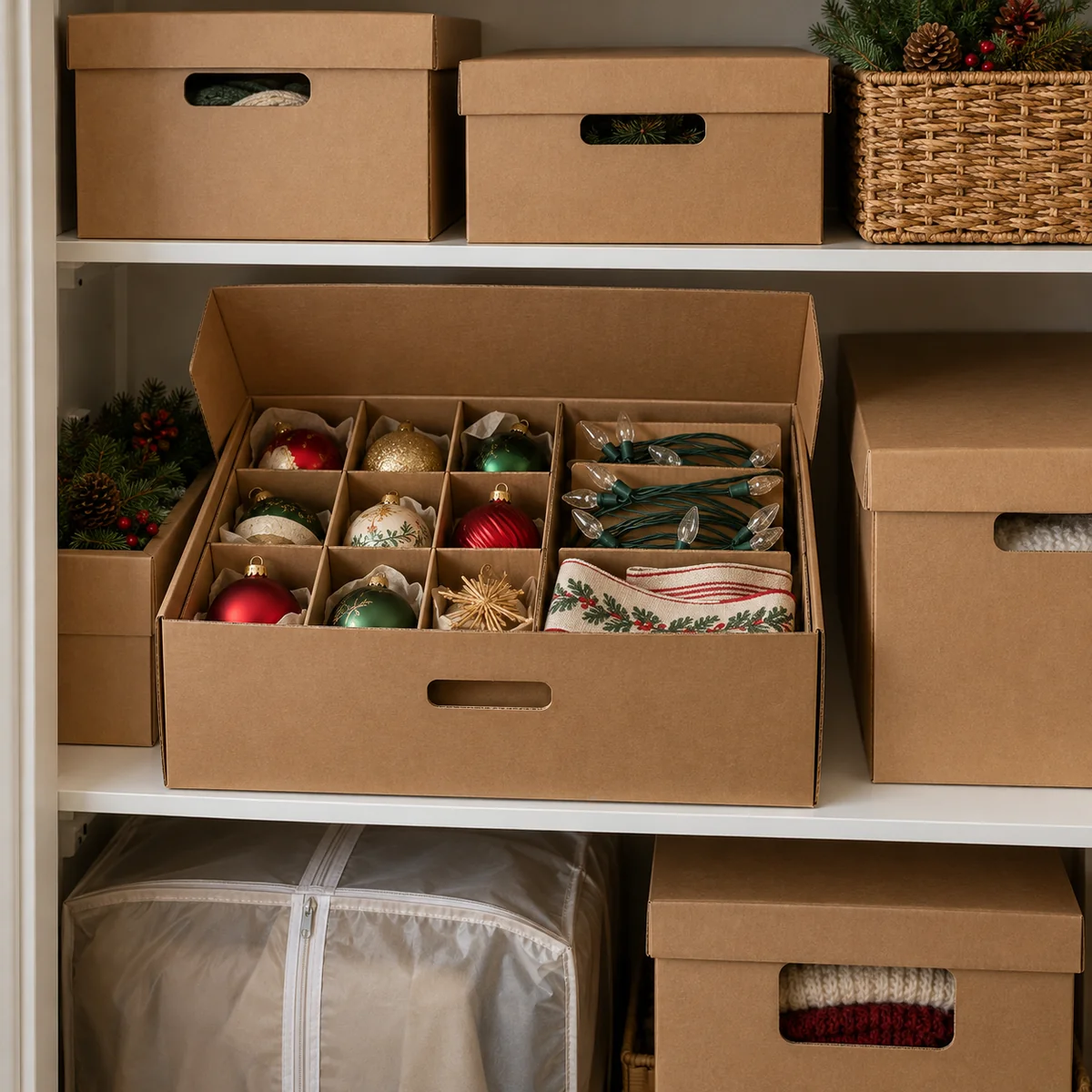
Put items that are set up together in the same box when their shapes and fragility allow it. A small “table” box might hold a fabric runner and sturdy centerpiece pieces; a “window” box might hold one light strand and its clips. Fold fabric clean and dry. Keep paper decorations flat between pieces of cardboard so they do not bend.
Choose an existing box that is clean, sturdy, and the right size. Pack heavier durable items at the bottom and fragile pieces separately. Write the contents and location on a removable label or a reused sheet of paper taped to the outside. The label should say enough to find the box without opening every one. Gift bags, ribbons, and wrapping paper can stay in their own wrap zone; see our gift-wrap organization guide.
Choose a dry storage spot and a limit
Store boxes away from leaks, damp floors, and excessive heat. Put fragile items where they will not be crushed by other boxes. Keep the decorations within a space you can access without pulling apart an entire closet. If the collection no longer fits that space, review what you actually used this season before buying another storage container.
When you unpack next time, save the dividers and labels that worked. This makes the following pack-up a short reset instead of another organizing project.
Common questions
Do I need plastic storage bins?
No. Existing sturdy boxes can work in a dry, protected indoor spot. Use the packaging you already have when it fits and protects the item.
Can I store batteries inside decorations?
For long storage, remove them according to the device and battery makers’ guidance. Keep batteries protected and away from children.
What should I do with a damaged light strand?
Do not keep using or store a strand with worn wiring or loose connections. Replace it and follow local electronics disposal guidance for the damaged one.
Sources
- National Fire Protection Association: Winter Holiday Safety — checking and replacing damaged light strands.
- Energizer: Battery Care Do’s and Don’ts — removing batteries for long storage and storing them safely.