Gift wrap has a way of spreading through a home: a roll in the closet, a bag behind a door, ribbon in a drawer, and tags that vanish when you need them. You can bring it together without buying a special cart or filling another room with containers. The aim is a small, usable collection that makes the next gift easier to wrap.
The quick method: Gather what you already own, keep only materials you can use, sort them by shape, and give each group one simple home. Nest bags, protect full sheets and rolls, corral small pieces in reused envelopes, and keep scissors and tape nearby. Finish with a five-minute reset after each occasion.
1. Bring every wrapping supply to one surface
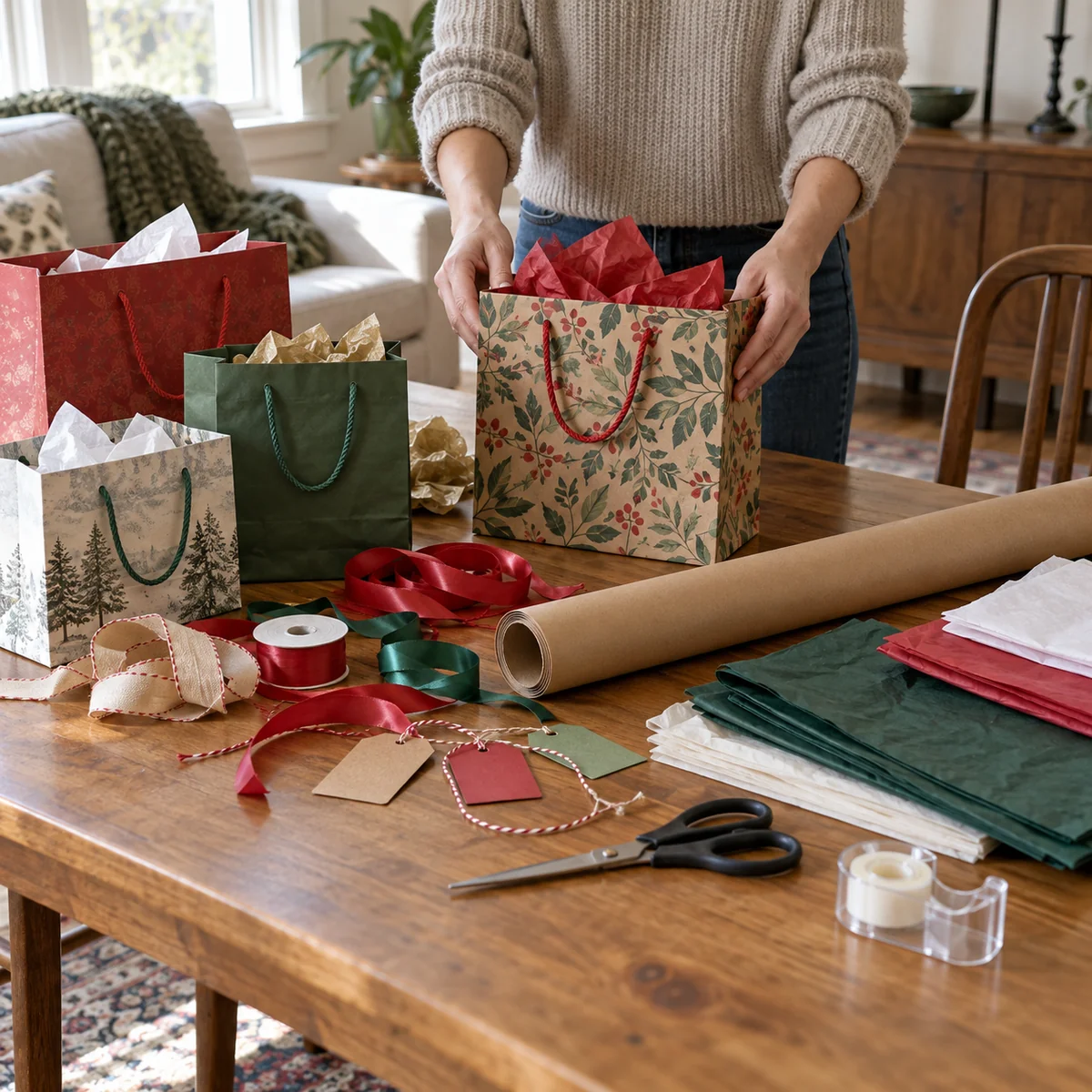
Check the places where these materials tend to hide: the back of a closet, under a bed, the stationery drawer, and any bag of saved gift bags. Put everything on a clear table. Seeing the full collection prevents you from buying another roll or a packet of tags because the ones you own were out of sight.
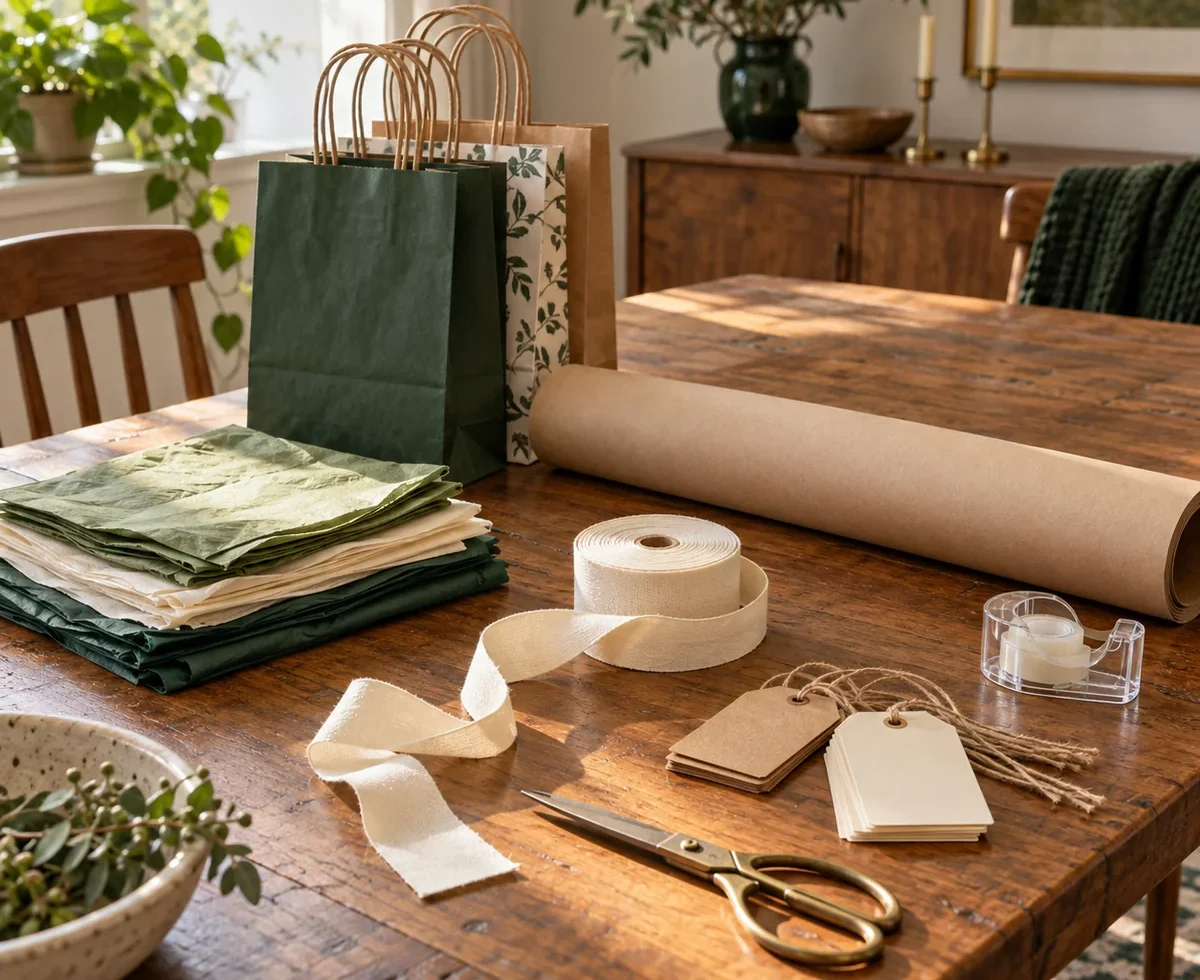
Include wrapping paper, gift bags, tissue, ribbon or string, tags, cards, tape, and scissors. Leave unrelated craft supplies where they belong. If the collection is large, do one shelf or box at a time, then bring the keepers together. Our guide to decluttering without throwing everything away offers a useful way to make decisions without creating an aimless donation pile.
2. Make five practical groups
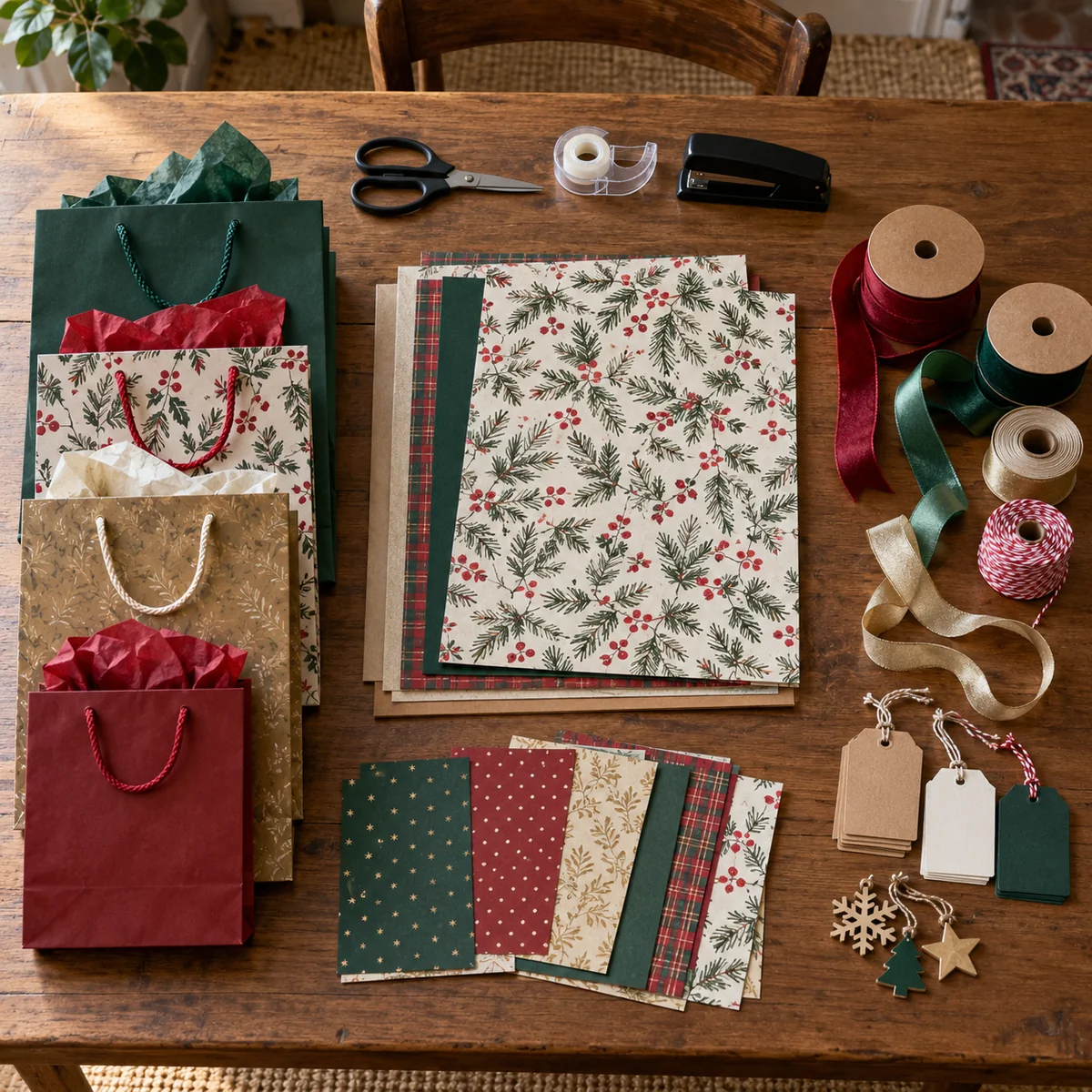
Sort into bags and boxes, full sheets and rolls, tissue, ribbons and tags, and tools. This is enough separation to find what you need without creating a complicated system. As you sort, check whether a bag has sturdy handles, paper is large enough to wrap something, and ribbon is clean and untangled.
Set aside materials that are damaged or unlikely to be used. A small offcut is worth saving when it can cover a book, a small box, or a card; a palm-sized scrap that has no realistic use can go. If you are discarding mixed, coated, glittered, or taped material, follow your local collection rules rather than assuming all gift wrap belongs in paper recycling.
3. Keep paper flat or rolled, not crushed
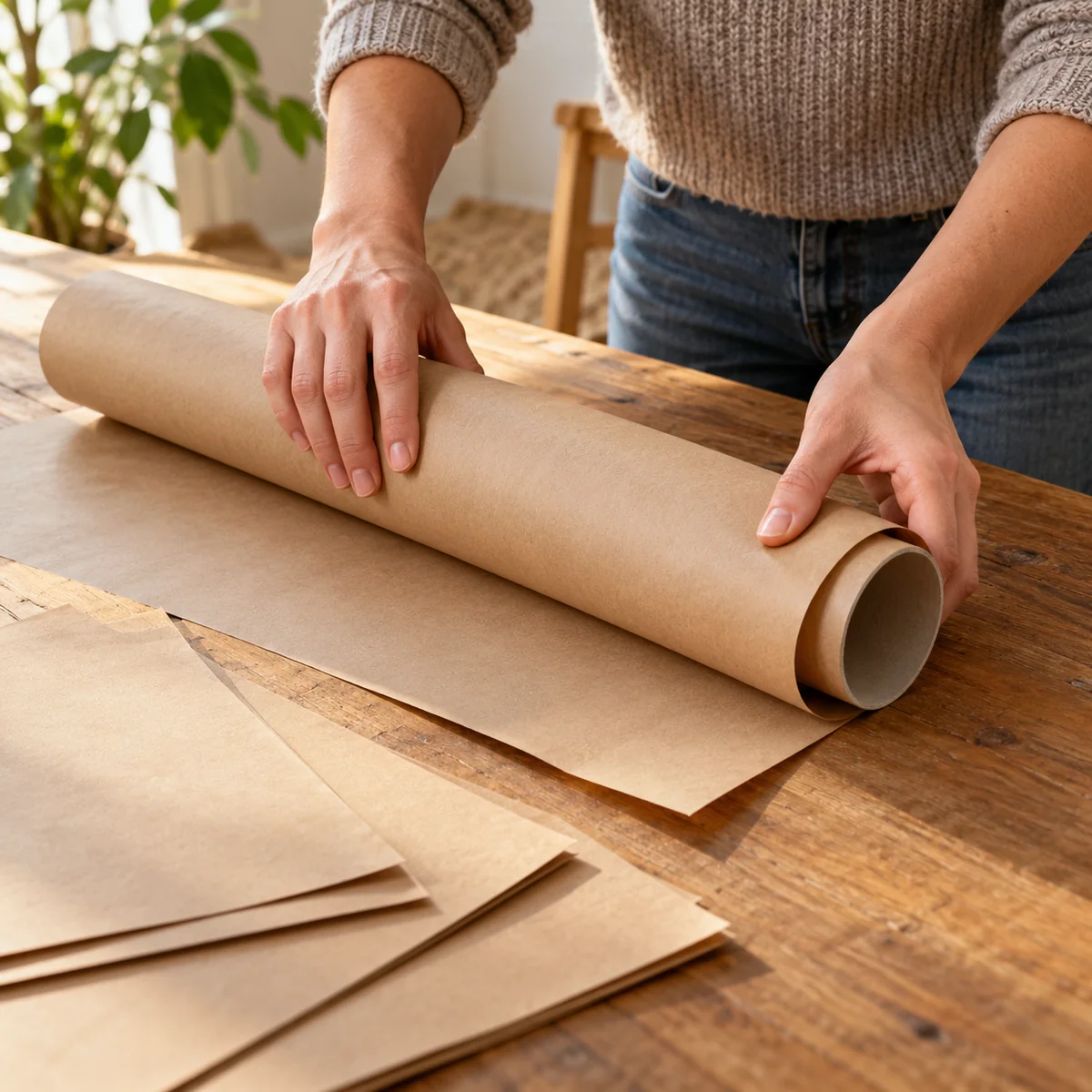
Place full sheets in a large reused envelope, a shallow drawer, or between two pieces of clean cardboard. Keep larger offcuts together in a separate envelope so they do not disappear under full sheets. Roll long paper around its original tube and secure it with a loose ribbon or a paper band; tight tape can tear the surface when removed. Store rolls horizontally where they will not bend or fall.
If you have only one or two rolls, they may fit on a closet shelf. If you have many, first ask whether you will genuinely use them before making a bigger storage area. A manageable limit is the space you already have, rather than the size of a container you could buy.
4. Nest reusable bags and smooth tissue
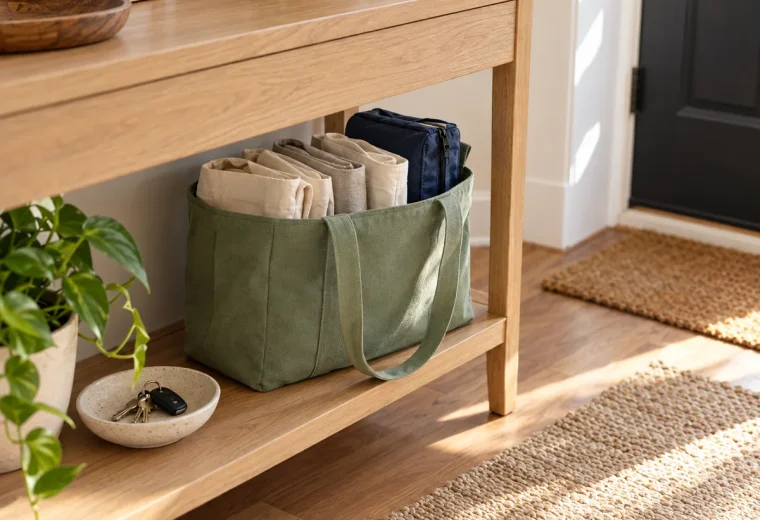
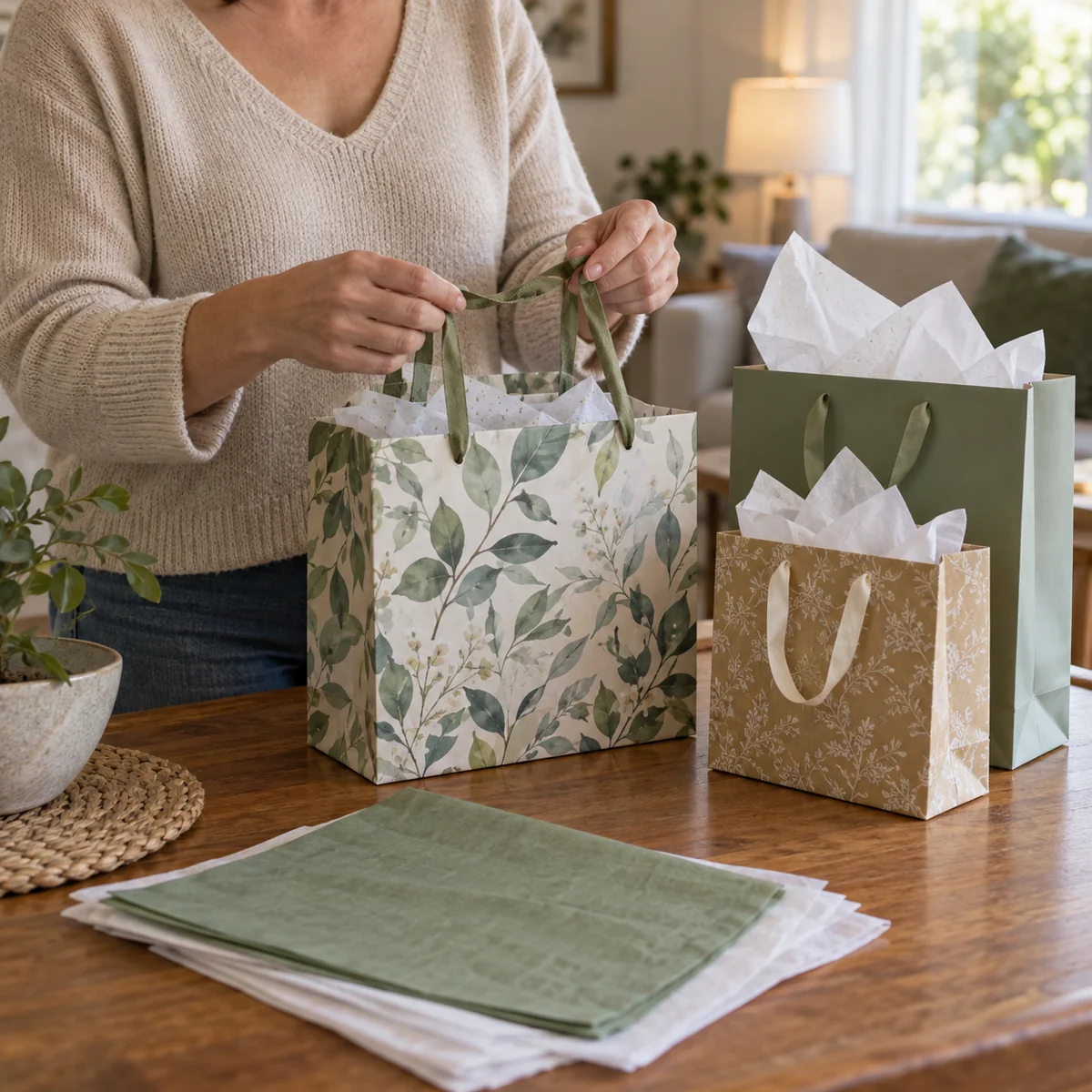
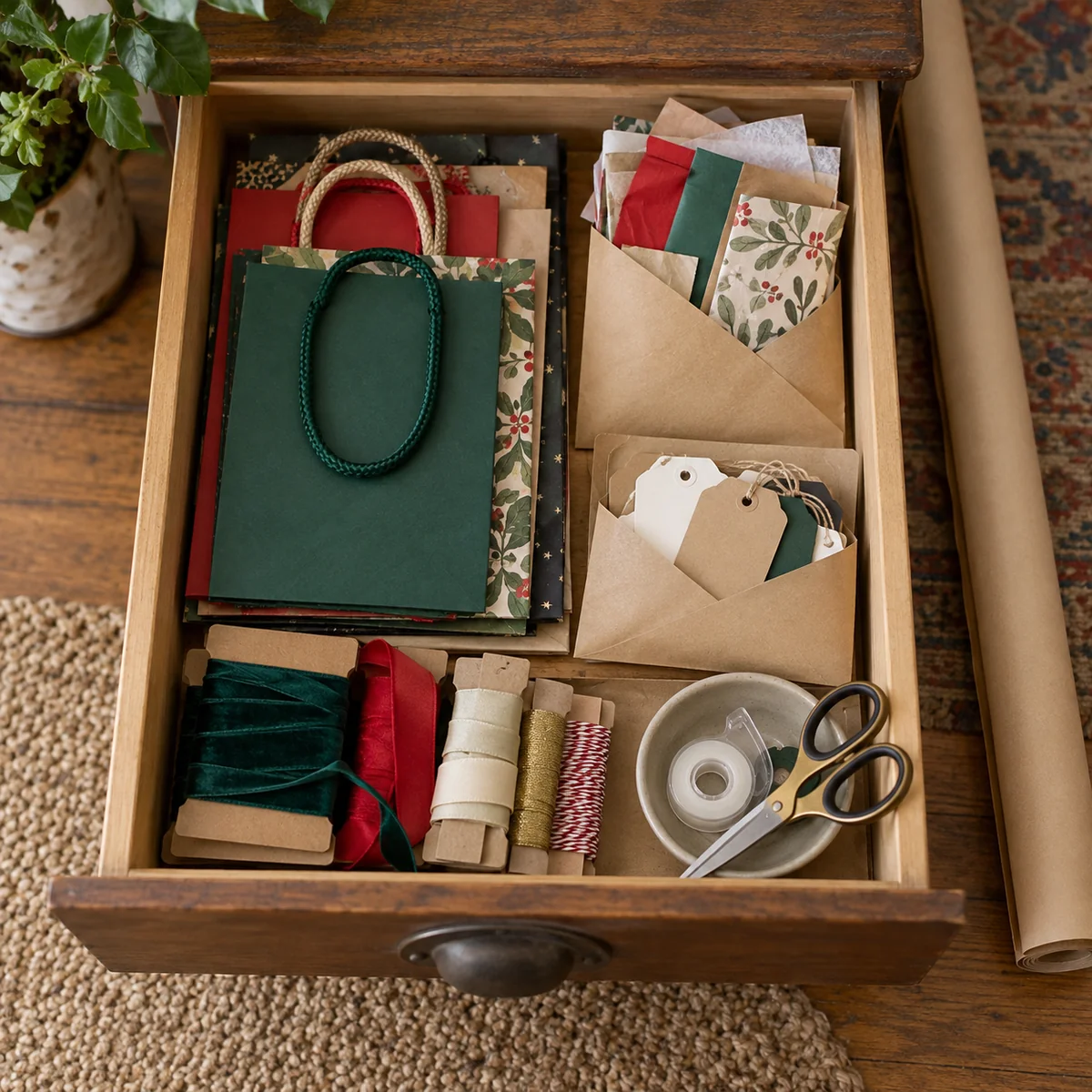
Check each bag’s base and handles before saving it. Fold any top edge neatly, then nest small bags inside medium ones and medium bags inside the largest. Do not force a thick stack into one bag; crushed sides make a reusable bag less appealing to use. Keep a few gift boxes flat if they fold without damage.
Gently smooth tissue sheets and fold them loosely. Slightly creased tissue can still work inside a bag, while badly torn or heavily stained pieces are less useful. Place the folded tissue in an envelope or between the nested bags so it stays clean. When a gift arrives, take thirty seconds to decide whether its packaging is actually reusable before adding it to the collection.
5. Give the small pieces a simple home
Wind longer ribbon around a piece of scrap cardboard and tuck the loose end under the last turn. Put short usable lengths in one envelope. Keep blank tags and spare cards in another. A small reused box can hold these envelopes, scissors, and tape together. You should be able to lift out the tools without emptying a tangle of ribbon onto the floor.
Store the box, flat bags, and paper in one reachable spot, ideally near the table where you wrap. If they cannot fit together, keep the roll nearby and the small box on the same shelf. A system that takes several trips to assemble is less likely to survive the next busy celebration.
Before buying more, check the wrap zone
Look at the next few occasions on your calendar and the gifts you expect to give. You may already have a suitable bag, a sheet large enough for a box, or a card you can use. For an unusually shaped gift, a reusable bag may be simpler than cutting into a fresh roll. If a gift itself is still undecided, our guide to giving gifts people will actually use can help you start with the person rather than the wrapping.
Only replace a supply when you know what it is for. Buying a coordinated stash “for someday” can quickly recreate the scattered collection you just sorted. Use existing plain paper, a reusable bag, or ribbon already on hand when it suits the gift.
Reset the space in five minutes
After wrapping, return the scissors and tape, wind up leftover ribbon, put usable paper offcuts in their envelope, and flatten any bag you can reuse. Remove scraps you will not use. Before saving packaging from newly received gifts, check that it is clean, intact, and fits your available space.
The result is a small wrap zone you can open and use immediately. It can look ordinary; the useful part is knowing what you have and where to find it.
Common questions
What if I have no spare drawer?
Use one existing shelf, a sturdy reused box, or a large bag for flat materials, with a smaller box for tools. Keep the collection small enough to lift out easily.
Should I keep every gift bag?
No. Keep bags with sound handles and a size or style you expect to use. Passing on extras while they are still in good condition is more useful than storing an overflowing stack.
Can I recycle leftover wrapping paper?
Rules vary by local collection program and by the paper’s coating, glitter, tape, and other additions. Check your local guidance for the exact material you have.