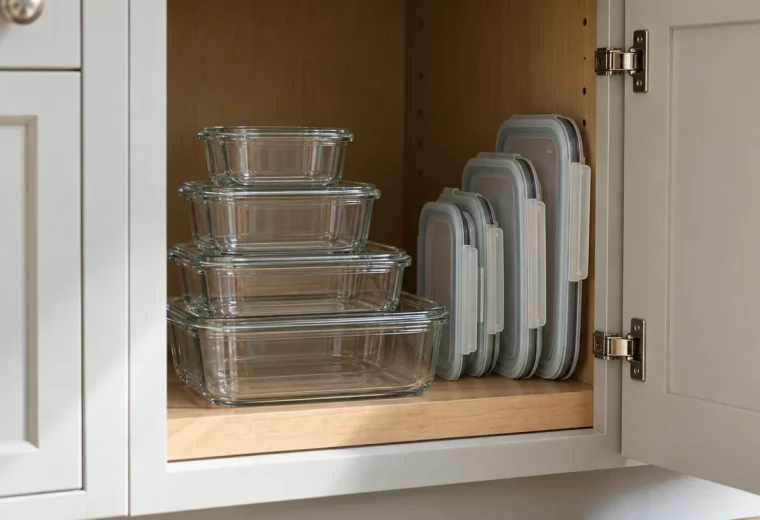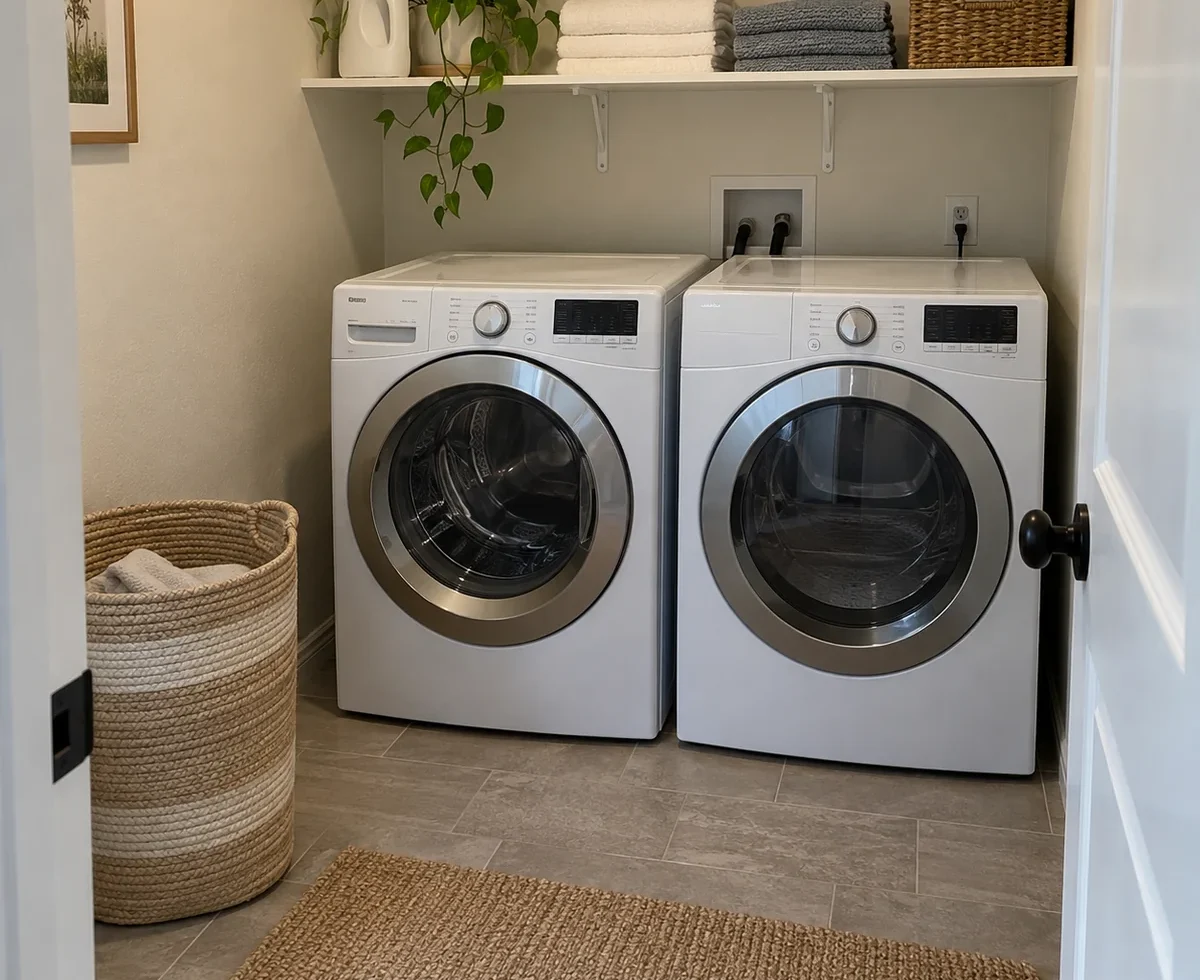
A small laundry room can become a holding area for half-finished loads: dirty clothes on the floor, clean clothes in a basket, and several bottles competing for the top of the machine. The fix is to make the next step obvious for each item. A clear route to the washer and dryer, one place for dirty laundry, and a short path for clean laundry can do more than another storage purchase.
The quick answer: Remove unrelated items, keep the appliance doors and floor path clear, assign one hamper to incoming laundry, store products safely in their original containers, and decide where a clean load will be folded or put away. End each wash day by emptying the clean basket and checking the dryer lint filter according to its manual.
Clear the working path first
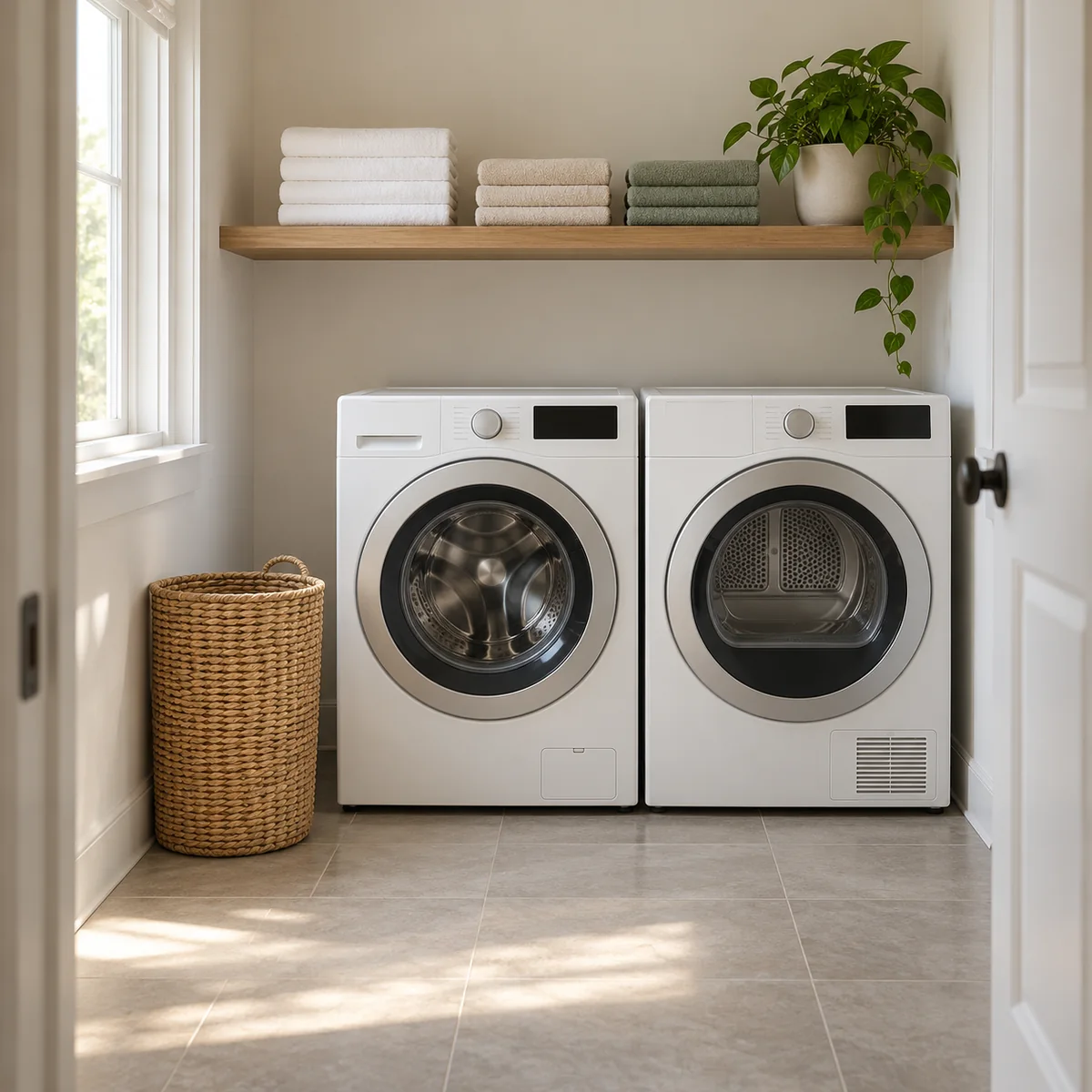
Stand where you normally load the machine. Can you open both appliance doors fully, lift a basket, and turn around without stepping over shoes or laundry? Move loose items off the floor and out of the door swing. Do not block access to outlets, water shutoffs, or a dryer vent. A narrow room needs working space more than it needs a display of supplies.
Sort what you removed into laundry essentials, items that belong elsewhere, and things you can let go. Empty product bottles and stray household tools do not need to live here. If you are unsure what to keep, use the decluttering guide to choose a real next step for each item.
Give dirty and clean laundry separate routes
Place a dirty-laundry hamper where clothes naturally arrive, provided it does not block the door. Use a basket you already own for clean loads. If the space is too tight for both, keep the clean basket elsewhere and bring it in only when unloading. The distinction matters: a basket of clean clothes should not become the next hamper for dirty ones.
Choose a simple rule for overflow: when the hamper is full, start a load that fits the washer’s instructions or move it to the household’s normal laundry schedule. Avoid creating a second floor pile. For clothing-care decisions, see how to wash clothes so they last longer.
Keep only the products you use, and store them safely
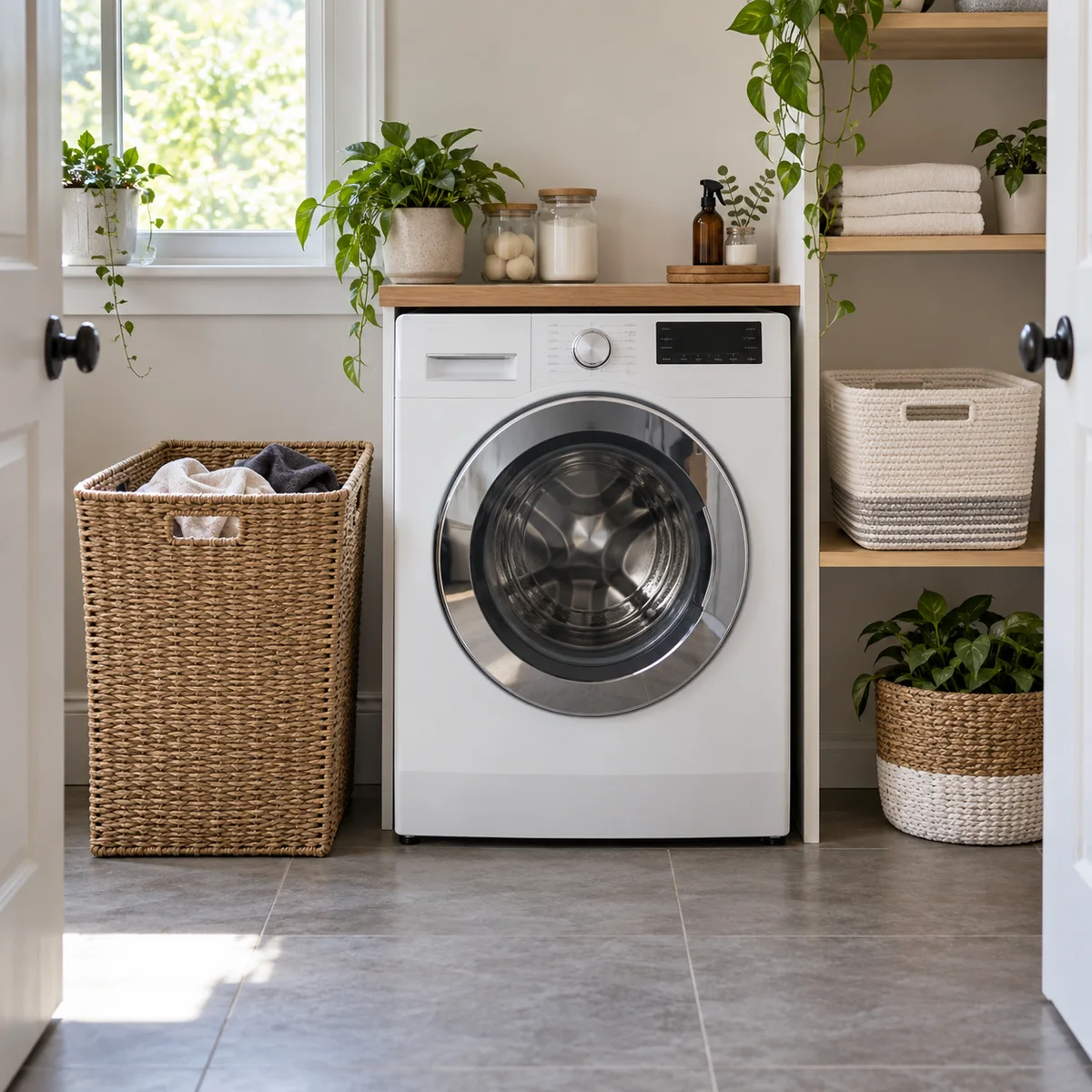
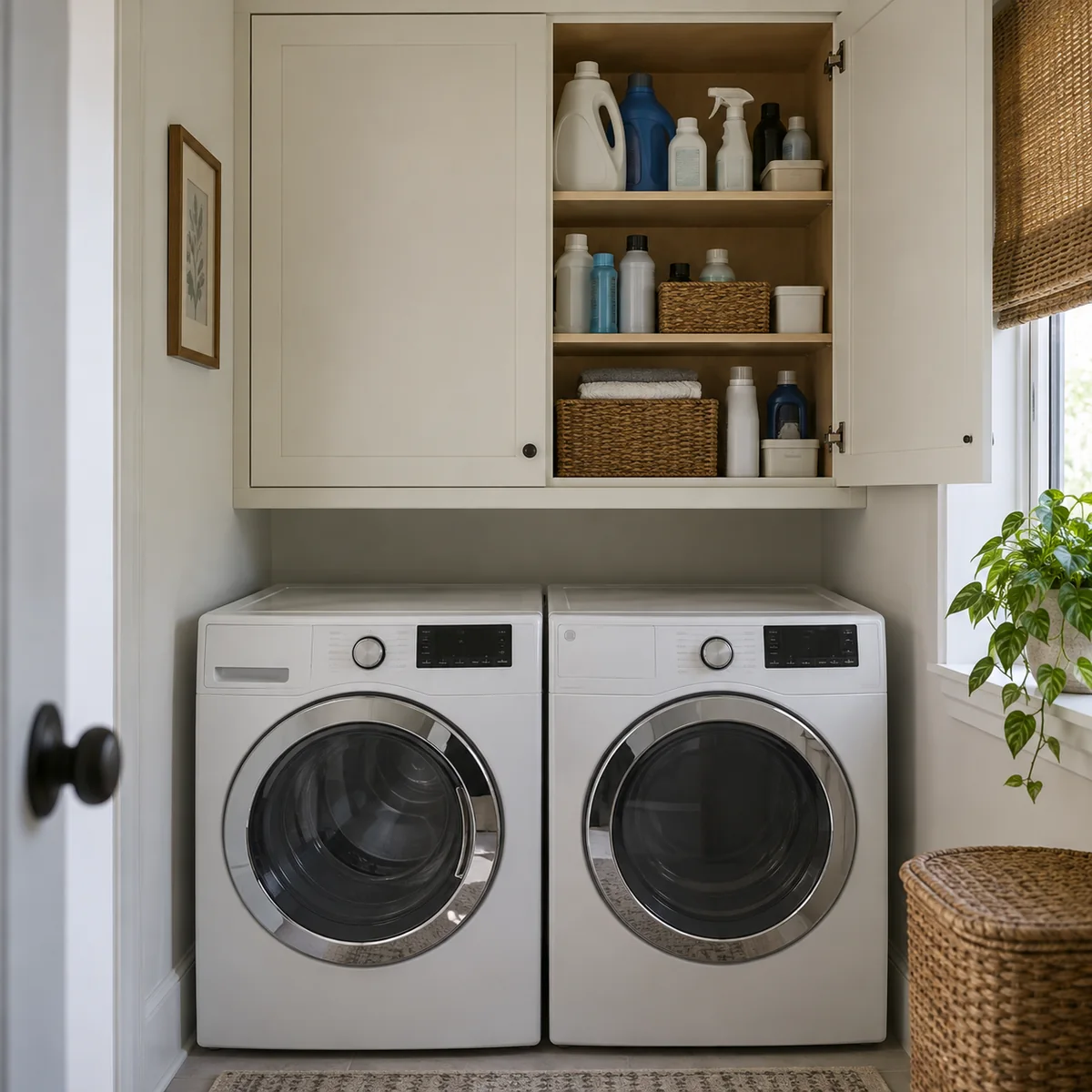
Group current laundry products in an existing cabinet or suitable shelf rather than leaving a row of bottles on the appliances. Keep each product in its original, labeled container and close it after use. If children or pets can access the room, store products securely out of sight and reach; the American Academy of Pediatrics recommends a high, locked cabinet for laundry products, especially detergent packets. A decorative jar is not a safe substitute for original packaging.
Keep spares only if you have a dry, suitable place for them. Avoid a stockpile that hides leaks or makes it hard to reach a shutoff. If a product has not been used in months, check its label and local disposal guidance before deciding what to do with it.
Choose where the clean load will finish
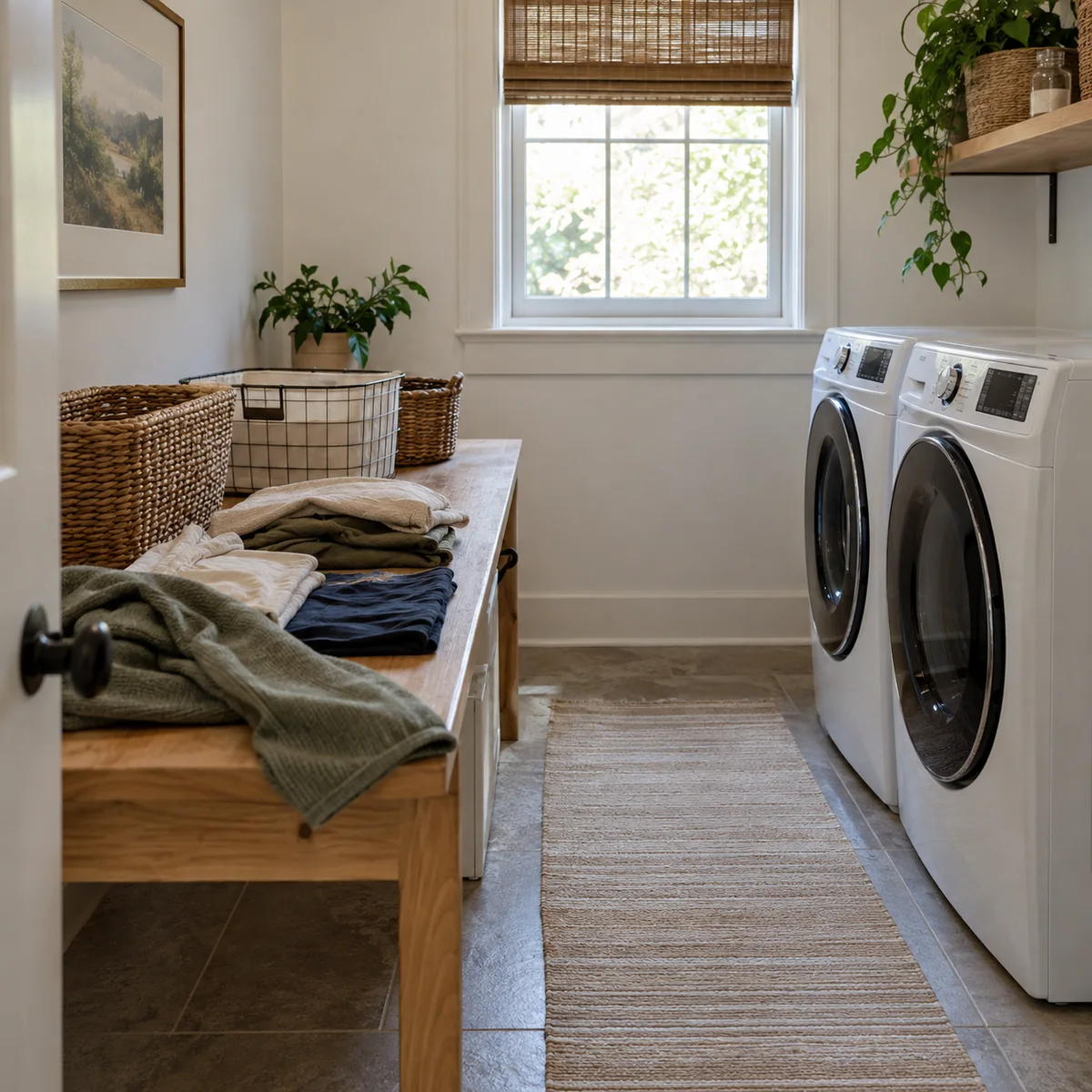
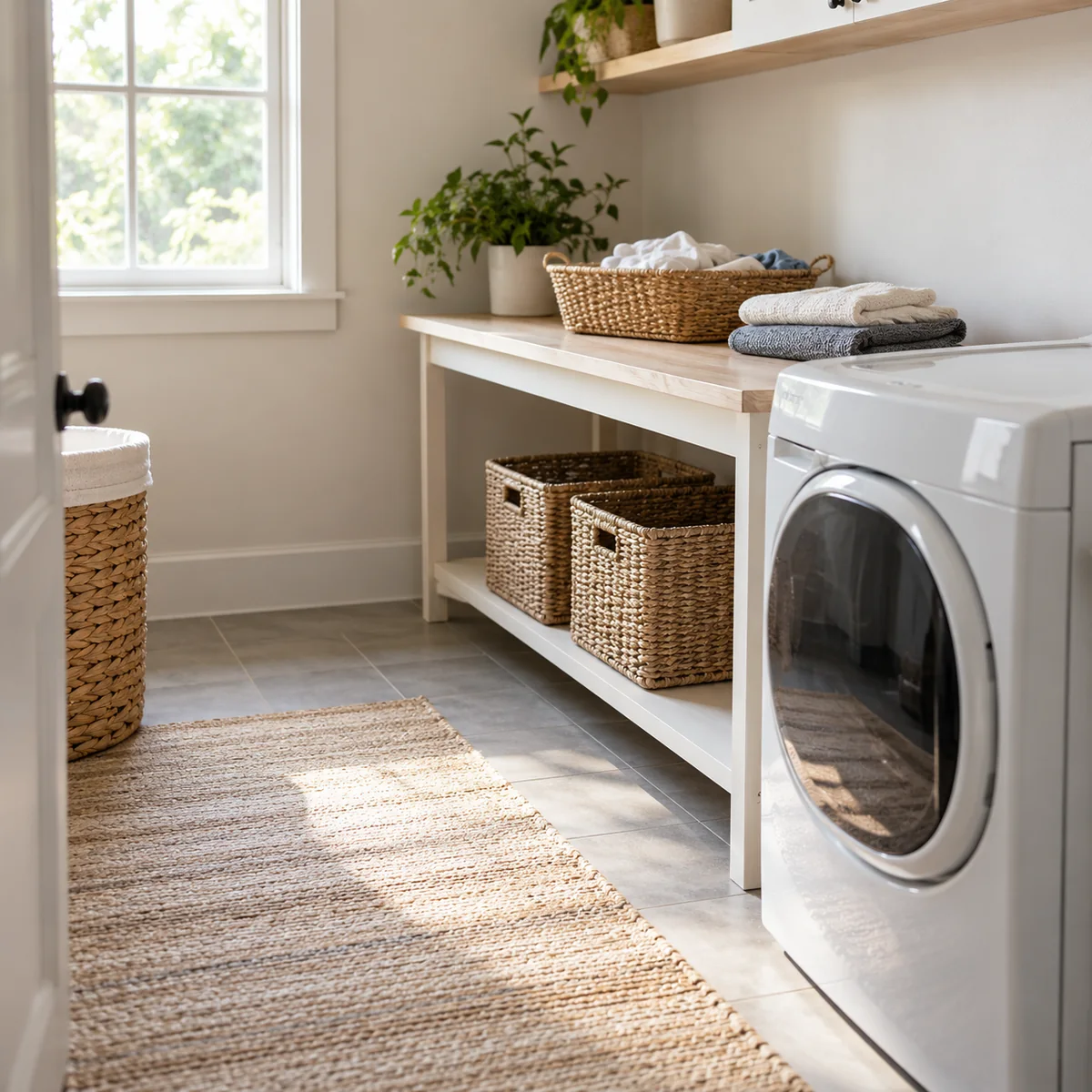
Decide on a folding surface before the machine finishes. It can be an existing table nearby or a clear surface in another room. If there is no safe surface in the laundry area, carry the clean basket out to fold; do not create a stack that sits there for days. Return folded clothes to their rooms promptly, even if that means making a short second trip.
Items that need air drying should go to a suitable drying place where they can dry fully without blocking the room. If towels repeatedly stay damp or smell musty, the musty-towel guide covers that problem in more detail.
Finish with a two-minute reset
At the end of a wash day, return the empty basket to its place, wipe spills, close product containers, and check that no clothing remains in the machine. Clean the dryer lint filter according to the appliance instructions; ENERGY STAR advises cleaning it after every load to support airflow. The U.S. Fire Administration also advises keeping items that can burn away from the dryer.
Do not let an organizing project hide a maintenance problem. If the dryer takes unusually long, its venting may need attention under the manufacturer’s guidance. If the washer has a stale smell, see our separate washer gasket and dispenser guide. A clear small room works best when the appliances themselves can be used and maintained without moving a pile.
Questions people ask
What if the washer is in a closet rather than a room?
Keep only what fits without blocking doors, access panels, or ventilation. Store the clean basket and folding surface elsewhere if needed. The same incoming and outgoing routine still works.
Can I transfer detergent to matching jars?
Keep laundry products in their original labeled containers. That preserves directions and warnings and helps prevent dangerous confusion, especially in homes with children.
Do I need a new shelf or basket?
Start with the furniture and containers you already have. A clear path, one hamper, and a place for clean laundry solve the main workflow before extra storage is considered.
Sources
- U.S. Fire Administration: Clothes Dryer Fires in Residential Buildings — keeping combustibles away from the dryer and maintaining lint and venting systems.
- ENERGY STAR: Clothes Dryers — cleaning the lint filter after every load.
- American Academy of Pediatrics: Laundry Room and Detergent Safety — storing laundry products in original containers out of children’s reach.