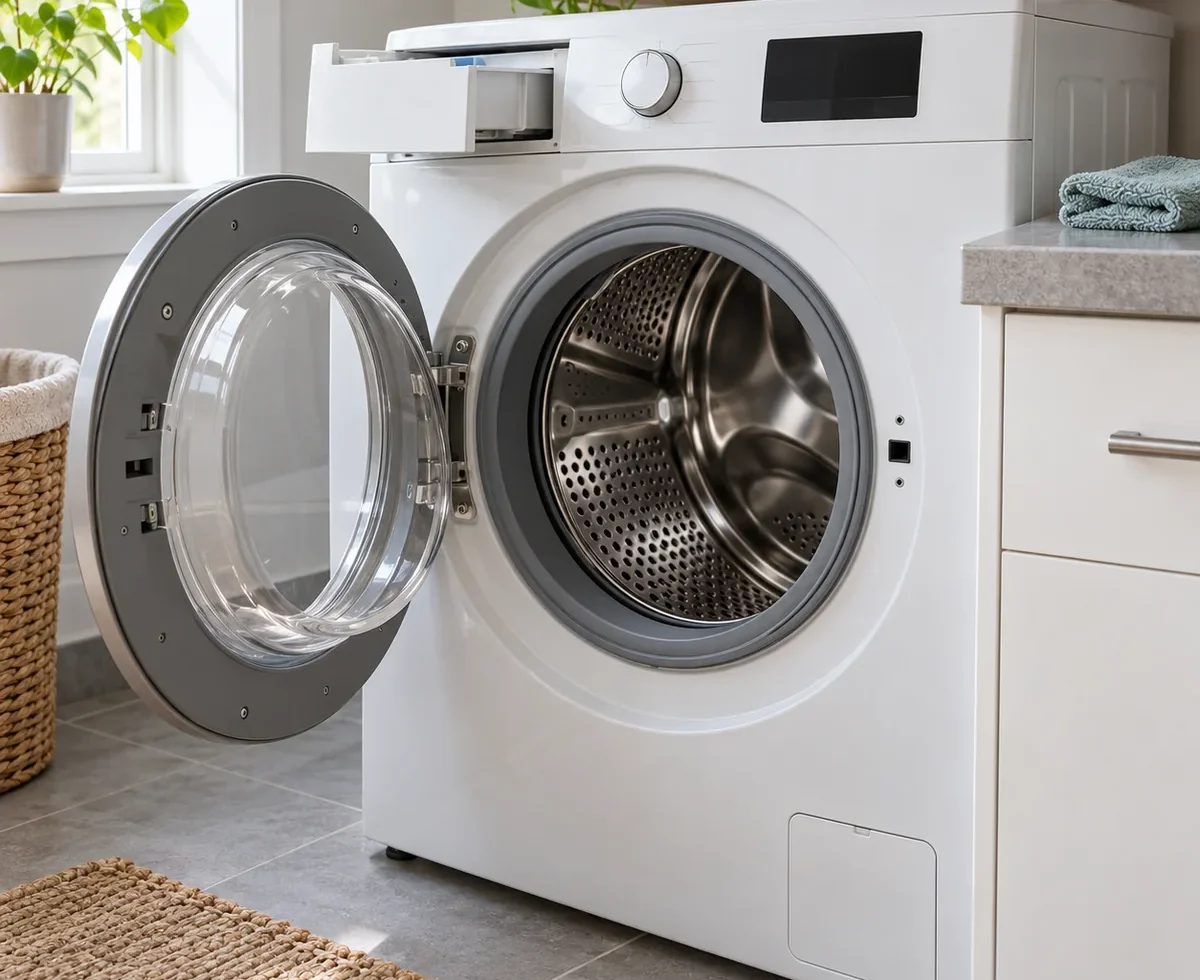
If clean laundry comes out of a front-loading washer with a stale smell, the drum is not the only place to check. Water, lint, and detergent residue can collect in the rubber door seal and the dispenser drawer. These two small areas are easy to overlook because they disappear when the door and drawer are closed.
The quick answer: With the washer off and empty, inspect the accessible folds of the door gasket, remove loose debris, wipe the seal with a soft damp cloth, and dry it. Remove the dispenser drawer only as your model’s manual directs; rinse its removable parts by hand, wipe the housing without flooding it, and let everything dry before reassembly. Follow your washer’s own care instructions for any cleaning cycle or product.
First, check the model and gather simple supplies
Look up the model number and care guide before pulling on a drawer or using a cleaner. Dispensers do not all release in the same way, and some have inserts or automatic-dosing parts. For the basic hand-cleaning job, gather two reusable soft cloths, warm water, and, if your manual allows it, a small amount of mild detergent and a soft brush. Keep an old towel nearby for drips.
Turn the washer off, remove any laundry, and give the interior a moment to cool if you just ran a hot cycle. Do not pour water into control openings or use an abrasive pad on the rubber seal. Avoid mixing cleaning products. A routine wipe does not require a homemade chemical blend.
Inspect the rubber door seal
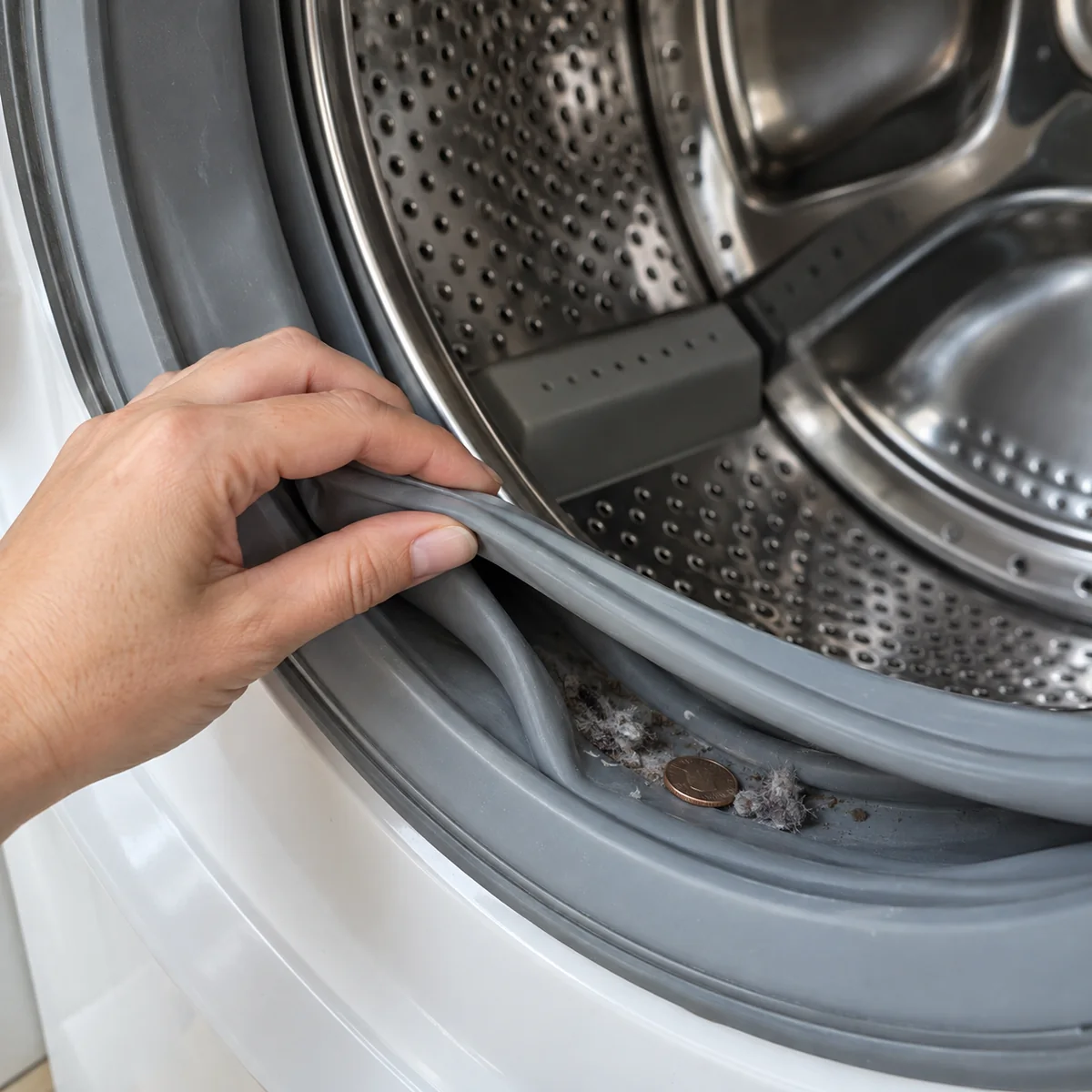
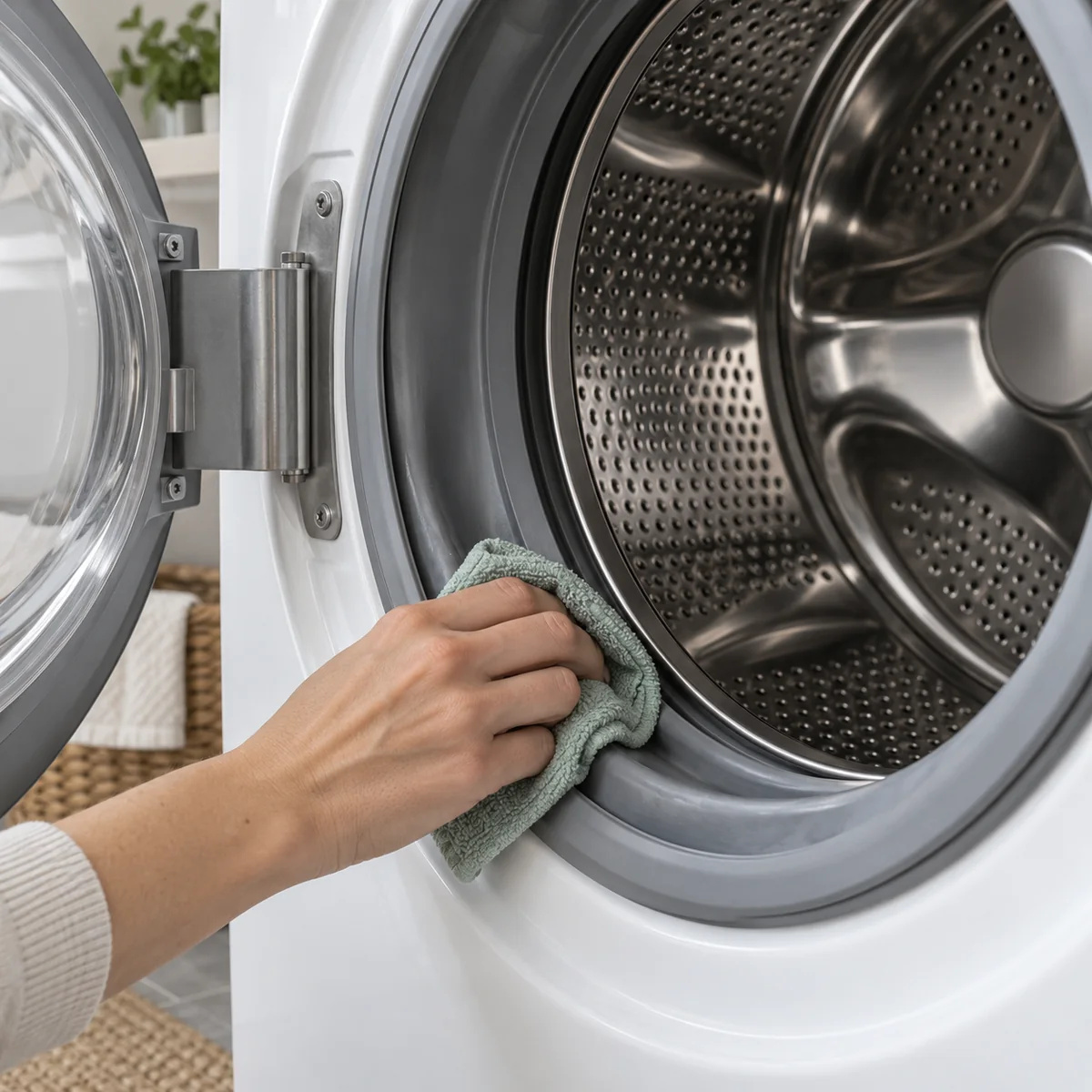
Open the door and look around the circular rubber gasket. Gently part its accessible fold with your fingers; do not stretch it or pull it away from the machine. Remove loose lint, hair, and small objects such as a coin. Check all the way around, including the lower fold where water and debris can settle. If you notice a tear, a loose section, or a persistent leak, stop and consult the manufacturer or a qualified repair professional.
Wipe, rinse, and dry the gasket
Wipe the gasket and the inside edge of the door with a soft damp cloth. Work around the folds rather than scrubbing hard at one spot. If residue is stubborn and your manual permits it, use a little mild detergent on the cloth or a soft brush, then wipe away the cleaner with a fresh damp cloth. Finish with a dry cloth, paying attention to the lower fold.
Whirlpool’s care guidance also recommends wiping under the rubber lip and letting the interior air dry with the door open. If you see extensive staining or suspect mold that does not come away with routine cleaning, follow your specific model’s instructions or arrange service rather than improvising a stronger mixture.
Clean the removable detergent drawer by hand
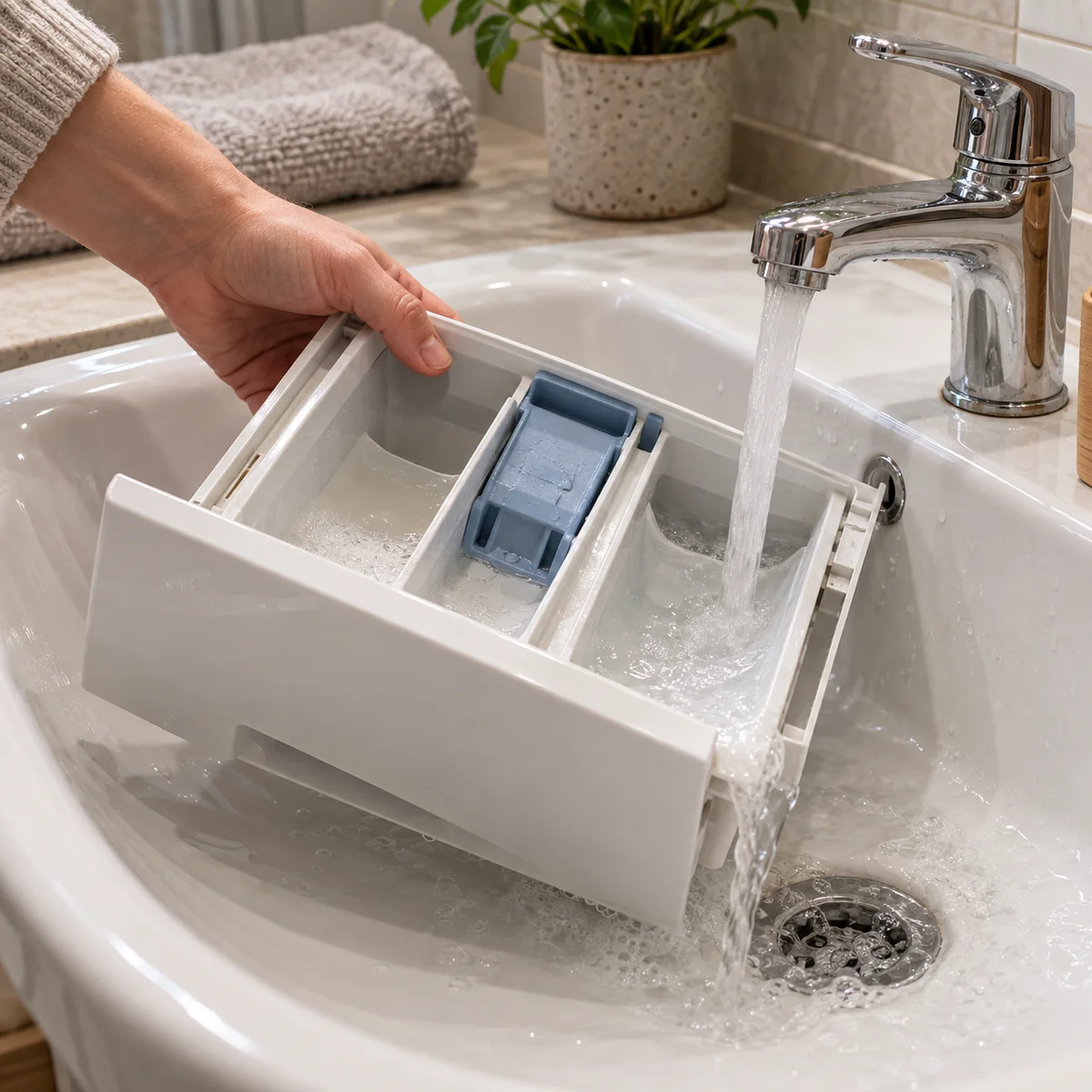
Pull the drawer only to the point your manual specifies, press its release if it has one, and remove any inserts designed to come out. Take a quick photo before disassembly if the compartments look similar. Rinse removable pieces under warm running water; use a soft brush for dried detergent in corners. Whirlpool advises washing drawer parts by hand rather than in a dishwasher. Do not force a component that seems fixed in place.
Dry the pieces with a clean cloth and check that no detergent remains in the channels. If your model has a sealed automatic-dosing reservoir, follow its separate maintenance instructions; it may not be handled like an ordinary removable tray.
Wipe the drawer housing, then reassemble
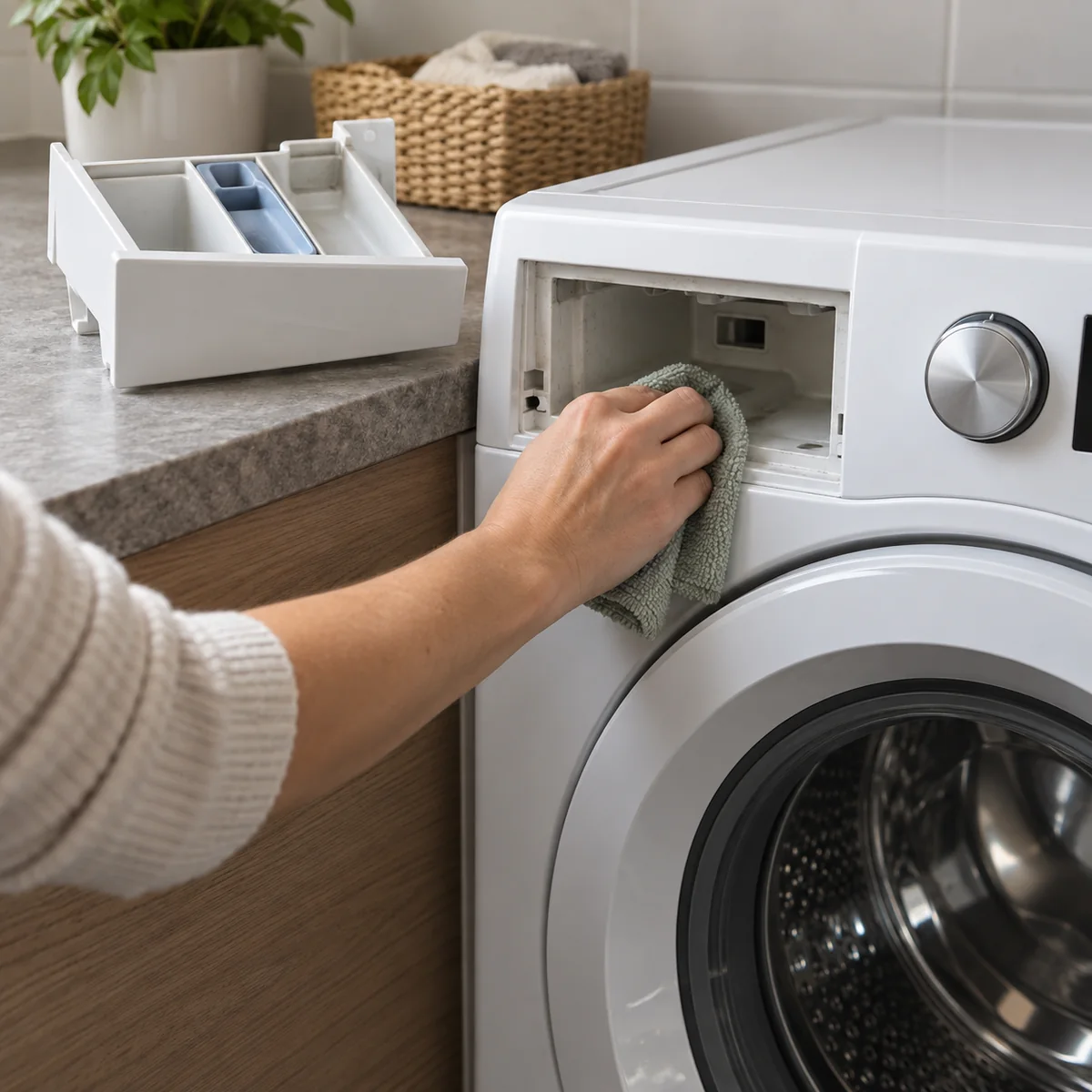
With the drawer out, wipe reachable residue from the housing using a damp cloth or a small soft brush. Keep water and loose debris out of inaccessible openings; do not spray liquid deep inside the machine. Whirlpool recommends mild soap and water on a soft cloth or sponge for its dispenser housing. Once the parts are dry, replace any inserts in their original positions and slide the drawer back in without forcing it.
If detergent still fails to dispense after cleaning, check your model’s troubleshooting guide. A clogged drawer is only one possible cause, and a mechanical problem needs more than another wipe.
Let the machine dry after the load
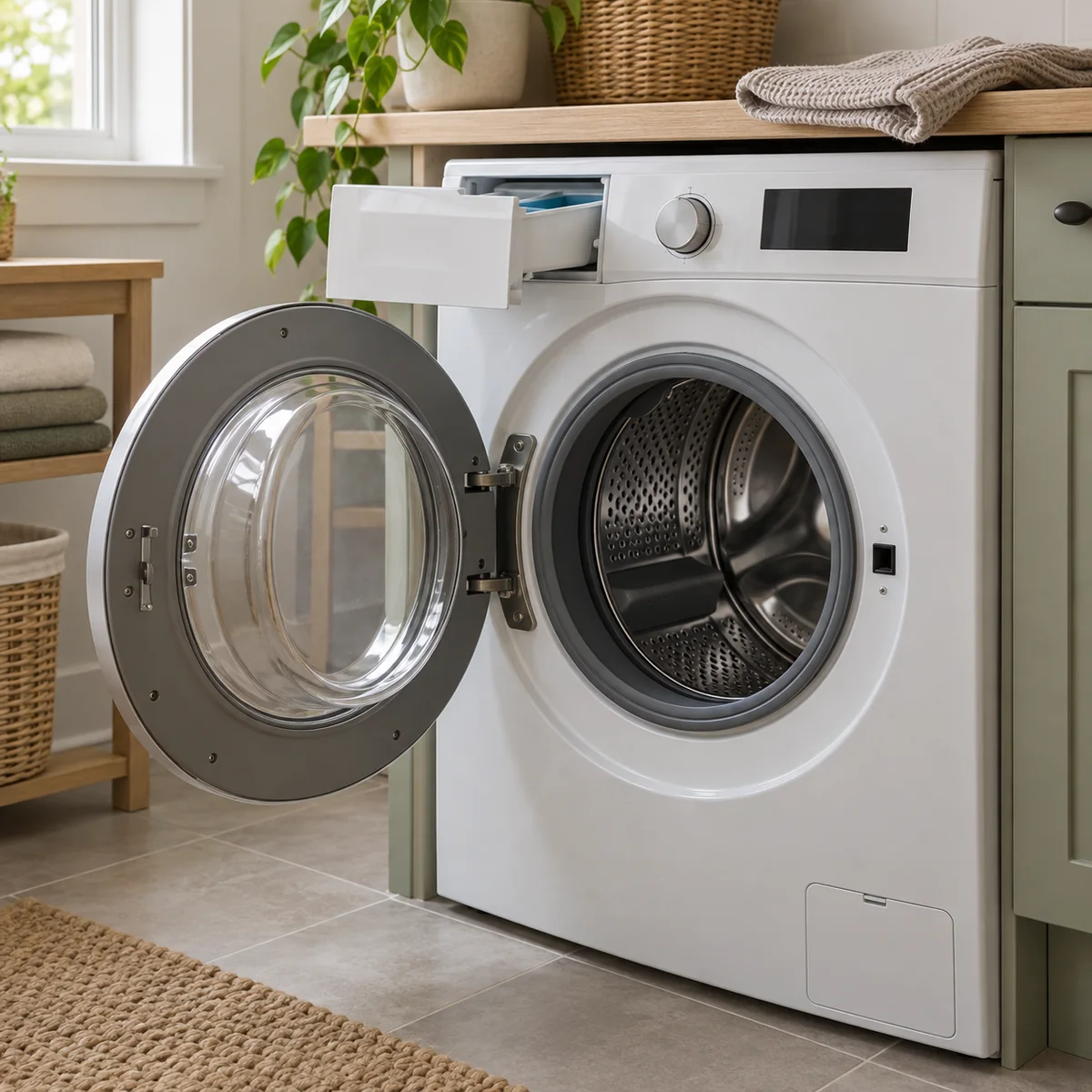
When it is safe for your household and the manufacturer’s instructions allow it, leave the washer door ajar and the detergent drawer slightly open after a wash so moisture can escape. Wipe any standing water from the gasket. Keep detergent doses within the product and machine directions; adding extra detergent can leave more residue. Run a dedicated washer-cleaning cycle only according to your model’s manual, including its instructions about whether and which cleaning product to use.
If towels themselves keep smelling musty, the cause may also be how they are washed and dried. See our musty-towel guide for that separate problem. For a broader laundry routine, read how to wash clothes so they last longer.
Questions people ask
How often should I clean the gasket and drawer?
Follow your manufacturer’s schedule and clean sooner when you see residue or smell an odor. A quick gasket check after loads and a periodic drawer wash are easier than waiting for heavy buildup.
Can I put the detergent drawer in the dishwasher?
Do not assume so. Whirlpool specifically advises hand-washing its removable drawer parts. Check your own model’s manual before exposing plastic parts to dishwasher heat.
Should I use bleach or vinegar?
Use only products and amounts permitted by the washer’s care guide. Never mix bleach with vinegar, ammonia, or other cleaners. For routine residue, a soft cloth, water, and a manual-approved mild cleaner are a sensible starting point.
Sources
- Whirlpool: How to Clean Your Front Load Washer — gasket, door, and dispenser cleaning overview.
- Whirlpool Product Help: How to Clean a Front Load Washer Dispenser Drawer — drawer removal, rinsing, housing, and hand-washing instructions.
- Whirlpool Product Help: Cleaning a Front Load Washer Door Seal — wiping and drying the gasket.