The food container cabinet can look full while leaving you with nothing useful for tonight’s leftovers. Bowls sit inside bowls, lids slide to the back, and the one size you need has no matching top. You can make the space work again with a table, a few minutes of matching, and a storage rule that fits the cabinet you already own.
The quick answer: Empty the cabinet, match every container with a lid, keep the sizes you actually use, and give unmatched pieces a short decision window. Nest only containers that fit without jamming, keep their lids together and visible, and return each clean, dry piece to the same place after washing.
Take everything out and see the whole set
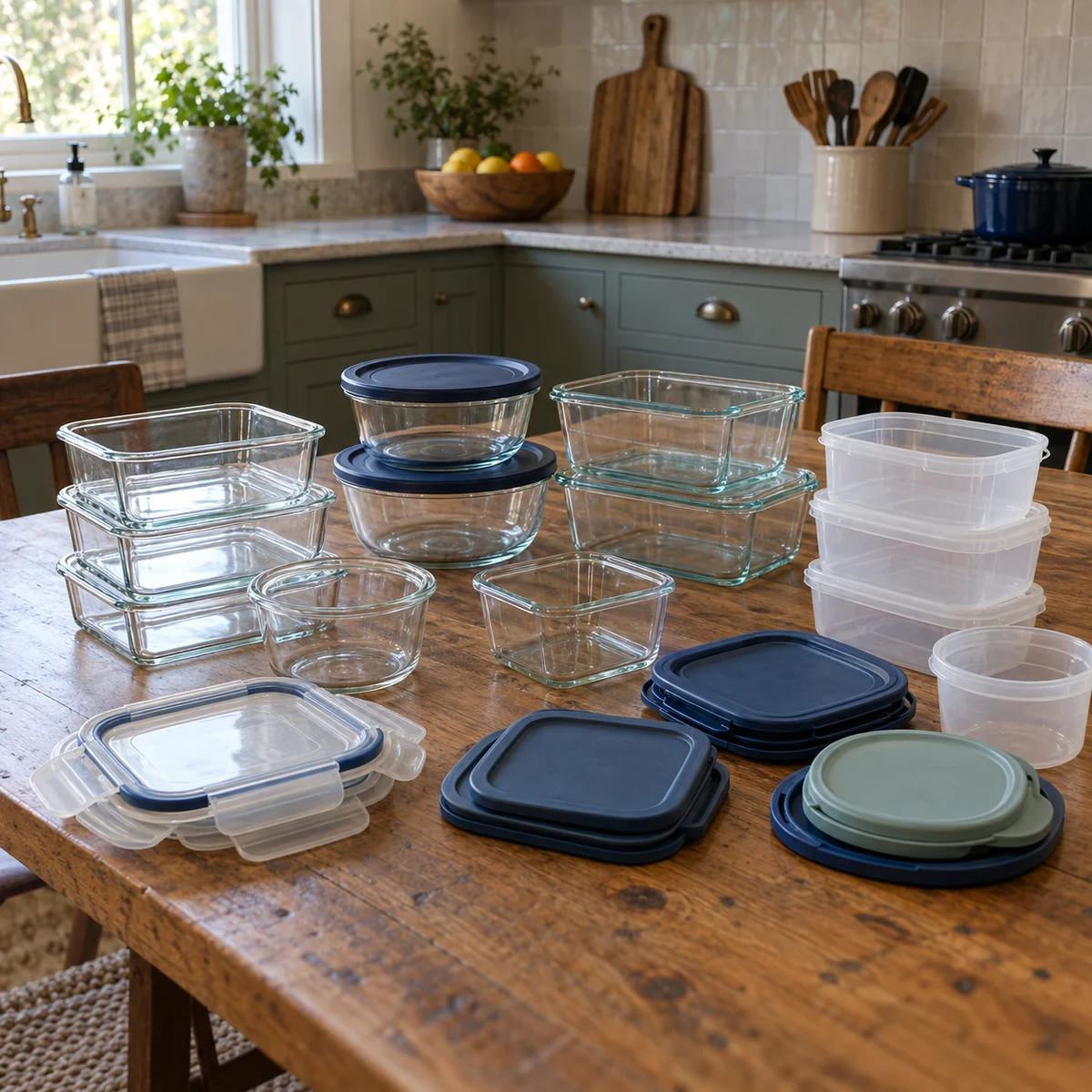
Clear one table or counter section and bring out every food storage container and loose lid from that cabinet. Check nearby drawers, the dish rack, and the refrigerator for pieces that belong to the set. You are not trying to organize the entire kitchen; you are collecting one category in one place so you can see what you actually have.
Wipe the empty shelf and let it dry. Put containers in one loose group and lids in another. If the pile is large, sort by shape first—round, square, and rectangular—so matching takes less time. For a broader kitchen surface reset, see our counter organization guide.
Match each lid to a container
Pick up a lid and test it on the container that looks closest. Check that it sits evenly and closes as designed; a similar-looking lid is not necessarily a real match. Put confirmed pairs together. If several containers share one lid size, check all of them before deciding how many lids you need.
Make a small temporary group for unmatched pieces. Look in the dishwasher or fridge once, then set a specific date—such as your next weekly kitchen reset—to decide what to do with leftovers. This stops “mystery lids” from living in a permanent pile. If a clean container without a lid is genuinely useful for non-food sorting, give it a named job; otherwise check local disposal or recycling rules for its material.
Keep the sizes you reach for, and check condition
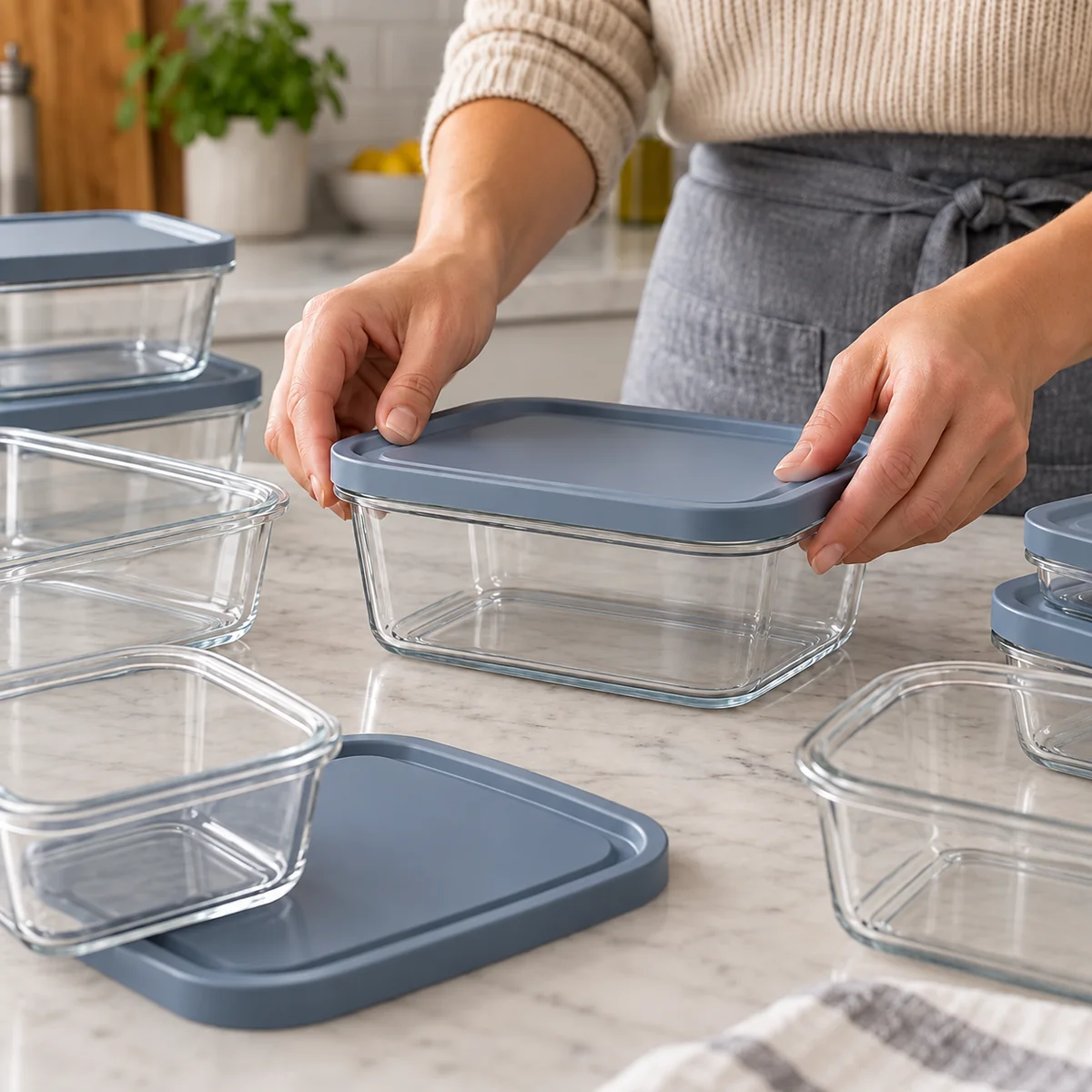
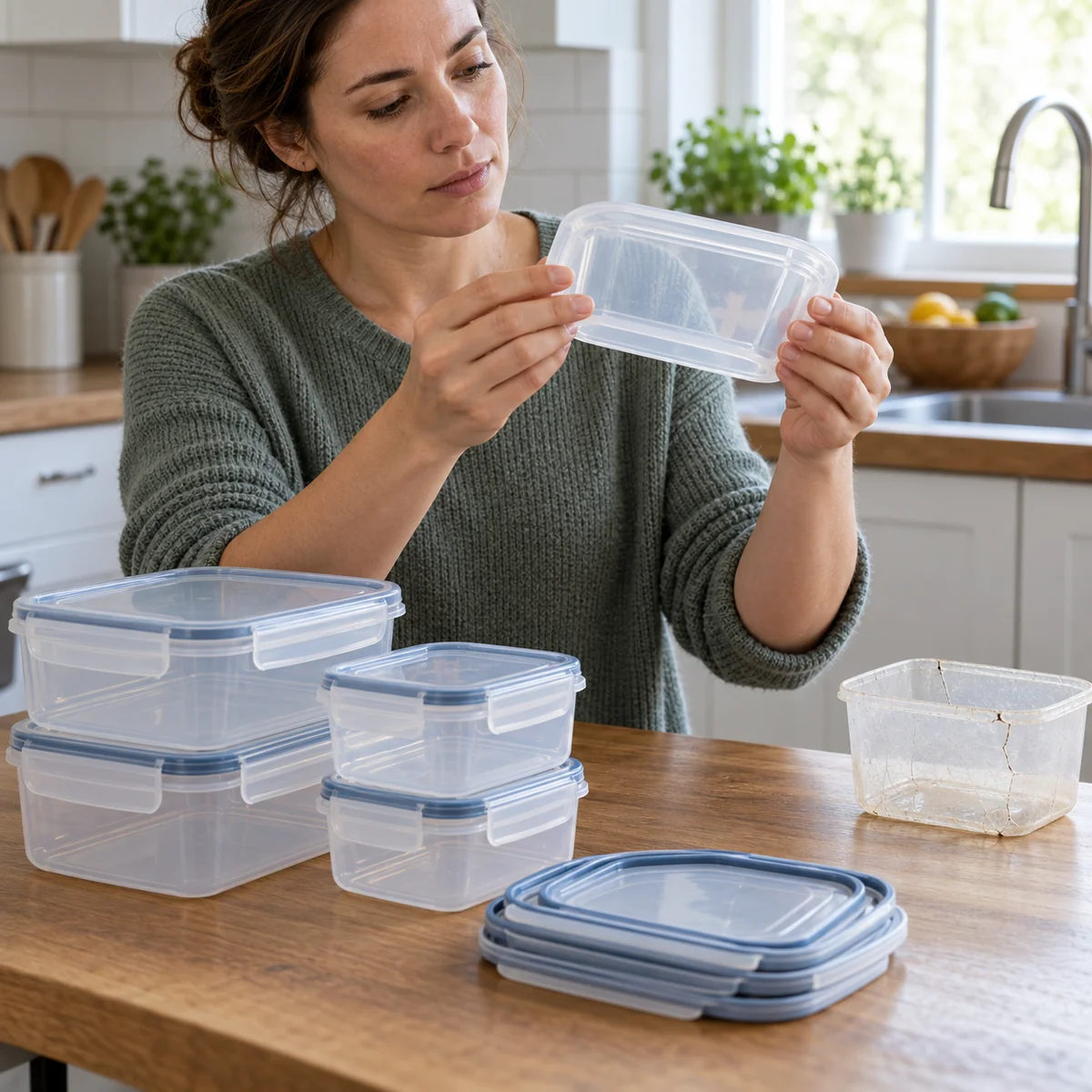
Notice which containers fit your ordinary portions and the refrigerator shelf you use. A few reliable sizes may serve you better than a crowded collection of awkward ones. Keep pieces that close properly and are easy to clean. Set aside cracked, warped, or persistently stained or odorous pieces for a decision; do not count a container as useful if you avoid putting food in it.
Follow the maker’s care directions for dishwasher, freezer, and microwave use. The U.S. Department of Agriculture advises using only items labeled microwave-safe for microwave cooking. An empty yogurt tub or other cold-storage package should not automatically become reheating equipment. Reusing an item for a suitable purpose is useful; assuming every container is safe for every job is not.
Use one simple cabinet layout
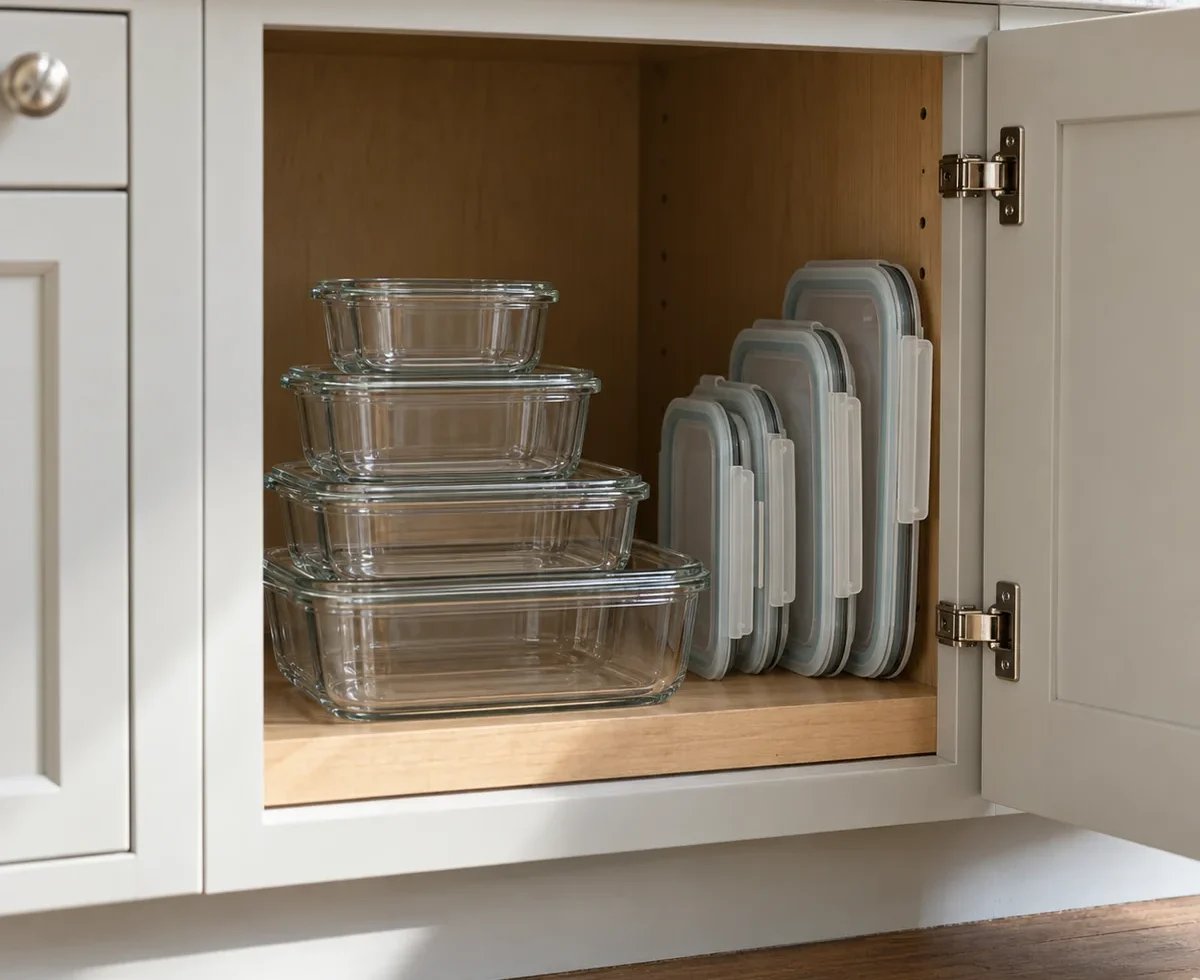
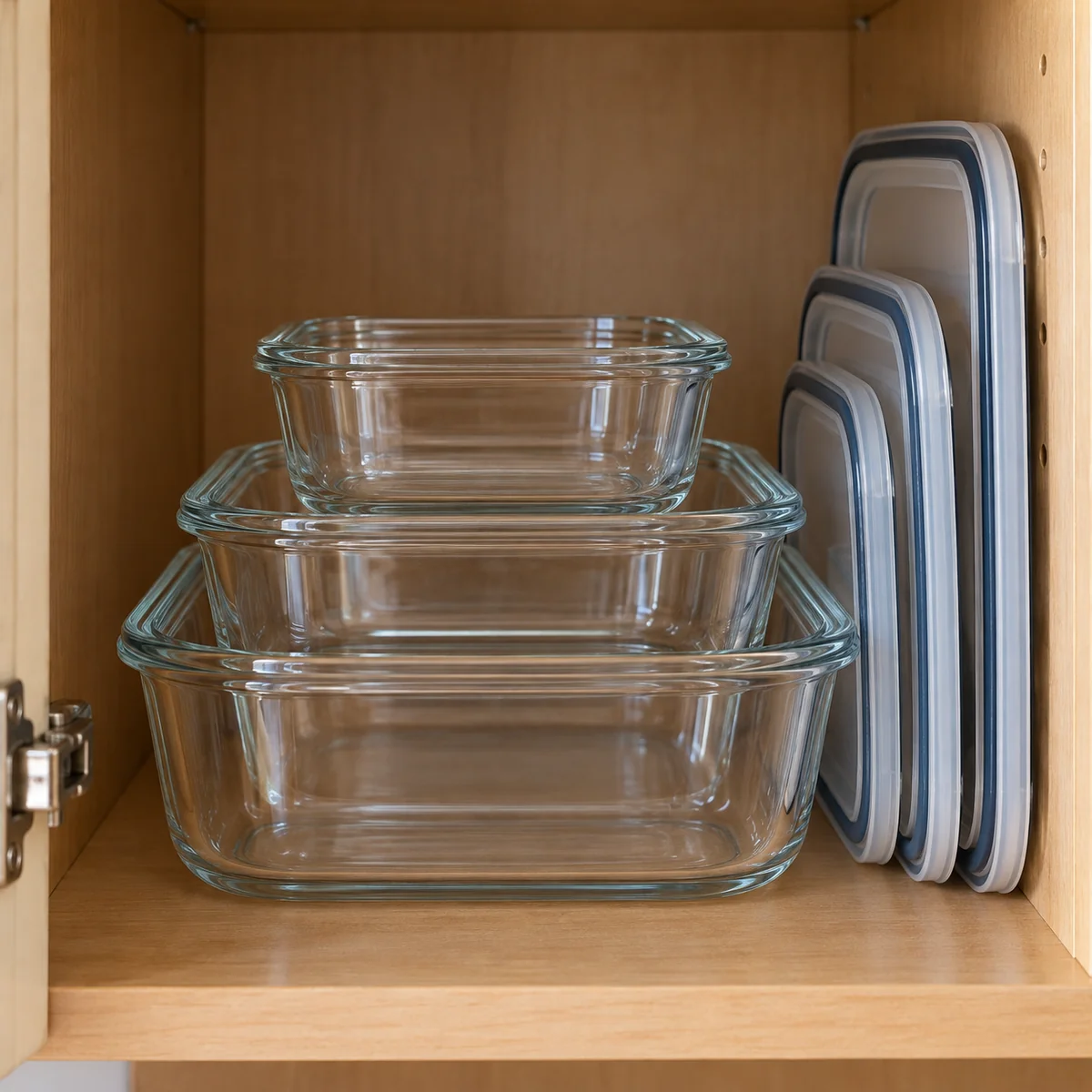
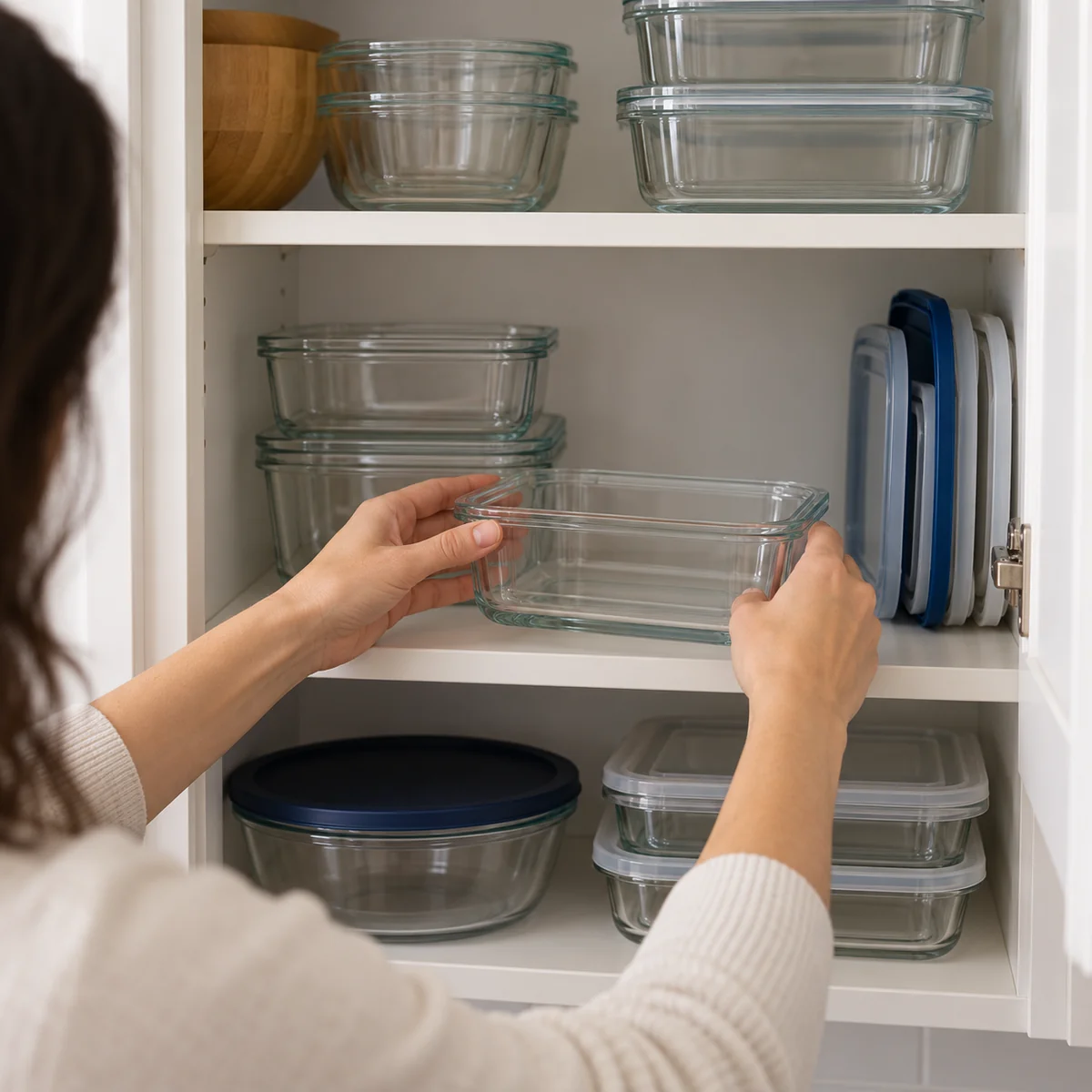
Nest containers by shape and size, largest at the bottom, but stop if the stack wedges together. Keep lids upright in one visible place next to their containers, or lay a short stack flat if your shelf is shallow. You can place less-used large containers behind the everyday sizes. No rack is required if the shelf itself gives each group a consistent home.
Leave enough space to lift out one container without unloading the entire cabinet. If the shelf is still packed, reduce the number of duplicates or move rarely used serving pieces elsewhere. The point is easy retrieval and return, not a perfectly symmetrical display.
Make the return trip easy
After washing, let containers and lids dry completely before stacking or closing them for storage. Put each piece back in its assigned area rather than dropping it into an empty corner. If a family member cannot tell where a lid goes, the system may need fewer groups or a more obvious position.
Recheck the cabinet when you notice lids piling up again. A quick match-and-return is easier than starting over. If food containers are part of a larger drawer overflow, our junk drawer guide uses the same principle: give every kept object a specific place and an easy next action.
Questions people ask
Should lids stay on every container?
That makes matching easy but can use more shelf space. If nesting works better for your cabinet, keep the lids in one visible group next to the containers. Choose the arrangement you can maintain.
What should I do with an unmatched lid?
Check the dishwasher and refrigerator, then give the piece a short, specific decision window. If no match appears, look for a real alternate use or follow local material disposal rules. Avoid keeping a permanent pile of “maybe” pieces.
Can I microwave food in any reused plastic tub?
No. Use only containers labeled or specified as microwave-safe for that use. Cold-storage packages such as yogurt or margarine tubs are not automatically suitable for reheating.
Sources
- USDA Food Safety and Inspection Service: Are Utensils Microwave Safe? — use only microwave-safe labeled items for microwave cooking.
- U.S. Food and Drug Administration: Safe Food Handling — cleaning dishes, utensils, and food-contact surfaces.