A carton of strawberries can look perfect at the store and show a soft spot the next day. The useful routine is simple: check the fruit when you get home, keep it dry and refrigerated, wash only what you are about to eat, and freeze the rest while it is still good. No special produce gadget is required.
This guide explains what to do at each point, including the important difference between a slightly soft berry and a moldy one. Oregon State University Extension recommends planning to use or freeze strawberries within about one to three days for best flavor and texture. That is a planning window, not a promise that every carton will last the same number of days.
The quick answer
- Open the carton and check for damaged or moldy berries.
- Refrigerate the sound berries promptly, dry and with their green caps attached.
- Wash a serving under cool running water just before eating.
- Use ripe berries soon; freeze clean, drained extras before quality falls.
FoodSafety.gov advises refrigerating perishable produce such as strawberries once home. If you know you cannot finish the carton in the next few days, make a freezing plan on the day you buy it rather than waiting for the first berry to collapse.
1. Sort the carton before putting it away
Look through the top and bottom of the container. Set aside berries that are bruised or soft for prompt use if they are otherwise sound. Remove any moldy strawberry and any fruit directly touching it. USDA guidance says mold can grow below the visible surface of soft fruit; it advises discarding those pieces, then closely checking and washing the remaining fruit before eating it. Do not cut away a fuzzy spot from a strawberry and eat the rest.
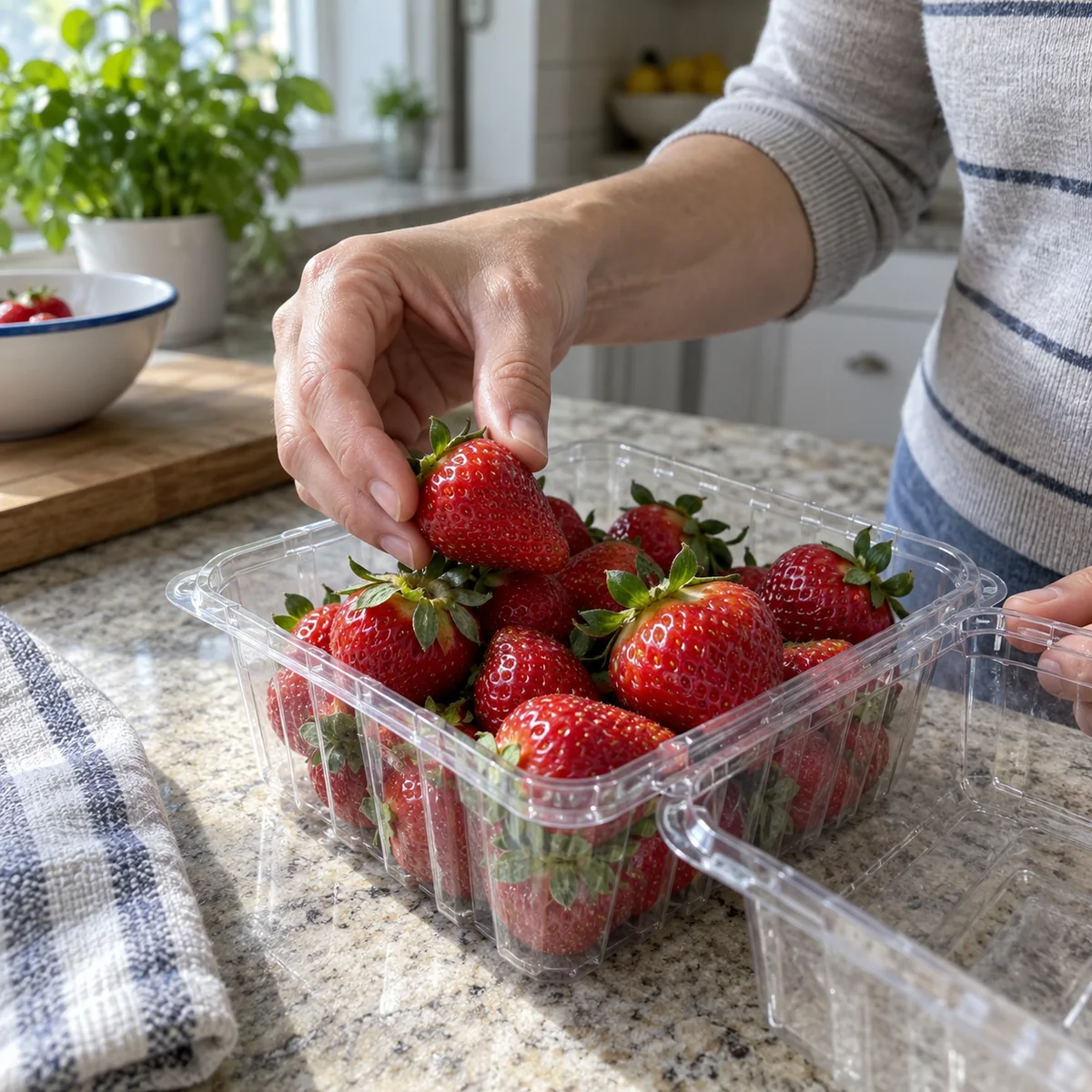
Handle the berries gently. Pressing a ripe berry to test every one can create more damaged spots. If the container is wet or crushed, move sound fruit to a clean, shallow container that lets you inspect it easily. Avoid piling it deeply or sealing wet fruit where moisture can collect. Keep the green caps on for storage.
2. Keep strawberries dry and cold
Refrigerate strawberries promptly. Oregon State University Extension recommends keeping them dry, with caps attached, to delay spoilage. A shallow vented carton or a clean reusable container that does not trap moisture can work. Choose a place in the refrigerator where the fruit will not be crushed by heavier groceries. Check your refrigerator’s temperature with an appliance thermometer if you are unsure it is cold enough; FoodSafety.gov recommends 40°F (4°C) or below for refrigerated food.
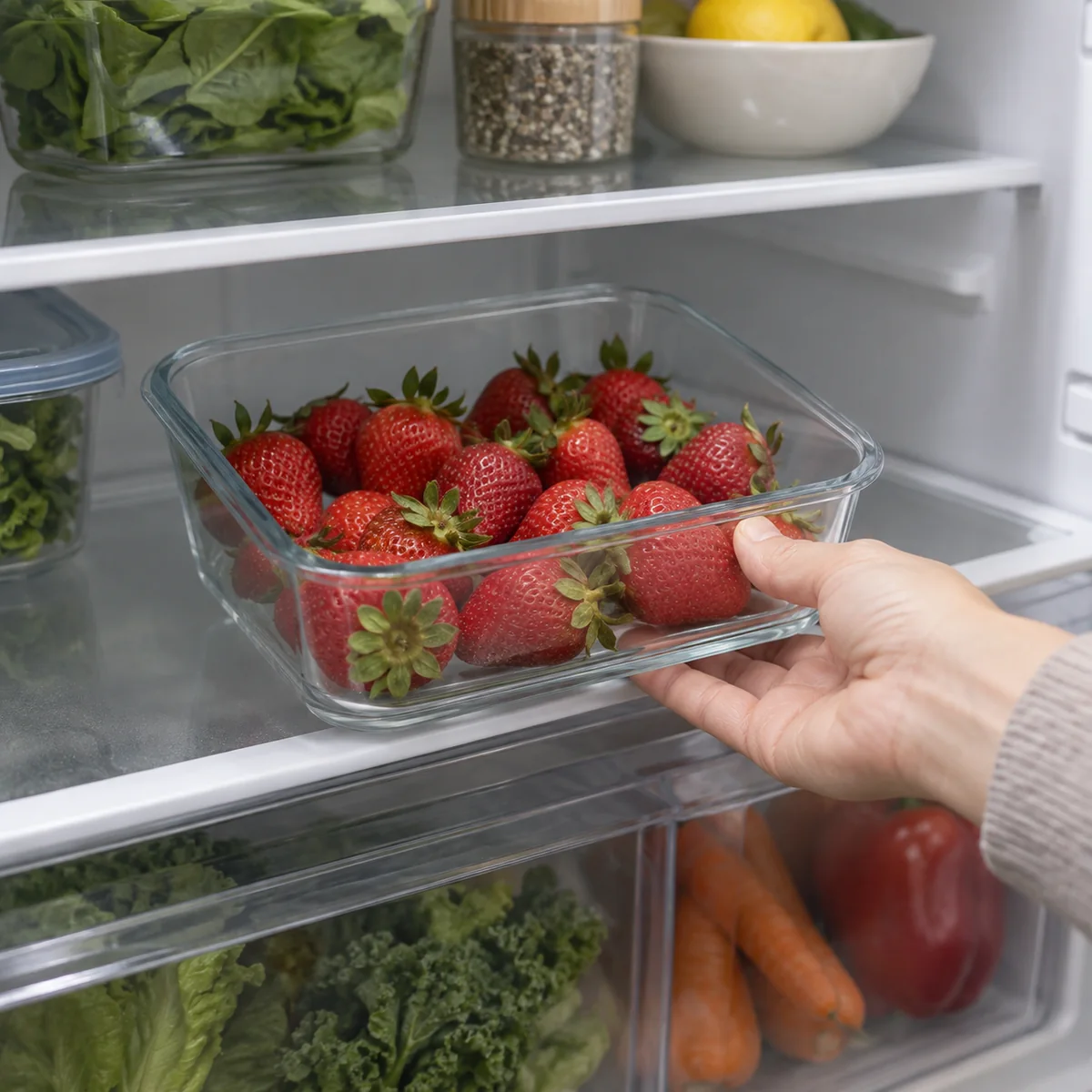
There is no need to transfer fruit to an elaborate storage system if its original carton is clean and sound. The important features are cold storage, visibility, and avoiding excess moisture. Keep the carton where you will remember it, then glance at it each day. If one berry begins to deteriorate, act before the whole carton is affected.
3. Wash only the berries you will use now
University of Minnesota Extension recommends waiting to wash strawberries until just before eating or processing them. Rinse them gently under clean, cool running water. Do not soak them or use soap or detergent. Drain and pat them dry as needed, then remove the caps. Washing too early adds moisture during storage and can shorten quality.
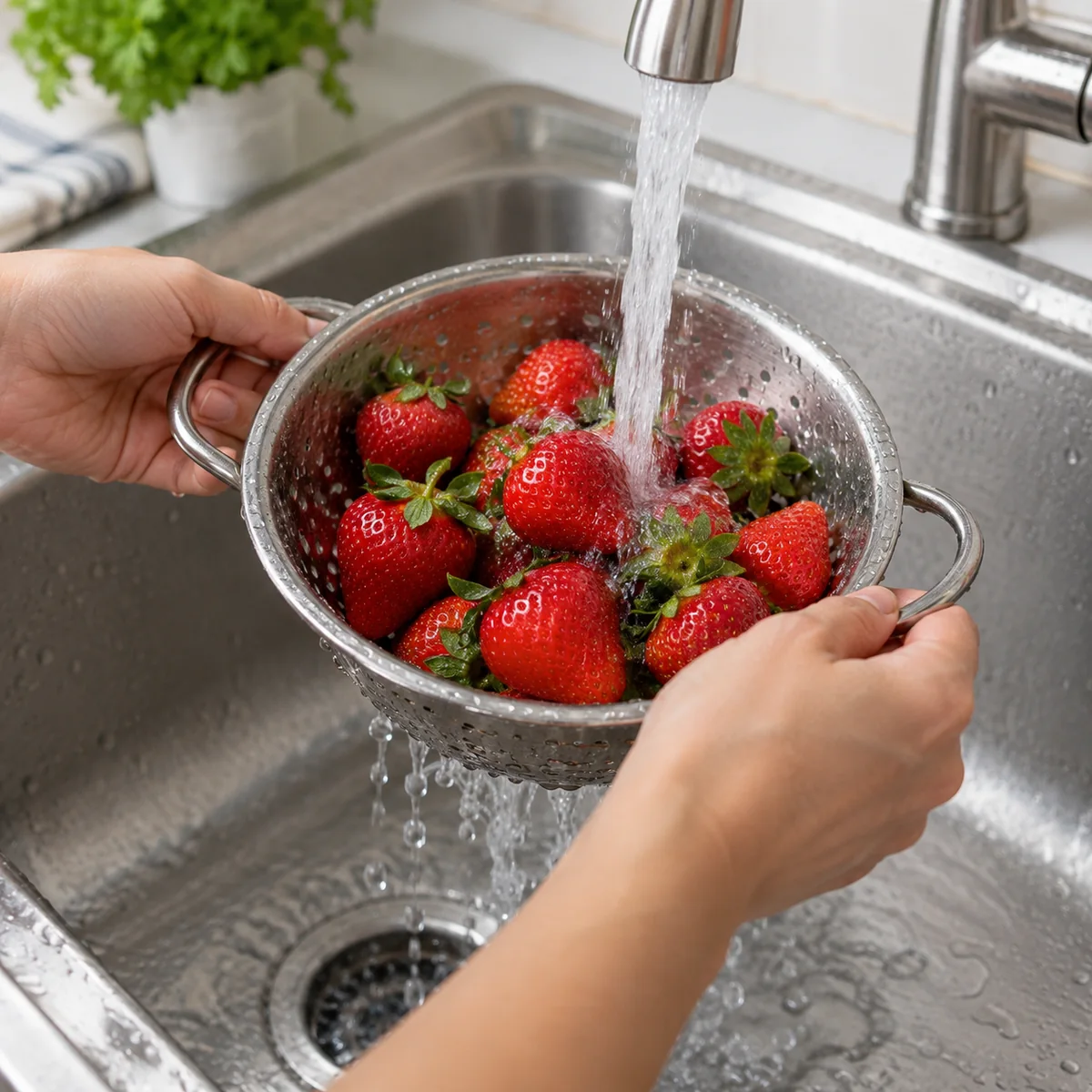
Wash fruit before slicing it as well as before eating it whole. Use clean hands, utensils, and a clean work surface. If you have already washed more than you need, dry it carefully and use it promptly; do not put wet berries back among the unwashed stored fruit. Keep cut strawberries refrigerated and follow ordinary food-safety guidance for prepared fruit.
4. Freeze the extras before they become a rescue project
Freezing is a good route for strawberries you will not eat while fresh. Start with sound, ripe fruit. Penn State Extension advises washing, removing the caps, and draining strawberries before freezing. Spread them in a single layer on a tray and freeze until firm, then transfer them to a labeled freezer container or bag with as little excess air as practical. This tray step helps prevent one solid block.

Label the package with the contents and freezing date. Keep the freezer at 0°F (-18°C) or below for best storage conditions. Frozen strawberries often become softer when thawed because ice crystals affect their cells, so plan to use them in smoothies, sauces, baking, or other dishes where crisp fresh texture is not essential. Do not freeze moldy fruit; cold storage does not make spoiled food safe.
For a broader system to remember what you froze, see our freezer inventory guide.
5. Give the ripest sound berries a job today
Strawberries do not need a complicated recipe to get used. Slice a few over yogurt or oats, add them to a fruit salad just before serving, or mash sound ripe berries into a quick topping to refrigerate and eat promptly. If you have more than one meal’s worth, freeze the remainder now instead of waiting for a crowded week to become less busy.
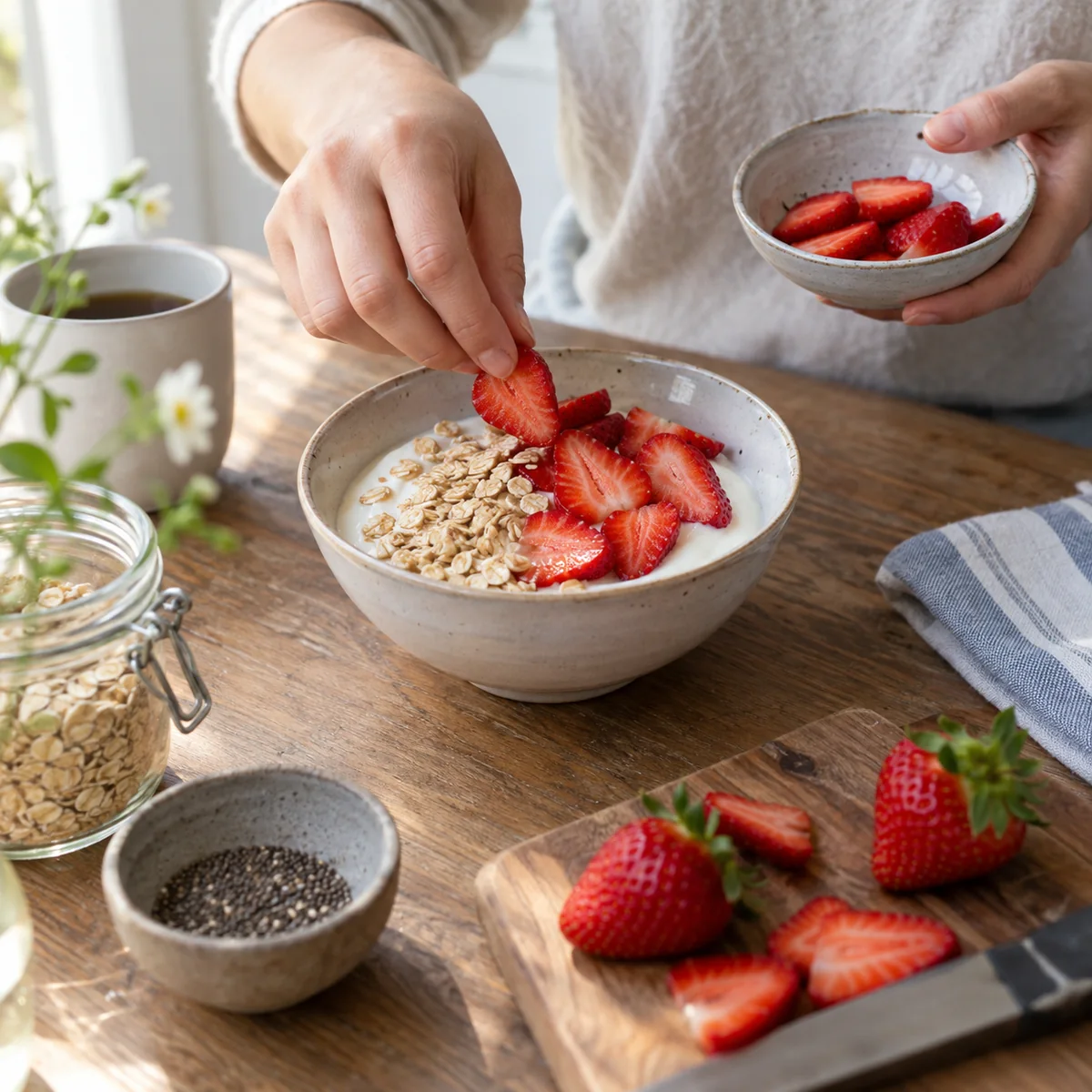
Store-bought strawberries should be selected for the meals you realistically have time to make. A smaller carton you finish can be a better choice than a large discount carton that spoils. The same principle applies elsewhere in a low-waste kitchen: buy a usable amount, make the next action obvious, and store food in a way that helps you notice it.
What about a vinegar bath or a produce-wash spray?
Online storage tips often recommend prewashing berries in vinegar, baking soda, or a commercial produce wash. The university guidance cited here gives a simpler baseline: keep strawberries dry in the refrigerator, then rinse them under cool running water just before use. University of Minnesota Extension specifically says not to use soap or detergent. A treatment that wets every berry on day one also creates an extra drying task. Start with the basic method and the freshest fruit you can use soon.
Common mistakes
- Washing the whole carton immediately: stored moisture can work against quality.
- Leaving berries on the counter for days: refrigerate this perishable fruit once home.
- Ignoring one moldy berry: discard it and fruit directly touching it, then inspect the rest.
- Waiting to freeze until the fruit is spoiled: freezing preserves good fruit’s quality; it does not restore bad fruit.
- Hiding the carton: a visible spot and a quick daily check help you use it in time.
If your kitchen also has herbs or vegetables that need attention, see how to store fresh herbs and what to do with vegetables before they go bad. The next time you buy strawberries, decide at the start which portion is for fresh eating and which portion will go into the freezer.
Sources
- Oregon State University Extension, Strawberry: Store Well Waste Less.
- University of Minnesota Extension, How to Wash Strawberries and Washing Fresh Fruits and Vegetables Safely.
- Penn State Extension, Freezing Strawberries.
- USDA Food Safety and Inspection Service, What if I Find Moldy Fruit in a Container With Other Fruit?.
- FoodSafety.gov, Shopping at the Farmers Market With Food Safety in Mind.