Potatoes and onions often arrive home in one grocery bag and stay together under the counter. A week later, an onion may feel soft or a potato may show sprouts. The fix is not a new storage system: give each crop air, a suitable spot, and a brief weekly check.
The quick answer: Store whole, sound potatoes in a dark, cool, ventilated place. Keep mature dry onions in a separate cool, dry, airy container. Avoid sealed plastic and warm, sunny counters. Inspect both regularly, remove any rotting item promptly, and plan to use the sound produce before it deteriorates.
Sort the bag before putting anything away
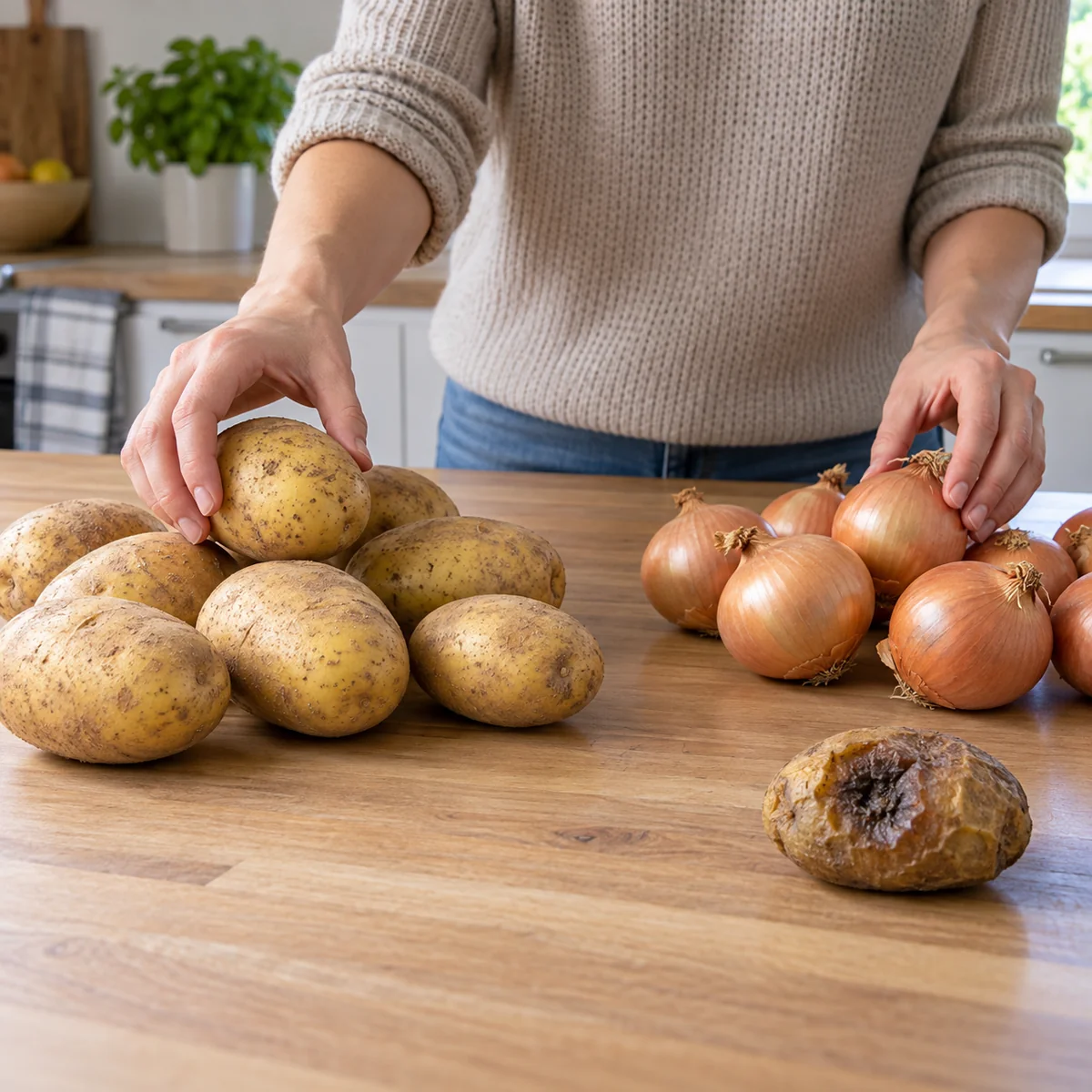
Tip the shopping bag onto a clean surface and check each item. Set aside potatoes with cuts or bruises for earlier use if the remaining flesh is sound. Remove potatoes that are rotten, leaking, or heavily green. For onions, look for dry papery skins and firm bulbs; remove any that are soft, wet, moldy, or have a strong spoiled smell. One bad item can spoil the rest of a crowded pile.
Do not wash whole potatoes or dry onions before storing them. Brush away loose dirt if needed and wash potatoes under running water when you are ready to prepare them. Keep the use-first items visible and give them a meal plan, rather than returning them to the bottom of the bag.
Give potatoes darkness and airflow
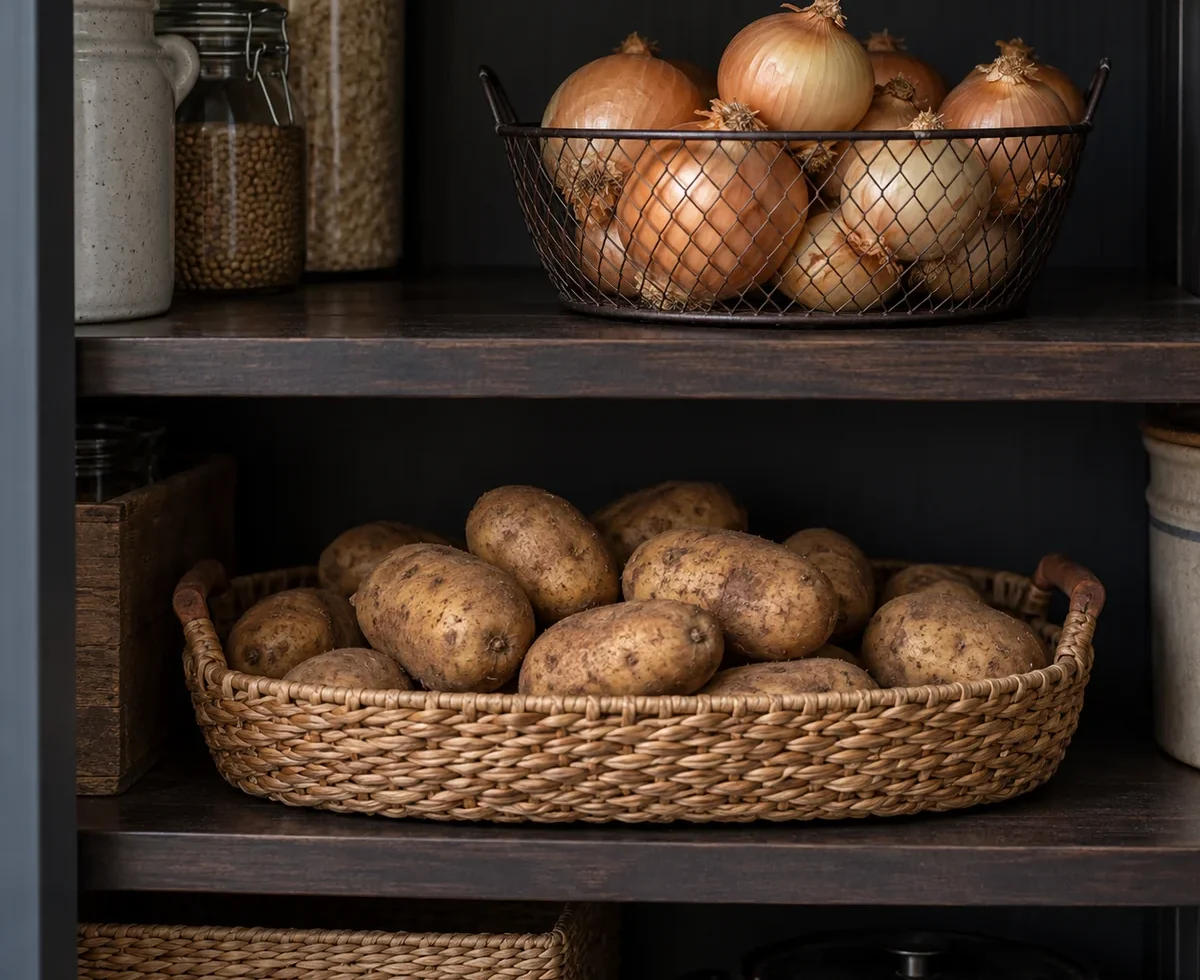
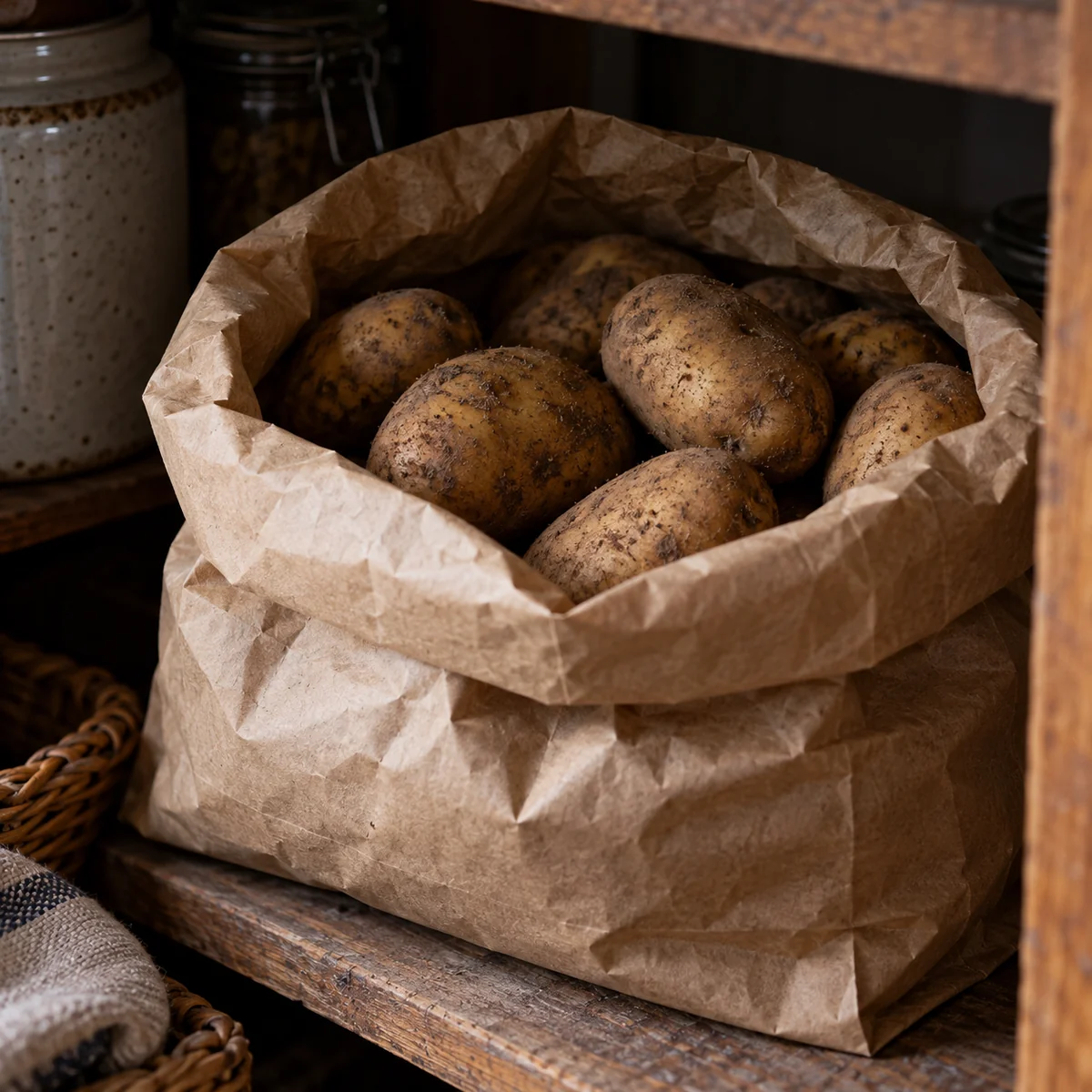
Use a cool, dark cupboard, pantry shelf, or other ventilated spot away from direct sun and heat. A breathable paper bag or ventilated container you already own can protect potatoes from light without trapping condensation. Utah State University Extension recommends a dark, cold place with air circulation. If your home is warm, buy smaller amounts and use them sooner rather than counting on months of storage.
Light exposure can turn potato skin green. Oregon State University Extension explains that greening can signal increased glycoalkaloids; potatoes with pronounced greening or damage should not be eaten. Do not use the green parts as a routine food-waste rescue project. Keep potatoes whole until you are ready to cook them.
Keep dry onions in their own airy place
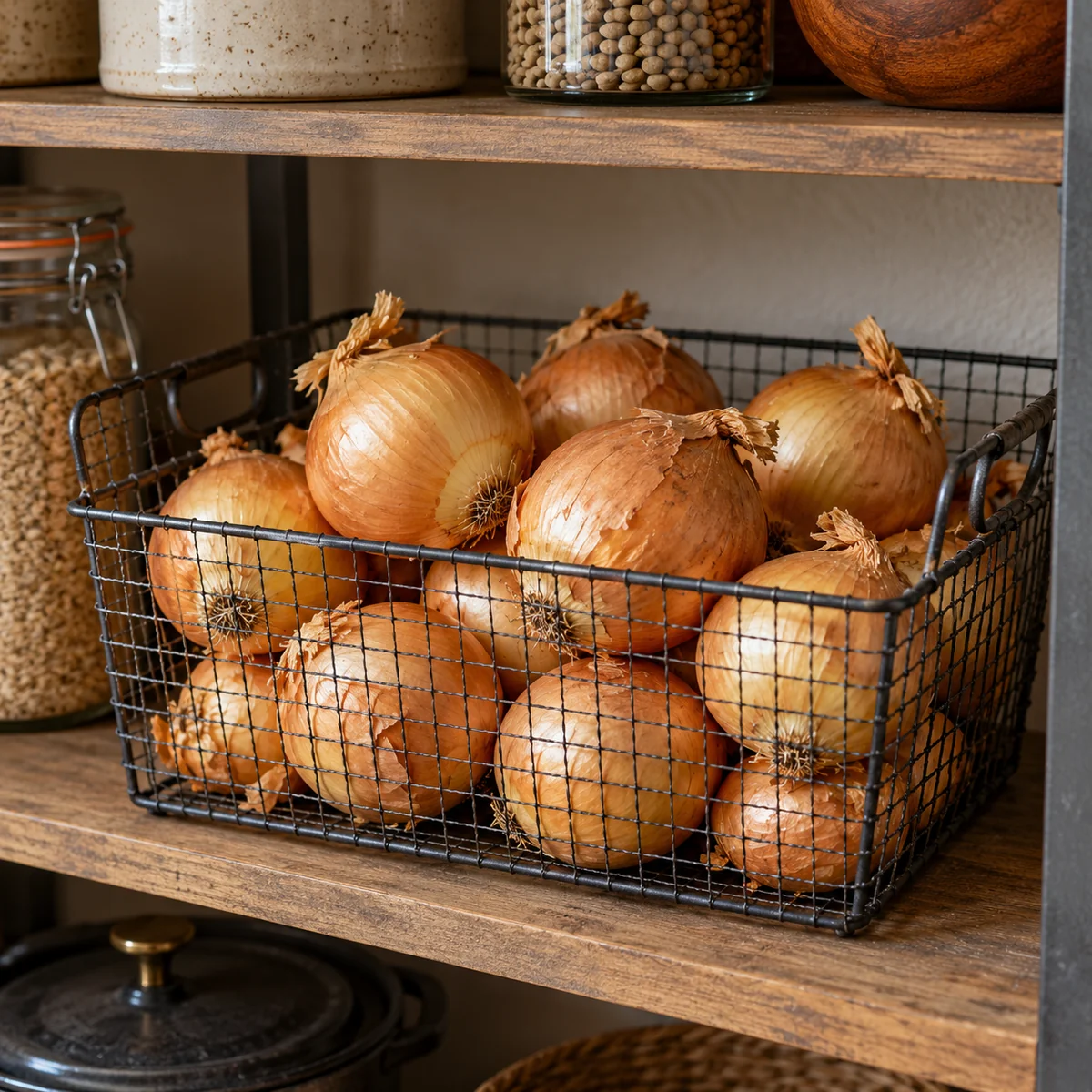
Mature dry onions do best in a cool, dry area with airflow. A reused mesh bag or open basket works if the onions are not piled too deeply. University extension guidance recommends cool, dry conditions and mesh bags or slatted crates. Avoid a sealed plastic bag, which can hold moisture against the bulbs.
Put onions on a separate shelf or in a separate container from potatoes. The aim is practical: you can keep onions dry and inspect both groups easily without one deep mixed pile hiding a soft bulb. Green onions and cut onions are different foods with different storage needs; this advice is for whole mature dry onions.
Check once a week, especially in a warm kitchen
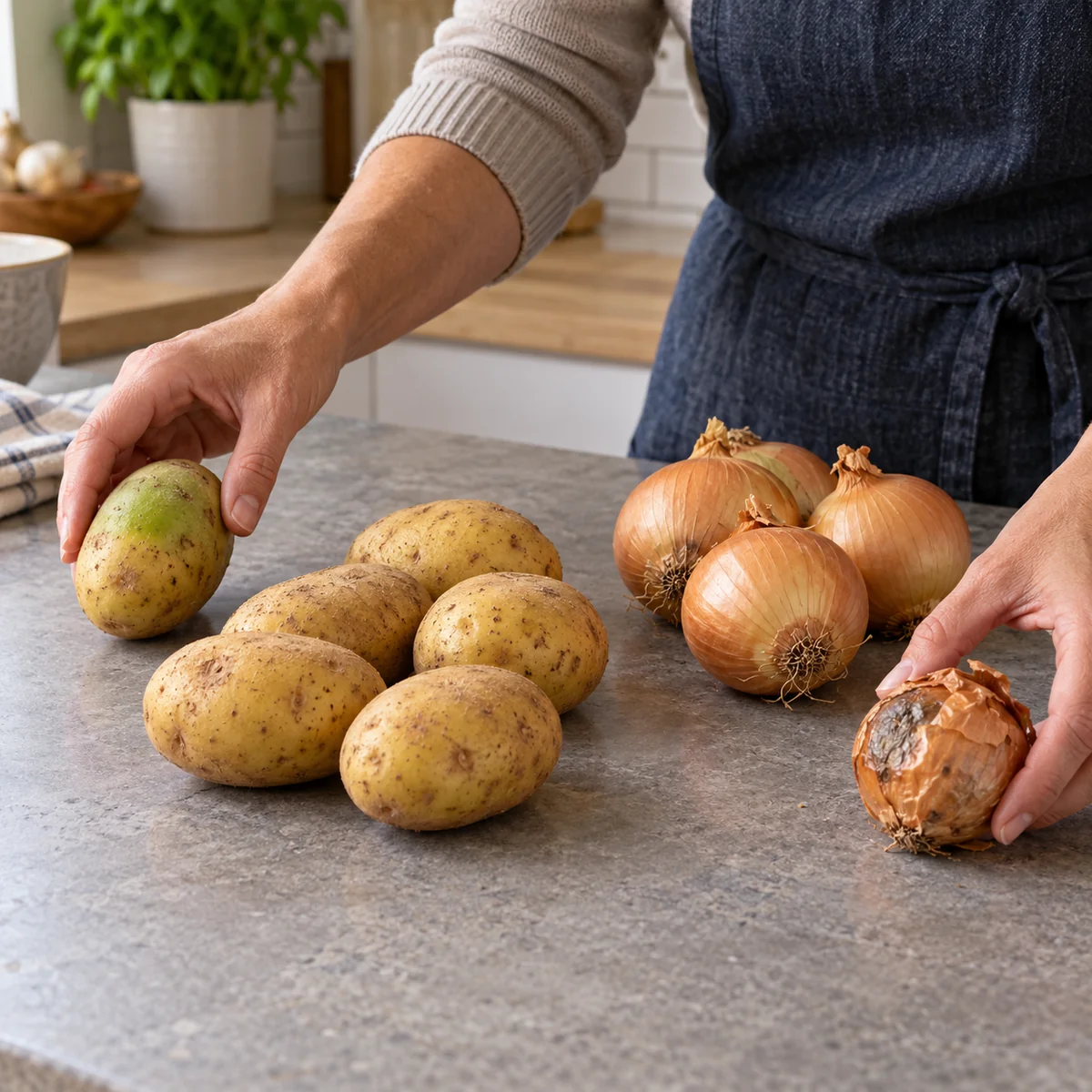
Lift the top layer and look for moisture, soft spots, odor, sprouts, or greening. Remove any spoiled item and check its neighbors. If potatoes are sprouting, use only those that remain firm and free of green areas, trimming sprouts and their eyes thoroughly before cooking; discard potatoes that are soft, shriveled, extensively sprouted, or green. When in doubt about spoilage, throw the item away.
A weekly check takes less effort than cleaning up a collapsed bag later. If the storage spot is warm or humid, the produce may need using much sooner than the ideal times cited for a cool cellar. A small “use soon” bowl or note can help you act on the inspection.
Turn the sound produce into a real meal plan
If you have more potatoes or onions than the storage spot can handle, decide on a meal now. A soup, roast tray, or skillet dish can use sound produce before it deteriorates. Write down the dish and the day you will make it. Our vegetable rescue guide helps with a broader use-first plan.
Buying the amount you can use matters as much as storage. Before the next shop, glance at the remaining potatoes and onions and add only what the coming meals require. Our inventory-first grocery list can make that step easier.
Questions people ask
Can potatoes and onions share the same cupboard?
They can be in the same general cool area if you give them separate ventilated containers and keep the onions dry. Avoid stacking them together in one closed bag or bin.
Should I refrigerate whole potatoes and dry onions?
For everyday home storage, a cool, dark, ventilated place is the usual guidance for potatoes, while whole mature onions need cool, dry airflow. Refrigeration can change potato cooking quality; consult specific guidance for your variety and intended use if a cool cupboard is unavailable.
Is every sprouted potato unsafe?
A small sprout on an otherwise firm potato is different from extensive sprouting, softness, or greening. Remove sprouts and their eyes thoroughly from a firm, non-green potato before cooking. Discard potatoes with pronounced green areas or signs of spoilage.
Sources
- Utah State University Extension: Fruit and Vegetable Guide Series — Potatoes — cool, dark, ventilated storage.
- Oregon State University Extension: Best Practices for Harvesting and Storing Homegrown Potatoes — ventilation, sorting, and light exposure.
- Utah State University Extension: Harvest and Storage of Vegetables and Fruits — dry onion storage and mesh or slatted containers.
- Oregon State University Extension: Glycoalkaloids in Potato Tubers — why pronounced greening and damage matter.
- University of Minnesota Extension: Growing Potatoes — removing sprouts and avoiding extensive green areas.