Fresh herbs can go from fragrant to limp before the week’s meals are finished. The fix is rarely a special container. First identify the herb, remove damaged pieces, give the remaining stems the right amount of water and space, and decide which portion you will use or freeze. Basil needs a different short-term plan from parsley or cilantro.
This guide shows how to store fresh herbs so they last longer without promising a fixed number of days. Starting freshness, handling, and refrigerator conditions all matter. The methods below draw on university extension guidance and U.S. Food and Drug Administration (FDA) produce-safety advice. They are for fresh culinary herbs; follow package instructions for ready-to-eat or pre-cut products.
Free Fresh Herb Rescue Plan
The one-page printable helps you choose a home for each bunch and plan what to use first or freeze. It includes quick reminders for parsley, cilantro, basil, hardy herbs, and extra leaves. Choose US Letter or A4 and print at 100% or Actual Size.
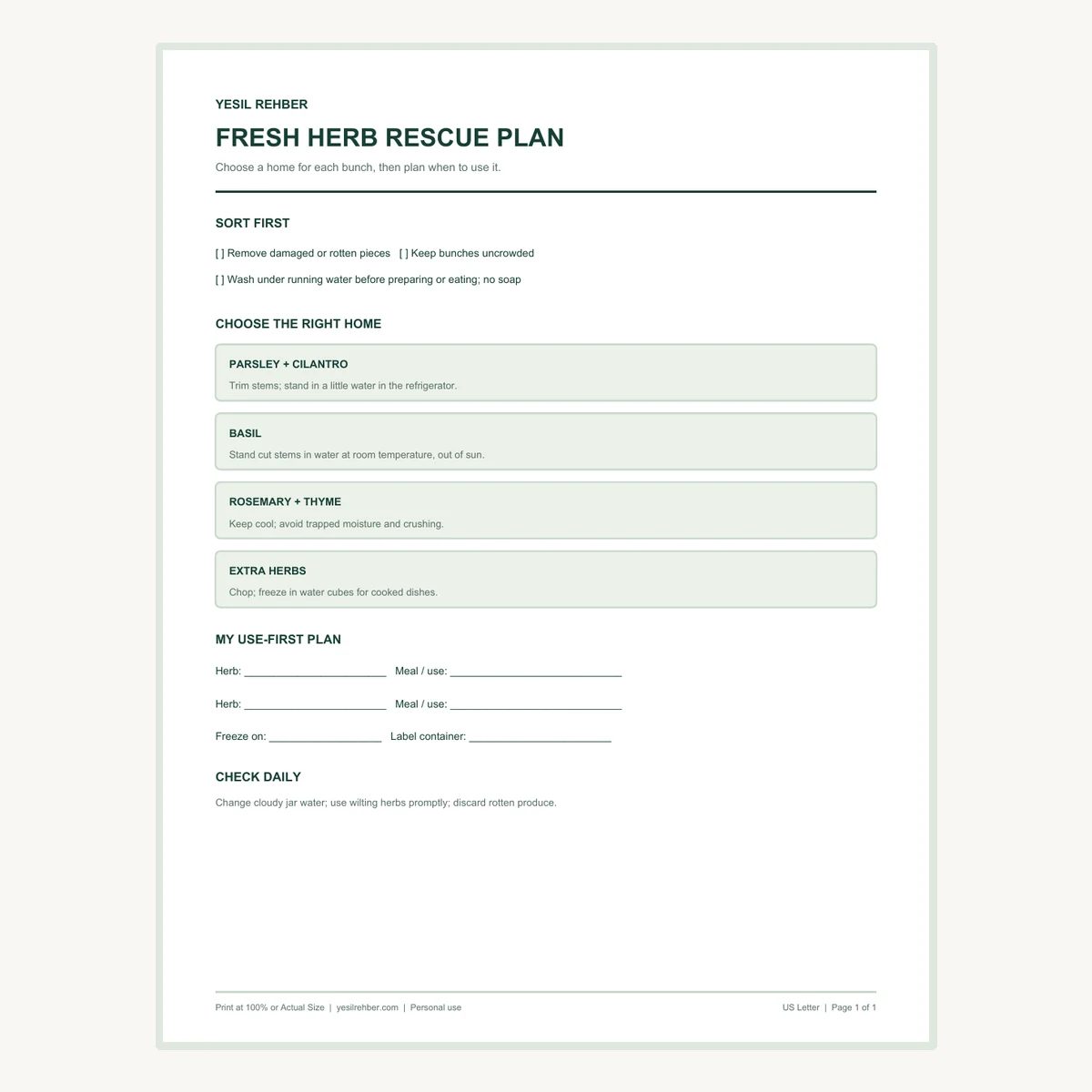
The quick answer: match the herb to its storage method
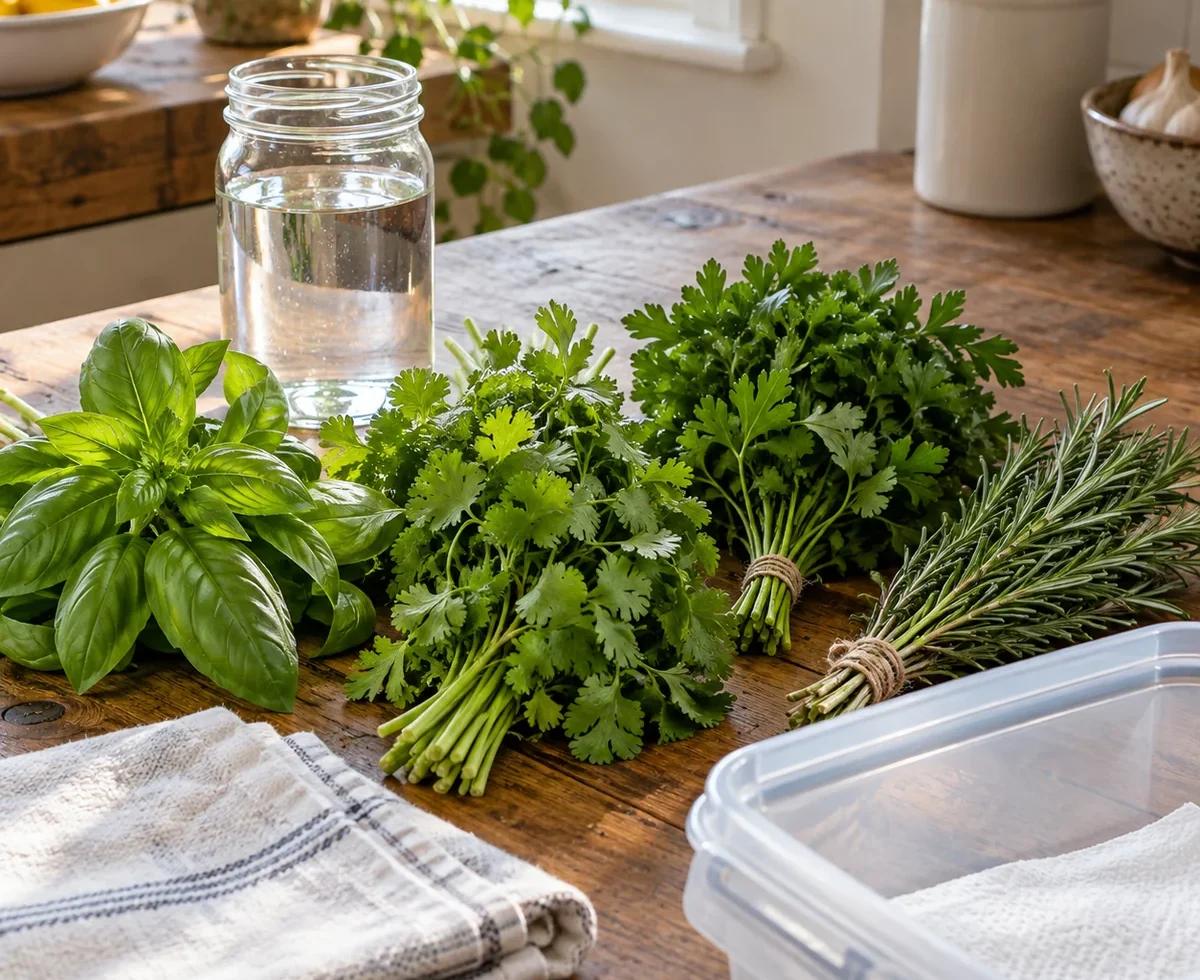
- Parsley and cilantro: trim the stem ends, stand the bunch loosely in a clean jar with a little water, and refrigerate. Keep leaves above the water.
- Basil: put cut stems in water on a counter away from direct sun for short-term use. Cold can discolor its leaves; use it promptly and follow any package directions.
- Rosemary and thyme: keep them cool and protected from drying without trapping wet leaves in a tightly packed container.
- More than you can use: freeze clean chopped herbs in a little water for future cooked dishes.
These are starting points, not guarantees. Check the bunches daily. If you notice slimy or rotten parts, remove and discard affected produce rather than trying to save it for a fresh garnish. For a wider way to prioritize perishable food, see our use-first pantry guide.
Step 1: sort the bunch before choosing a container
Take the herbs out of a crowded store package and look through the stems. Remove bruised leaves; discard produce that looks rotten, and discard a bunch with visible mold or widespread sliminess. Handle sound leaves gently: bruising can reduce quality and make them deteriorate faster. Separate different herbs so you can give each one an appropriate home. If a bunch is already wilting but otherwise sound, plan to use it soon rather than hiding it behind newer produce.
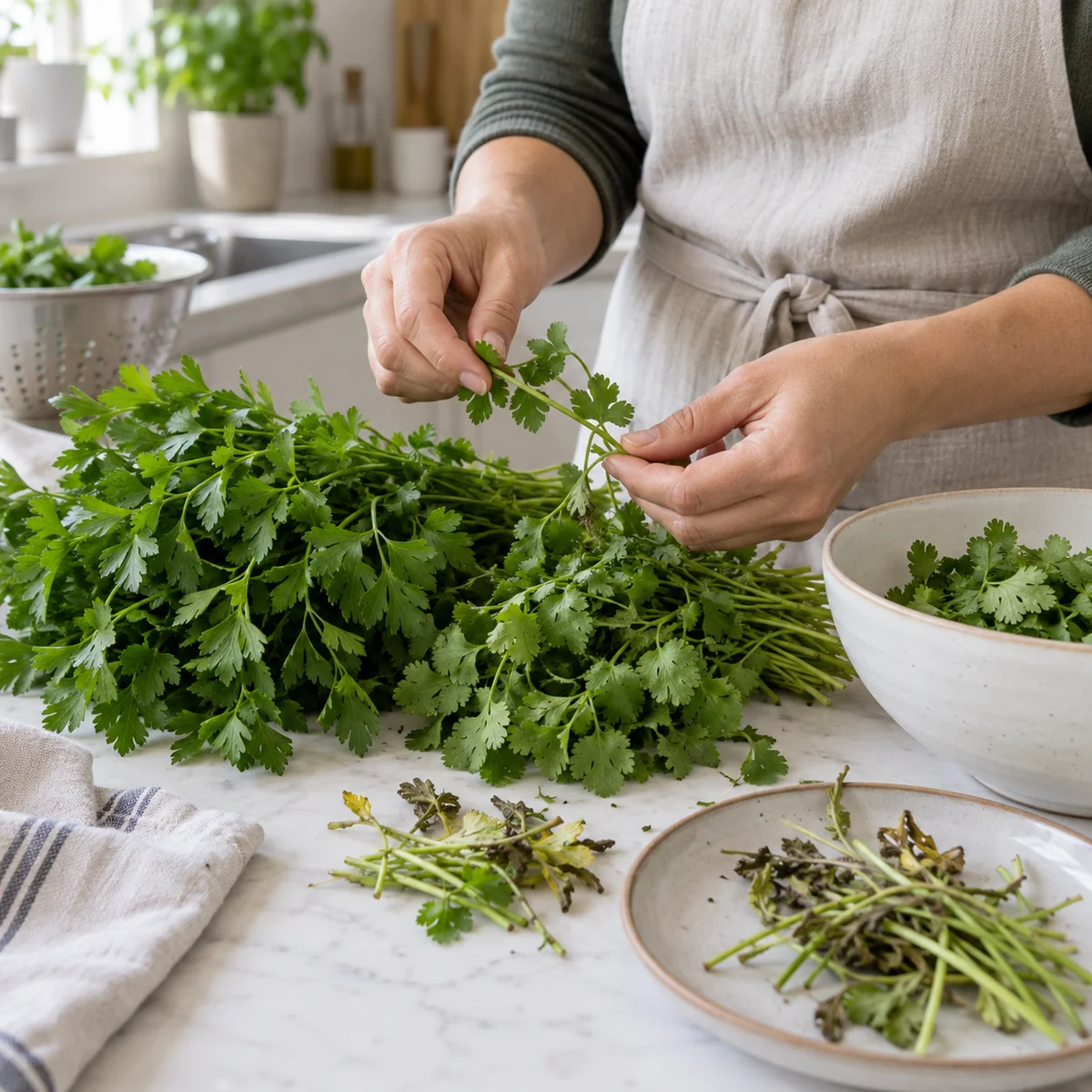
Wash your hands before preparing produce. The FDA recommends washing fresh produce under running water before preparing or eating it, including herbs grown at home. Do not use soap, detergent, bleach, or commercial produce wash. If you wash herbs before storage, drain and dry them gently so they are not packed away dripping wet; if you wash just before use, keep them clean and separated from raw meat and its juices in the meantime.
Step 2: give parsley and cilantro a small jar of water
Trim a little from the stem ends and remove leaves that would sit below the waterline. Put the stems upright in a clean, stable glass or jar with roughly an inch of water. Give the bunch room rather than packing it tightly. Oregon State University Extension recommends this jar method for parsley and cilantro in the refrigerator. Check the water each day and replace it when cloudy; keep the jar where it cannot tip or drip onto other food.
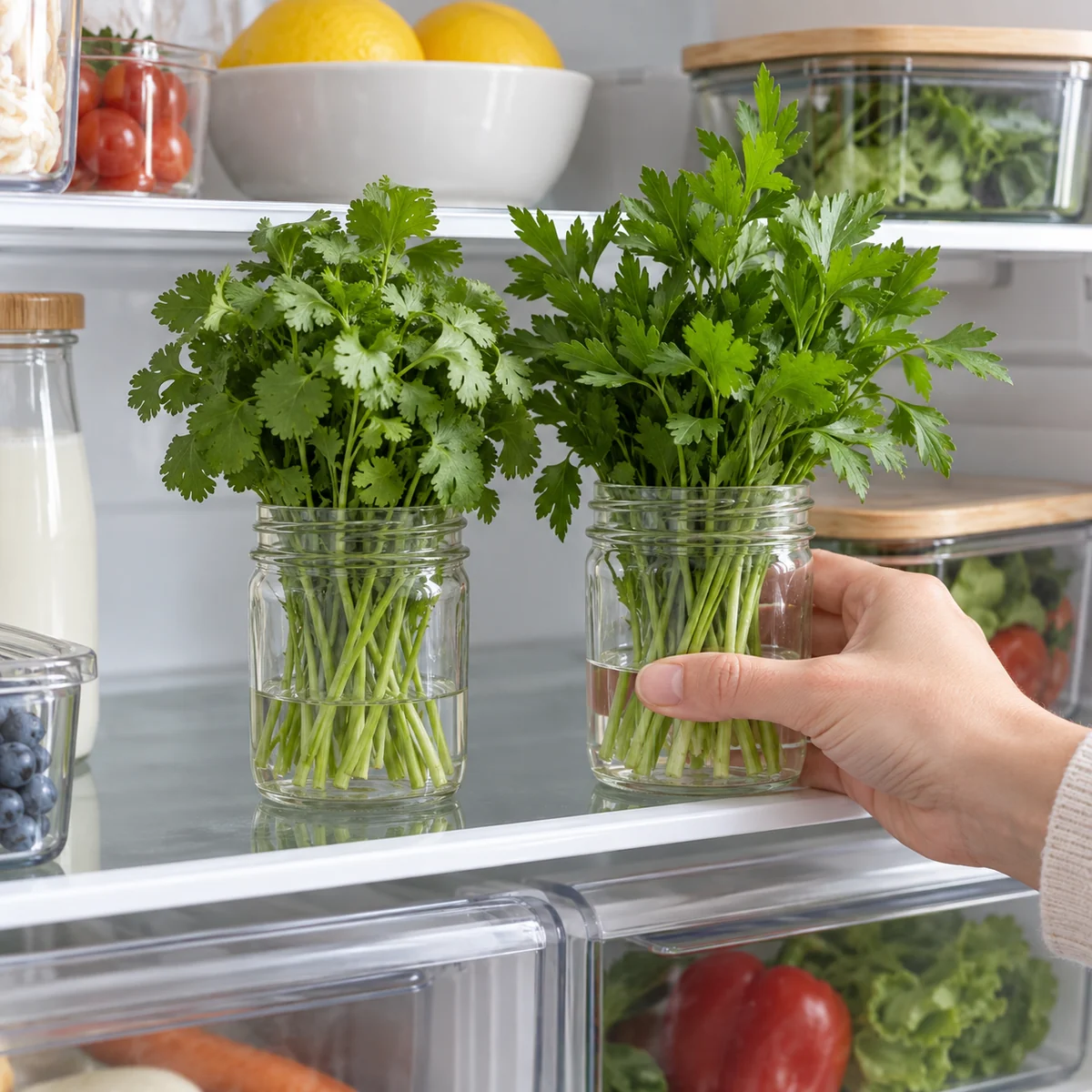
A loose cover can reduce drying if your refrigerator’s air flow is strong, but avoid sealing wet leaves into a tight, steamy bundle. If the leaves are close to a cold back wall or freezing vent, move the jar to a less exposed shelf. The goal is a sound bunch you can see and use, not a jar you forget until it turns cloudy.
Step 3: keep cut basil on the counter for short-term use
Basil is the exception that frustrates an all-herbs-in-the-fridge rule. University of Illinois Extension advises holding cut basil stems in a glass of water at room temperature because refrigeration can discolor the leaves. Set it away from direct sunlight, a hot stove, and drafts. Keep leaves out of the water, change the water when needed, and plan a meal that uses the basil soon.
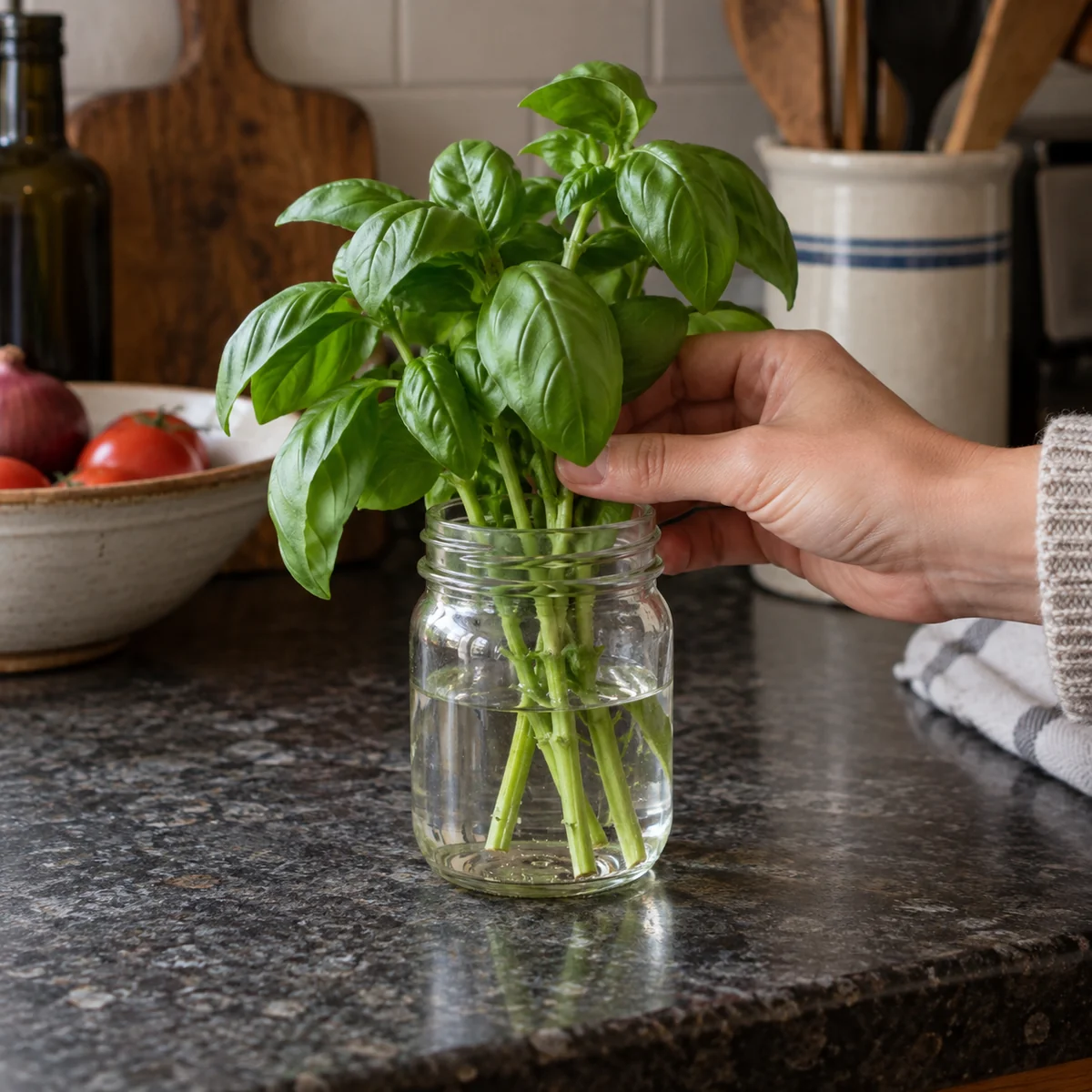
Do not leave basil at room temperature indefinitely. If it came in a packaged, pre-cut, or ready-to-eat product with refrigeration instructions, follow that label. If you have far more fresh basil than you can use promptly, freeze it for a cooked sauce rather than waiting for a countertop bunch to deteriorate. Frozen basil will not have the texture of a fresh garnish.
Step 4: protect hardy herbs without trapping moisture
Rosemary and thyme are sturdy compared with tender leafy herbs, but they can still dry out or become soggy. Keep sound sprigs in the refrigerator in a clean shallow container or a reusable cloth wrap that prevents crushing. If a cloth is used, it can be lightly damp rather than wet; check the leaves and container for condensation. Give them some air space and replace a soggy wrap. This adapts extension advice about maintaining moisture without enclosing herbs in a wet, crowded bag.
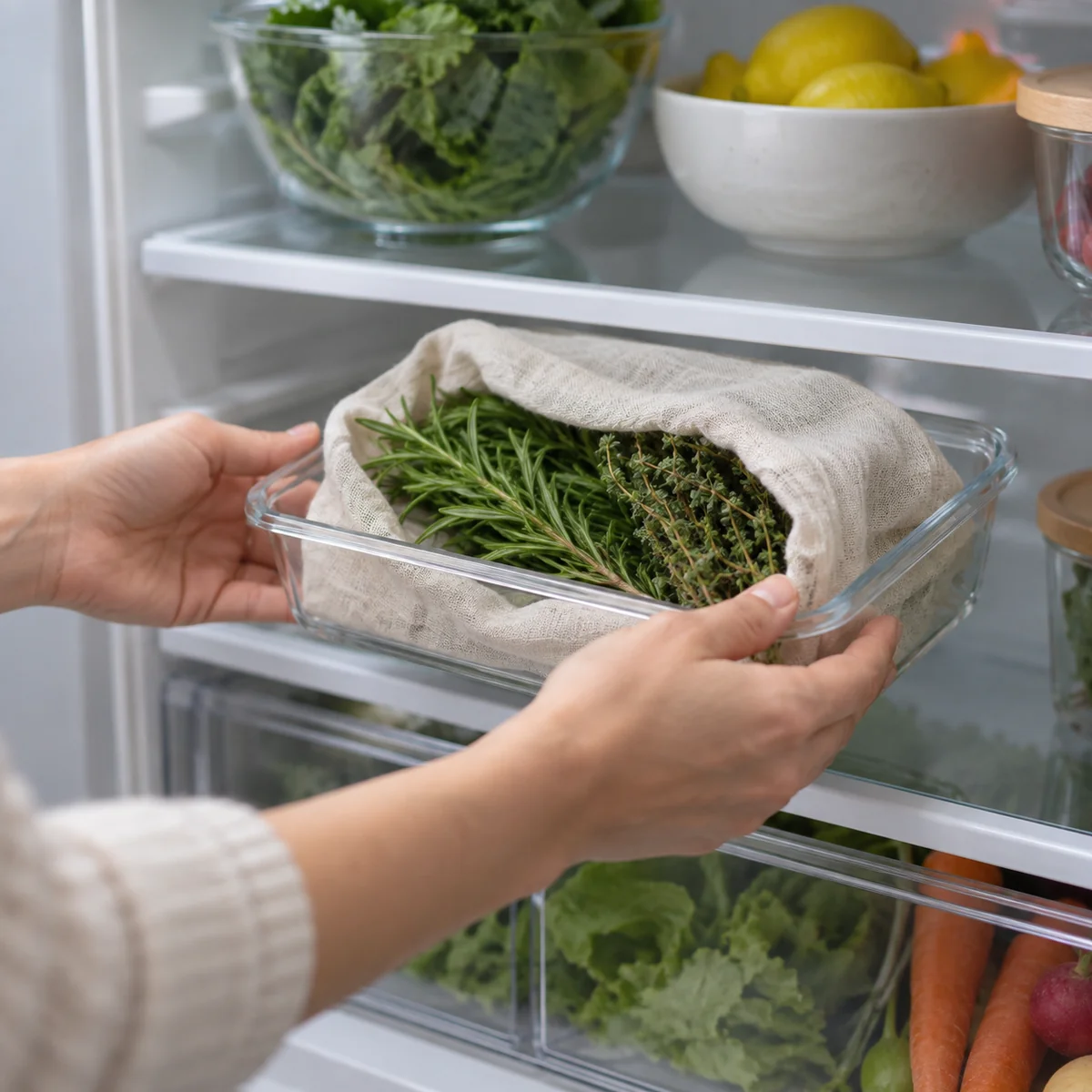
Use what is already in your kitchen. A clean reusable container and cloth are enough for this routine; buying a new herb keeper is optional. If you prefer a jar method for a particular hardy herb and it holds up well, keep the setup easy to inspect and clean. Storage is a test you can adjust according to how the herb actually behaves in your refrigerator.
Step 5: freeze the extra before it wilts
Choose a day to freeze a portion while it is still fresh, rather than treating the freezer as a rescue for rotten leaves. Wash under running water, gently dry, and chop the herbs you want for cooked meals. Spoon small portions into a clean ice-cube tray, add water, and freeze. Transfer frozen cubes to a labeled freezer-safe container so you can recognize the herb later. Oregon State University Extension recommends water cubes for herbs such as chives, thyme, oregano, savory, and parsley; drop a cube into soup or sauce as it cooks.
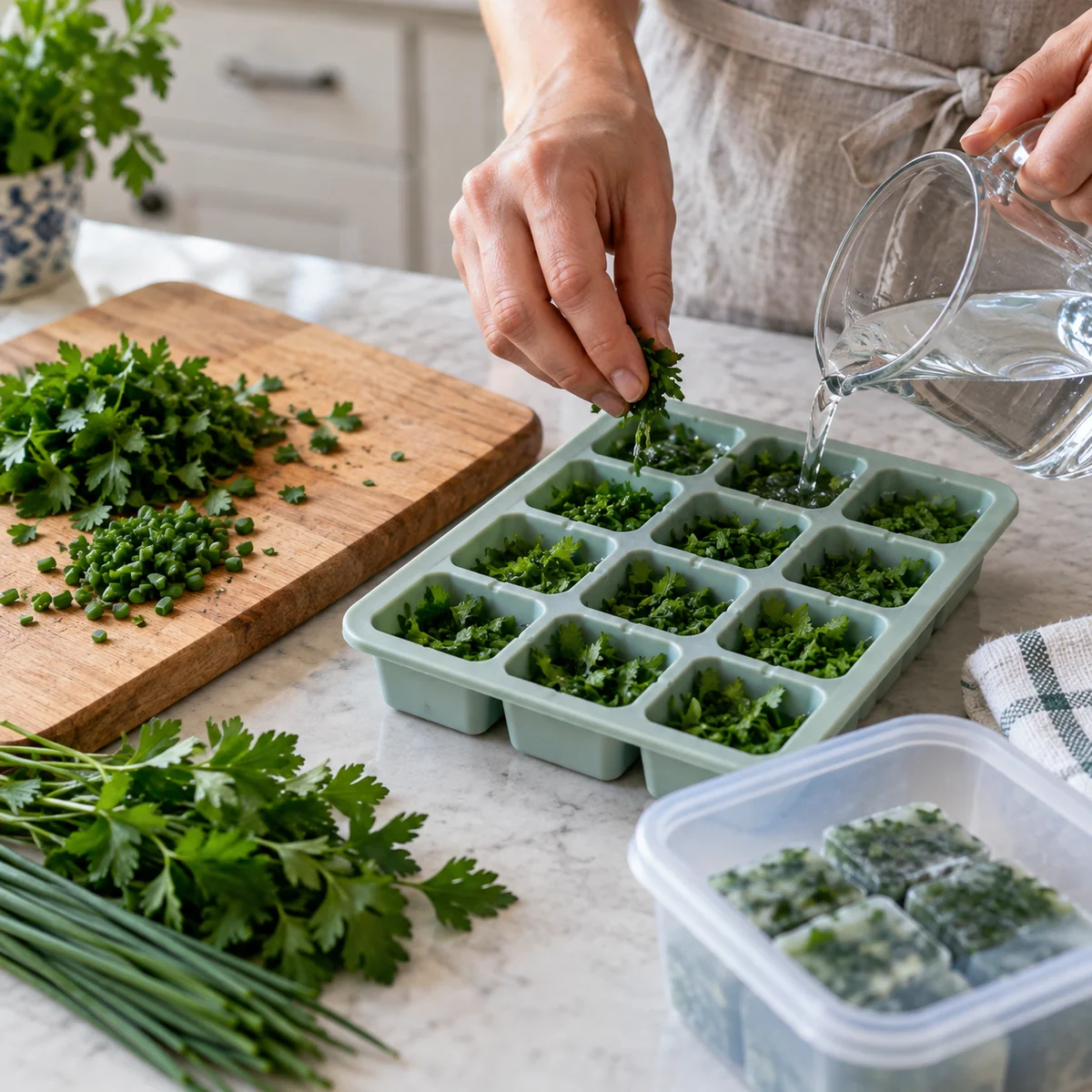
Frozen herbs are best used where texture is less important, such as soup, stew, or sauce. They are less appealing as a crisp salad topping. You can also freeze clean whole sprigs or leaves in a labeled freezer-safe bag or container if that suits your cooking. Do not assume herbs stored in oil at room temperature are a safe shortcut; oil mixtures need specific food-safety guidance. Water cubes keep this plan simple.
Use the bunch before you need a rescue
When you bring herbs home, assign a dish to each bunch. Use delicate leaves in the next meal, then decide what to freeze while the rest still looks good. A handful of cilantro can finish beans or a rice bowl; parsley can go into a chopped salad or sauce; basil can finish tomato pasta; rosemary and thyme can season roasted vegetables. These are flexible uses, not recipes that force you to buy extra ingredients.
Put the planned meal on your calendar or a visible note. On the following day, glance at the jars, change cloudy water, and move a wilting but sound bunch into that day’s cooking. If several herbs are competing for attention, choose one “use first” bunch. Our vegetable rescue guide offers the same kind of decision process for produce beyond herbs.
Common herb-storage mistakes
- Putting every herb in one sealed bag: crowding and trapped moisture can accelerate decay.
- Letting leaves sit in jar water: keep the water around stems and remove submerged leaves.
- Refrigerating cut basil by default: cold can discolor it; plan quick countertop use unless the package says otherwise.
- Washing with soap: rinse produce under running water; the FDA does not recommend soap or produce wash.
- Waiting until leaves are rotten to freeze: freeze sound herbs while they are still useful.
- Forgetting the freezer container: label it with the herb and date so small cubes get used.
Download the fresh herb rescue plan
Use the printable to choose a home for each bunch and name two meals that will use your herbs first. Download the US Letter PDF (8.5 × 11 inches) or the A4 PDF (210 × 297 mm). Print at 100% or Actual Size. The simplest routine is to inspect, store by type, check daily, and freeze the extra while it is still fresh.
Sources
- Oregon State University Extension Service, Five Ways to Preserve Fresh Homegrown Herbs.
- University of Illinois Extension, Using Fresh Herbs in the Kitchen and Basil.
- U.S. Food and Drug Administration, Selecting and Serving Produce Safely.