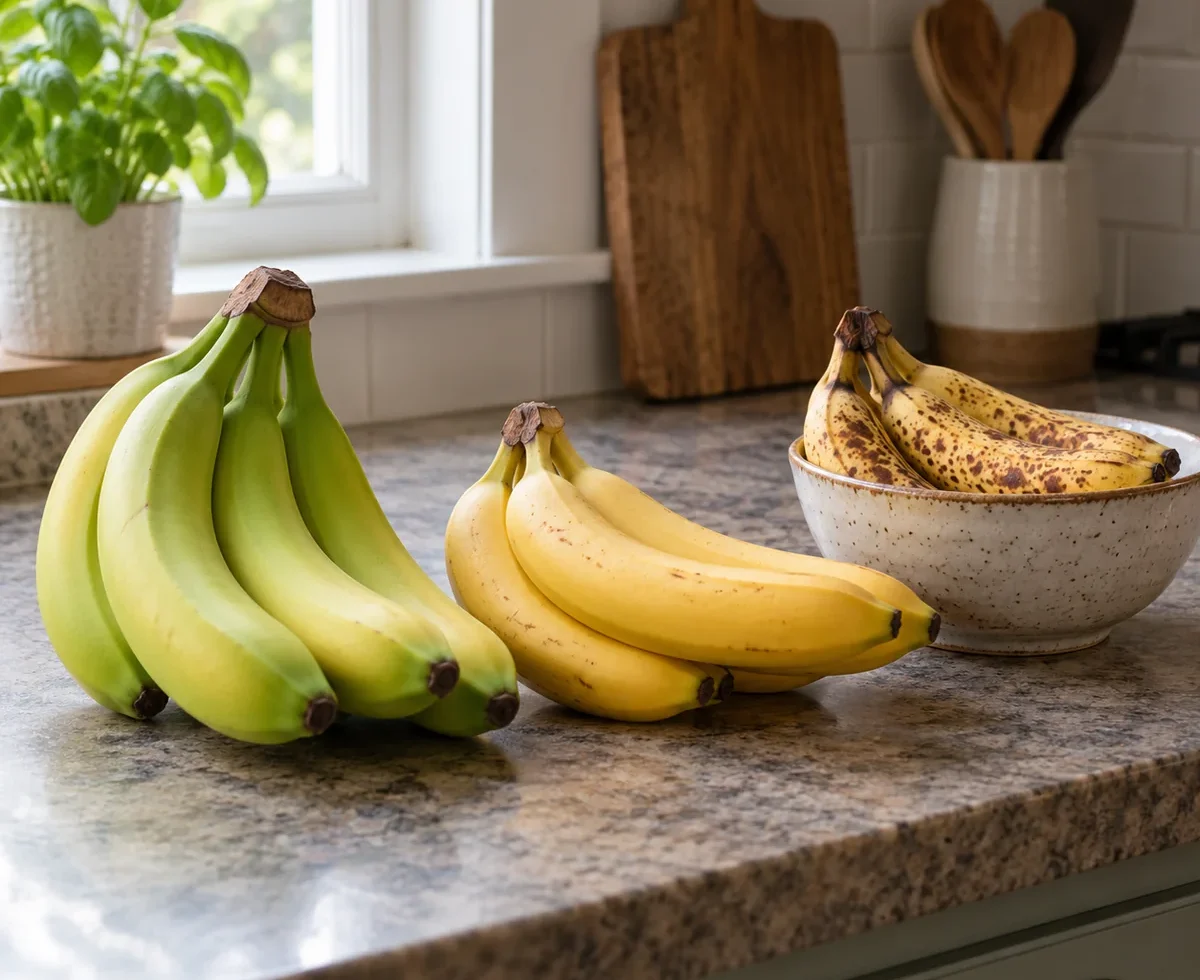
A bunch of bananas can go from too green to too soft in what feels like a single day. The useful trick is to change their storage place as their ripeness changes. Give firm bananas time to ripen at room temperature, move ripe bananas to the refrigerator when you need a little longer, and freeze peeled fruit before it becomes too soft to use.
The quick answer: Keep green or partly green bananas on the counter in a cool spot away from direct sun and heat. Once they are as ripe as you like, eat them or refrigerate them; the peel may darken in the fridge even while the flesh is still usable. For longer storage, peel sound ripe bananas, portion them, and freeze them in a freezer-safe container. Discard fruit that is moldy, leaking, or rotten.
Start by sorting the bunch by ripeness
Look at each banana rather than treating the whole bunch as one deadline. Green-tipped bananas can wait on the counter. Fully yellow bananas are ready to eat. Brown-speckled bananas may be sweet and useful in oatmeal, pancakes, or baking if the flesh is sound. A dark peel is not, by itself, proof that the fruit is spoiled; inspect the fruit when you peel it. Fruit with visible mold, leaking flesh, or an off smell should be discarded.
If you buy bananas for a household that eats one a day, choosing a mix of green-tipped and yellow fruit can spread out when they are ready. Buy the number you actually eat, rather than expecting one large bunch to wait for your schedule.
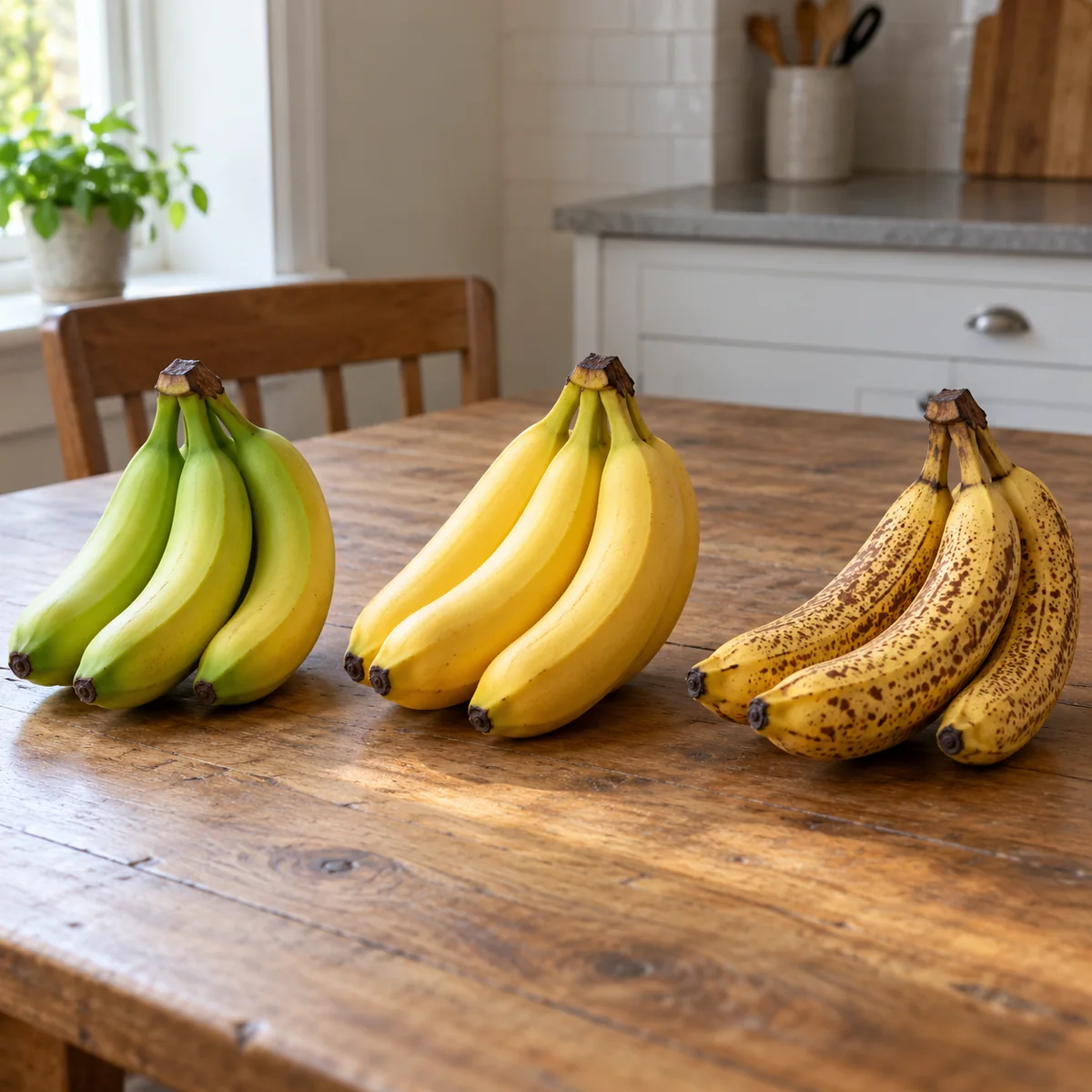
Let green bananas ripen on the counter
Place firm, unripe bananas in an open, cool part of the kitchen, away from a hot stove and direct sun. Do not seal them in a plastic bag; trapped moisture can work against good quality. Leave enough room so heavy groceries do not bruise the fruit. The University of California, Davis notes that bananas are sensitive to chilling before they have ripened, so a household refrigerator is not the place to finish ripening a green bunch.
Check the fruit each day. The moment it reaches the ripeness you prefer is the moment to decide whether you will eat it soon or slow things down in the refrigerator. You do not need a special hanger or single-use wrap to make that decision.
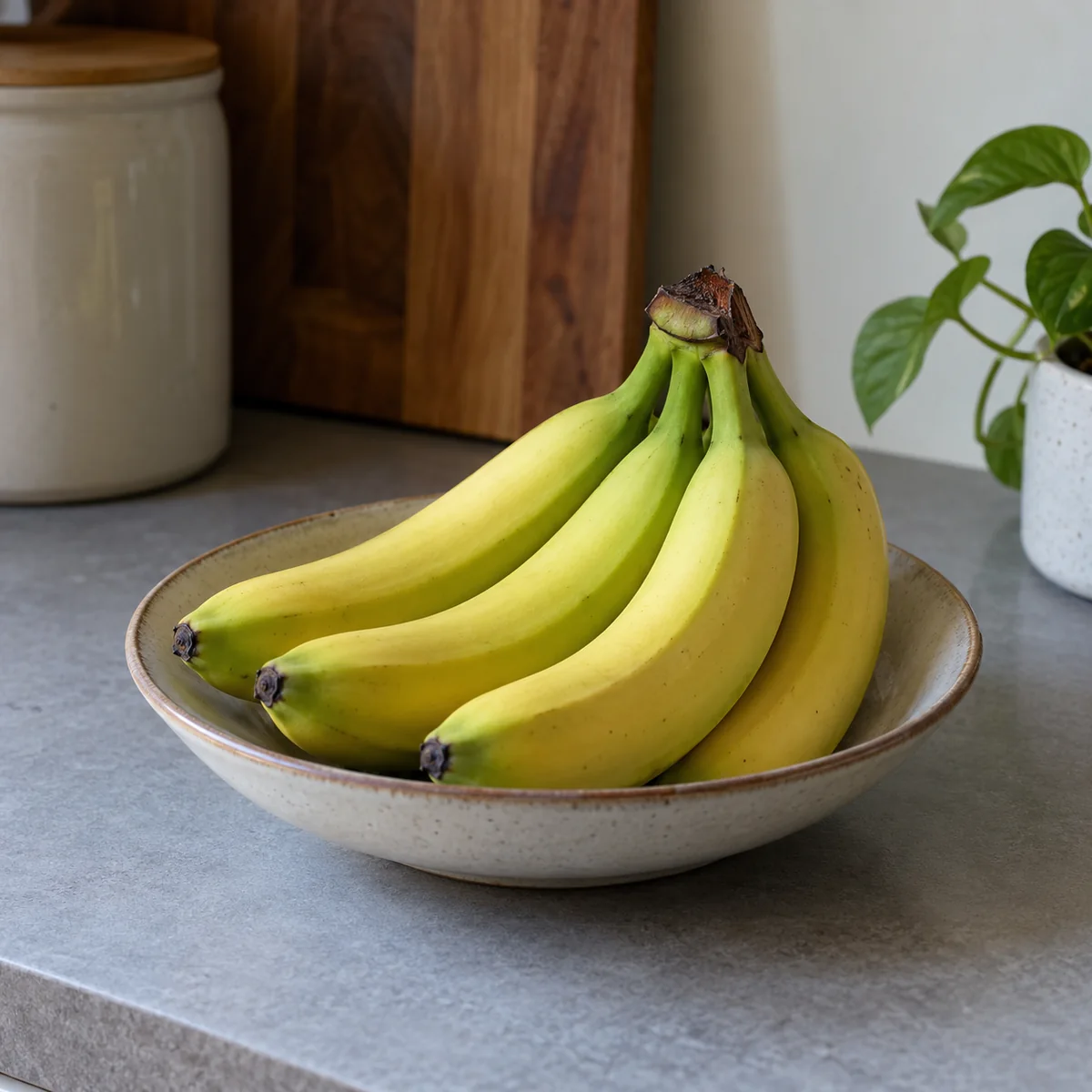
Refrigerate bananas once they are ripe
When bananas are fully ripe but you will not eat them immediately, put them in the refrigerator. Utah State University Extension says ripe bananas can keep for a few more days there. Their peels often turn brown in the cold, but that color change does not mean the flesh has automatically spoiled. Peel and inspect a banana before deciding whether to use it.
This is a short pause, not indefinite storage. Keep the fruit where you will remember it, and use it in the next few days. Do not expect a green banana to ripen normally in the refrigerator; let it become ripe on the counter first.
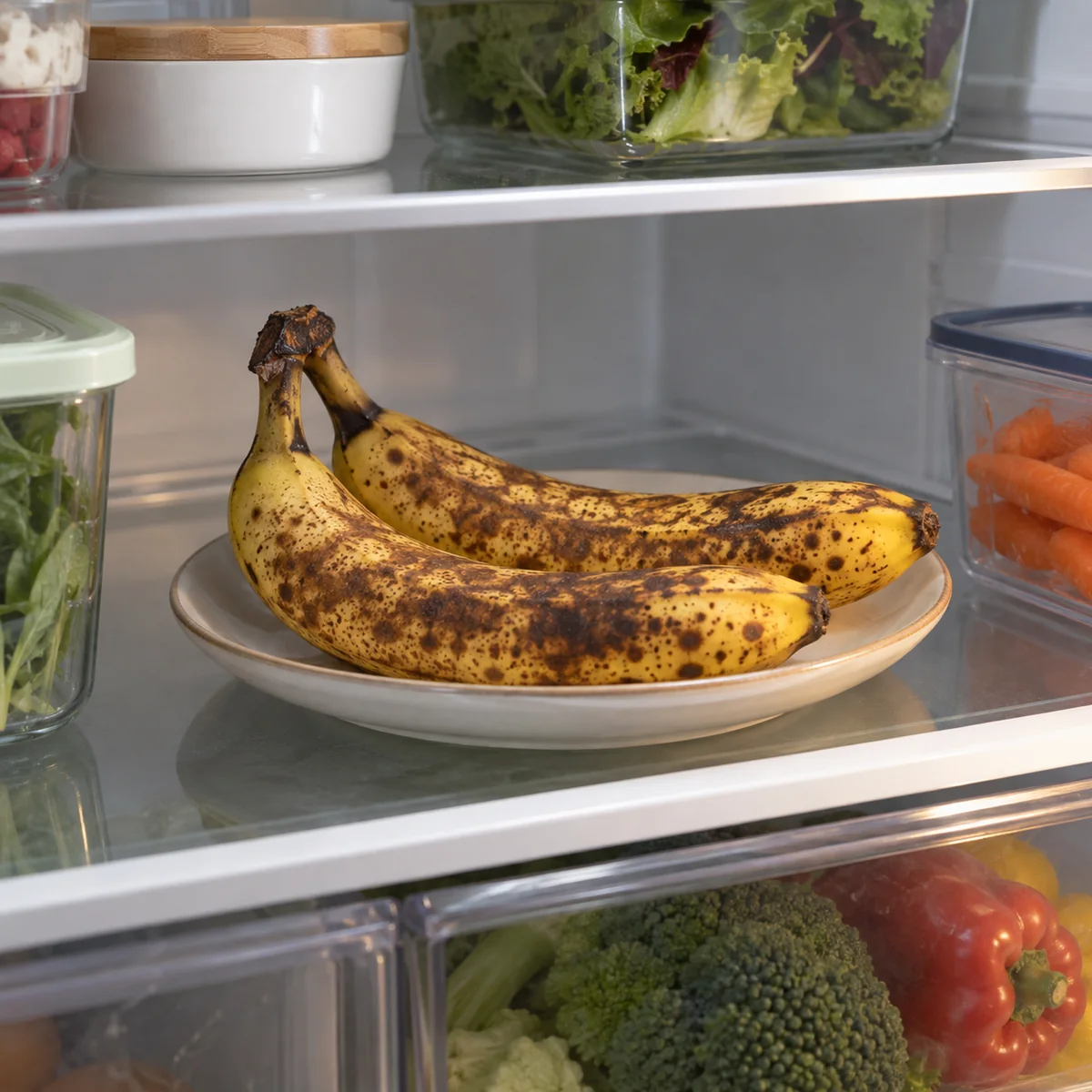
Freeze peeled portions before the fruit goes too far
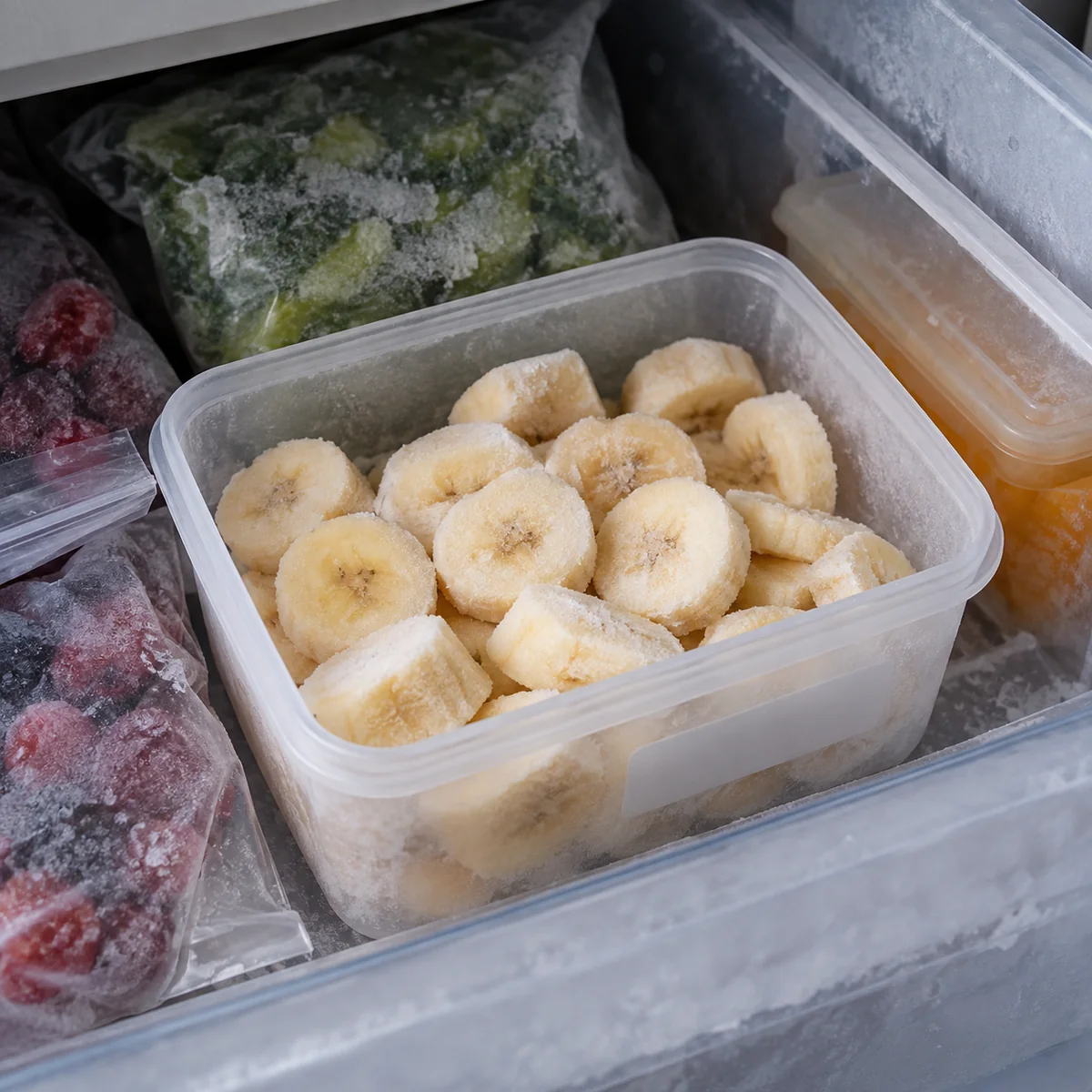
If several sound bananas are ripe at once and you have no near-term plan for them, freeze them. Peel first. You can leave each banana whole for baking, mash it for a recipe, or slice it for smaller portions. For easy-to-separate slices, spread them in one layer on a tray until frozen, then move them into a freezer-safe container or bag you already have. Label the container with the date and the amount.
Utah State University Extension recommends selecting firm ripe bananas for freezing. Frozen banana is best planned for smoothies, baking, or other dishes where a softer thawed texture is welcome, rather than expecting a thawed slice to have the bite of fresh fruit. Our freezer organization guide helps keep those portions visible.
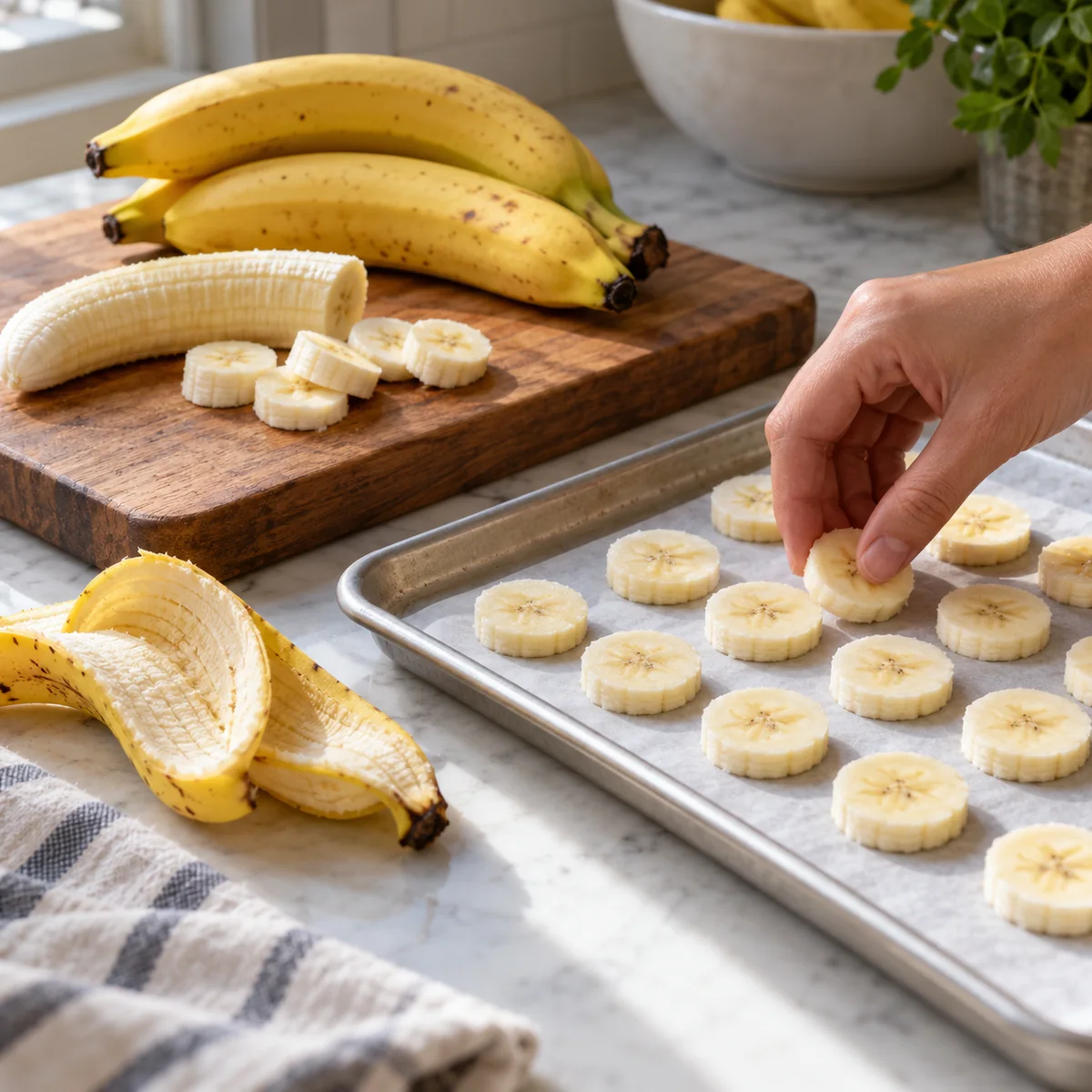
Give the frozen fruit a real job
Write one intended use on your meal plan: blend a portion into a smoothie, thaw and mash it for pancakes, or add it to a familiar baking recipe. Take out only what you need. If thawing, use a covered container in the refrigerator and follow the recipe’s directions; the fruit will be softer after thawing.
A small, dated portion you actually use beats a large unmarked bag at the back of the freezer. The same principle works before shopping: check the bananas you already have before buying another bunch. Our new grocery-list guide starts with that quick kitchen check.
Questions people ask
Should I put green bananas in the refrigerator?
Wait until they are ripe. Bananas are sensitive to cold before ripening, and green fruit may not ripen normally after refrigeration.
Are bananas with brown refrigerator peels still good?
They can be. Cold can darken the peel while the inside remains usable. Peel and inspect the fruit; discard it if it is moldy, leaking, rotten, or smells wrong.
Can I freeze bananas in their peels?
Peeling and portioning them first makes the frozen fruit easier to use later. Freeze sound ripe fruit in a suitable container, and label it so it does not become another forgotten item.
Sources
- Utah State University Extension: Fruit and Vegetable Guide Series: Bananas — room-temperature ripening, refrigeration after ripening, and freezing ripe bananas.
- University of Nebraska-Lincoln Extension: Prolonging the Life of Bananas — refrigeration after ripening and storage tips.
- UC Davis Postharvest Research and Extension Center: Banana — chilling sensitivity and ripening conditions.