Carrots often arrive crisp and leave the refrigerator bendy a week later. The reason is usually moisture loss, especially when leafy tops stay attached or the roots sit uncovered in a dry drawer. A useful home routine is simple: trim the greens, protect the roots from drying out without trapping standing water, and keep them cold and easy to inspect.
The quick answer: Remove any leafy tops, set aside damaged carrots for prompt use, and keep sound whole roots in a lightly vented bag or suitable produce container in the refrigerator crisper. Avoid wet, sealed conditions that encourage decay. Store them separately from apples where you can. Wash under running water just before preparing them, and discard carrots that are rotten, moldy, or slimy.
Sort the bag before it disappears into a drawer
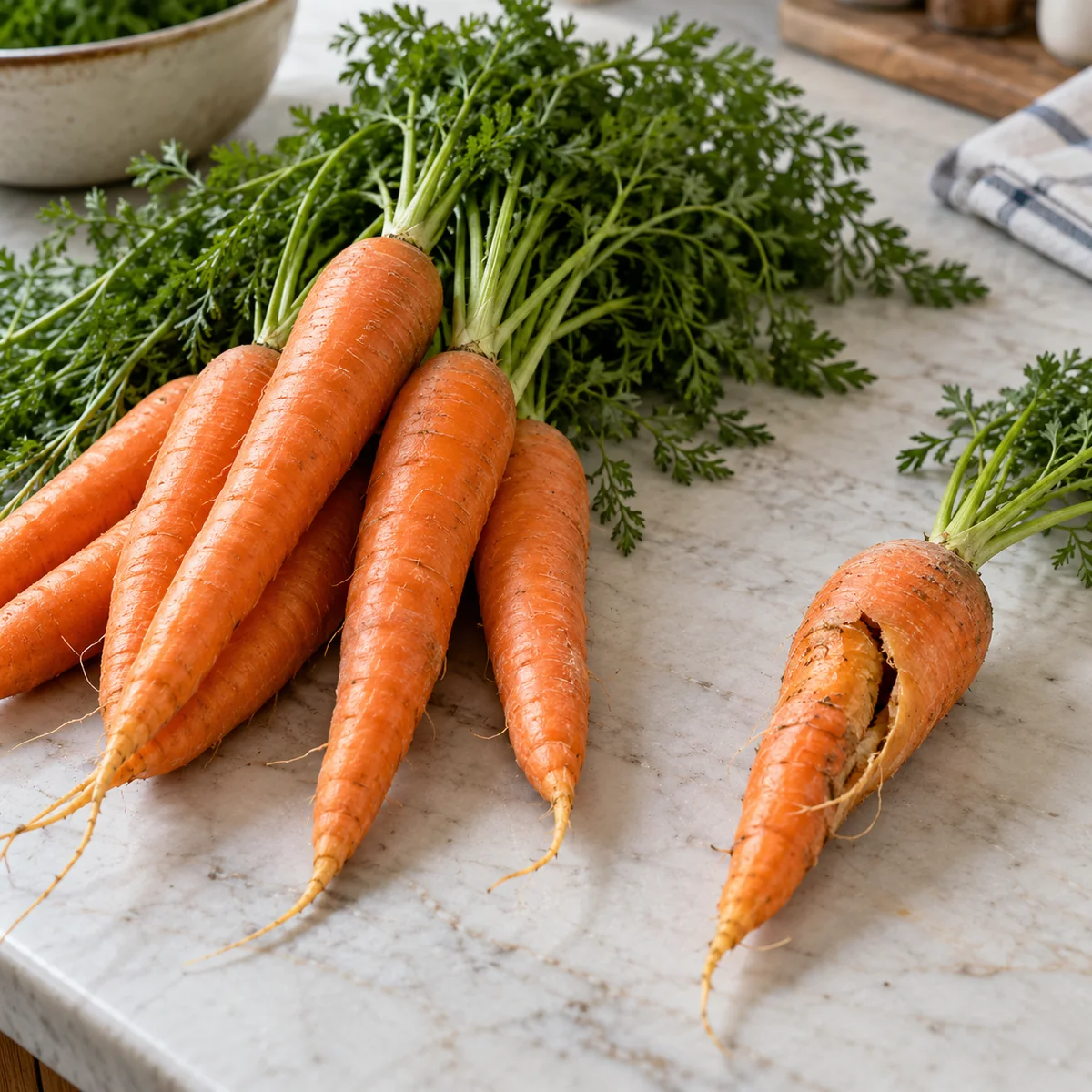
Take the carrots out of a crowded shopping bag and look at each root. Firm, intact carrots are your longer-storage group. A carrot with a minor split or bruise but otherwise sound flesh can go on a use-first list. Discard any root that looks rotten, is leaking, or is slimy; cooking is not a fix for spoiled produce.
Make the next use specific: soup tonight, sticks for tomorrow’s lunch, or grated carrot for a dish you already plan. If your produce drawer routinely hides food, our vegetable rescue guide gives a broader use-first routine.
Remove the leafy tops from bunched carrots
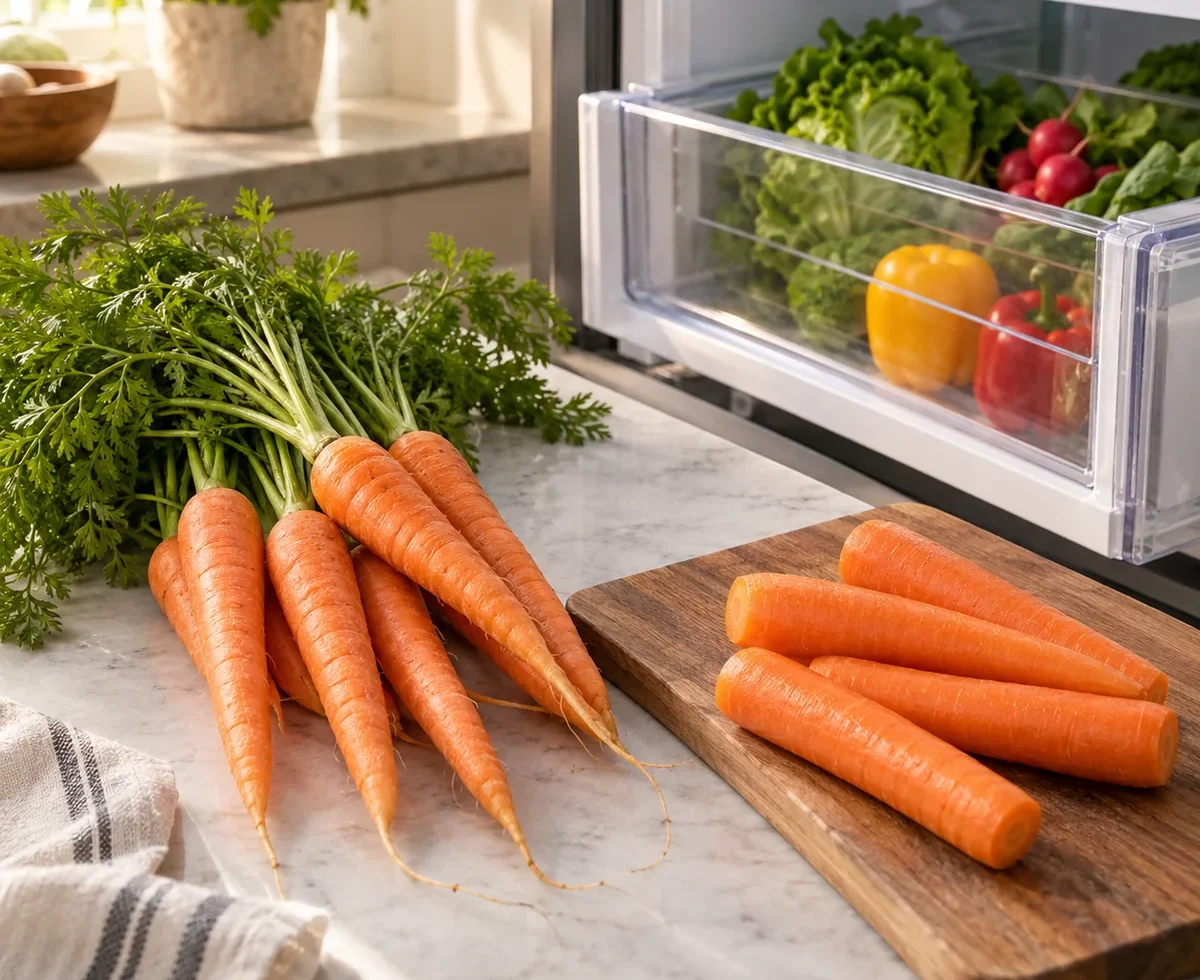
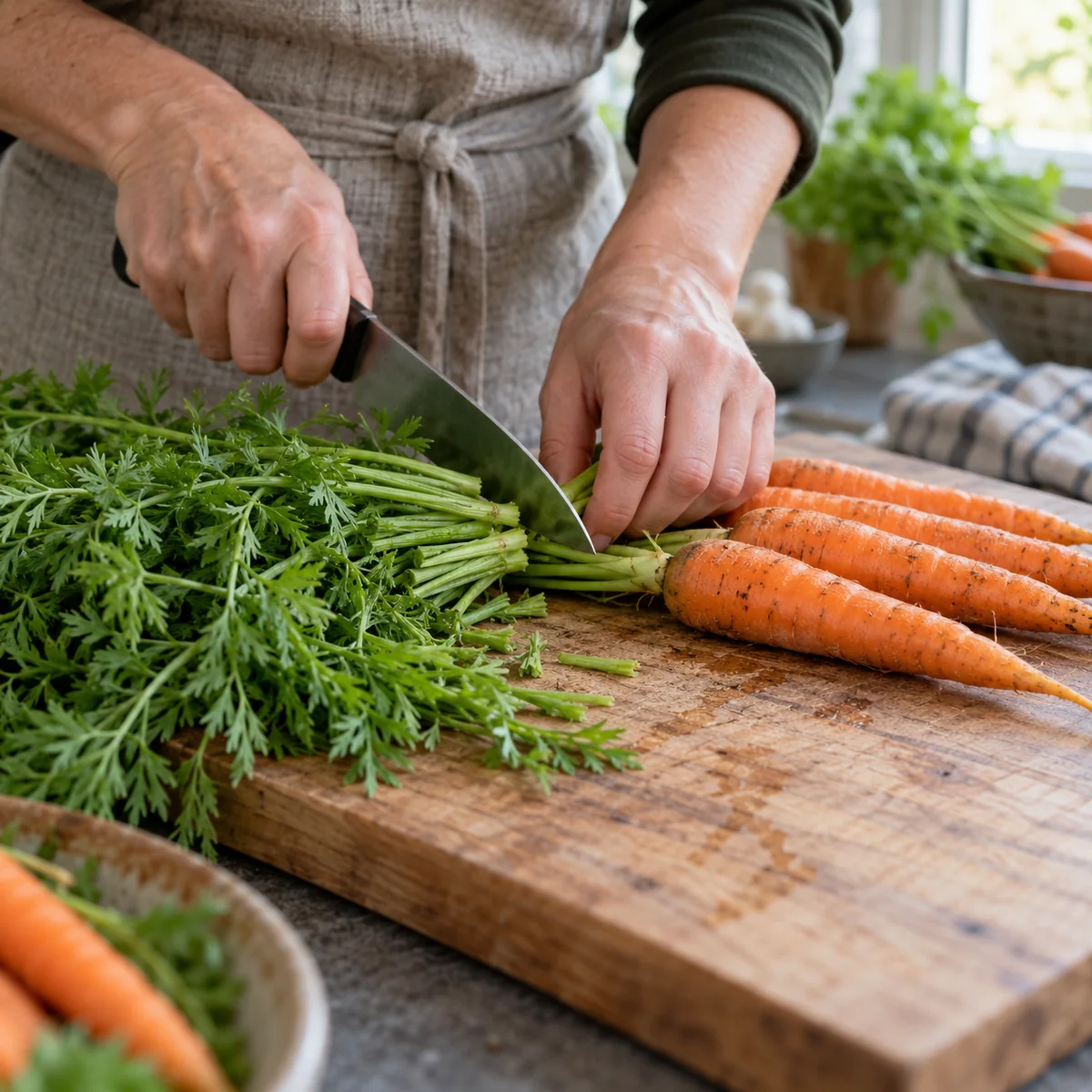
If greens are attached, cut them off before storing the roots. Utah State University Extension notes that tops draw moisture from carrots and recommends removing them for longer storage. Keep the roots whole; you do not need to peel or cut them in advance. Store any greens you intend to use separately and promptly, checking that they are clean and sound.
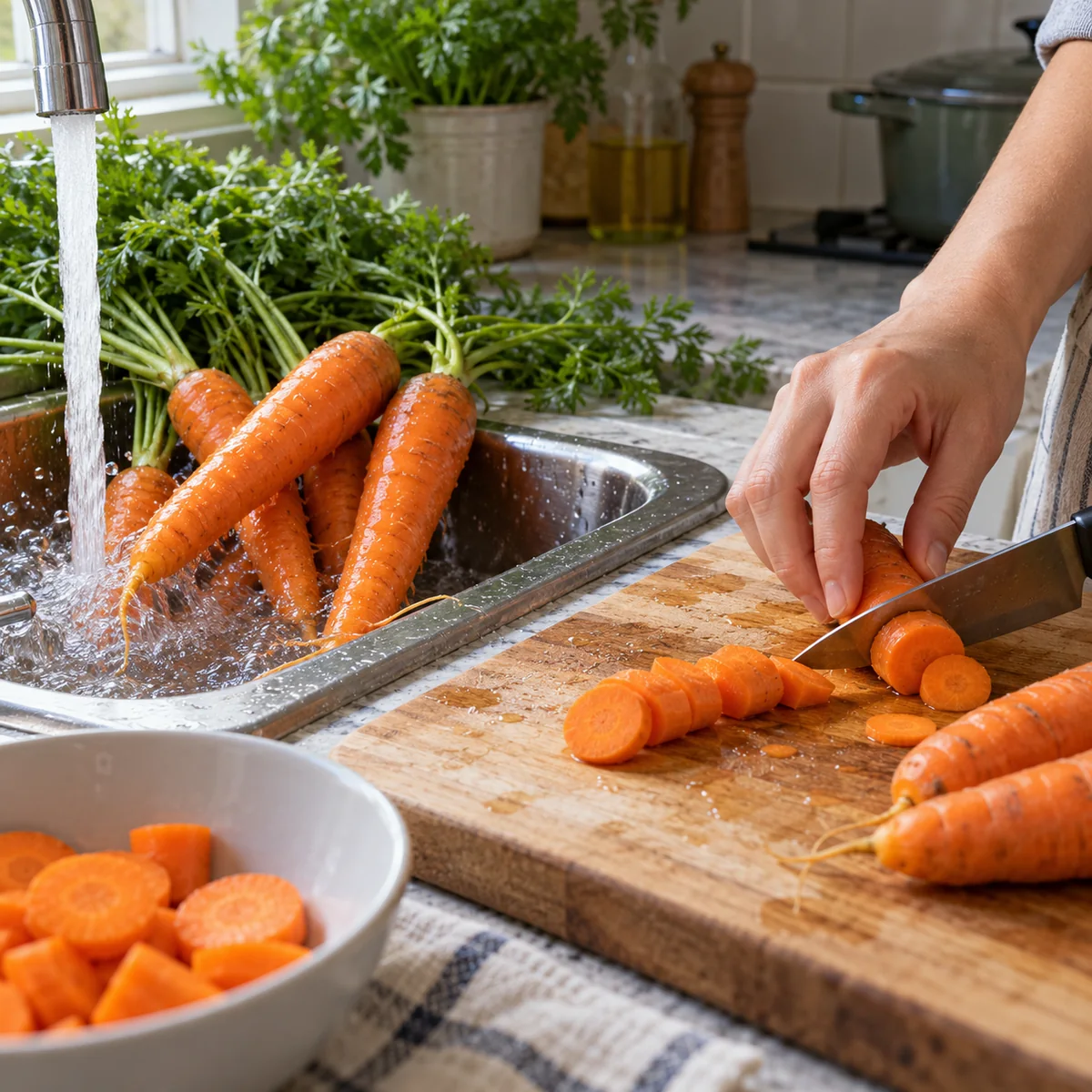
Trim on a clean board with a steady knife, then wipe away loose soil from the storage area. Avoid putting a damp, freshly washed bunch straight into a closed bag. Wash carrots thoroughly under running water before eating or cooking, including when you plan to peel them.
Choose a cool, humid place without standing water
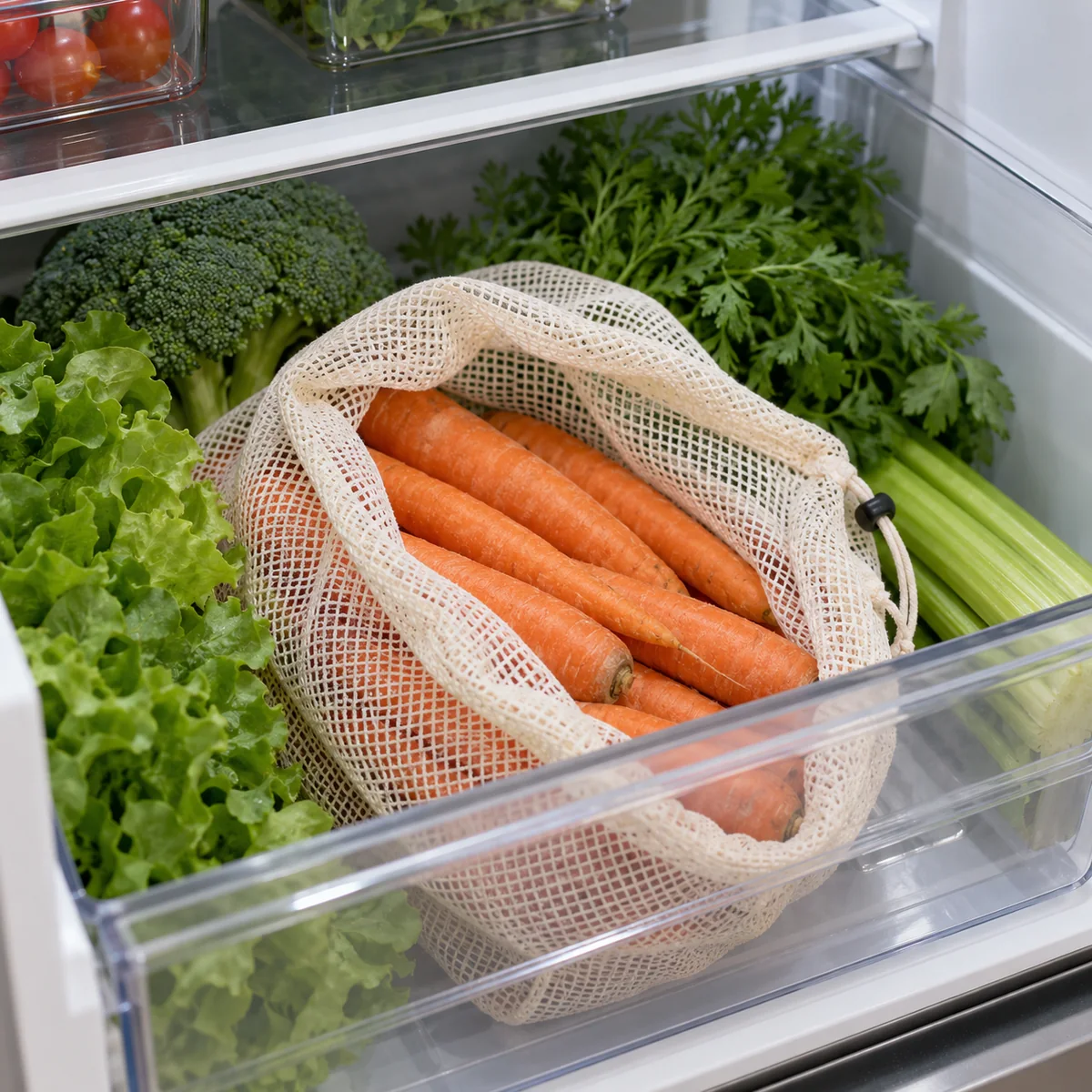
Put the whole trimmed roots in the refrigerator crisper, preferably in a perforated or lightly vented produce bag you already own. Utah State University Extension recommends a perforated bag in the crisper. The purpose is to reduce drying while letting excess moisture escape. Check for pooled water or condensation and dry the bag or replace a wet liner if needed.
UC Davis explains the balance: high humidity helps carrots stay crisp, but free moisture and condensation can promote decay. A clean reusable produce bag or vented container can work if it actually maintains that balance in your refrigerator. Keep raw meat and its juices away from produce.
Keep carrots separate from apples when possible
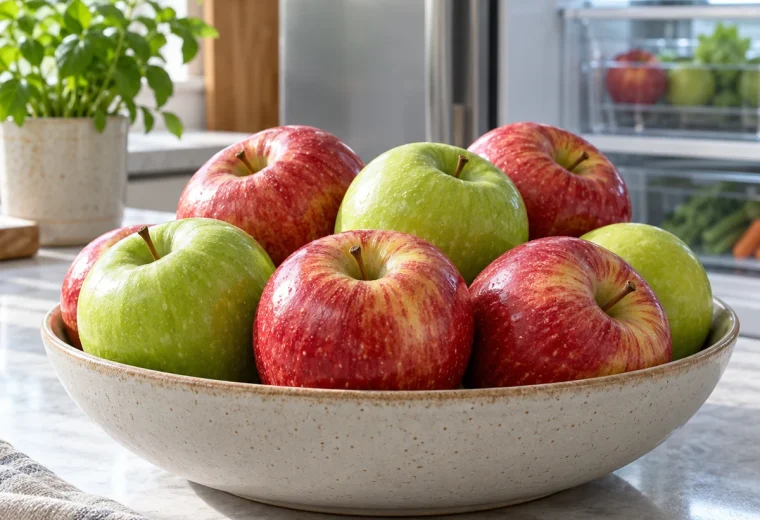
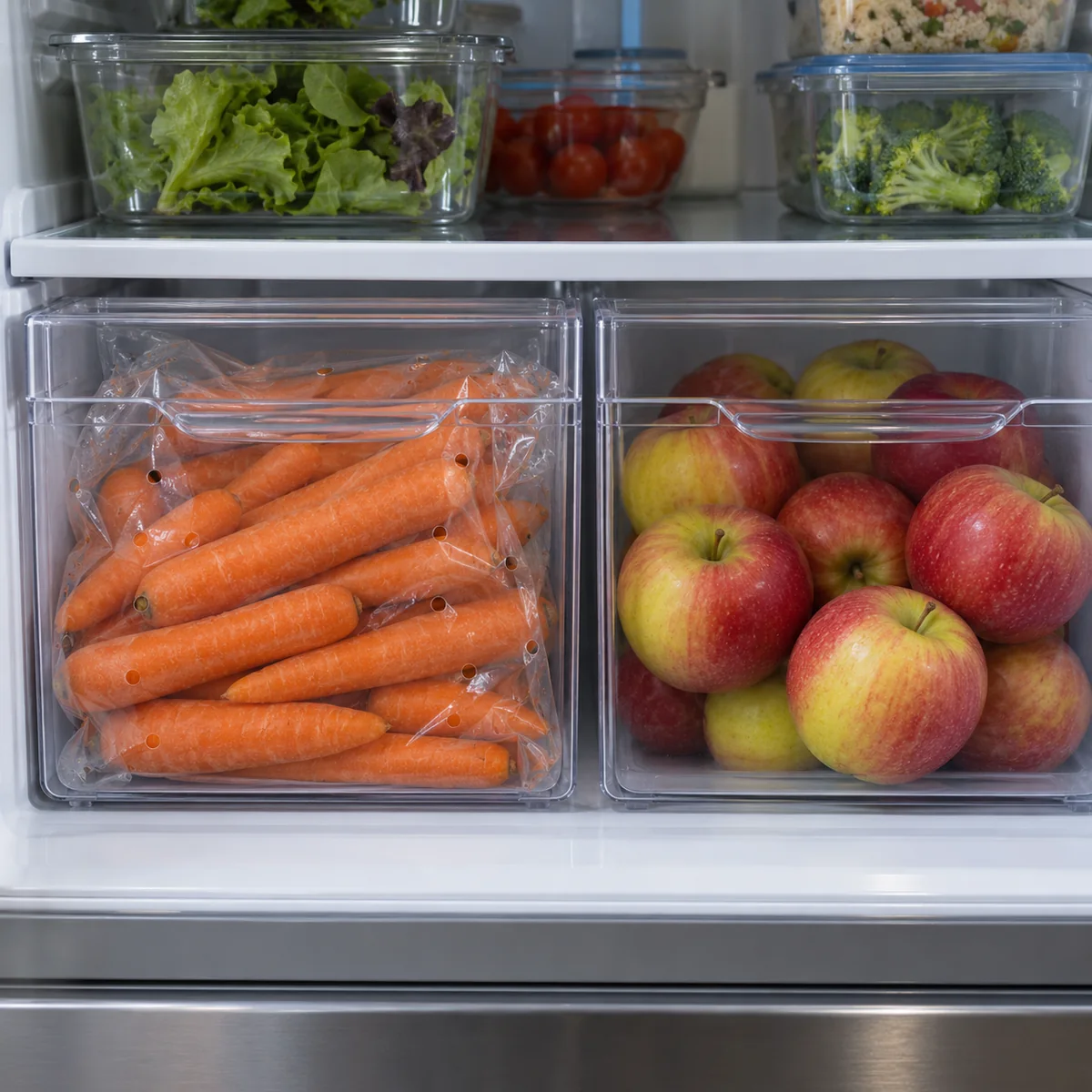
Apples and some other ripening fruits release ethylene. Carrots can develop a bitter flavor after enough exposure, so a separate fruit drawer or shelf is useful when your refrigerator has room. UC Davis recommends not mixing carrots with ethylene-producing produce. If your refrigerator has only one drawer, use separate areas or containers and check the carrots regularly rather than buying a new organizer.
This is a quality issue, not a reason to throw out a carrot that shared a drawer once. The bigger everyday priorities are cold storage, avoiding moisture loss, and using carrots before they spoil. Our apple storage guide explains where to put the fruit side of that arrangement.
Use a less-crisp carrot while it is still sound
A carrot that has lost some snap can still be useful in a cooked dish if it has been stored safely and shows no spoilage. Wash it under running water, cut away a small damaged area, and add the sound remainder to soup, a stir-fry, or another meal you will make now. The U.S. Food and Drug Administration advises cutting away damaged or bruised areas and throwing away produce that looks rotten.
Do not let “use first” become another forgotten category. Put the sound, less-crisp roots at the front and decide on a meal today. Check the rest of the bag when you do. A quick weekly look is more useful than relying on an exact promised shelf-life, which varies with the carrots and the refrigerator.
Questions people ask
Should I store carrots in water?
For whole carrots, a vented bag in the refrigerator crisper is a simpler routine supported by extension guidance. The goal is high humidity without standing water or condensation that could encourage decay.
Do carrots need to be washed before storage?
Wash thoroughly under running water before preparing or eating them. If you wash them before storing, make sure excess surface water does not pool in the container.
How long will they stay crisp?
There is no guaranteed number for a home refrigerator. Utah State University Extension describes a few weeks in a perforated bag, while quality depends on freshness at purchase, temperature, and moisture. Inspect the carrots rather than relying only on a date.
Sources
- Utah State University Extension: Fruit and Vegetable Guide Series: Carrots — trimming tops, crisper storage, and separating carrots from fruit.
- UC Davis Postharvest Research and Extension Center: Carrot — moisture, condensation, and ethylene sensitivity.
- U.S. Food and Drug Administration: Selecting and Serving Produce Safely — washing and handling damaged or rotten produce.