A microwave splatter is easiest to clean while it is fresh. Once sauce has dried onto the ceiling and door, scrubbing harder can be tempting—but you can usually start with water, a soft washable cloth, and a little patience. This guide turns that into a simple reset you can repeat without disposable wipes or a collection of specialty sprays.
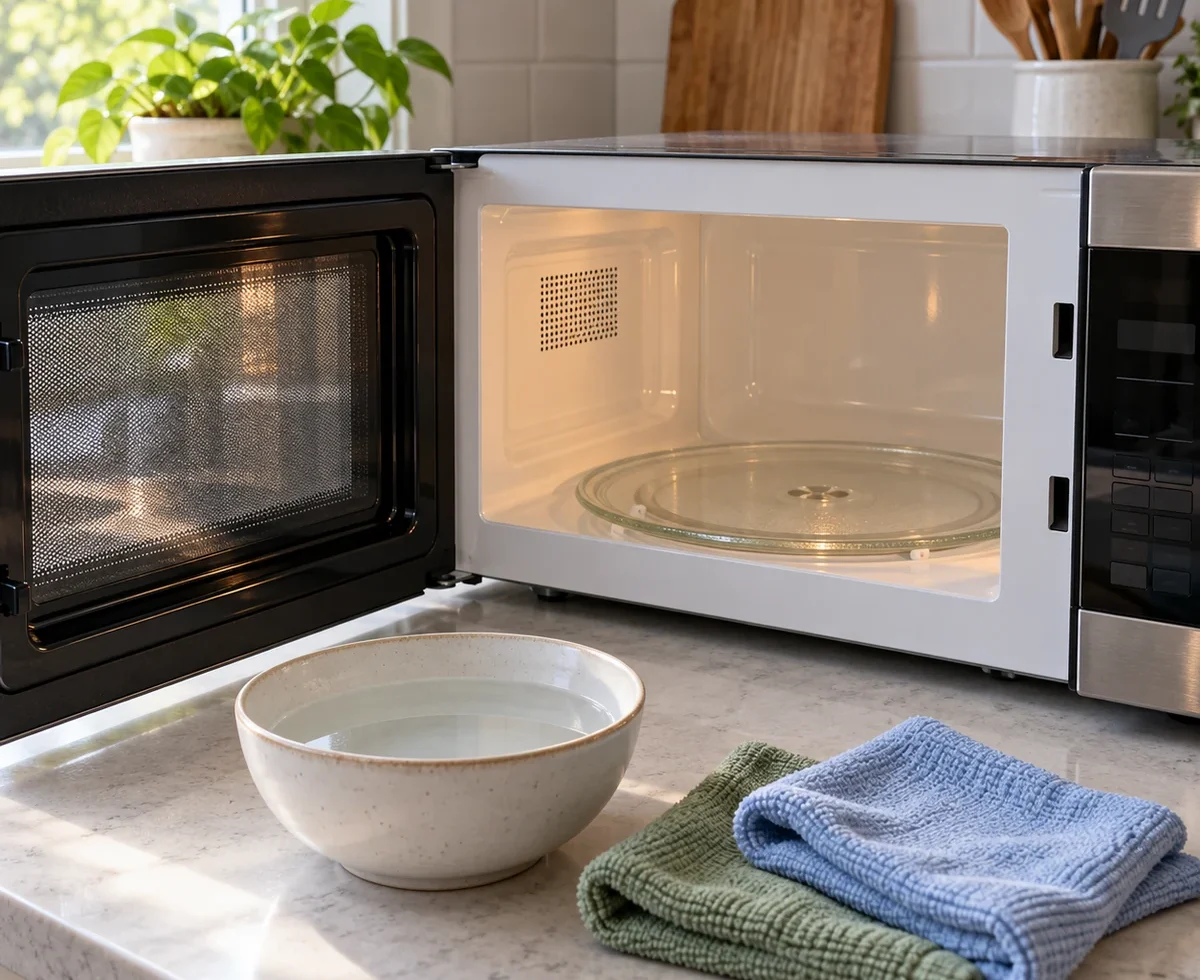
The short answer: Check your microwave manual first. For a typical microwave that allows this method, heat one cup of water in a microwave-safe bowl for about three to four minutes to soften stubborn residue. Let the bowl cool before moving it. Then wipe the cool interior with a soft damp cloth, use a little mild dish soap where needed, rinse with a second damp pass, and dry. Whirlpool describes this water-and-cloth approach for its microwaves; your model’s instructions take priority.
Gather what you already have
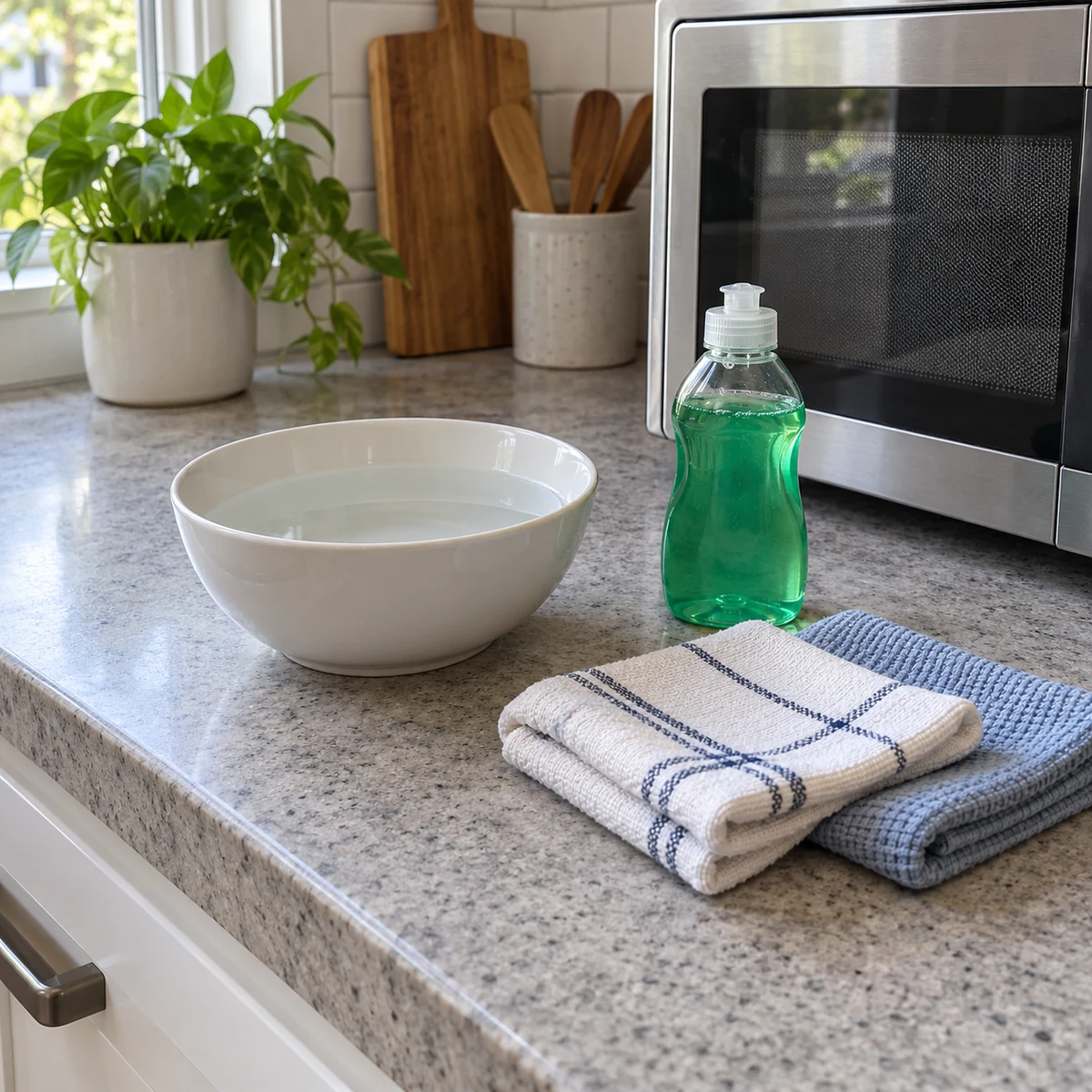
- A microwave-safe bowl or measuring cup and about one cup of water
- Two clean, soft reusable cloths: one for washing and one for rinsing or drying
- A small amount of mild dish soap for greasy or persistent spots
- A towel or oven mitt for handling the bowl after it has cooled enough to remove safely
Skip metal scrubbers, abrasive pads, and oven cleaner. The USDA advises against these for microwave interiors. If your microwave has a built-in steam-clean cycle, follow its own manual instead of choosing a time from this article.
Step 1: Remove crumbs and check the turntable
Wait for the appliance and glass turntable to cool. Lift out loose crumbs with a damp cloth. If the turntable is dirty, remove it carefully; wash it by hand in warm soapy water, rinse, and dry it. Check the manual before putting it in a dishwasher. Do not move hot glass straight into cold water, and put the turntable back before using the microwave again.
Look at the corners, the door edge, and the ceiling. This quick check tells you whether a damp wipe is enough. If only one fresh splash is present, wipe it now and skip the steam step. Heating a bowl of water is for dried-on messes, not a required daily ritual.
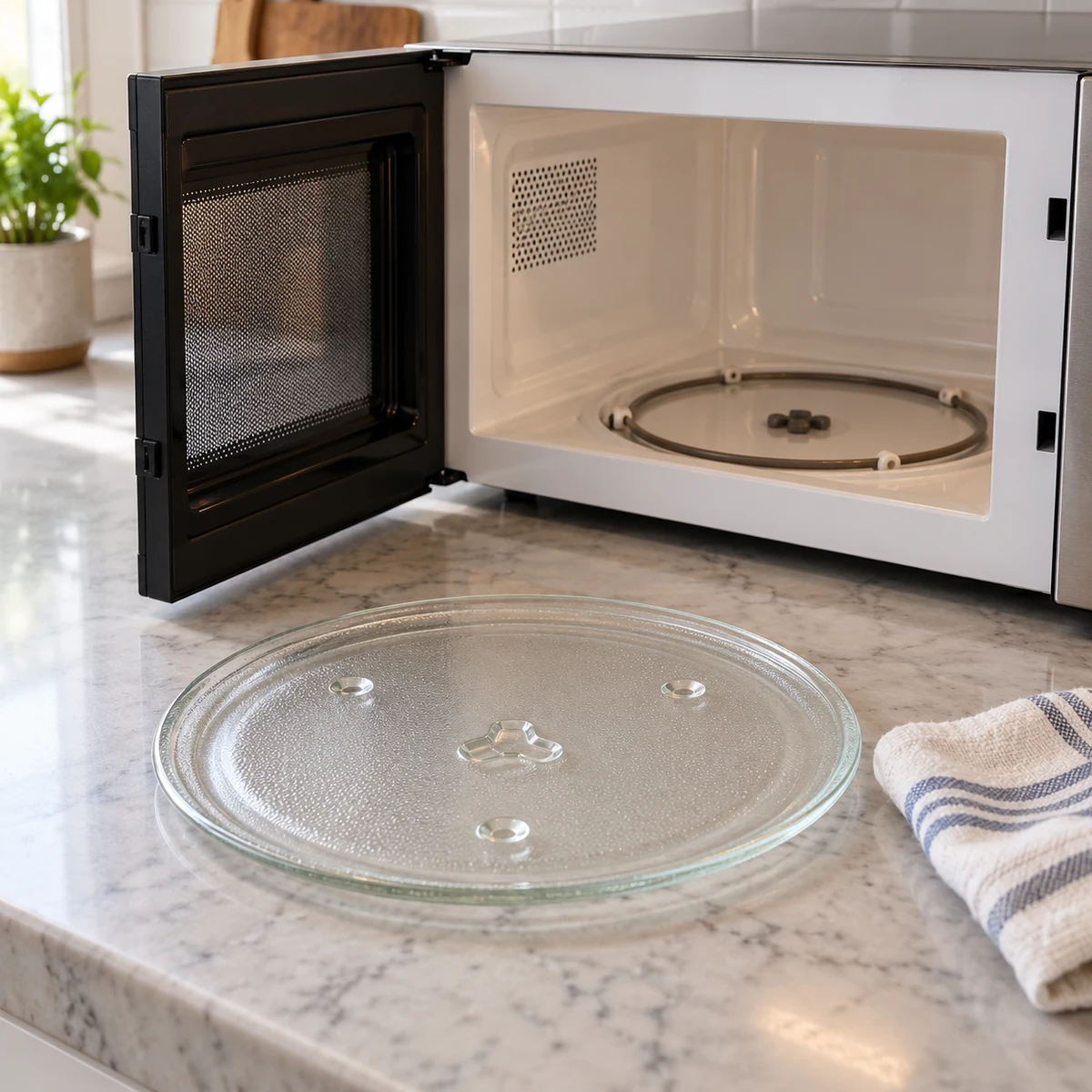
Step 2: Let one bowl of water soften dried splatter
Put about one cup of water in a microwave-safe bowl with plenty of room above the waterline. Place it on the turntable and heat for about three to four minutes, following the appliance maker’s instructions. Leave the door closed briefly so the moisture can work on the dried spots. Open the door carefully and let the bowl cool before taking it out; hot water and steam can burn.
You do not need vinegar or lemon to make the water useful. Plain water keeps the process simple and avoids adding a scent you may not want. If the cavity is already cool and the residue remains firm, dampen the spot and give it more time rather than scraping with metal.
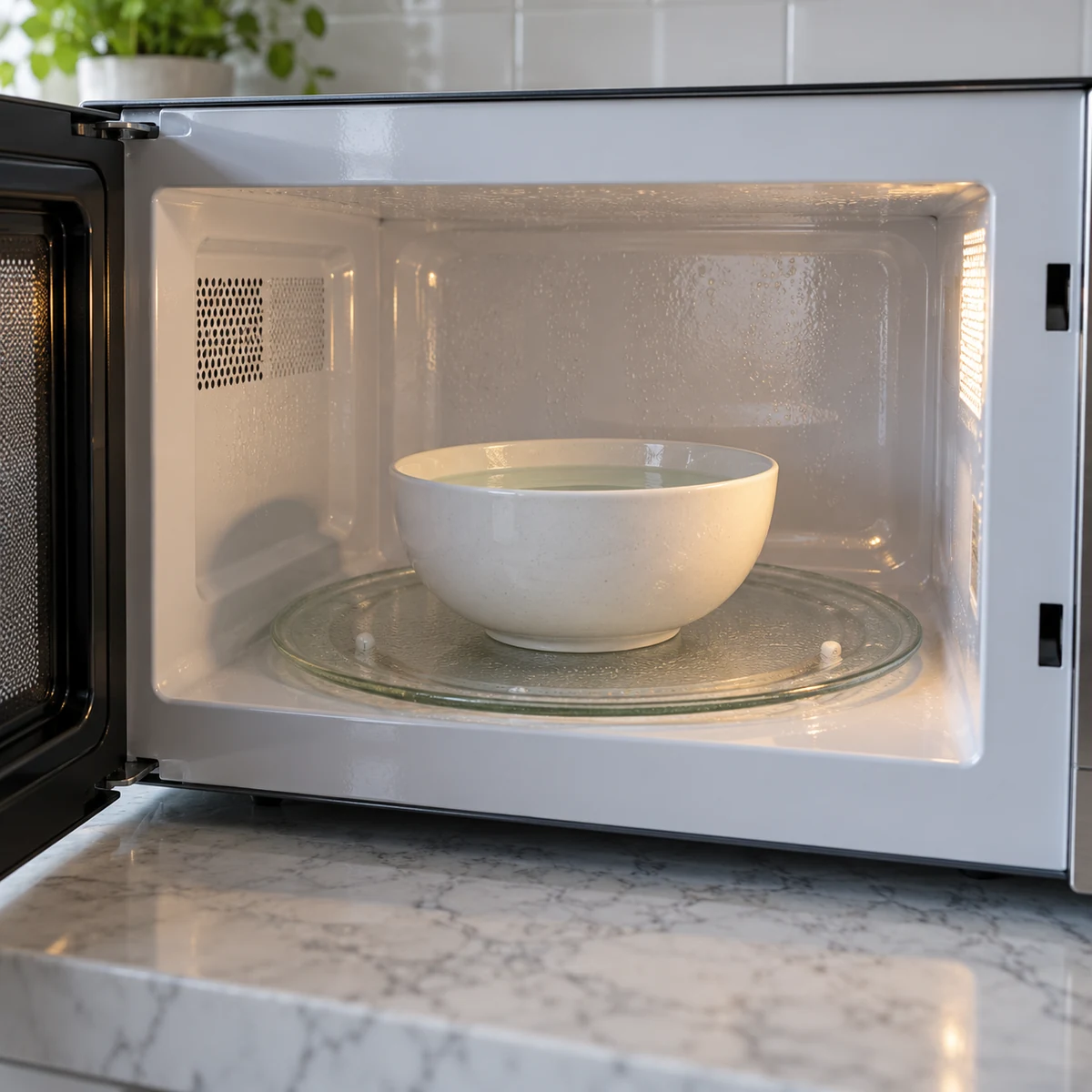
Step 3: Wipe the ceiling, walls, floor, and door
Once the interior is cool enough to touch, wipe the ceiling first so loosened food falls onto surfaces you have not cleaned yet. Continue with the walls, floor, and inside of the door. Fold the damp cloth to a clean side as you go. For greasy patches, dip the cloth in water with a drop of mild dish soap, then follow with a clean damp cloth to remove soap residue. Finish with a dry cloth.
Pay attention to the door seal without tugging or soaking it. Keep water out of vents, controls, and openings. Do not spray cleaner directly into the cavity. If you see damage to the door, seal, or interior coating, stop using the microwave and consult the manufacturer or a qualified repair professional.
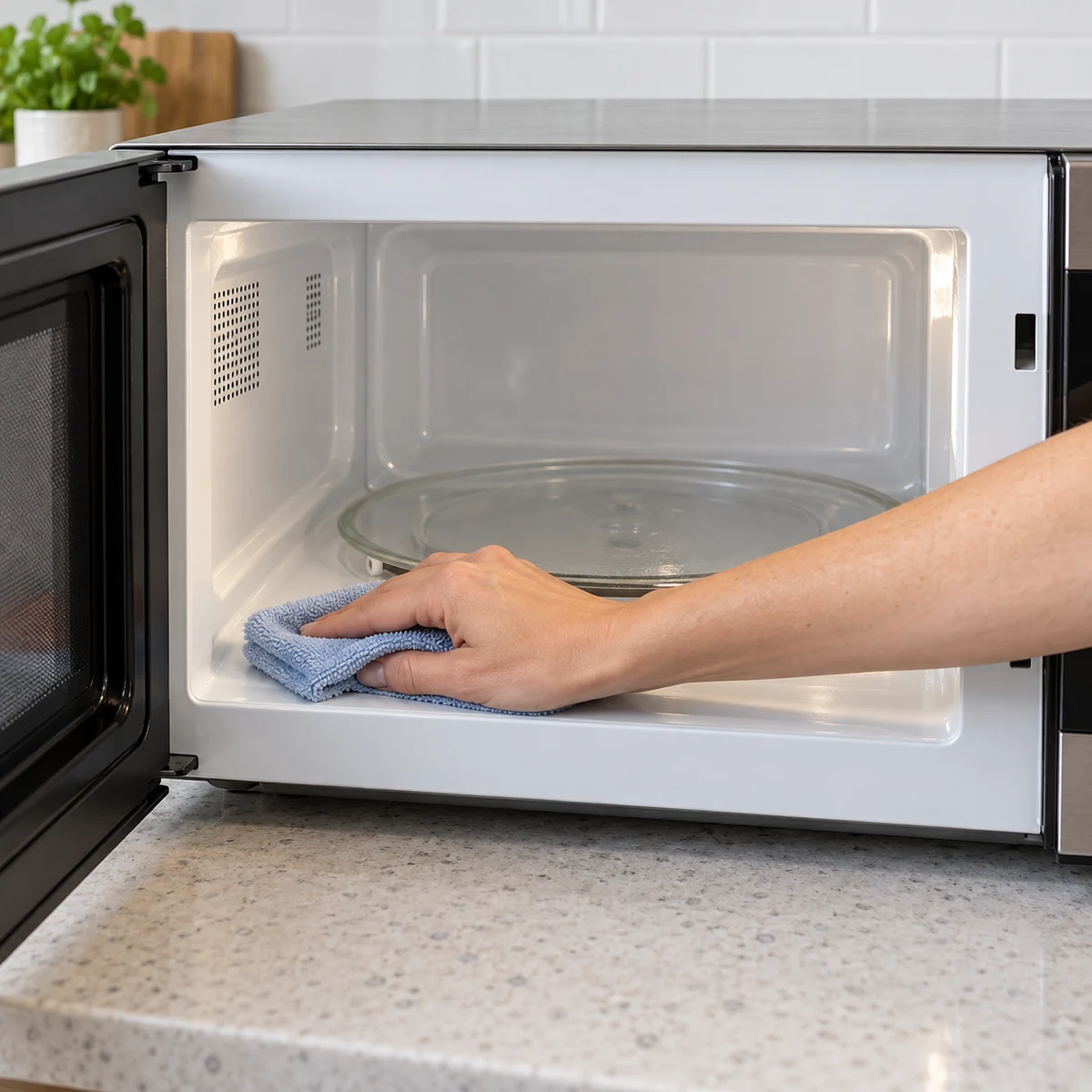
Step 4: Clean the outside and prevent the next mess
Wipe the handle and exterior with a lightly damp cloth, following the finish-care instructions for your model. Use a control lock if your model has one, or follow its directions about unplugging before exterior cleaning. Dry the controls and handle. Wash the used cloths and let them dry completely before putting them away.
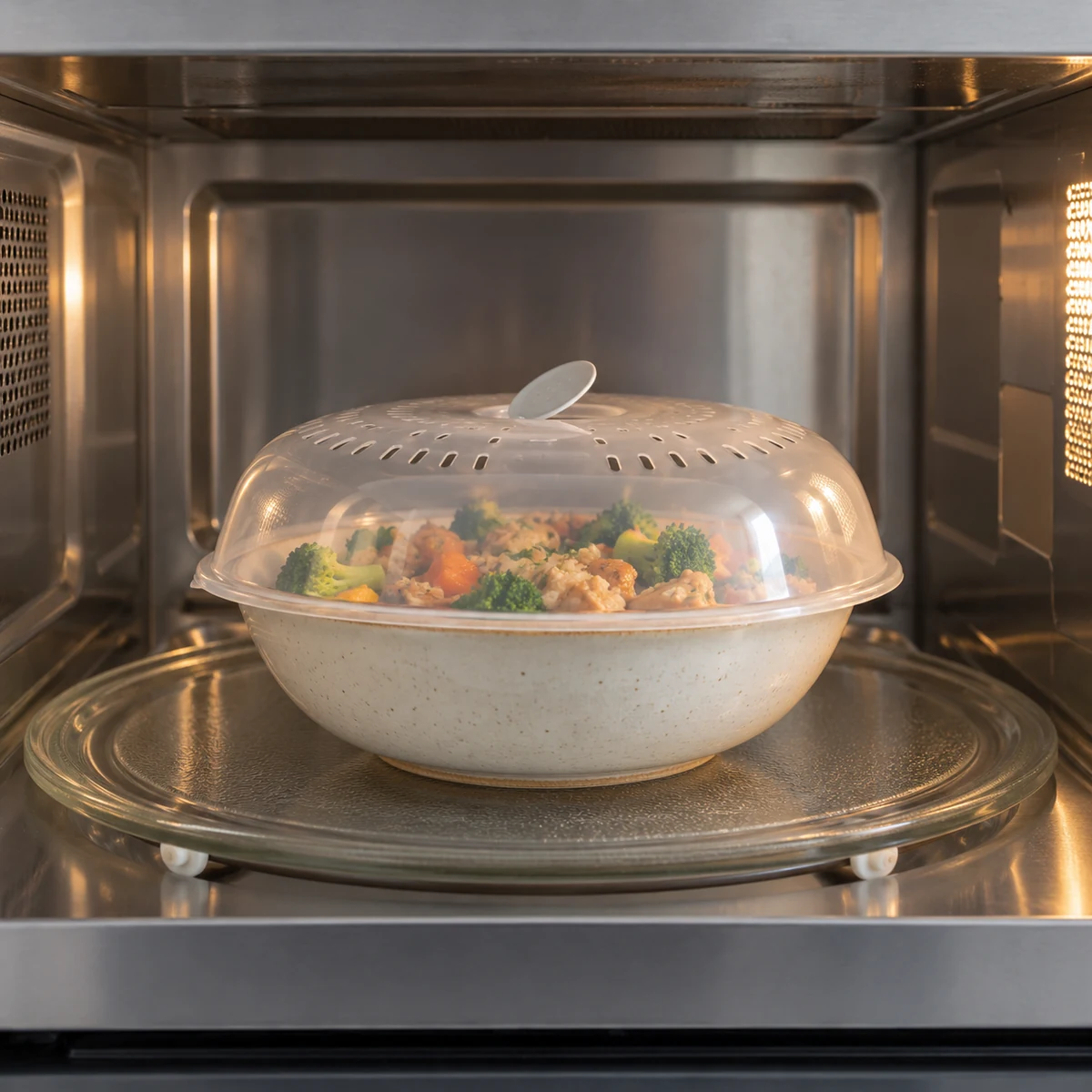
When reheating food, use a microwave-safe cover or an appropriate loose lid if the cookware instructions allow it. Leave a route for steam to escape and follow the food and appliance directions. A cover reduces many splashes; wiping a new spill after the oven cools keeps it from becoming the next baked-on job.
If the mess will not wipe away
- Dried sauce on the ceiling: hold a warm, damp cloth against the spot briefly, then wipe gently. Repeat rather than scraping.
- Greasy film: use a little mild dish soap on the cloth, then rinse and dry the surface.
- Lingering food smell: remove any hidden crumbs, wash the turntable, wipe the door edges, and leave the door open briefly after cleaning if the space is safe to do so. If there is a burnt electrical smell or visible damage, stop using the appliance.
- Mess under the turntable: clean and dry the floor, support ring, and turntable separately, then reassemble them as the manual shows.
Questions people ask
Do I need vinegar or lemon to clean a microwave?
No. Water can soften dried food, while mild dish soap helps with grease. Some manufacturers describe optional additions, but plain water is a useful starting point. Follow your own microwave’s care guide.
Can the glass turntable go in the dishwasher?
Only if the manual for your model says it can. Hand washing a cooled turntable is a straightforward default.
How often should I do the full reset?
Wipe fresh splatters after the microwave cools. Do the longer clean when residue starts to build up; frequency depends on how often the appliance is used. Whirlpool suggests roughly weekly cleaning as a rule of thumb for frequently used microwaves.
For other small routines that reduce disposable supplies, see our guides to dusting with washable cloths and cleaning windows without paper towels. If the kitchen has a larger odor problem, start with its source using our guide to a fresher home without air fresheners.
Sources
- Whirlpool: How to clean a microwave — steam-softening, soft-cloth wiping, turntable care, and routine frequency.
- USDA Food Safety and Inspection Service: Cooking with Microwave Ovens — manufacturer-first cleaning advice and avoiding abrasive materials.