If your range hood feels sticky or seems to move less air, the metal mesh above the stove is worth checking. That removable panel catches cooking grease, and cleaning it can be a straightforward sink job. The important first step is identifying the filter: a washable metal grease filter and a charcoal odor filter are different parts with different care instructions.
The quick answer: Turn the hood and stove off and let everything cool. Check your model’s manual, release and support the metal grease filter, soak it in warm water with dish detergent, gently brush stubborn grease, rinse, and let it dry completely before reinstalling. If your hood also has a charcoal filter, follow its model-specific replacement or regeneration instructions instead of assuming it can be washed.
First, identify the filter you have
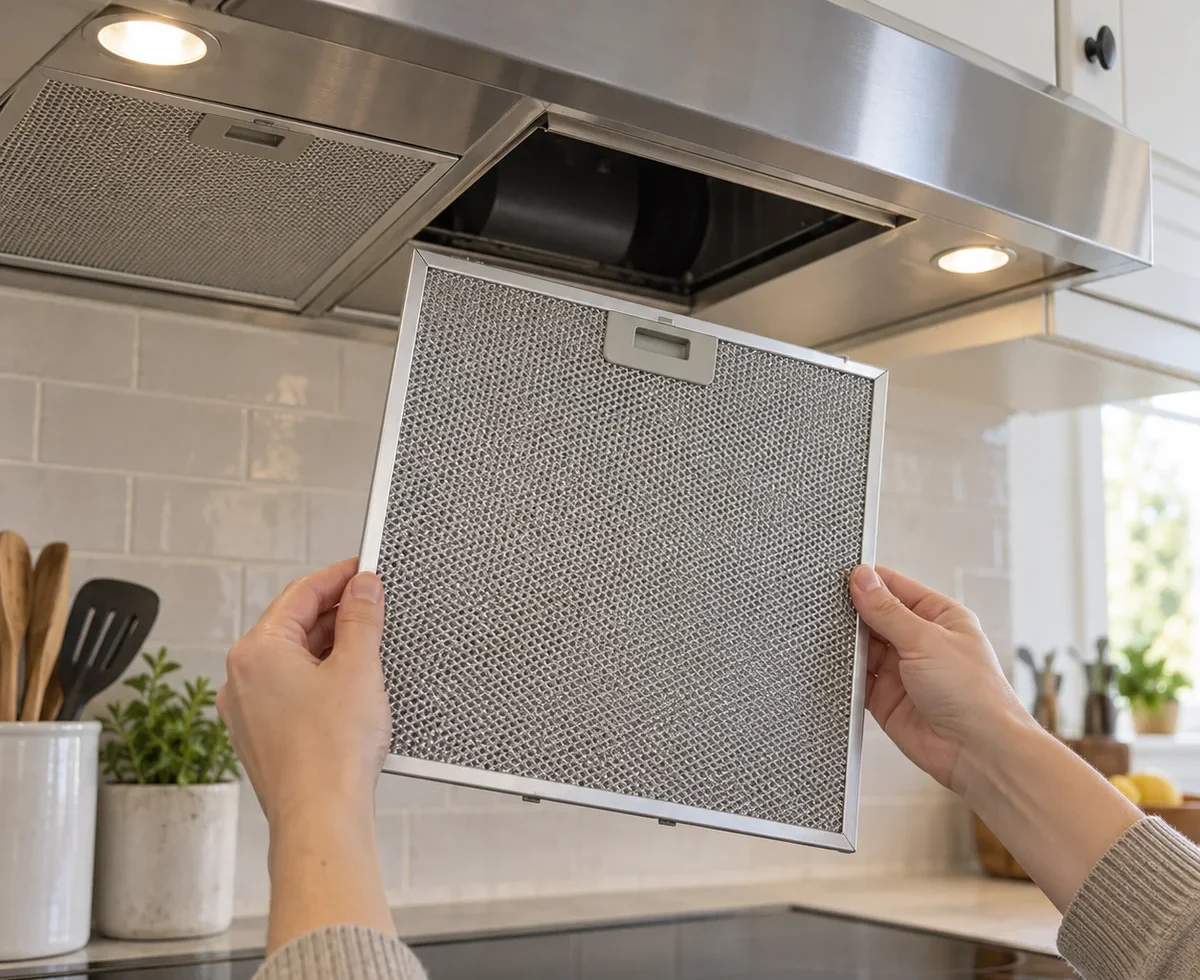
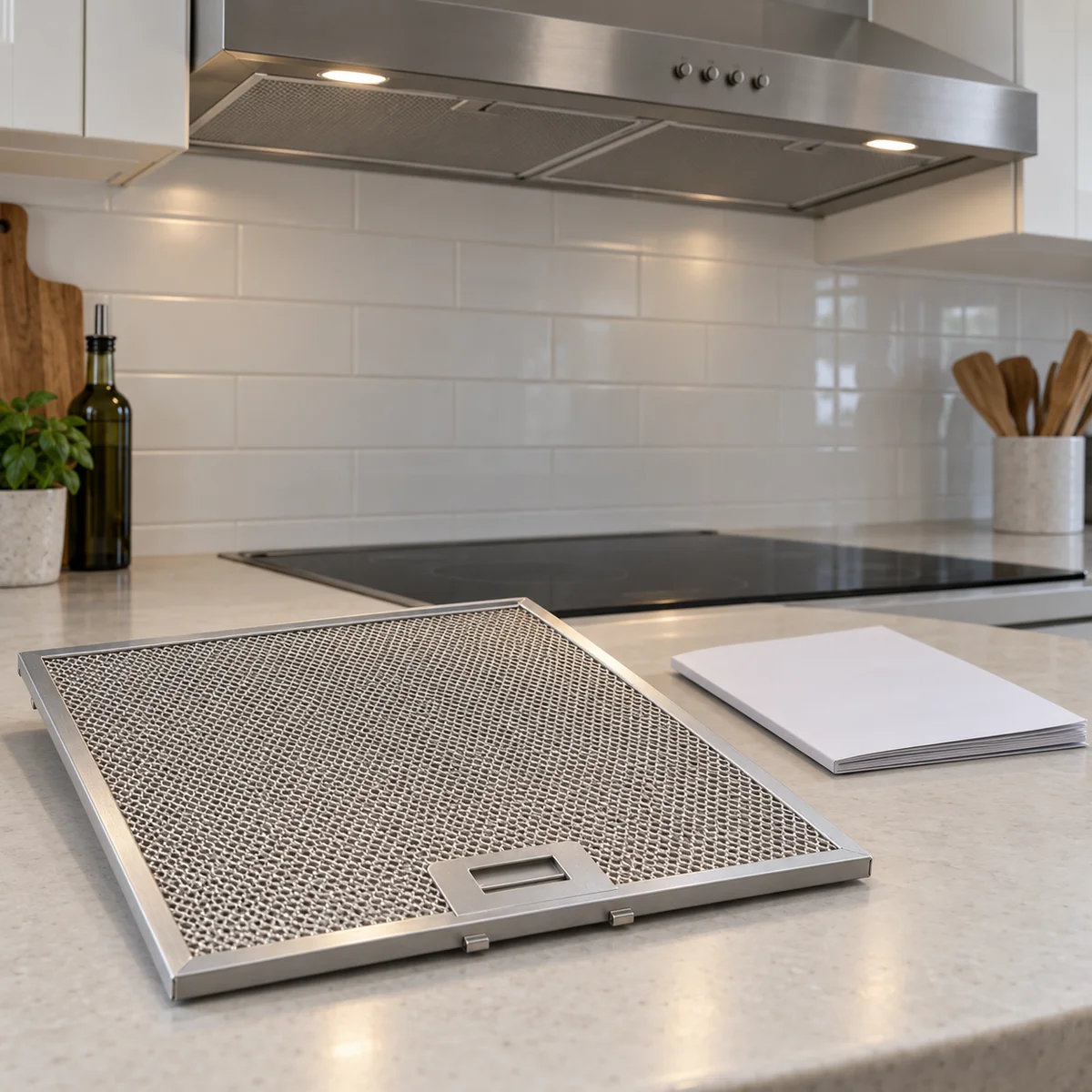
The most visible filter is often a silver metal mesh or baffle panel beneath the hood. Many models use a removable metal filter to catch grease. A recirculating hood may also contain a separate charcoal filter for odors. The metal panel is commonly washable; charcoal care varies by model, so use the owner’s manual rather than treating both filters alike.
Find the model number on the hood label and look up its filter instructions before releasing anything. Check the removal method and whether the manufacturer permits dishwasher cleaning. GE Appliances says its general directions cover common metal filters but advises consulting the specific manual when the filter differs. If a filter is damaged, bent, or does not latch securely, check the manufacturer’s replacement guidance.
Remove it only when the hood and stove are cool
Switch the fan and stove off and wait until the cooking area is cool. Put a cloth or tray on a nearby counter if the filter is greasy. Support the panel with one hand while releasing its latch or sliding it from its track with the other. Filters vary: do not force a part that does not move as the manual describes.
Once it is out, take a quick look at the exposed accessible rim of the hood. You can wipe a greasy exterior or accessible surface according to the manual, but do not spray water or cleaner into the fan, light fittings, or electrical areas. Keep the stovetop clear while you work.
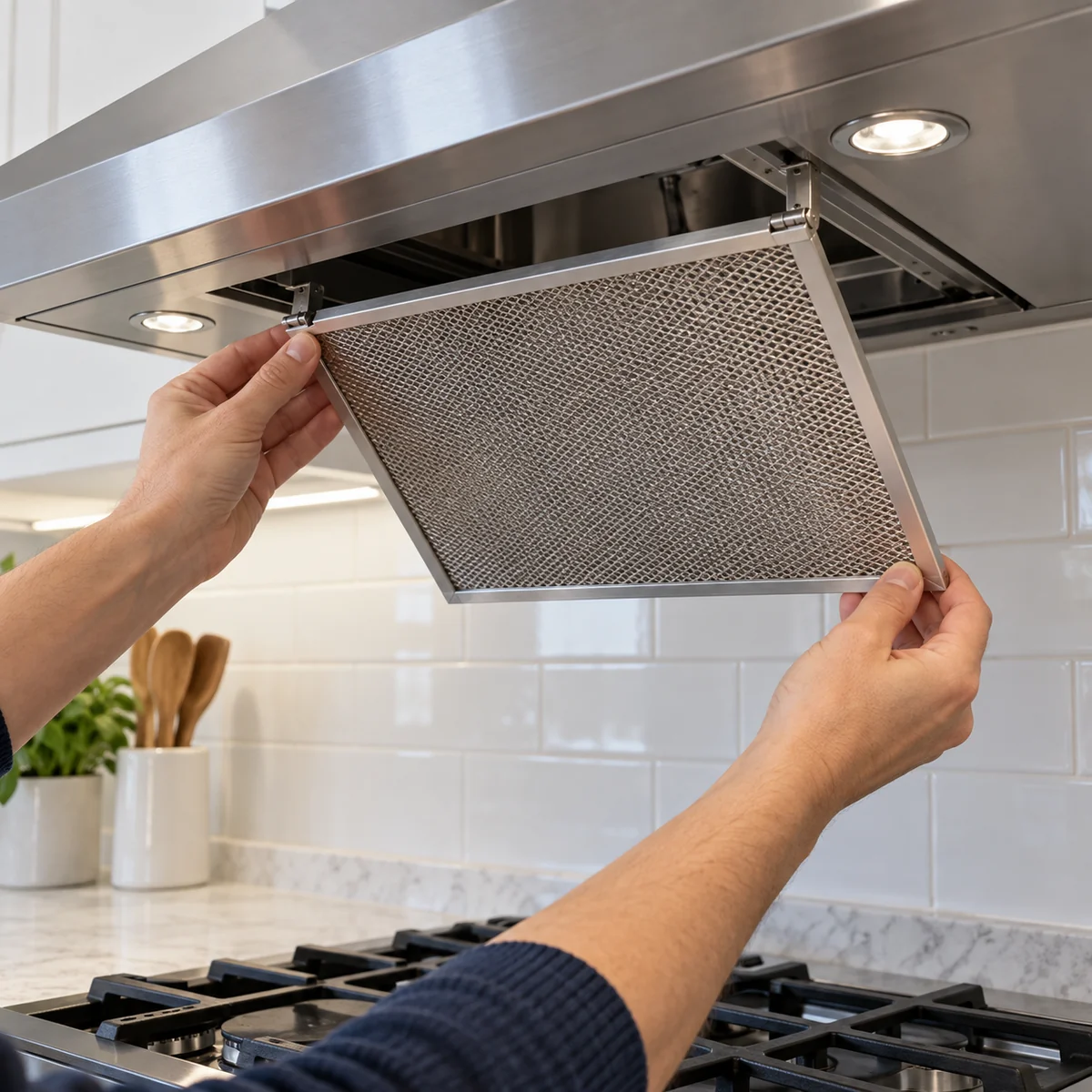
Soak the metal panel in warm soapy water
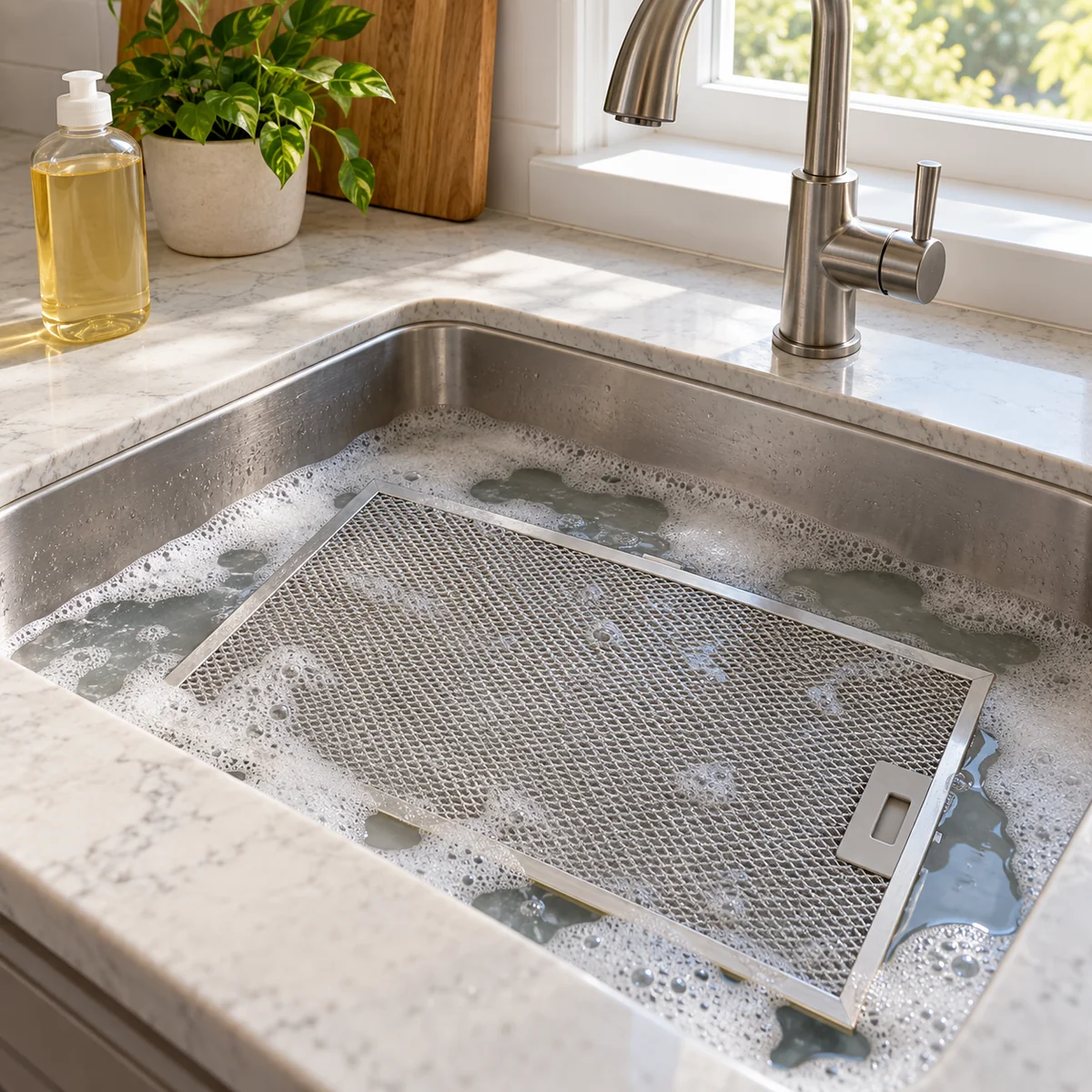
Fill a sink or basin with warm water and a little dish detergent. Let the metal filter soak so the grease softens, then swish it gently in the water. Bosch describes a short hot, soapy soak, brushing, rinsing, and thorough drying; GE also recommends hot water and detergent for common metal grease filters. Use water that is comfortable to handle safely rather than a boiling-water stunt.
For a large panel, wash one half at a time if the sink is too small. A greasy filter may need a second wash. Avoid mixing cleaning products or using an abrasive tool that bends the mesh. If your manual allows a dishwasher, follow its directions; GE notes dishwasher washing can discolor some metal filters.
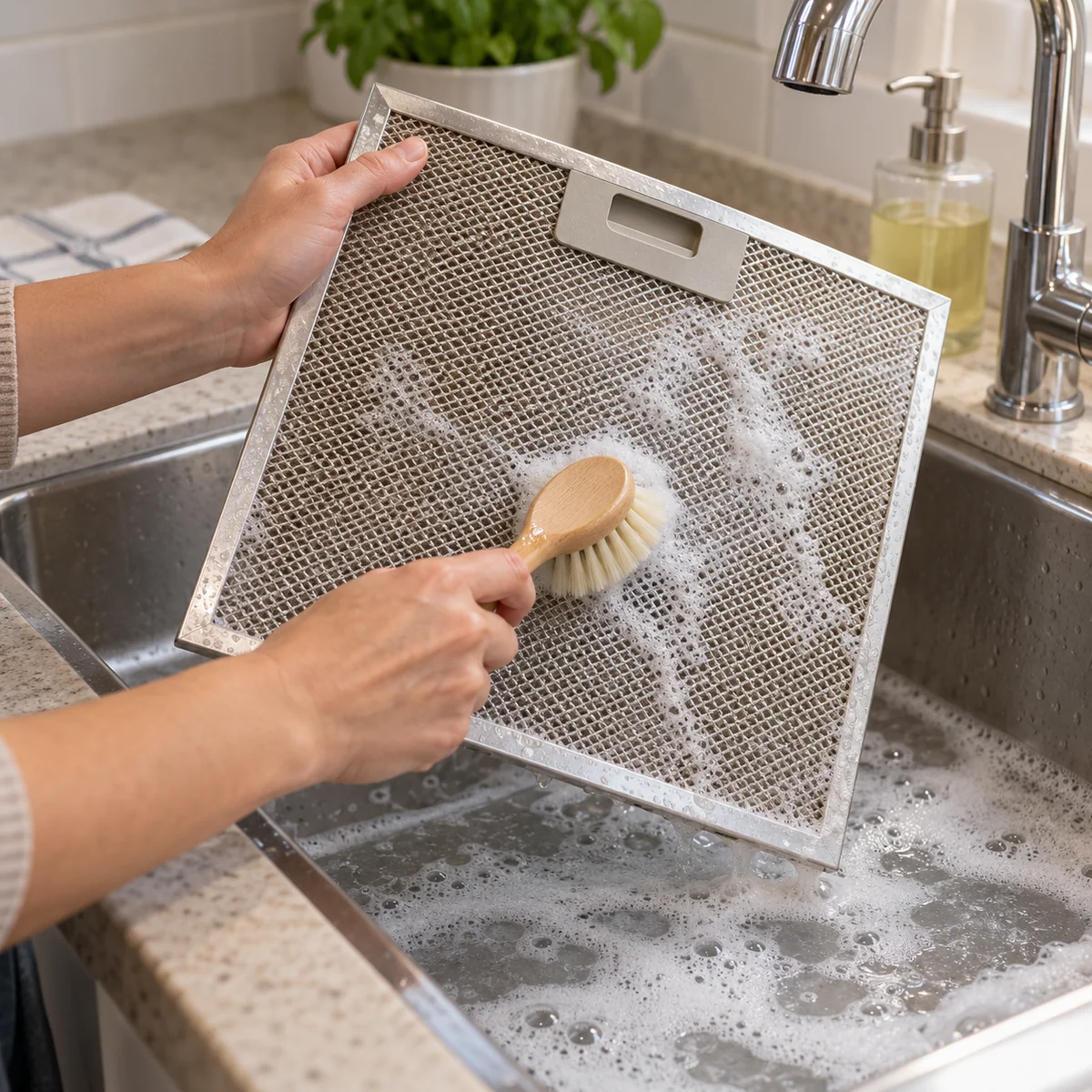
Brush, rinse, and check the mesh
Use a soft brush on the greasy areas, working along the mesh without crushing it. Rinse thoroughly so detergent and loosened grease do not remain in the panel. Look through the filter in good light. If sections still appear clogged, repeat the soak and brush step rather than scraping hard at the metal.
Wash the sink afterward. If the rest of the cooking area needs attention, tackle it separately with the products and methods appropriate to those surfaces. Our microwave cleaning guide covers another small kitchen reset.
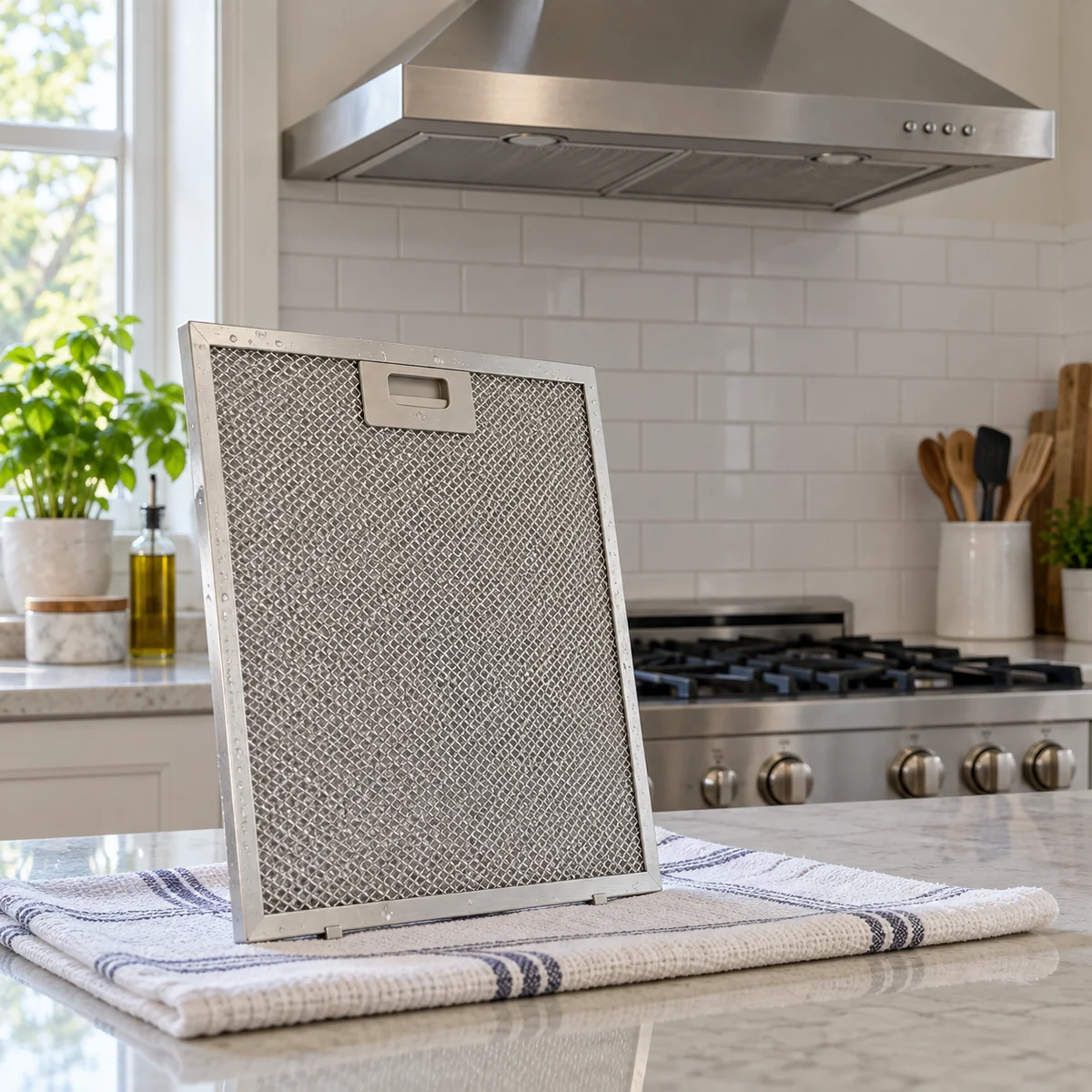
Let it dry fully before putting it back
Stand the clean filter where it can drain, then let it dry completely. Reinstall it in the same orientation, making sure its tabs or latch engage as the manual shows. Bosch and GE both direct users to dry metal filters thoroughly before reinserting them. Run the fan only after the filter is securely in place.
How often should you do this? Follow your model’s schedule and adjust for how much you cook. GE says frequency depends on cooking habits and suggests cleaning common metal filters about every six months for ordinary use, or as needed; other manufacturers and models may recommend shorter intervals. A visible greasy buildup is a reason to check sooner. If you’re building a wider home routine, see our weekly home reset.
Questions people ask
Can the metal grease filter go in the dishwasher?
Some can, but check your model’s manual first. GE notes that dishwasher cleaning is acceptable for its common metal filters, although it may discolor them. Hand washing is a practical option when you are unsure or want to inspect stubborn grease closely.
Can I wash a charcoal range hood filter?
Do not assume so. Charcoal filters are often replaced rather than washed, while certain specialized models have different care instructions. Identify the exact part and follow its manufacturer’s directions.
What if the hood still seems weak after cleaning?
Check that the metal filter is dry and installed correctly, and review the manual for a charcoal filter or other maintenance step. If airflow is still poor, consult the manufacturer’s troubleshooting guidance or a qualified appliance professional rather than dismantling the fan.
Sources
- GE Appliances: Vent Hood — Cleaning Metal Grease Filters — removal, detergent washing, drying, and model-specific guidance.
- Bosch: Cleaning Your Ventilation Hood — soaking, brushing, rinsing, and drying the metal filter.
- Whirlpool Product Help: Cleaning or Replacing the Filters in a Vent Hood — distinguishing washable grease filters from other filter care.