A linen closet can look full even when you cannot find one complete sheet set. Towels lean into the door, spare pillowcases disappear between shelves, and a new storage bin seems like the obvious fix. Before buying anything, reset the space around what you actually use and how often you reach for it.
The short version: empty one shelf at a time, check that everything is clean and completely dry, group items by use, then give the easiest-to-reach shelf to everyday linens. Keep each stack short enough to lift without toppling its neighbors. An extra pillowcase can hold a sheet set; a spare shelf can hold guest linens. You do not need identical bins to make the closet work.
Start with a quick shelf-by-shelf reset
Take a photo of the closet before moving anything. Clear one shelf onto a clean bed or table, wipe the shelf according to its finish, and let it dry. Repeat shelf by shelf so the room does not become one enormous pile. Set aside anything damp, musty, or visibly damaged for a separate decision rather than returning it to the closet automatically.
Check for a moisture problem before refolding everything. The U.S. Environmental Protection Agency notes that moisture control is central to preventing mold; water-damaged items and surfaces should be dried promptly. If a shelf or nearby wall is damp, address the source of the moisture before using the space for fabric storage.
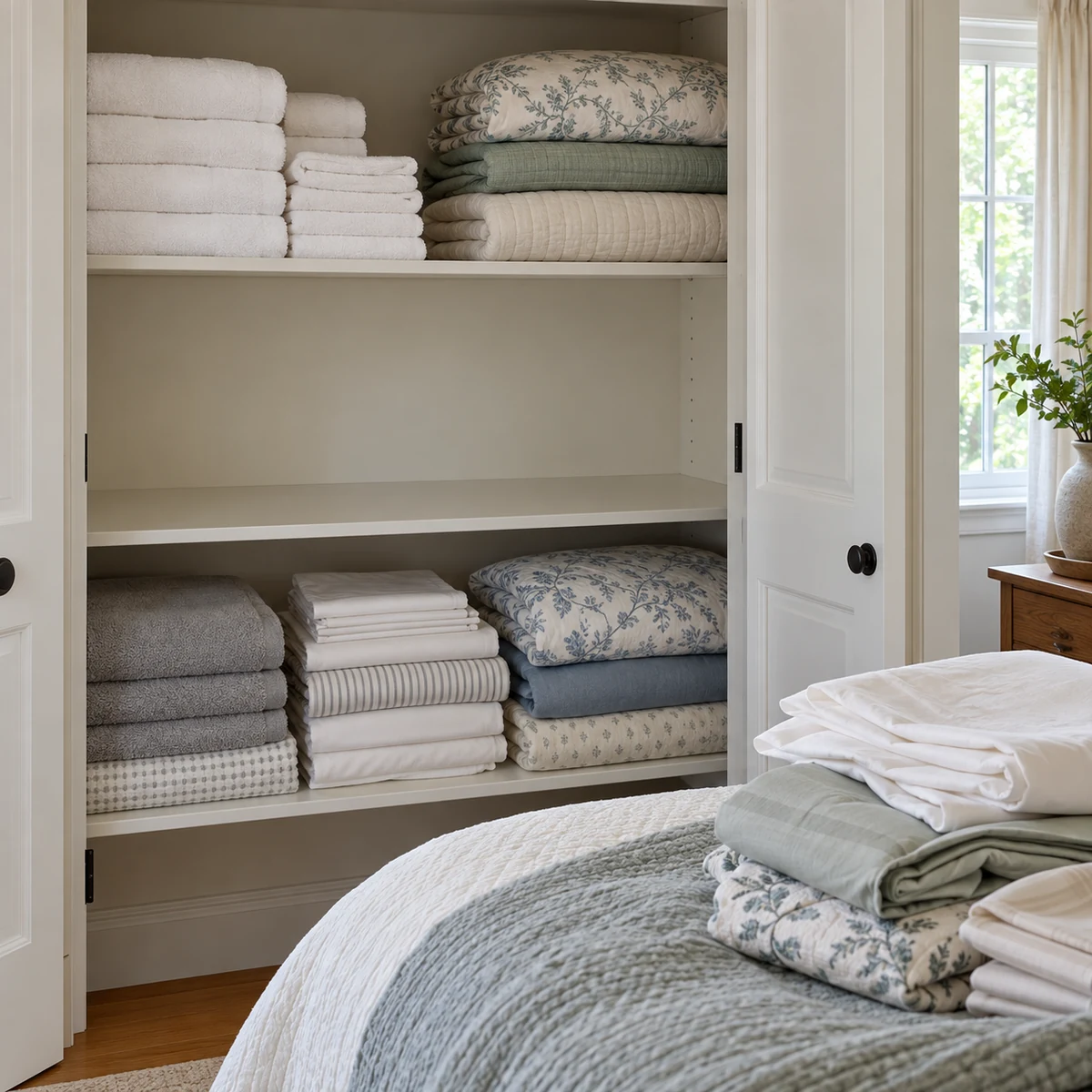
Sort by job, not by size or color
Make a few useful groups: everyday bath towels, hand towels and washcloths, sheet sets for each bed size, guest linens, and seasonal or rarely used pieces. Match fitted sheets, flat sheets, and pillowcases by size. A beautiful color gradient will not help if a queen sheet gets mixed into the twin stack.
Keep the number of sets that fits your real laundry cycle and household needs. Put worn but usable towels into a separate working-cloth group if you genuinely use them for cleaning or pets. If a textile is too damaged for its original job, check local textile reuse or recycling options before deciding what to do with it. Do not make a permanent “maybe” pile inside the closet.
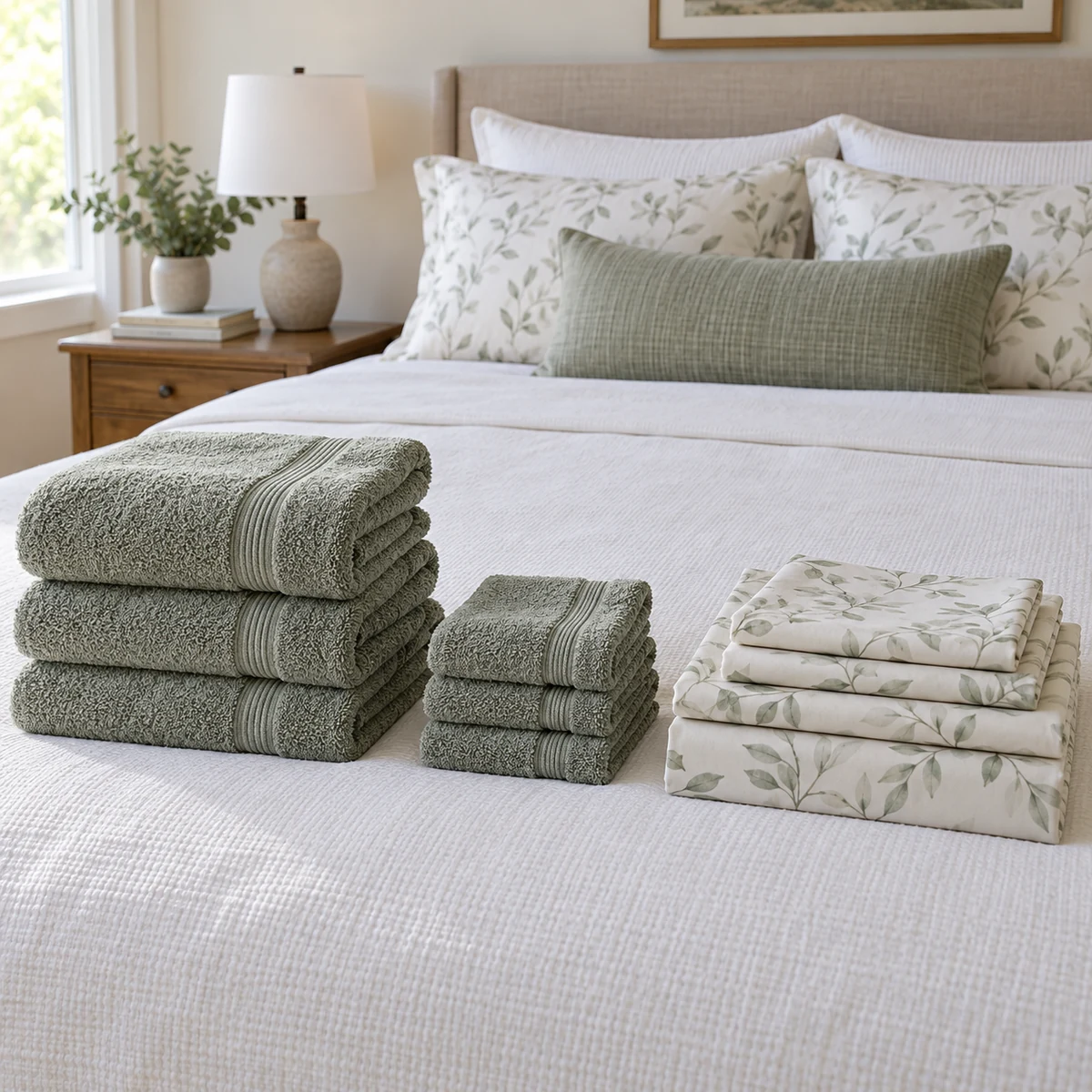
Give the best shelf to what you use most
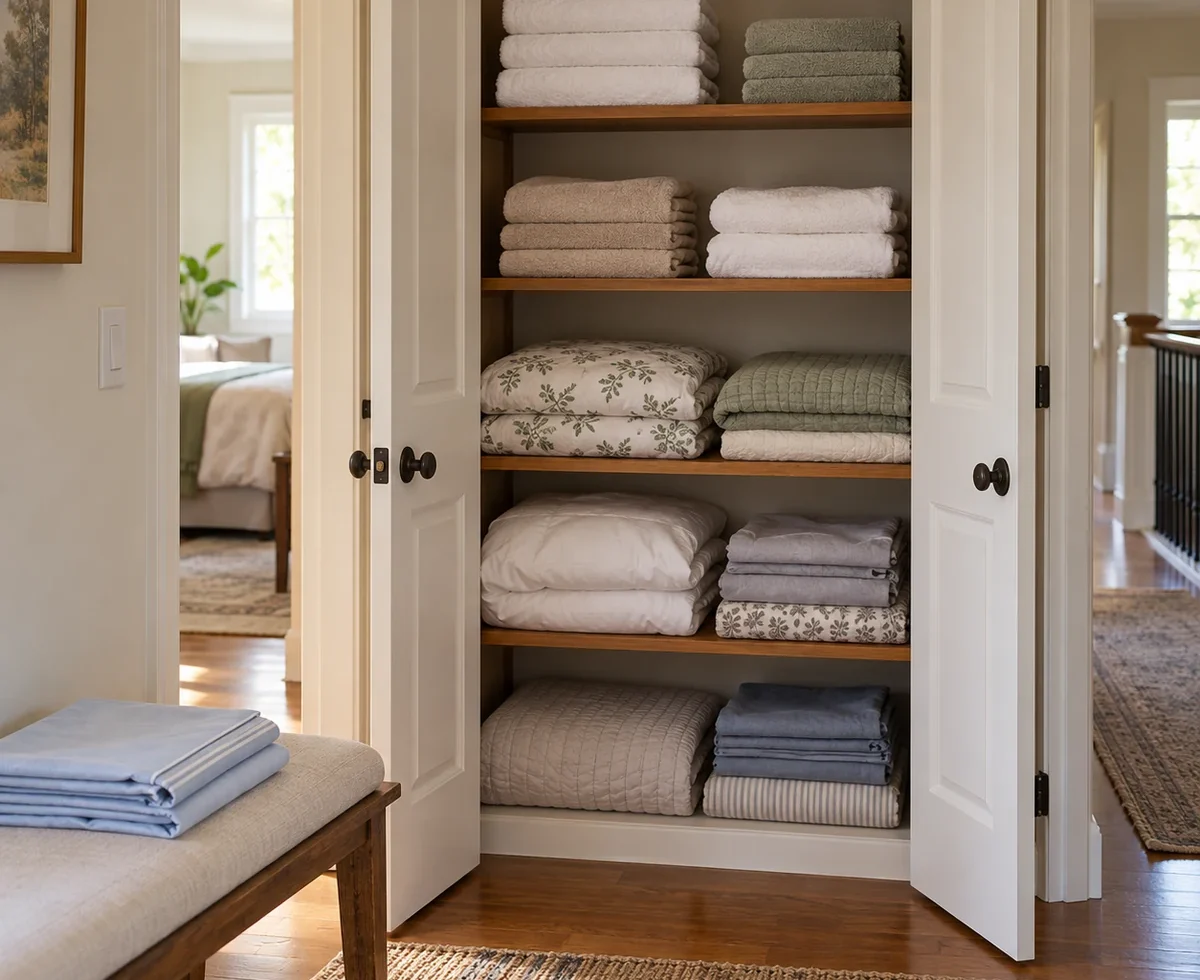
Stand in front of the closet and notice the shelf you can reach without stretching or crouching. Use that zone for the towels and bedding you reach for every week. Put guest bedding and seasonal pieces higher or lower, as long as they remain safe to lift. Heavy stacks should stay on sturdy, accessible shelves; do not build a tall pile that has to be caught every time the door opens.
If shelves are deep, avoid putting an unlabeled second row behind the first. Keep a clear front path to the back items, or reserve the back for an item you rarely need. A useful layout is easy to put away after laundry day, not merely tidy in a photograph.
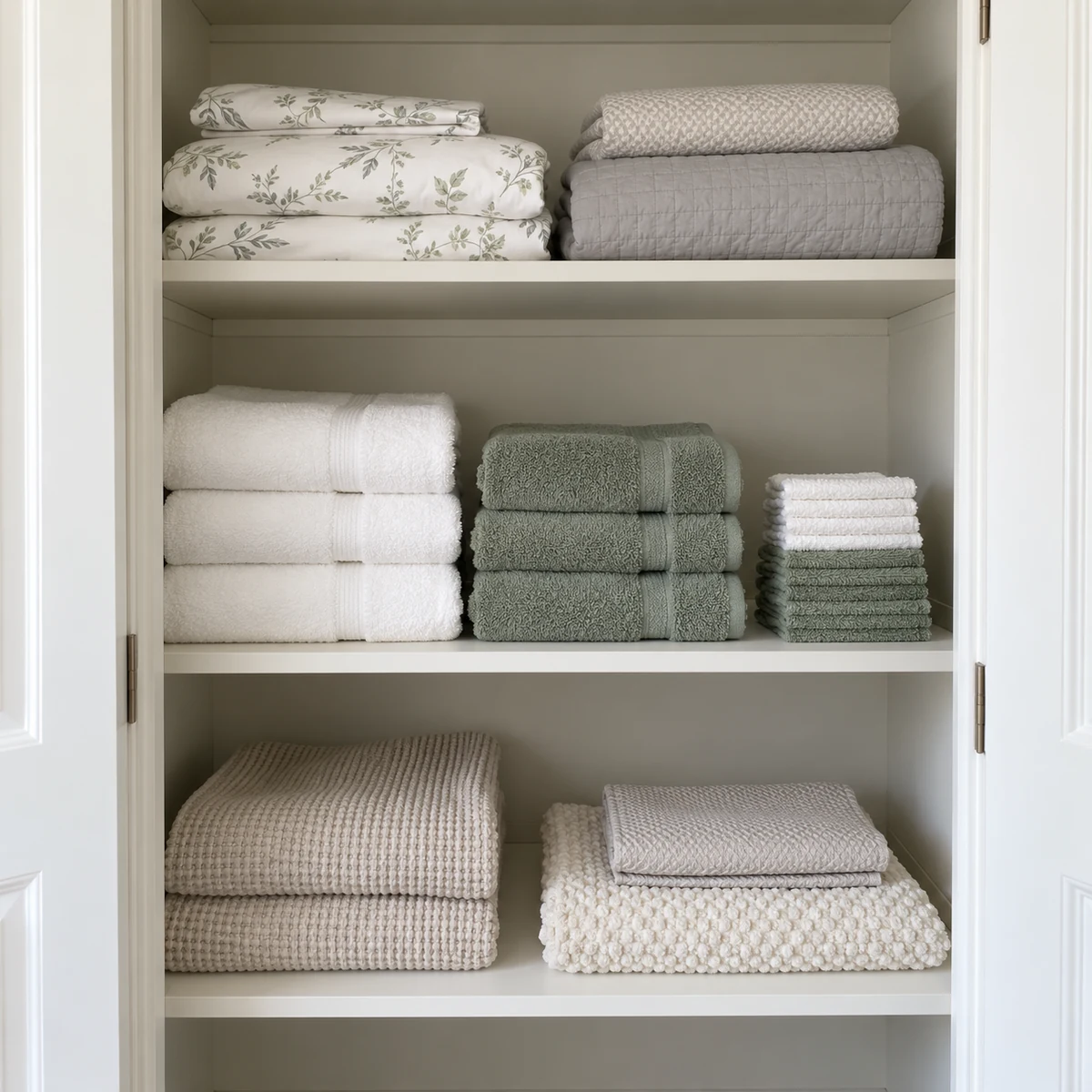
Keep sheet sets together with what you already own
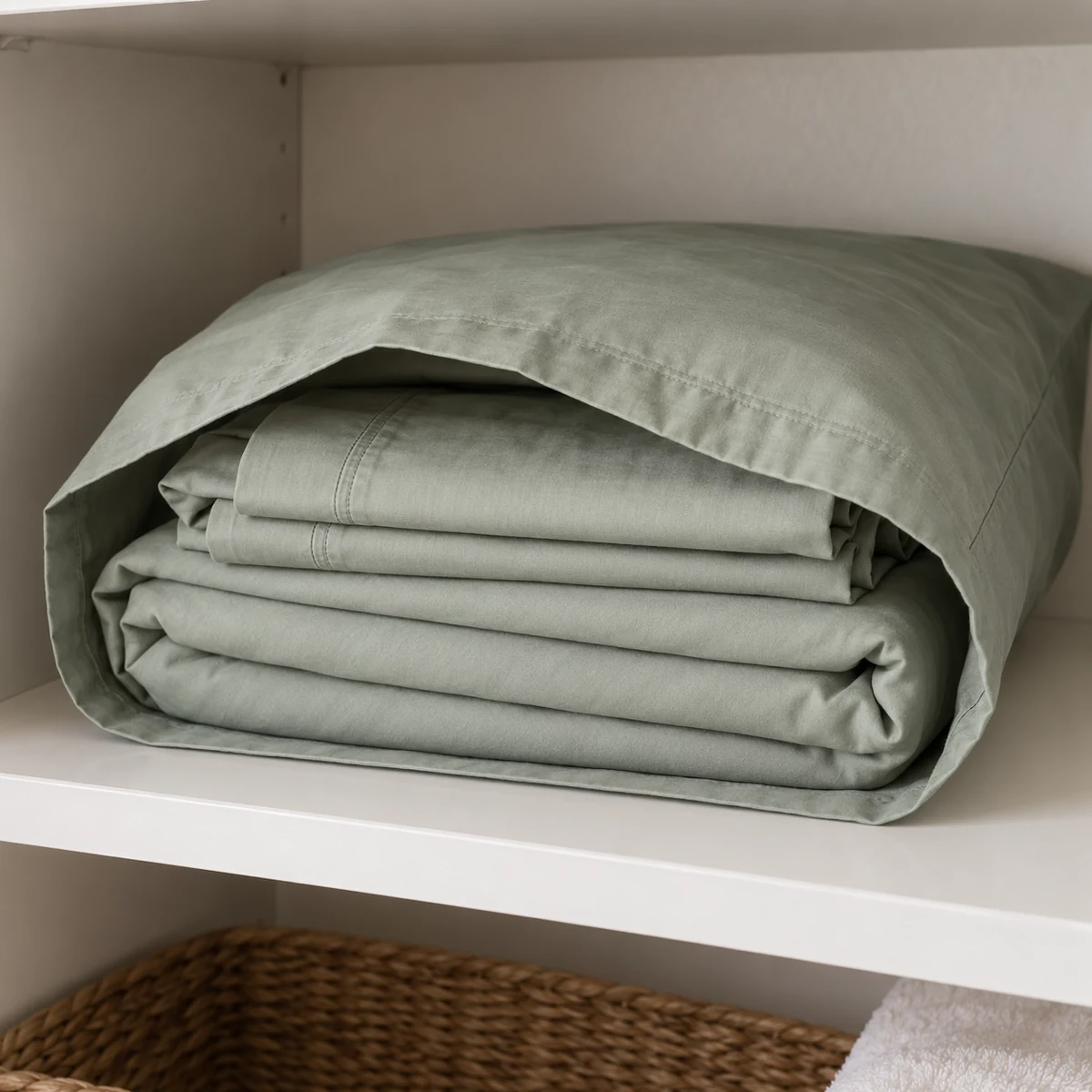
Fold each clean, dry sheet set into a manageable rectangle. Place its fitted sheet, flat sheet, and matching pillowcase inside the second pillowcase, if there is one. If a set has only one pillowcase, simply stack its pieces together and place that pillowcase on top. Do not force bulky bedding into a pillowcase that is too small; a short, clearly separated stack is fine.
Put each bed size in its own part of the shelf. If more than one person puts laundry away, a small removable paper label on the shelf edge may help; write the size, not a complicated inventory code. The goal is to be able to take one complete set without unfolding three others.
Fold towels for the shelf you have
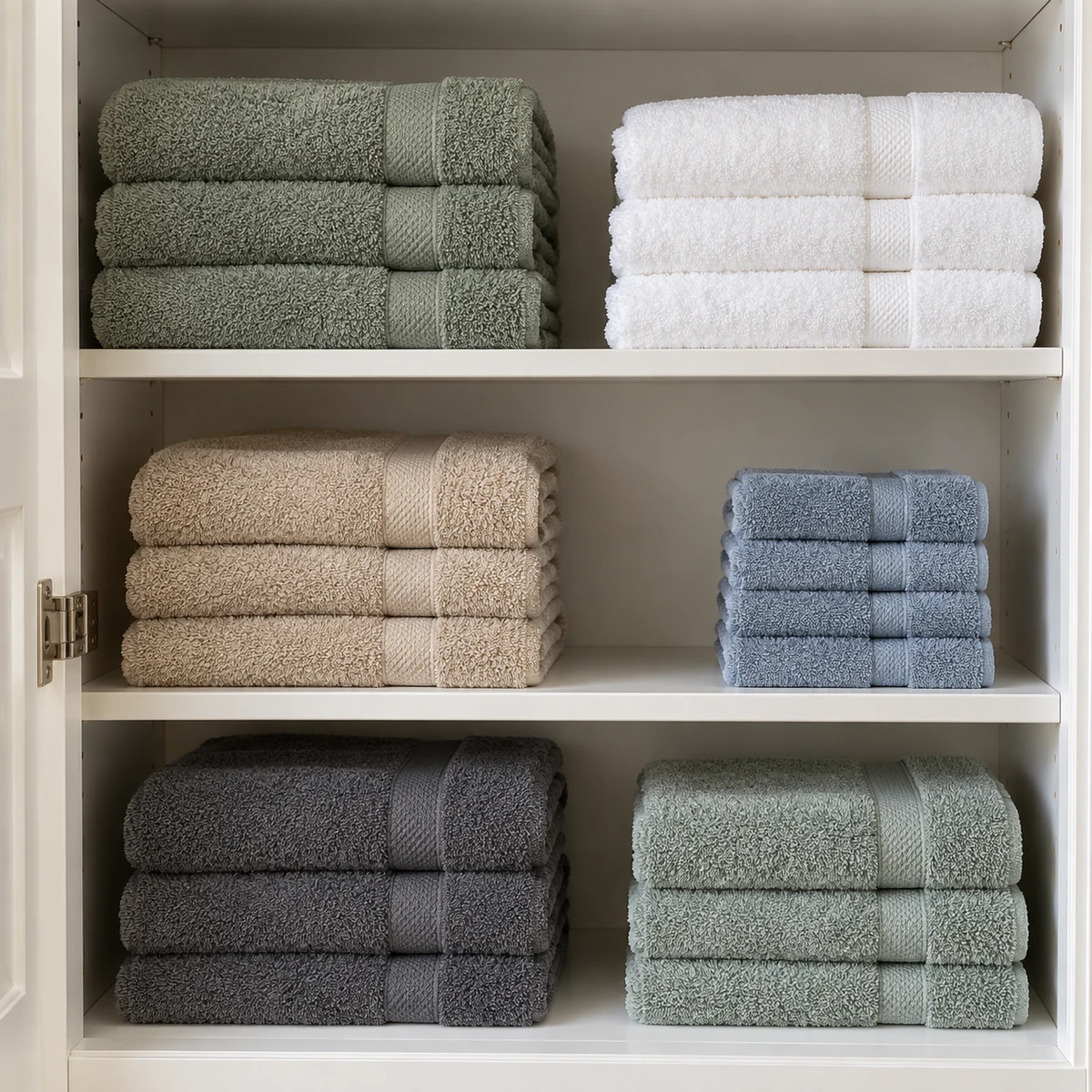
There is no universal fold that wins in every closet. Fold a towel so its finished stack fits the shelf depth and leaves space for your hand to lift it. Make several short stacks instead of one tall tower. Keep hand towels and washcloths in their own small groups near the bath towels they go with.
If the closet is narrow, a simple roll may fit better for some towels, but test whether it stays put during normal use. Choose a method that the household will repeat. Shelves do not need to be filled to the edge; a little space makes putting clean laundry away much easier.
What belongs elsewhere
- Damp towels or sheets: dry them fully before storage. If towels keep smelling musty, follow our musty-towel guide and check the room’s moisture source.
- Cleaning chemicals: store according to their labels in a secure place, separate from linens.
- Sentimental or antique textiles: their preservation needs can differ from everyday towels. The Smithsonian recommends clean, dry, cool storage and care with wrapping materials for antique textiles.
- Unmatched, unused extras: decide whether they have a real job. If not, give them a specific reuse or donation route instead of returning them to the shelf.
The five-minute laundry-day maintenance habit
When clean laundry is fully dry, put each group directly into its zone. Straighten only the stack you touched. Once a month, check for a towel that has migrated into the wrong section, an incomplete sheet set, or a damp smell. If the closet starts overflowing again, revisit the number of spare sets before buying containers.
For a broader small-space reset, see our small-closet guide. If you are deciding what to keep, our decluttering guide gives useful routes beyond throwing things away.
Questions people ask
Do I need baskets for a linen closet?
No. Short stacks, clear zones, and grouped sheet sets can make an ordinary shelf functional. A basket can help if you already own one and it solves a real problem, but it is not the first step.
How many spare towel or sheet sets should I keep?
There is no universal number. Base it on household size, laundry frequency, guest needs, and available shelf space. Keep sets you can identify and realistically use.
Can I put clean linens away while they are slightly damp?
Wait until they are completely dry. If the closet itself feels damp or smells musty, deal with the moisture problem before using it for fabric storage.
Sources
- U.S. Environmental Protection Agency: A Brief Guide to Mold, Moisture and Your Home — moisture control and drying damp items and surfaces promptly.
- Smithsonian Institution: How do I store antique textiles at home? — clean, dry storage considerations for heirloom textiles.