A secondhand dresser can be a useful find, but the price tag is only one part of the decision. An item that will not clear the stairwell, has a stubborn odor, or needs an expensive repair may cost more time and money than expected. A short check before you pay helps you buy a piece you can actually use.
This guide walks through fit, condition, cleanliness, safety, seller terms, and the full cost of getting furniture home. It is designed for ordinary used tables, chairs, shelving, and storage pieces. Children’s products and specialized items need additional product-specific checks.
Free Secondhand Furniture Purchase Checklist
Take this one-page checklist to a store or keep it on your phone when arranging a pickup. It covers measurements, condition, recall checks, seller terms, and total cost. Choose US Letter or A4 and print at 100% or Actual Size.
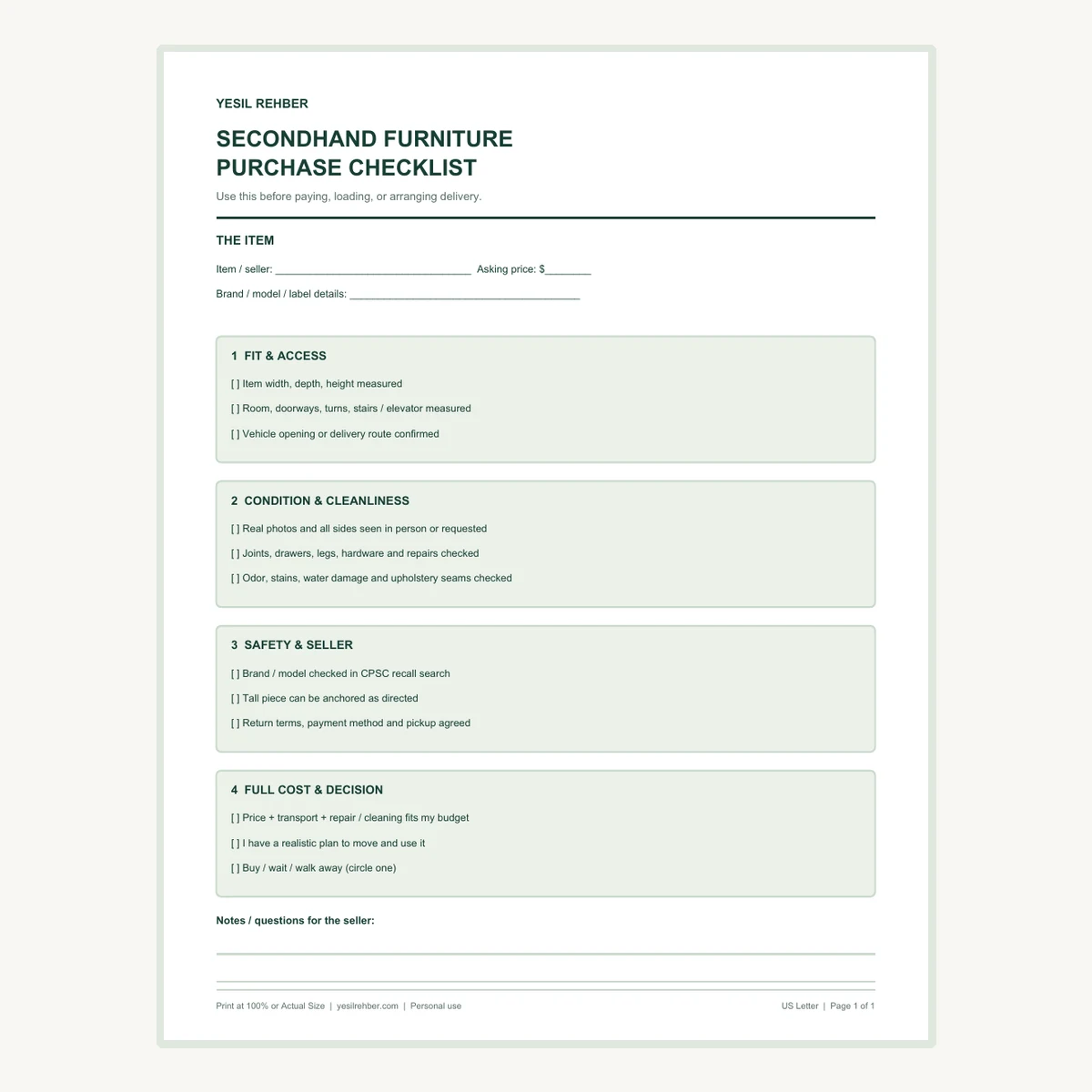
The five checks before you buy
- Need: Know where the piece will go and what job it will do.
- Fit: Measure the item, its destination, and the route between them.
- Condition: Inspect structure, surfaces, odor, and signs of pests.
- Safety: Check for recalls and plan to anchor furniture that could tip.
- Full cost: Add transport, repairs, cleaning, and any missing hardware.
If one of these is unknown, ask a question before making the trip or sending payment. The U.S. Environmental Protection Agency suggests thinking about whether you need an item before shopping and considering reused goods. Buying used makes sense when the piece meets a real need, not simply because a listing creates urgency.
1. Measure the piece, the room, and the route
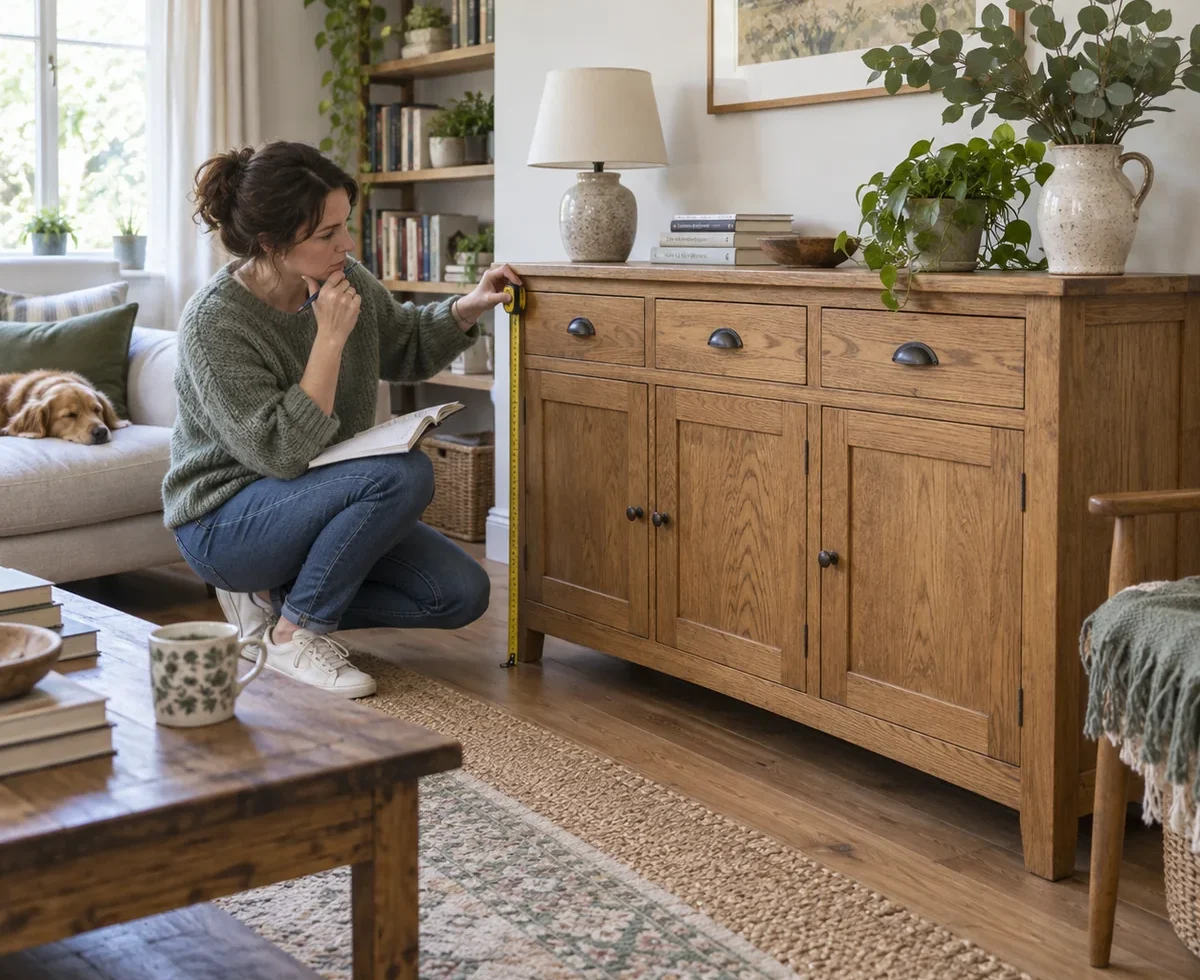
Write down the maximum width, depth, and height that will work in the room. Leave room for drawers and doors to open, people to pass, and any vents or outlets you need to reach. Ask the seller for the item’s measurements, then confirm them yourself if you can. A photograph rarely shows scale reliably.
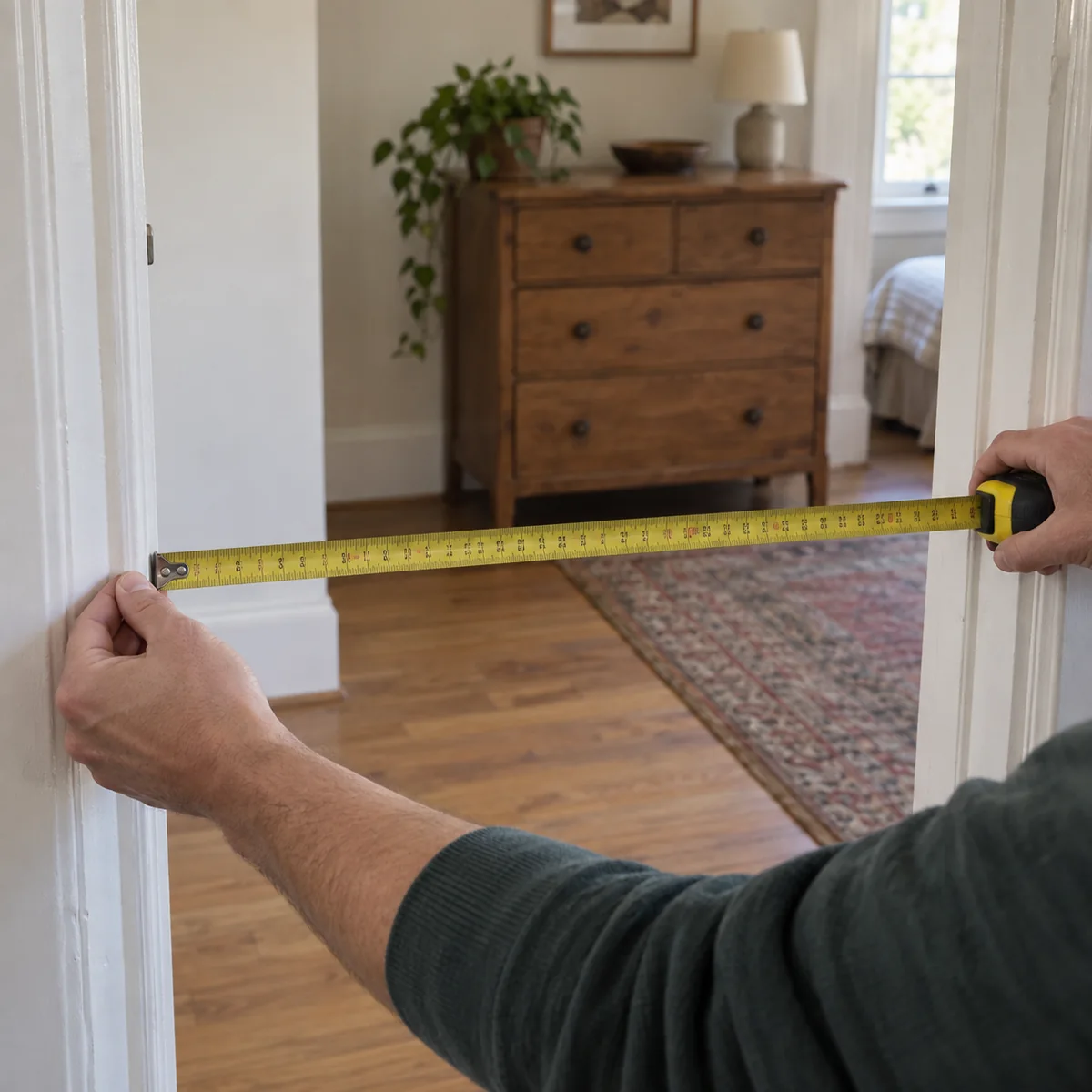
Measure the narrowest doorway, hallway turn, stair landing, elevator, and vehicle cargo opening. Remember the piece may need to turn a corner rather than move through a straight opening. Check whether legs, doors, or shelves can be removed without damage and whether you have the right tools. If a seller cannot provide dimensions and you cannot measure before pickup, treat fit as unresolved.
For a simple example, a 48-inch-wide dresser may fit a 60-inch wall yet fail at a tight stair turn. The useful number is the clearance along the whole path. Sketch the route and dimensions on the printable before you commit.
2. Ask for useful photos, then inspect the structure
For an online listing, ask for current photos of the actual item: front, back, sides, underside, open drawers, close-ups of damage, and a maker’s label if present. The Federal Trade Commission advises marketplace shoppers to review the listing carefully and understand seller and platform terms. Stock photos alone cannot show the condition of a particular used piece.
In person, set the piece on a level surface if possible and check for wobble. Open every drawer and door. Look at joints, rails, hinges, legs, and the back panel. A small scratch can be cosmetic; a loose joint, swollen particleboard, or drawer that will not track may require more work. Ask whether a repair was done and whether any hardware is missing.
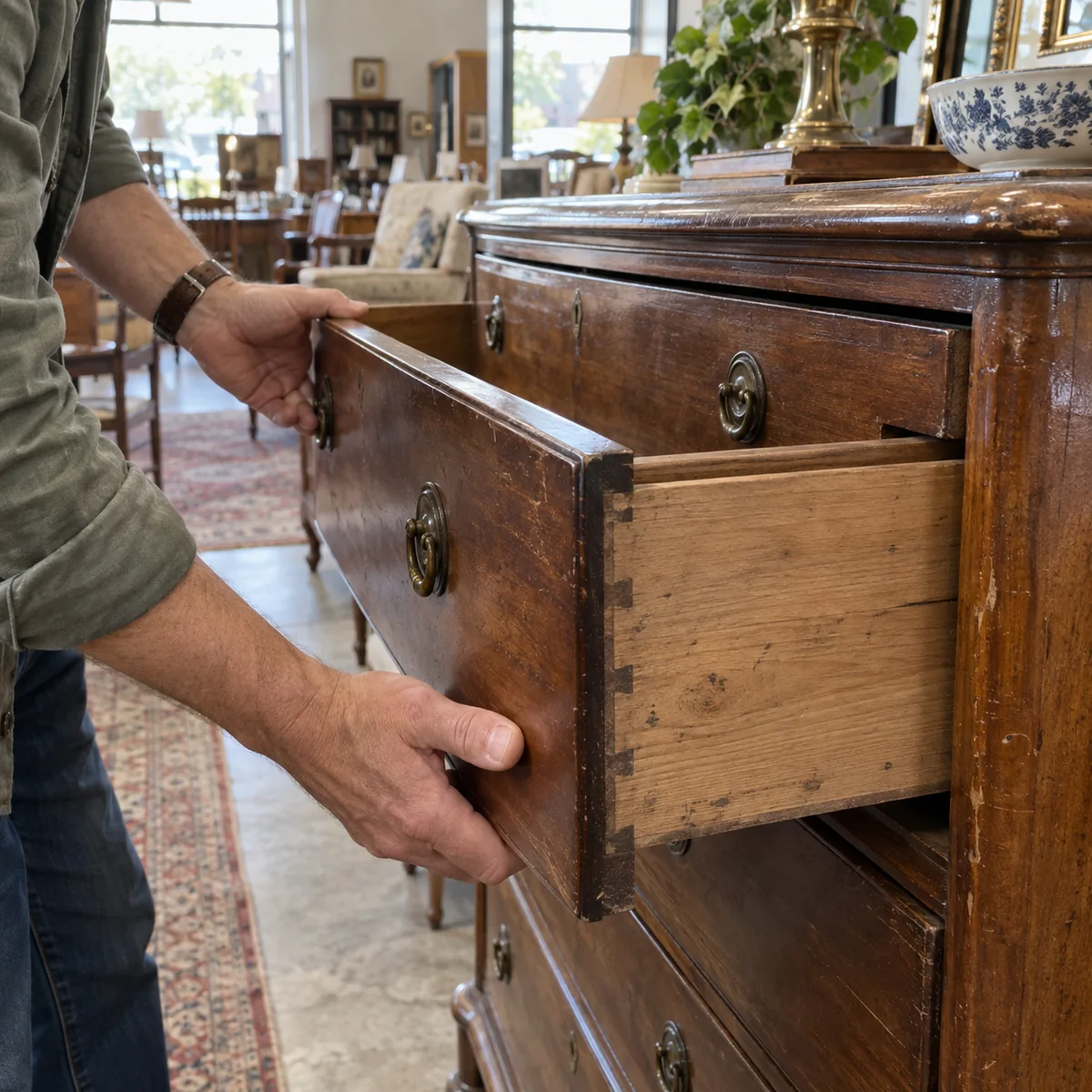
Smell the piece at close range, especially inside cabinets and drawers. Check for water marks, soft or swollen areas, peeling veneer, or a musty odor. Do not assume a coat of paint or a quick wipe will solve hidden damage. Decide what defects you can accept before a low price persuades you to overlook them.
3. Inspect upholstery and hidden surfaces carefully
Used furniture can bring unwanted pests into a home. University of Minnesota Extension recommends inspecting secondhand furniture and avoiding furniture left out for disposal; bed bugs can hide in furniture, including seams and crevices. Examine upholstery seams, folds, underside fabric, screw holes, and drawer corners with a flashlight. Look for insects, shed skins, dark spotting, or other signs that need closer investigation.
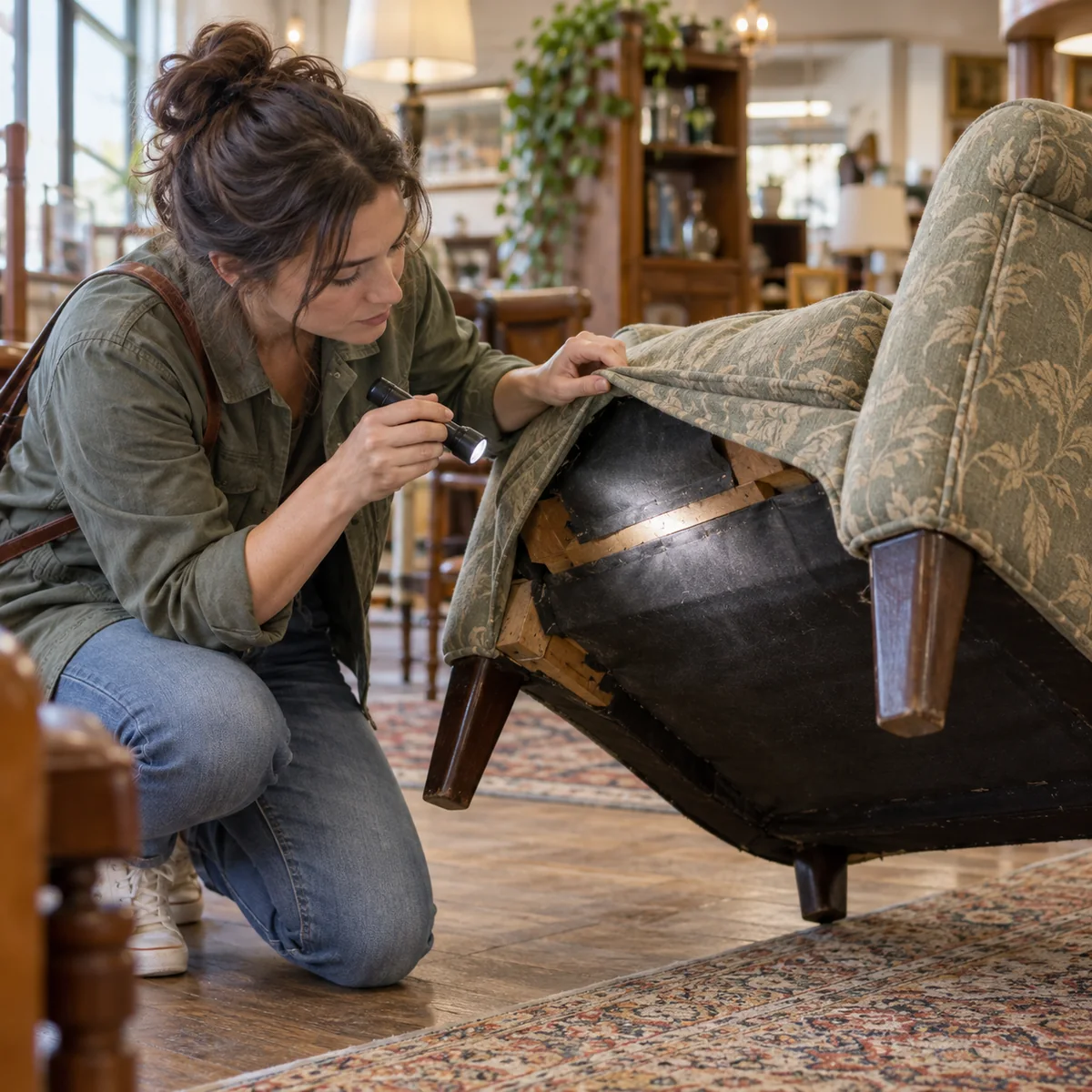
A visual check cannot guarantee an item is pest-free. If access is restricted, the seller refuses inspection, or you find a concerning sign, it is reasonable to walk away. Be especially cautious with curbside upholstery and mattresses. For a wooden piece, inspect cracks, joints, the back, and the underside too; hard surfaces are easier to see and clean, but they are not automatically risk-free.
After purchase, keep the item in an appropriate inspection area until you can clean it according to its materials and fully check it again. Do not soak upholstered or wood furniture on the assumption that more moisture means better cleaning. If you suspect an infestation, seek local pest-control guidance before bringing the piece into living spaces.
4. Check recalls and plan for tip-over safety
Find the manufacturer and model name or number on labels, the back panel, or paperwork. Search the U.S. Consumer Product Safety Commission’s recall database before buying. Used products can still be subject to recalls. If a match appears, read the recall notice and confirm the remedy before treating the item as usable. A seller’s assurance alone is not a substitute for the official notice.
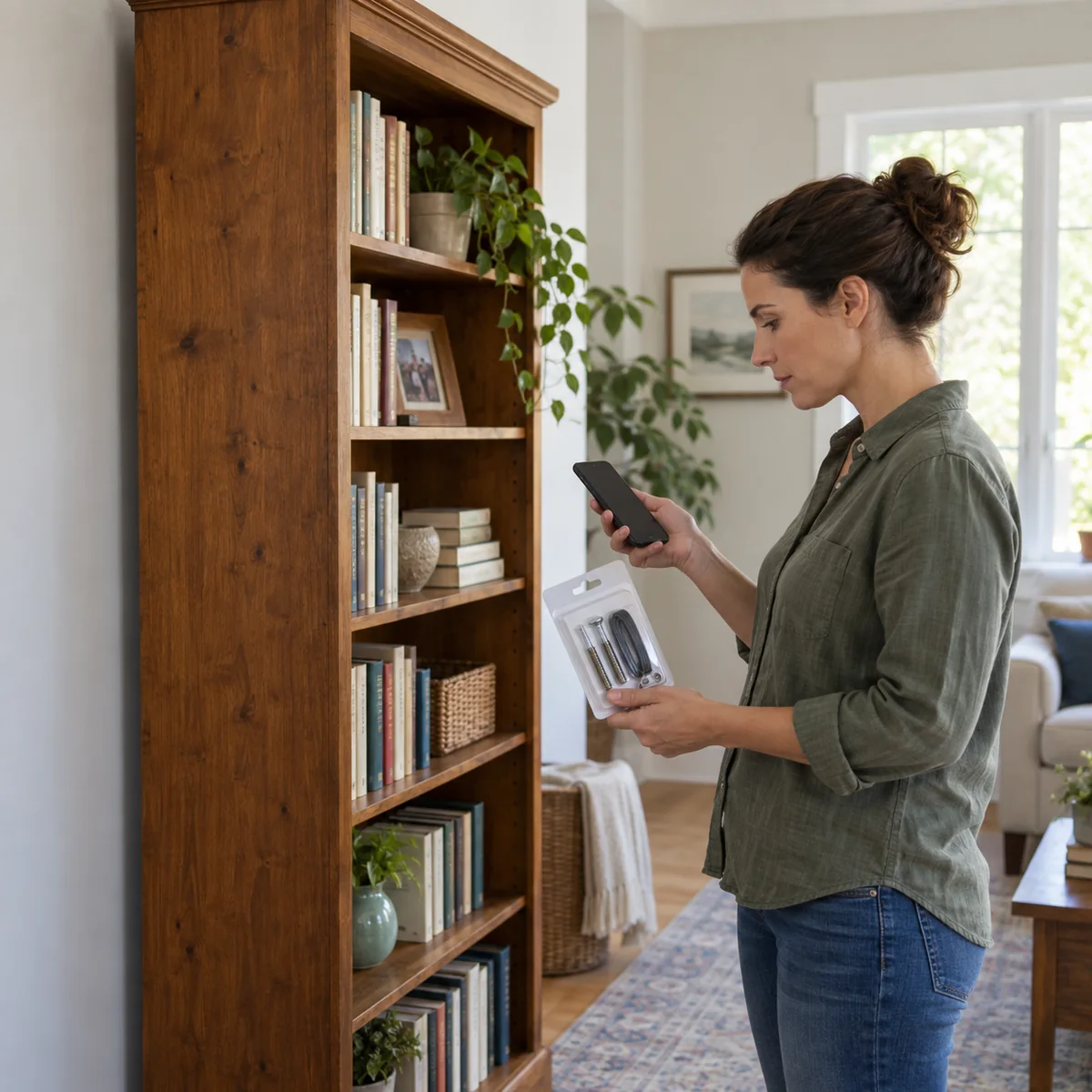
Dressers, bookcases, and other tall pieces can tip. CPSC’s Anchor It campaign urges securing furniture to the wall, especially where children may be present. Check that the piece is stable and that you can use an appropriate anchoring method for the furniture and wall. Do not assume its weight alone makes it safe.
A used crib, bunk bed, or other children’s product raises additional safety questions about standards, missing parts, and recalls. This general furniture checklist does not replace product-specific instructions. If you cannot identify the model or verify the needed parts and guidance, skip the purchase.
5. Count the entire cost before calling it a bargain
Add the listed price, tax or marketplace fees where applicable, fuel or delivery, help moving the item, protective materials, cleaning, missing hardware, and realistic repairs. A $40 dresser with $75 delivery and a drawer repair is not a $40 decision. Write the total on the checklist and compare it with your budget and other available options.
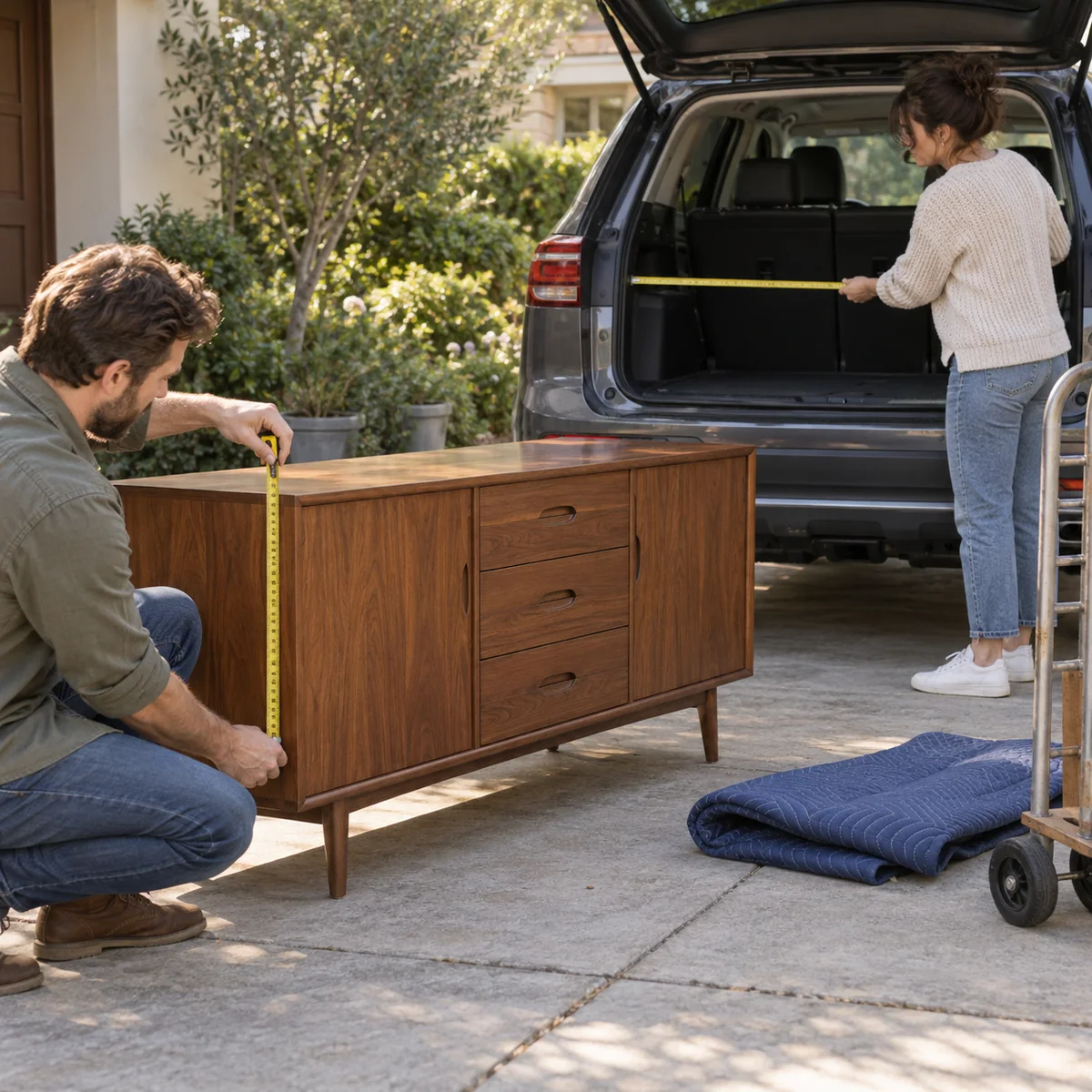
Ask when and where pickup will happen, whether the item will be disassembled, and who is responsible for loading. Bring measurements, suitable transport equipment, and enough help for the item. Do not force a heavy piece through a tight doorway or overload a vehicle. If a professional delivery service is needed, obtain the price before agreeing to buy.
Pay in a way that preserves your options
When using an online marketplace, read its buyer protections, return rules, and dispute process. The FTC advises buyers to keep payment and communication on the platform when possible and to be wary of sellers who insist on unusual payment methods or moving the transaction off-platform. Never treat a payment request as proof that the item exists or is in the stated condition.
Ask specific questions in writing: Are there repairs or stains? Are all parts included? Is the piece from a smoke-free space if that matters to you? Can you inspect it before paying? What happens if it does not match the listing? Save the listing and agreed terms. For an in-person purchase, arrange a sensible public meeting or pickup plan and avoid carrying more cash than needed.
When should you walk away?
- The seller will not give measurements or allow a reasonable inspection.
- The item has a strong unexplained odor, water damage, structural instability, or signs of pests.
- A recall is unresolved, or a tall piece cannot be installed safely in your home.
- The route or vehicle fit remains uncertain.
- Pressure to pay quickly prevents you from checking the real total and terms.
Leaving a questionable item behind is a useful shopping decision. If you are still deciding whether the purchase fits your needs, our guide to slowing online impulse purchases offers a simple pause before checkout. If an existing piece is taking up space, see how to declutter without throwing everything away.
Download the checklist before your next viewing
Use the US Letter PDF (8.5 × 11 inches) or A4 PDF (210 × 297 mm). Print at 100% or Actual Size. Fill in the measurements and full cost while you can still ask the seller questions; the best time to find a problem is before the furniture is in your doorway.
Sources
- Federal Trade Commission, Buying From an Online Marketplace.
- U.S. Consumer Product Safety Commission, Recalls and Anchor It.
- U.S. Environmental Protection Agency, Think Green Before You Shop.
- University of Minnesota Extension, Bed bugs.