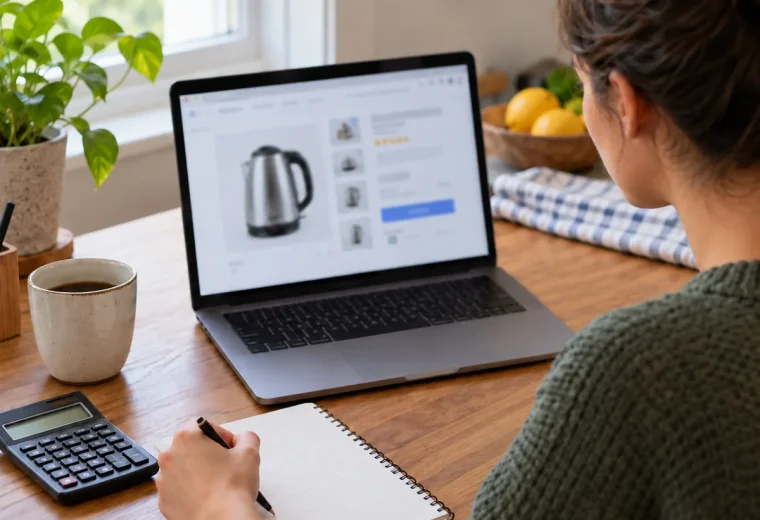
Buying secondhand clothes online can put a useful garment back into circulation, but “my usual size” is a weak fit test. Brands change patterns, previous owners may have altered an item, and a listing photo cannot tell you whether a jacket will close comfortably. The best way to reduce returns and regret is to compare the seller’s actual measurements with a similar garment you already wear.
This guide shows how to check fit, condition, fabric care, the full price, and marketplace protections before you pay. It is about choosing one wearable piece, not filling a cart because every listing looks like a bargain.
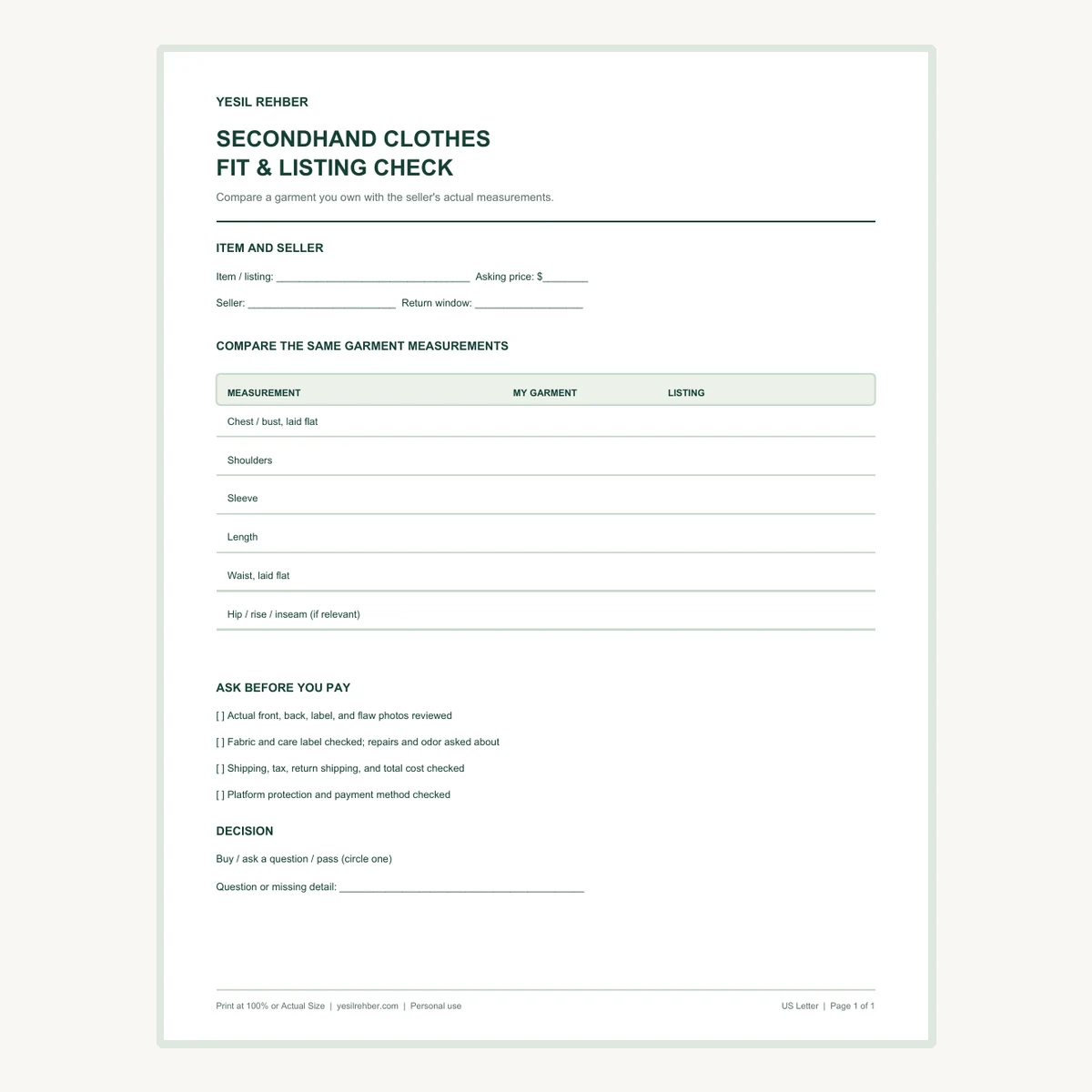
Free Secondhand Clothes Fit & Listing Check
This one-page worksheet lets you compare your own garment with a listing, then record condition questions, return terms, and total cost. Choose US Letter or A4 and print at 100% or Actual Size.
The short version: five checks before checkout
- Measure a similar garment you own and like to wear.
- Ask for the secondhand item’s actual flat measurements.
- Look closely at photos of the real garment and its flaws.
- Read the fabric and care information plus return terms.
- Add shipping, tax, cleaning, and likely alterations to the price.
If a seller cannot answer a key question, save the listing and keep looking. A low price does not solve an unwearable fit. For a broader pause before any online purchase, see our guide to stopping impulse buying online.
1. Measure a piece that already fits you
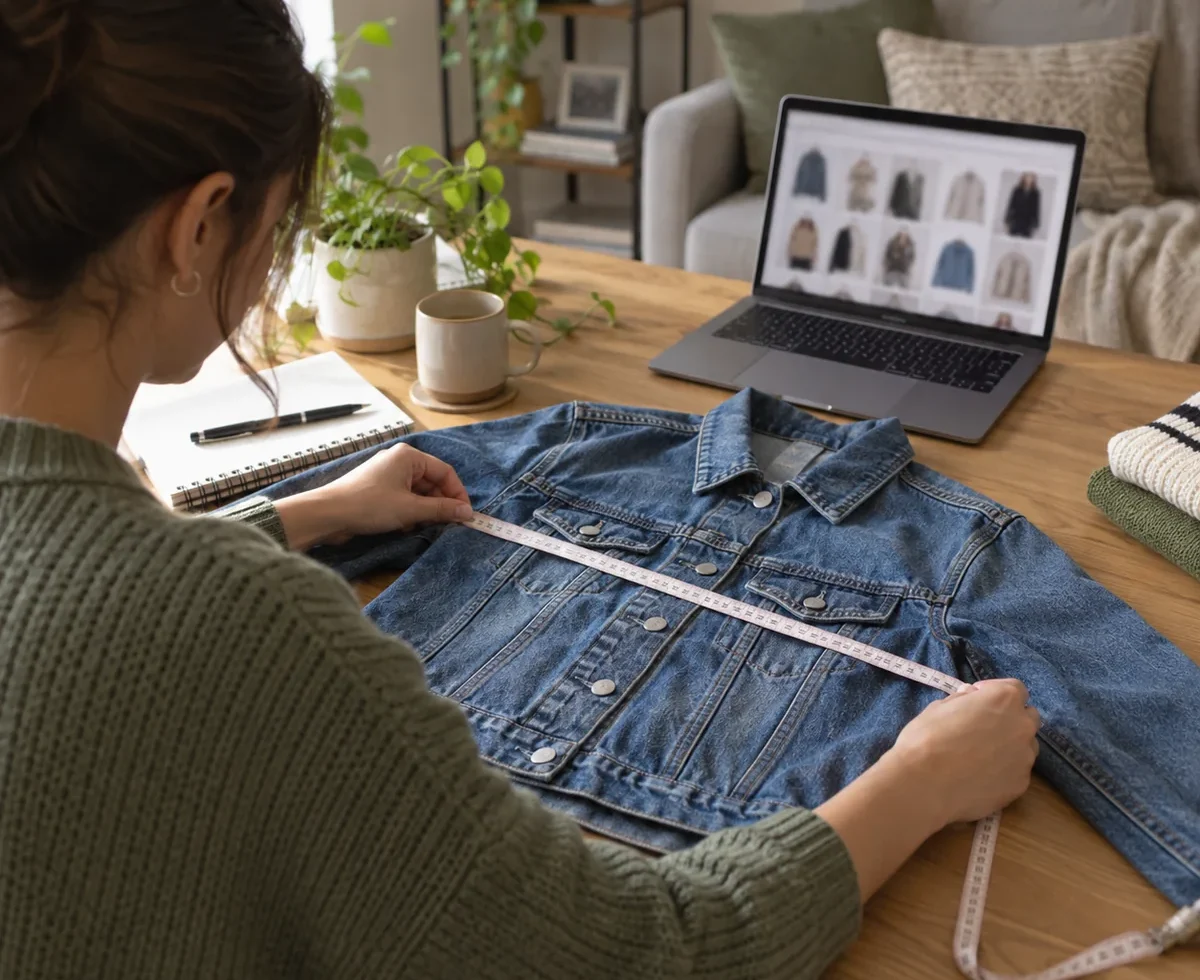
Choose a shirt, jacket, pair of trousers, or dress with a fit close to what you want. Lay it flat without stretching it. For a top, measure across the chest under the armholes, shoulder to shoulder, sleeve length, and overall length. For trousers or a skirt, measure the waist laid flat, hip area, and relevant rise or inseam. Record whether your measurements are flat widths or full circumferences; confusing those two numbers can double the apparent size.
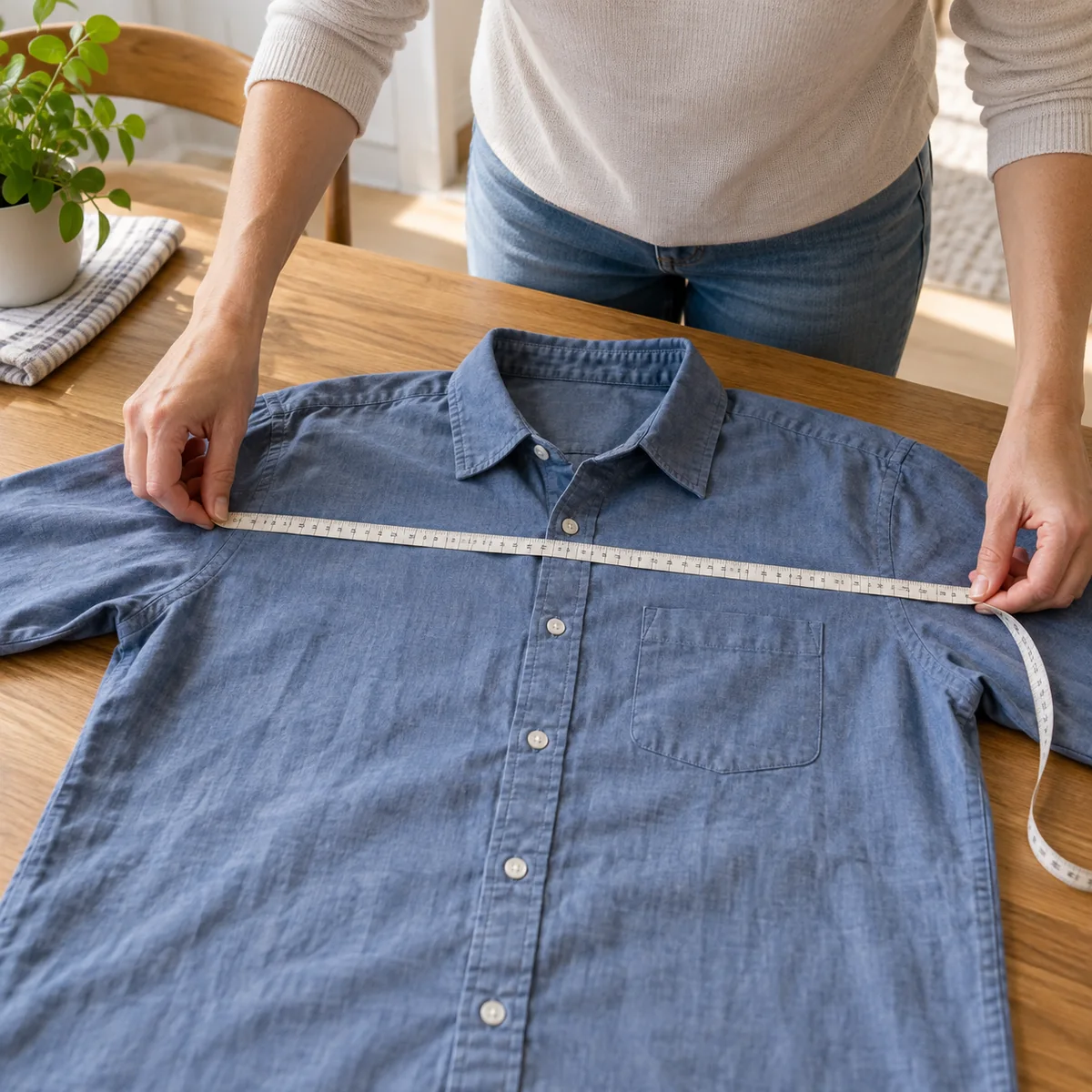
Ask the seller to use the same measuring points and units. A stated “medium” or “size 8” is useful background, but actual measurements are more informative. Allow for the shape and stretch of the fabric, the way you want to layer the item, and the margin you personally find comfortable. The worksheet has two columns so you can spot a meaningful difference before ordering.
2. Ask for photos that show the actual condition
The Federal Trade Commission advises marketplace shoppers to look for multiple photos of the actual item, rather than stock images, and to read the description carefully. Ask for front, back, close-up views of cuffs and seams, the inside label, and any stated flaw. For knitwear, inspect high-friction areas for pilling or thinning. For trousers, look at hems, pockets, and the seat. For shoes, request soles and heel wear as well as size details.
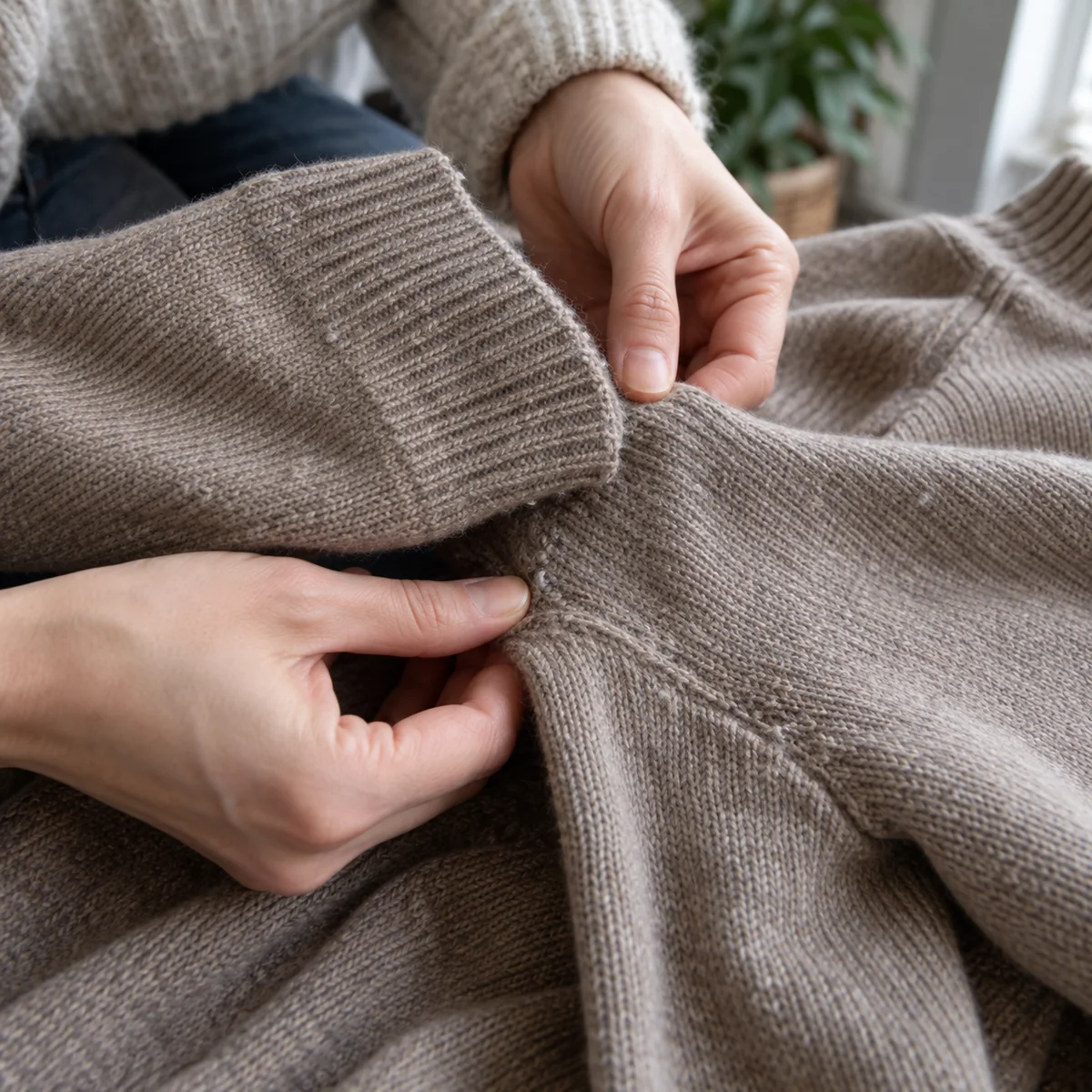
Useful questions are specific: Is there a stain in daylight? Are any buttons, hooks, or zipper teeth missing? Has it been altered? Is the hem even? Is there a persistent odor? Can you see the flaw next to a ruler or coin for scale? A seller may describe “excellent condition” differently from you; photos and written answers provide a clearer record.
Small, repairable issues may be acceptable if you can do the repair and the final cost still makes sense. Do not assume a stain will wash out or that a tailor can fix every fit problem. Shoulder shape, too-short length, and worn fabric can be harder to change than a loose button.
3. Read the fiber and care labels
Ask for a clear photo of the fiber-content and care labels if they are present. The FTC explains that most textile and wool products have fiber-content labels and that covered garments carry care instructions. A label can help you understand what you are buying and whether the upkeep suits your routine. It does not prove the current item is in good condition; you still need actual-item photos.
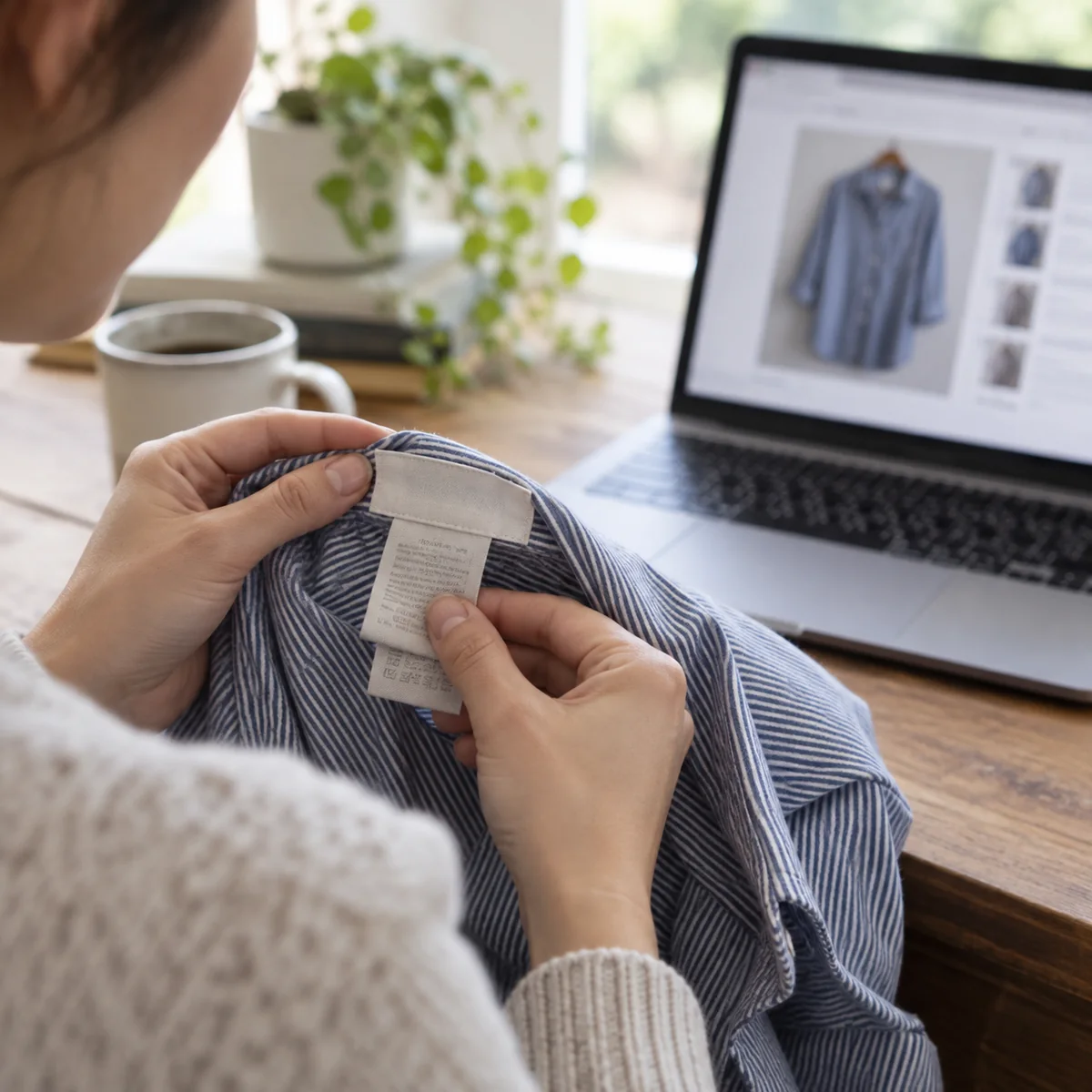
“Dry clean only,” “hand wash,” or “dry flat” may be manageable for you, but include that time and expense in the decision. If the labels are missing, ask the seller what they know and consider the uncertainty. Care instructions can also affect whether a secondhand item will remain easy to wear over time. Our clothes-care guide explains how to follow those directions after purchase.
4. Calculate the delivered and wearable price
Add the item price, shipping, tax where applicable, any platform fees, expected cleaning, and realistic alteration or repair costs. Check who pays return shipping and whether a return is allowed for fit. A $20 shirt with $12 shipping and a costly nonreturnable mistake is not the same decision as a $20 shirt you can try on locally.

The FTC recommends reading marketplace and seller policies before purchase, including refunds, deadlines, and payment methods. Buyer protection varies by platform and transaction. Keep questions and answers in the marketplace message thread where possible, save the listing, and use a payment method with appropriate protections. Do not move payment off the platform at a seller’s request if that would remove its buyer protection.
A counterfeit or misrepresented expensive item is another risk. A price far below comparable listings is a reason to ask more questions, not proof of a special deal. If authenticity matters, use the platform’s stated verification process and understand its limits before buying.
5. Compare the item promptly when it arrives
Keep the listing, messages, and order details until you have checked the delivery. Measure the garment on a flat surface the same way you measured your reference piece. Check for undisclosed damage and confirm the label and material match what was advertised. Do this within the marketplace’s claim or return window; the FTC notes those deadlines can be short.
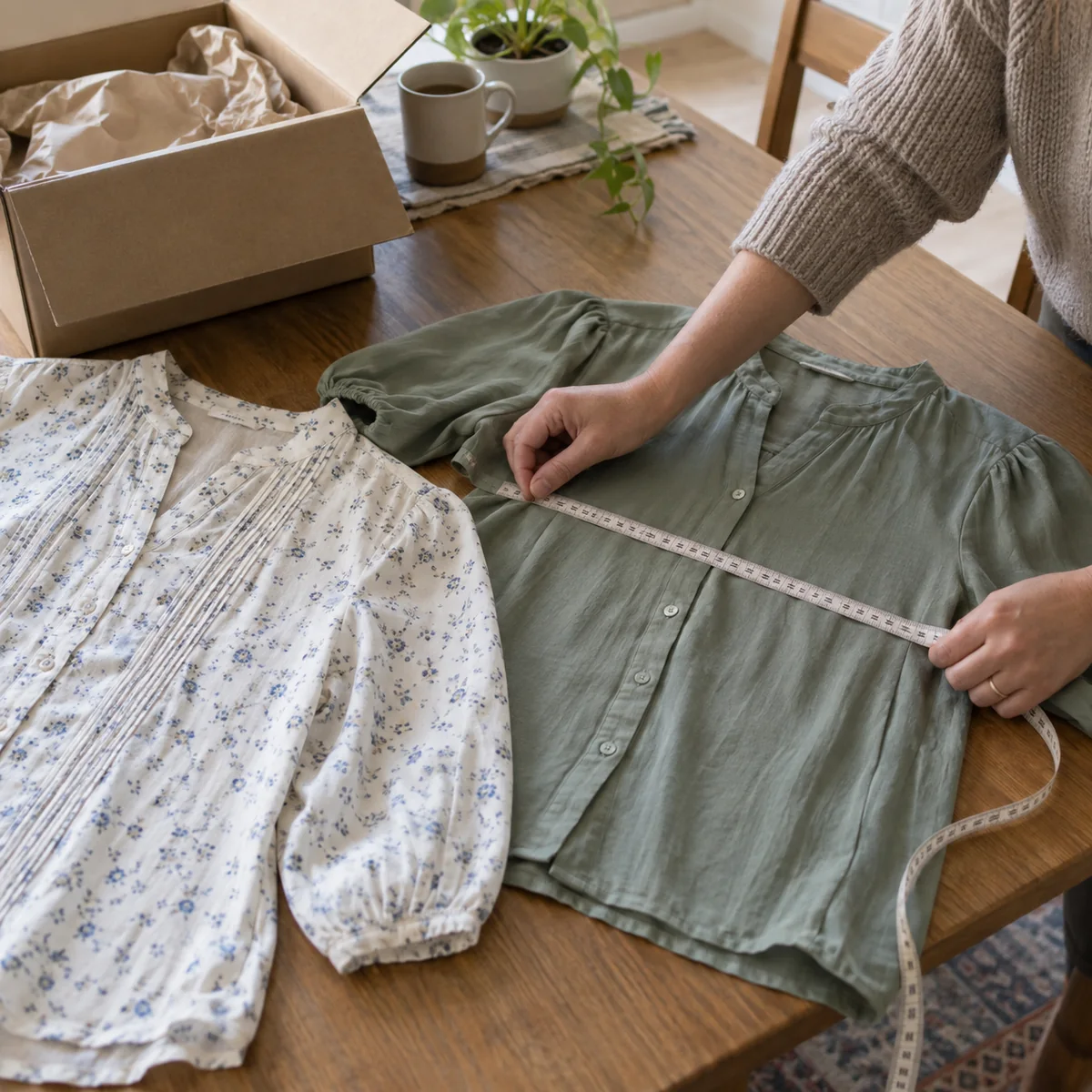
If it does not match the listing, photograph the issue and contact the seller through the marketplace promptly. Follow the platform’s dispute steps if needed. Once you decide to keep it, clean it according to the care label before wearing and repair any small issue you planned for. If it will not work for you and cannot be returned, a thoughtful resale or pass-on may recover some value, but it is better to prevent that extra transaction with careful questions upfront.
When to pass on a listing
- The seller provides only stock photos or refuses a reasonable request for measurements.
- The listing hides obvious wear or uses vague condition language without clear photos.
- The garment needs an alteration you have not priced or cannot reasonably make.
- Shipping and nonreturnable terms make the full risk too high for your budget.
- The seller pushes an unprotected payment method or a rushed decision.
Secondhand shopping works best when the purchase fills a real gap. If your wardrobe already has a similar piece, consider whether you need another one; our capsule wardrobe guide can help you check what you already wear. The goal is a garment that fits, lasts, and gets used.
Download the fit checklist
Use the US Letter PDF (8.5 × 11 inches) or the A4 PDF (210 × 297 mm). Print at 100% or Actual Size. Fill in your favorite garment’s measurements once; then compare each promising listing against a real reference rather than a size name.
Sources
- Federal Trade Commission, Buying From an Online Marketplace.
- Federal Trade Commission, Apparel and Labeling and Clothes Captioning: Complying with the Care Labeling Rule.
- U.S. Environmental Protection Agency, What You Can Do About Climate Change: Waste.