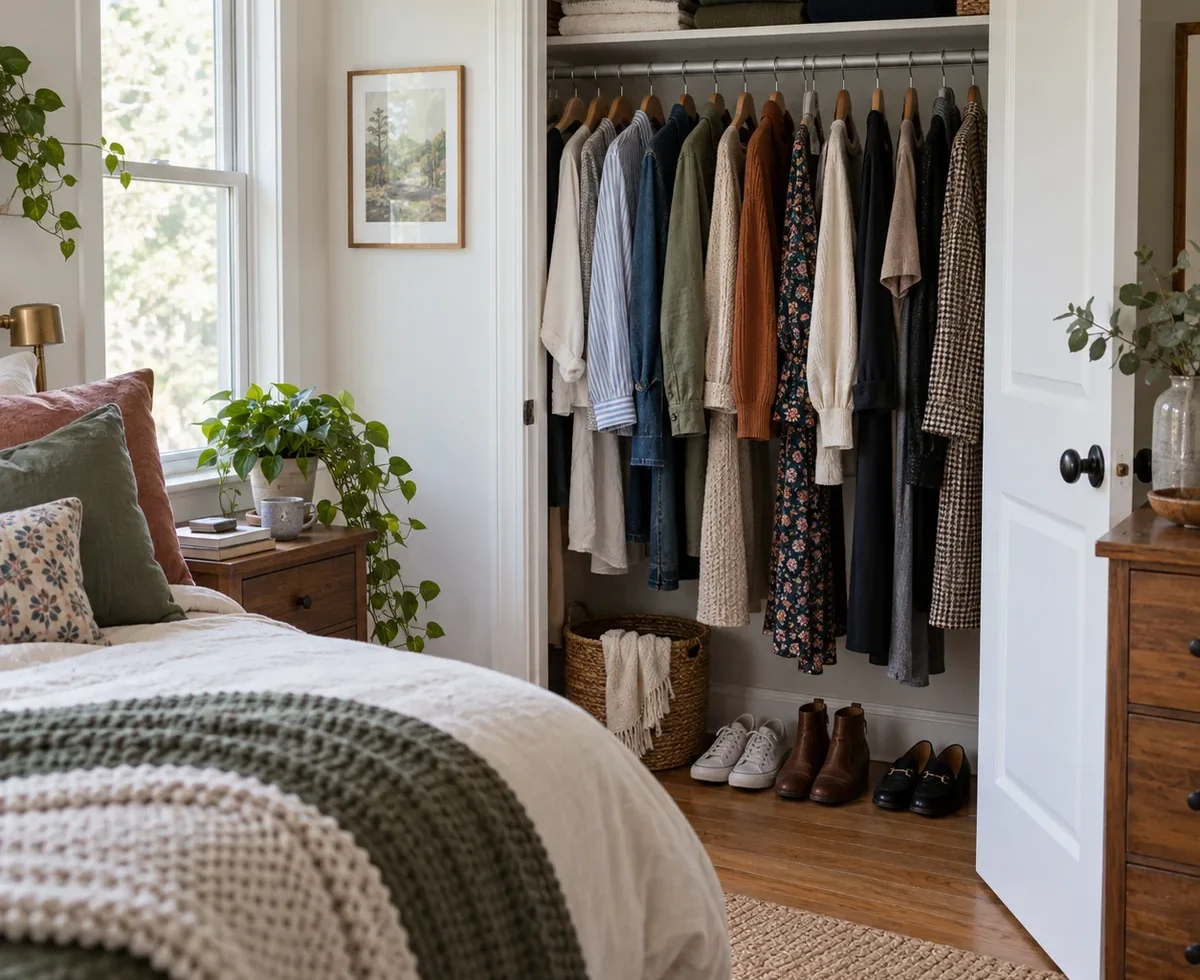
You do not need a new set of matching basics to build a capsule wardrobe. Start with the clothes you already reach for, then see whether they can cover your actual week. A useful small wardrobe is shaped by your job, weather, laundry routine, comfort, and personal style. Someone else’s exact item count cannot tell you whether yours works.
This guide shows how to build a capsule wardrobe from clothes you already own. You will pull together a workable starting set, test outfits for seven days, repair what is worth keeping, and write a precise shopping list only if a real gap remains. There is no shopping ban and no requirement to throw out favorite pieces.
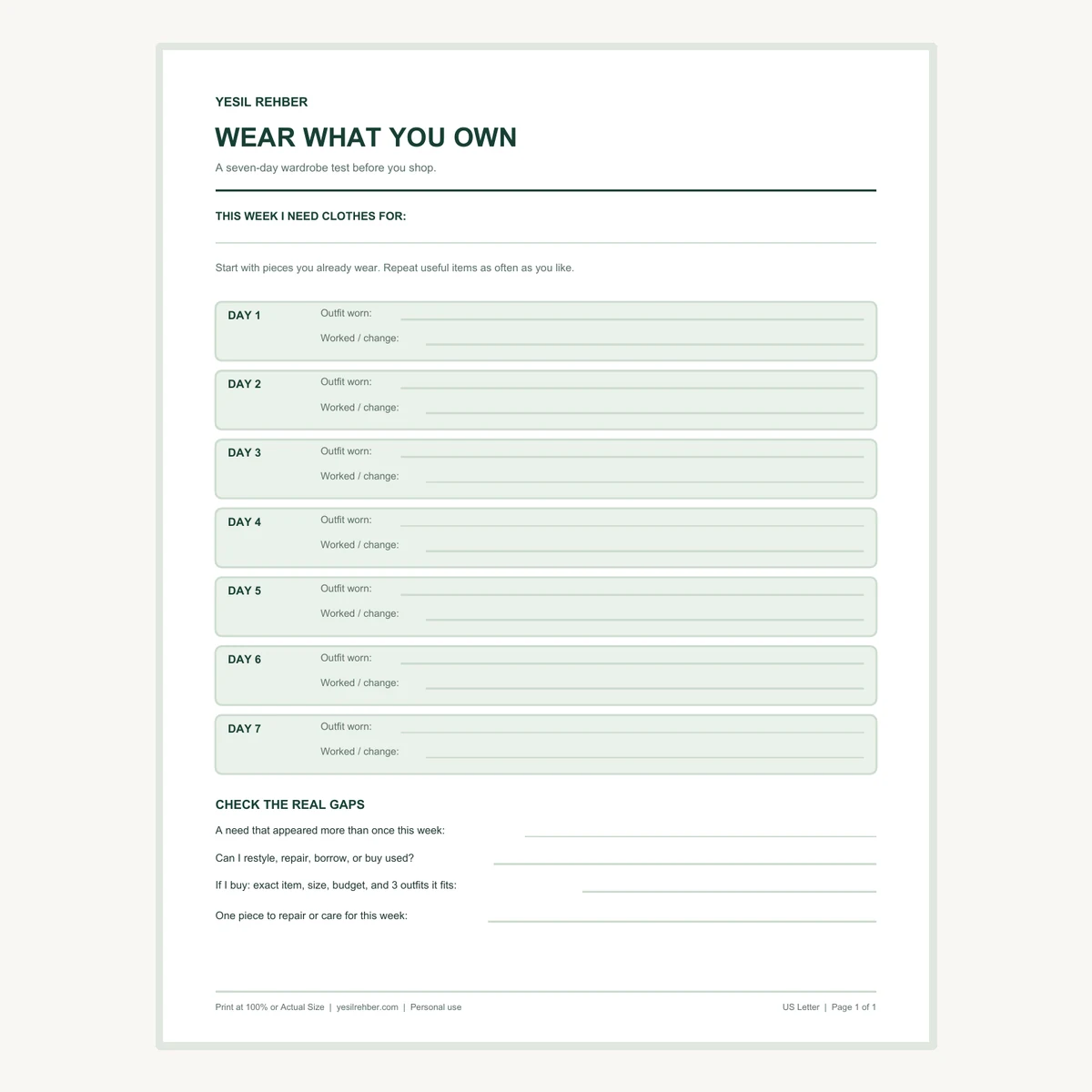
Free 7-Day Wear-What-You-Own Printable
Record what you wore, what worked, and any gap that appeared more than once. The one-page worksheet helps you make a wardrobe decision after a real week, not after one frustrating morning. Print at 100% or Actual Size.
What is a capsule wardrobe when you are using what you own?
Think of it as a small working group of clothes that makes getting dressed easier for a particular season or stretch of life. The rest of your wardrobe does not have to disappear. Formalwear, specialty gear, off-season pieces, and sentimental items can stay elsewhere if you have room. The question is whether the items in the easy-reach group work together and get worn.
Skip a universal number such as 10, 30, or 37 pieces. A person who does laundry twice a week may need a different set than someone who does it once. A uniform, caregiving needs, climate, and mobility needs also change the answer. Begin with a week you can describe, then choose enough clothes for it.
Step 1: write down the life your clothes need to serve
Before opening the closet, sketch the next seven days. How many workdays, active days, social events, and at-home days do you expect? What is the weather likely to require? Are there uniforms, protective garments, or pieces that must be washed after each use? This is a better starting point than a mood board of an imagined lifestyle.
Make a short list of outfit jobs: perhaps three casual work outfits, two comfortable home outfits, one walking layer, and one dressier option. These are examples, not a prescribed wardrobe. A garment earns its place when it helps with one of your real outfit jobs and feels good enough that you will wear it.
Step 2: pull your most-worn pieces first
Take out the pieces you wore recently and would willingly wear again. Put them on a bed or another clean surface. Check fit, condition, care needs, and whether each piece works in the coming week. Do not start by evaluating every garment you have ever owned; that turns a focused outfit exercise into a large decluttering project.
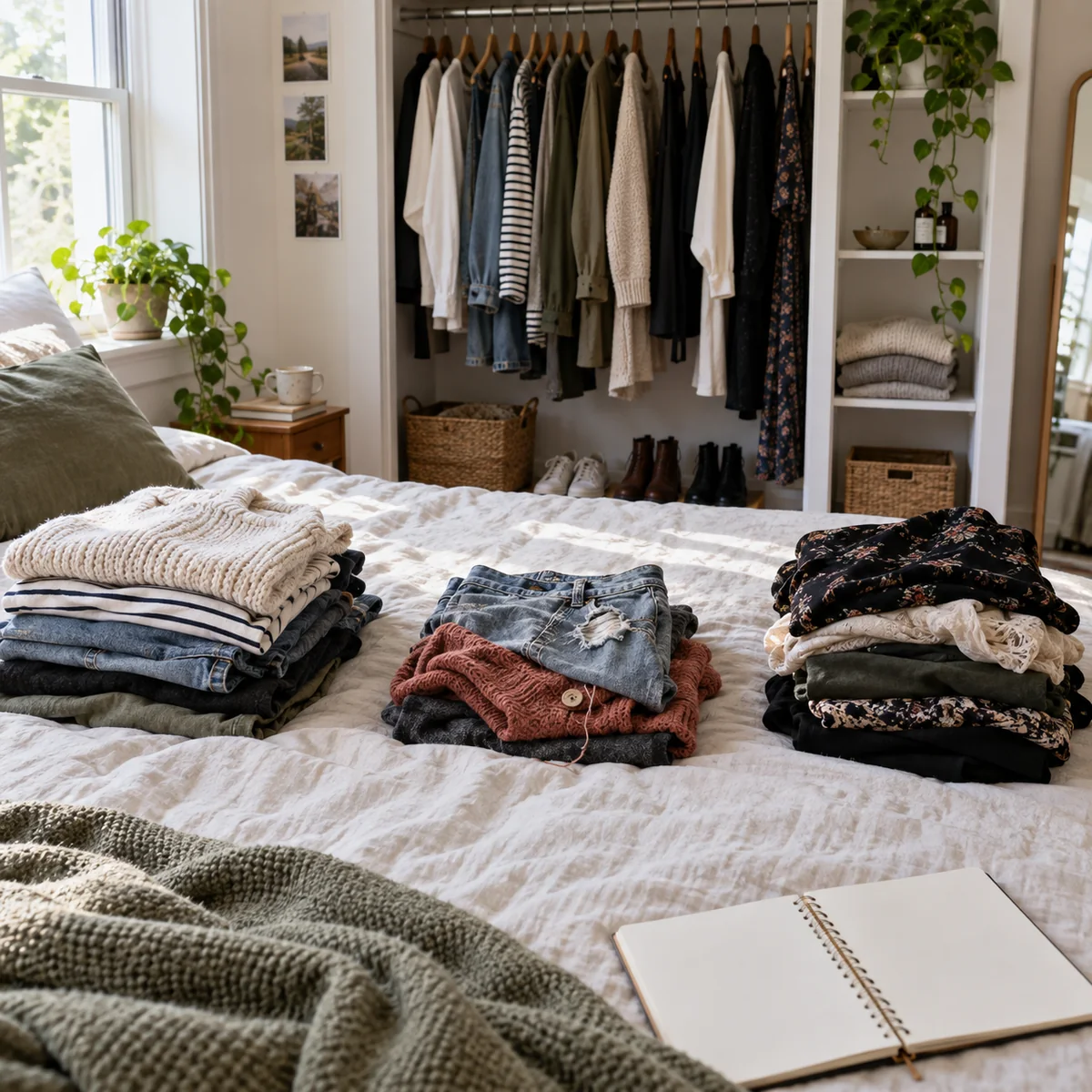
Make three temporary groups: ready to wear, needs a specific repair or cleaning step, and not part of this week’s test. The third group is not automatically a donation pile. If you need help deciding what should leave your home, use the low-waste decluttering guide. For now, return off-season and special-purpose clothes to their own place so they do not crowd the test.
Step 3: build outfit combinations, not a color scheme
Choose a few bottoms, tops, and layers that can cover the outfit jobs you listed. Lay out complete outfits, including shoes and any necessary outer layer. Try each one on if fit or comfort is uncertain. A top that looks versatile on a hanger may not work with the trousers you actually own; one repeated pair of jeans may be the most useful piece in the group.
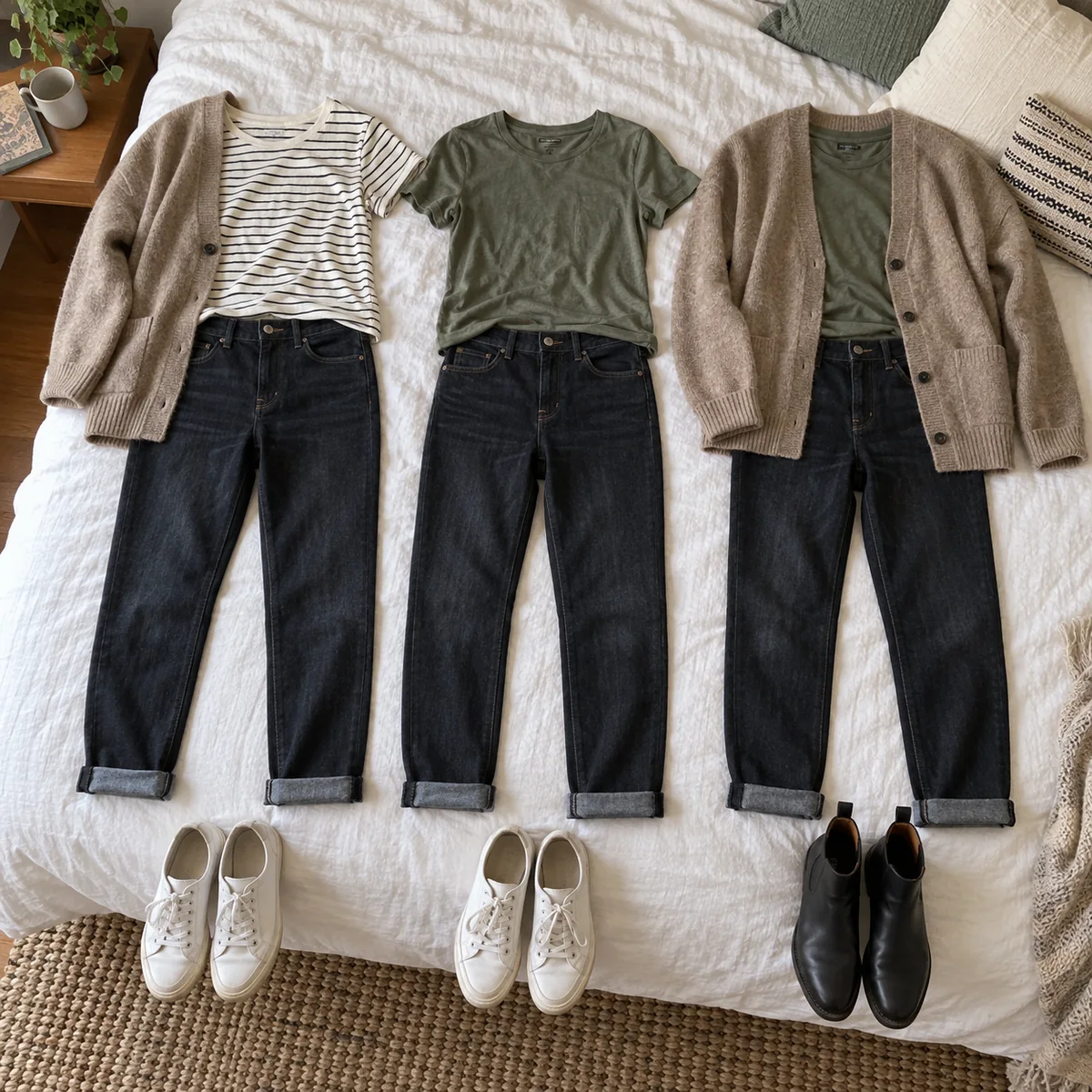
Do not force every item to match everything. Two or three combinations you genuinely like may be more useful than a perfectly coordinated rack you will not wear. Note why an outfit works: comfortable waistband, suitable warmth, shoes you can walk in, or a layer that meets a dress code. If something fails, describe the specific problem. “This shirt needs a different underlayer” is more useful than “I have nothing to wear.”
Step 4: fix the small problems that keep favorites idle
A loose button, missing hem stitch, or stained item can look like a wardrobe gap even when the garment is already in your home. Name the fix and choose when you will do it or who can help. If a repair is beyond your time, skill, or budget, do not keep promising yourself an indefinite fix. Decide whether professional repair is worthwhile or whether the item belongs in a different path.
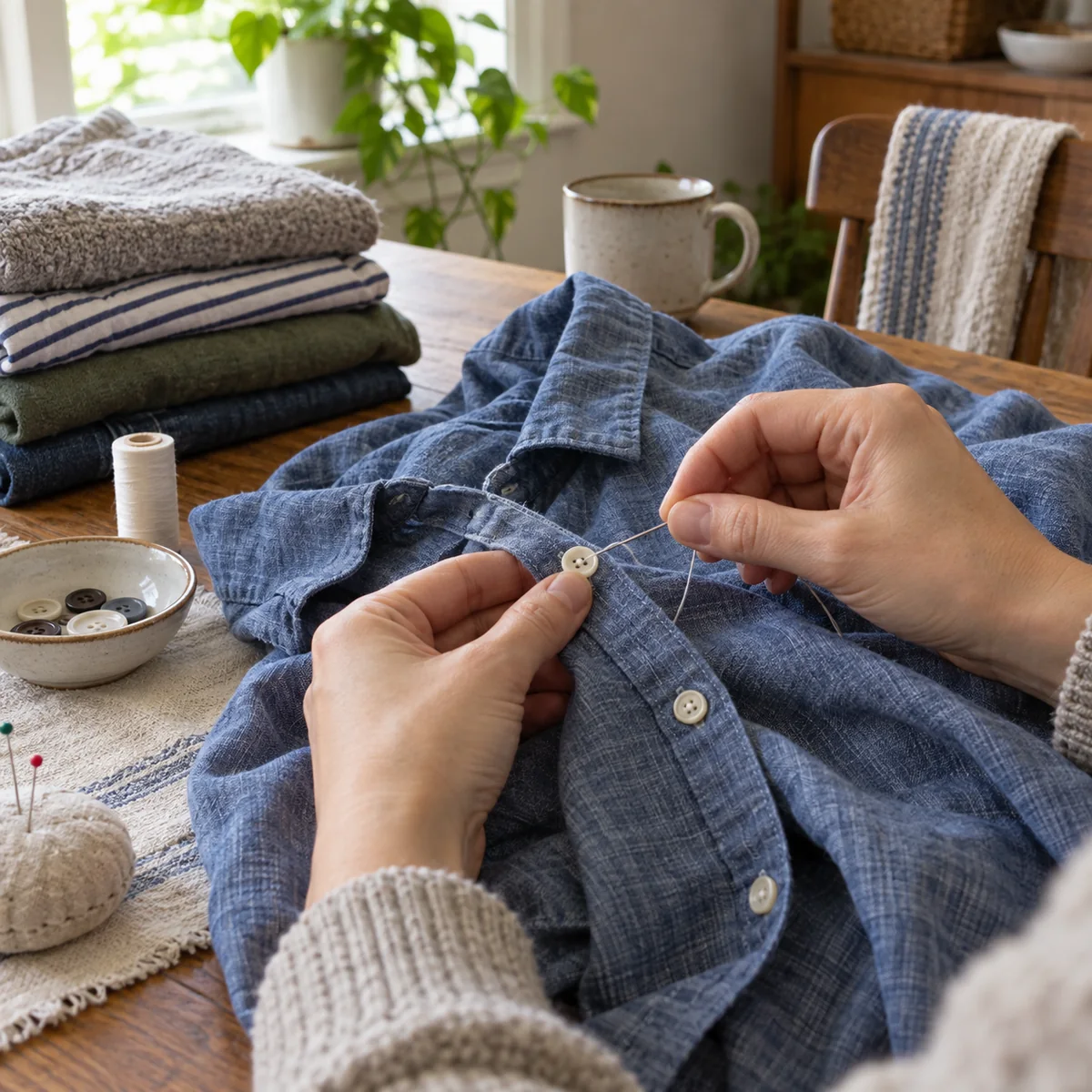
The U.S. Environmental Protection Agency encourages maintaining and repairing clothing so it need not be replaced as often. Caring for the clothes you already enjoy is part of mindful shopping because it can change what, if anything, you need to buy. Follow garment care labels and do not assume every fabric or repair needs the same treatment.
Step 5: wear the test wardrobe for seven ordinary days
Put the starting set where it is easy to reach. Keep your other clothes available; this is an experiment, not a lockbox. Each day, note the outfit you wore and one useful observation. Did you feel comfortable? Did you need another layer? Did laundry timing change the plan? Did you reach for a piece outside the set because it served a real need?
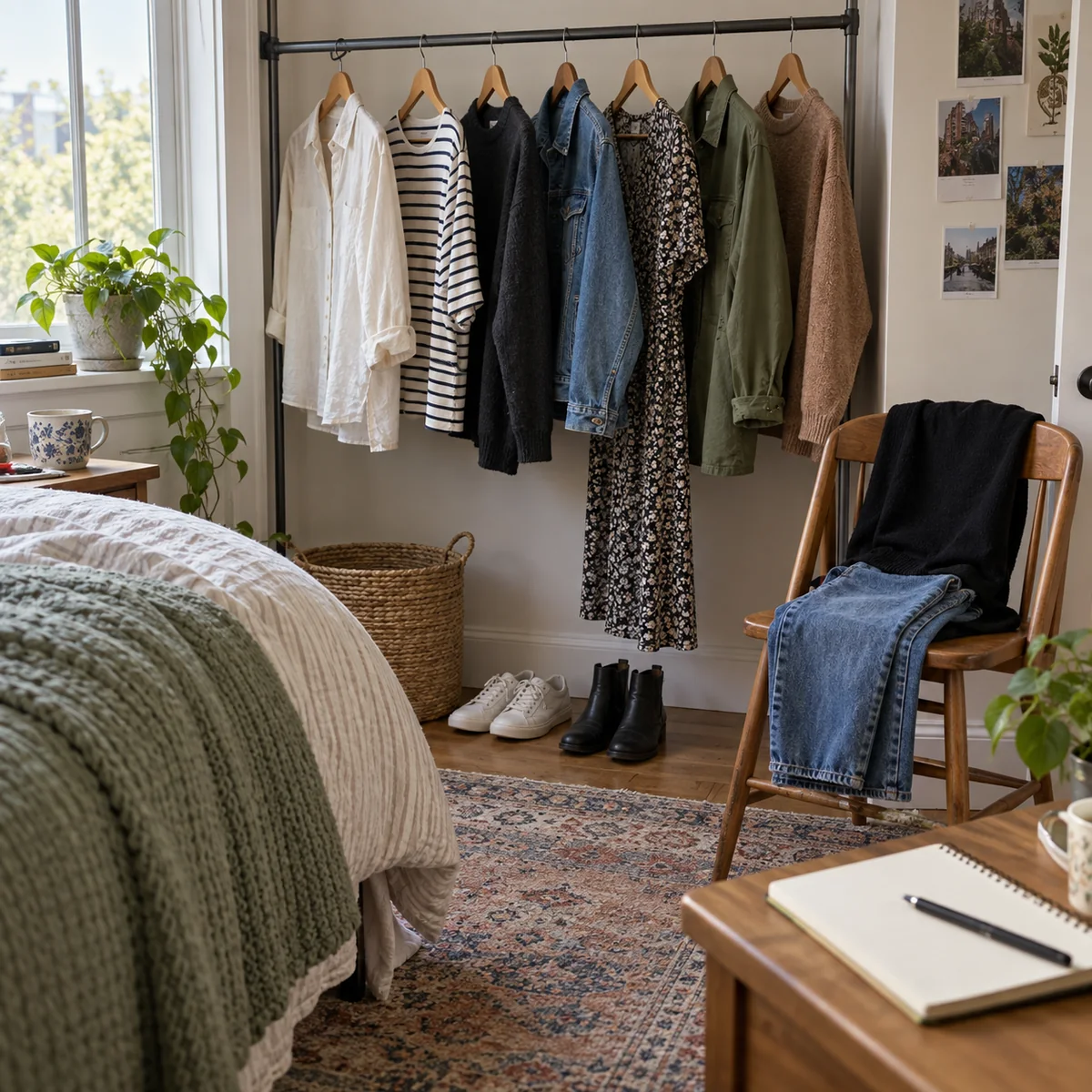
Repeat clothes when that works for you. The test is meant to reveal useful combinations and recurring friction, not produce seven entirely different looks. If the weather changes or a surprise event appears, use another item and record why. That exception may be important information. If your routine varies widely, repeat the test in a different week or season before making a permanent decision.
Step 6: name a real gap before you shop
At the end of the week, read your notes. A repeated problem is more credible than a passing wish. Write down the exact item, size or fit requirement, purpose, and budget. For example, “a washable midweight layer that fits over my work shirts” is a clearer need than “more basics.” Check whether a piece you own can be restyled or repaired first. Borrowing or buying used may also be practical, depending on the item.
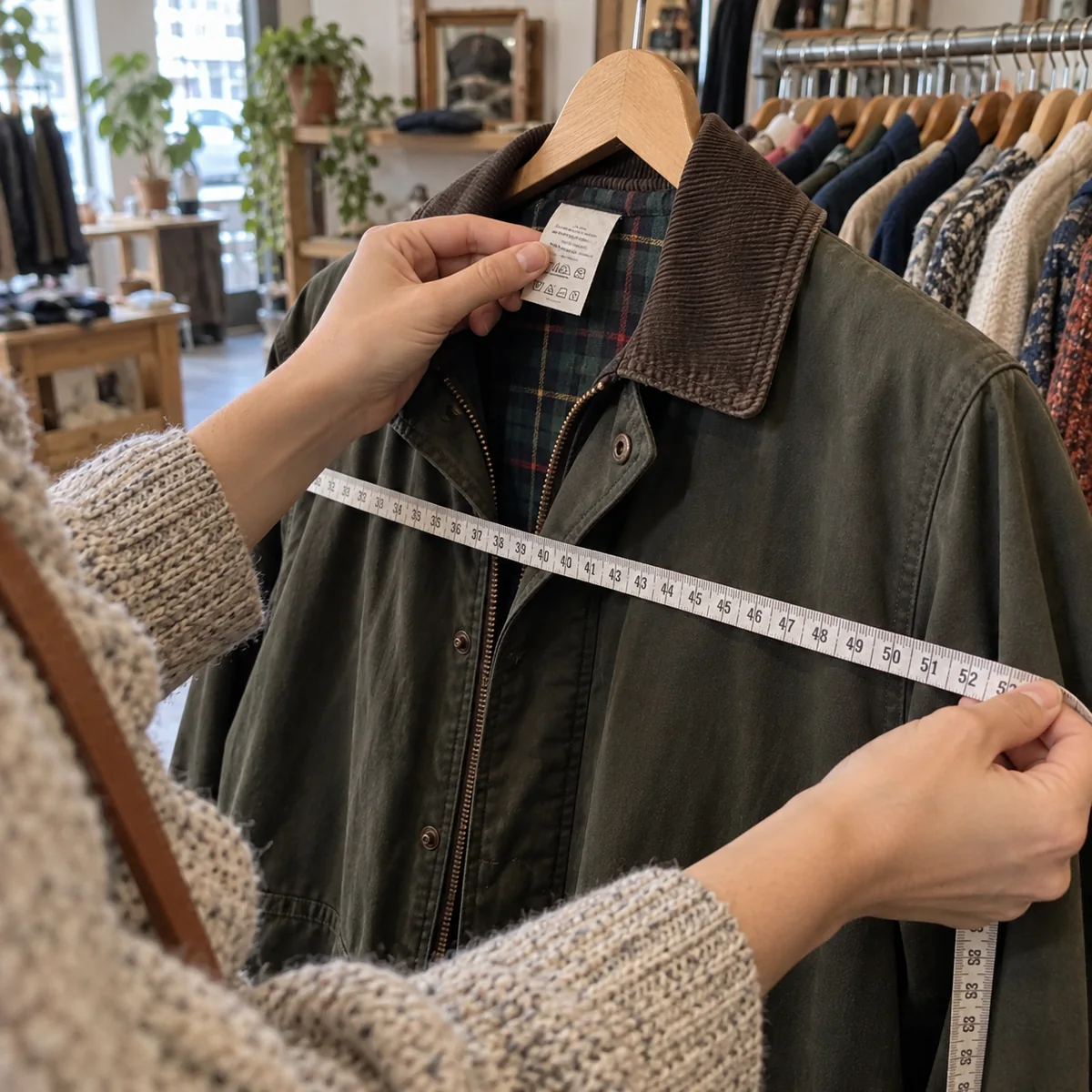
Before buying, ask whether the candidate works with at least three outfits you would actually wear. That is a practical check, not a mathematical rule; specialized items may have a different purpose. Inspect condition, care instructions, and return terms when relevant. The EPA suggests asking whether you already own something, can repair it, or can buy a suitable used option. The Federal Trade Commission also advises consumers to look past broad “green” claims and check the specific claim being made.
What if the capsule does not look minimal?
That is fine. A capsule wardrobe is a tool for making your clothes easier to use, not a visual standard. Colors do not have to be neutral. A favorite patterned shirt can be central to the set if you wear it. Adapt the test for disability, sensory comfort, religious dress, work rules, and changing body size. Clothes that fit your life now deserve priority over a hypothetical future version of you.
If the closet feels crowded even after you identify the working group, our small closet guide shows how to place daily clothes within reach without buying new organizers. The useful garments should be easy to find, not buried behind the rest.
Common mistakes to avoid
- Buying a capsule wardrobe: Test existing clothes before making a list of replacements.
- Copying someone else’s item count: Build around your schedule, climate, and laundry access.
- Keeping pieces because they match: Comfort, fit, and actual use matter more than a perfect palette.
- Removing special-purpose items: Keep them separately if they serve a real occasional need.
- Calling one difficult outfit a gap: Look for a repeated problem during the week.
- Ignoring care or repairs: Fixing a favorite may be easier than finding a replacement.
Download the seven-day wardrobe test
The one-page worksheet has space for each day’s outfit and what you learned, then prompts you to check real gaps, repair options, and the exact requirements for a possible purchase. Download the US Letter PDF (8.5 × 11 inches) or the A4 PDF (210 × 297 mm). Print at 100% or Actual Size. If online shopping is the main pressure, pair the test with our seven-day mindful shopping reset.
Start with the clothes you were happy to wear last week. Make a few complete outfits and learn from seven real days. Any later purchase can answer a specific need instead of an imagined one.
Sources
- U.S. Environmental Protection Agency, Think Green Before You Shop
- U.S. Environmental Protection Agency, What You Can Do About Climate Change: Waste
- Federal Trade Commission, Eco-Friendly and Green Marketing Claims