Tomatoes rarely arrive at the same stage of ripeness, yet they often get one storage instruction: put them all on the counter or put them all in the fridge. That is why a promising bag of tomatoes can become a mix of bland slices and soft fruit you did not plan to use. A better routine starts by sorting them by ripeness, then choosing a place for each group.
The quick answer: Keep whole, unripe tomatoes in a single layer at room temperature, out of direct sun, and check them daily. Keep ripe whole tomatoes on the counter if you will use them soon; a short spell in the refrigerator can delay softening when plans change, though cold storage may cost some flavor. Refrigerate cut tomatoes promptly in a covered container. Throw away tomatoes that look rotten or moldy.
First, sort the tomatoes you brought home
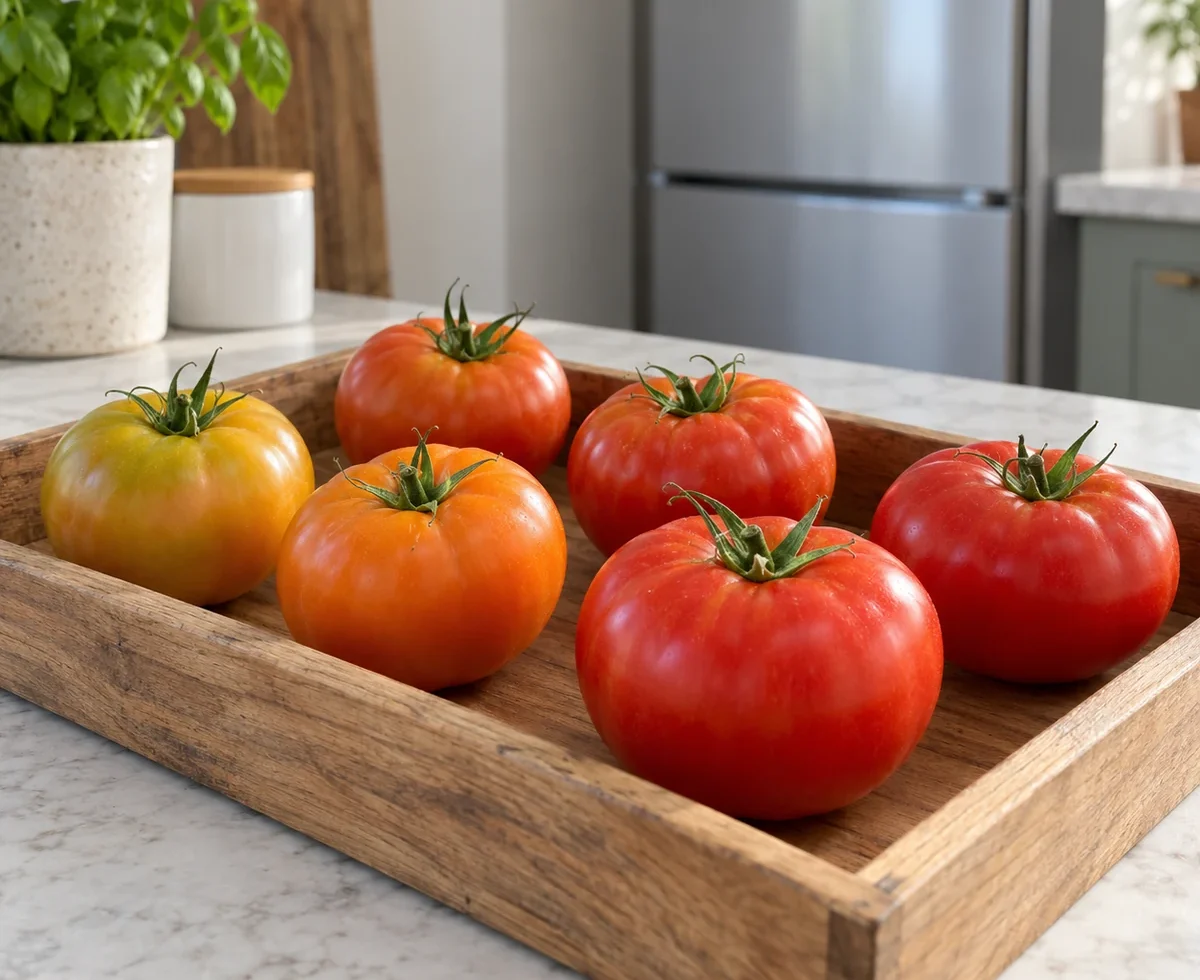
Set the tomatoes out where you can see each one. Put firm fruit that has not finished coloring into one group, ripe fruit ready for the next meal into another, and very soft fruit into a use-today group. Check for bruises, cracks, leaking, or mold. A tomato that is soft from ripeness is different from one that is rotting; do not try to rescue visible mold or decay by cutting around it.
This quick sort gives you a plan before the fruit disappears into a bag or a deep drawer. Buy only what you can use at its current stage when possible. If several are ready at once, plan a cooked meal with the softest sound tomatoes first.
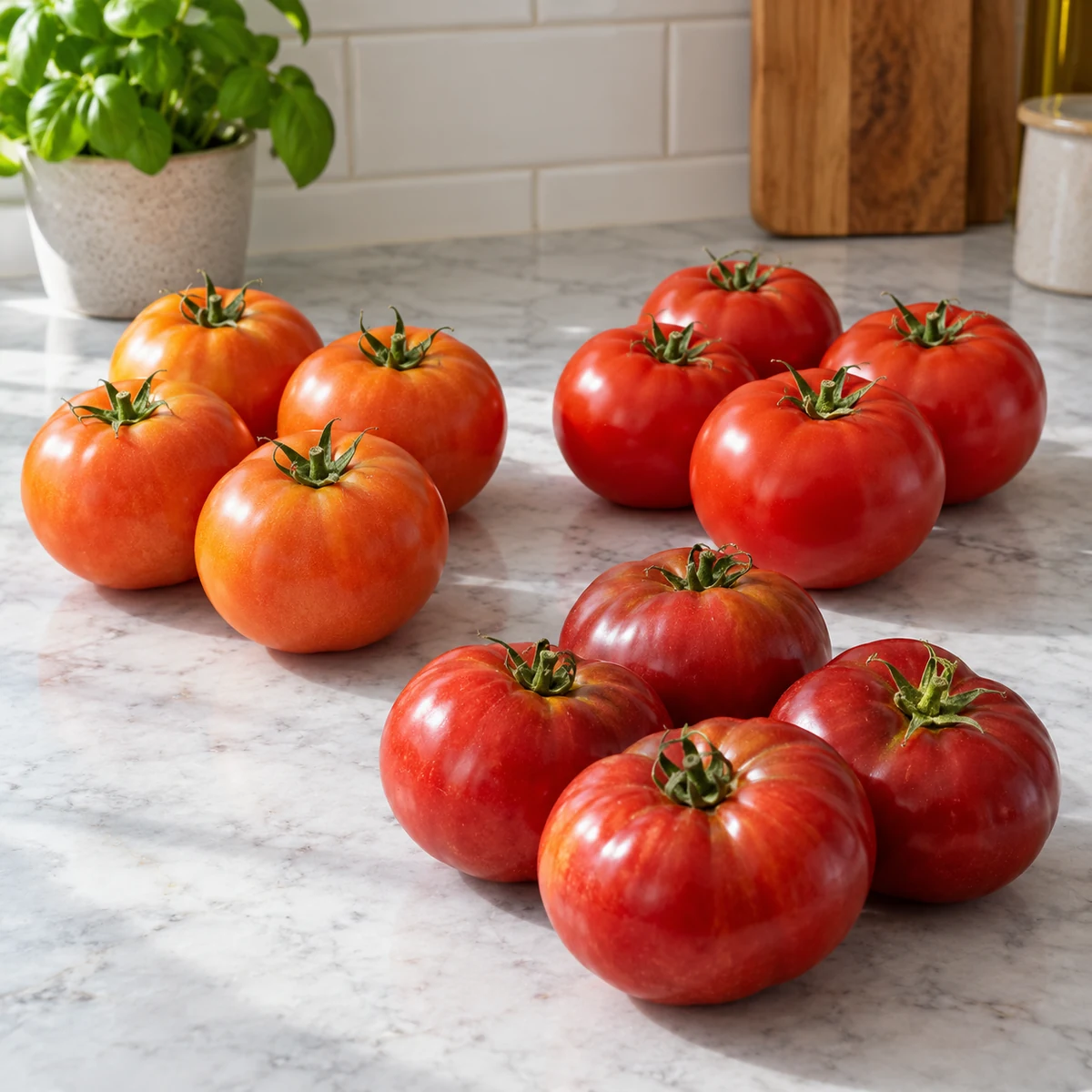
Whole and still ripening: use the counter
Lay unripe whole tomatoes in one layer at room temperature, spaced so a soft spot on one fruit does not press against another. Keep them out of direct sunlight. A shallow tray, plate, or open bowl works better than a deep pile. Check them daily and move each ripe tomato into the next-meal group.
There is no need to put the tray in a sunny window: University of Minnesota Extension says light is not required for indoor ripening. Extremely green, immature fruit may never develop the flavor of a tomato that had already begun to mature, so use your senses rather than assuming every hard green tomato will ripen well.
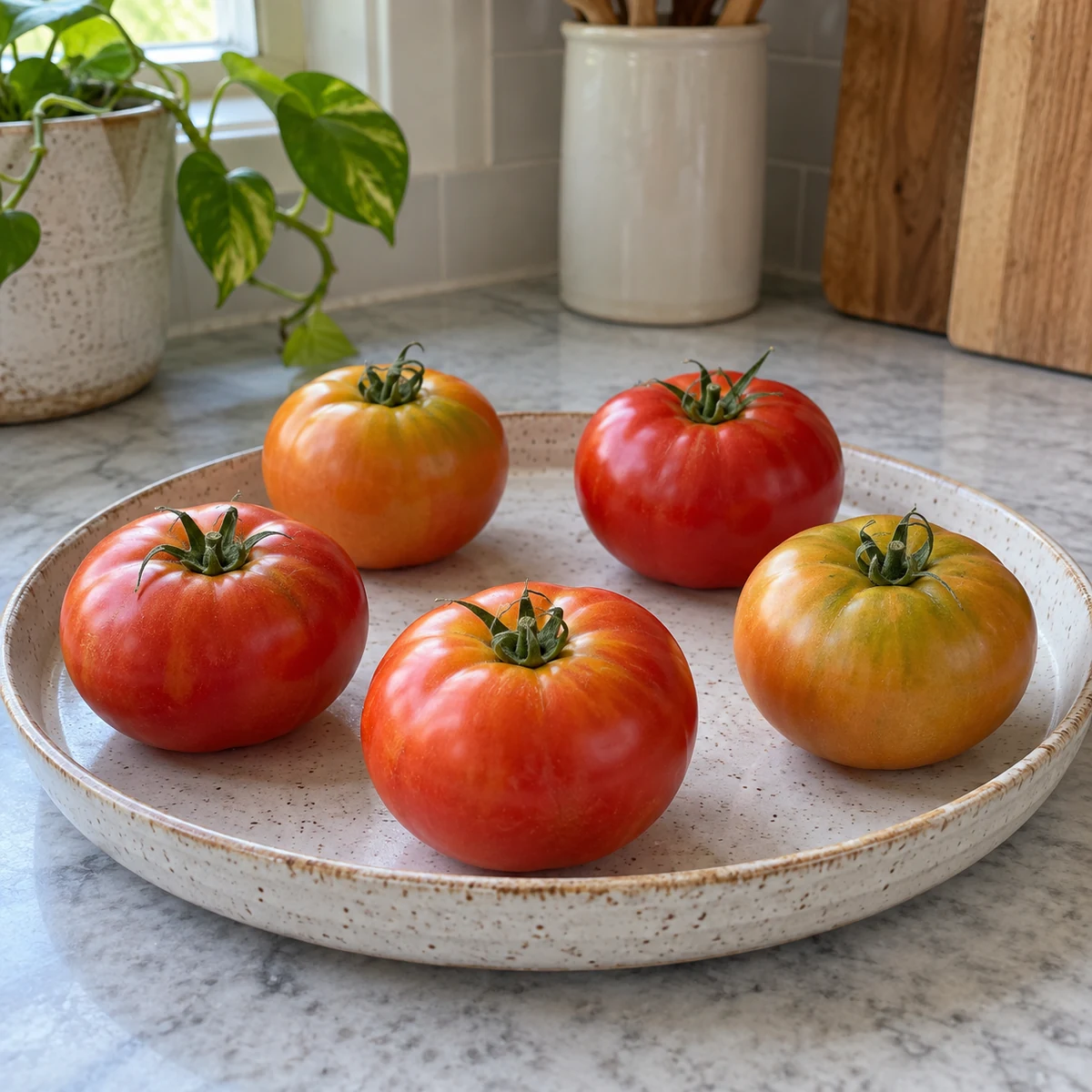
Whole and ripe: decide when you will eat them
If you will slice a ripe whole tomato for the next meal or two, keep it on the counter away from heat and direct sun. Oregon State University Extension recommends room-temperature storage and planning to use tomatoes within a few days after they ripen. The exact time depends on how ripe the fruit was when you bought it and how warm your kitchen is.
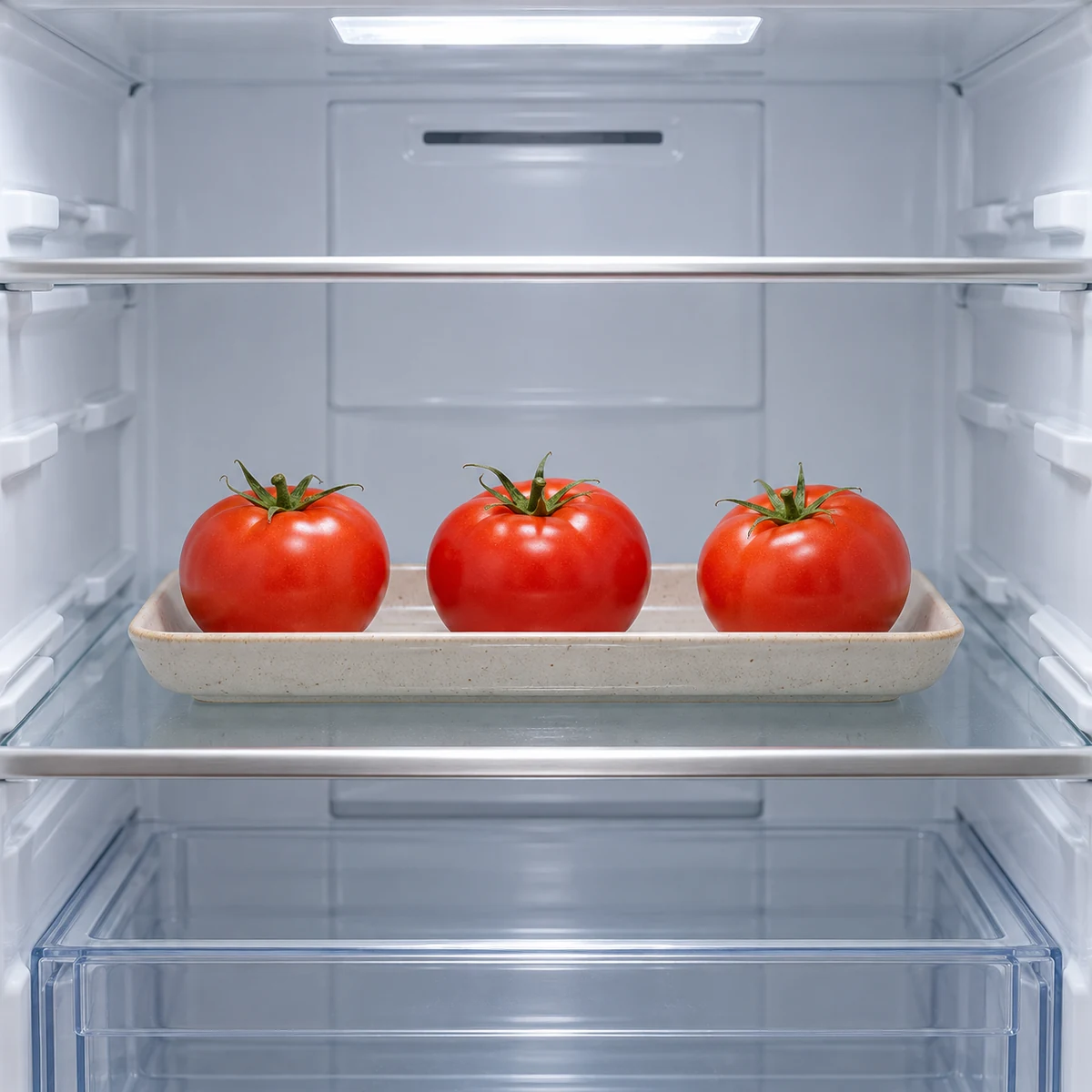
If plans change and the fruit is already ripe, move it to the refrigerator for short-term storage rather than leaving it to collapse on a hot counter. Refrigeration can delay softening, but it may reduce flavor and change texture. This is a quality tradeoff for whole ripe fruit, not a rule that every tomato belongs in the fridge. Bring a whole chilled tomato out shortly before eating if you prefer it less cold; do not use this counter rule for a cut tomato.
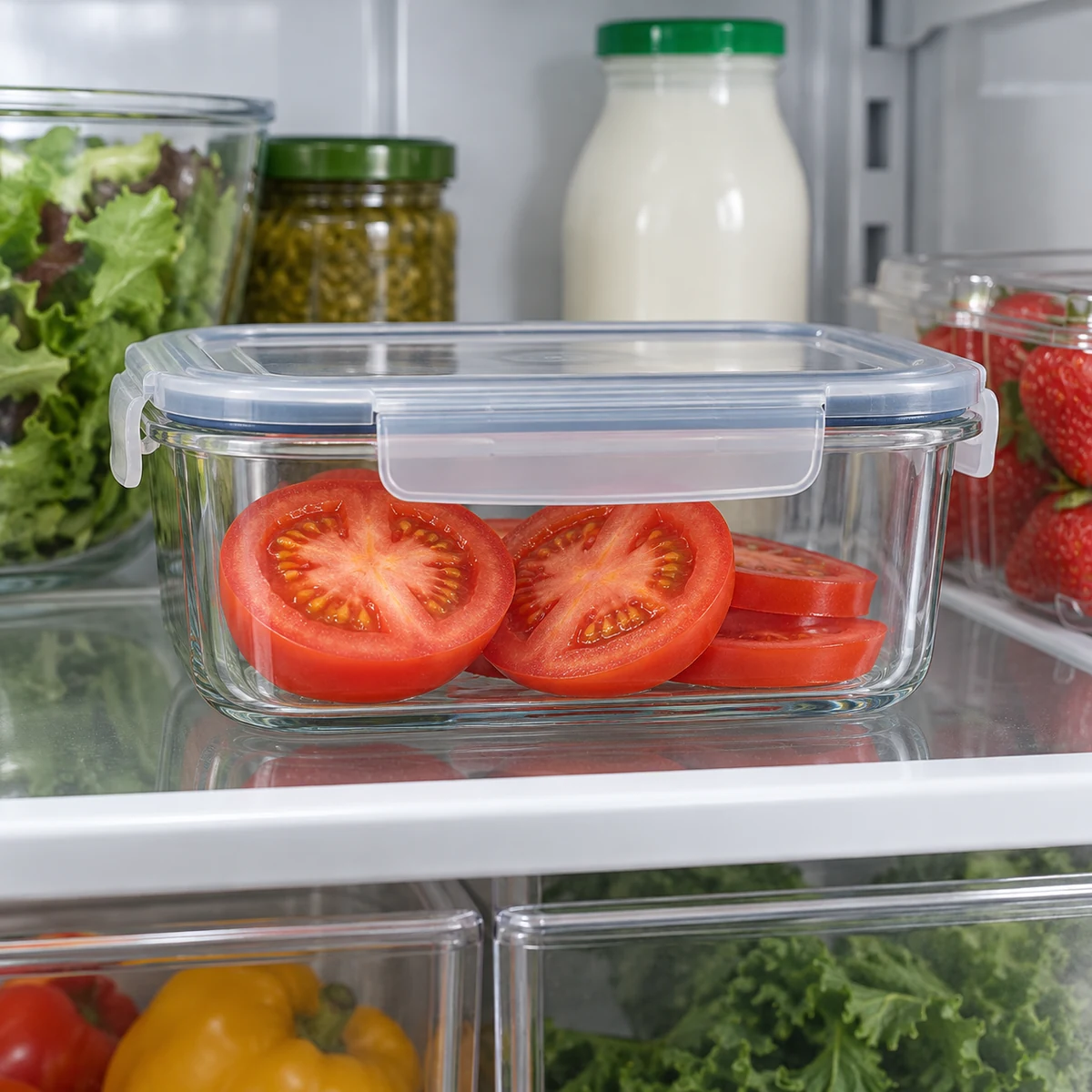
Once cut, switch to food-safety rules
A sliced or chopped tomato is no longer a whole tomato on the counter. Put leftovers promptly in a clean covered container in a refrigerator at 40°F / 4°C or below. The U.S. Food and Drug Administration advises refrigerating pre-cut produce and keeping perishable produce cold. Its food-waste guidance uses the two-hour rule for perishable foods left at room temperature; when the room is very hot, shorten that window.
Use a clean knife and board, and keep raw produce away from raw meat, poultry, and seafood. Wash whole tomatoes under running water immediately before cutting; do not wash them with soap or produce detergent. If a cut tomato has been left out beyond safe limits or looks spoiled, discard it.
Use sound but soft tomatoes before they become waste
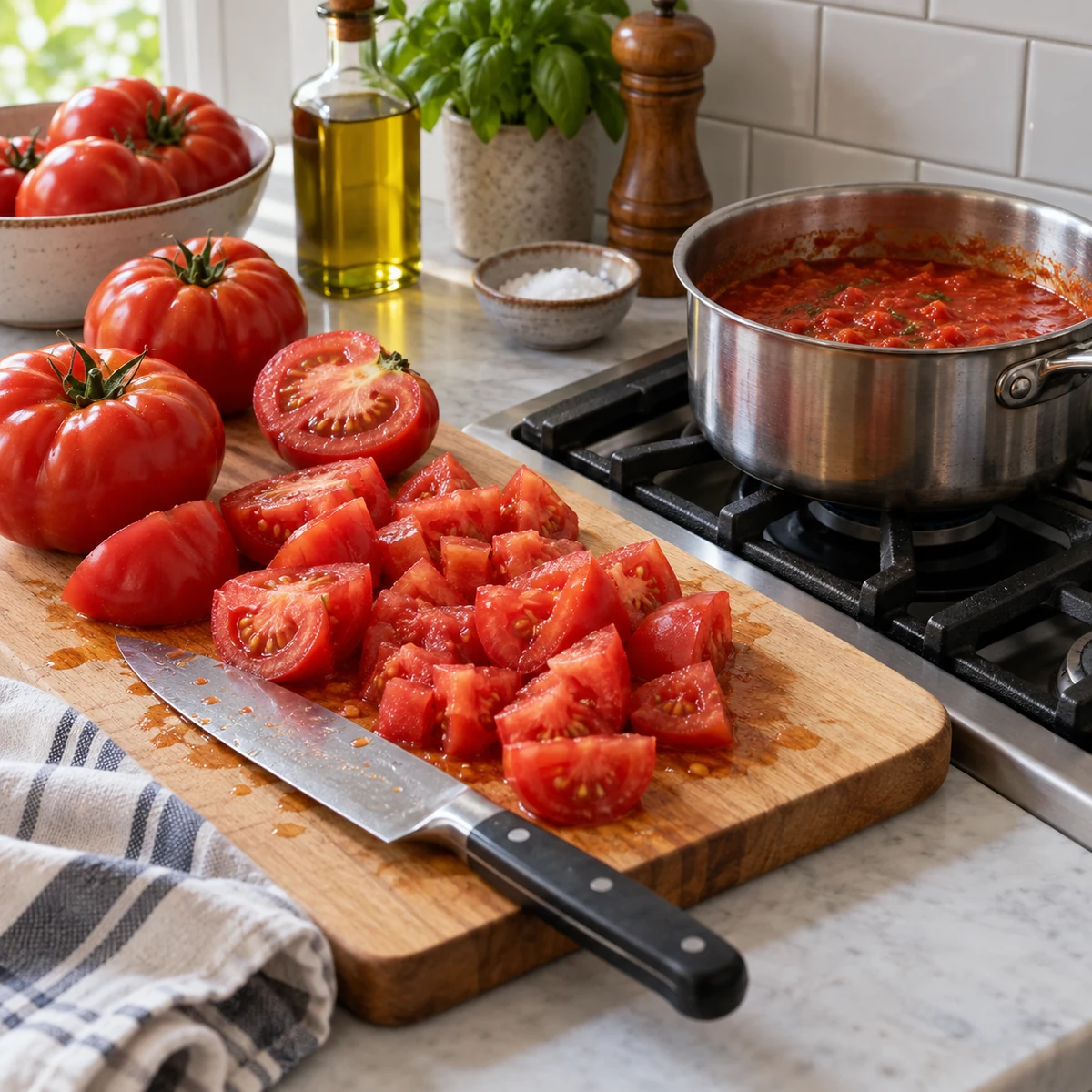
A very ripe tomato may be poor for neat sandwich slices but useful for a quick cooked sauce. Wash it, remove any small bruised areas, chop it, and cook it with ingredients you already planned to use. You can also add sound soft tomato to soup or a cooked bean dish. Cooked tomato dishes should be cooled and refrigerated promptly, or frozen in portions suited to your future meals.
Do not treat a quick sauce as a shelf-stable preserve. Home canning requires a current, tested recipe and the specified acidity and processing steps; soft or overripe tomatoes are not a shortcut to a safe canned product. Our freezer organization guide can help you label and find a frozen portion later.
A small daily routine that makes the difference
- Check the counter tray for a tomato that has become ripe.
- Put the ripest sound one into today’s meal plan.
- Move a whole ripe tomato to short-term refrigeration if plans change.
- Refrigerate any cut tomato promptly, covered and dated if it will not be used right away.
- Discard moldy or rotten fruit and clean the surface it touched.
Keep tomatoes away from ethylene-sensitive produce such as lettuce and cucumbers when possible. UC Davis notes that ripening tomatoes release ethylene, which can affect those neighboring foods. For another ingredient that needs a different storage approach, see our guides to leafy greens and fresh mushrooms.
Questions people ask
Do tomatoes always have to stay out of the refrigerator?
No. Room temperature generally protects the flavor of whole tomatoes, especially those still ripening. Short refrigeration of ripe whole tomatoes can slow softening when you cannot use them immediately. Cut tomatoes need refrigeration for safety.
Does a sunny windowsill ripen tomatoes faster?
They need suitable temperature, not direct sunlight. A bright hot window can warm fruit unevenly. Use a room-temperature spot out of direct sun and check the fruit often.
Should I wash tomatoes before storing them?
Wash them under running water just before preparation or eating, then dry with a clean towel. Do not use soap. If a tomato is visibly dirty, handle and store it so it does not contaminate nearby food or surfaces.
Sources
- Oregon State University Extension: Tomatoes — room-temperature storage for whole tomatoes, short refrigeration of ripe tomatoes, and flavor tradeoffs.
- University of Minnesota Extension: Growing Tomatoes — one-layer indoor ripening and the role of temperature rather than light.
- U.S. Food and Drug Administration: Selecting and Serving Produce Safely — washing, cross-contamination prevention, and refrigerated produce guidance.
- U.S. Food and Drug Administration: How to Cut Food Waste and Maintain Food Safety — refrigerator temperature and the two-hour rule.
- UC Davis Postharvest Research and Extension Center: Tomato — ripening, chilling sensitivity, and ethylene.