Many recipes ask for one or two tablespoons of tomato paste, then leave most of the can behind. That extra paste is easy to forget at the back of the refrigerator. Freezing it in small portions turns the remainder into a ready-to-use ingredient for the next soup, sauce, or pot of beans.
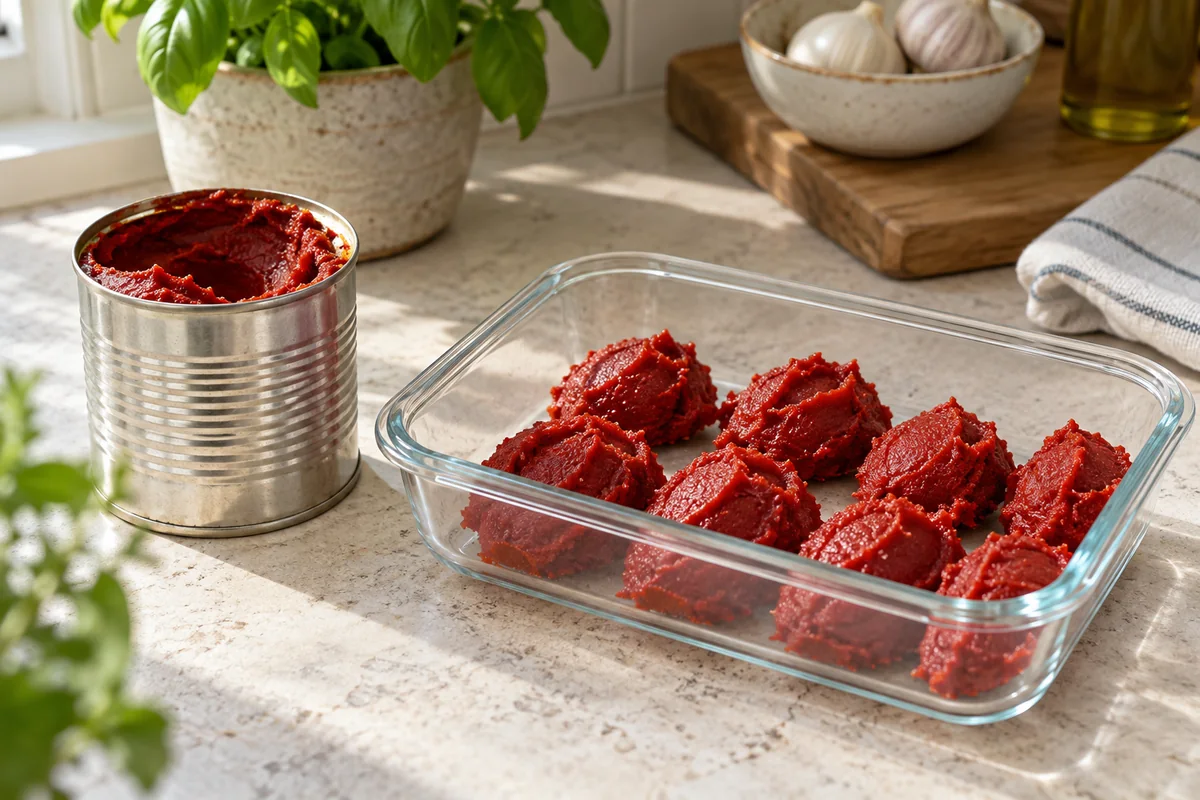
The quick answer: While the opened paste is still fresh, spoon it into tablespoon-size portions in a clean, freezer-safe reusable tray. Freeze until firm, then move the portions into a labeled, tightly closed freezer-safe container. Add one frozen portion straight to a simmering dish, or thaw it in the refrigerator when a recipe needs soft paste.
Start with paste that is safe to save
Plan to portion the extra paste soon after opening the can or tube. Use clean utensils and keep the paste away from raw meat and used tasting spoons. Refrigerate or freeze it promptly; do not leave an opened can on the counter for an afternoon. If the paste has visible mold, an off odor, or has been stored in uncertain conditions, discard it. Freezing preserves food that is in good condition; it does not make spoiled food safe again.
Choose a clean reusable silicone portion tray, or spoon separate mounds onto a freezer-safe plate or tray. Have a freezer-safe container with a tight lid ready for the frozen pieces. A small container is easier to reuse than a large bag with one forgotten spoonful at the bottom. Check the manufacturer’s freezer guidance before using glass or silicone.
Spoon out portions you will actually use
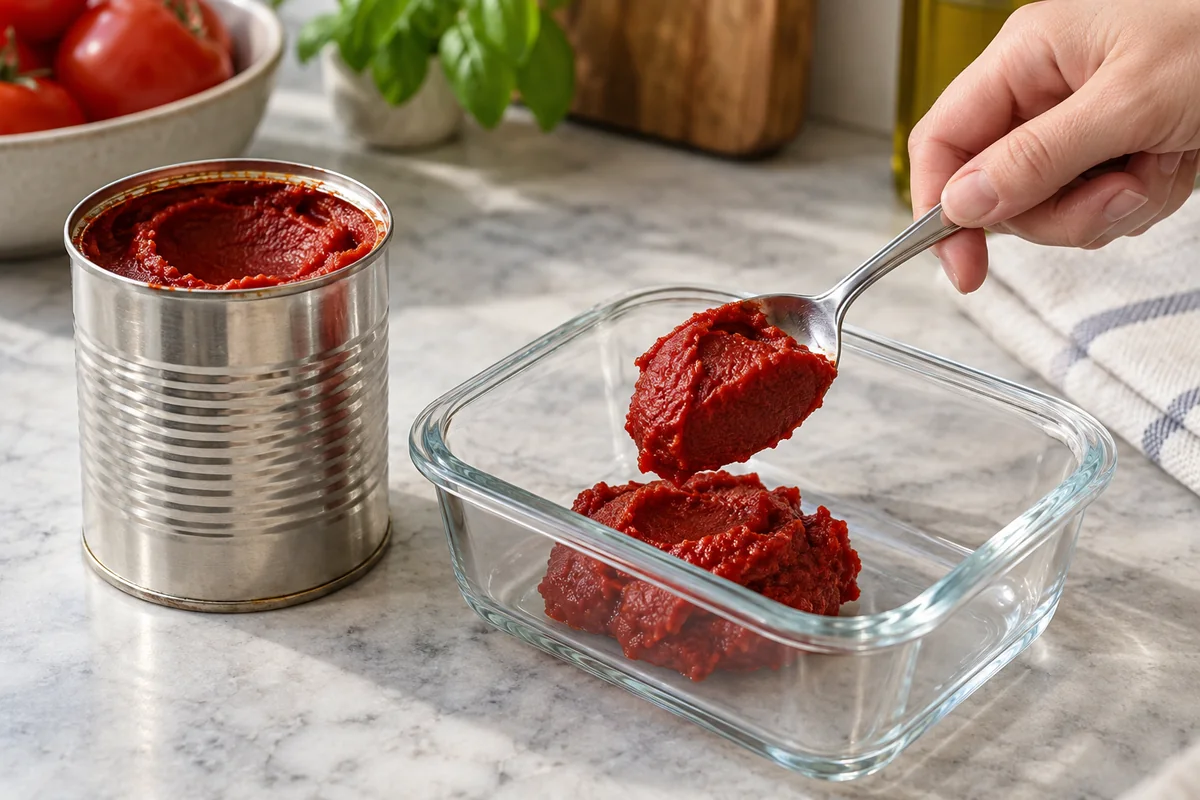
Use a clean tablespoon to portion the remaining paste. One tablespoon is handy because many recipes call for that amount, but you can also make two-tablespoon portions if that matches your cooking. Make the mounds roughly even; precision is less important than knowing their approximate size. If you are using a flat tray, leave space between them so they freeze separately.
Oregon State University’s Food Hero recipe notes recommend freezing extra tomato paste by the tablespoon, then transferring it to a labeled freezer container. This is a simple way to use the paste already open instead of buying single-use packets.
Freeze the portions until firm
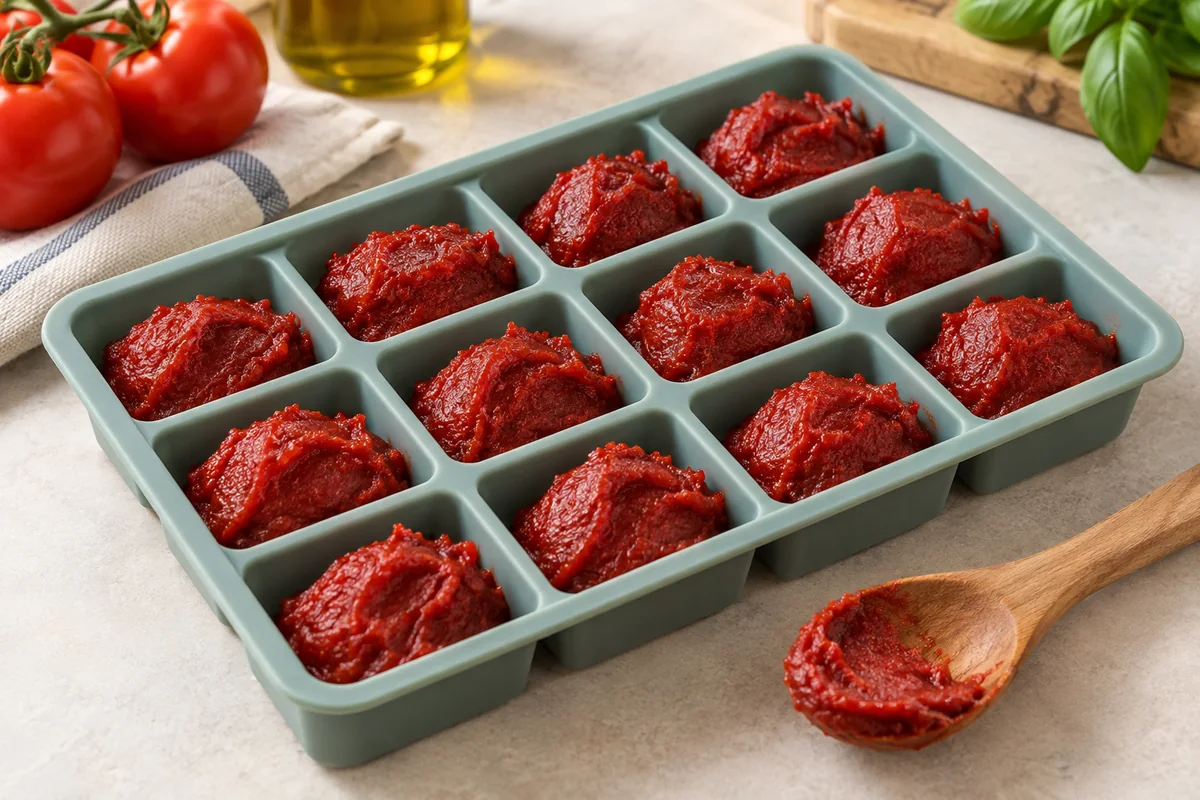
Set the tray flat in the freezer so the portions keep their shape. A reusable silicone tray makes it easy to pop them out once solid. If you use a plate, keep the spoonfuls separated and transfer them as soon as they are firm. Do not leave uncovered portions in the freezer for weeks: exposure to air can dry them out and reduce quality.
You do not need to buy a special gadget. Use an existing freezer-safe tray or container that is clean, food-safe, and easy to wash. If your current container is too large for a few portions, gather the frozen pieces in the smallest suitable covered container you own.
Transfer, label, and make the portions visible
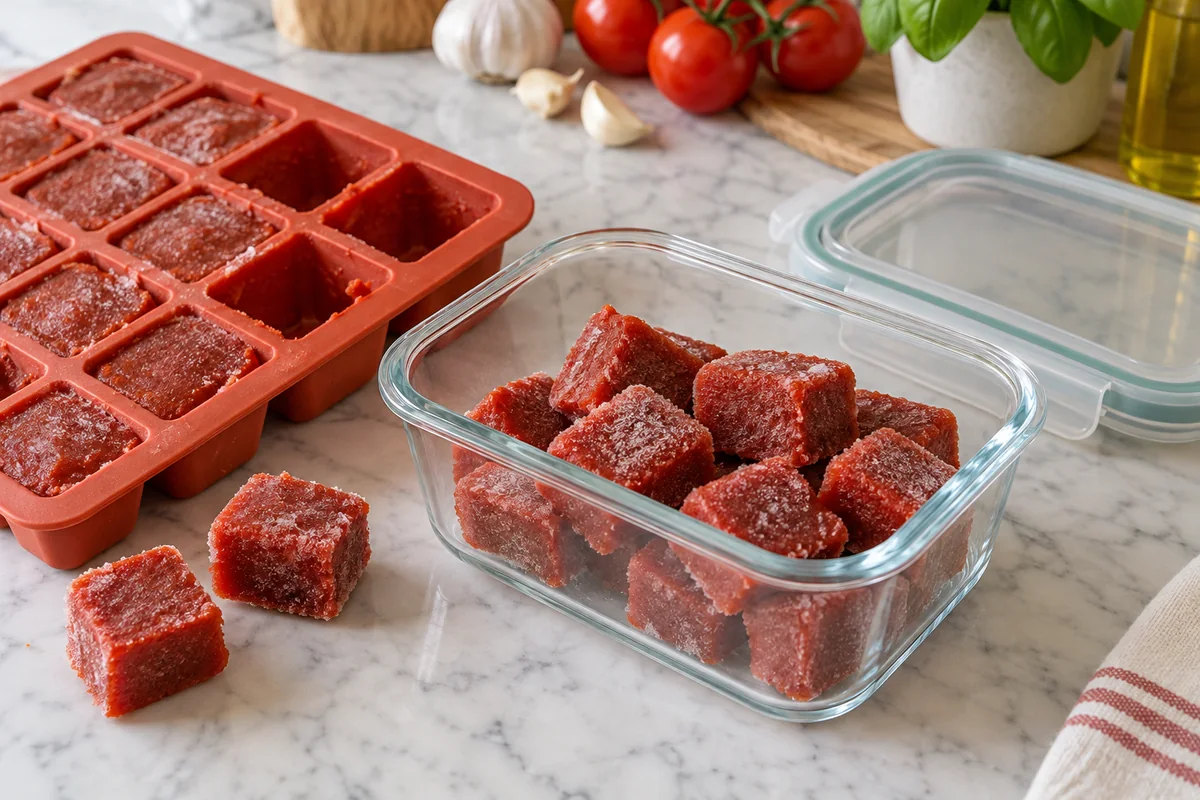
Move the firm portions into a clean freezer-safe container and close it tightly. Label it “tomato paste,” the approximate portion size, and the date you froze it. The label saves you from mistaking a dark red cube for another sauce later. Put the container where you can see it during meal planning, rather than behind large packages.
Freezing at 0°F / −18°C keeps food safe for a long time, but quality can decline as frozen food dries out. Use older portions first and check them for freezer burn before cooking. If your freezer regularly fills with small leftovers, our freezer organization guide can help you keep an inventory you will actually consult.
Use one frozen spoonful in the next meal
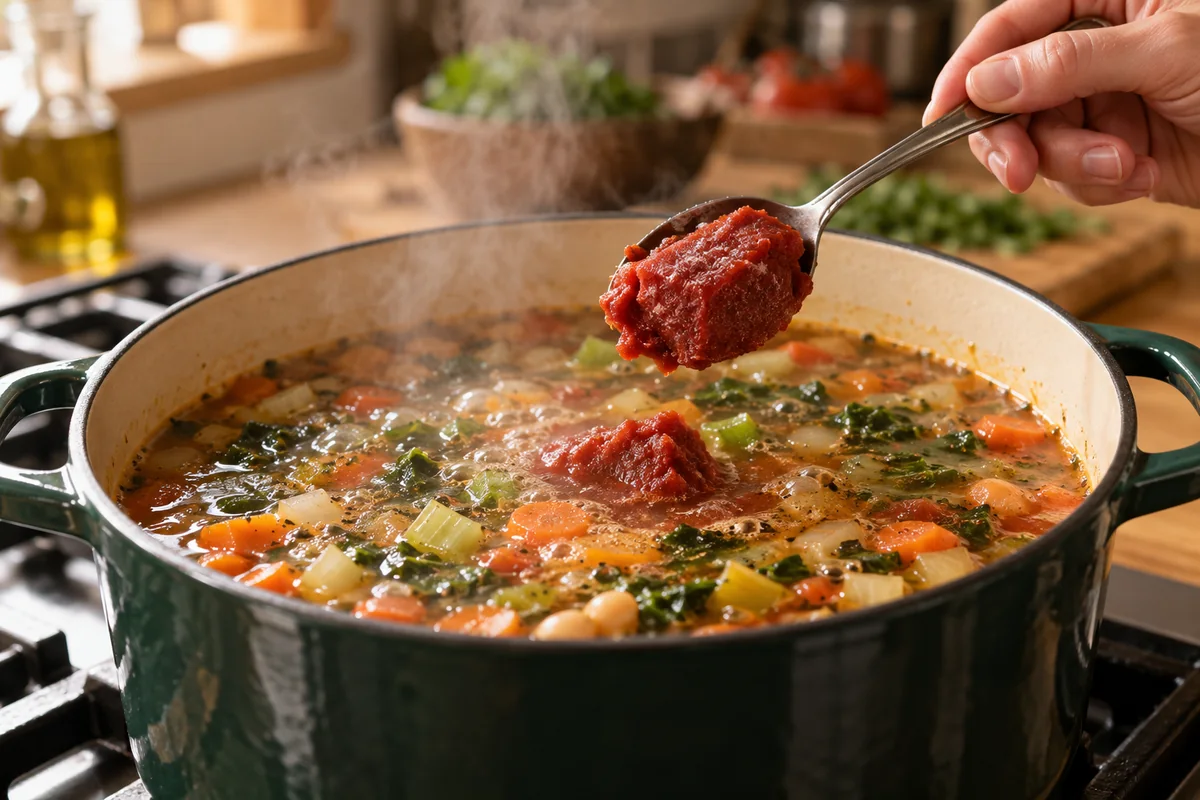
For a soup, stew, or simmering bean dish, add a frozen portion to the hot liquid and stir as it softens. For a recipe that starts by frying tomato paste in oil, thaw the portion in the refrigerator first and follow the recipe’s cooking directions. Never thaw paste on the counter. Use a clean spoon to remove only the amount you need, then return the rest promptly to the freezer.
Small portions are useful in tomato soup, lentil stew, chili, quick pasta sauce, and cooked beans. They add concentrated tomato flavor without requiring a new can for each meal. Check your grocery list against what you already own before buying more paste.
Common questions
Can I freeze tomato paste in an ice cube tray?
Yes, if the tray is food-safe and freezer-safe. Check how much each cavity holds before assuming one cube equals one tablespoon. Transfer the solid portions to a covered, labeled container rather than leaving them exposed in the tray.
How long can opened tomato paste stay in the refrigerator before freezing?
Follow the package’s after-opening directions, refrigerate promptly, and freeze while the paste is still fresh. Do not rely on freezing to rescue paste that is moldy or has sat out too long. If you cannot remember when it was opened, discard it.
Do I have to thaw frozen tomato paste before cooking?
Not for a simmering soup, sauce, or stew: add a portion directly and stir. For a recipe that needs the paste spreadable or browned first, thaw the amount you need in the refrigerator before cooking.
Sources
- Oregon State University Food Hero: Jollof Rice — tablespoon-size freezing and labeled storage of extra tomato paste.
- Oregon State University Food Hero: Making the Most of Leftovers — freezing extra tomato paste and prompt cold storage.
- USDA Food Safety and Inspection Service: Freezing and Food Safety — freezer temperature, safe thawing, and the distinction between safety and quality.