One extra bell pepper can sit in the crisper until it is too soft to use. Freezing it while it is still sound turns that almost-wasted produce into a ready ingredient for a future meal. You can freeze sweet bell peppers raw, without blanching, and cut only the amount you expect to use.
Quick answer: Select firm peppers, wash and dry them, remove stems and seeds, cut into useful pieces, then seal in freezer-safe packaging. For pieces you can scoop out separately, freeze them in a single layer on a tray first. Label the container and keep it at 0°F (−18°C) or colder. Raw-frozen peppers work especially well in cooked dishes; they may be softer than fresh peppers after thawing.
1. Start with peppers worth saving
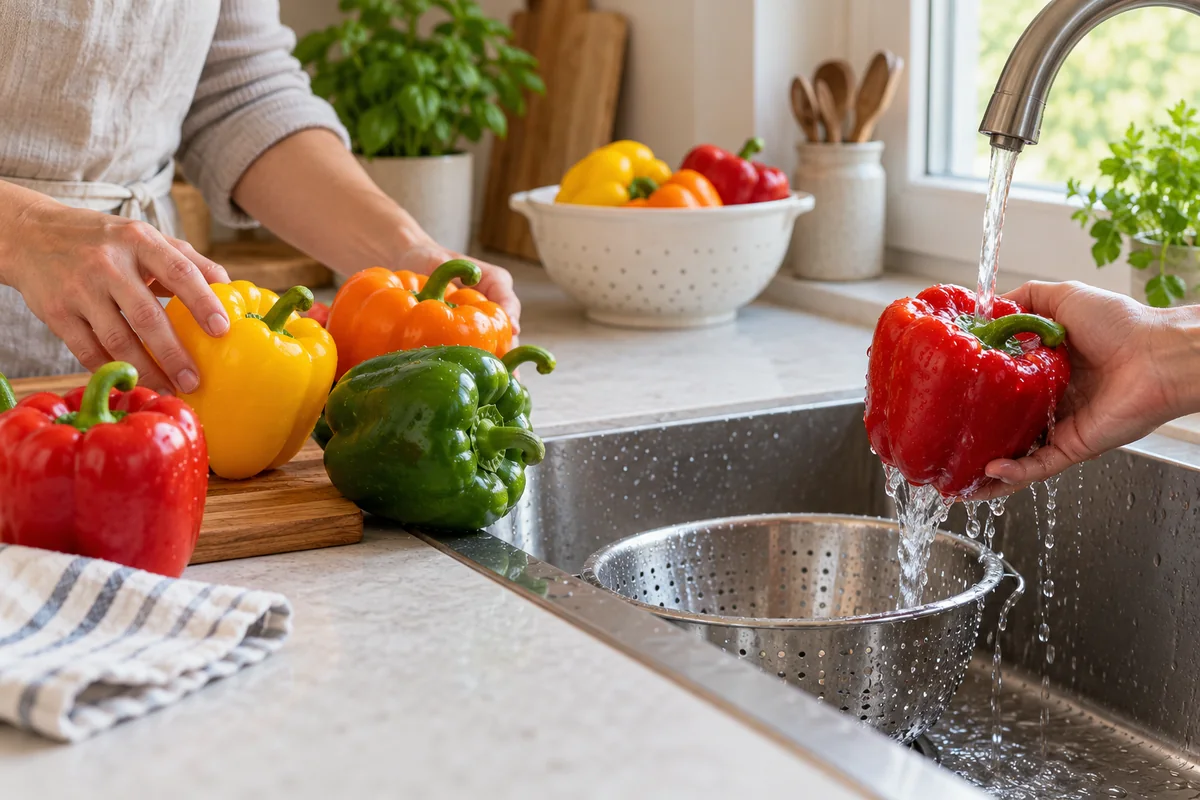
Choose peppers that are firm and free of mold or slimy spots. Freezing preserves the quality you start with; it does not repair spoiled food. If a pepper has a questionable odor, extensive soft spots, or visible mold, discard it rather than freezing it for later. Wash your hands and clean the board and knife before cutting.
Rinse each pepper under cool running water and rub the surface gently. Dry it with a clean reusable towel. Less surface water means less ice clinging to the pieces. If you have only half a pepper left from dinner, freeze that half while it is still fresh instead of waiting for a large batch.
2. Cut pieces for the meals you really make
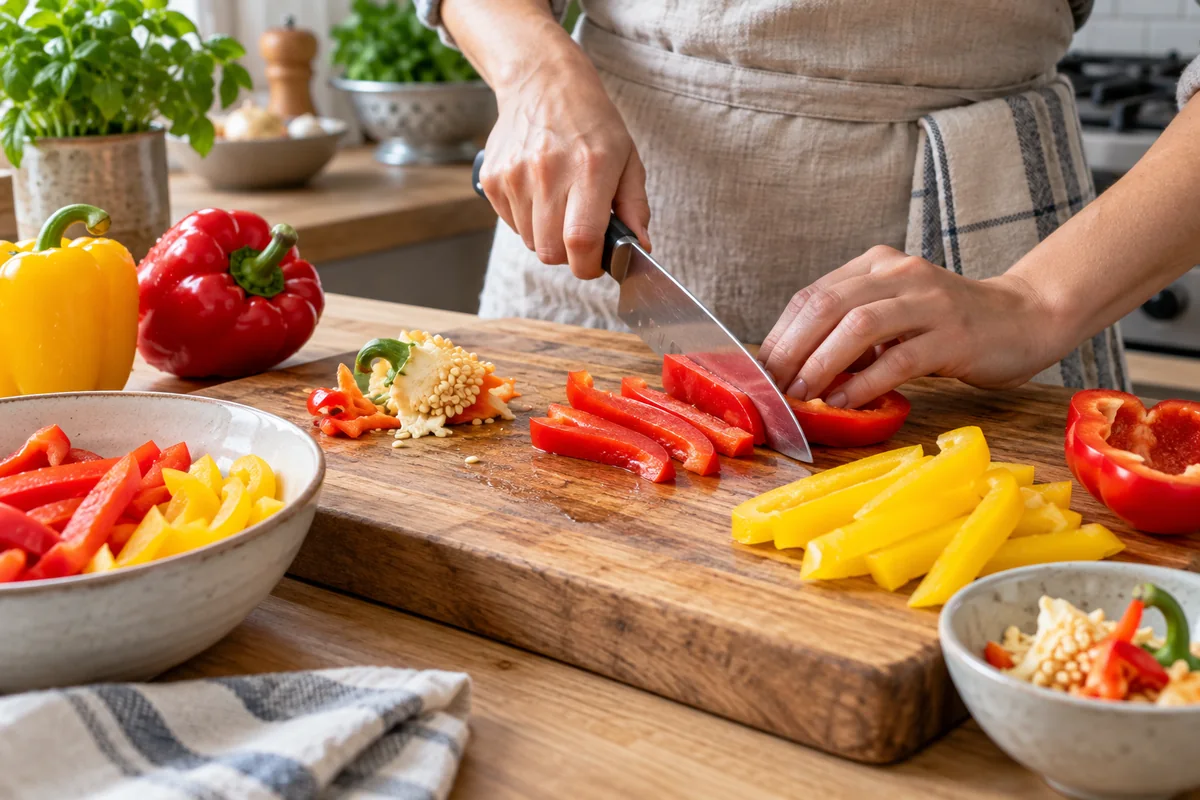
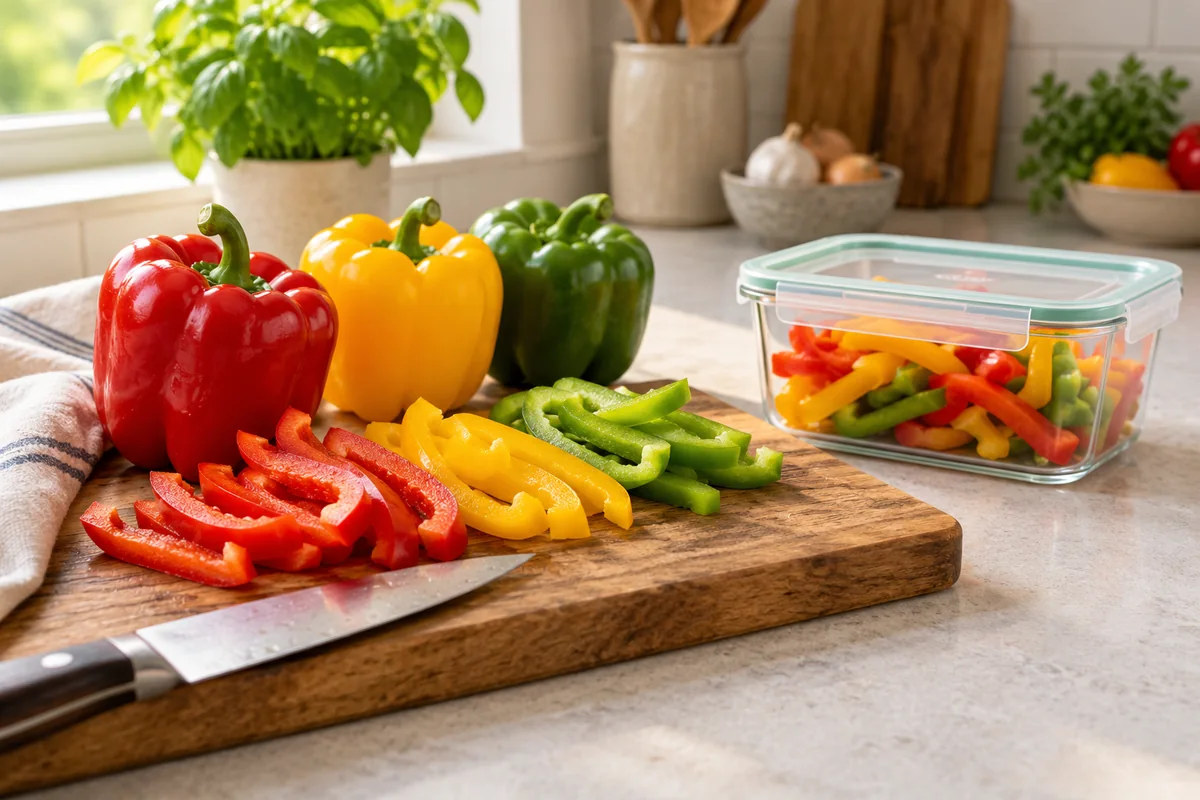
Remove the stem, core, seeds, and pale inner ribs. Cut peppers into strips, rings, or dice. Choose the shape based on the dish you will cook: strips for fajitas or a skillet, small dice for a sauce or soup. A useful portion may be only a handful, so you do not have to thaw a whole container for a small recipe.
Bell peppers can be frozen raw. The National Center for Home Food Preservation also gives an optional blanching method for peppers intended for cooking: three minutes for halves and two minutes for strips or rings, followed by prompt cooling and draining. This guide uses the simpler raw method. Raw-frozen peppers can be used in cooked foods and, according to the Center, retain a crisper texture than blanched-frozen peppers. Neither will have exactly the snap of a fresh pepper after thawing.
3. Tray-freeze if you want loose pieces
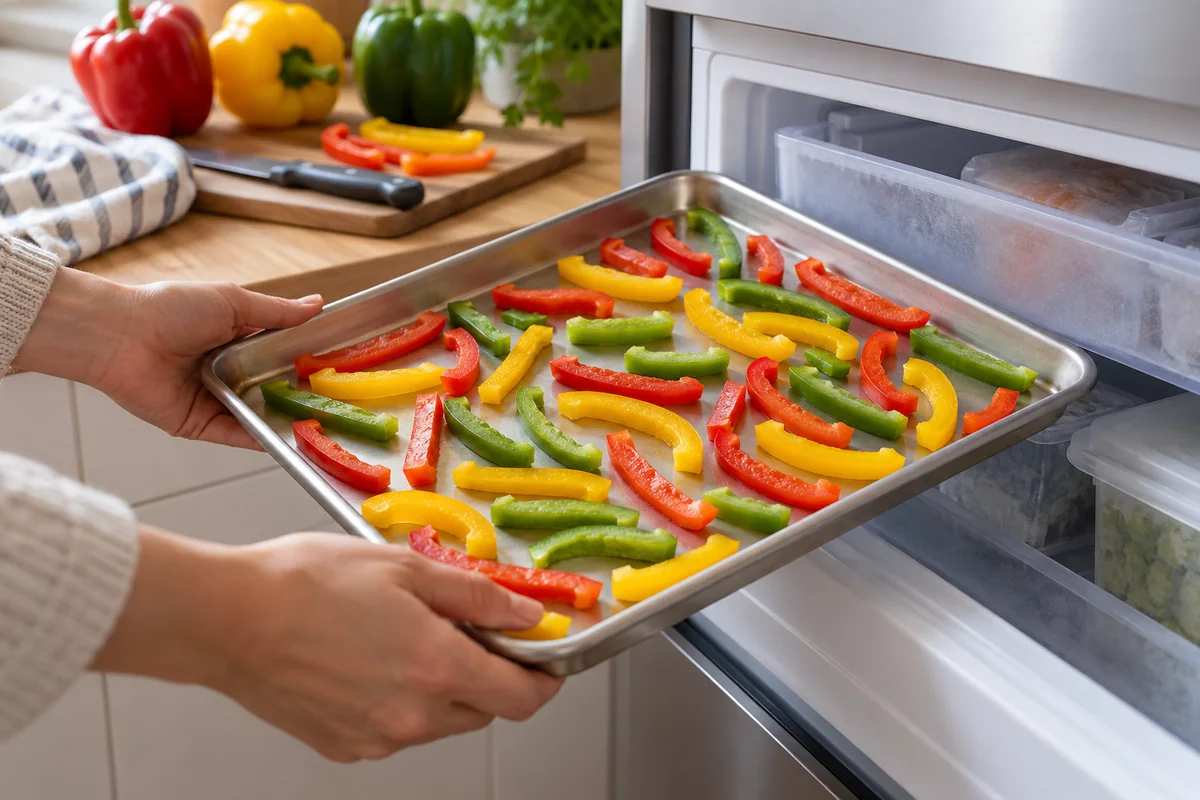
Spread the dry pieces in one layer on a clean metal tray that fits your freezer. Freeze until solid, then transfer promptly to a container. This optional step makes it easier to take out just a handful. If freezer space is tight, skip the tray and pack recipe-size portions directly; the pieces may stick together, but they will still be useful.
Do not leave the tray uncovered for days. Once the peppers are firm, package them to limit drying and freezer burn. The goal is a convenient ingredient, not a freezer full of forgotten trays.
4. Pack, label, and use from frozen
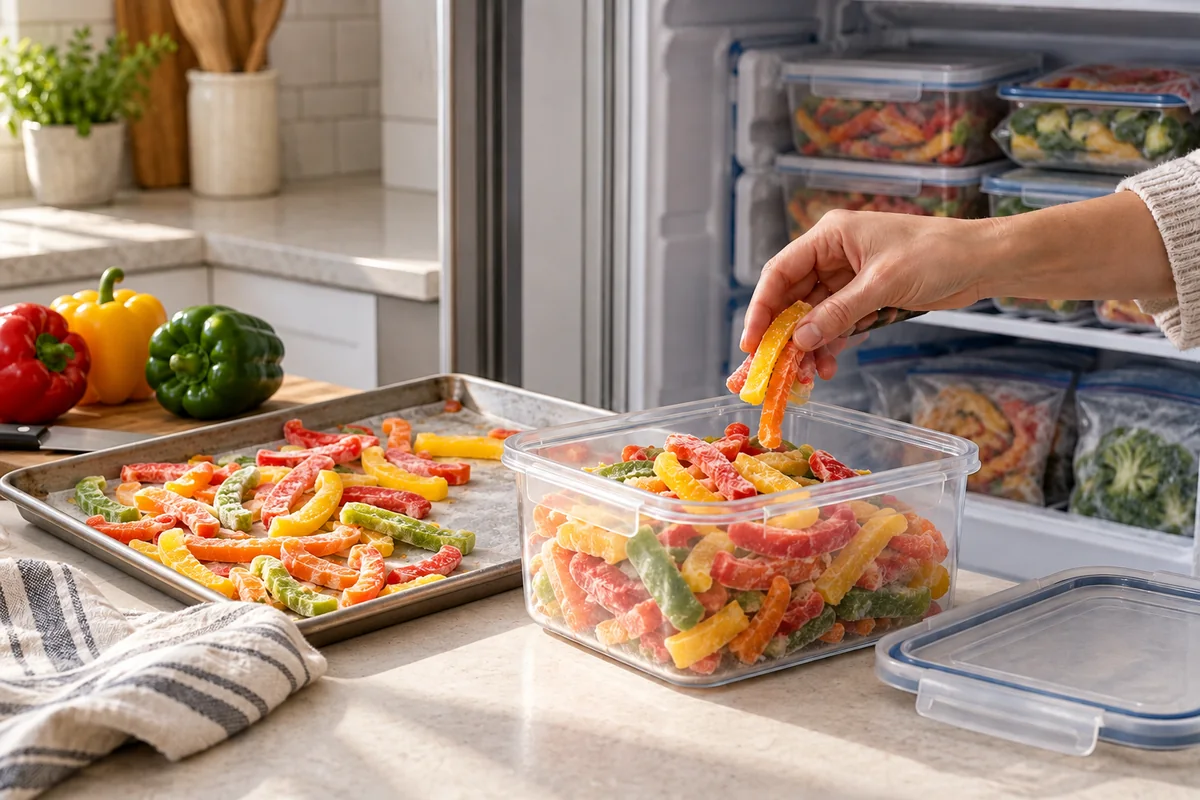
Move the frozen pieces into a clean freezer-safe container or bag you already have. Seal it well and limit empty air space. Mark the date and the cut shape on a removable label. Keep the freezer at 0°F (−18°C) or colder. At that temperature, frozen food remains safe while continuously frozen, but flavor and texture decline with time, so use the oldest portion first.
Add frozen strips or dice directly to a hot pan, soup, chili, pasta sauce, or cooked egg dish. Plan for a little extra moisture and cooking time. If you need crisp raw pepper for a salad or dipping, a fresh pepper is the better choice. For a broader rescue routine, see our fridge rescue plan for vegetables; to keep these portions visible, use our freezer organization guide.
What this saves—and what it does not
Freezing a pepper you already own can prevent a usable ingredient from spoiling and can make a quick meal easier later. It is most helpful when you choose portions that fit your actual cooking habits and check the freezer before buying more. It does not make moldy food safe, replace washing, or keep the texture identical to fresh produce.
Common questions
Do bell peppers need to be blanched before freezing?
No. The National Center for Home Food Preservation gives both raw and blanched methods for sweet bell peppers. Raw pieces are a convenient choice when you want to skip a boiling-water step.
Can I freeze a whole bell pepper?
Cutting, removing the stem and seeds, and portioning before freezing make later cooking easier. If you expect to need halves, prepare halves; if you usually need a handful of dice, cut them now.
Can I use frozen bell peppers in a salad?
Raw-frozen peppers may be crisper than blanched-frozen peppers, but freezing still changes texture. Try a small amount first if you want them uncooked; cooked dishes are the more predictable use.
Sources
- National Center for Home Food Preservation: Freezing Bell or Sweet Peppers — raw and blanched methods.
- Penn State Extension: Let’s Preserve — Freezing Vegetables — washing, blanching exceptions, tray freezing, and packaging.
- FoodSafety.gov: Cold Food Storage Chart — freezer temperature and the distinction between safety and quality times.