Yes, you can freeze cheese—but the better question is what you want it to do after thawing. A firm cheese that becomes a little crumbly can still be useful in a cooked meal. A soft cheese you wanted smooth on a cracker may disappoint. Freezing a few recipe-sized portions gives surplus cheese a job without turning the freezer into another forgotten storage place.
Quick answer: Freeze firm cheese while it is still in good condition. Grate it first if you expect to cook with it, divide it into amounts you will use, pack the portions well, and keep them at 0°F (-18°C) or below. Thaw only what you need in the refrigerator and use it soon, preferably in a cooked dish. Expect some texture change, especially in soft cheeses.
1. Choose cheese by how you will use it later
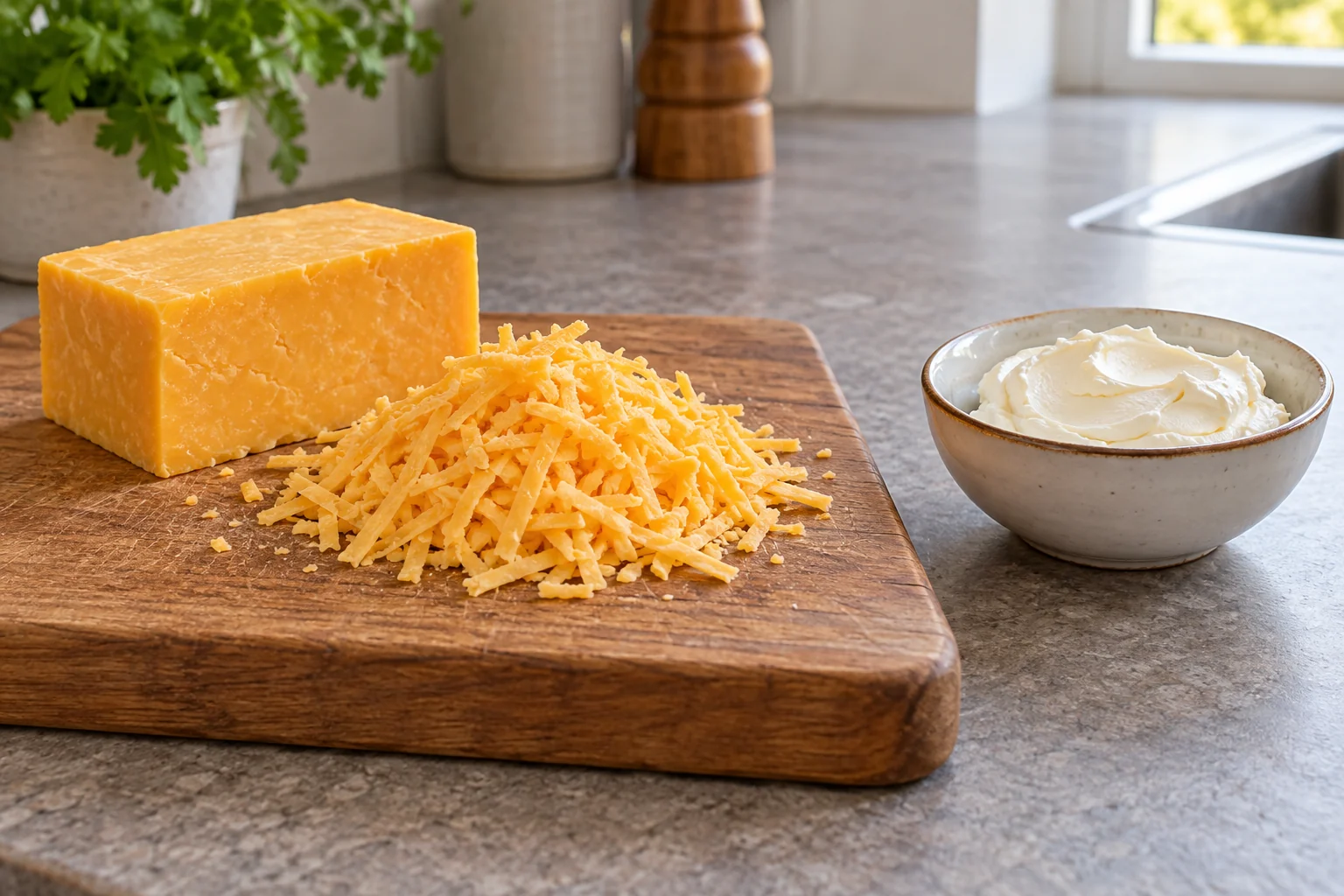
Start with cheese that has been refrigerated properly and is still good to eat. Freezing does not repair spoilage. Firmer varieties such as cheddar are practical candidates when you plan to melt, bake, or stir them into food. Oregon State University Extension notes that firmer cheese can be frozen but may become crumbly. That makes it less ideal for a neat cheese board and more useful in cooking.
Soft cheeses can also change texture on freezing. The OSU food storage guide describes soft cheeses becoming crumbly and suggests cooked uses where creaminess is less important. If you value a soft cheese for its smooth spread, use it fresh rather than assuming freezing will preserve that quality.
2. Grate and divide firm cheese into real meal portions
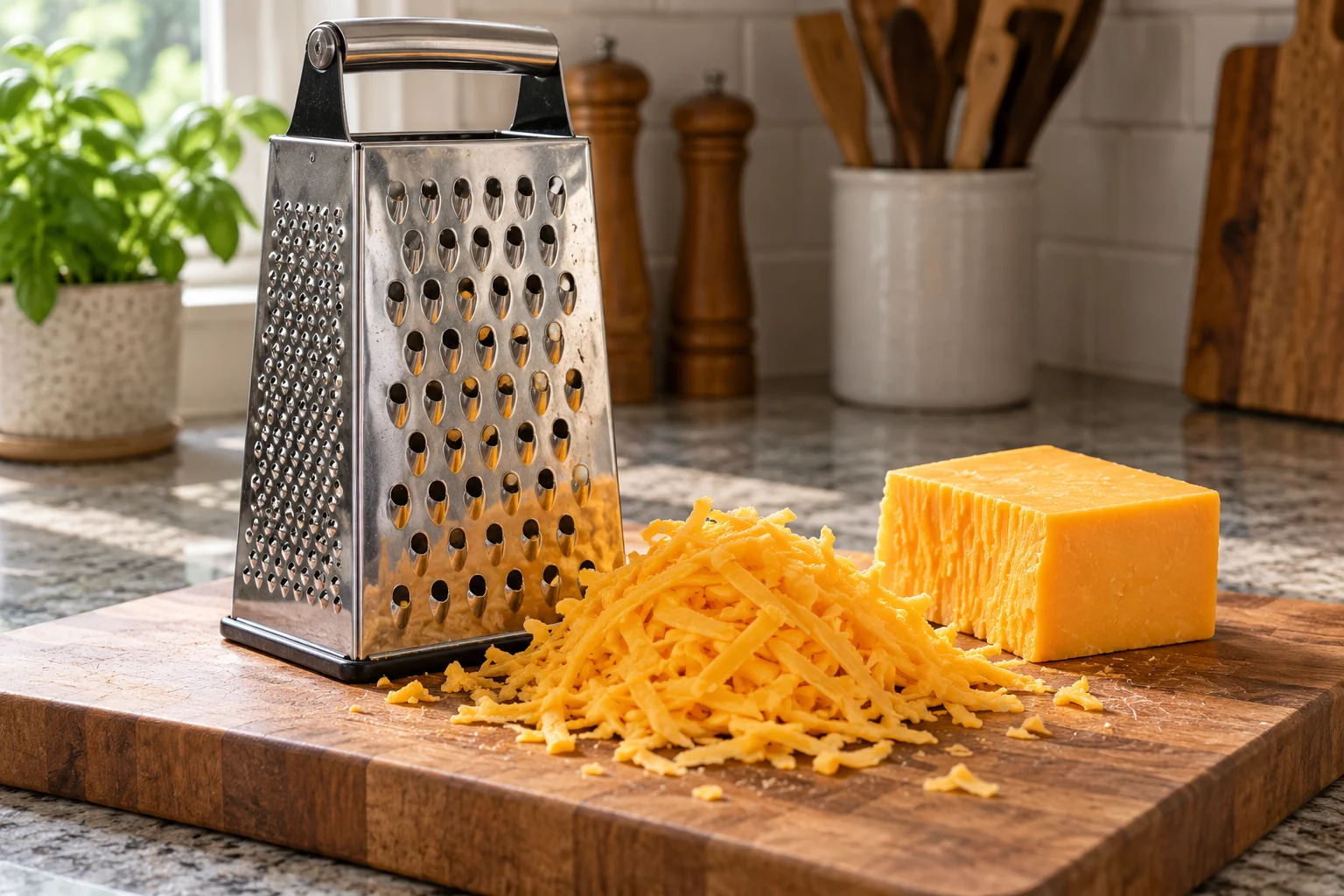
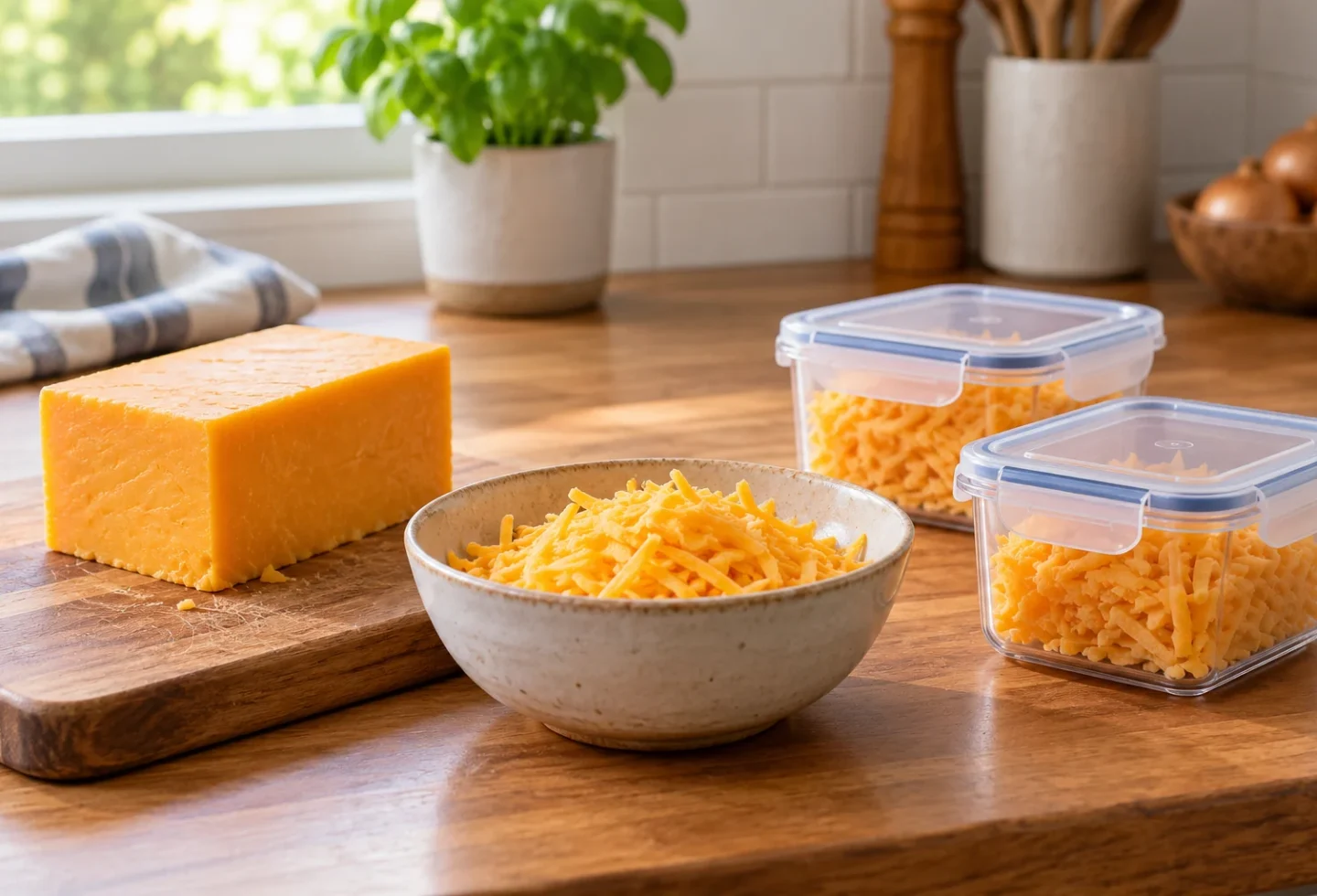
If the future use is pasta, eggs, soup, or a baked dish, grate the cheese now. Work on a stable board with a clean grater and keep your fingers away from the grating surface. Separate the shreds into amounts your household actually uses. OSU Extension recommends grating firmer cheese and dividing it into recipe-sized portions before freezing.
You can freeze a block if you need it that way later, but thawed cheese may crumble when sliced. Small portions also let you take out only what you need, instead of thawing and handling a whole block repeatedly.
3. Pack the portions and freeze promptly
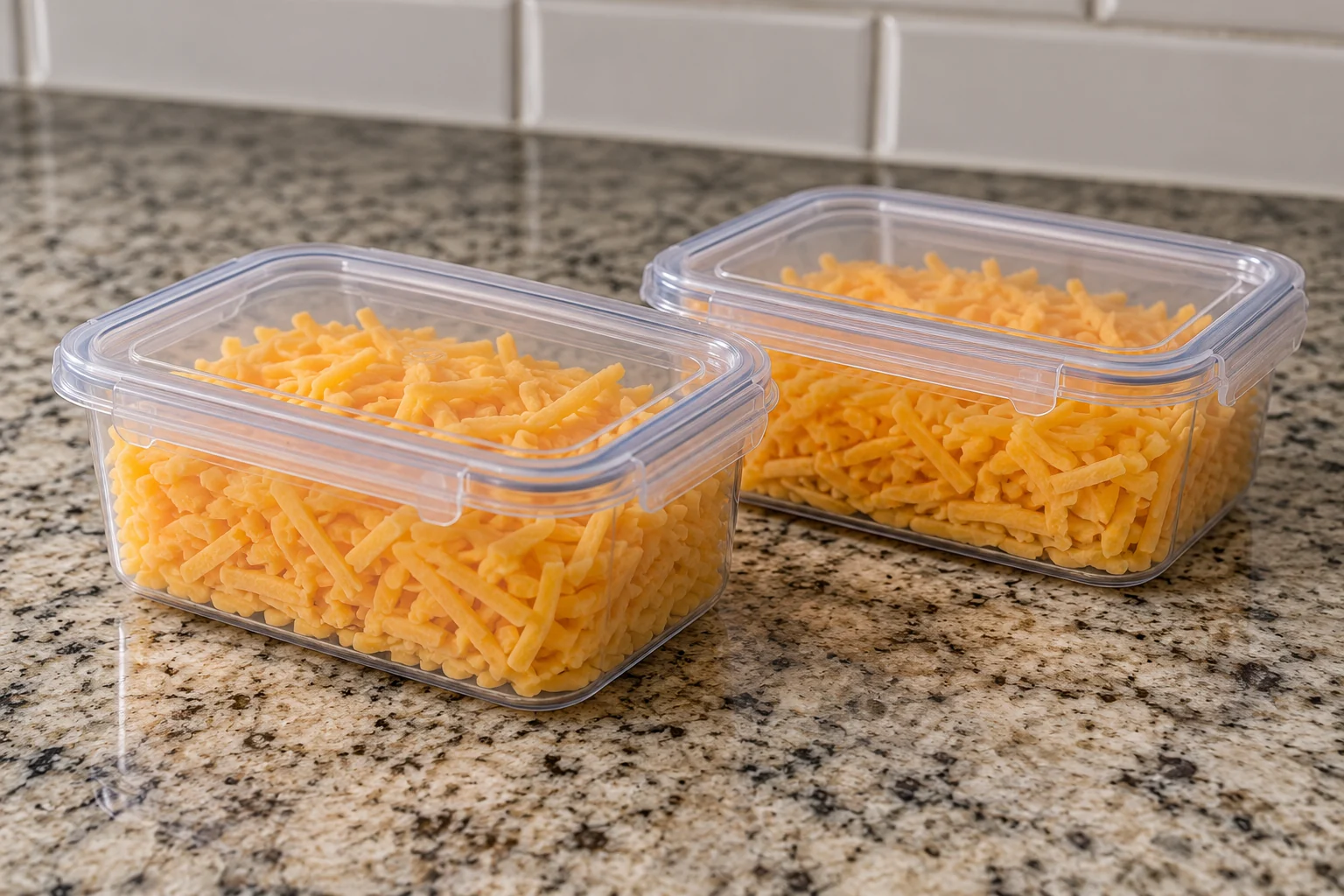
Use clean, freezer-safe containers or bags you already have. Pack each portion so little empty space remains, close it fully, and mark the contents and freeze date on a removable label. Spread newly filled portions in a single layer until frozen, then arrange them more compactly. The USDA explains that prompt freezing and good packaging help protect quality.
Keep the freezer at 0°F (-18°C) or below. The FoodSafety.gov storage chart distinguishes quality recommendations from safety: food held continuously frozen at that temperature remains safe, while texture and flavor can decline over time. Use your dated portions while they still suit the meal you planned.
4. Thaw only the portion you need in the refrigerator
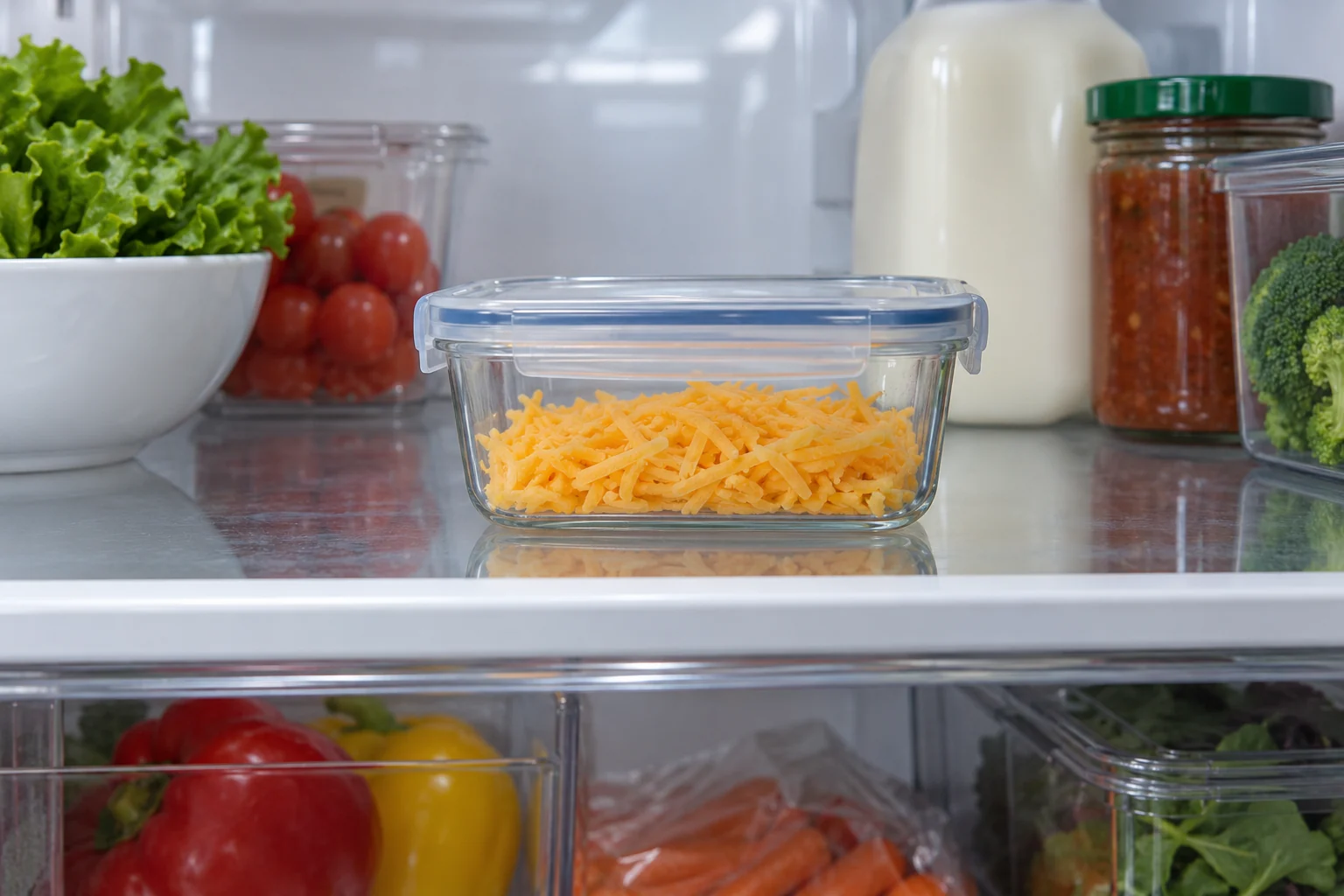
Move one closed portion to the refrigerator and let it thaw there. Do not leave cheese on the counter for hours to speed things up. The USDA lists refrigerator thawing as a safe method, and OSU Extension specifically advises thawing frozen cheese in the refrigerator and using it soon afterward.
If the cheese looks a little dry or crumbly after thawing, that can be a quality change rather than a reason to throw it away. If it smells off, shows unexpected mold, or was mishandled at unsafe temperatures, do not taste it to decide whether it is safe.
5. Use thawed cheese where its new texture works

Add the portion to an omelet, soup, sauce, or a vegetable bake. The goal is to match the cheese’s changed texture with a job where it still tastes good. Do not promise that a frozen-and-thawed slice will look and feel like a fresh slice; test one small portion before freezing a large supply.
If your freezer already holds several small ingredients, keep an easy inventory. Our freezer organization guide can help you use them before they disappear behind newer food.
Common questions
Can I freeze a whole block of cheddar?
Yes, but thawing may leave it crumbly. If you intend to cook with it, grating and portioning first is often easier.
Can I freeze cream cheese or ricotta?
They may be safe to freeze if handled correctly, but texture can change markedly. Plan for a cooked use where smoothness is less important, or use them fresh.
Can I thaw cheese on the kitchen counter?
Use the refrigerator for ordinary thawing. It keeps the cheese cold while the center defrosts.