A recipe asks for one spoonful of fresh ginger, but the market sells an entire hand. The rest can sit in the crisper until it wrinkles. Freezing the unused piece in the form you actually cook with gives it a clear next use.
Quick answer: Choose firm ginger, rinse it under running water, dry it well, and cut away any damaged spot. Freeze a small piece whole if you normally grate ginger, or portion it as slices or grated mounds. Pack it in a labeled, freezer-safe airtight container at 0°F (-18°C) or below. Add a portion straight to a hot dish; thaw in the refrigerator if a recipe needs a soft, measured amount.
1. Start with ginger worth saving
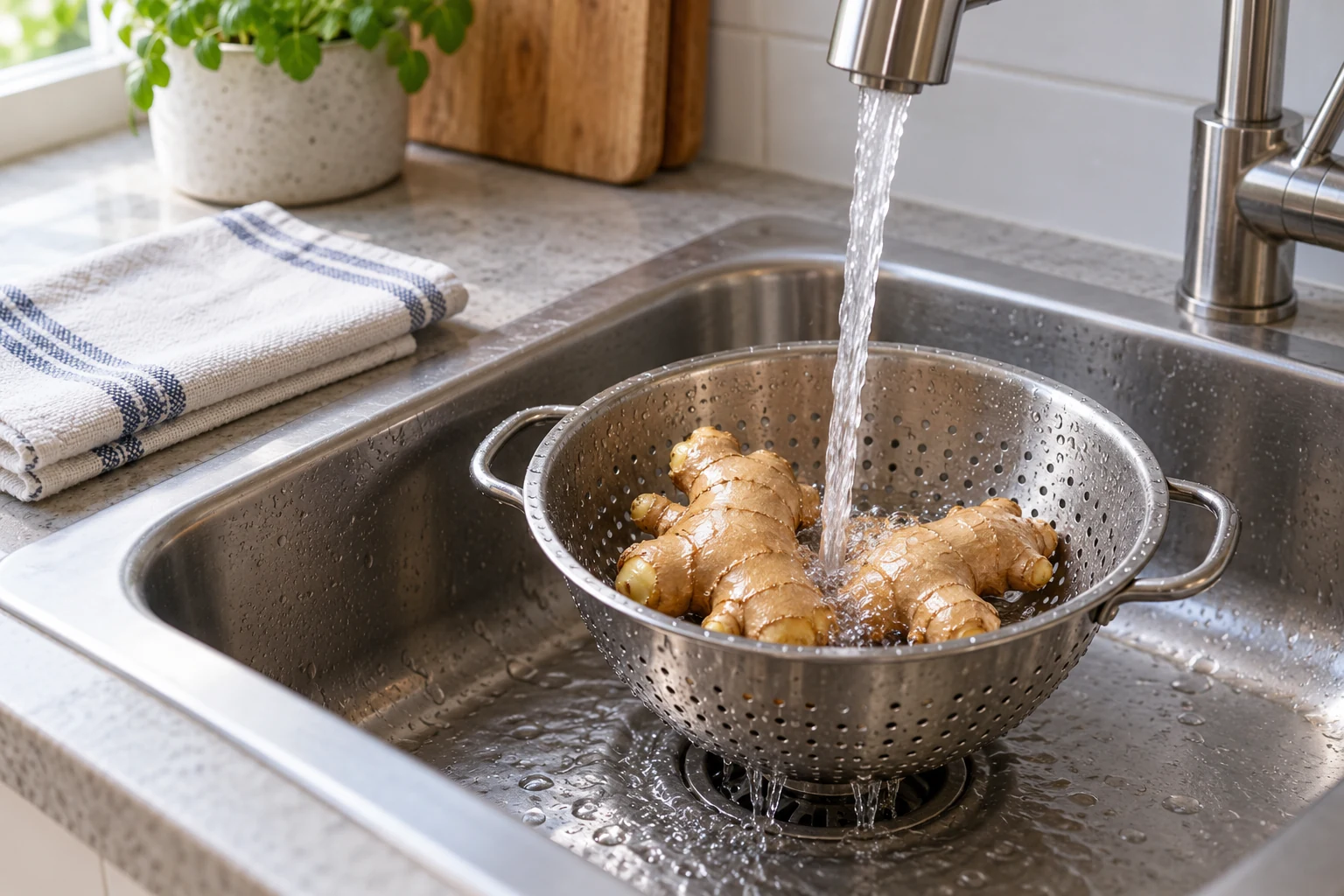
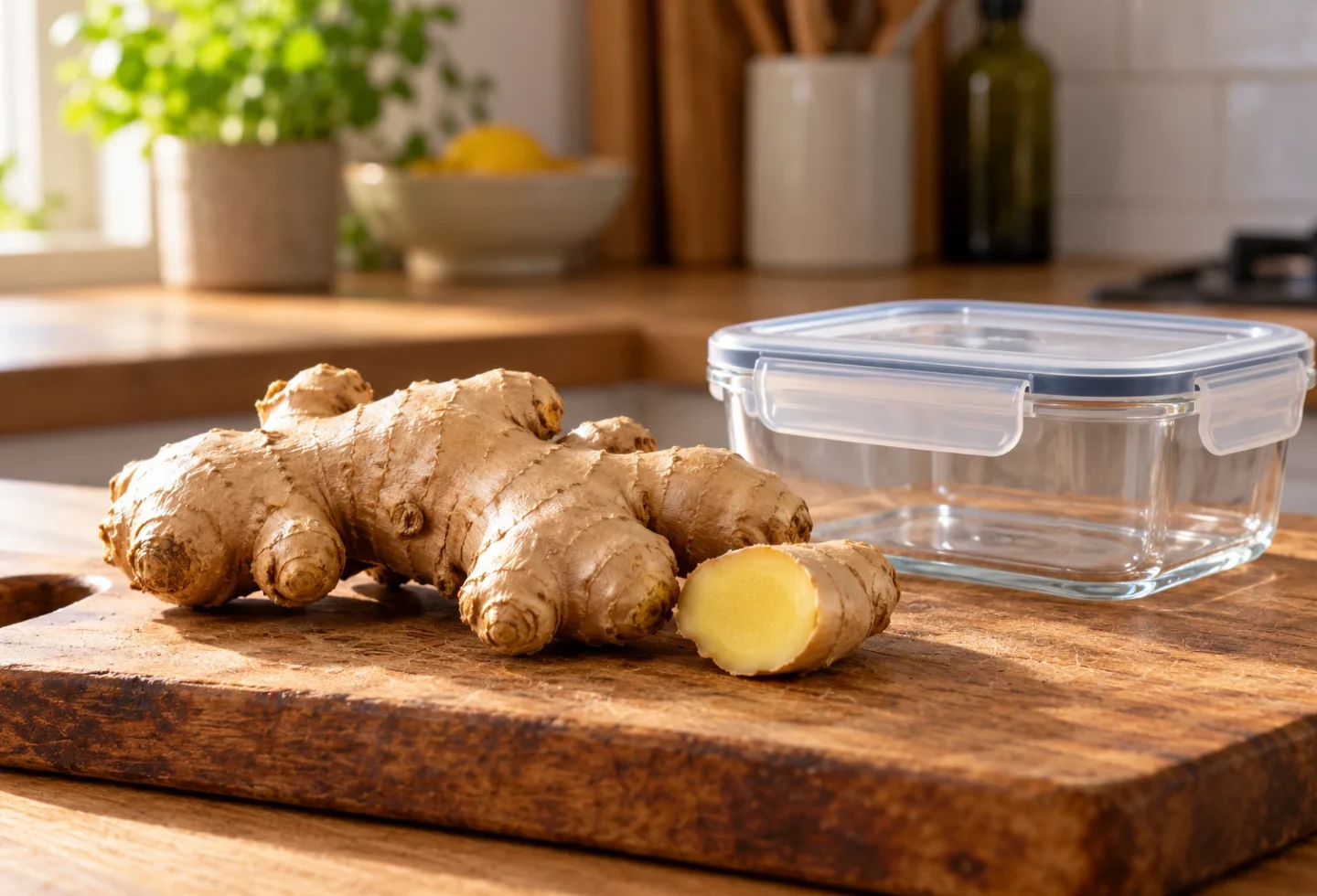
Pick a firm, fresh-looking piece. Do not treat freezing as a way to rescue moldy or rotten produce: the FDA advises discarding produce that looks rotten and trimming damaged or bruised areas before preparation. Wash your hands and work surface, rinse the ginger under running water even if you plan to peel it, then dry it with a clean towel. Do not use soap or produce wash.
If you expect to cook with the ginger soon, an unpeeled piece can stay in a storage bag in the refrigerator. UC Master Gardeners suggest using refrigerated unpeeled ginger within about two to three weeks and freezing or drying it for longer storage. Freeze the extra while it is still in good condition, rather than waiting until it softens.
2. Choose a portion you will actually use
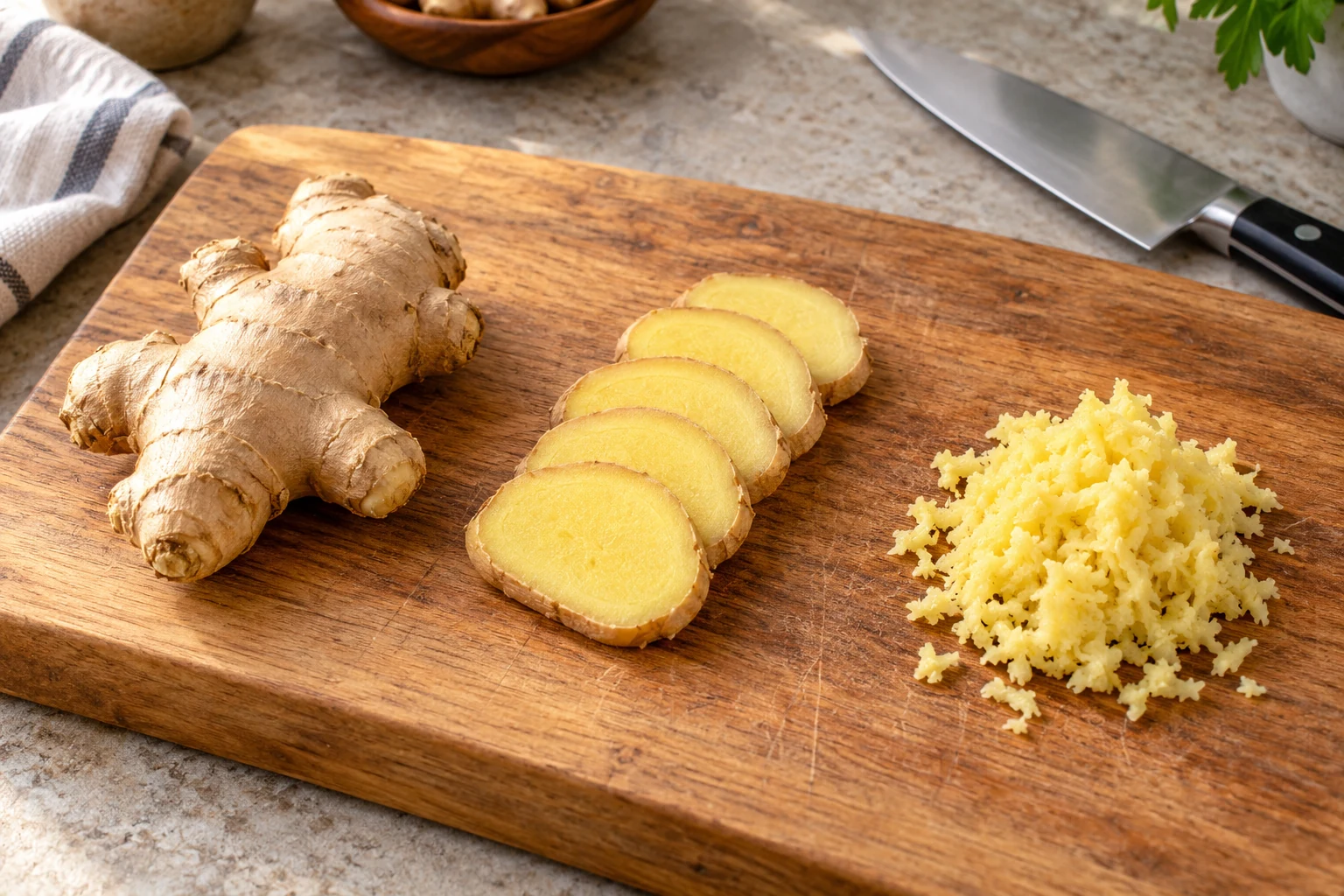
Whole: Break a large hand into smaller, recipe-sized knobs. This is the least prep. A frozen knob is firm enough to grate only what you need, then return the unused part promptly to the freezer. Peel first if you dislike bits of skin in the finished dish; otherwise wash the surface thoroughly before freezing.
Sliced: Cut pieces for tea, broth, or dishes where you want to remove the ginger later. Keep the slices fairly similar in thickness so a portion is easy to judge. A stable cutting board and a sharp knife make the job safer than trying to cut a rock-hard frozen knob.
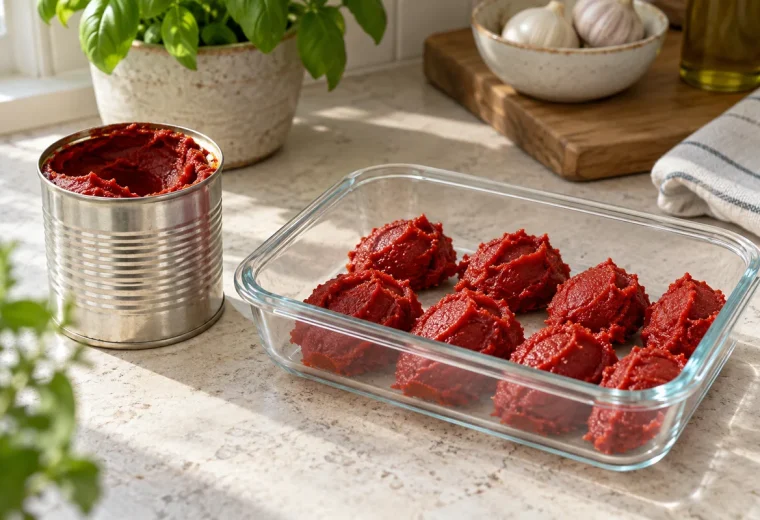
Grated: Grate the amount you normally add to one pan or pot and divide it into small mounds. This takes more effort today but saves work on a busy night. Use a clean spoon or grater and keep the mounds separate while they freeze.
3. Freeze separately, then pack airtight
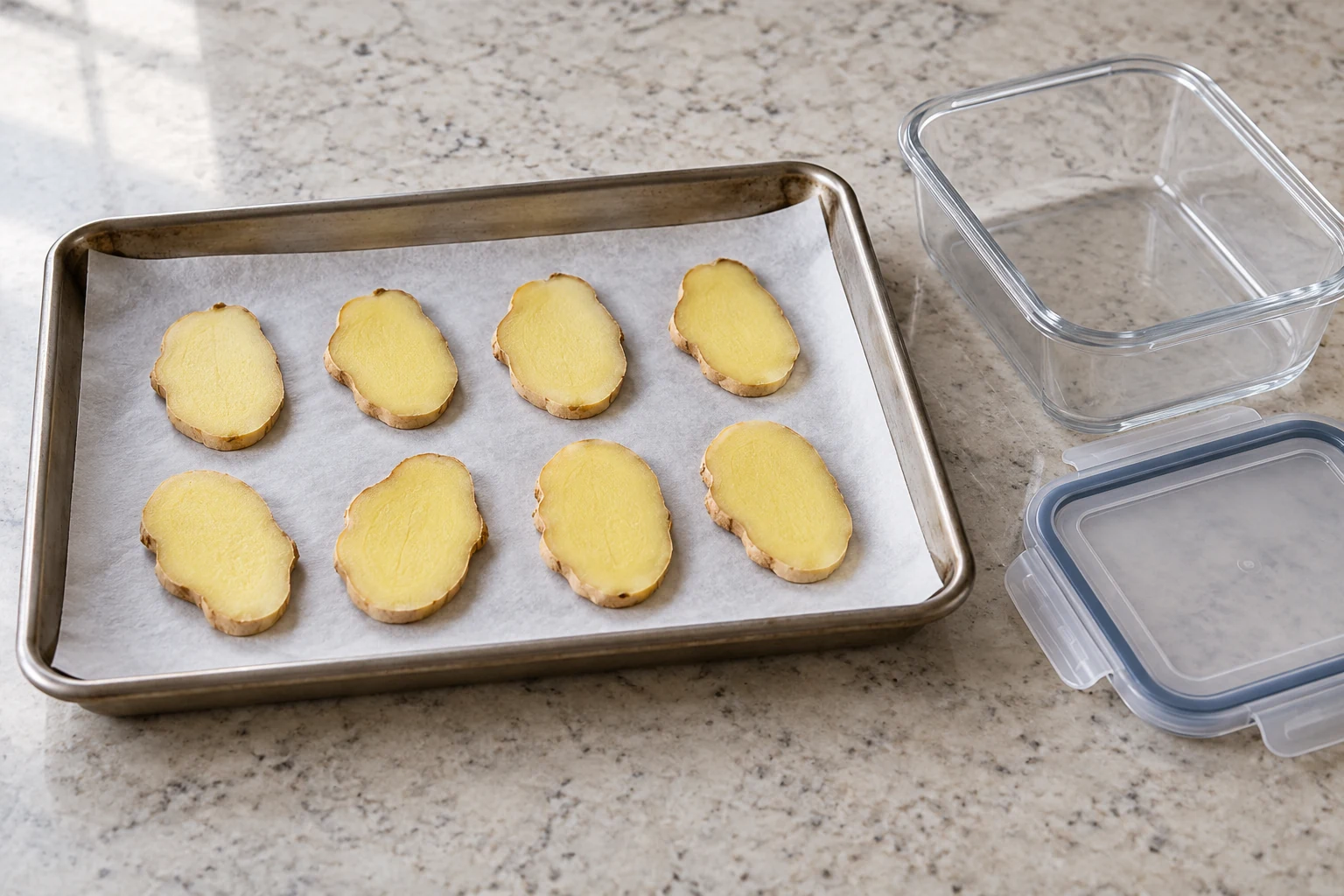
Place slices or grated mounds in a single layer on a small parchment-lined tray and freeze until firm. Transfer them promptly to a freezer-safe bag or rigid container with a tight-fitting lid. Whole pieces can go directly into suitable freezer packaging. Push out excess air where the package allows it, seal, and write “ginger” and the freeze date on a label.
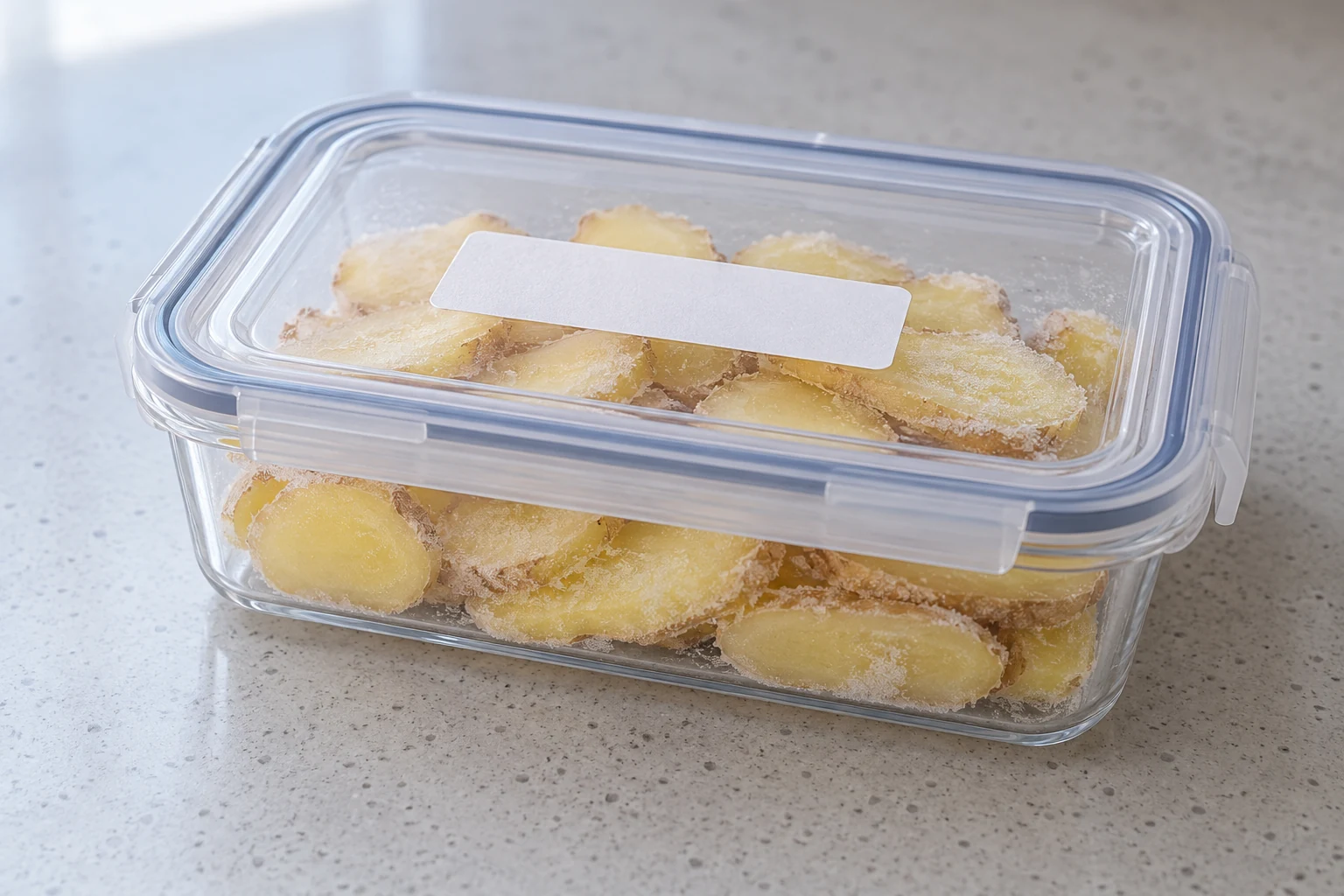
These packaging details matter. University of Minnesota Extension recommends airtight freezer packaging and removing excess air to limit freezer burn, which harms texture and flavor. Oregon State Extension recommends freezing produce quickly and holding it at 0°F (-18°C) or colder. Use a container you already own if it is suitable for freezing and seals well.
4. Cook with the form you froze
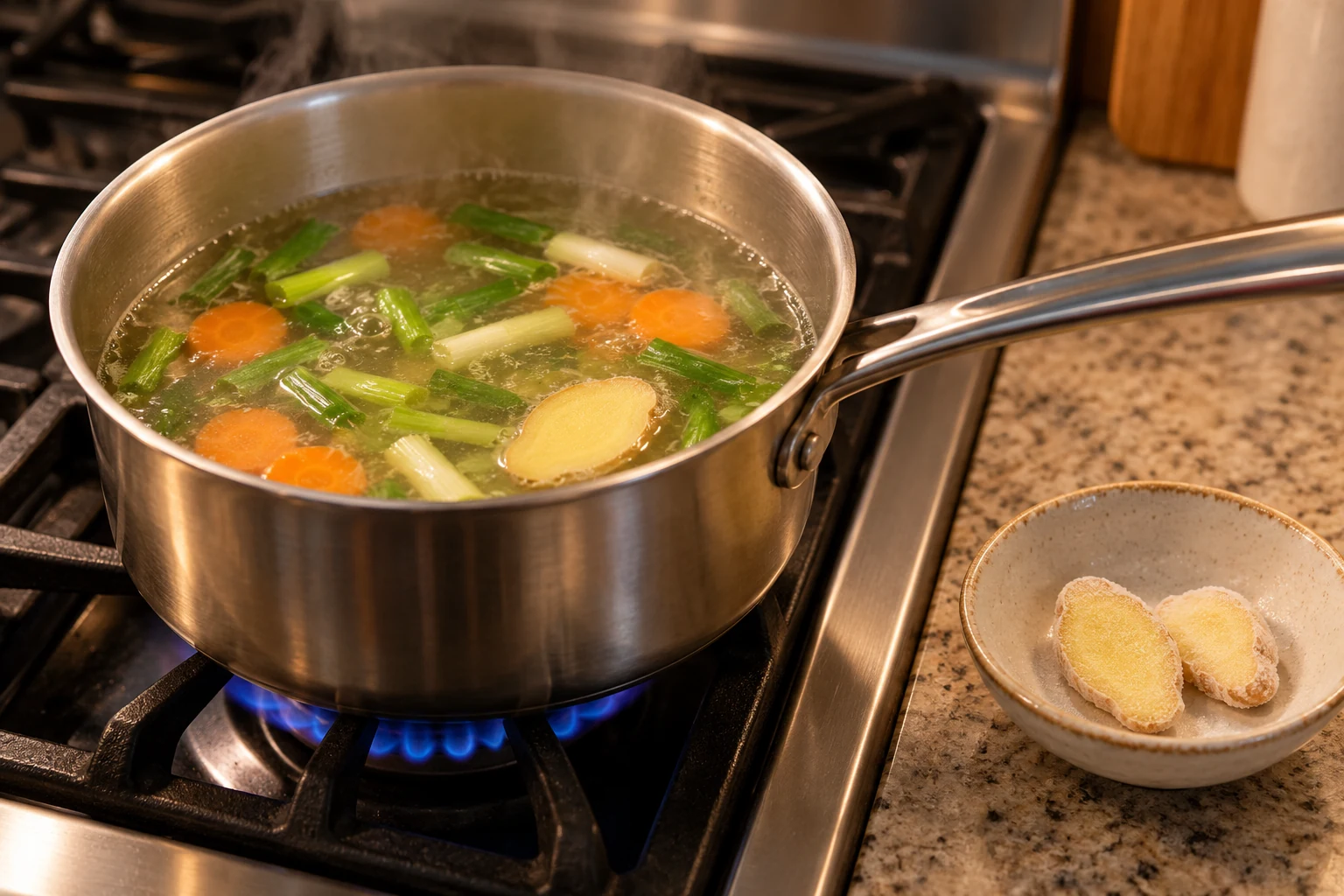
Drop a slice into a simmering broth or tea, or add a grated portion to a hot stir-fry, curry, or soup. For a cold dressing or a recipe that needs an exact spoonful, thaw just that portion in the refrigerator and use it promptly. Expect the texture of thawed ginger to be softer; freezing changes plant cell structure, as Illinois Extension explains for produce generally. For that reason, frozen ginger is most convenient in cooked or blended dishes.
Freeze only what you will realistically use. Illinois Extension notes that ginger can stay in the freezer for several months. Date the package and use the oldest batch first for the best flavor. Continuous freezing at 0°F (-18°C) protects safety, while storage time mainly affects quality; inspect and discard any ginger that was already spoiled before freezing or was handled unsafely.
Make this a small weekly habit
Before shopping, check whether you already have whole, sliced, or grated ginger in the freezer. Buy only the amount your recipes call for, and choose the same form next time if you used it easily. If you often freeze small ingredients, our freezer organization guide can help you keep the dated package visible.
Common questions
Do I need to peel ginger before freezing?
No fixed rule is needed for home cooking. Wash it first. Peel before freezing if you want skin-free slices or grated portions; leave a whole piece unpeeled if you normally grate it that way and the surface is clean.
Can I freeze grated ginger?
Yes. Freeze small separate mounds until firm, then seal them in a freezer-safe container. That makes it easier to take one portion without thawing the rest.
Should I thaw ginger before cooking?
Usually not for hot dishes: slices and grated portions can go straight in. Thaw a single portion in the refrigerator when you need it for a cold recipe or precise measurement.