When clean dishes still have tiny food flecks or a gritty film, the dishwasher filter is worth checking. It catches debris that would otherwise circulate, and a clogged removable filter can interfere with cleaning. But the filter is only one possible cause: blocked spray arms, poor loading, detergent, and water problems can also affect results.
Start here: find your model’s manual and confirm whether it has a removable filter that you are meant to clean. If it does, let the machine cool, remove the lower rack, take the filter out exactly as the manual shows, rinse it under running water, use a soft brush if needed, and lock it back in place. Do not run the dishwasher with a removable filter missing or loose.
First, check what kind of filter your machine has
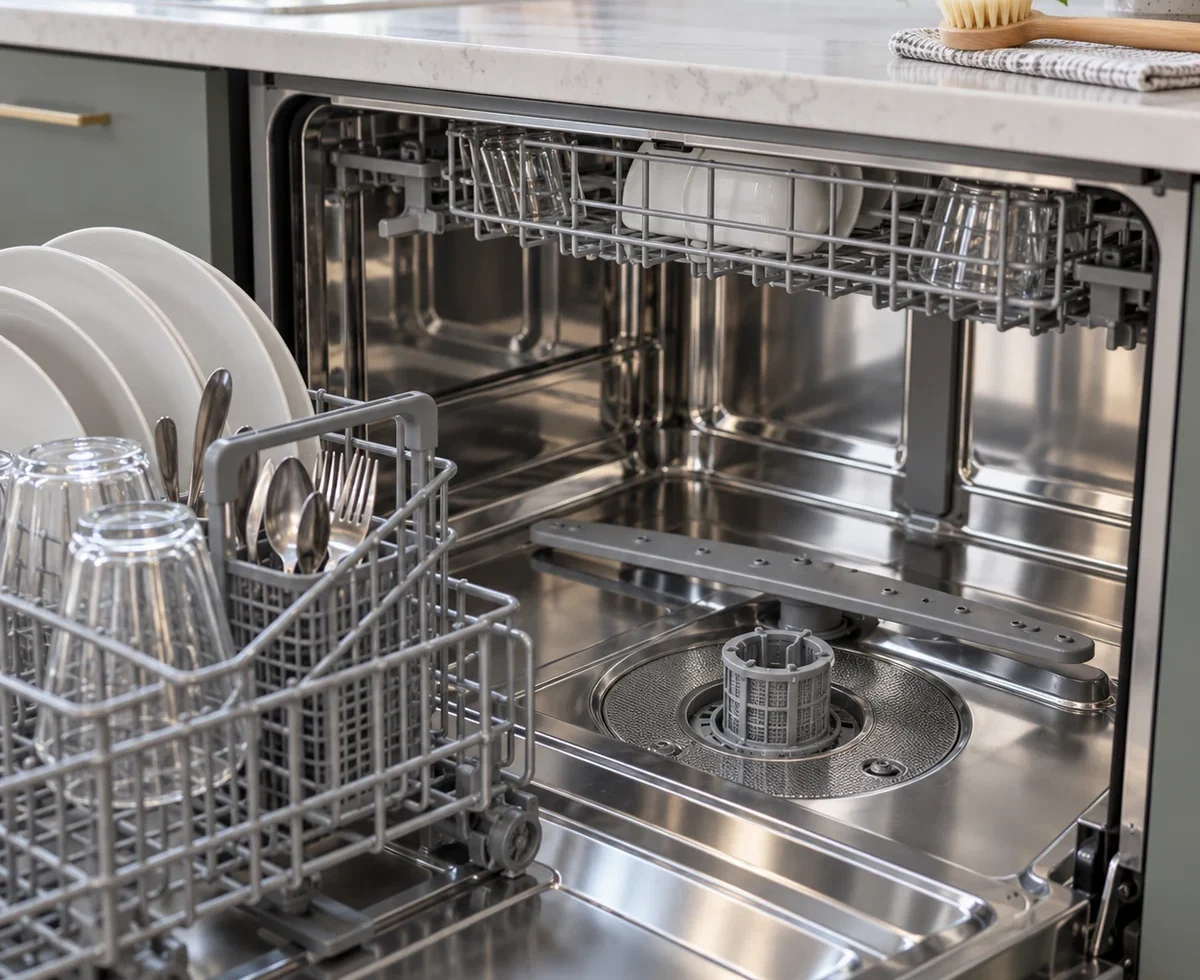
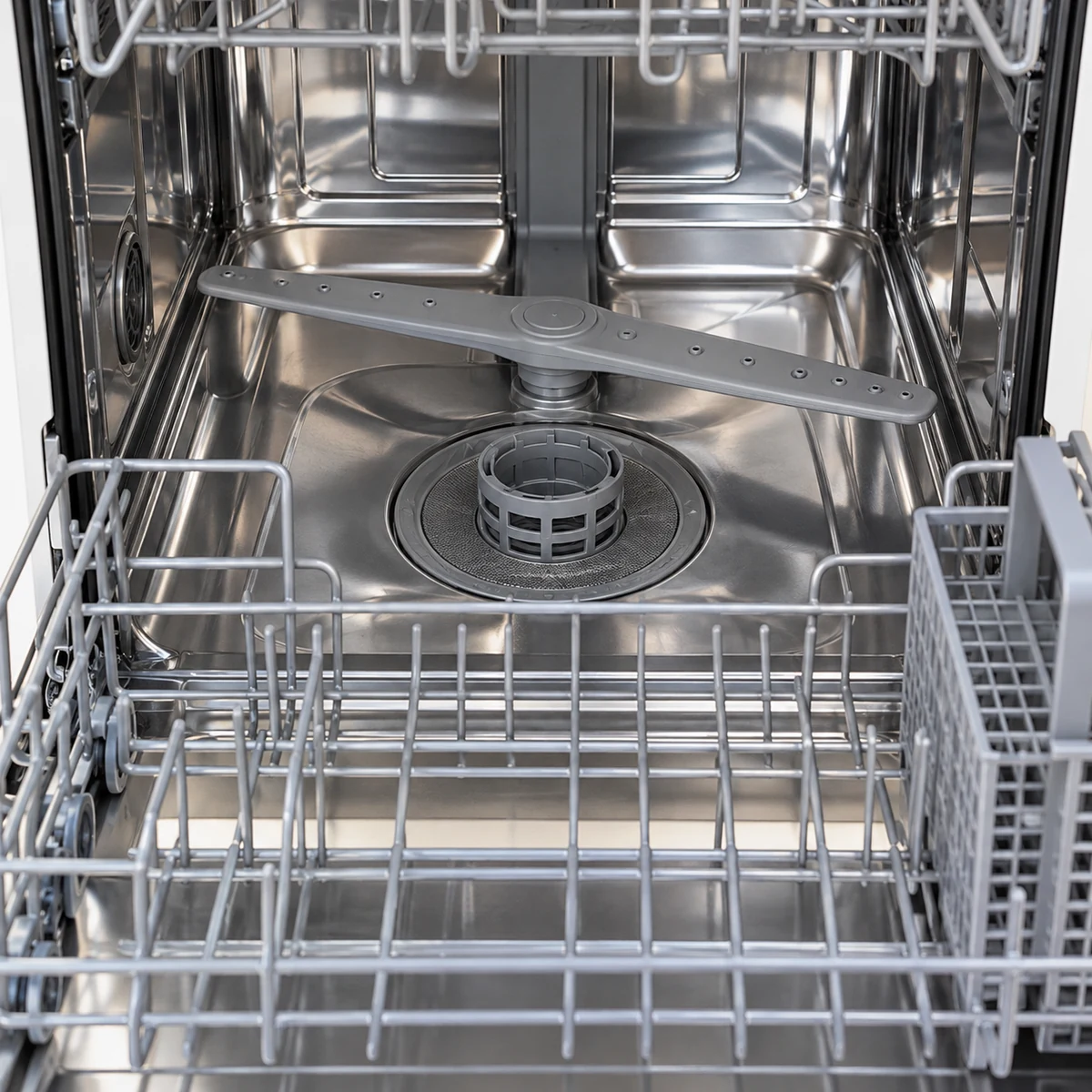
Many dishwashers have a removable manual-clean filter near the base of the tub, but some use self-cleaning filtration or a different assembly. The location, twist direction, and number of pieces vary by model. Look up the model number on the door edge or rating plate and follow that appliance’s owner guide. If the guide does not tell you to remove a part, do not force it.
This check matters more than a universal “quarter turn” instruction. Whirlpool and GE both note that filter designs differ. A picture of another brand’s filter can help you recognize the general area, but it should not replace your manual.
Get ready without buying a cleaner
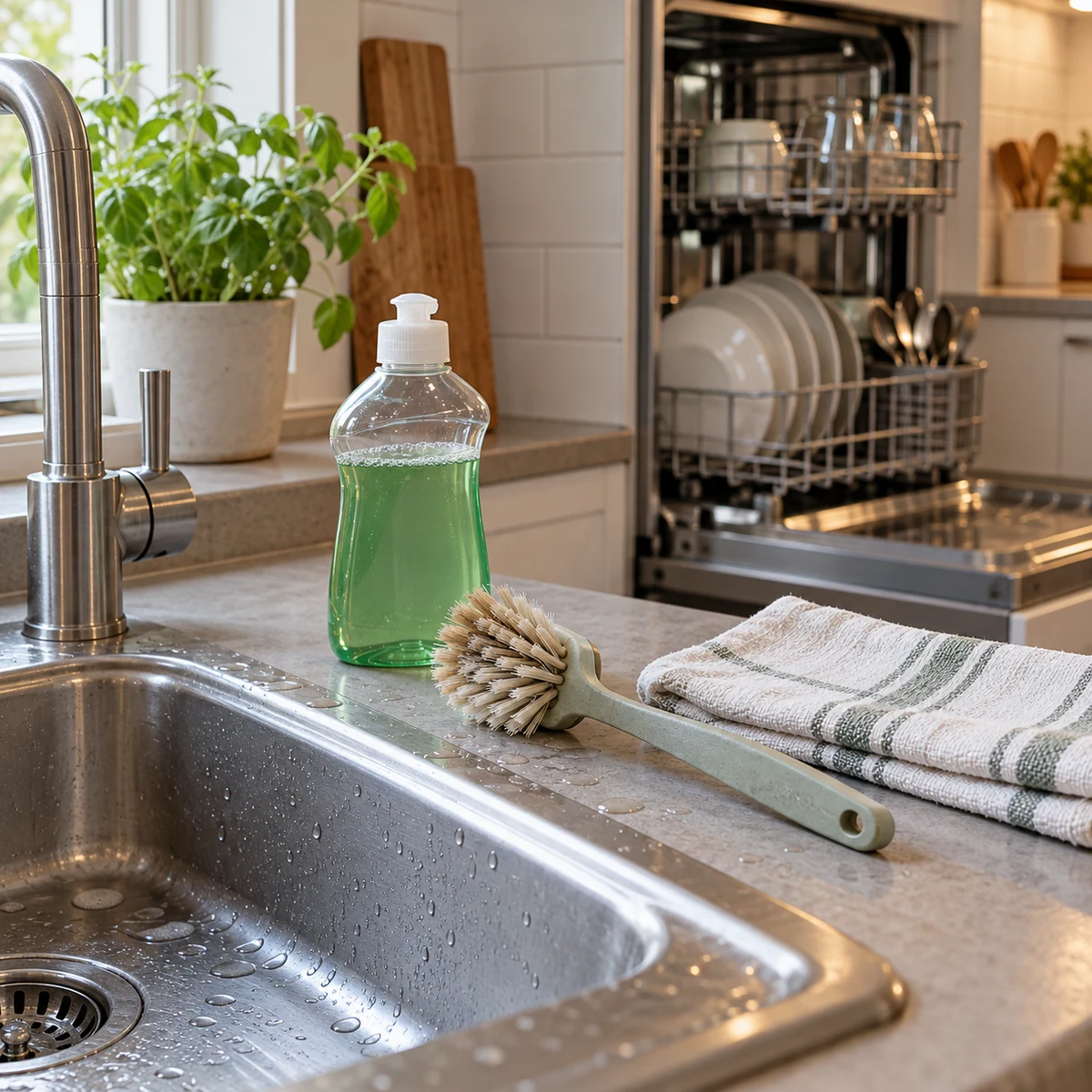
Set a soft brush or an old clean toothbrush by the sink. You may also need mild dish soap if the maker recommends it for greasy residue. Clear and scrape large scraps from the dishes before future loads; that helps keep food from collecting in the filter. Wait until the dishwasher and its water have cooled. Remove the lower rack so you can see the filter area clearly.
If you find standing water, broken glass, a sharp object, or an error message, pause and follow the model’s troubleshooting instructions. Do not reach into hidden pump parts or try to force a jammed filter. A routine filter rinse is different from pump repair.
Remove the filter the way your manual shows
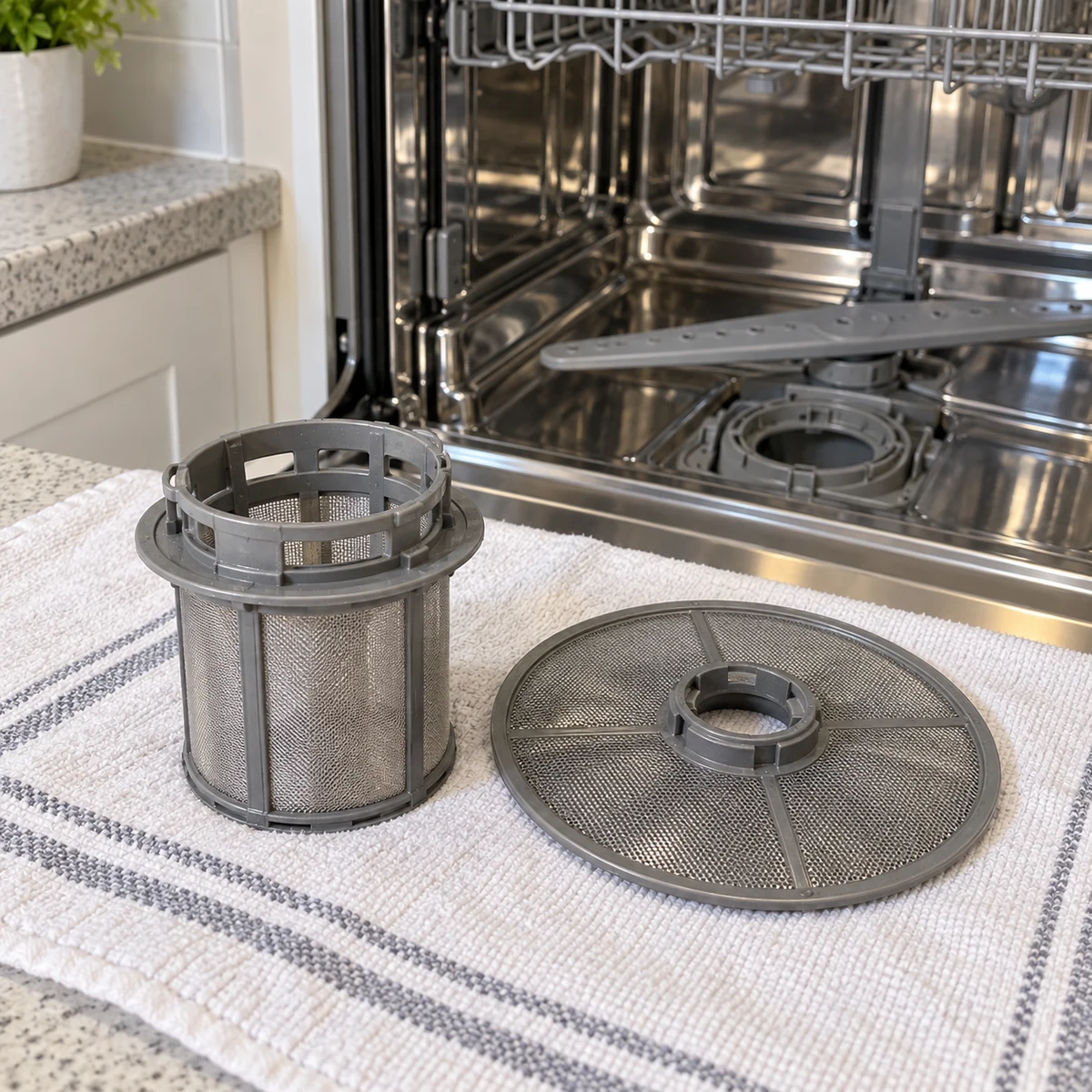
With the lower rack out, identify each removable piece in your manual. Some systems have a cylindrical upper section and a flat lower screen; others are different. Hold the designated grip, turn only in the direction specified, and lift gently. Place the parts in the sink in the order you removed them so reassembly is easy.
Look at the open filter well for loose, visible food bits, but avoid pushing debris farther into the drain. Do not put your fingers into a pump opening. If there is a large or sharp object, use the manufacturer’s directions or get service help rather than guessing.
Rinse gently, then inspect the mesh
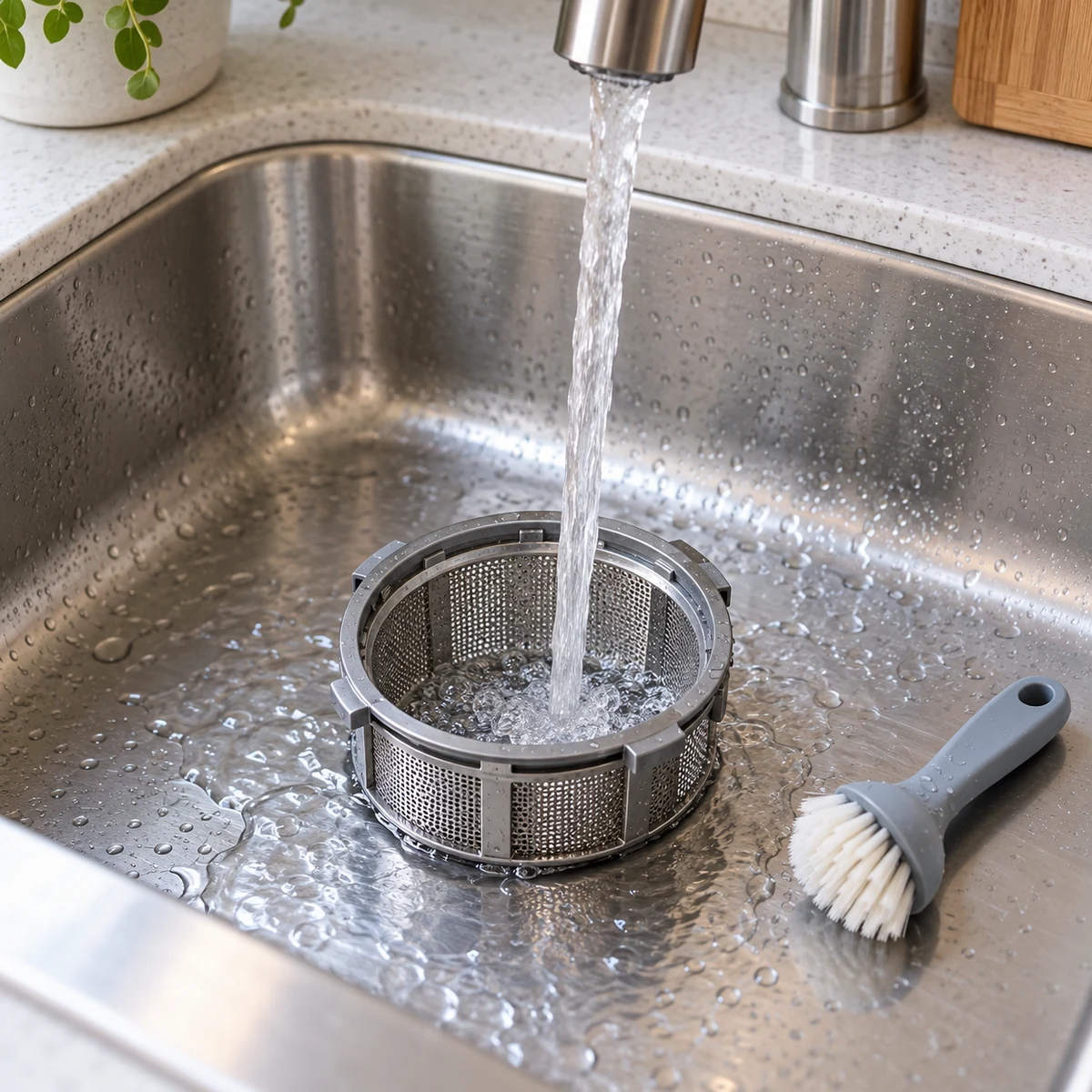
Rinse the removable filter under running water to loosen food particles. If residue remains, use mild soap if your manual permits it and a soft brush to clean the mesh and frame. Avoid wire brushes, scouring pads, and aggressive scraping; Whirlpool warns that these can damage the filter. Rinse away soap and debris. Check for torn mesh, cracks, or pieces that no longer fit securely.
Cleaning a filter does not require an empty hot cycle with vinegar or a special tablet. Those are separate whole-machine cleaning questions and should follow your appliance’s instructions. For a removable filter, start with the simple rinse the manufacturer describes.
Reinstall it securely before the next load
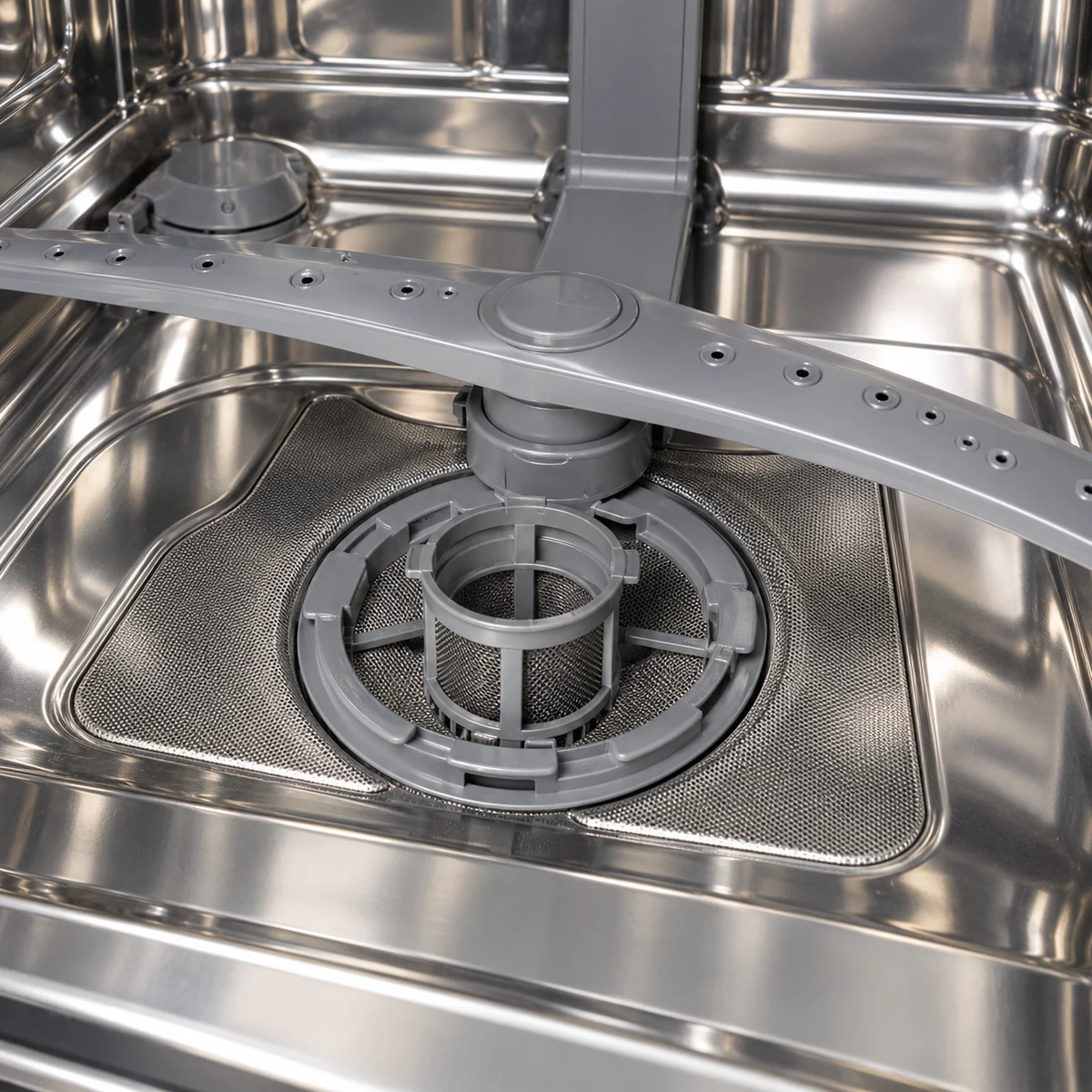
Put every part back in the order and orientation shown in the manual. Make sure the lower screen sits flat and any upper assembly locks into its intended position. Whirlpool cautions against operating a dishwasher without its filters correctly installed. Slide the rack back in and check that it moves freely.
On the next normal load, scrape off large scraps and leave space between dishes so the spray arms can turn. If dishes are still gritty after a correctly cleaned and reinstalled filter, check the manual’s guidance on loading, spray arms, detergent, and water supply. A continuing drainage problem or damaged filter calls for model-specific service advice.
When to check it again
Use the schedule in your model’s manual. Check sooner if you notice visible food debris, grit on dishes, odor from trapped scraps, or slower draining. A household that scrapes plates well may need a different cleaning frequency from one that regularly loads food-coated dishes. Bosch suggests checking its filters every few months, but that is not a universal schedule for every dishwasher.
Make the maintenance step easy to remember: inspect the filter while putting away a clean load, when the machine is cool and empty. A quick look can tell you whether a full rinse is needed. For another small appliance reset, see our guide to cleaning a microwave with a reusable cloth. If the kitchen smells stale, our source-first odor guide may help you find the cause.
Questions people ask
Does every dishwasher have a filter I should remove?
No. Filter designs and maintenance requirements vary. Use the model manual to identify any removable parts and the correct cleaning method.
Can I run the dishwasher with the filter out?
Do not run a model that requires its removable filter to be installed until every part is back and secured as the manual directs.
Will cleaning the filter fix gritty dishes?
It can help if trapped debris is the cause. If grit remains, look at loading, blocked spray arms, detergent, and water-related troubleshooting for your model.
Sources
- Whirlpool Product Help: How to Clean the Dishwasher Filters — removable versus self-cleaning types, gentle cleaning, and correct reinstallation.
- Bosch Owner Support: How to Clean Your Dishwasher Filter — model manual, rinse, mild soap, and soft brush.
- GE Appliances: How to Clean Fine and Ultra Fine Filters — model-specific filtration differences.
- Bosch Owner Support: Dishwasher Not Cleaning Dishes — other reasons for poor wash results.