A weekly low-waste home reset is a short, repeatable check before the next round of shopping and household chores. Look at the food you already have, put reusable supplies back where you will take them, and move one outgoing item to its next destination. You do not need to deep-clean the house or complete every task on a long checklist.
The routine works best when it is tied to something you already do, such as making a grocery list. Start with the parts of your home that create avoidable waste for your household. Skip steps that do not apply, and keep the version you can repeat next week.
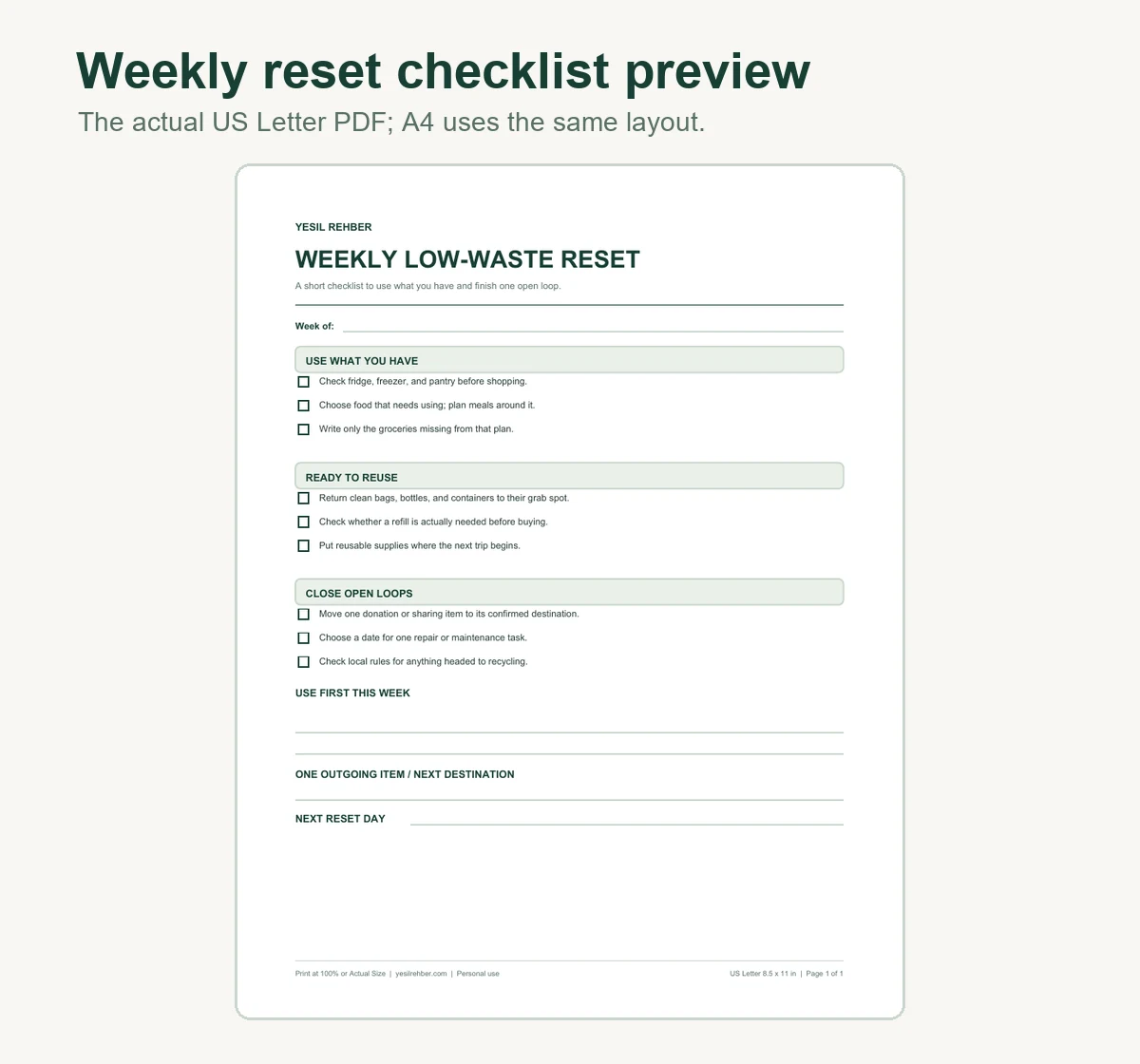
Free Weekly Reset Checklist
Print this one-page checklist to use what you have, prepare reusables, and finish one open task. Choose your paper size and print at 100% or Actual Size.
Why a weekly reset helps
Waste often begins with a small missed handoff. Food gets pushed to the back before anyone plans a meal around it. A reusable bag is still in a closet when the next shopping trip starts. An item marked for donation sits in the hallway because nobody chose a recipient. A weekly check catches these gaps while the next decision is still easy to make.
This is a coordination routine, not an attempt to count every wrapper or make the house perfect. The U.S. Environmental Protection Agency recommends looking in the refrigerator, freezer, and pantry before shopping and making a weekly list of food to use. That advice gives the reset a useful starting point. The rest of the checklist makes sure the same “use what you have” principle reaches bags, containers, and household items.
Choose a repeatable moment
Place the reset just before the activity it supports. If you buy groceries on Saturday, a Friday evening check may work. If your household shops at different times, attach the check to the moment someone writes the list. The exact day is less important than seeing what is on hand before you decide what to bring home.
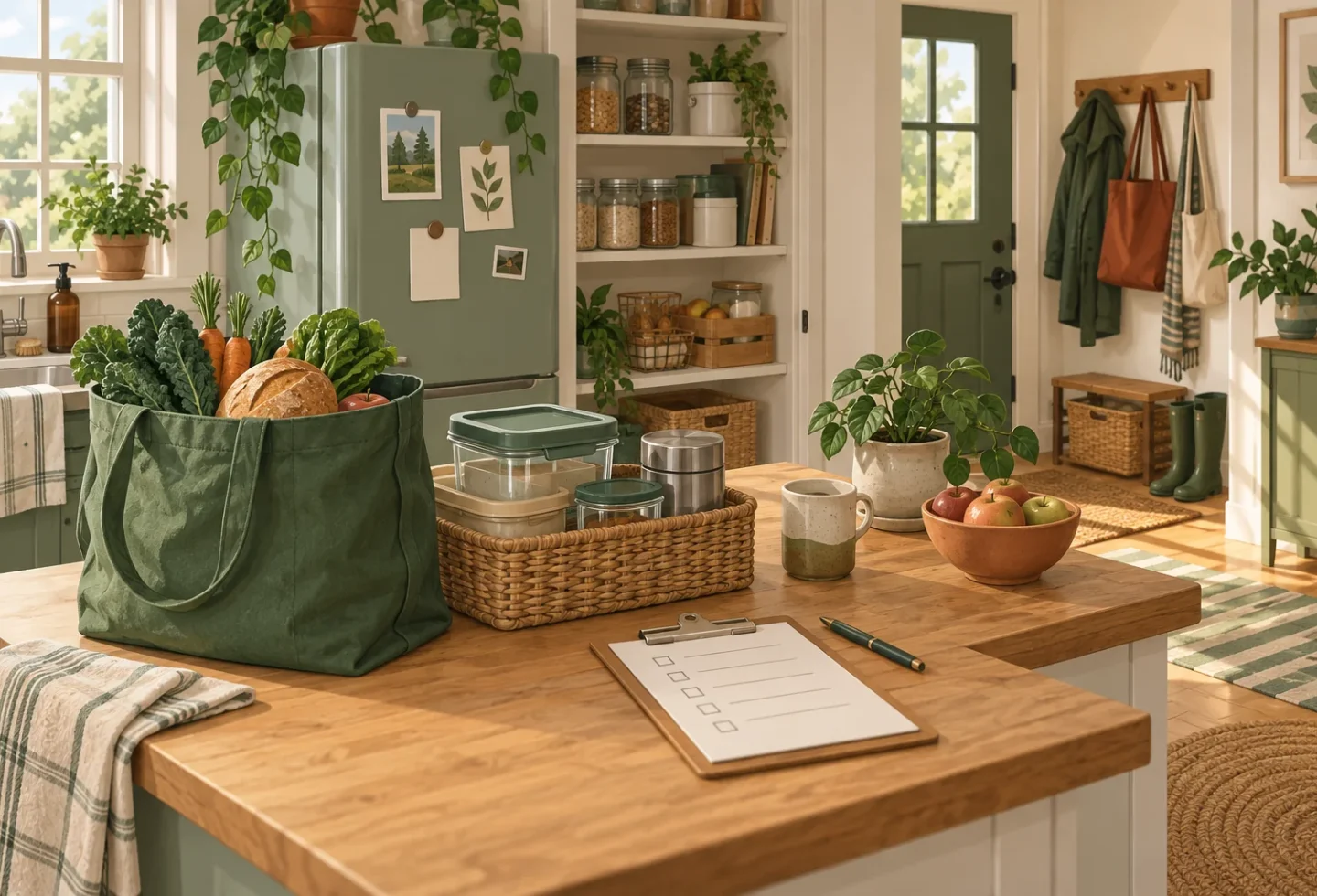
Keep the checklist where the work happens: on a clipboard near the kitchen, inside a cabinet door, or as a note on your phone. Gather a pen, your shopping list, and one small container for things that need to leave. You should be able to start without hunting for supplies.
Use the same three passes each week: food, reusables, and open loops. If you are short on time, do just one pass. Finishing the food check before shopping is more useful than postponing the entire routine until you can do every task.
Pass 1: Use what you already have
Open the refrigerator, freezer, and pantry. Look for opened packages, produce or leftovers you intended to use, and duplicates you might otherwise buy again. Write down only the food that needs attention before the next shop. You are making a decision list, not rebuilding a full inventory every week.
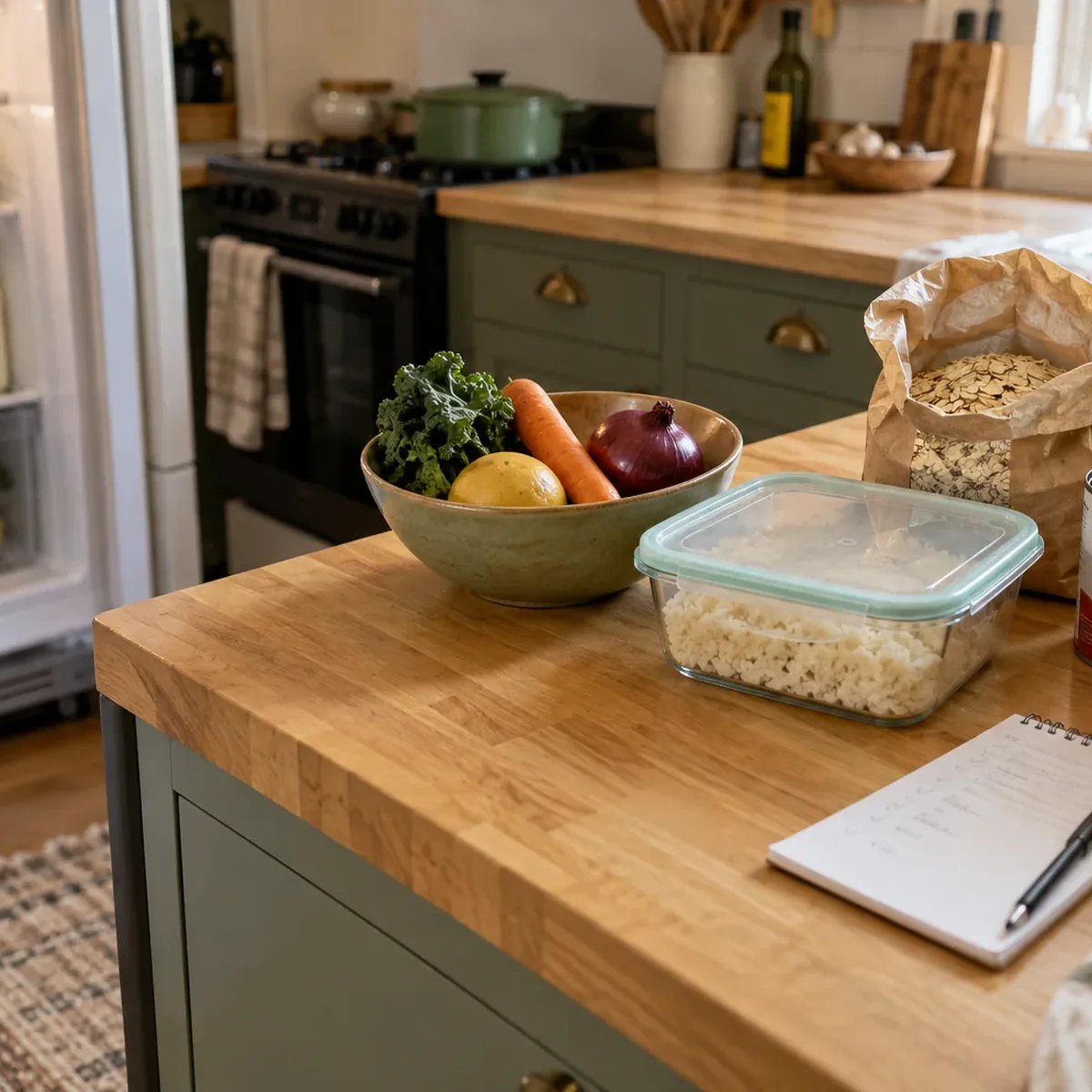
Choose meals or flexible meal components around those items, then make the shopping list from the gaps. If the plan uses a bag of rice, two cans of beans, and vegetables you already own, add only the missing ingredients. The EPA notes that buying large quantities helps only when the food actually gets used. A quick stock check can keep a tempting offer from becoming another forgotten package.
Keep food safety separate from the aim of wasting less. Follow package handling instructions and use a reliable food storage reference when you are unsure whether a specific item is safe. Do not taste questionable food to decide. Our pantry inventory guide covers the deeper shelf setup; this weekly pass is the lighter habit that keeps it useful.
Pass 2: Make reusables easy to grab
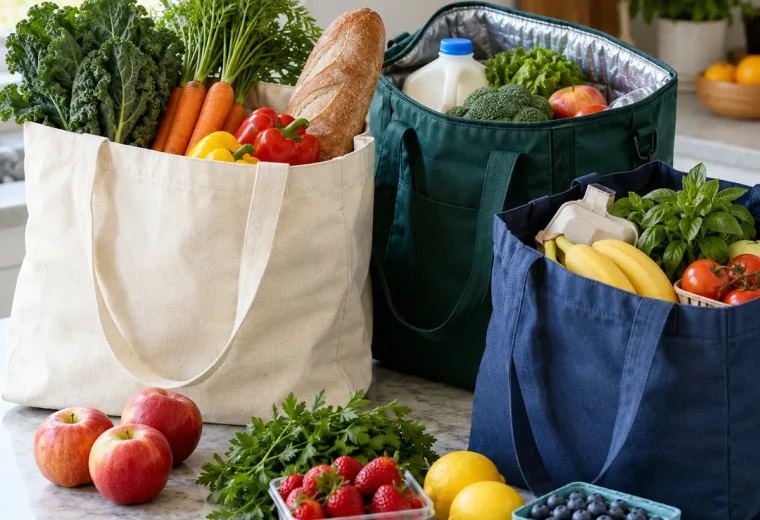
Return clean shopping bags, water bottles, lunch containers, and other items you actually use to one visible departure point. A hook near the door or a shelf beside your keys may be enough. If the supplies live in several rooms, they are easy to forget. Pick a location that matches how your household leaves home.
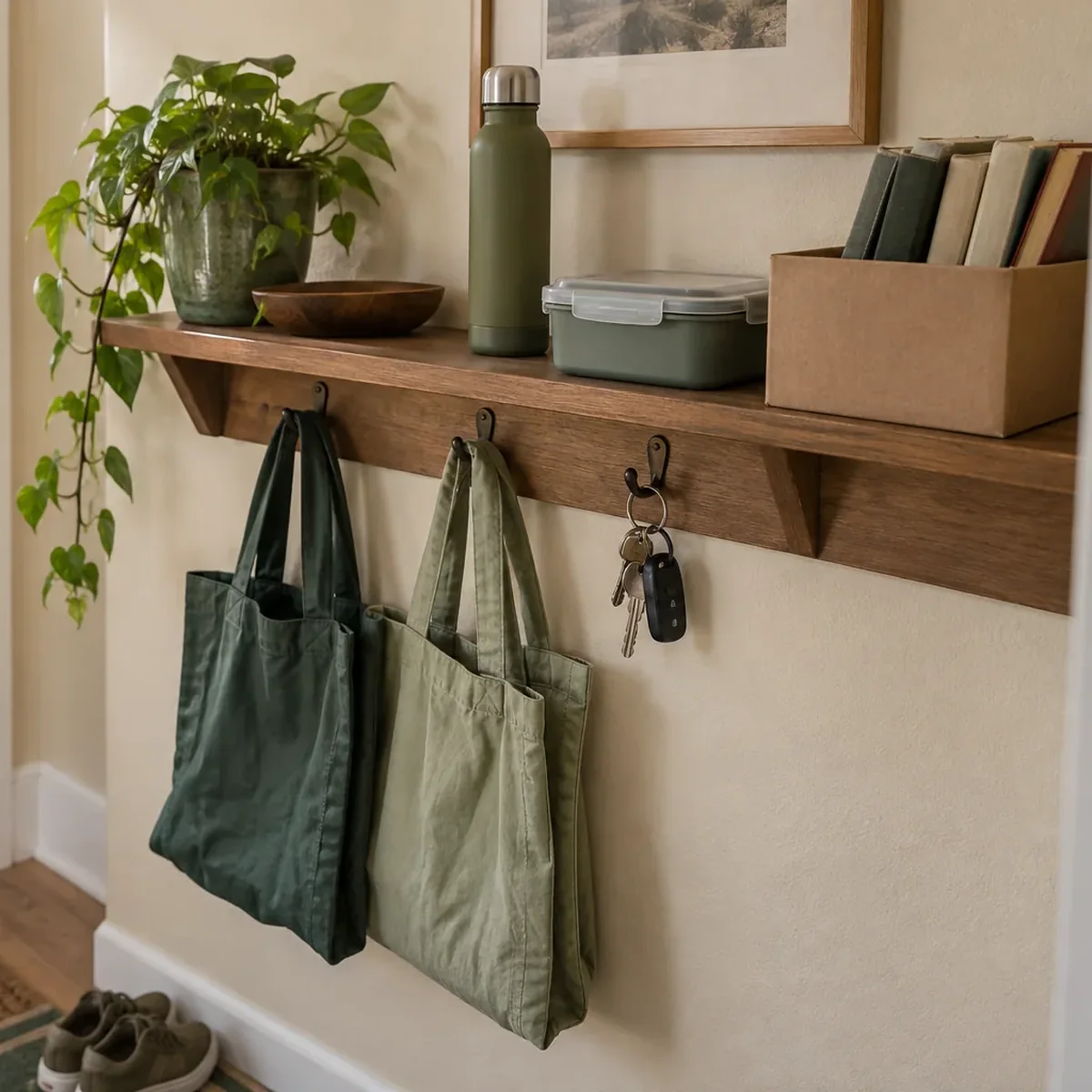
Check whether the items need washing or a missing lid before the next outing. Fix the obstacle now if it is simple. If it requires more work, add a specific note rather than placing the item back in circulation unfinished. Reuse works when the item is ready at the moment you need it.
Look at household supplies before buying replacements, too. You may already have a spare cleaning cloth, a partly used refill, or enough containers for the week. Avoid turning this pass into an excuse to buy a complete set of new reusable products. Start with the items you own and use consistently.
Pass 3: Close one open loop
Choose one object or task that has been waiting for “later.” It might be a book someone agreed to take, a repair that needs an appointment, or a household item that requires special collection. Write the next physical action: hand it to a named person, book the repair, or check your local collection rules.
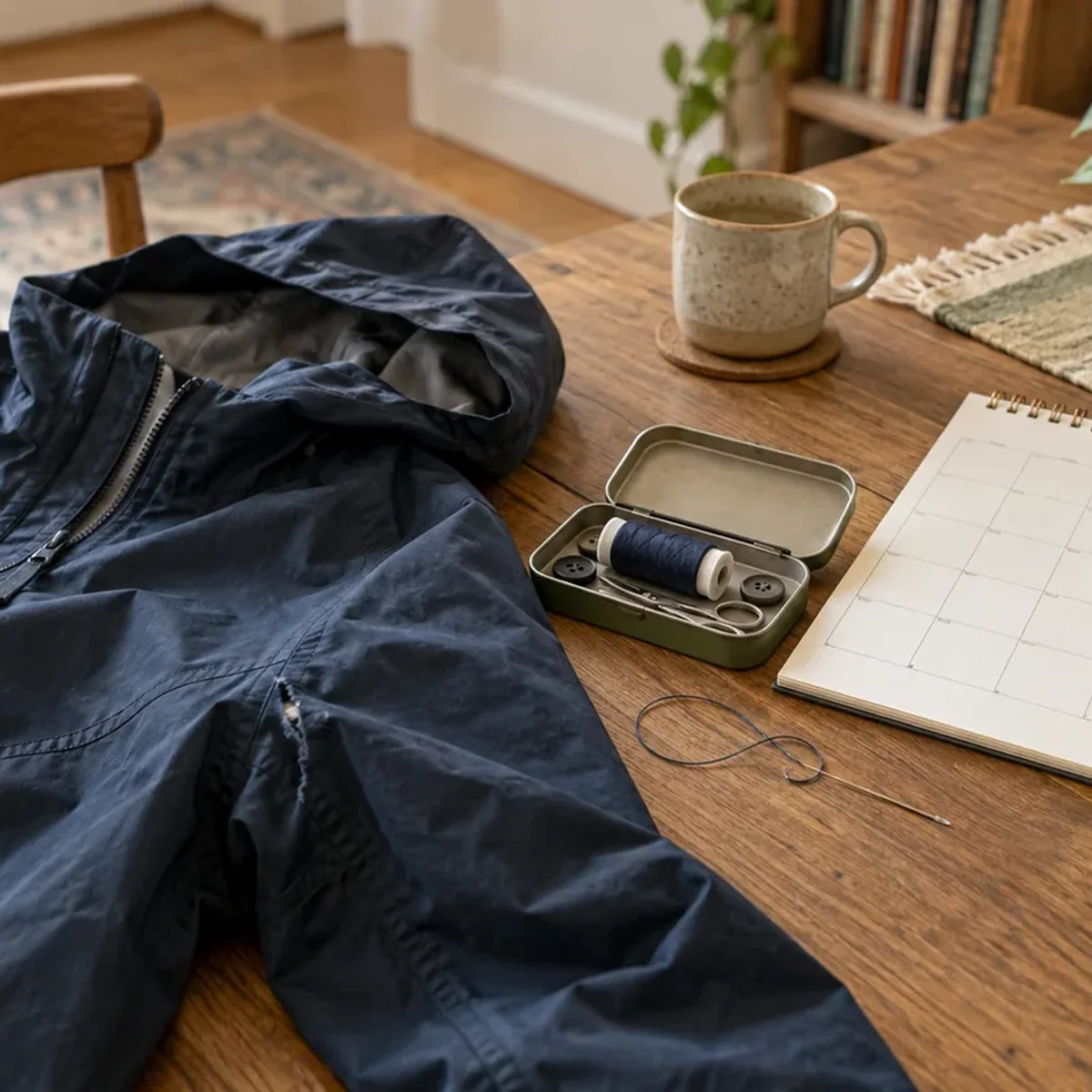
A bag labeled “donate” is an intention, not an exit plan. If an organization is the destination, confirm that it accepts the item and check its drop-off instructions. The same applies to recycling. EPA explains that local programs differ and that putting unaccepted material in a recycling bin can contaminate the stream. Verify the exact item with your local provider.
Keep the outgoing area small and out of walkways. If there are several items waiting, select one to move this week. Then repeat. For a larger household reset, use our low-waste decluttering plan to decide where each item should go.
A realistic example week
Suppose the next grocery trip is tomorrow. You notice an open bag of oats, a container of cooked rice, and two cans of tomatoes. You check the storage instructions and choose meals that use the suitable food first. Your list now reflects those meals instead of starting from a blank page.
At the door, you find two clean grocery bags but the lunch container needs a lid. You put the bags with your keys and match the lid with the container. Finally, you see a small box of books waiting to leave. You message the person who offered to take them and write the agreed handoff date on the checklist. The reset is complete because three next steps are clear, not because every room was cleaned.
Adapt the checklist to your home
A small apartment may need only one shelf and one bag check. A larger household may split the passes between people: one person checks food, another prepares bags, and someone else handles an outgoing item. Keep the handoff visible so nobody assumes a task was done by someone else.
If you do not shop every week, run the food pass before each shop and use the other passes on a weekly rhythm. If you rarely have donations or repairs, leave that line blank until something real comes up. The checklist is a prompt for decisions, not a quota for getting rid of things.
Review the routine after a few weeks. If a line is repeatedly skipped, ask whether it belongs at a different time or location. If one task consistently takes over the whole reset, make it a separate project. The weekly version should remain simple enough to repeat.
Common mistakes
- Starting with a whole-house clean: A large job can crowd out the checks that prevent the next round of waste.
- Writing a shopping list before checking supplies: Look in the fridge, freezer, pantry, and supply area first.
- Collecting reusables without a grab spot: Give the items you use an easy place near the next trip.
- Calling an item “donated” while it is still at home: Confirm a recipient and a handoff date.
- Assuming everything recyclable goes curbside: Check local acceptance rules for the exact material.
Download the weekly checklist
The free printable includes the three weekly passes plus space for food to use first, one outgoing item’s next destination, and your next reset day. Download US Letter (8.5 × 11 inches) or A4 (210 × 297 mm). Print at 100% or Actual Size to keep the intended margins.
Start with one check before your next shop. Repeat it until it feels automatic, then add the other passes. A small routine that happens is more useful than an elaborate plan that stays on paper.
Sources
- U.S. Environmental Protection Agency, Preventing Wasted Food at Home
- U.S. Environmental Protection Agency, Frequent Questions on Recycling