The cabinet under a kitchen sink often becomes a dark collection of half-used bottles, old sponges, and things you bought because the last bottle was hard to find. More bins will not solve a hidden leak or make cleaning products safe around children. A useful reset begins with a safety check, then gives the few items that belong there an easy-to-see place.
This guide uses trays, boxes, and containers you already own. It is for a household cabinet, not for storing food or mixing chemicals. Read every product’s storage label. If children can reach the cabinet, the U.S. Consumer Product Safety Commission advises keeping cleaners and chemicals in a locked cabinet or box and out of children’s reach. A neat lower cabinet is not a substitute for secure storage.
Empty one cabinet and sort what you find
Put a cloth on the counter and remove the contents of the under-sink cabinet. Keep bottles upright and closed. Sort into products you still use, tools and reusable cloths, empty packaging, and items that need a disposal or safety decision. Check labels before deciding where a product belongs. Do not pour partly used products together to save shelf space.
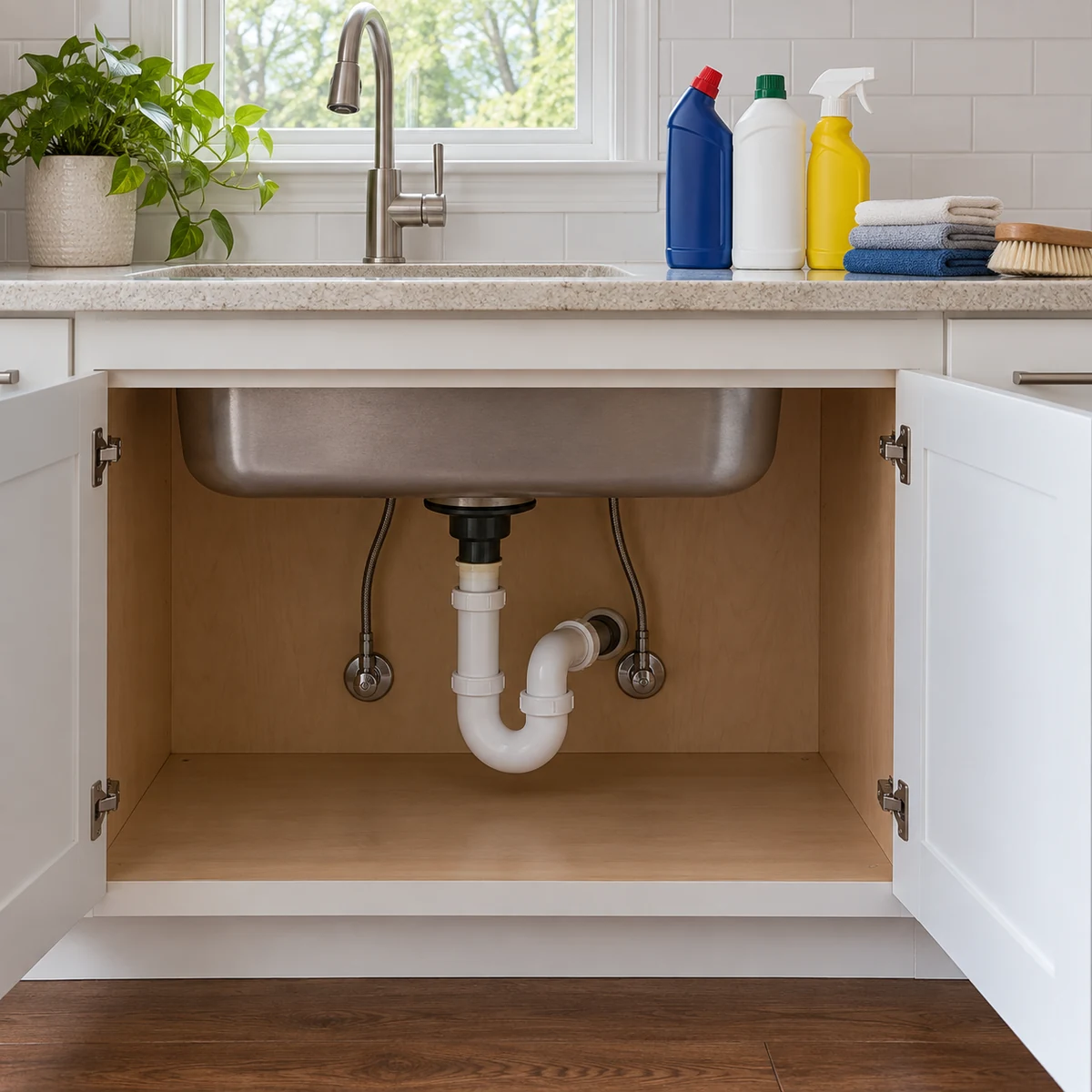
If a container is leaking, corroded, or no longer has a readable label, do not handle it like ordinary clutter. Follow its label where possible and ask your local hazardous-waste program for the right next step. The U.S. Environmental Protection Agency says to keep hazardous products in their original containers and never remove their labels. Do not transfer cleaner into a food or drink bottle.
Inspect the space before putting anything back
With the cabinet empty, look at the base, back wall, and around the pipes for dampness, staining, softened material, or an active drip. Wipe ordinary dust with a suitable cloth and let the area dry. If you find a leak, address the plumbing problem before arranging supplies around it. Keep pipe connections and shutoff valves visible and reachable; a storage system that hides a future drip is working against you.
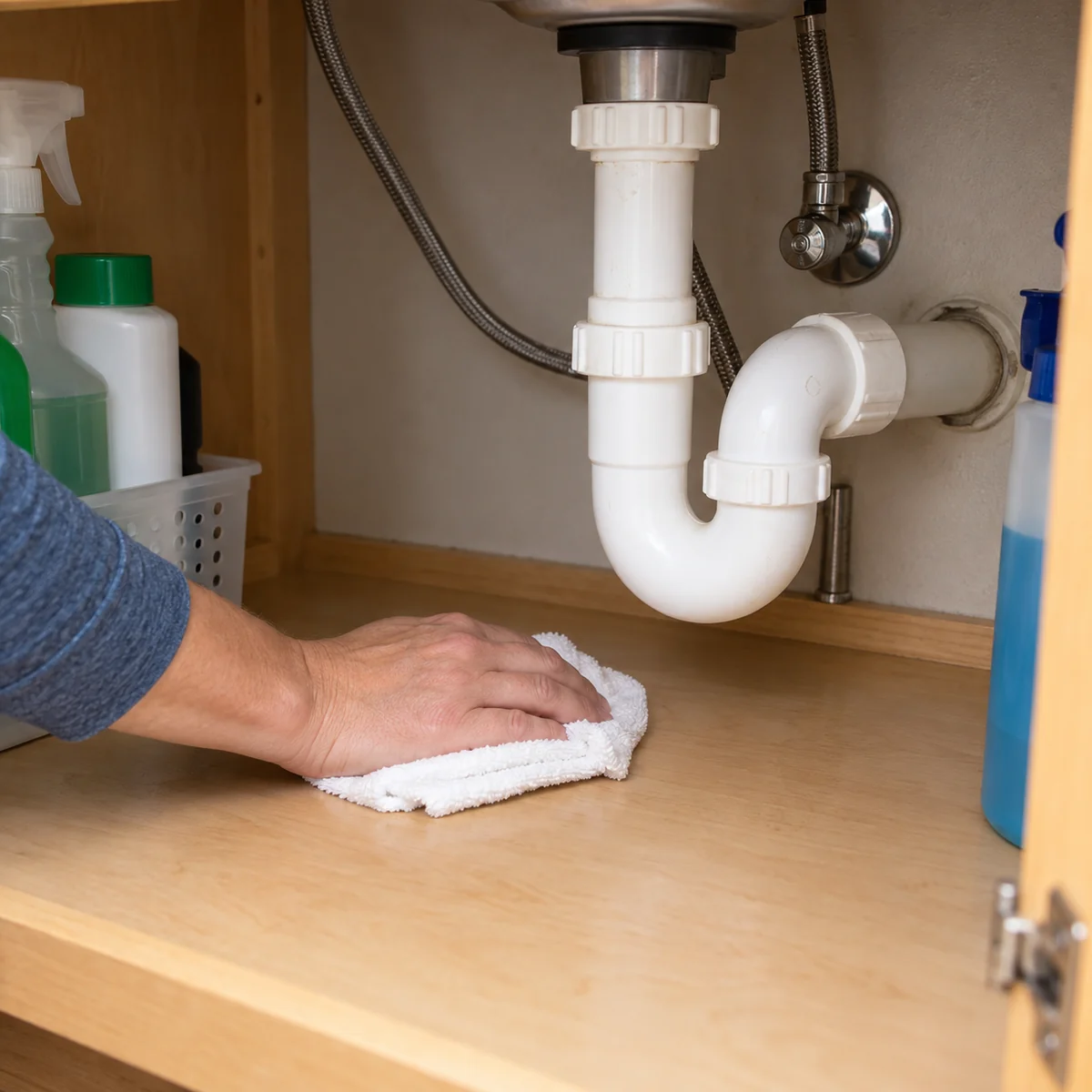
Do not place electrical items, food, pet food, or medicines under the sink alongside household cleaners. Check the cabinet’s dimensions before deciding what can fit without bending hoses or crowding the pipes. You may find that fewer products belong here than you first assumed.
Make child access the deciding factor
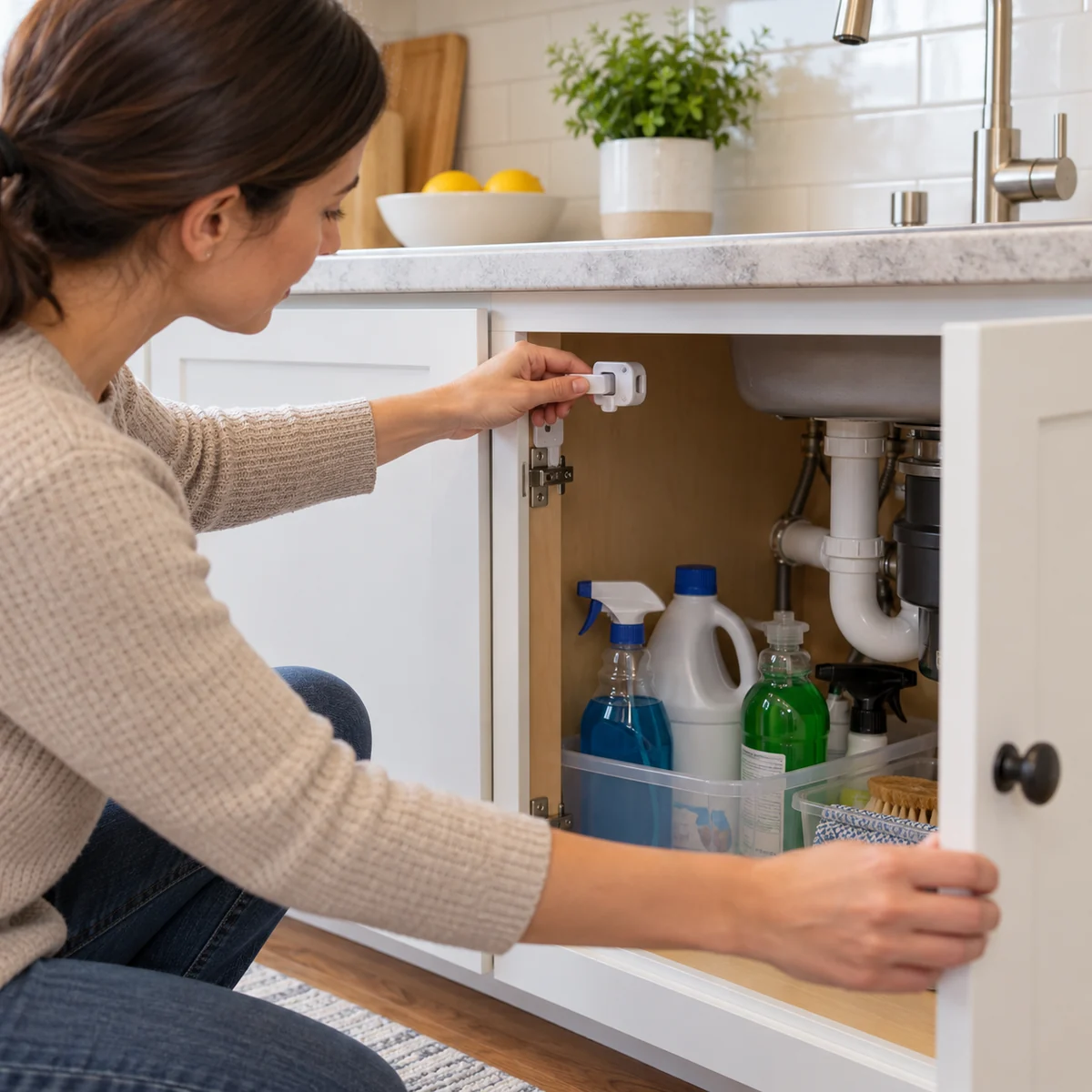
If children live in or visit the home, a low kitchen cabinet is accessible unless it is secured. The CPSC recommends locking cleaning supplies in a cabinet or box and keeping them out of children’s reach; child-resistant caps alone are not childproof. If this cabinet has no reliable lock or latch, move household chemicals to an appropriate locked location rather than making an attractive open display beneath the sink. Pets may also get into low cabinets, so secure the space for them as well.
Keep every cleaner in its original child-resistant container, closed according to its label. Never decant it into a jar or spray bottle that could be mistaken for a drink. Store products according to their individual label instructions, including any limits on heat, ventilation, or incompatible materials.
Group the products you actually use
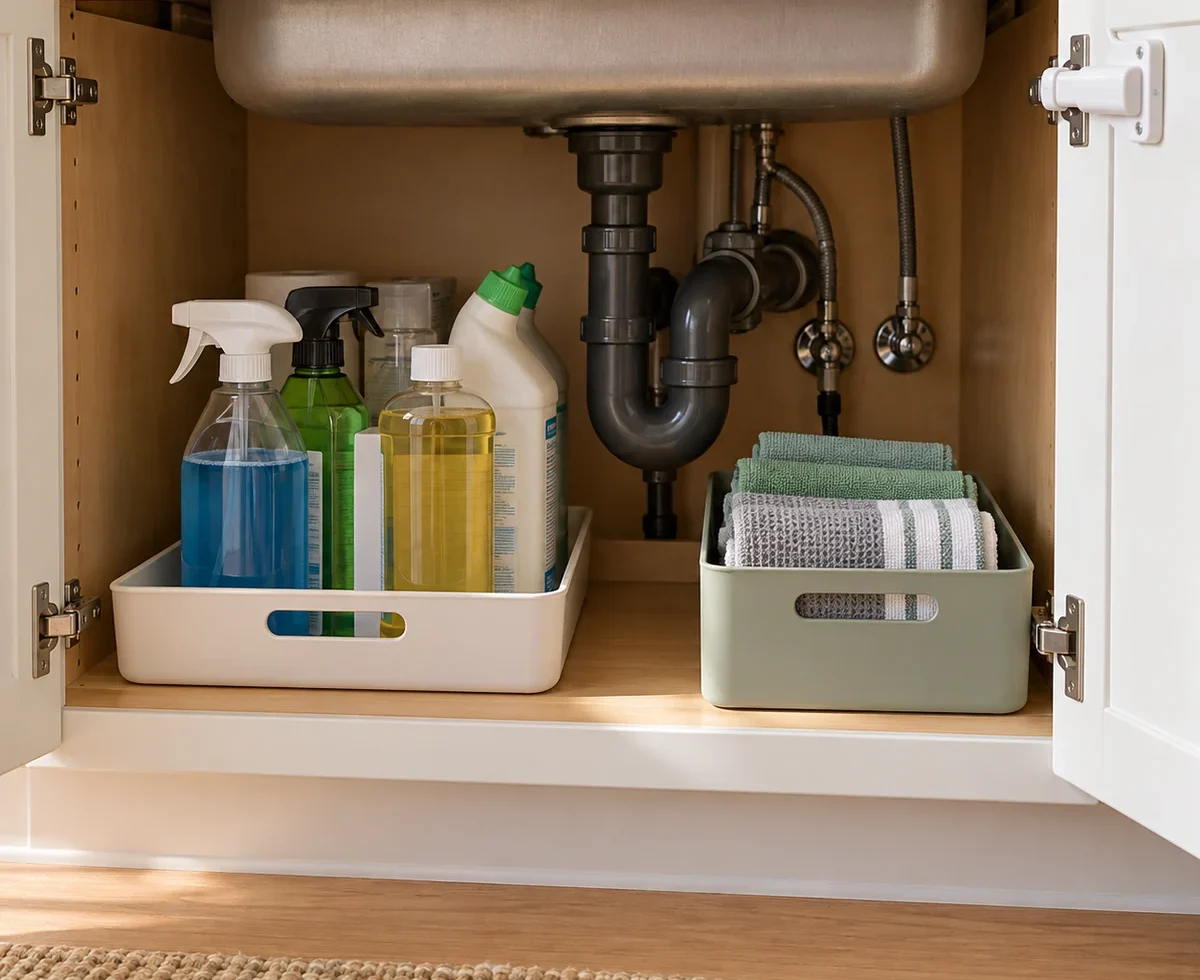
For a secure cabinet, set upright, closed bottles in one existing shallow washable tray so you can pull the group forward and see the back. The tray can catch a minor drip, but it is not permission to ignore a leak or store a damaged bottle. Put frequently used appropriate products at the front and rarer ones behind without blocking plumbing. A tall new organizer is unnecessary if it makes access to the pipes worse.
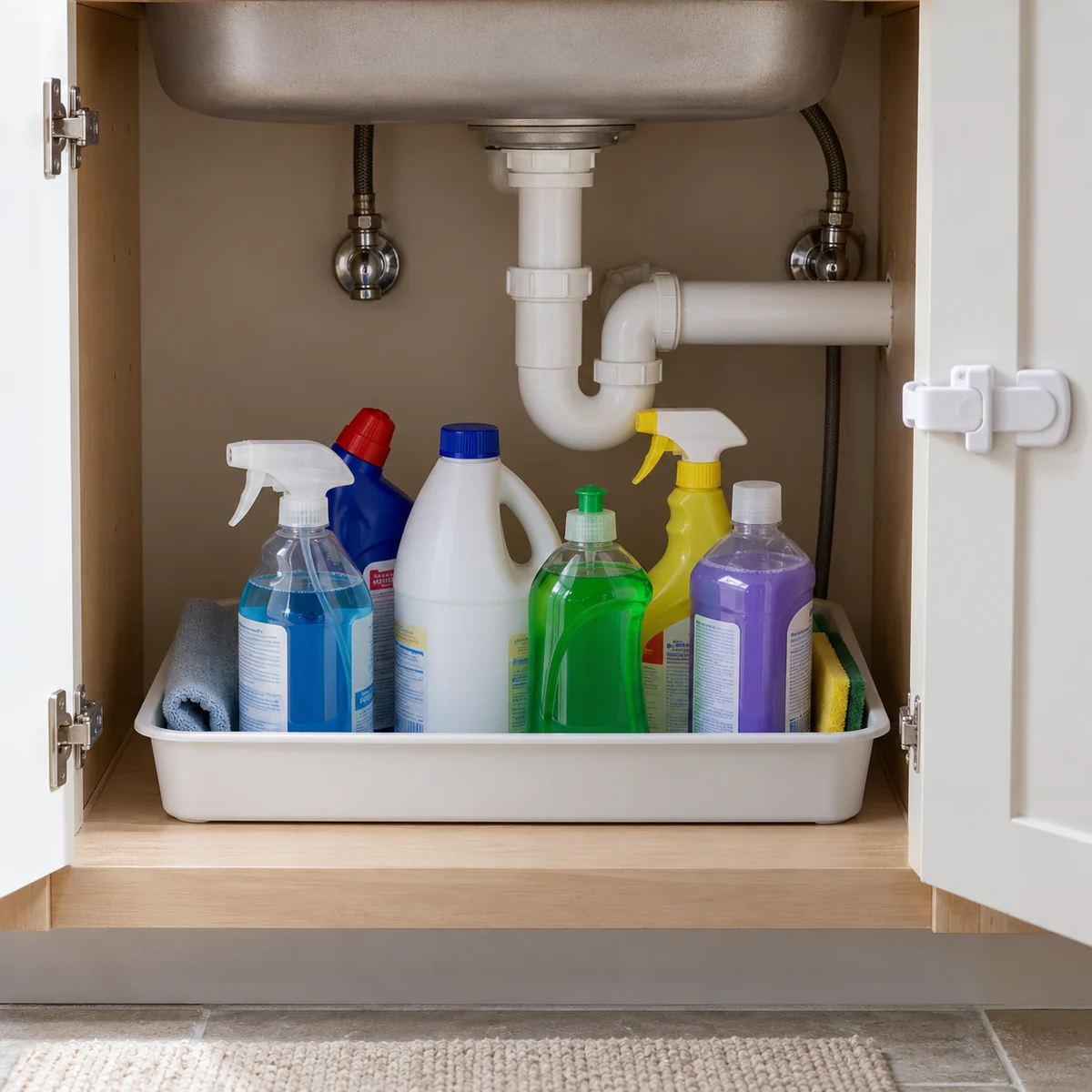
Do not combine leftover cleaners or add bleach to another product. The EPA warns that mixing household hazardous products can cause dangerous reactions. If you have duplicates, use the already-open suitable product according to its label before starting another one. Do not keep an unsafe or unwanted product simply to make the shelf look full.
Give reusable tools a dry place
Keep dry reusable cloths, brushes, and spare sponges in a separate small box or existing container. A cardboard box should not sit where it will get wet; use a washable option if the cabinet floor is prone to splashes, or store the tools in another dry location. Wash and dry used cleaning cloths according to their care instructions before returning them to storage. A wet sponge tucked behind a bottle can bring back an odor quickly.
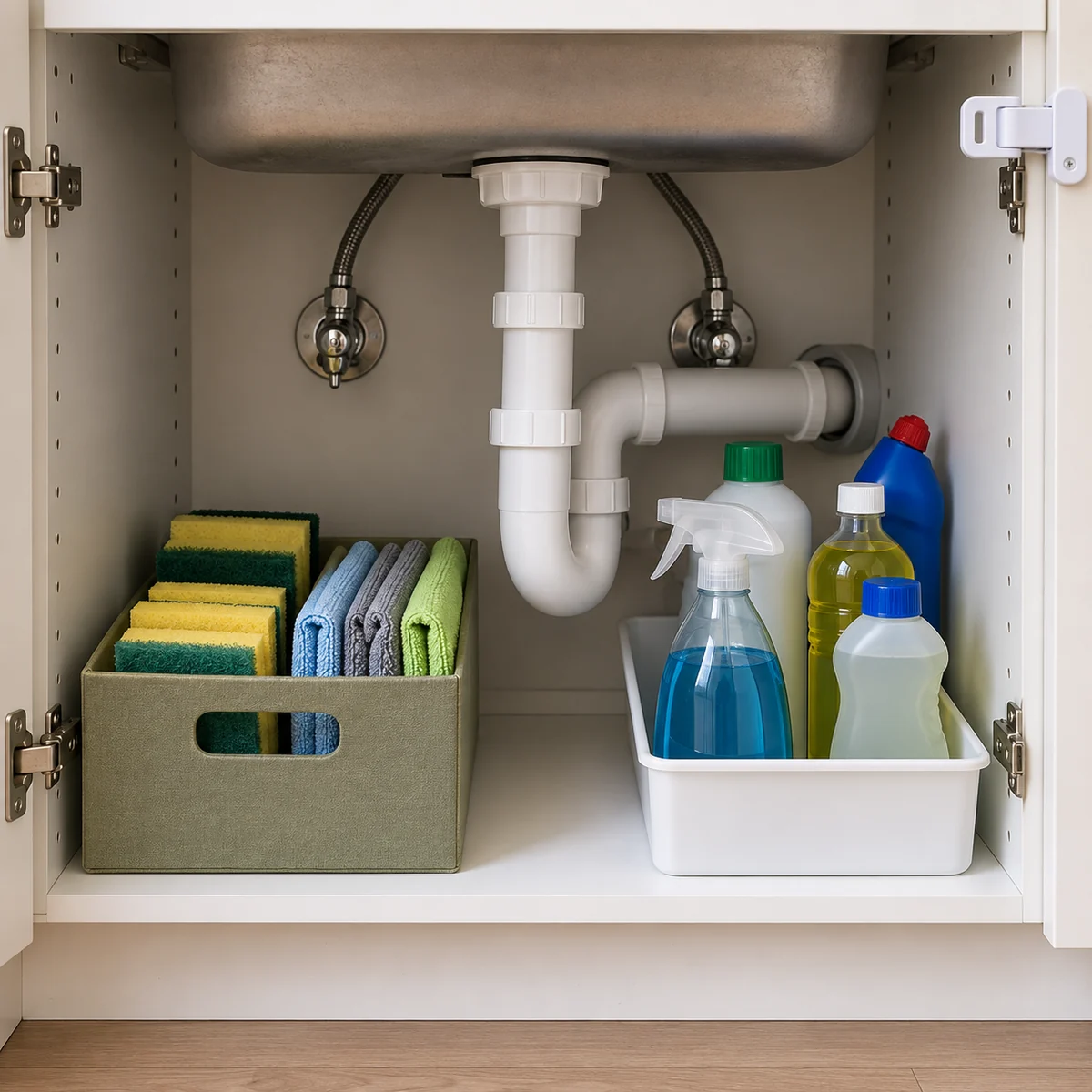
Leave some open cabinet floor visible so you can notice water or a tipped bottle. Skip racks that attach to plumbing, require holes in the cabinet, or prevent the door from closing securely. If the layout is awkward, storing a few less-used items in another safe location may be better than adding a second tier.
Deal with what you no longer need
Check the product label for disposal instructions. For potentially hazardous household products, the EPA advises contacting a local environmental, health, or solid-waste agency about collection options. Do not pour leftovers together or into a drain to clear the cabinet. Empty containers may have different local recycling rules. Keep an uncertain item upright in its original container and secure location while you verify the correct route.
Once you know what remains, make a short note of the product you truly need to replace. Buying a fresh bottle while a nearly full duplicate hides at the back creates more waste. For the broader home approach, see how to declutter without throwing everything away.
Keep the setup working
- After using a product, close its cap and return it to the secure storage spot.
- Keep the cabinet lock or latch engaged when the door is closed.
- Let reusable cloths dry before storing them.
- During a routine kitchen reset, check the tray and visible cabinet floor for moisture.
- Use existing supplies before buying another bottle or organizer.
For an adjacent small-space project, our small-bathroom organization guide uses the same principle: let access and safety set the layout before adding containers.
Sources
- U.S. Consumer Product Safety Commission, Poison Prevention and Childproofing Your Home.
- U.S. Environmental Protection Agency, Household Hazardous Waste.