A matching set of food containers looks useful on a store shelf. At home, it may become another stack of unused boxes and lost lids. The best container is the one that fits the food you save, the space you have, and the way you actually wash and carry it.
Quick answer: Count what you already own, identify one missing job, choose a size that fits a real portion, and check the lid and the maker’s directions for washing, freezing, and reheating. Buy one useful container before committing to a set. Good storage helps you see and use leftovers; buying more containers alone does not prevent food waste.
1. Audit your kitchen before you shop
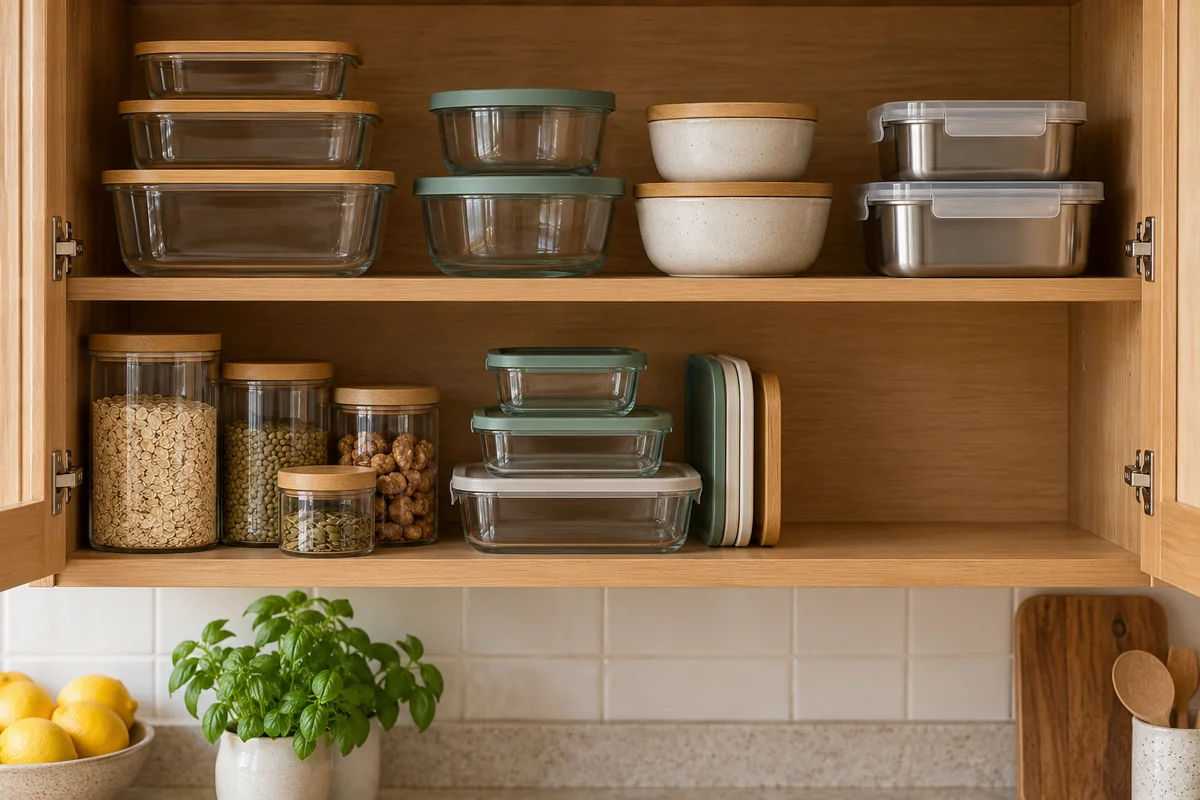
Take every container and lid out of the cupboard. Match pairs, set aside broken pieces, and count the containers you reach for each week. A missing lid may be replaceable; check the maker before replacing an entire set. Put aside duplicates that never leave the shelf and identify the one problem you need to solve: a shallow lunch portion, a leak-resistant soup container, or a smaller box for half a meal.
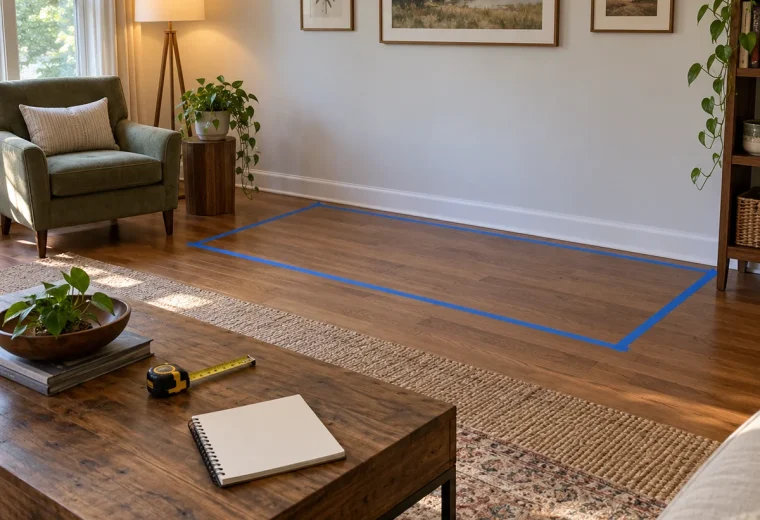
Measure the shelf, lunch bag, or freezer drawer where that container will live. A large set is a poor purchase if only one size fits. If the issue is simply a chaotic cupboard, try our container-and-lid organizing guide before shopping.
2. Match size and shape to the food
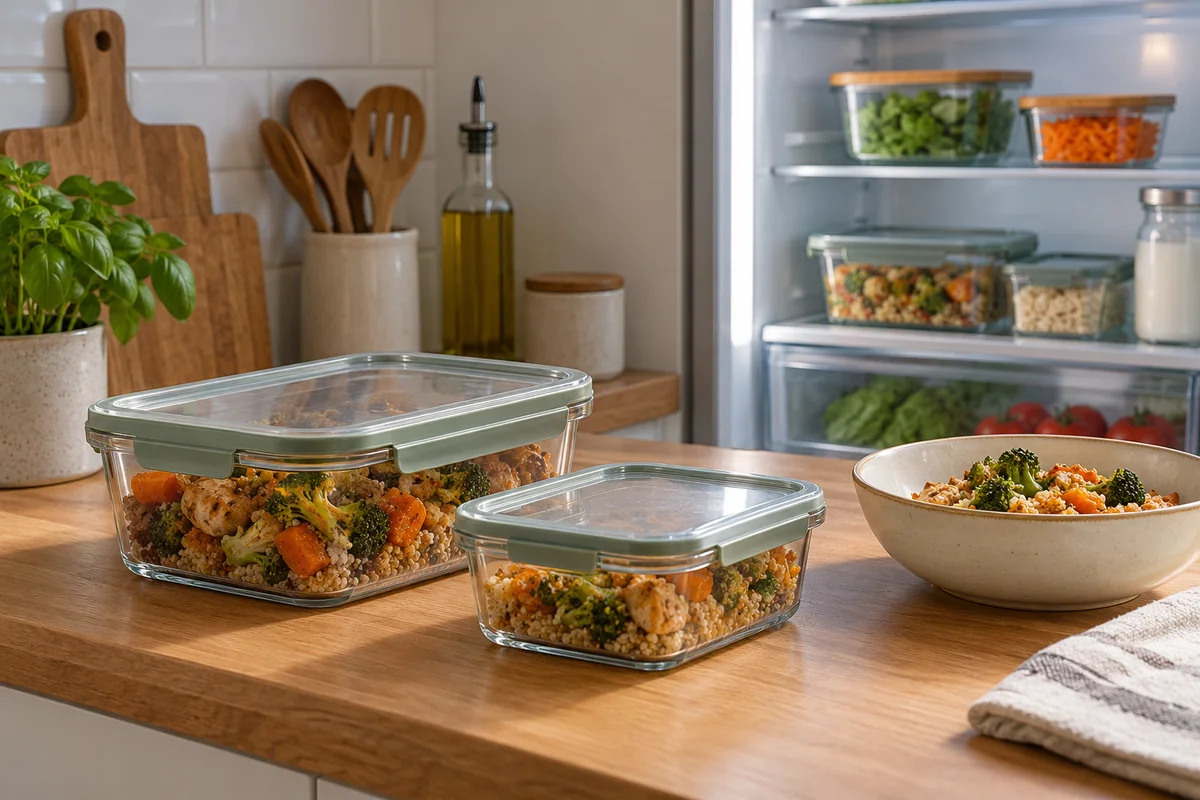
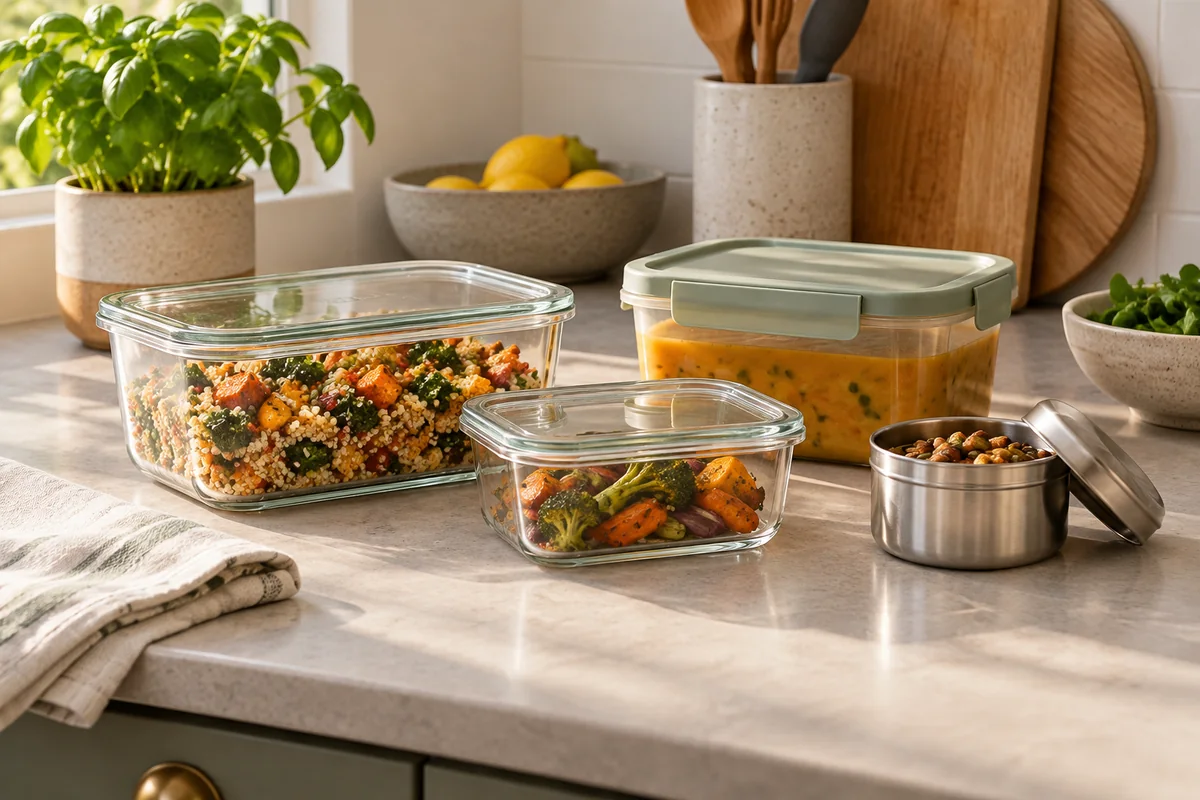
Picture a specific meal instead of a product photo. Will a single lunch fit? Can you see the leftovers when the container is on a refrigerator shelf? Will it sit flat in your bag? A shallow container is especially useful for cooked leftovers: the USDA advises dividing large amounts into shallow containers so they cool promptly, and refrigerating perishable leftovers within two hours of cooking (one hour above 90°F/32°C).
Choose a clear container if visibility helps your household use food before it is forgotten. An opaque container can work just as well if you reliably label it. Keep only enough sizes to cover meals you routinely save. If you need freezer portions, check the maker’s freezer directions and leave room for food that expands when frozen, where applicable.
3. Inspect the lid and care instructions
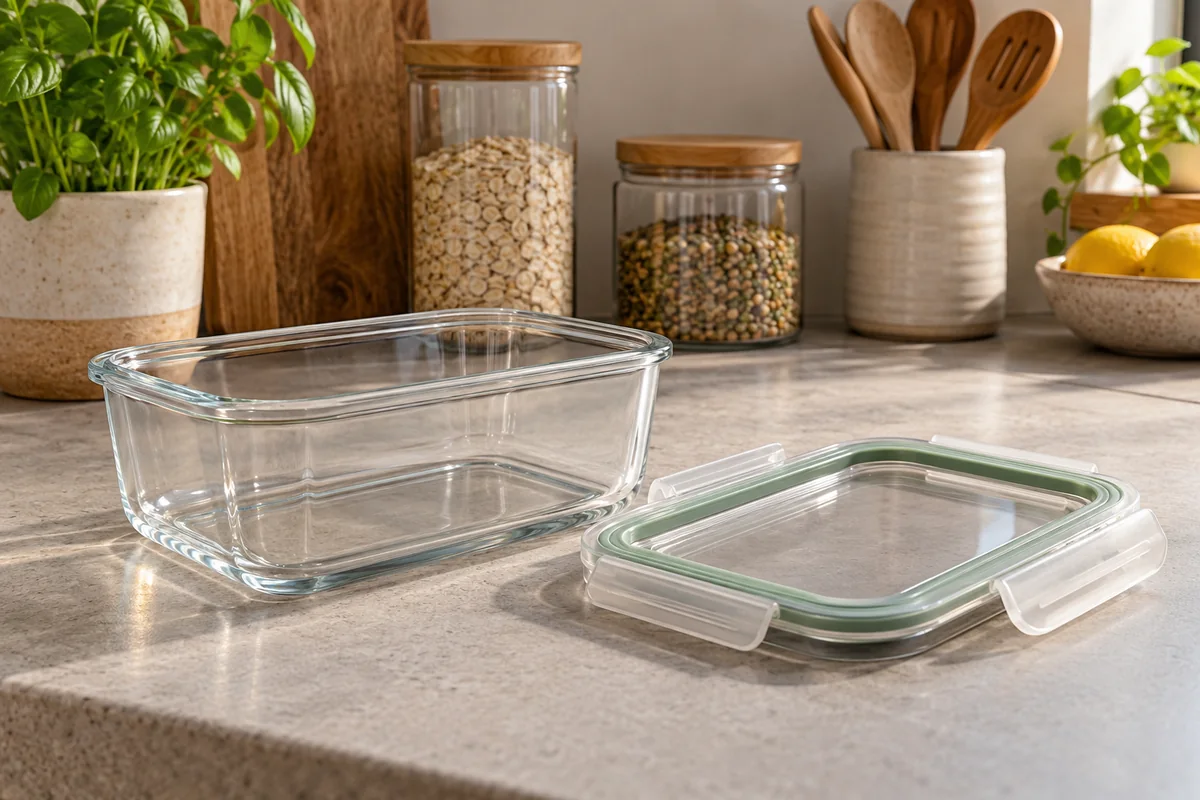
Try opening and closing the lid. It should be comfortable to use and easy to clean around its seal. Check whether gaskets or lids can be replaced separately. If you plan to carry liquids, confirm the maker describes the container as leak-resistant or leakproof and test it with water at home before trusting it in a bag. A snap lid is not automatically spillproof.
Read use labels carefully. “Freezer-safe,” “dishwasher-safe,” “oven-safe,” and “microwave-safe” are separate claims; one does not imply another. For microwave reheating, the USDA says to use containers made for microwave use. Do not microwave food in reused yogurt or takeout tubs unless their original packaging specifically says they are suitable for that use. Follow the lid’s venting and heating instructions as well as the container’s.
4. Test one in your real routine
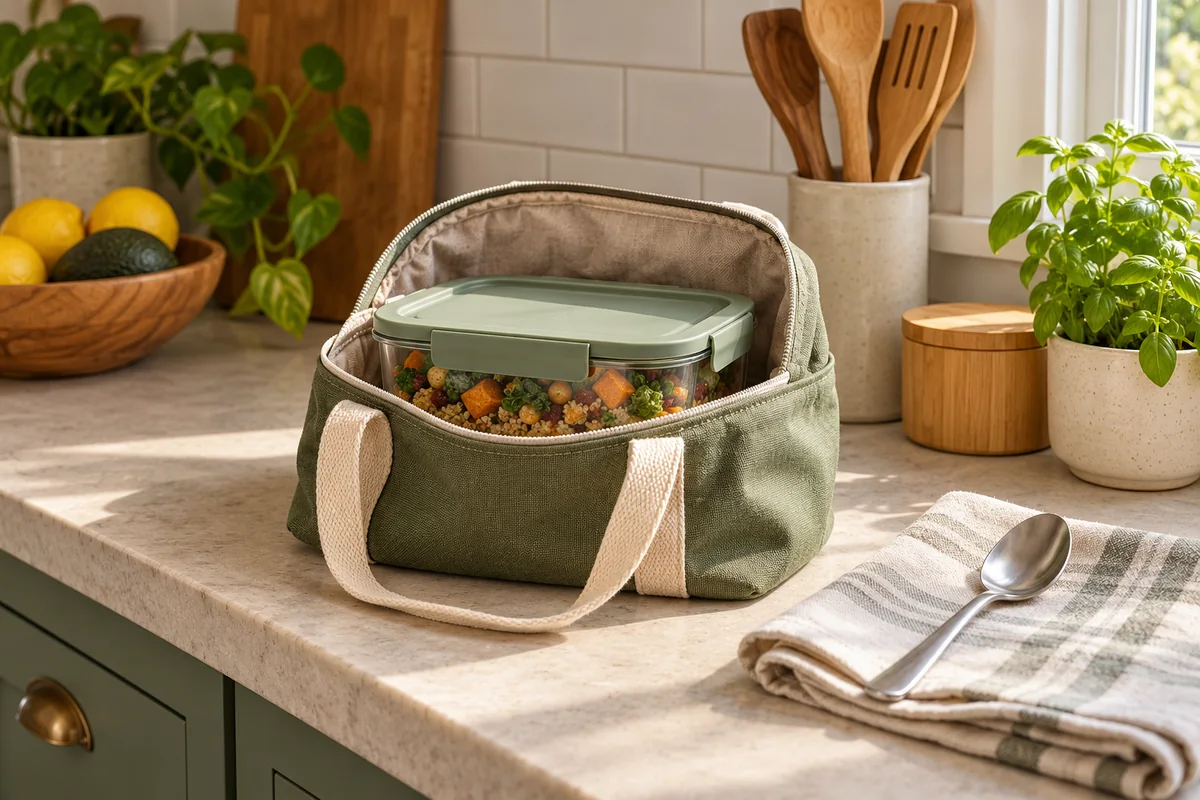
Before buying multiples, use one container for a normal week. Pack a usual lunch, wash it the way you normally wash dishes, and check whether it fits the fridge and cupboard. If the lid is frustrating, the container is too heavy for your commute, or food gets hidden at the back of the shelf, change the choice before buying more.
Reuse what you already have when it is sound and appropriate for the task. For example, a clean food jar can hold dry goods or cold leftovers if its lid and condition suit the job; it should not be assumed oven-safe, freezer-safe, or microwave-safe. Our jar reuse guide explains how to prepare one without buying another organizer.
A five-question shopping filter
- What exact food or meal will this hold?
- Which current container fails at that job?
- Will it fit the shelf, drawer, or bag where it belongs?
- Can I clean and replace its lid or seal?
- Do its stated temperature and washing limits match how I will use it?
If those answers are vague, wait. The low-waste choice may be to keep using a sound container you own, make leftovers more visible, or cook a smaller amount next time. The EPA’s household food-waste guidance likewise emphasizes planning, using what you buy, and storing food properly.
Common questions
Is glass always better than plastic for food storage?
There is no one material that fits every household. Consider weight, breakage, sealing, cleaning, and the maker’s approved uses. Reusing a suitable container you already own often makes more sense than buying a new material for its own sake.
Can a food storage container go from freezer to microwave?
Only if the manufacturer explicitly permits both uses, including any temperature-change instructions. The lid may have different limits from the base. When unsure, transfer food to a microwave-safe dish.
How many containers should I buy?
Start with the actual gap in your routine. One container in a size you use is a better trial than a full set. Add another only if you repeatedly run short despite washing and reusing what you have.
Sources
- USDA Food Safety and Inspection Service: Steps to Keep Food Safe — prompt refrigeration and shallow containers for leftovers.
- USDA Food Safety and Inspection Service: Cooking with Microwave Ovens — containers suitable for microwave use.
- U.S. Environmental Protection Agency: Preventing Wasted Food at Home — planning, storing, and using food.