If half a loaf goes stale before you reach it, the useful decision happens when the bread is still fresh. Keep the slices you expect to eat soon, then freeze the rest in portions you can pull out for one meal. If bread has already become dry but is still safe, it can become toast, croutons, breadcrumbs, or French toast. Moldy bread is a different case and belongs in the trash.
This guide explains how to store bread so it lasts longer without buying a new storage system. It covers counter storage, freezing, thawing, and practical uses for safe stale bread. The best routine depends on the loaf, your household, and how often you eat bread; the aim is to make the next slice easy to use.
Free Bread Rescue Plan Printable
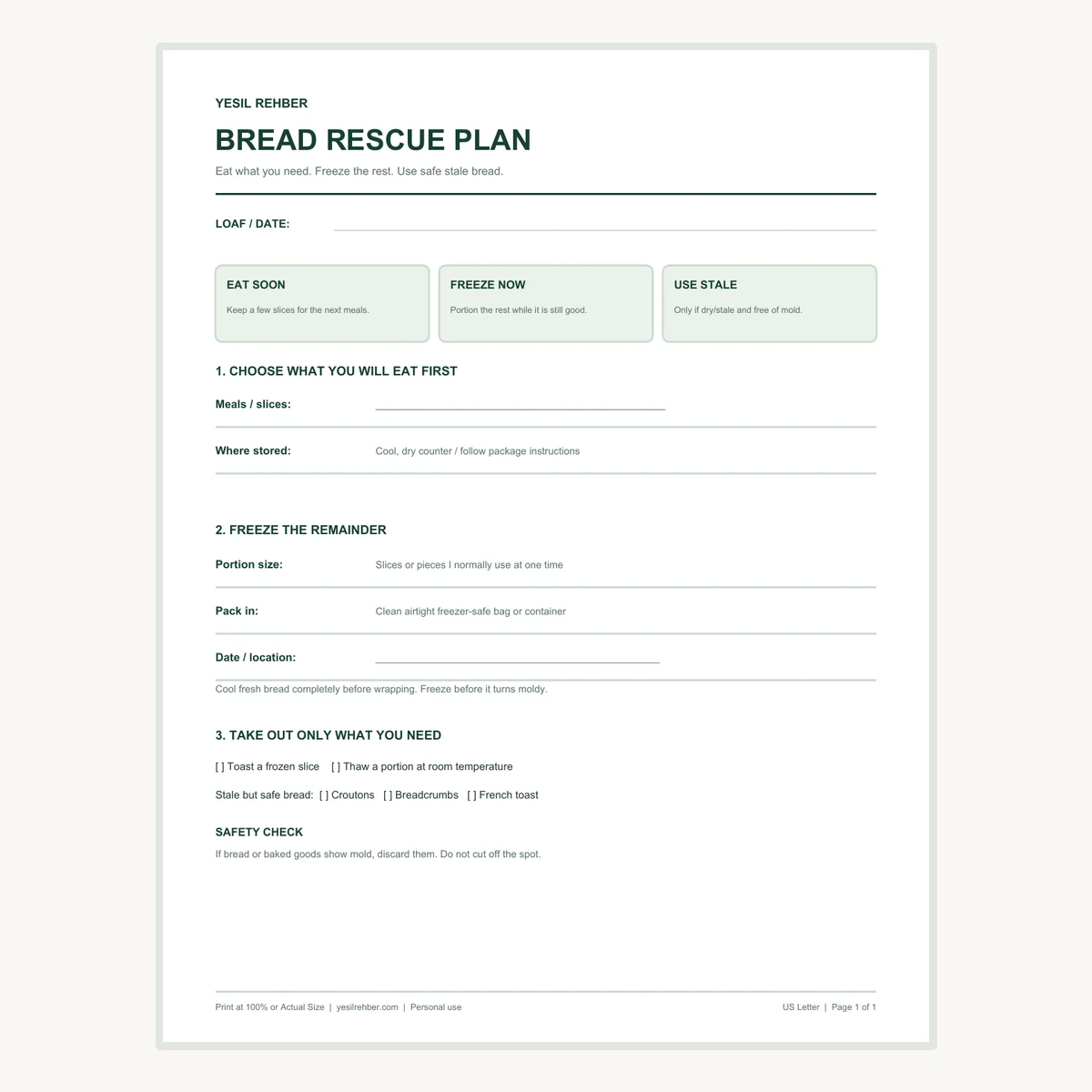
Use this one-page worksheet to decide what to eat soon, what to freeze now, and how to use safe stale bread. Choose US Letter or A4 and print at 100% or Actual Size.
The quick answer: counter for soon, freezer for later
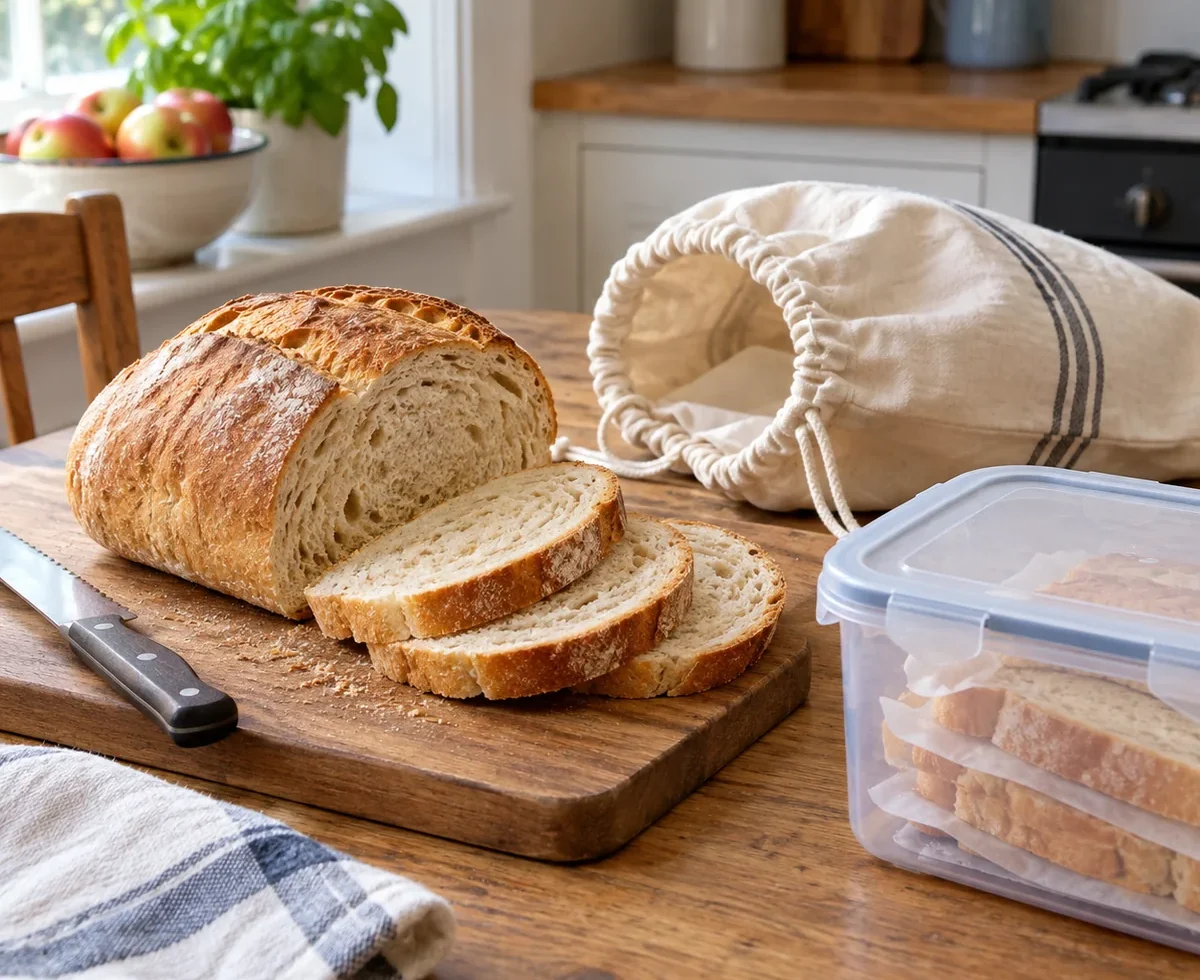
For an ordinary plain loaf, keep only the amount you expect to use soon in a clean, dry place at room temperature, protected from drying out. Freeze the remainder before it becomes stale or moldy. Slice or divide the loaf first so you can remove a small portion later. A freezer bag or container you already own works if it is clean, freezer-safe, and closes well.
That plan follows U.S. Environmental Protection Agency advice to freeze bread that will not be eaten in time. The bakers at King Arthur Baking also recommend freezing bread for longer storage rather than relying on the refrigerator, which can speed staling in many plain yeast breads. Follow the package directions for a particular product, especially if it has a perishable filling or topping.
1. Decide how much bread will actually be eaten soon
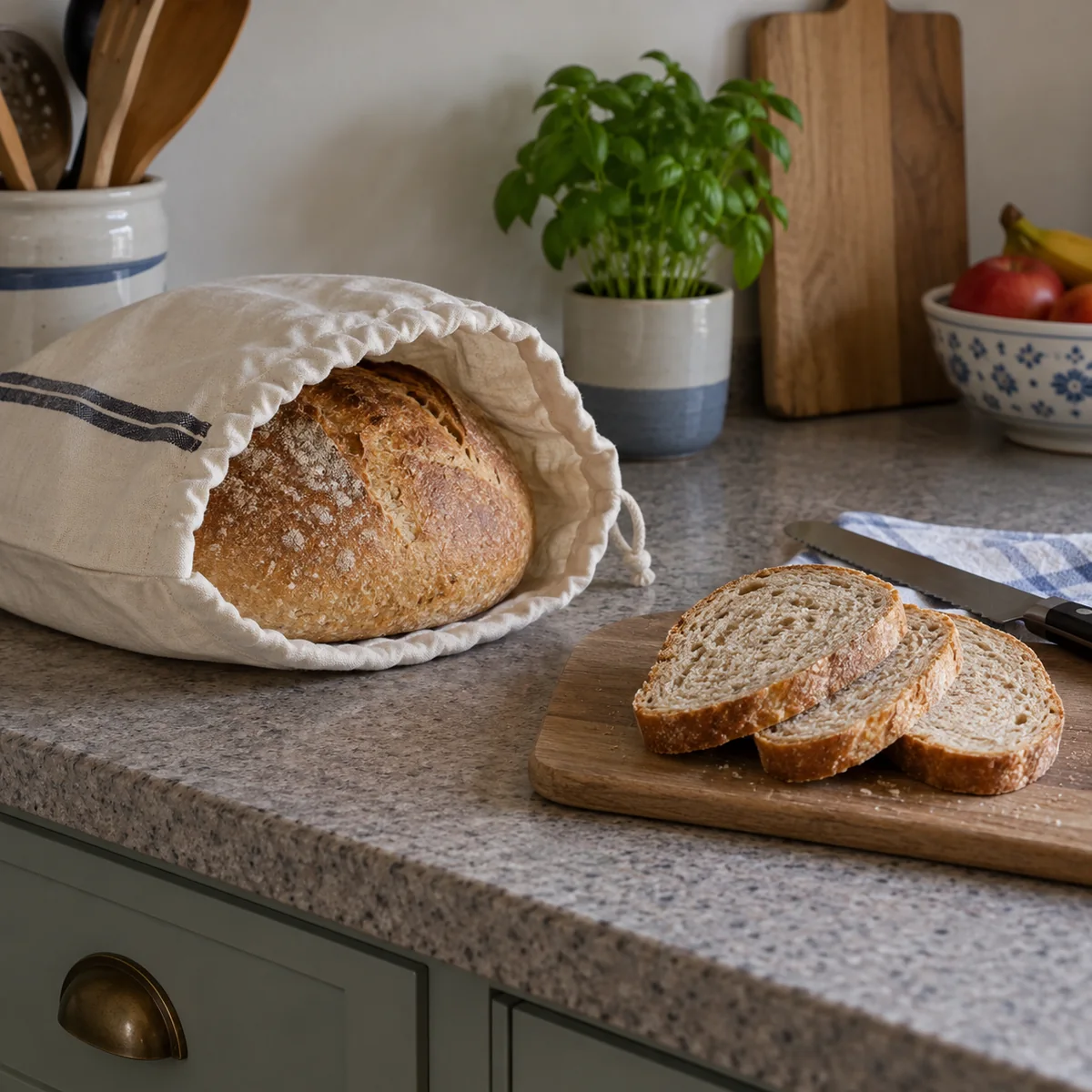
Look at the next few meals before you put the loaf away. Will anyone make sandwiches tomorrow? Is the bread for breakfast, soup, or a weekend meal? Keep the amount you realistically expect to use on the counter. If the answer is “probably not the whole loaf,” freeze the extra now instead of waiting for visible dryness or mold.
Check the type of bread, too. A crusty loaf and soft sandwich bread do not keep the same texture in the same wrapping. A cut crusty loaf may need protection on its cut side while you use it soon; a soft sliced loaf usually benefits from being kept closed so it does not dry out. Store bread in a cool, dry spot away from heat and direct sun, and use clean hands or utensils when handling it.
If a loaf came with specific storage instructions, use those. Do not leave bread with perishable fillings, meat, cheese, or cream at room temperature just because plain bread can sit on the counter. Those products have different storage needs. When in doubt, follow the label or a relevant food-safety guideline.
2. Freeze the extra while it is still good
Let homemade or warm bakery bread cool completely before wrapping. Trapped steam can create condensation and hurt quality. Slice the loaf if you usually eat it one or two slices at a time; keep a larger portion intact if you will serve it at a meal. Put each practical portion into a clean, airtight freezer-safe bag or container. Press out excess air if the packaging allows, close it well, and mark the bread and date so it does not become an unidentifiable frozen block.
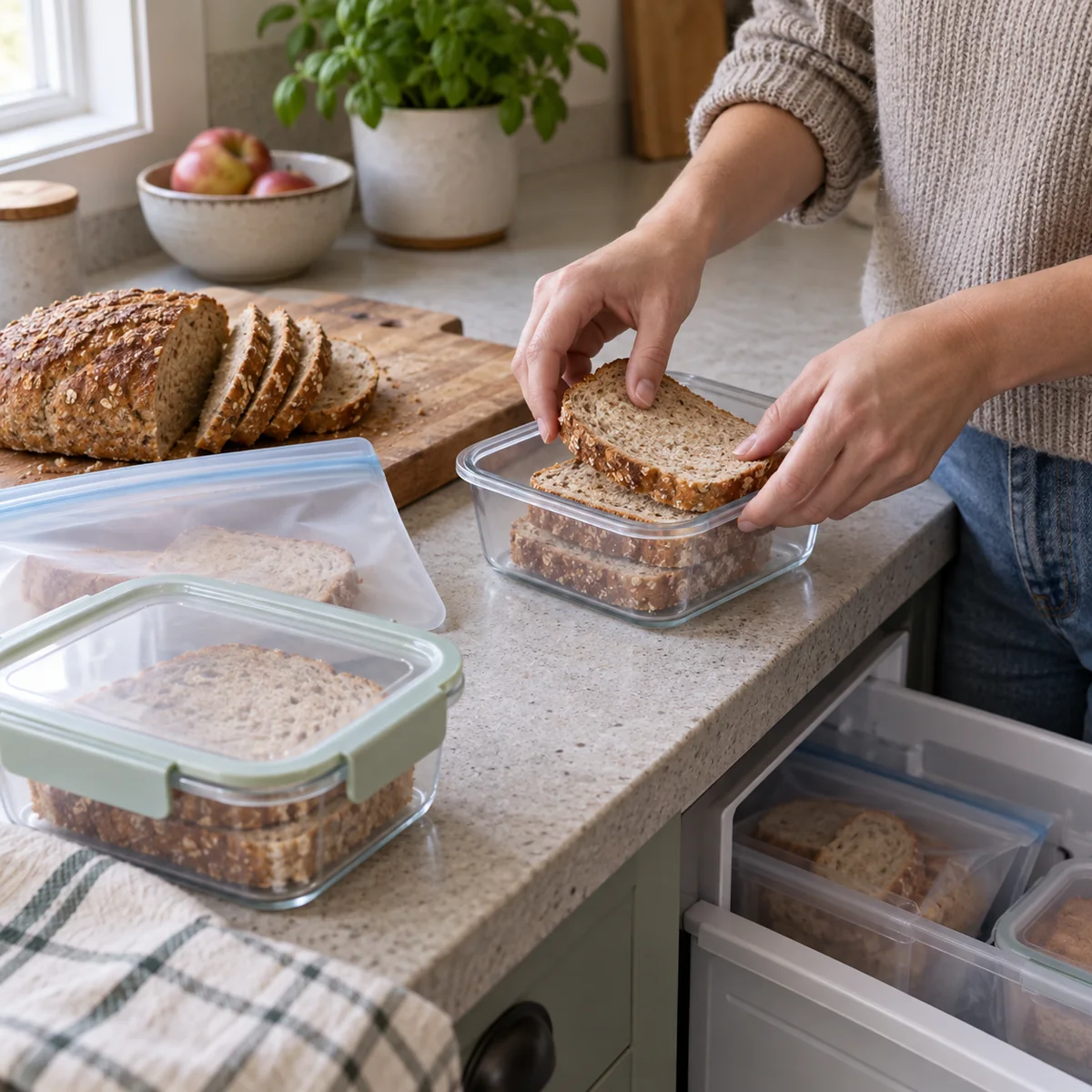
Use a container you already have if it fits the portions without crushing them. If you reuse a bag, make sure it is suitable for food and the freezer and is clean and intact. Keep portions easy to see so you remember they are there. A freezer maintained at 0°F (-18°C) preserves frozen foods; storage-time suggestions are mainly about quality, not a promise that bread will taste freshly baked forever. King Arthur Baking suggests using most frozen bread within a few months for best quality, with some breads losing texture sooner.
3. Take out just the amount you need
A frozen slice can go directly into a toaster or toaster oven. A larger portion can thaw at room temperature in its wrapping, then be enjoyed or briefly refreshed according to the bread type. King Arthur Baking notes that presliced bread can also be thawed at room temperature. The key convenience is that you do not have to thaw the entire loaf for one sandwich.
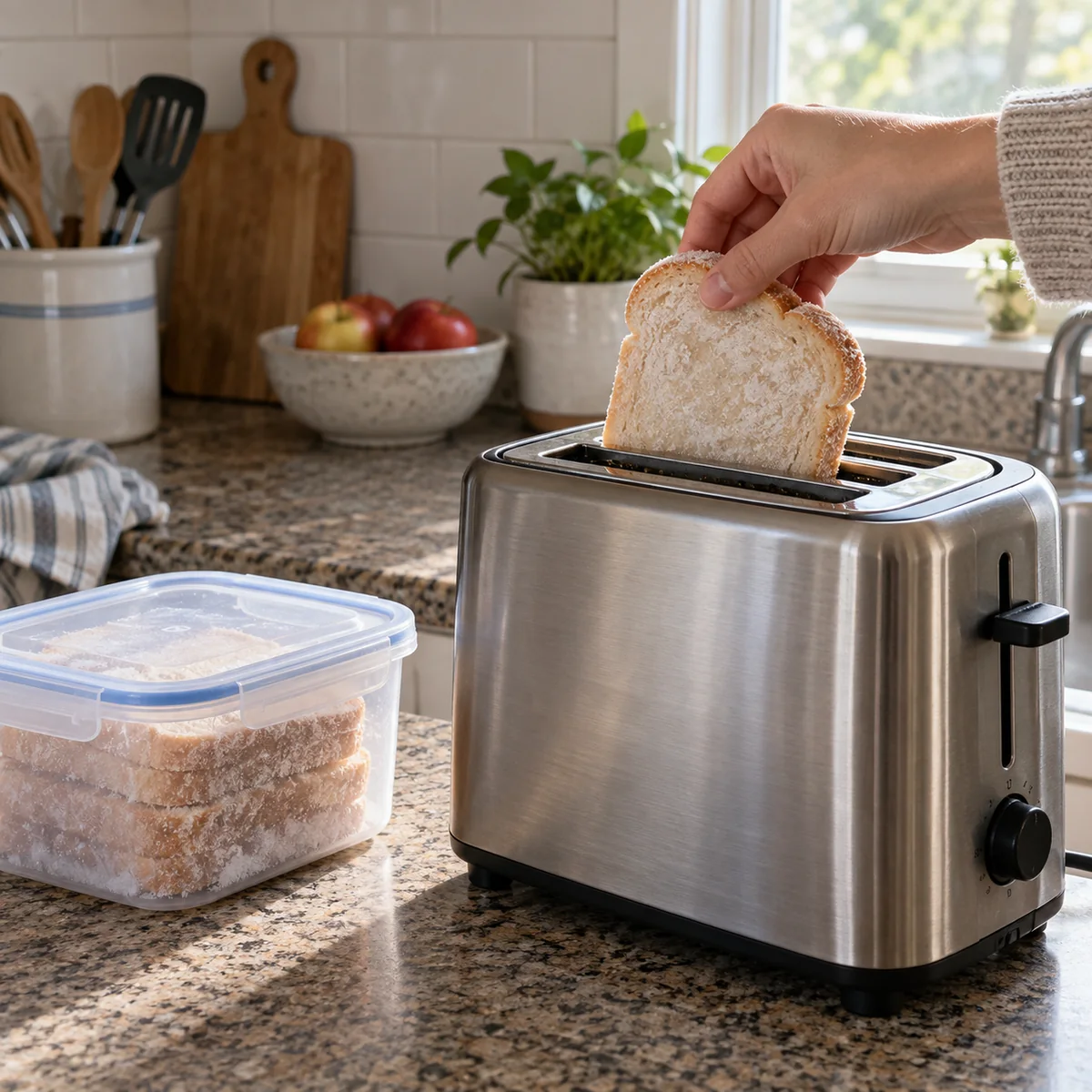
Plan the thaw around how you will eat it. A toasted slice works well for breakfast; a larger loaf for dinner needs more time. Avoid letting bread sit unprotected while it thaws, which can dry the surface. If you regularly freeze too much at once, adjust the portion size next time rather than adding more packaging.
4. Turn safe stale bread into croutons
Stale means dry or firm, not moldy. If the bread is simply stale and otherwise safe, tear or cut it into similar-size pieces, toss lightly with oil and any seasonings you like, and bake until crisp. Use the croutons on soup or salad. King Arthur Baking offers this as a practical use for stale bread; it is especially helpful for heels and the last few slices that no one wants for a sandwich.
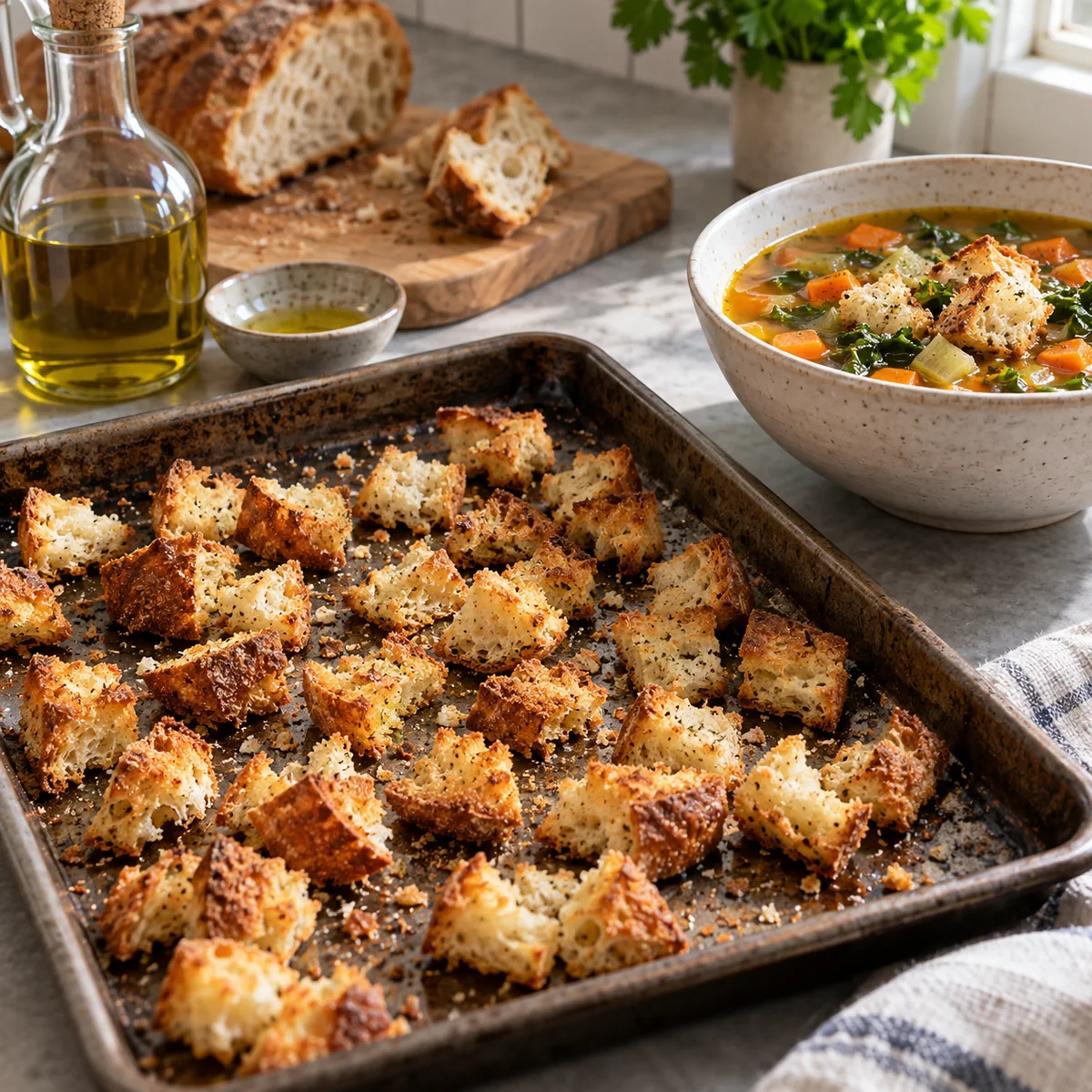
Watch the pieces as they bake because size, sugar content, and bread type affect browning. Let the croutons cool before placing them in a clean container. If you prefer a complete recipe with quantities and oven guidance, use King Arthur Baking’s homemade croutons recipe rather than guessing at a timing that suits every loaf.
5. Save heels and dry slices for breadcrumbs
Another option for safe stale bread is breadcrumbs. Dry bread can be broken up by hand or pulsed in a food processor to the texture you want. Use the crumbs as a topping, binder, or coating in a recipe that calls for them. King Arthur Baking also suggests French toast for slices that have become a little firm. If you want to make a dish containing eggs or dairy, follow that recipe’s preparation and storage directions.
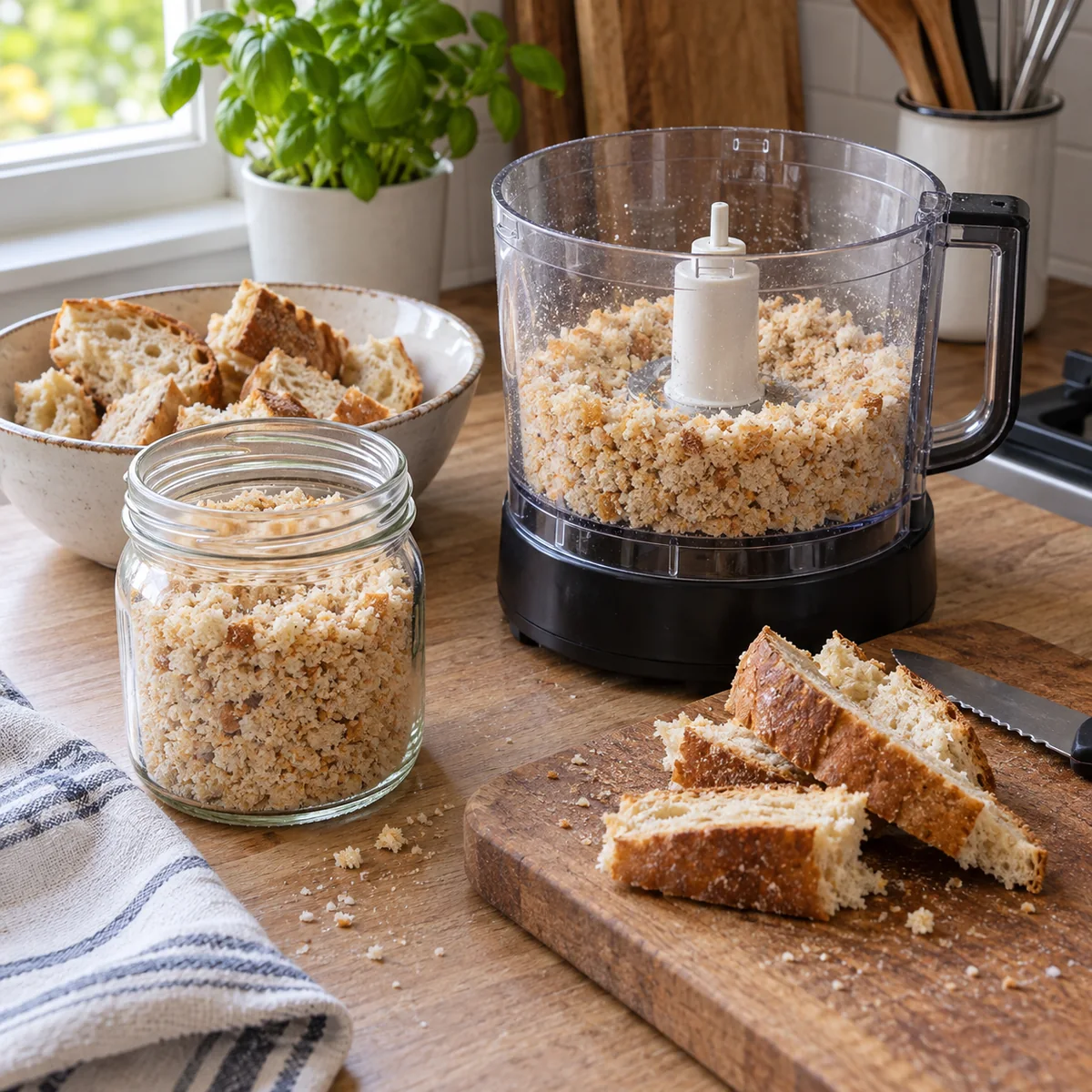
Do not keep a growing bag of bread scraps without a plan. Decide whether the next heels will be croutons, crumbs, or French toast, and note when you will make them. If you cannot use them soon, freeze safe pieces while they are still in good condition and label the container. This turns “save it for something” into an actual next step.
When bread is moldy, do not rescue it
Do not cut a spot of mold off bread and eat the rest. The U.S. Department of Agriculture’s Food Safety and Inspection Service says bread and baked goods with mold should be discarded because these porous foods may be contaminated below the visible surface. Do not sniff moldy bread to investigate it. Discard the affected bread, clean the storage spot, and check food it touched.
Freezing is a prevention step for good bread, not a way to make questionable bread safe. If you are uncertain whether you are seeing harmless flour or mold, avoid taking a chance with bread that looks or smells spoiled. The useful low-waste habit is to make the freeze decision earlier next time.
A small bread routine you can repeat
- When bread comes home: Decide what will be eaten in the next meals and freeze the rest before quality drops.
- Before freezing: Cool, slice or portion, pack airtight, and mark the date.
- At each meal: Remove only the slices or portion you need.
- When a piece is dry but safe: Choose toast, croutons, breadcrumbs, or French toast.
- When you see mold: Discard the bread and clean its storage spot.
If bread regularly goes unused, consider buying a smaller loaf or a type you enjoy enough to finish. The pantry inventory guide can help you see what is already available before shopping. For a broader use-first approach to fresh food, see our vegetable rescue guide.
Common questions
Should I put plain bread in the refrigerator?
For many plain yeast breads, refrigeration makes the bread stale faster than counter storage. Freeze the amount you will not use soon. A product with perishable ingredients or instructions to refrigerate is different; follow its label.
Can I toast bread straight from the freezer?
Yes, for ordinary frozen slices, a toaster or toaster oven is a convenient option. Take out only what you need and keep the rest well sealed.
Is stale bread safe to eat?
Dryness alone is a quality change. Inspect the bread and use it only if it is otherwise safe. If you see mold, discard bread and baked goods rather than cutting away the spot.
Download the bread rescue plan
The one-page plan helps you divide a loaf into eat-soon and freeze-now portions, note a thawing method, and choose a use for safe stale bread. Download the US Letter PDF (8.5 × 11 inches) or the A4 PDF (210 × 297 mm). Print at 100% or Actual Size.
Start with the next loaf: keep a few slices for the meals you can name and freeze the rest while it is still good.
Sources
- U.S. Environmental Protection Agency, Preventing Wasted Food at Home
- USDA Food Safety and Inspection Service, Molds on Food: Are They Dangerous?
- King Arthur Baking, How Can I Freeze My Bread?, How to Defrost Bread, and What to Do with Stale Bread
- FoodSafety.gov, Cold Food Storage Chart