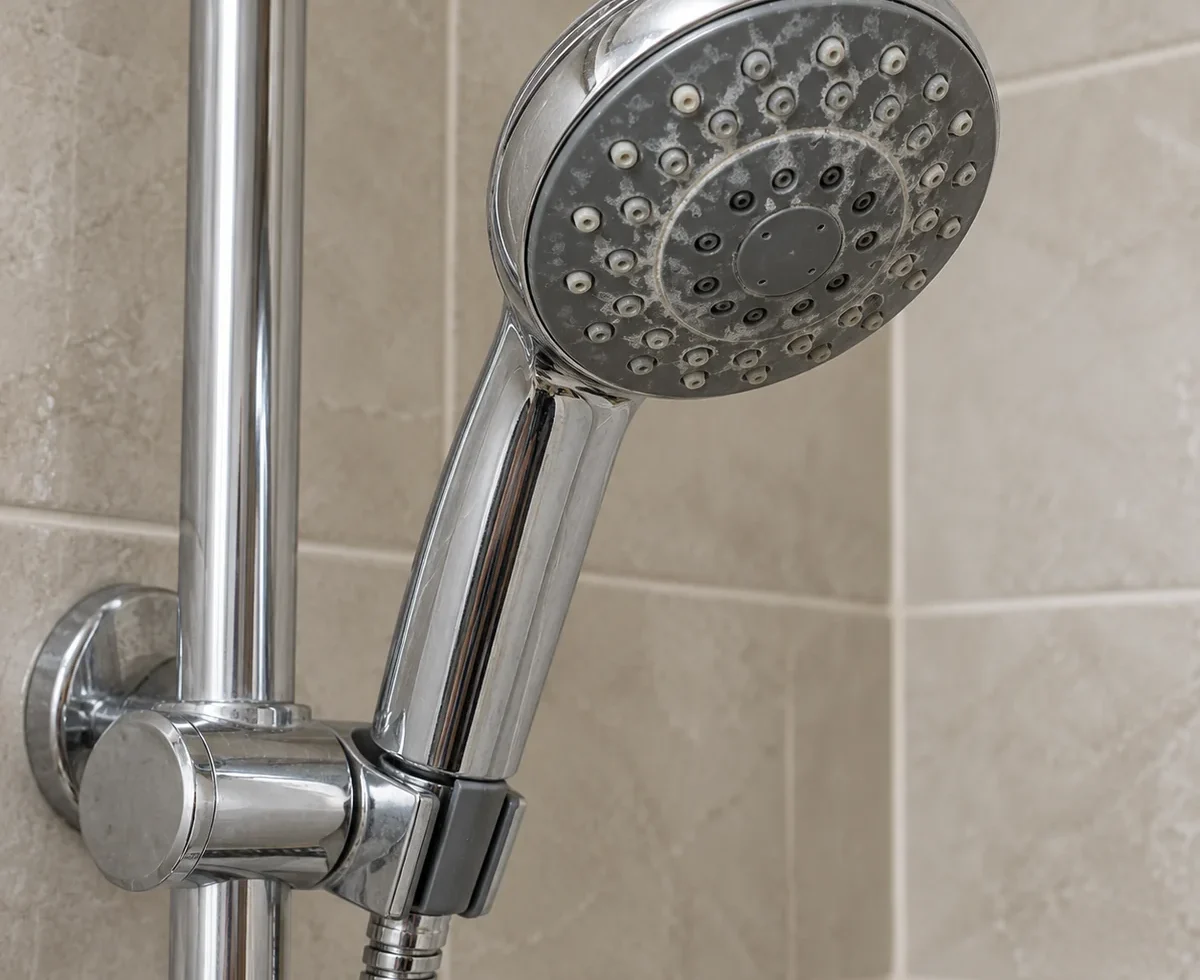
When a shower begins spraying sideways or feels weaker, the showerhead may be coated with mineral deposits. Before buying a replacement, inspect the spray face. Many deposits can be removed with a gentle wipe and a cleaning method approved for the fixture. The finish and nozzle design matter, so the showerhead’s care instructions come first.
The quick answer: Turn off the water and look for white crust around the spray holes. If your model has flexible rubber nozzles, rub them gently as its maker directs. For stubborn scale, use the manufacturer’s approved cleaner or vinegar method and dilution; rinse thoroughly and test the spray. Do not poke holes with needles or remove internal flow parts.
Check whether the showerhead is actually the problem
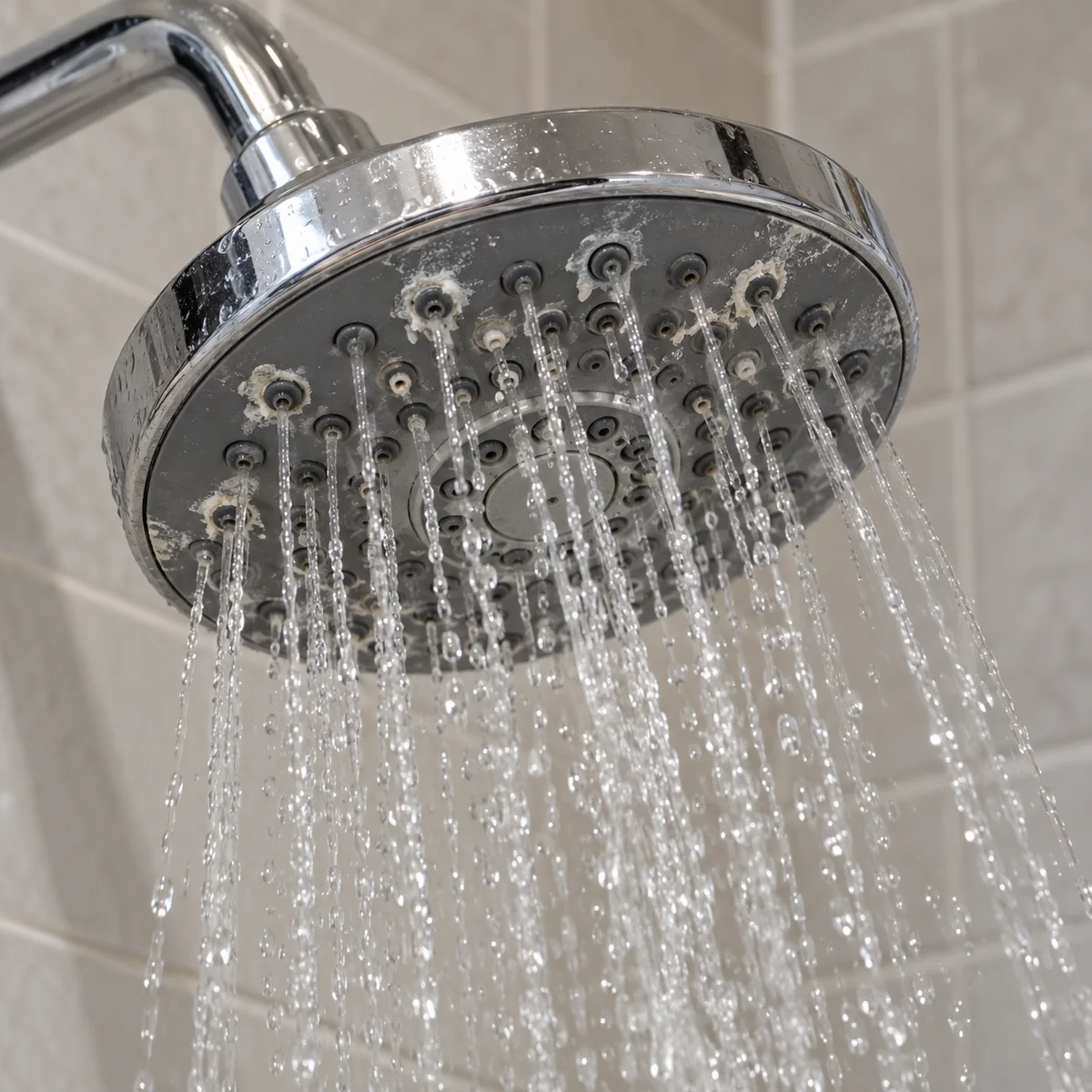
Look at the face of the showerhead while it is off. Chalky white deposits around individual nozzles and a few jets shooting in odd directions point to local buildup. The U.S. Environmental Protection Agency recommends inspecting showerheads for scale because it can affect performance. If every faucet in the home has suddenly lost pressure, a dirty showerhead may not explain the change.
Find the model’s care guide if you can. Some finishes and showerheads have specific cleaning instructions. Check whether the spray face has soft rubber nozzles, a removable head, or a screen washer the manual allows you to access. You can start with the outside without taking the fixture apart.
Try the gentlest fix first
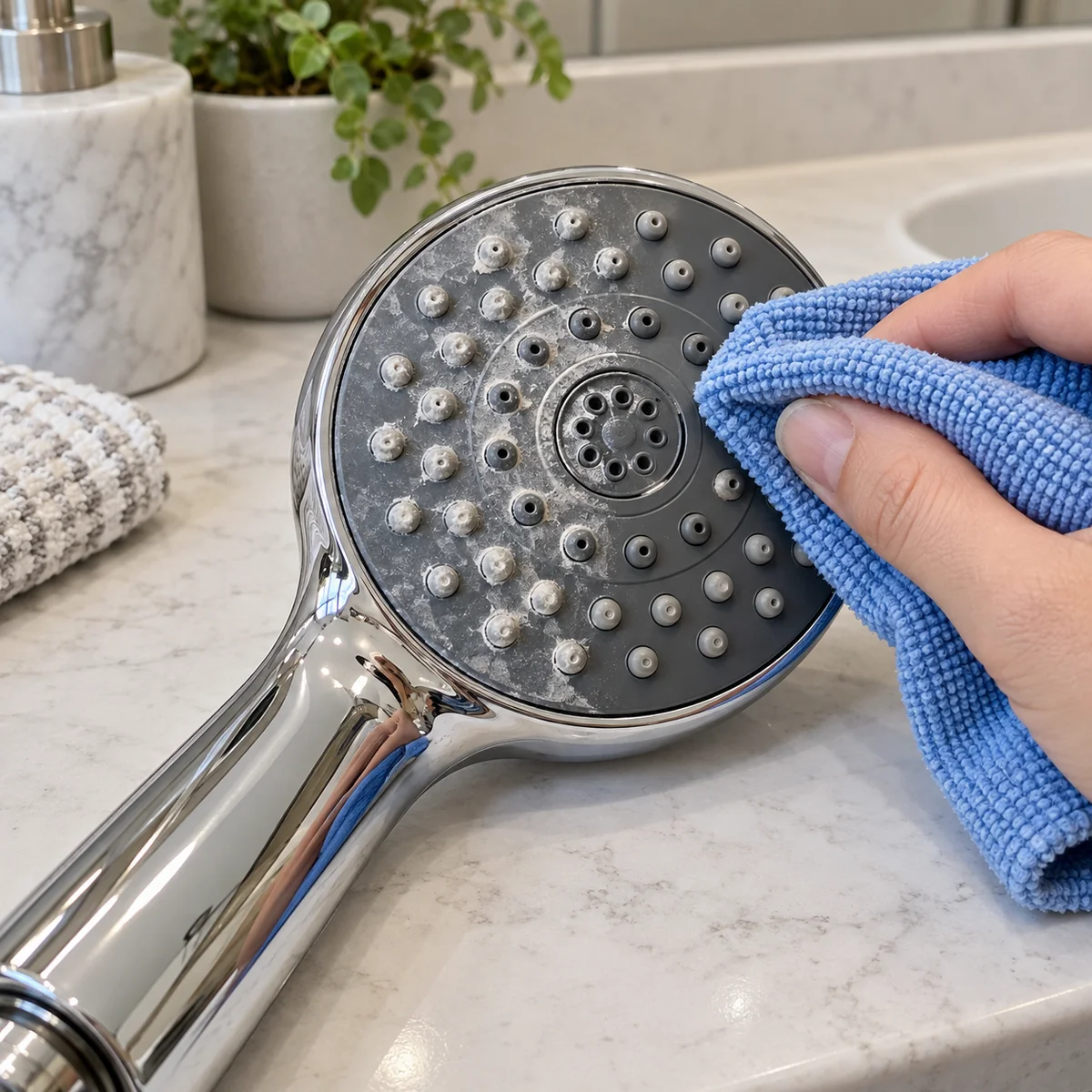
With the water off and the fixture cool, wipe the spray face with a damp soft cloth. On showerheads with flexible rubber nozzles, gently rub the nozzles with a finger if the maker recommends it. Delta advises this approach for its Touch-Clean showerheads. Run the water briefly afterward to see whether the spray improves.
Avoid wire brushes, sharp pins, or drilling into spray holes. EPA guidance warns that boring holes or manually digging out deposits can damage performance and increase water use. The goal is to loosen surface buildup without changing the nozzle itself.
Use vinegar only when the finish instructions permit it
If scale remains, consult the care guide for the product and finish. EPA says white vinegar or a suitable cleaning product can remove showerhead scale. Delta recommends a 50/50 mix of white vinegar and water for harder deposits on certain non-Touch-Clean models. That is an example from one manufacturer, not a universal rule for every finish.
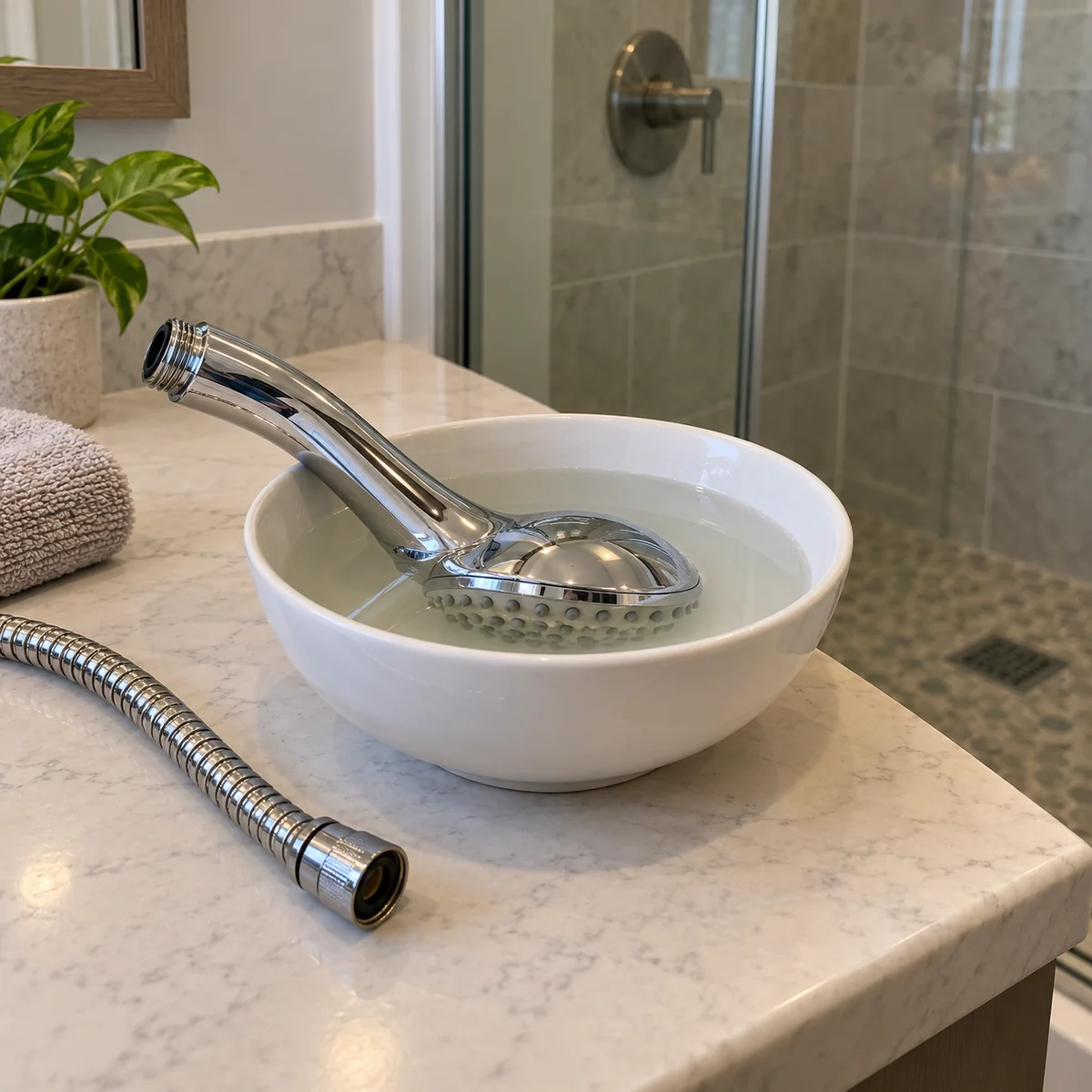
When the head can be removed as the manual describes, a shallow bowl can make a controlled soak easier. Follow the maker’s dilution and time guidance, keep electrical fixtures and other surfaces clear, and do not mix vinegar with bleach or another cleaner. If the maker does not approve a soak, choose its recommended method instead.
Rinse thoroughly and reinstall securely
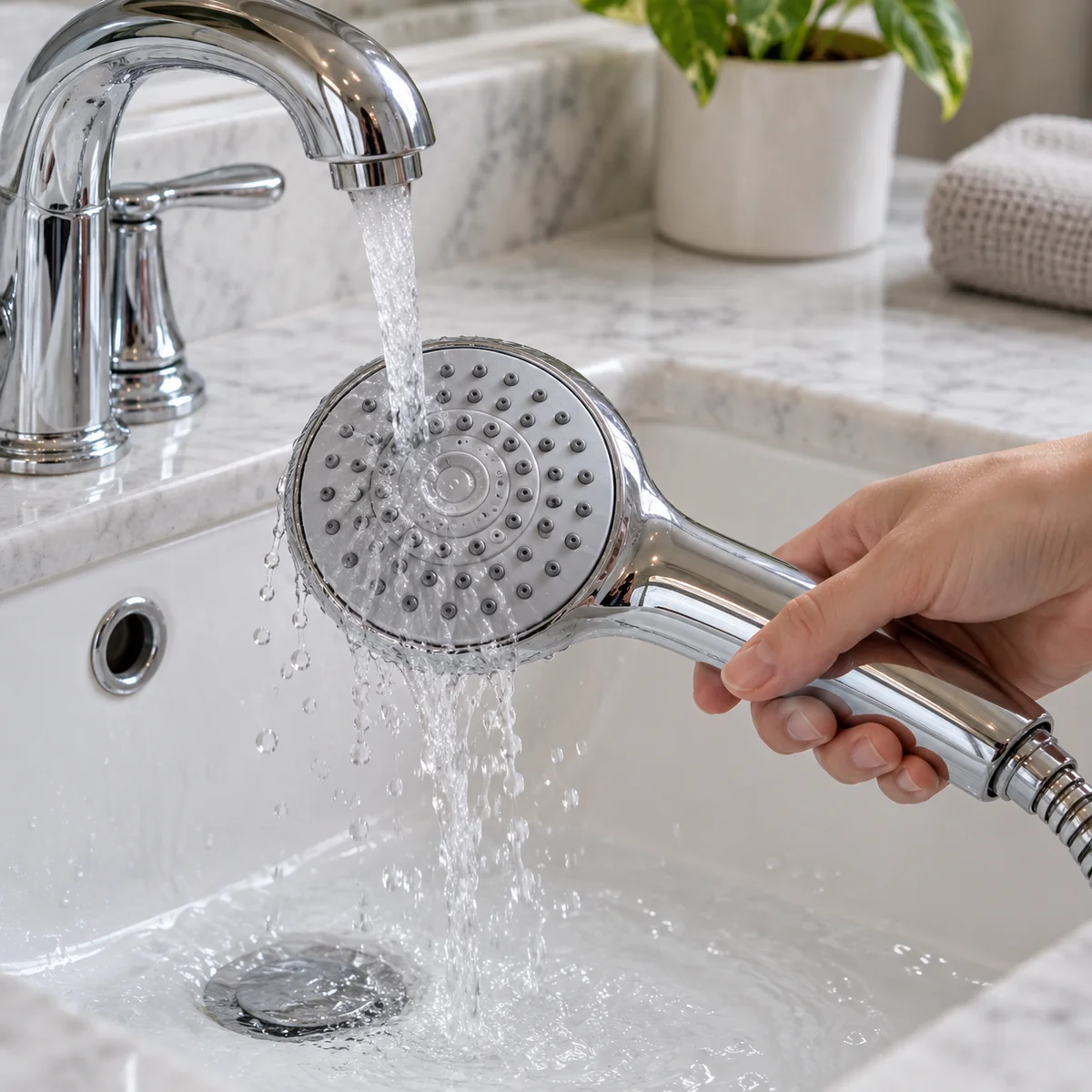
After the approved cleaning time, rinse away the cleaner and loosened deposits with water. Wipe the outside with a soft cloth. If you removed the head, reinstall it as the manual directs; preserve any gasket or screen washer in the correct position. Do not overtighten a plastic connection.
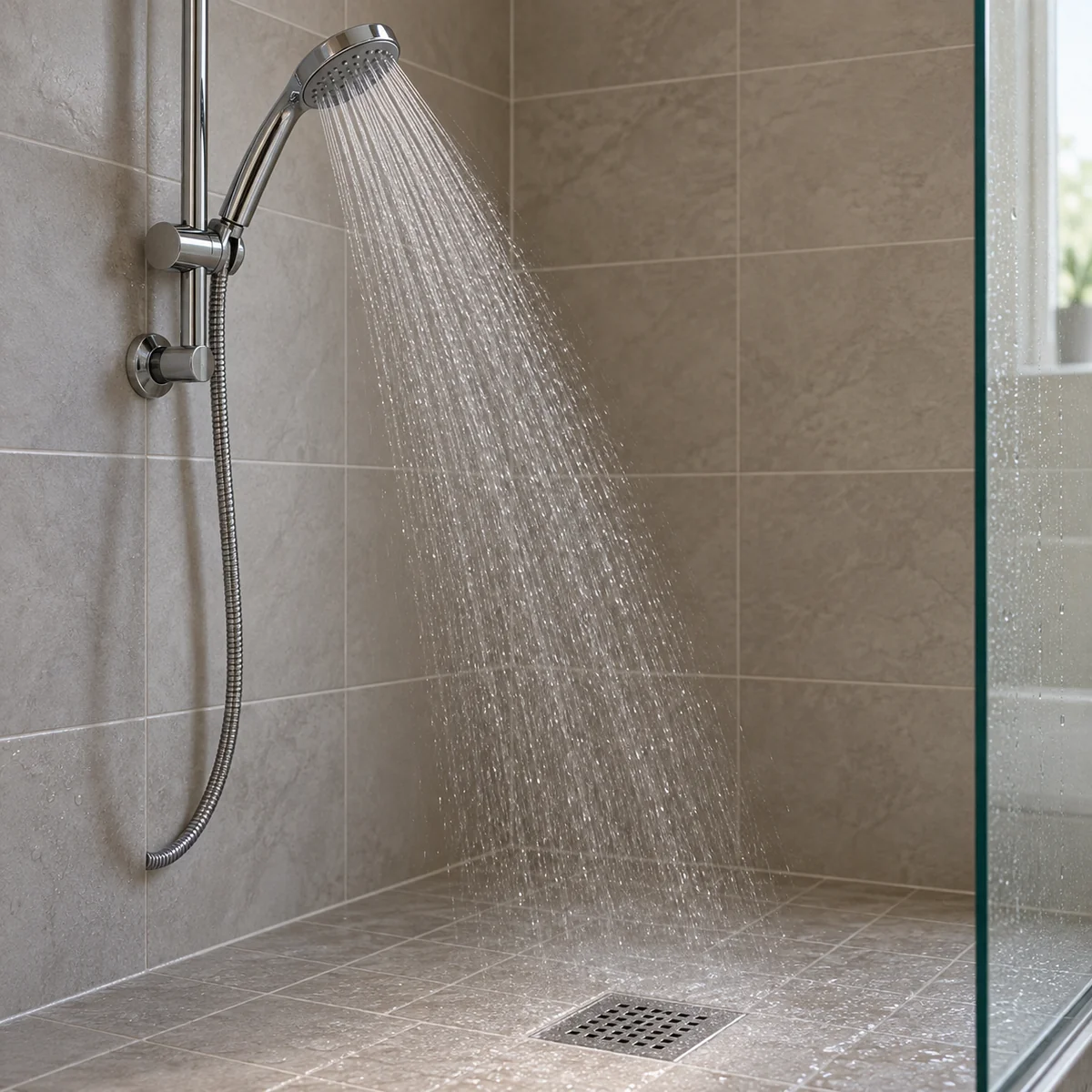
Run the shower and check both the spray pattern and the connection for leaks. A clean spray face should help if scale was the cause. If water still escapes at the joint, stop and check the connection instructions before using the shower again.
Know when cleaning is not enough
If the pattern remains uneven, the manual may have a screen-cleaning step for your model. If the fixture is cracked, leaks from its body, or cannot be reattached securely, cleaning will not repair the damage. A sudden pressure change across several fixtures also deserves a broader plumbing check.
Inspect the spray face periodically and clean when scale appears rather than waiting for a severe blockage. EPA also advises cleaning water fixtures more often when mineral buildup or slimy film is present, following manufacturer recommendations. For another reusable-cloth cleaning routine, see our window cleaning guide.
Questions people ask
Can I leave a showerhead in vinegar overnight?
Use the time and dilution stated by its manufacturer. Soaking advice varies by model and finish, and longer is not automatically better.
Should I poke a blocked hole with a pin?
No. EPA guidance cautions against boring into showerhead holes because it can affect performance. Use the approved nozzle-cleaning or soaking method instead.
Does cleaning always restore weak water pressure?
No. It may help when visible scale blocks the spray face. If flow is still poor after cleaning, follow the fixture’s troubleshooting instructions or have the plumbing checked.
Sources
- U.S. Environmental Protection Agency WaterSense: Home Maintenance — inspecting showerheads for scale and removing it.
- Delta Faucet: How Can I Clean Mineral Deposits From My Shower Head? — rubbing flexible nozzles and model-specific diluted vinegar guidance.
- U.S. Environmental Protection Agency: Legionella in the Indoor Environment — cleaning fixtures with buildup and following manufacturer directions.
- EPA WaterSense at Work: Showerheads and Bath and Shower Diverters — avoiding damage to spray holes.