The lower edge of a shower curtain can collect soap film, stay damp, and start to look ready for the trash long before the rest of the curtain is worn out. A quick inspection tells you whether it needs a wash, a careful wipe, or a replacement. The important distinction is between the decorative fabric curtain and the liner that sits inside the tub: they may have different care instructions.
The quick answer: Check the care label first. Wash a machine-washable fabric curtain according to its label. For a plastic or PEVA liner with no washing instructions, wipe both sides with mild soapy water, rinse, and hang it fully open to dry. Clean the rod-side hooks and the damp lower edge while they are accessible. Keep the liner inside the tub during showers and spread it out afterward so moisture can escape.
First, identify what actually needs cleaning
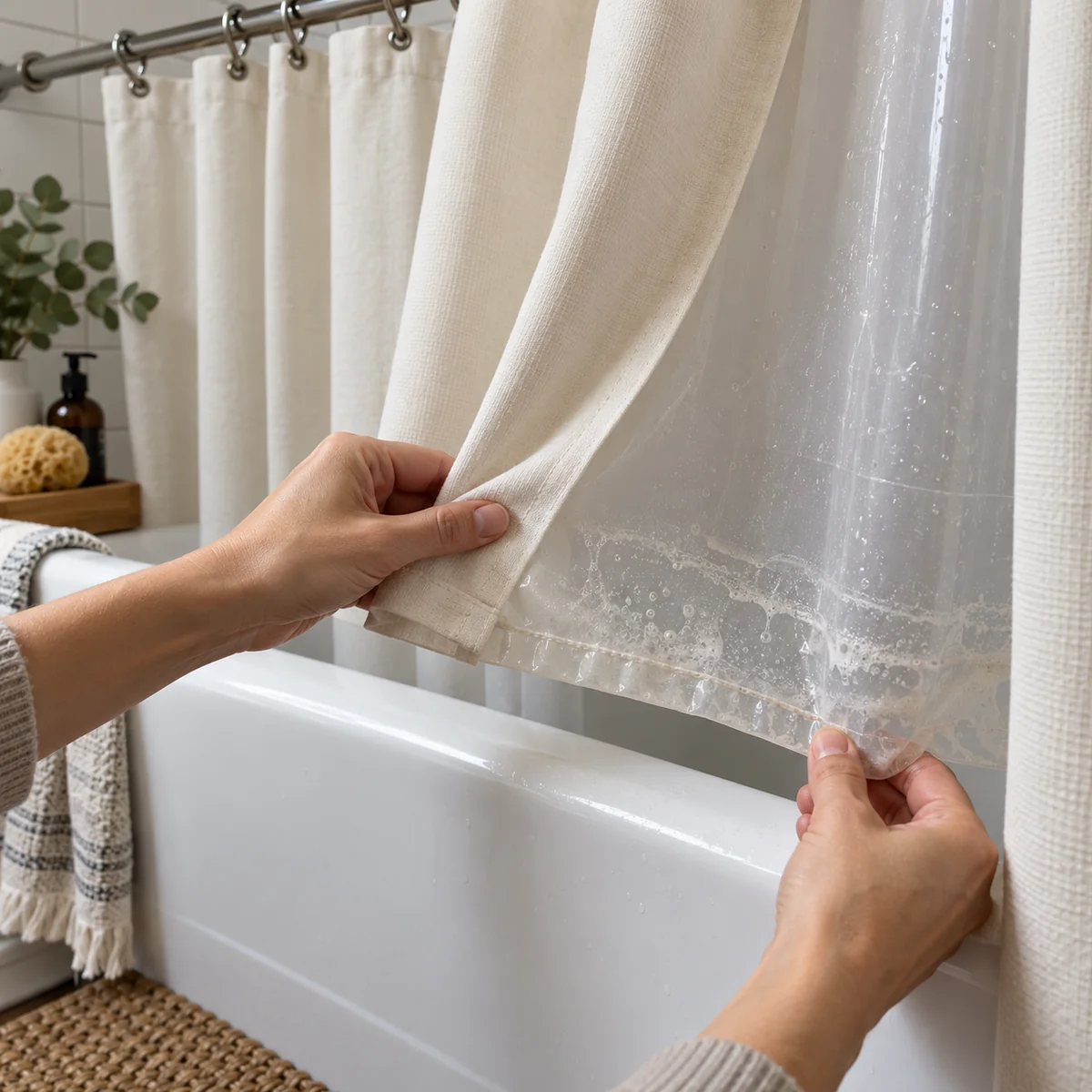
Look at the bottom hem, folds, hook holes, and the side facing the shower. A slippery film or discoloration near the bottom often needs more attention than the upper half. Check whether the surface is intact: a torn liner, cracked coating, or ripped hanging holes may no longer do its job even after cleaning.
If you see extensive mold on the curtain or a larger moisture problem on walls or ceilings, address the moisture source as well. The U.S. Environmental Protection Agency notes that recurring shower mold calls for better ventilation and more frequent cleaning. People with health concerns about mold should seek appropriate professional advice before cleanup.
Remove the curtain and liner without tangling the hooks
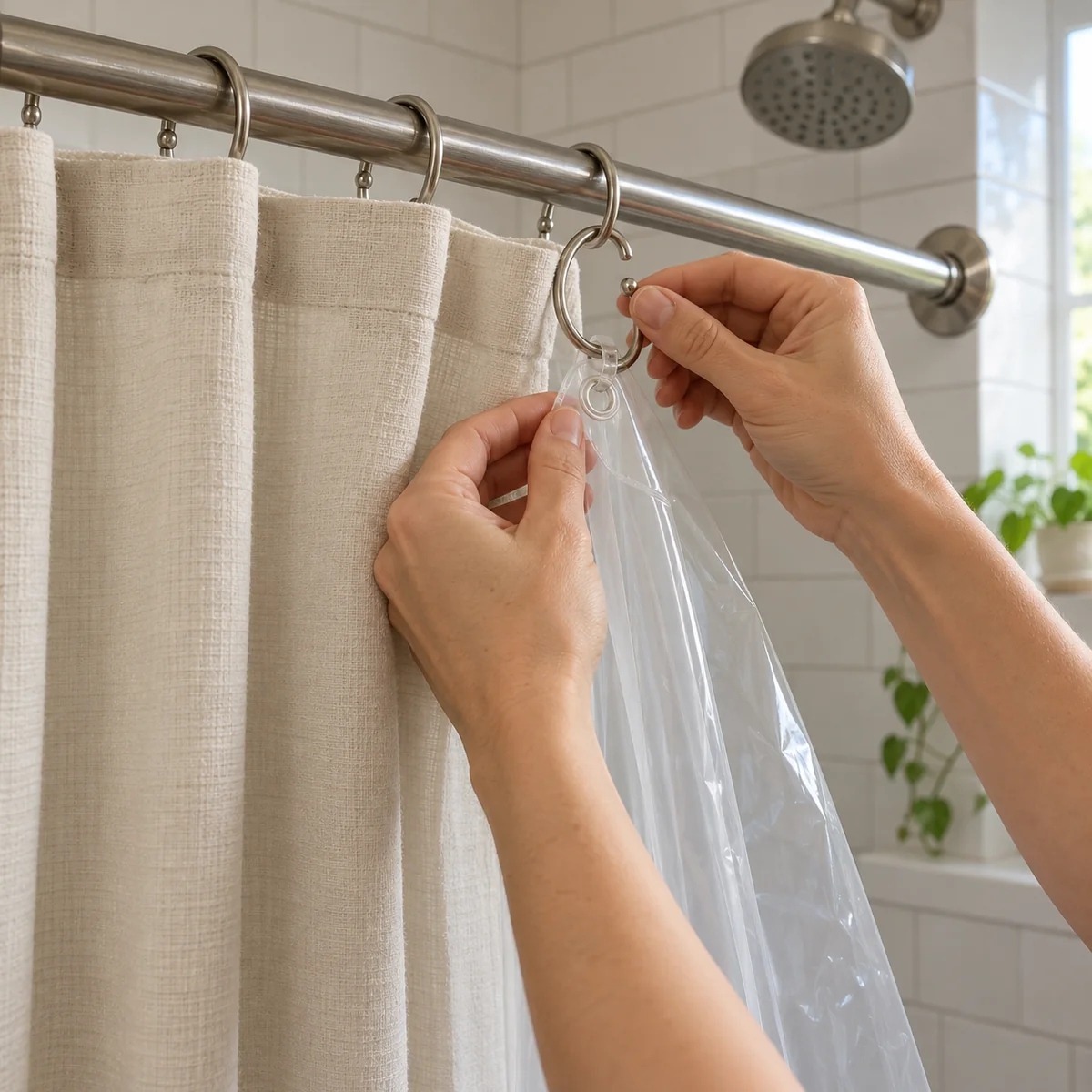
Open the shower rings one at a time and take down only the layer you are cleaning. If the liner and curtain share rings, keep the hooks together in a small bowl so none disappear. Photograph the hanging order if the setup is awkward to reassemble. Put the removed layer in the tub or on a clean surface rather than dragging its wet edge over the floor.
Read the sewn-in care label before choosing a wash cycle or water temperature. Material names alone are not enough: one polyester curtain may allow machine washing while another liner may say “do not wash.” For example, IKEA lists machine washing for one polyester curtain but “do not wash” for a clear curtain. Your own product’s label decides.
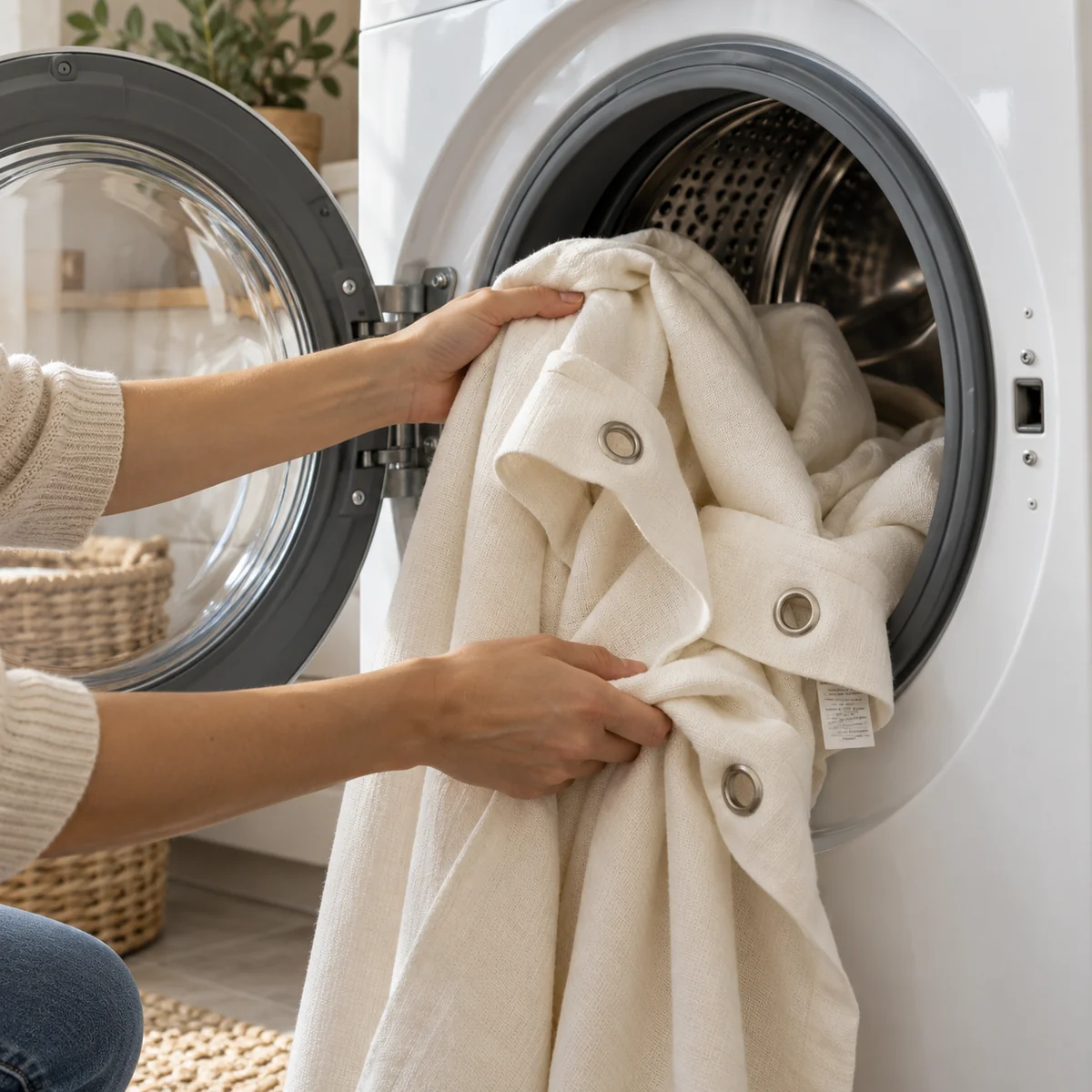
Wash a fabric curtain according to its label
If the fabric curtain is machine-washable, follow its label for cycle, temperature, detergent, and drying. Remove rings and hooks first. Give the curtain room to move in the drum rather than packing it tightly with a full load of towels. If the label calls for hand washing, use that method instead. Do not assume a hot wash or tumble dryer is safe for water-repellent coatings, prints, or trim.
Once clean, hang the curtain so it can dry completely before pushing it into tight folds. A curtain that goes back damp into a closed bathroom can quickly return to the same problem.
Wipe a liner that should not go in the washer
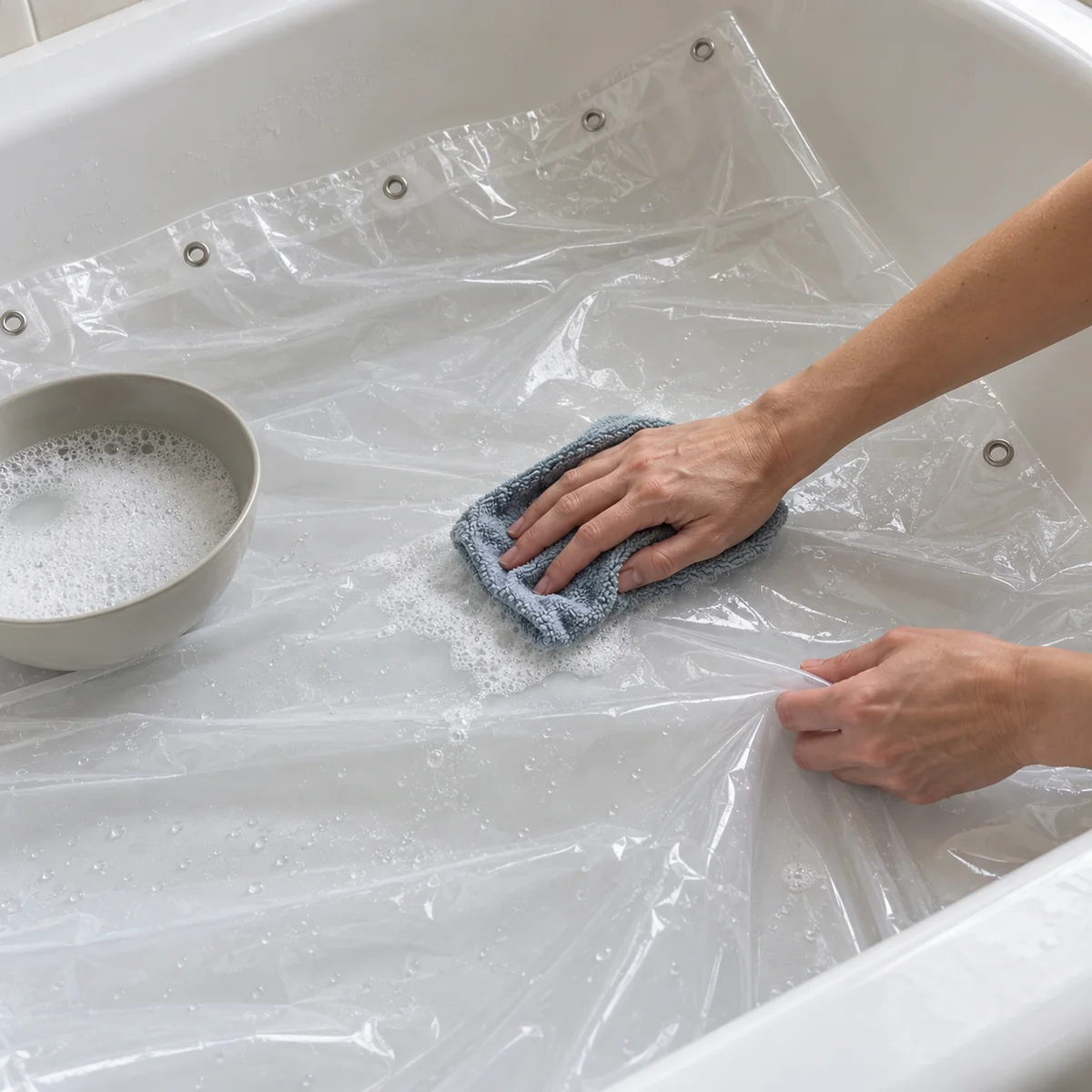
For a plastic or PEVA liner without machine-wash instructions, lay it flat in the clean tub. Wipe the shower-facing side and the lower edge with a reusable soft cloth, warm water, and a little mild dish soap. Turn or lift it to clean the other side, then rinse away the soap. Avoid harsh scrubbing that could tear a thin liner. If its manufacturer gives specific cleaning directions, follow those instead.
Hang the liner fully open to dry, with the lower edge inside the tub. Skip a recipe of mixed cleaning products. The CDC warns never to mix bleach or disinfectants with other cleaners. This routine uses soap and water for ordinary film; heavy contamination or material damage may call for a different decision.
Clean the hooks and put each layer back in the right place
While the rod is clear, wipe reachable rings and the section of rod they slide on with a damp cloth; dry them before rehanging. Replace any broken hook that cannot hold the curtain securely. Rehang the fabric curtain on the outside and the liner on the inside of the tub. Check that the liner reaches into the tub without bunching on the floor or blocking drainage.
After each shower, pull the curtain and liner across the rod so they are spread out rather than gathered in a wet knot. Run a bathroom exhaust fan or open a window when practical. The EPA recommends ventilation during showering because excess moisture supports mold growth. Fix leaks and persistent condensation rather than relying on another cleaning product.

When cleaning is not enough
Keep a curtain or liner if it cleans up, dries properly, and still hangs and contains water as intended. Replace a layer if it is torn, brittle, no longer hangs safely, or has persistent contamination you cannot clean and dry. Do not promise yourself that a damaged liner will work for one more month if it lets water reach the floor or wall.
For another small bathroom habit that keeps reusable items usable, see our water-bottle lid and straw cleaning guide.
Common questions
Can a plastic shower liner go in the washing machine?
Only if its manufacturer says it can. Some curtains are machine-washable and others explicitly are not. When you cannot verify the care instructions, a gentle hand wipe is the conservative choice.
Can I put the liner in the dryer?
Do not do so unless the product’s care instructions permit it. Hanging the liner fully open lets you check that the bottom edge has dried.
Why does the lower edge get dirty again?
It stays wet longer, often folds against itself, and catches soap residue. Clean that edge and improve drying and ventilation. If the surrounding bathroom repeatedly develops mold, look for a moisture problem.
Do I need bleach to clean ordinary soap film?
No. For routine film, start with mild soap, water, a soft cloth, and a thorough rinse. If you choose any stronger product for a separate problem, follow its label and never mix it with another cleaner.
Sources
- U.S. Environmental Protection Agency: A Brief Guide to Mold, Moisture and Your Home — moisture control and recurring bathroom mold.
- U.S. Environmental Protection Agency: Interactive Mold House Tour — shower ventilation.
- Centers for Disease Control and Prevention: Cleaning and Disinfecting with Bleach — product-mixing safety.
- IKEA: BANJANTRÄD Shower Curtain and IKEA: NÄCKTEN Shower Curtain — examples of different manufacturer care instructions.