An old bath towel can still be useful after it stops feeling good after a shower. The trap is turning every worn towel into a drawer full of rags you never reach for. Give each towel one clear next destination: keep using it, make a small working set, offer it where it is wanted, or use a textile collection service that accepts it.
Quick answer: Wash and dry the towels, then sort them by condition. Keep intact towels that still do their job. Cut only a few clean, absorbent towels into cloths sized for tasks you already do. Keep clean and used cleaning cloths separate, launder and dry them before reuse, and ask a local shelter or textile collector what it accepts before dropping off the rest.
1. Sort by condition before you cut anything
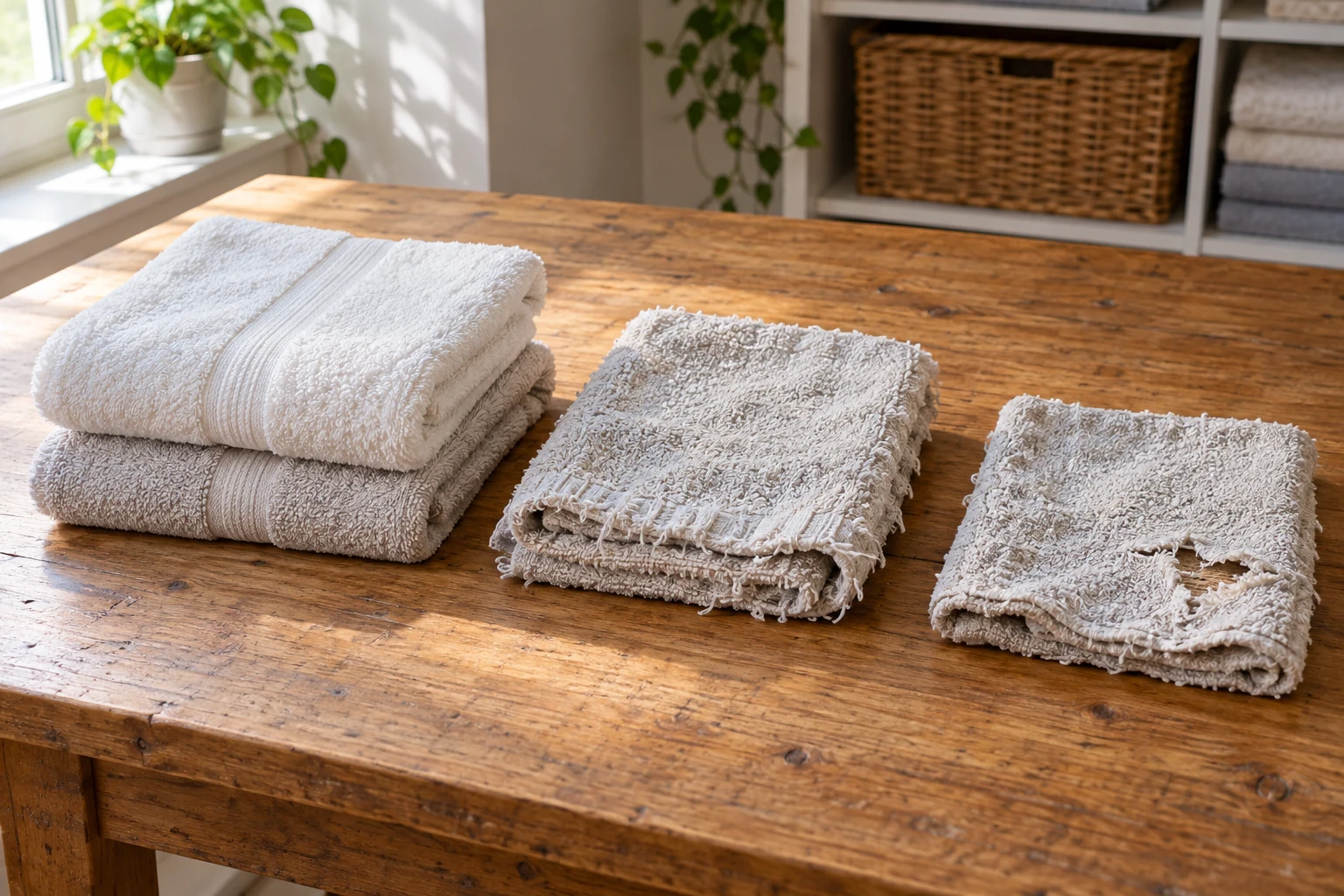
Put clean, dry towels into three groups. Still useful: intact, absorbent towels that can remain in the bathroom, become a pet-drying towel at home, or be offered for direct reuse. Good for cloths: absorbent fabric with frayed edges, a stain, or a worn corner. Ready to leave: towels you cannot use or store responsibly.
Do not cut a good towel simply because it is old. If it is clean and usable, keeping it whole preserves more options. If a towel is moldy, heavily contaminated, or cannot be cleaned and dried, do not put it into a donation or textile bin. Collection rules differ, so confirm the receiver’s requirements.
2. Make only the cleaning cloths you will actually use
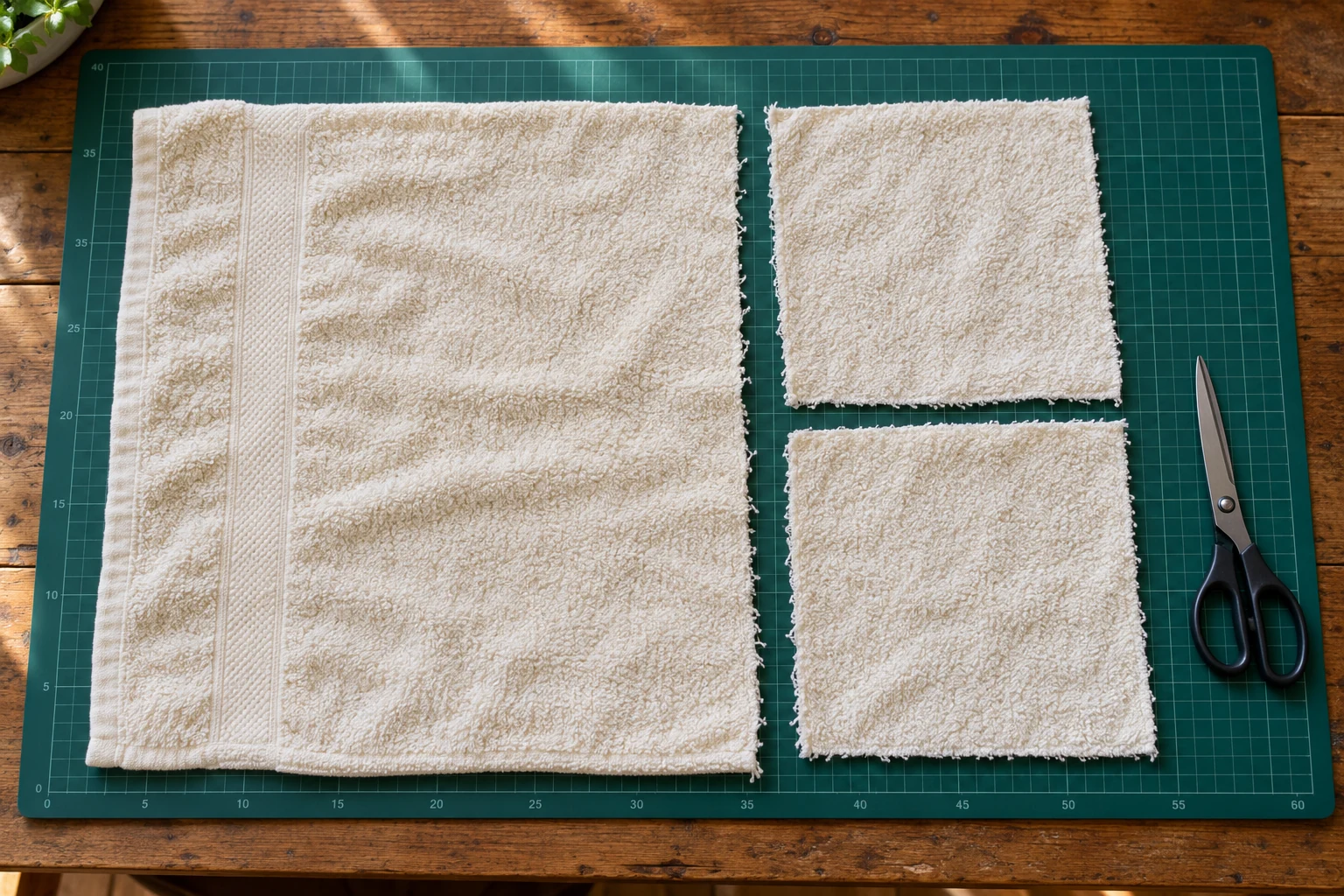
Choose one clean, absorbent towel from the middle group. Lay it flat on a stable surface and cut a few rectangles large enough to fold comfortably in your hand. There is no universal size: a small counter cloth and a larger spill cloth do different jobs. If a cut edge sheds badly, hem it if you can or choose a different piece. Avoid leaving loose threads where they could catch in a tool or appliance.
Stop after the number of cloths you can realistically rotate and wash. A small set can replace some disposable wiping for ordinary cleaning; the EPA’s reuse guidance recommends washable towels and rags in place of disposable ones where appropriate. More rags are not automatically less waste if they become clutter.
3. Give the cloths specific jobs and separate clean from used
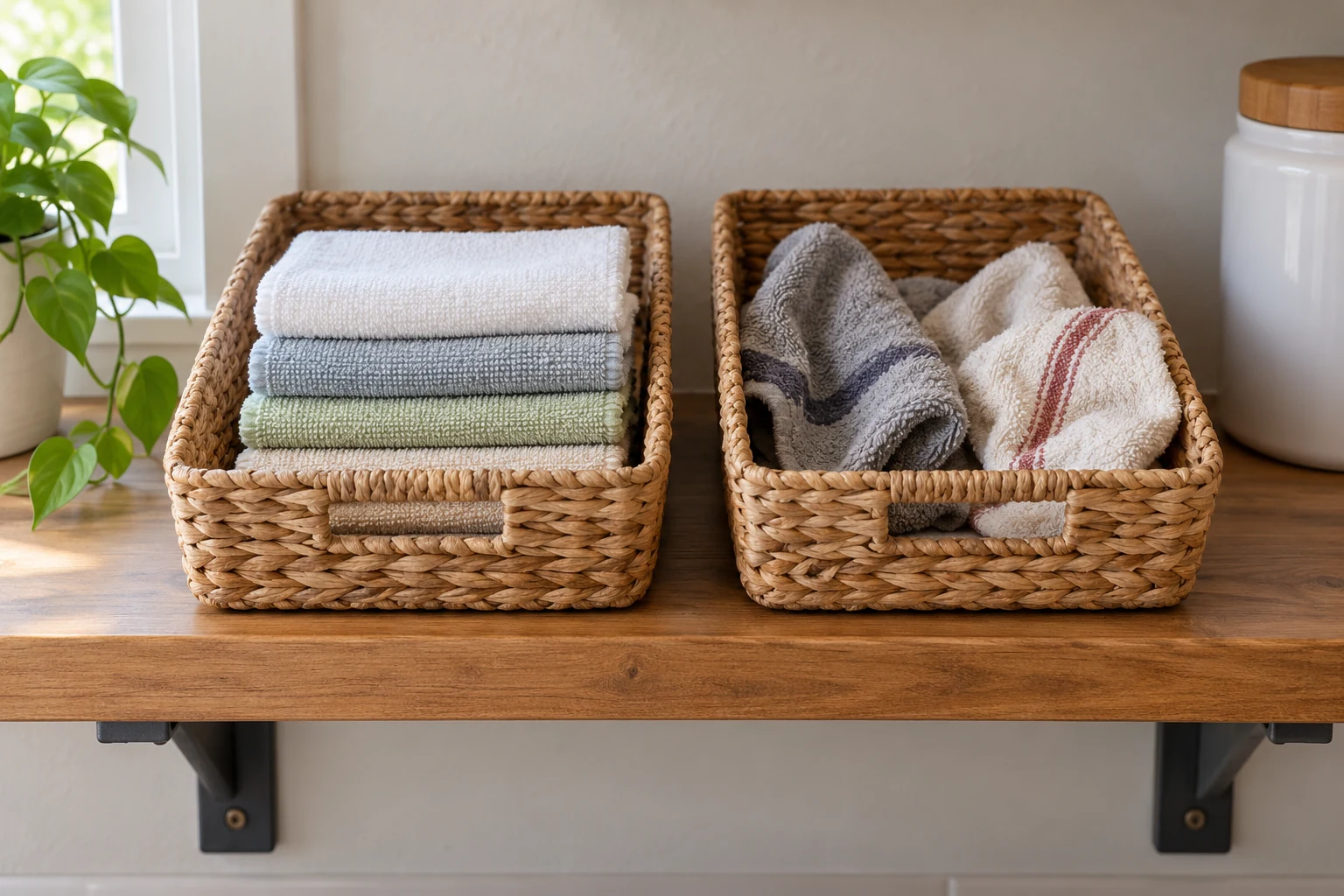
Assign the new cloths to jobs you already have: wiping nonfood-contact surfaces, absorbing a small spill, drying shoes at the entry, or padding an item while moving it. Keep cloths used for dirtier floor or bathroom work out of kitchen and hand-drying use. A simple shelf or pair of existing baskets is enough; keep clean pieces apart from those waiting for laundry.
This separation follows a basic cleaning principle. The CDC’s guidance for reusable cleaning supplies calls for clean and soiled cloths to be kept separate. A home does not need a clinical cleaning system; it does need to avoid moving a dirty cloth into a clean job.
4. Wash, dry, and return the set to its place
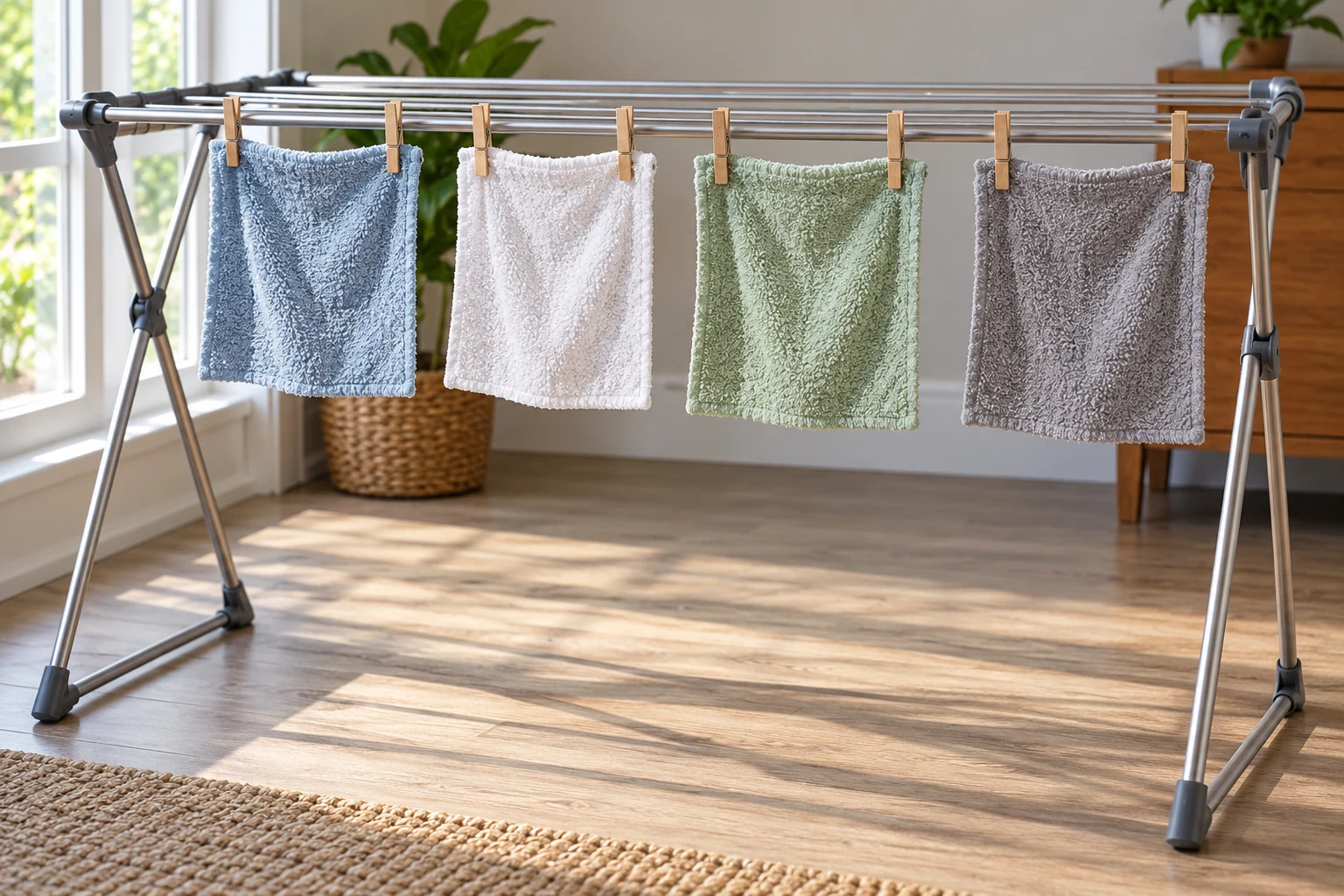
After use, place soiled cloths where they can await laundry without sitting wet in a closed pile. Wash according to the towel’s care label and the soil involved. Let every piece dry fully before storage. The CDC advises laundering used cleaning cloths and letting them fully dry before reuse.
If a cloth starts to smell musty or no longer cleans well, wash and reassess it rather than returning it to the clean basket. Our towel odor guide covers the drying and laundry habits that help keep towels usable.
5. Find a real home for the remaining towels
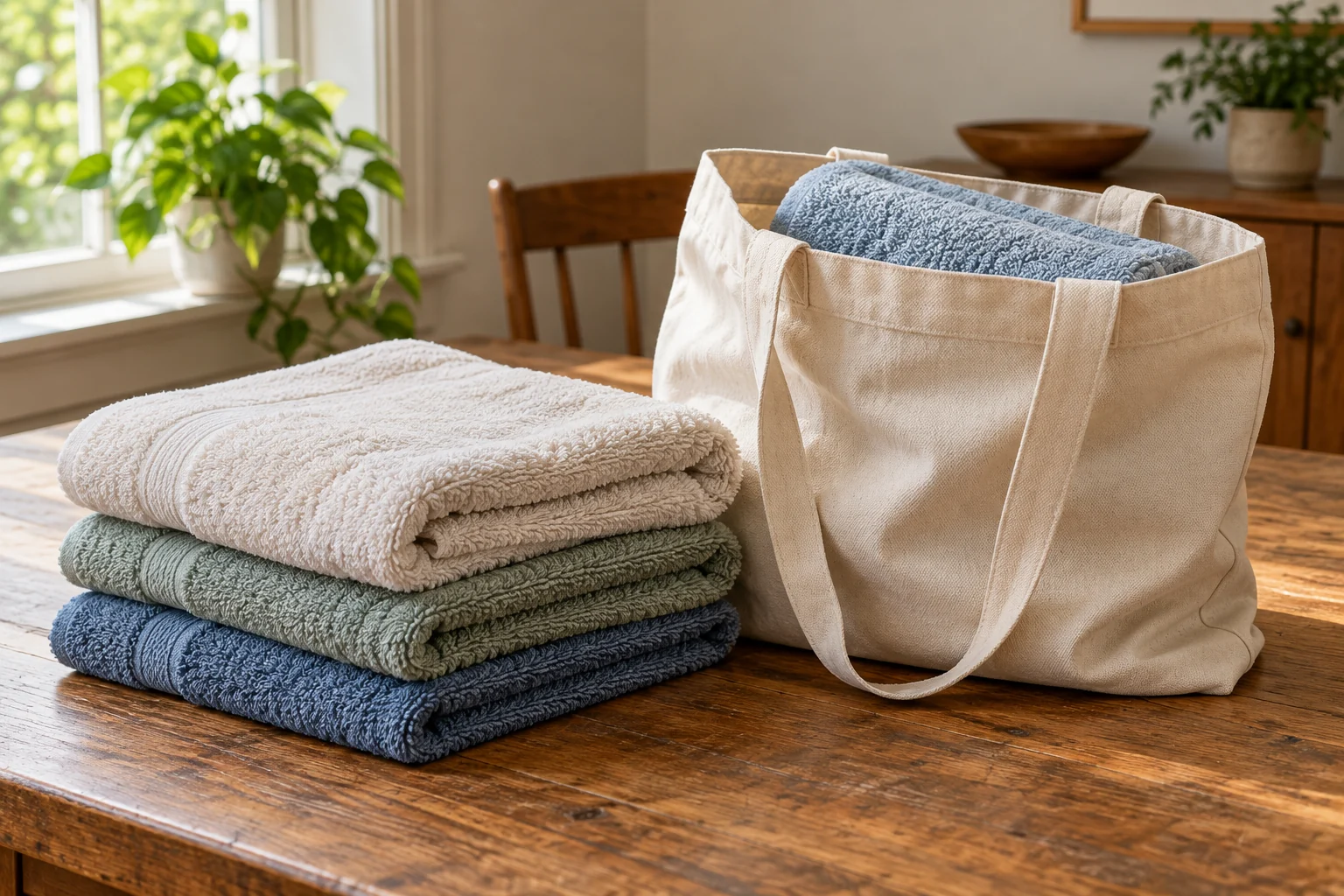
For clean, still-useful towels you will not keep, ask a local animal shelter whether it currently needs them and what condition it accepts. The ASPCA specifically recommends checking with a local shelter first about towel and blanket donations. Do not leave a bag outside a closed facility.
For worn fabric beyond your household set, find a textile drop-off that explicitly accepts towels and damaged material. New York City Sanitation lists towels among household textiles accepted at many sites and says items should be clean, dry, odorless, and bagged. That is an example, not a universal rule: local services, charities, and take-back programs set their own lists. Check before traveling, and never put towels in a curbside recycling bin unless your local program says to.
The useful limit is simple: keep a modest working set, give good items where they are genuinely wanted, and send the rest to a confirmed collection path. Reusing a towel should make the home easier to maintain, not create another pile to manage.
Common questions
Should I cut every old towel into rags?
No. Keep functional towels whole and cut only enough worn fabric for tasks you regularly do. Confirm a destination for the remainder.
Can animal shelters use old towels?
Some can, but needs and acceptance rules change. Contact the shelter before bringing clean towels, and follow its current instructions.
Can worn towels go in household recycling?
Usually they need a textile collection route rather than a standard curbside container. Check your local program for accepted materials and preparation rules.