A room can fill with toys even when a child plays with only a small part of what is there. More bins do not automatically fix that problem. A better first move is to make the play area easy to use and reset: check safety, keep a manageable selection within reach, store some suitable extras for later, and give unwanted usable toys a real next home.
This guide shows how to organize kids’ toys without buying storage. It uses shelves, baskets, and boxes you already own. Because toys are children’s products, safety decisions come before any reuse or donation plan. The right setup depends on the ages and abilities of the children in your home, especially when siblings of different ages share a room.
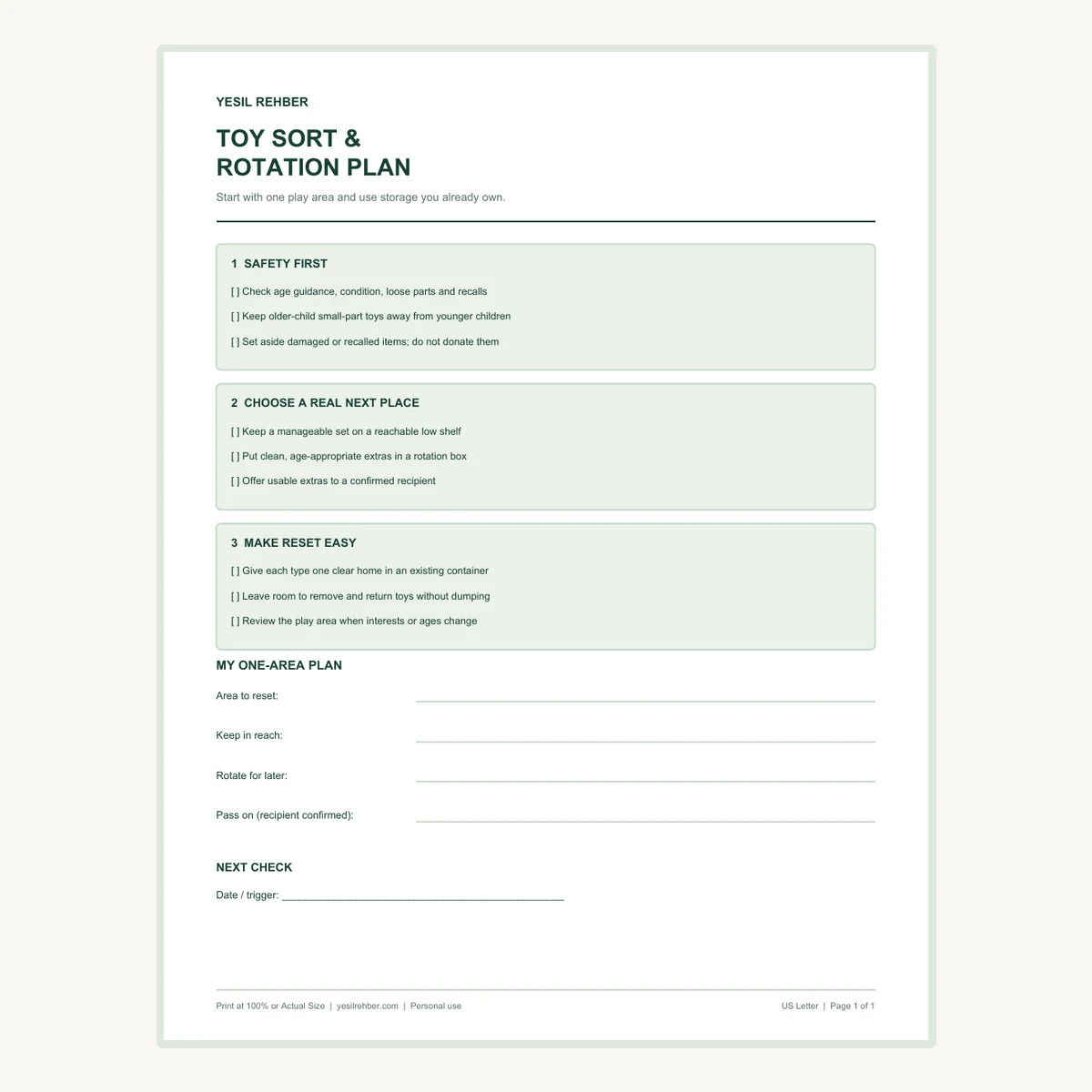
Free Toy Sort & Rotation Plan
Use the one-page plan to check safety, choose a small play-area reset, and record what stays in reach, rotates for later, or goes to a confirmed recipient. Choose US Letter or A4 and print at 100% or Actual Size.
Start with one play area, not every toy in the house
Choose the floor and one shelf, a playroom corner, or a single toy cupboard. Give yourself room to see each item. Bring together the toys that belong in that area, then separate them into simple groups: currently played with, worth storing for later, ready to pass on, and needs a safety or condition decision. This is a sorting tool, not a rule that every group must be the same size.
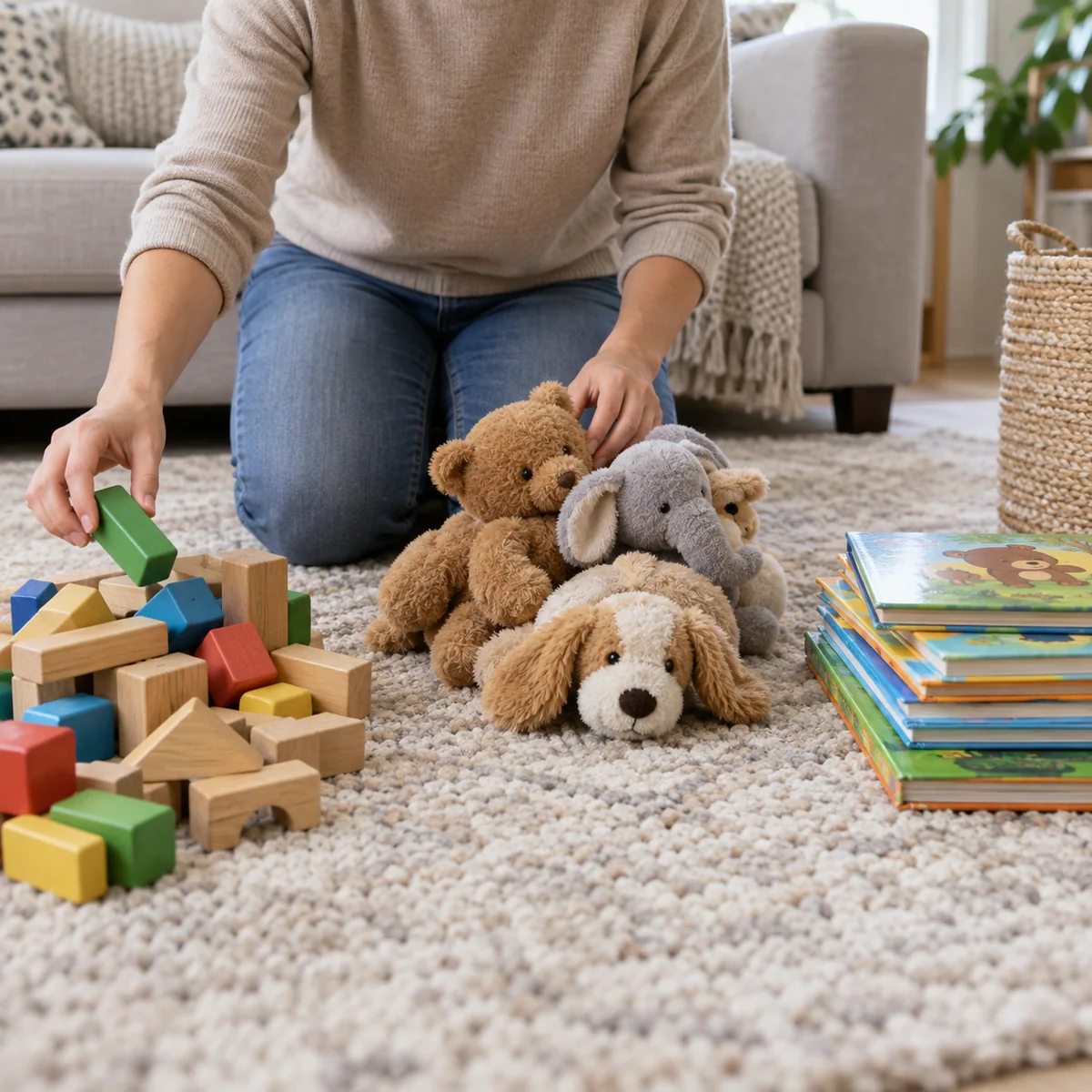
Leave the rest of the home alone until this area works. A child who is old enough can help choose favorite play materials and decide where they are easy to return. Keep sentimental decisions separate from the immediate floor reset; a special item may deserve its own place even if it is not played with every day. For a wider household approach, see our decluttering guide.
Check safety before a toy goes back on the shelf
Look for the manufacturer’s age guidance and instructions. The U.S. Consumer Product Safety Commission says to match toys to a child’s age and abilities, and to keep small balls and toys with small parts away from children younger than 3. In a mixed-age home, an older child’s toy can still be reachable by a younger child. Store those items separately and supervise according to the product’s guidance.
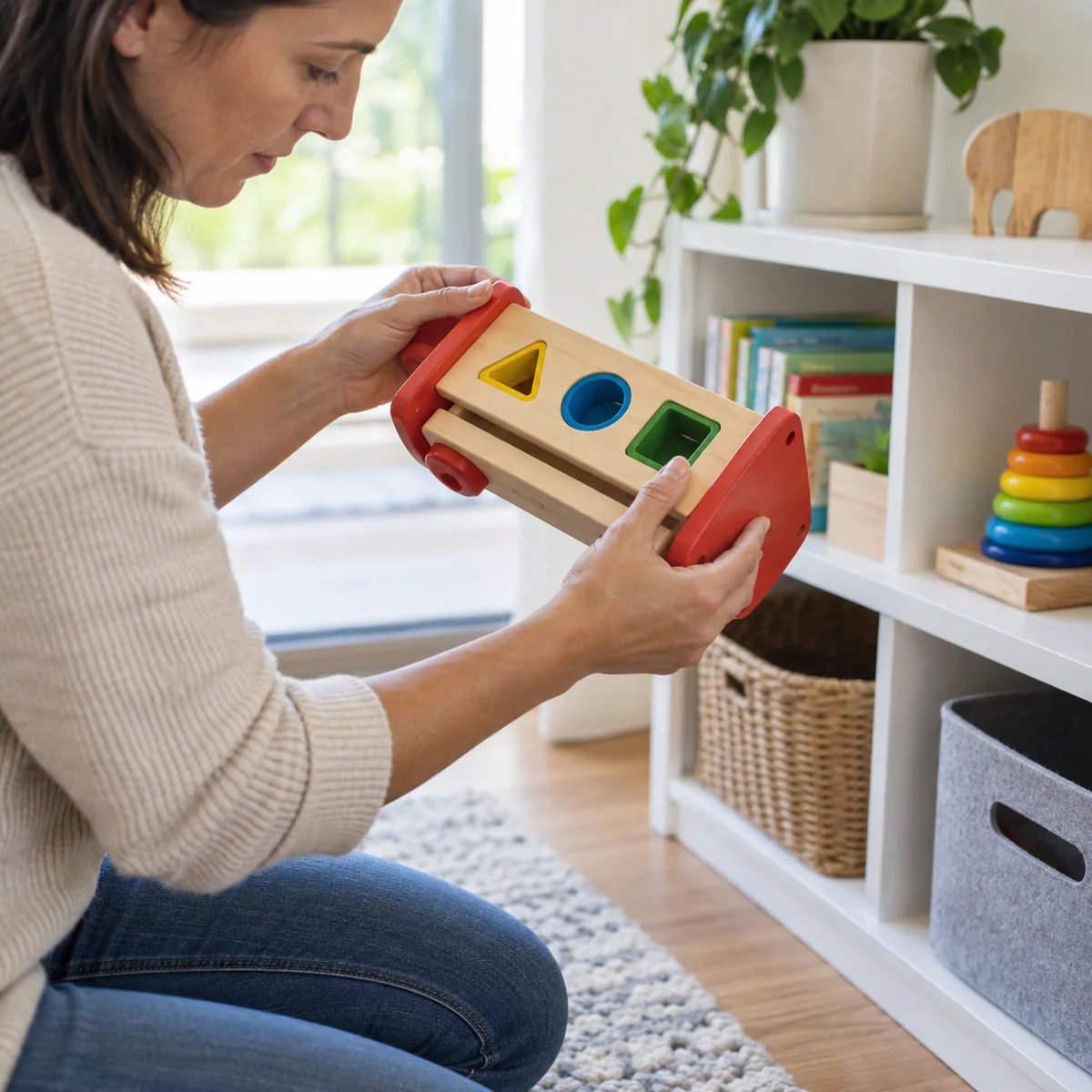
Inspect for loose or broken pieces, exposed batteries, damaged fabric seams, sharp edges, and missing parts that affect use. Search the CPSC recall database for the product’s brand and model when you can identify them. Follow the recall notice if there is a match. Do not put a recalled or damaged toy into a donation box. A quick clean does not make an unsafe toy safe.
Keep tiny parts, magnets, button batteries, and other hazards out of younger children’s reach. If you cannot identify an older toy or verify the parts needed for safe use, set it aside while you check. This safety step matters more than achieving a neat photograph.
Make the in-use toys easy to see and put away
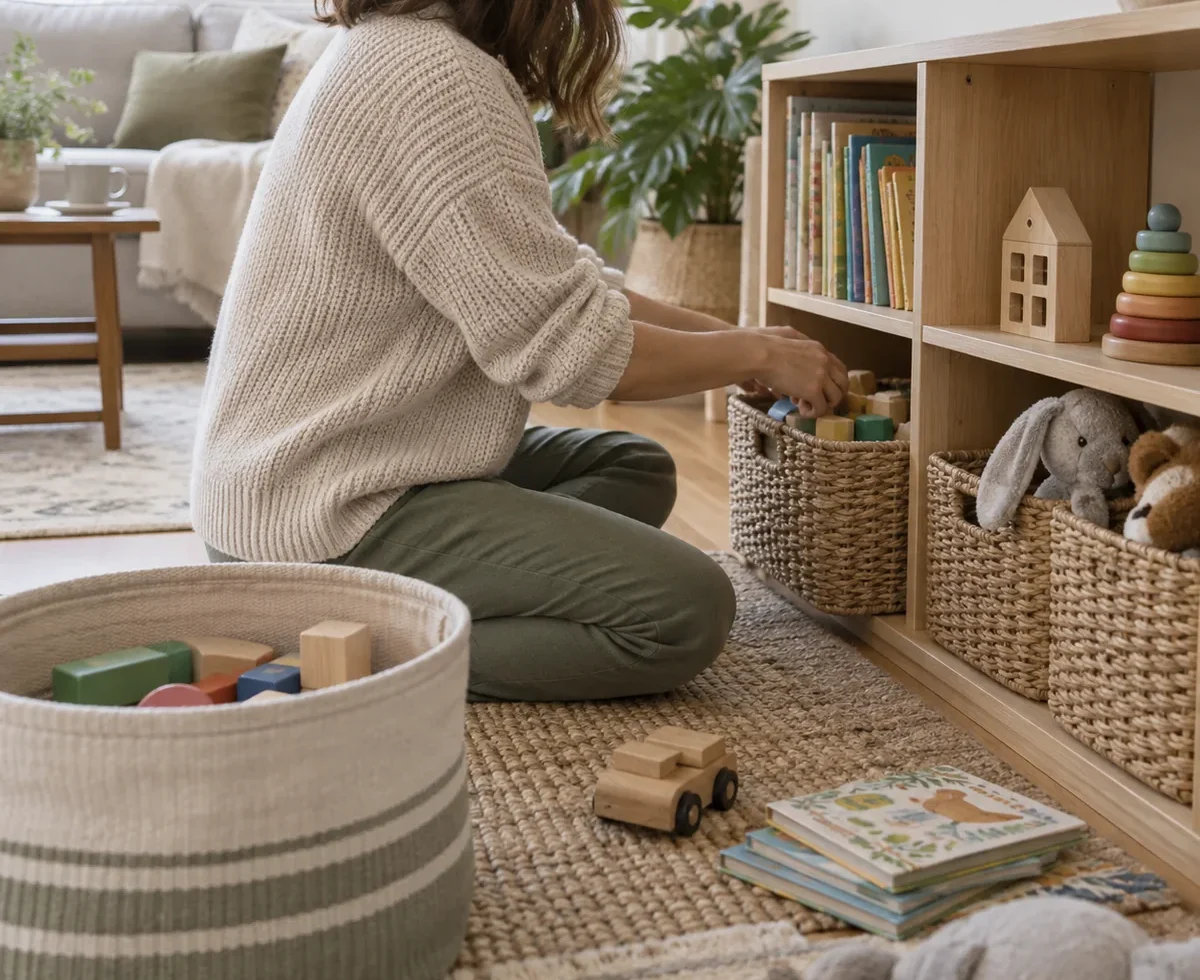
Use a stable low shelf or an existing container that a child can access appropriately. Put a small group of toys in each visible place: blocks together, books together, pretend-play items together. A broad category is enough. Avoid lids and stacks that force a child to dump several boxes to reach one favorite. Leave some open space so returning a toy is as easy as taking it out.
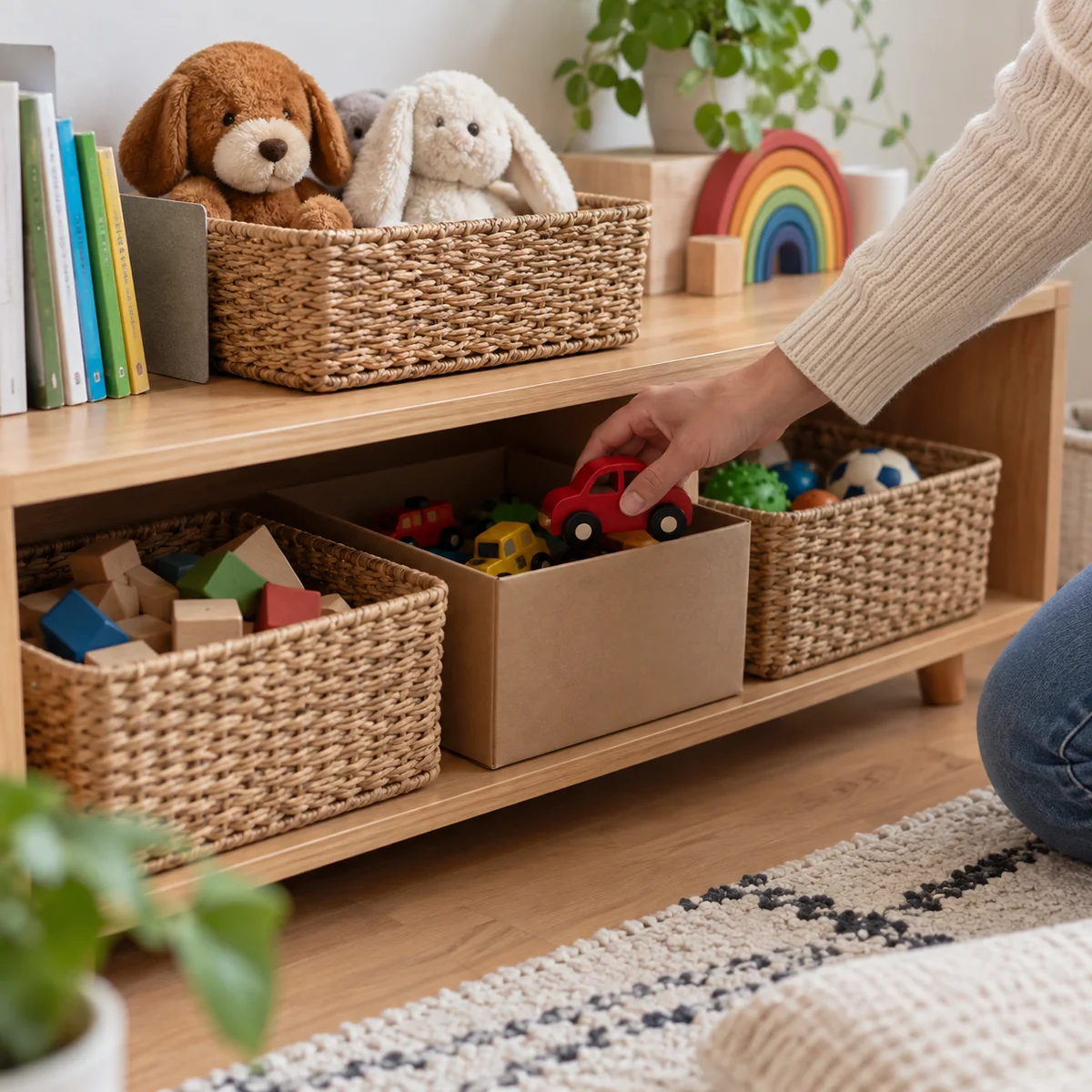
Check that any shelving is stable and installed according to its instructions. The CPSC’s Anchor It guidance addresses the tip-over risk from furniture; secure units as directed rather than assuming a heavy shelf cannot tip. Avoid placing heavy bins where they might fall on a child. If a basket is hard to pull out, too full, or has rough edges, use a safer existing container or a different location.
The American Academy of Pediatrics encourages easy access to open-ended toys and everyday play materials. That does not require a large collection on display. A few suitable, visible options can be easier for a family to use than a deep mixed bin whose contents are rarely seen.
Rotate suitable extras only if the system helps
A rotation box can hold clean, age-appropriate toys that are still useful but do not need to be in the play area today. Choose an existing sturdy box. Record its contents in a short note, store it in a safe location, and swap items when a child is ready for a change or their interests shift. There is no ideal number of toys or fixed rotation schedule. If a child asks for a stored favorite, retrieve it rather than treating the system as a rule to enforce.
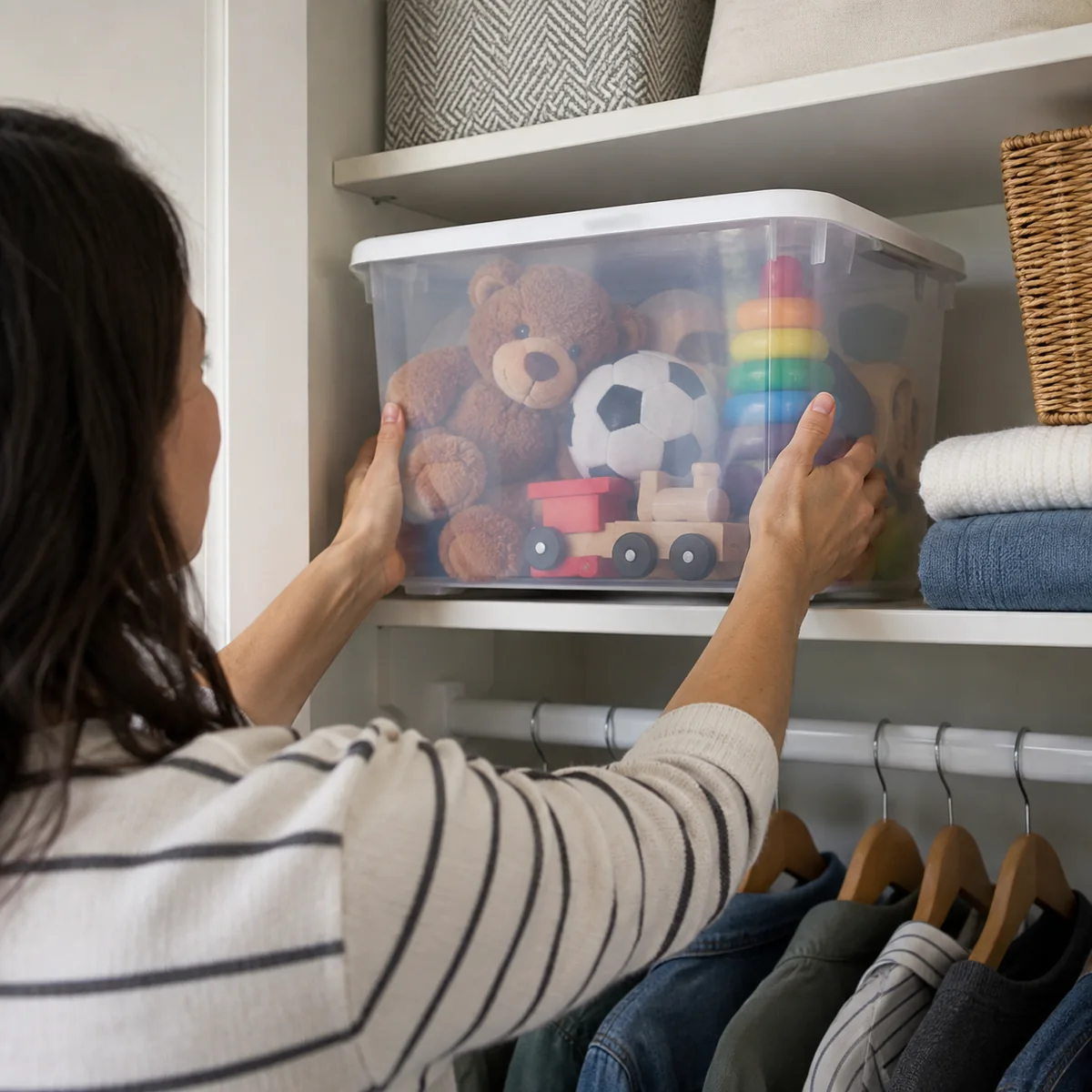
Recheck the rotation box as children grow. A toy that was suitable months ago may no longer match a child’s interests, while a younger sibling may not be ready for the same small parts. Follow the age label each time a toy changes users. If the box stays untouched for a long time, ask whether the items still have a realistic role in your home.
Give usable extras a confirmed destination
Donation works when the recipient can use and accept the item. Check a local charity, school, community group, or another family before packing a bag. Ask about accepted categories, condition, missing pieces, and cleaning requirements. Offer complete, clean, safe toys with any essential instructions. Do not pass a recalled or damaged product along and assume the next person will solve the problem.
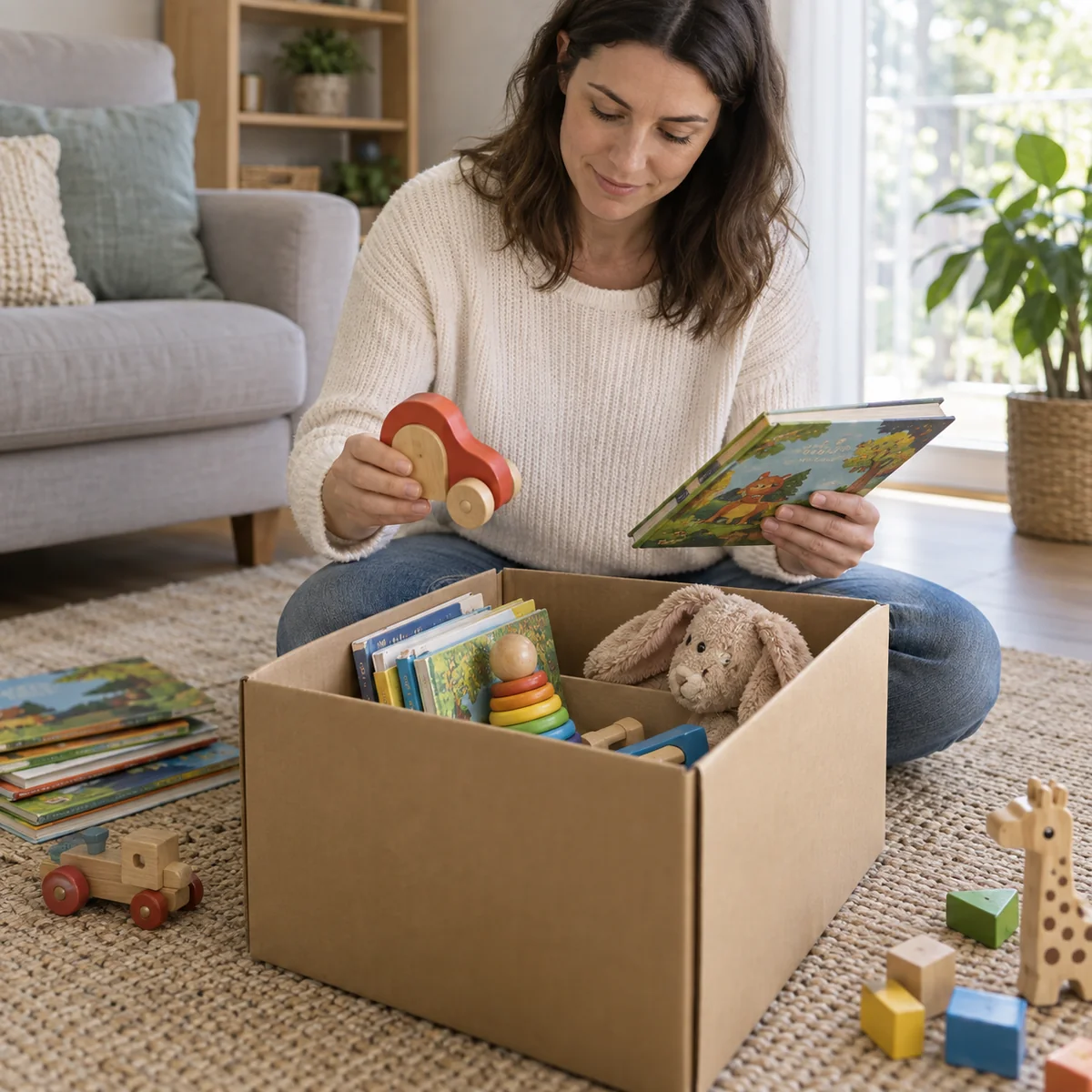
The U.S. Environmental Protection Agency puts reducing and reusing ahead of recycling in its waste advice. But reuse should be appropriate and safe. For a toy with a recall, follow the remedy instructions; for an unsafe damaged toy, check the product maker or local waste program for handling. Avoid dropping broken toys in ordinary donation bins.
A five-minute reset a child can understand
- Start with one visible category, such as books or blocks.
- Return it to its assigned low-shelf place or container.
- Put any pieces needing repair or adult review aside.
- Check the floor and walking path before ending play.
Use the same simple place names each time: “books here,” “blocks in this basket.” A picture on a box can help a child who does not read yet, but a label alone will not fix a container that is too full or hard to open. Adjust the layout based on what actually happens during cleanup.
What if the room fills up again?
Notice where the friction is. If toys are always left on the floor, perhaps their home is too high, the category is too broad, or the basket is overfilled. If new gifts arrive faster than anything leaves, decide whether each new toy has a place and whether an older unused item can go to a safe next owner. If the child plays with a small group consistently, keep that group easy to reach and review the rest without a deadline.
Download the US Letter PDF (8.5 × 11 inches) or the A4 PDF (210 × 297 mm). Print at 100% or Actual Size. Fill in just one play area, then try the layout for a week before changing anything else.
Sources
- U.S. Consumer Product Safety Commission, Toys, Recalls, and Anchor It.
- American Academy of Pediatrics, 5 Play Tips for Preschool-Age Children.
- U.S. Environmental Protection Agency, What You Can Do About Climate Change: Waste.