The thick stem left after you cut broccoli florets is often the first piece to land in the bin. It does not have to. The tender center can be sliced into the same meal as the florets; the main task is removing any dry base and tough outer layer.
Quick answer: Keep a fresh head unwashed in a loose or perforated bag in the refrigerator. Rinse it under running water just before preparing it. Cut off the florets, trim the dry base, peel the tough outside of a large stem and slice the tender core smaller than the florets. Cook stem pieces first, then add the florets. Colorado State University Extension specifically recommends peeling and using broccoli stems instead of discarding them.
1. Store the whole head before you cut it
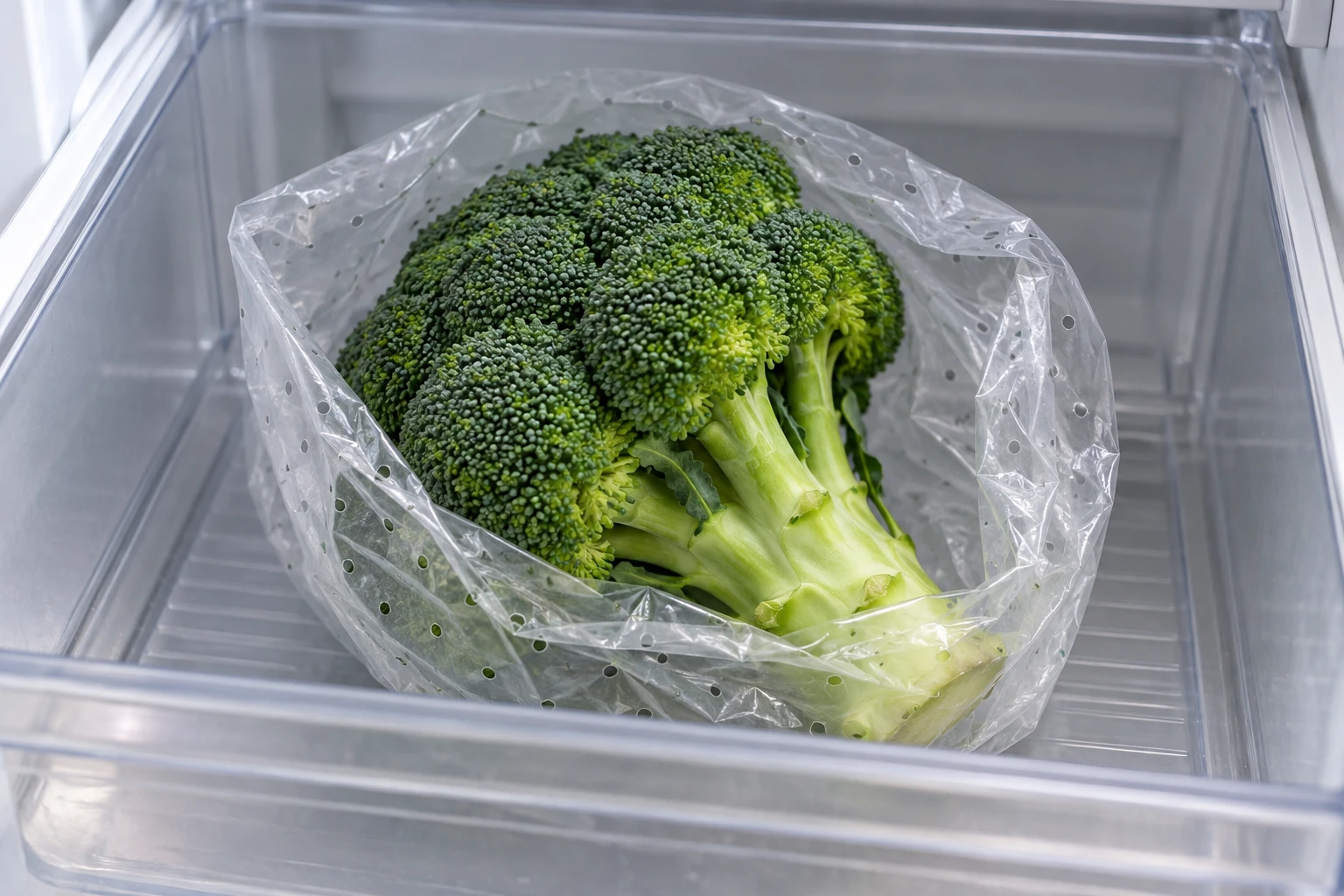
Choose broccoli with tight green buds and a firm stem. At home, keep it unwashed in an open or perforated produce bag in the refrigerator. A clean bag you already have is fine. Colorado State University’s broccoli guide recommends this setup and gives 3–5 days as a practical home refrigerator window. Plan to use it soon rather than relying on an exact expiration date. Moisture left on the florets before storage can make them soggy.
Keep the head intact until you are ready to cook if that fits your meal plan. If you have already cut it, refrigerate the pieces promptly in a clean container and use them while still fresh. The goal is to keep the stem visible as an ingredient, not to leave it forgotten at the back of a drawer.
2. Peel the tough outside and slice the tender stem
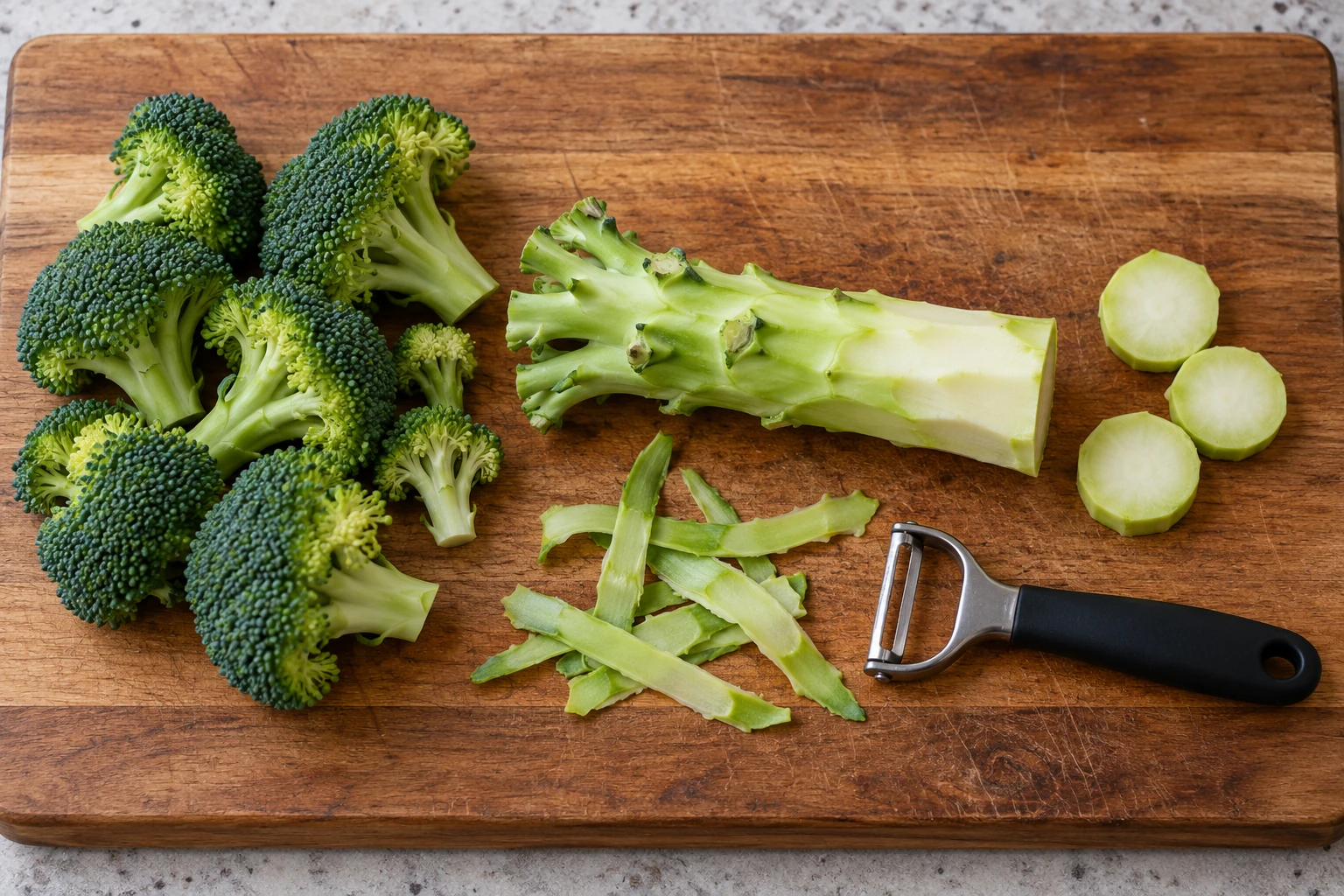
Wash the whole broccoli under running water before cutting, even if you plan to peel the stem. The US Food and Drug Administration advises washing produce before peeling or cutting so surface dirt is not carried inward by the tool. Do not use soap or produce wash. Work on a clean board with a clean knife or peeler.
Cut the florets away where their small branches meet the main stalk. Trim a dry or woody end. If the remaining stalk has a thick fibrous exterior, peel that layer until the lighter, tender core is exposed. Slice it into small coins or thin sticks. Utah State University Extension’s broccoli preparation guide recommends peeling the lower stem and making stem pieces smaller than florets because they take longer to cook. This is a texture choice: do not discard the entire stem because its outside feels firm.
3. Cook the stem and florets in one pan
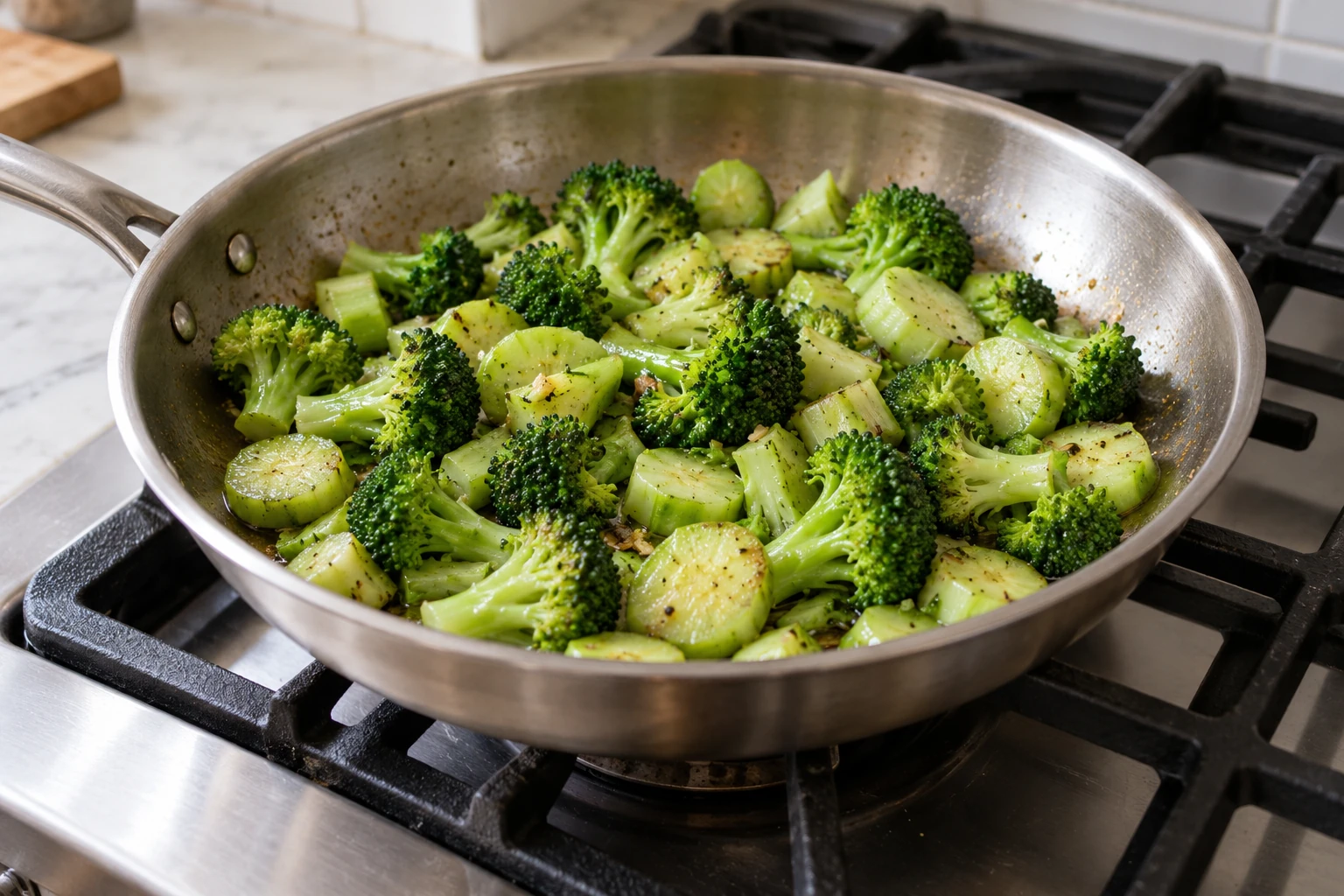
For a simple side dish, warm a little oil in a skillet, add the stem pieces and cook them until they begin to soften. Add the florets later, plus a splash of water if needed, and cook until the stem is easy to bite and the florets are bright green and tender. The exact minutes depend on how thick you cut the pieces and how hot the pan is. Utah State University notes that stems take longer to cook than florets; the staggered order follows from that difference.
Stems also work in soup, a vegetable stir-fry or shredded into another cooked dish. Utah State University Extension suggests shredding or stir-frying broccoli stems, while Colorado State University suggests dicing them into a dish or pureeing them as a soup thickener. Use whichever method matches a meal you were already making.
4. Know what to trim and what to discard
Remove a bruised or damaged spot before preparing sound produce. If the broccoli looks rotten, discard it rather than trying to rescue it by peeling or cooking; that is the FDA’s produce-safety advice. Yellowing buds are a quality warning that flavor and texture may be declining, but do not confuse a dry woody base with the whole stem being inedible. Check the remaining broccoli’s actual condition.
Common questions
Can I eat broccoli stems raw?
The tender peeled core can be cut into thin sticks and served raw with a dip, as Colorado State University Extension suggests. Wash the broccoli first and use fresh produce.
Do I have to peel every stem?
No. Small tender branches may need little or no peeling. Peel the thick lower stem when its outside feels fibrous, then use the lighter center.
Should I wash broccoli before refrigerating it?
For a whole head, store it unwashed and rinse it just before preparation. Colorado State University notes that wet broccoli can become limp or soggy in storage.
Sources
- Colorado State University Extension: Colorado Broccoli
- Colorado State University Extension: Reduce Food Waste at Home
- Utah State University Extension: How to Nourish With Broccoli
- Utah State University Extension: Small Actions Against Food Waste
- US Food and Drug Administration: Selecting and Serving Produce Safely