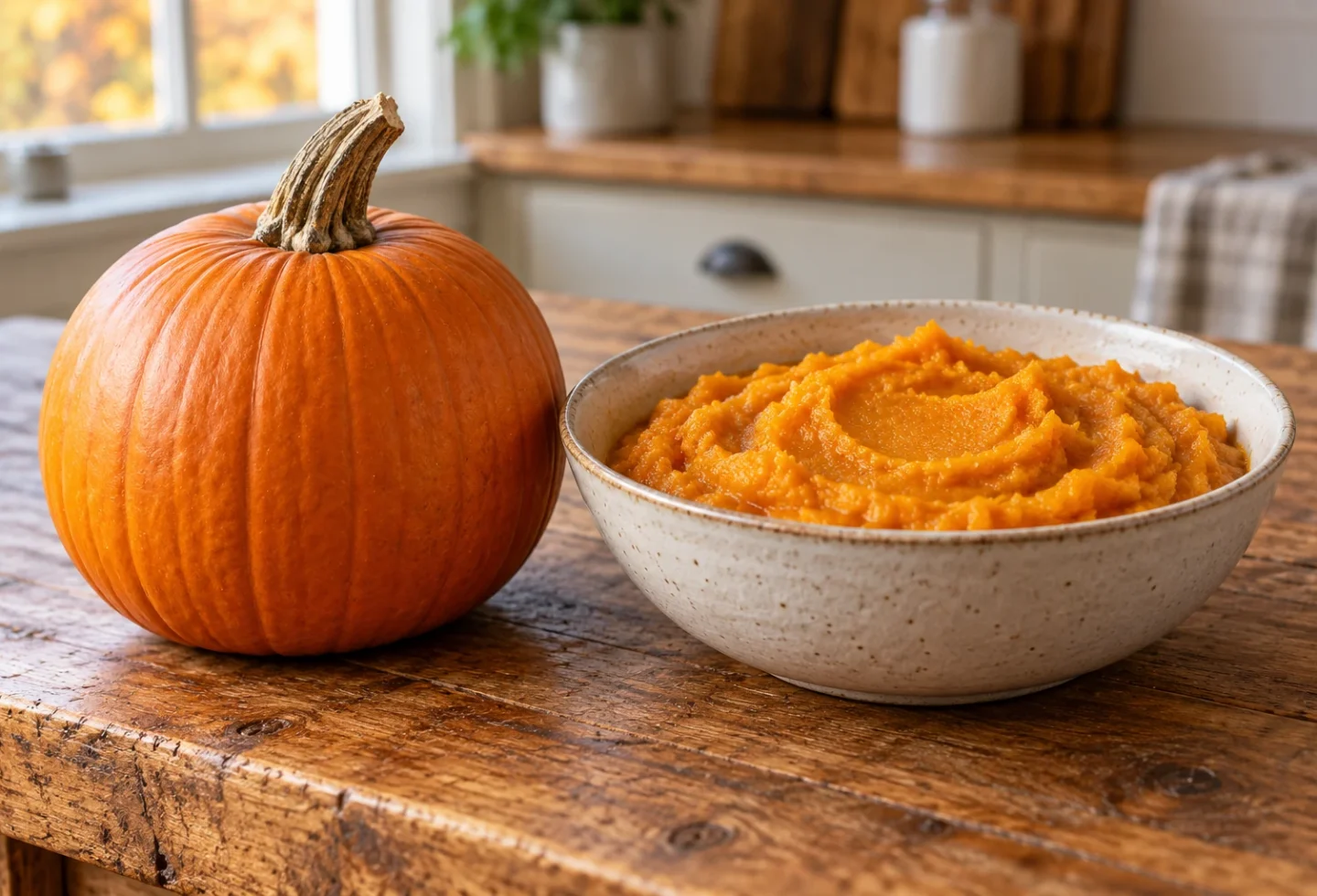
A whole pie pumpkin often yields more purée than one recipe needs. Freezing the extra in measured portions saves the rest for soup, baking or a later meal. The key is to cook it first, cool it promptly and use a container that leaves room for expansion.
Quick answer: Wash a mature pie pumpkin, remove the seeds and cut it into cooking-size sections. Cook until soft, scrape out the flesh and mash it. Cool the purée promptly, portion it into freezer containers with about ½ inch of headspace, seal and freeze. The National Center for Home Food Preservation gives this method. Homemade pumpkin purée should be frozen, not home-canned.
1. Choose, wash and cut the pumpkin
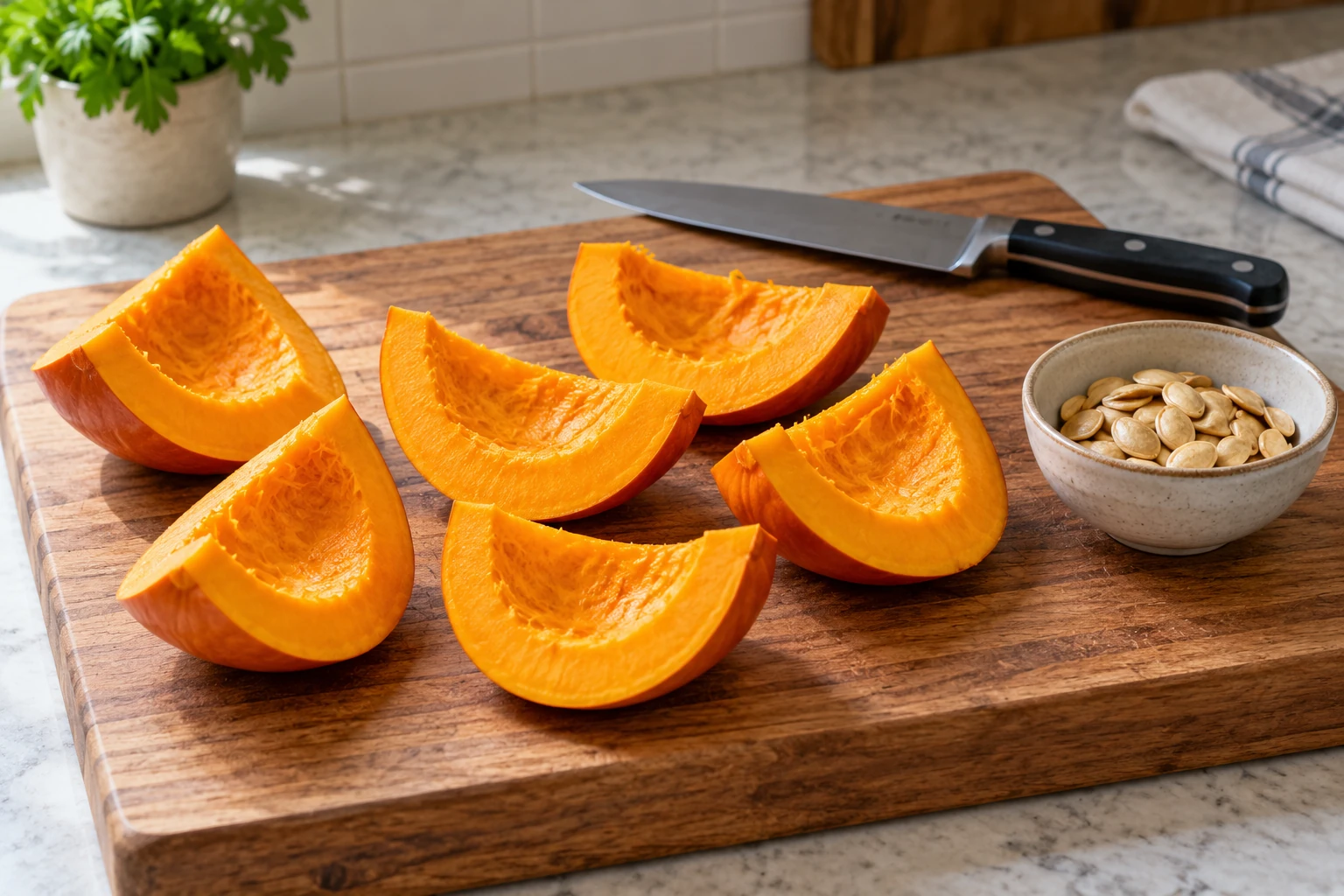
Start with a mature pumpkin with a firm rind and no soft or moldy areas. Pie or sugar varieties are useful for a smoother purée. Wash the outside, then cut it into sections you can handle safely and remove the seeds and stringy interior. Keep the cutting board steady and use a knife suited to a hard squash; do not force a dull blade through it.
The NCHFP method begins with a full-colored mature pumpkin that is washed, cut into cooking-size sections and deseeded. If the pumpkin is spoiled, freezing will not make it sound again.
2. Cook the sections until soft
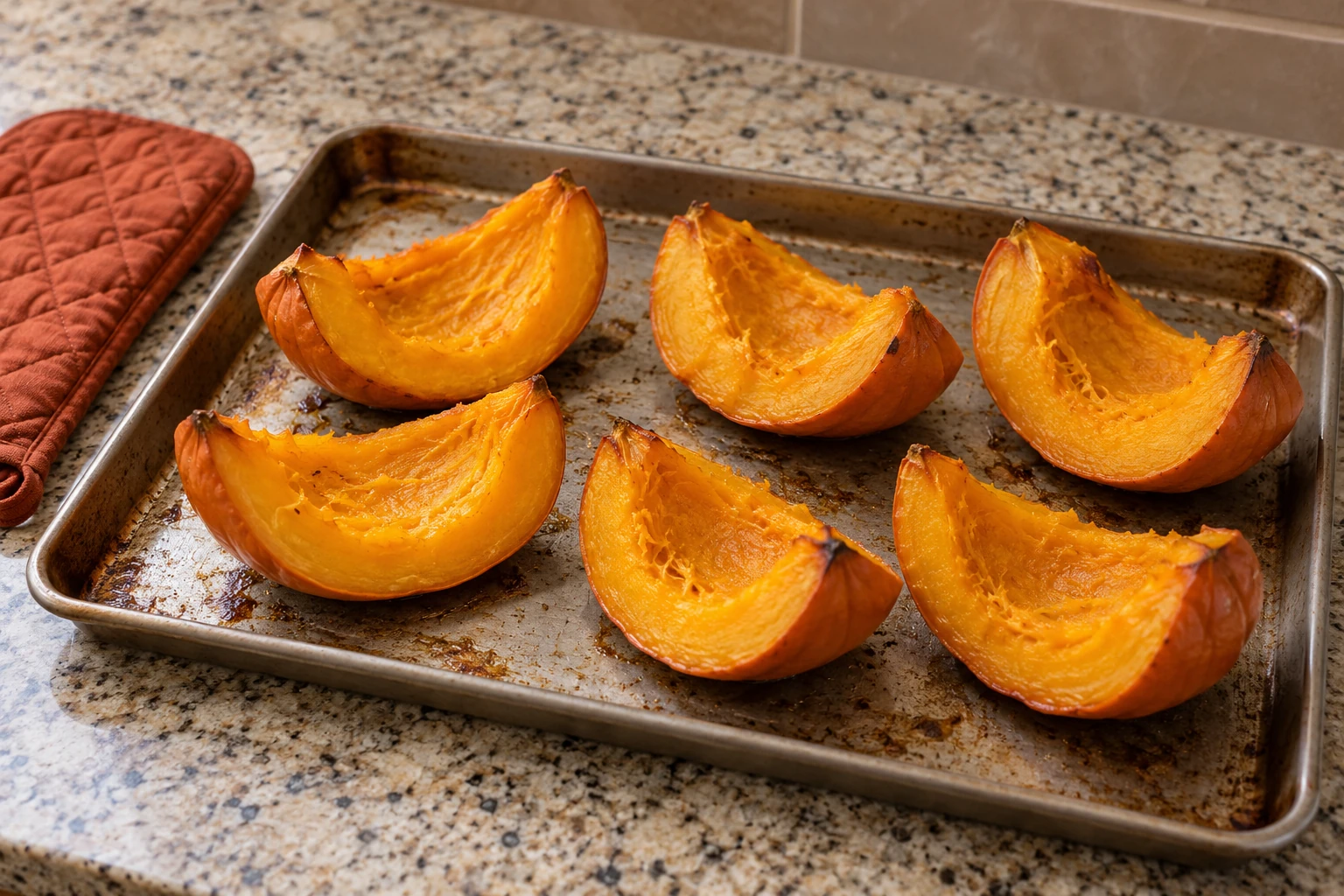
Cook the sections until the flesh is soft. The NCHFP lists boiling in water, steaming, pressure cooking or oven cooking as options; choose the method that suits your equipment and follow its instructions. Avoid adding lots of liquid if the purée is intended for baking, because watery purée changes a recipe’s texture.
Let the hot pieces become safe to handle. Scrape the flesh away from the rind, then mash or purée the cooked flesh. Do not treat uncooked pumpkin chunks as the same product as cooked purée.
3. Cool the purée promptly
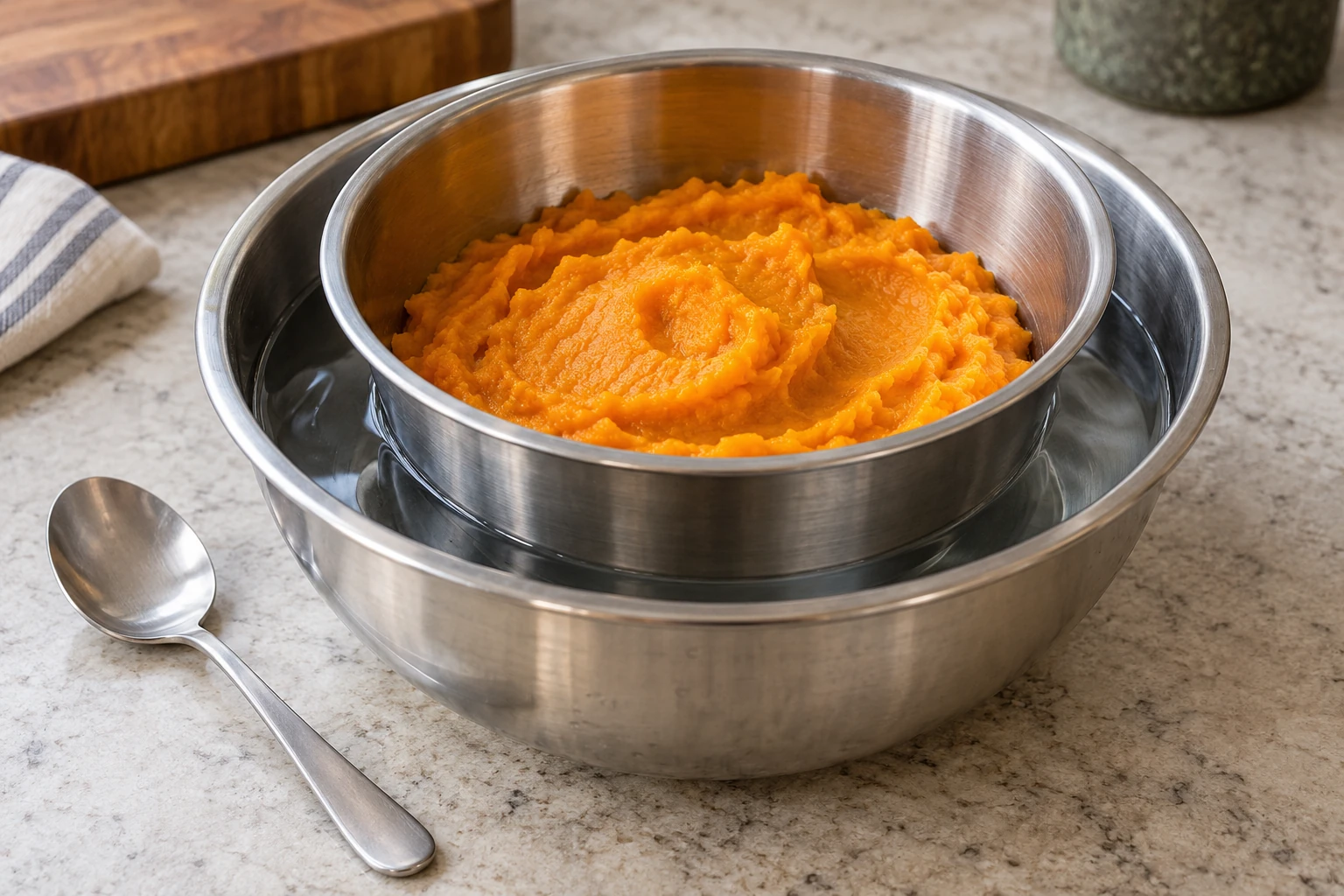
Put the pan or bowl of purée in cold water and stir occasionally, keeping the cooling water out of the food. That is the cooling approach in the NCHFP freezing directions. Divide a large batch among shallow containers if needed so it cools efficiently. Follow FoodSafety.gov’s two-hour rule for perishable cooked foods rather than leaving a deep warm pot on the counter for hours.
Do not put steaming-hot purée into a tightly sealed freezer container. Once cooled, move to the packaging step without unnecessary delay.
4. Pack useful portions and freeze
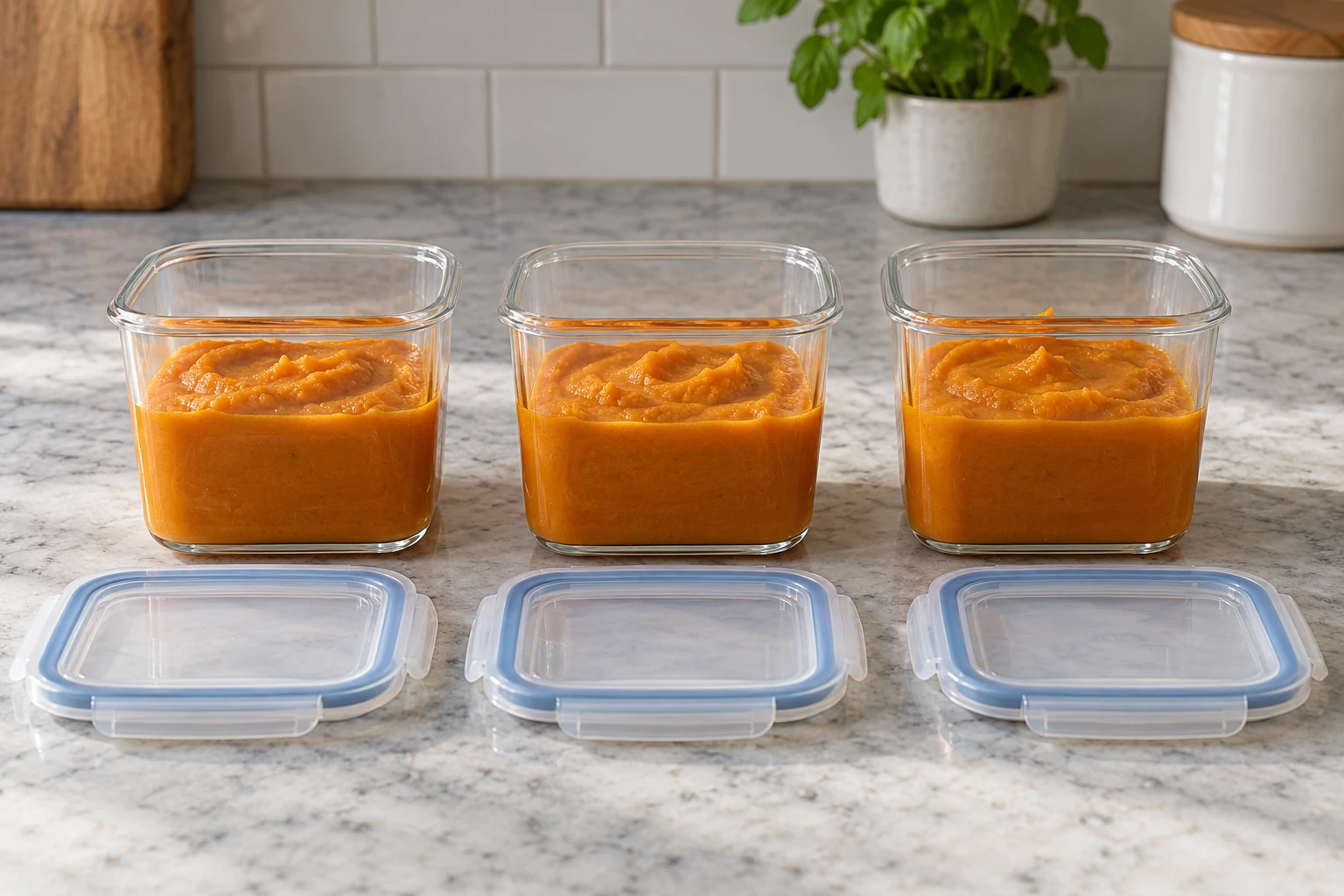
Measure portions you are likely to use in one recipe, then pack the cooled purée into rigid freezer containers. Leave about ½ inch of headspace, seal and freeze. Penn State Extension also describes flattening purée in freezer bags before freezing, then stacking the frozen packs. Choose packaging that closes securely and is intended for the freezer.
Mark each package with the amount and date so you can choose a portion without thawing everything. Keep the freezer at 0°F (−18°C) or colder. Freezer storage times mostly concern quality; use older portions first and discard any pack with signs of spoilage after thawing.
5. Thaw only what you need
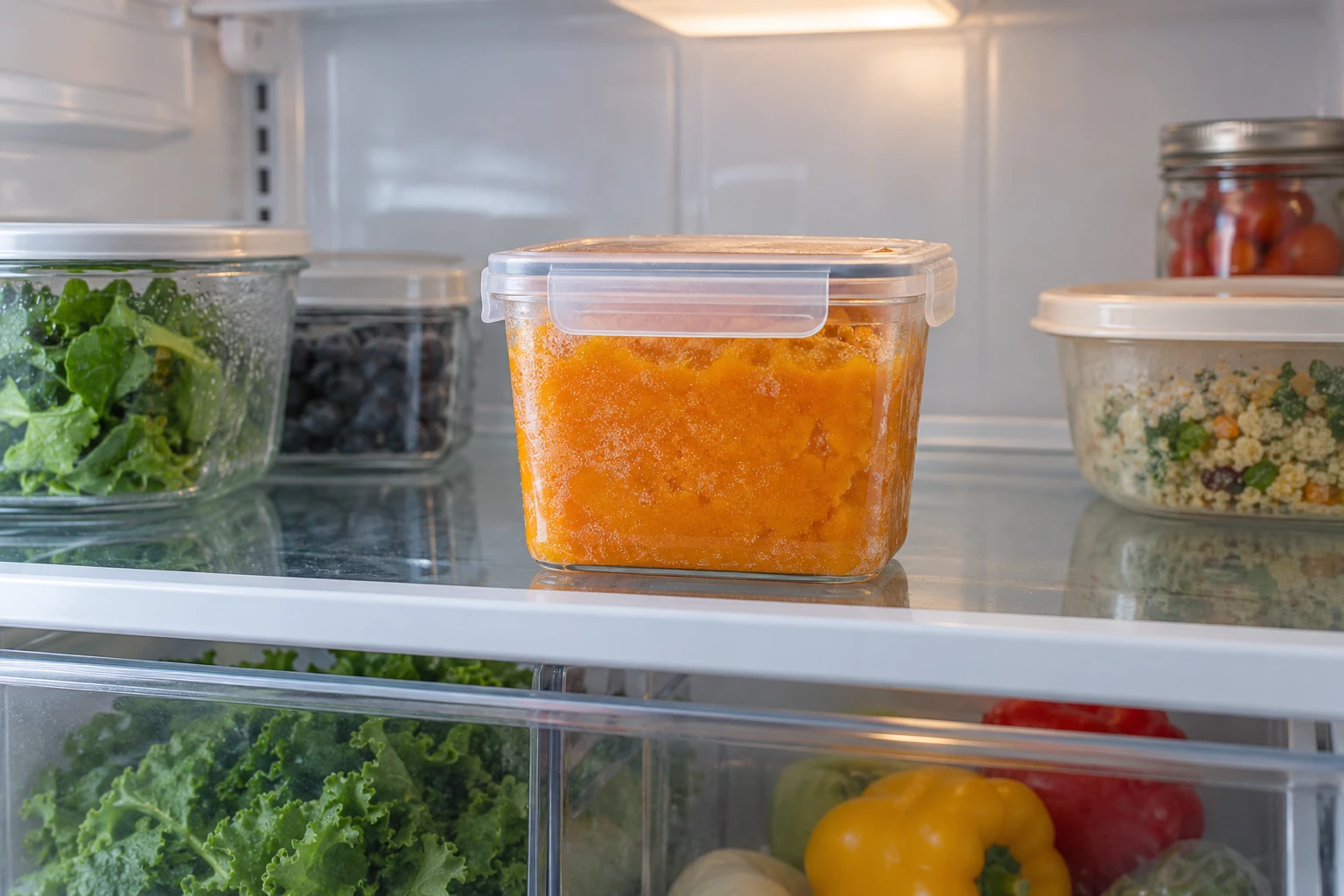
Thaw a sealed portion in the refrigerator rather than leaving it on the counter. Stir the thawed purée; some liquid may separate and can be handled according to the recipe. A measured portion works in soup, sauce or baking without opening several packages. The USDA describes refrigerator thawing as a safe method.
Do not home-can mashed or puréed pumpkin. The NCHFP explains that a tested home-canning process for purée is unavailable because batches vary in thickness, affecting heat penetration. Freezing is the appropriate home-preservation route for this form.
Common questions
Can I freeze raw pumpkin instead of making purée?
This guide is for cooked purée. Raw pumpkin pieces require a different preparation and will not become ready-to-use purée in the freezer.
Can I freeze pumpkin purée in a glass jar?
Use only a container made for freezing and leave enough headspace. The research-based method specifies about ½ inch of space for rigid freezer containers.
Can I pressure-can homemade pumpkin purée?
No. Research-based home-canning recommendations do not include mashed or puréed pumpkin. Freeze the purée instead.