Half an onion left after dinner can become one more thing to use up before it spoils. If you regularly cook with diced onion, freezing the extra pieces in meal-sized amounts is a practical way to save them. The important distinction: frozen onion is useful for cooked dishes, but it will not have the crisp bite you want in a raw salad.
Quick answer: Peel, trim and clean sound bulb onions, then dice them into roughly 1/4-inch pieces. There is no need to blanch diced onions. Pack them dry in a freezer bag or rigid freezer-safe container, or freeze separated pieces on a clean tray before packing. Remove excess air, seal, label and freeze at 0°F (−18°C) or below. Use them straight from frozen in cooked dishes; for best quality, plan to use them within a few months. These steps follow the National Center for Home Food Preservation (NCHFP).
1. Prepare the onions you actually want to cook with
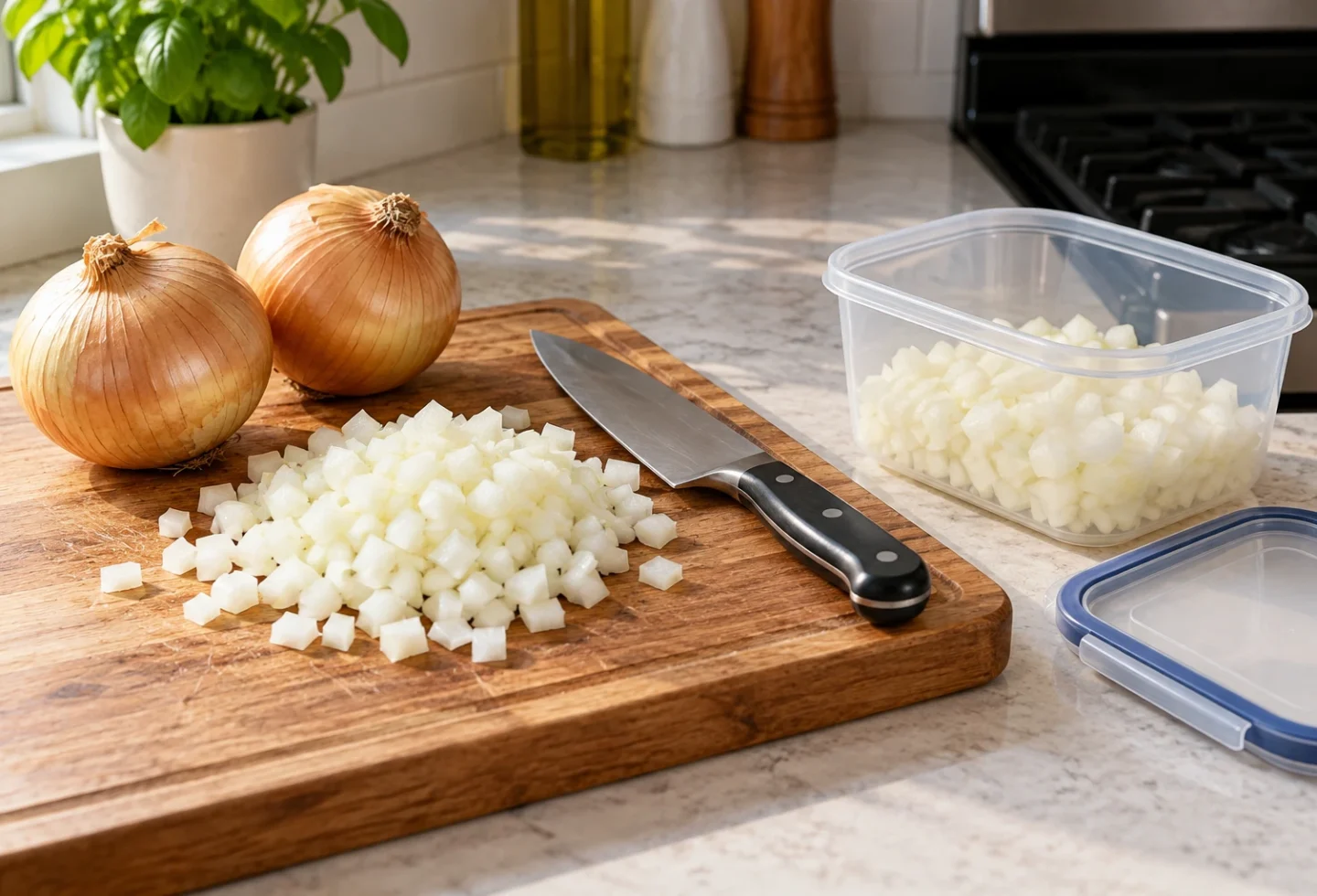
Start with firm, sound bulb onions. If an onion is visibly moldy, slimy or spoiled, freezing will not restore it. Peel, trim and clean it thoroughly, then dice it into pieces about 1/4 inch across. A stable cutting board and a sharp knife make the task easier. Keep the onion pieces clean and avoid leaving them sitting on the counter while you organize your freezer.
Freeze only the amount you expect to use in cooked meals. Whole dry bulb onions usually keep well in a cool, dry place; NCHFP does not usually recommend freezing them whole. For this method, do not blanch the diced onion. That differs from its separate directions for whole onions and breaded onion rings. If you want crisp raw slices for sandwiches or salads, use fresh onion instead.
2. Choose direct packing or a short tray freeze
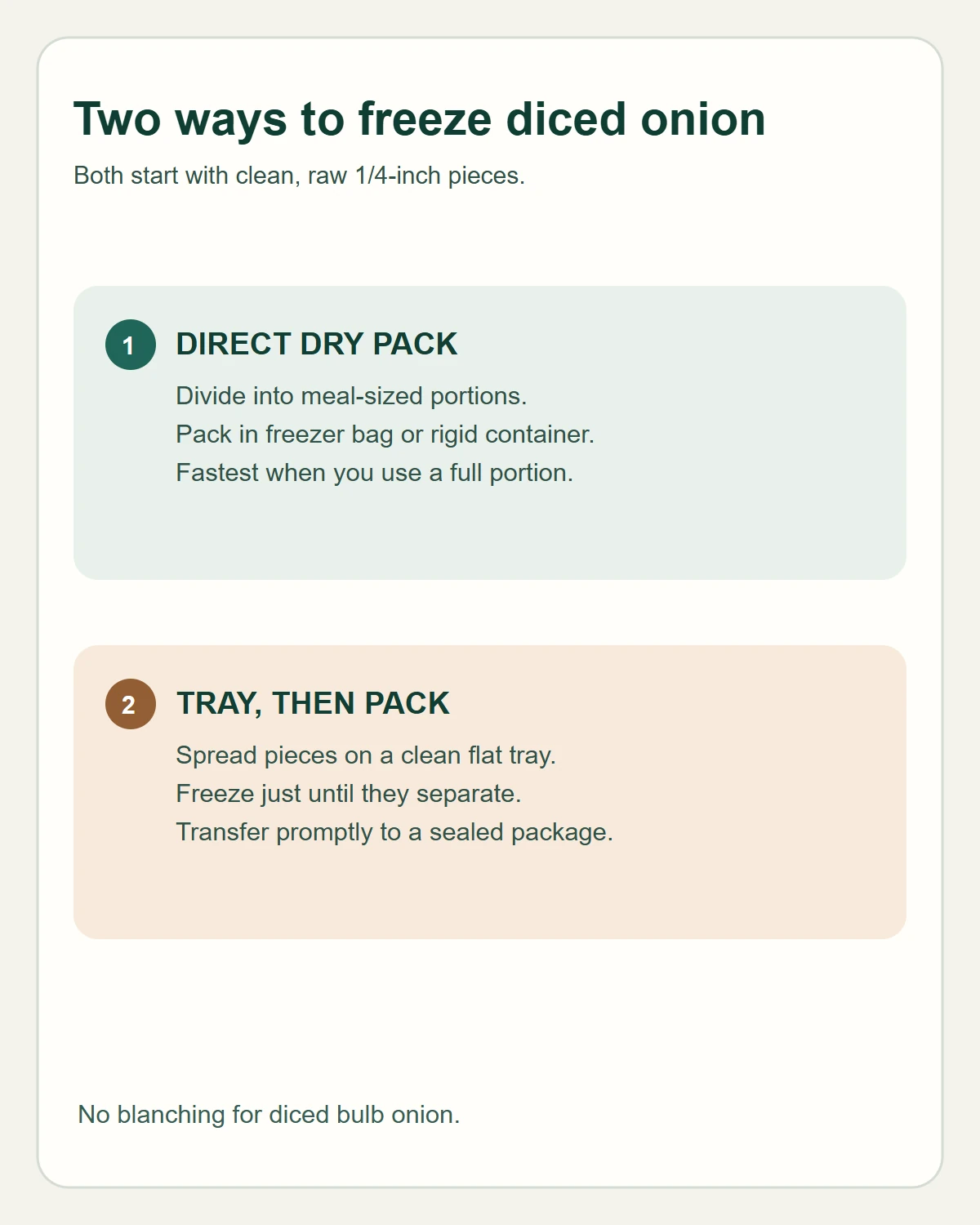
Fast method: Put the diced onion directly into a suitable freezer bag or rigid freezer-safe container in amounts you would use for one meal. NCHFP calls this a dry pack. If using a rigid container, leave about 1/2 inch of headspace. If using a bag, press out as much air as practical before sealing.
Loose-piece method: Spread the diced onion in a single layer on a clean tray that sits flat in the freezer. Once the pieces are firm enough to separate, transfer them promptly to a freezer bag or container and seal it well. NCHFP includes this tray method as an option. Penn State Extension cautions that uncovered onion can share its odor with other freezer foods, so do not leave the tray exposed longer than necessary.
3. Seal, label and store for the best quality
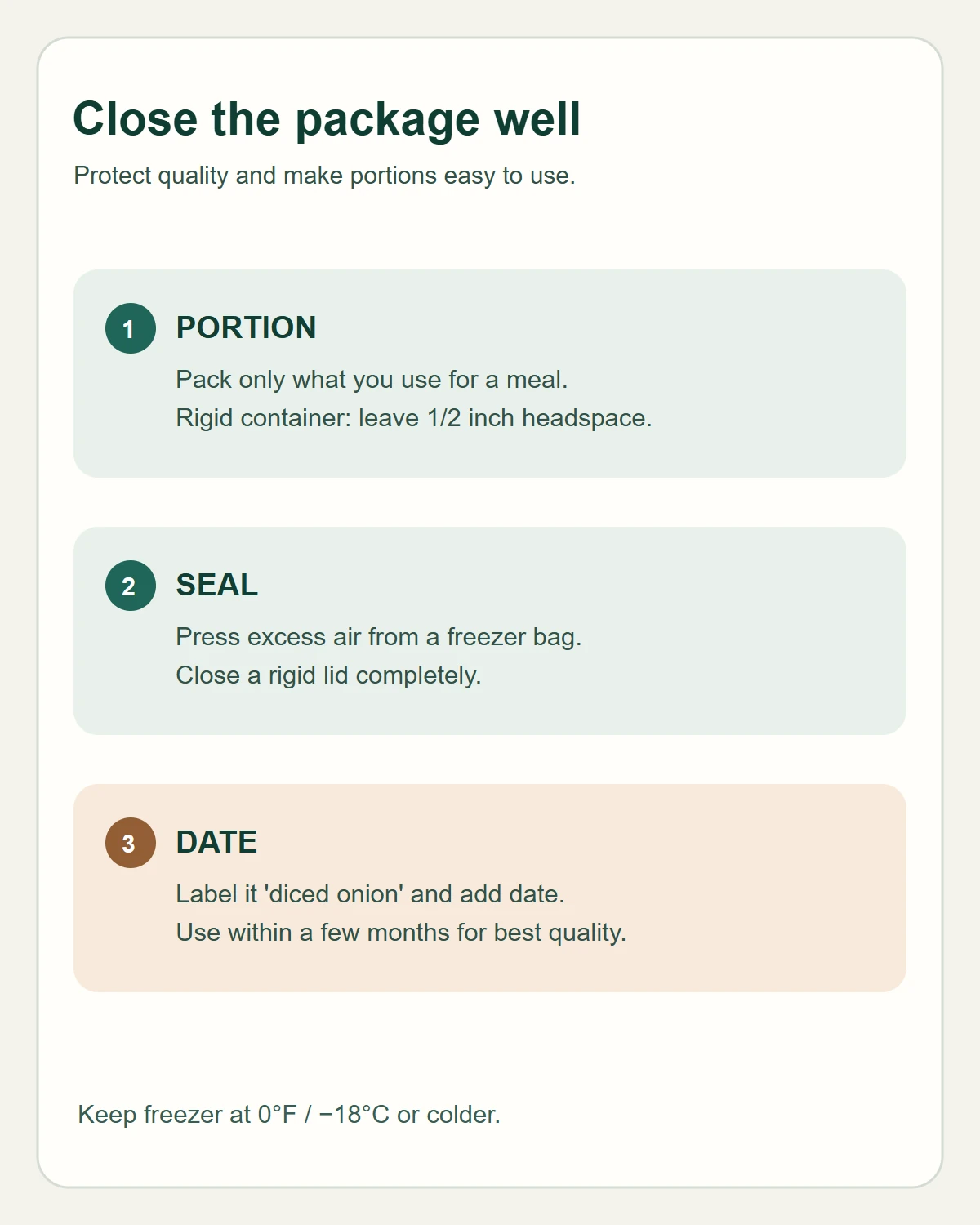
Use a freezer-grade bag or a clean, freezer-safe rigid container with a secure lid. Pack portions that fit your usual recipes; that way you will not keep reopening a large supply. Remove excess air from a bag, close the container completely, and label it “diced onion” with the freezing date. The NCHFP onion guidance says onions packed this way are best used within a few months. This is a quality target, not a date when continuously frozen onion suddenly becomes unsafe.
Keep the freezer at 0°F (−18°C) or below. FoodSafety.gov explains that freezer storage times are quality recommendations and food held continuously at that temperature can remain safe indefinitely, although flavor and texture decline over time. If your container smells strongly of onion after a spill, clean it before reusing it for another food.
4. Cook from frozen instead of waiting for crisp texture
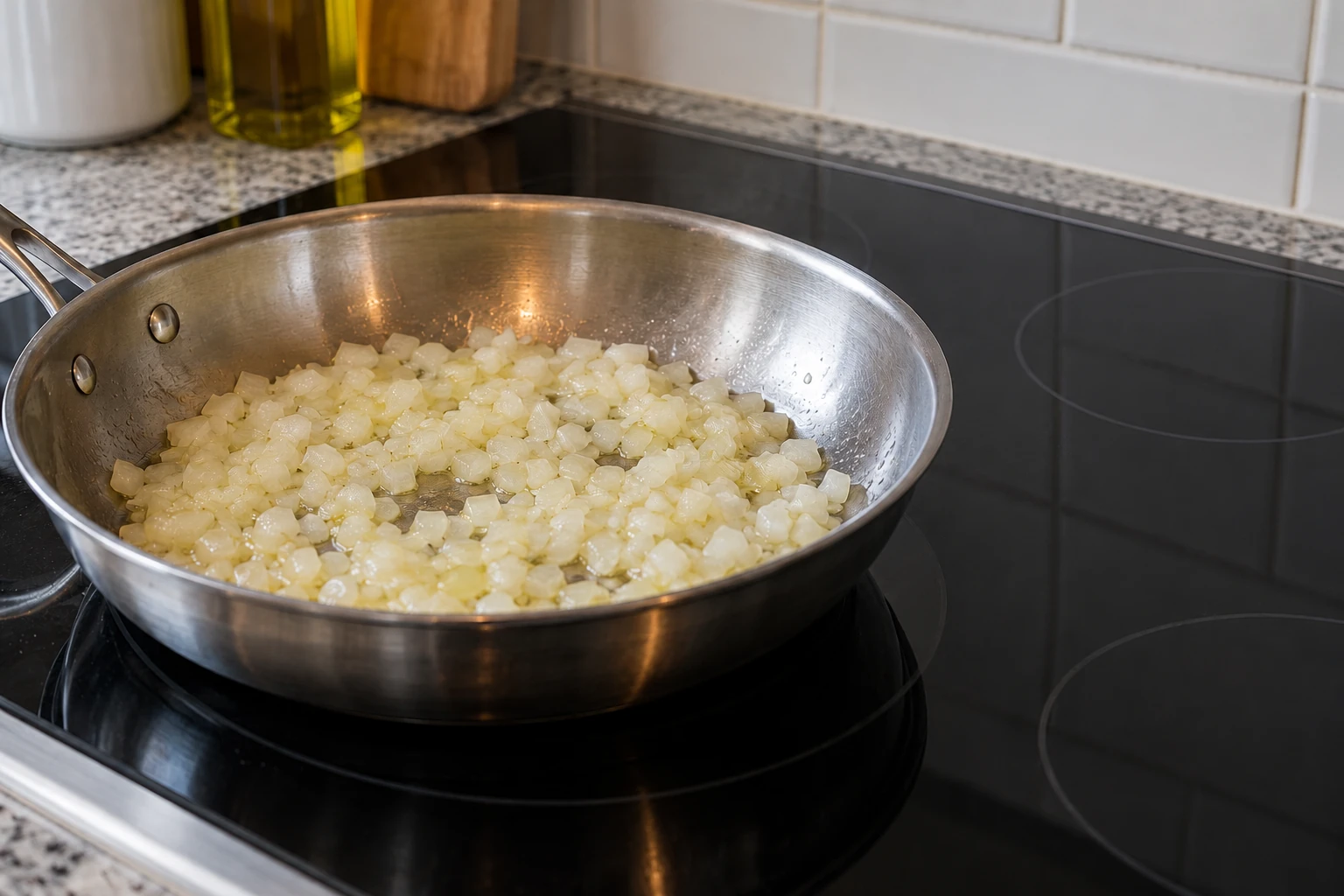
Add the frozen diced onion to a preheated pan for soups, stews, sauces, casseroles or sautéed dishes, and cook it as the recipe requires. The pieces may release water before they soften or brown, so give them time rather than expecting the exact timing of fresh onion. Avoid using thawed onion where crunch matters. NCHFP warns against thawing food at room temperature; if you need to thaw an onion portion before use, do it in the refrigerator, or cook it promptly from frozen.
Common questions
Do I need to blanch onions before freezing?
No for diced bulb onions prepared by the method above. NCHFP specifically says no blanching is required for 1/4-inch diced onions. Its whole-onion and onion-ring directions are different.
Can I freeze a whole onion instead?
NCHFP says freezing whole bulb onions is usually not recommended, because sound bulbs store well cool and dry. If you do need the separate whole-onion method, follow its blanching directions rather than treating a whole onion like diced pieces.
How long should I keep chopped onion in the freezer?
For best quality, NCHFP suggests using this frozen diced onion within a few months. Date each package so you use older portions first.