That half-bunch of celery can still flavor dinner weeks from now. Freezing is useful when you plan to cook it, but it will not preserve the raw crunch that makes celery good for snacking. The key step many quick tips skip is a short water blanch before packing.
Quick answer: Choose sound, tender celery stalks. Wash, trim and cut them into roughly 1-inch pieces. Water blanch for 3 minutes after the water returns to a boil, cool promptly, drain thoroughly, pack without headspace, seal and freeze at 0°F (−18°C) or below. Use the frozen pieces in soups, stews, sauces or other cooked dishes. This method follows the National Center for Home Food Preservation (NCHFP).
1. Choose, wash and cut the celery
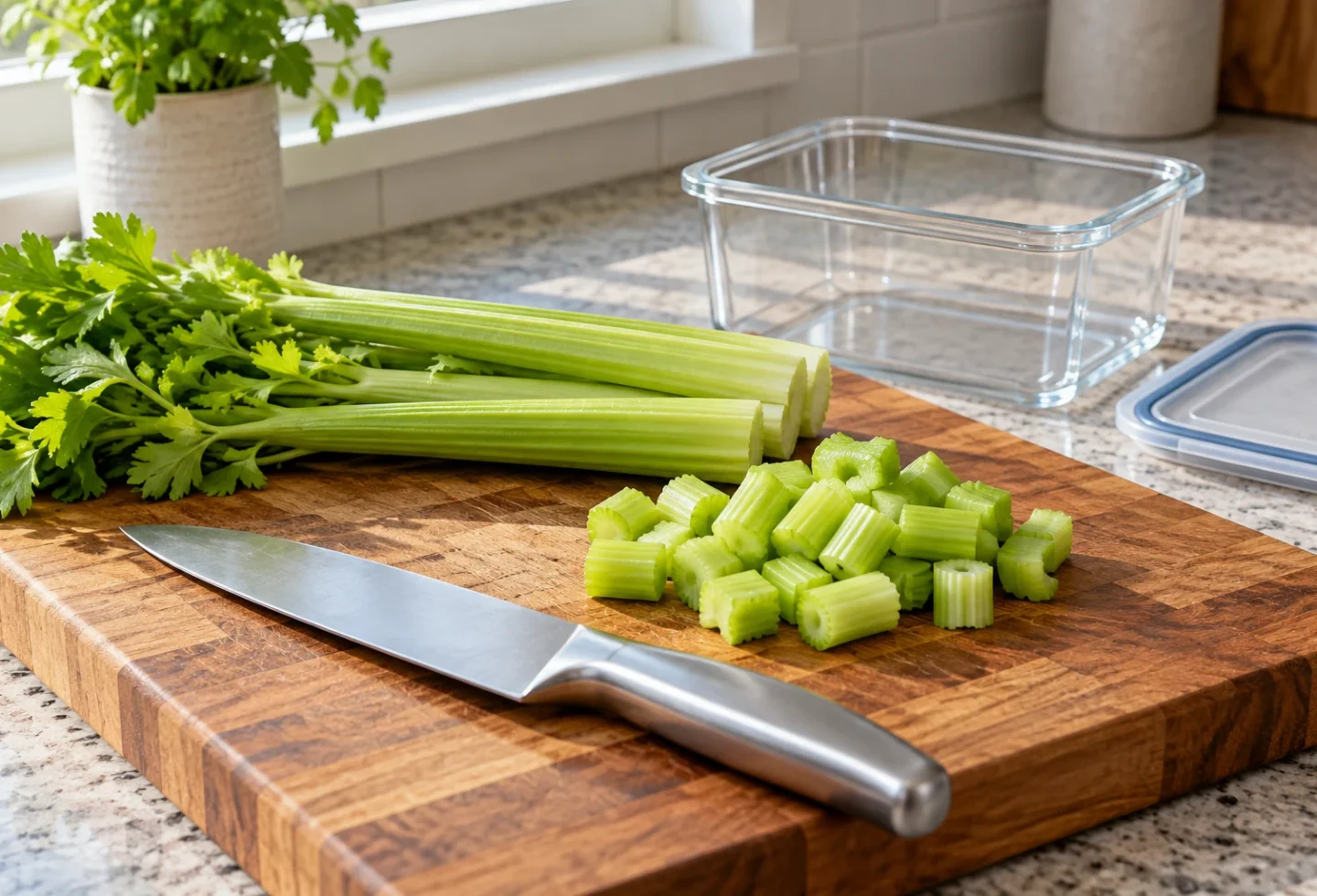
Start with crisp, tender stalks that are not slimy, moldy or badly damaged. Wash them thoroughly, trim the ends and remove tough strings if needed. Cut the stalks into pieces about 1 inch long, as the NCHFP celery directions specify. The featured image shows the raw stalks and cut pieces fully supported on a cutting board; the container is ready for the later packing step.
Think about use before making a large batch. Frozen celery will soften, so keep fresh stalks for crunchy snacks and salads. Freeze only the portion you expect to add to cooked meals.
2. Water blanch for three minutes
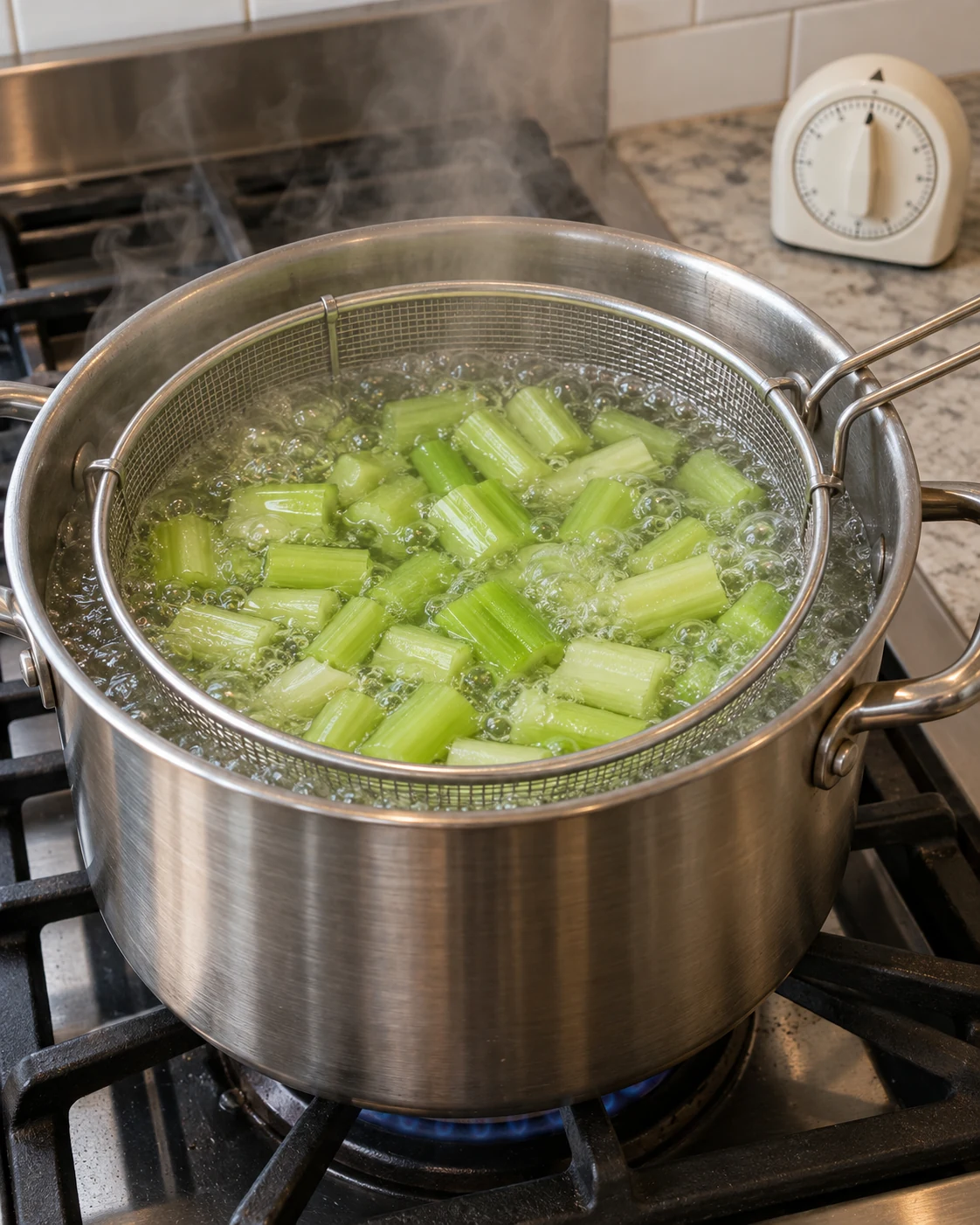
Bring a large pot of water to a vigorous boil. Lower a manageable batch of celery in a blanching basket, cover and keep the heat high. Start the 3-minute timer when the water returns to a boil. NCHFP’s general blanching guidance says the water should return to boiling within about 1 minute; if it does not, use less celery in the next batch.
Do not substitute a brief dip, and do not boil until the pieces are fully soft. The timing is for the roughly 1-inch celery pieces in the cited method. Blanching slows enzyme activity that otherwise reduces frozen vegetable quality; it does not make spoiled celery suitable to freeze.
3. Cool, drain and seal in useful portions
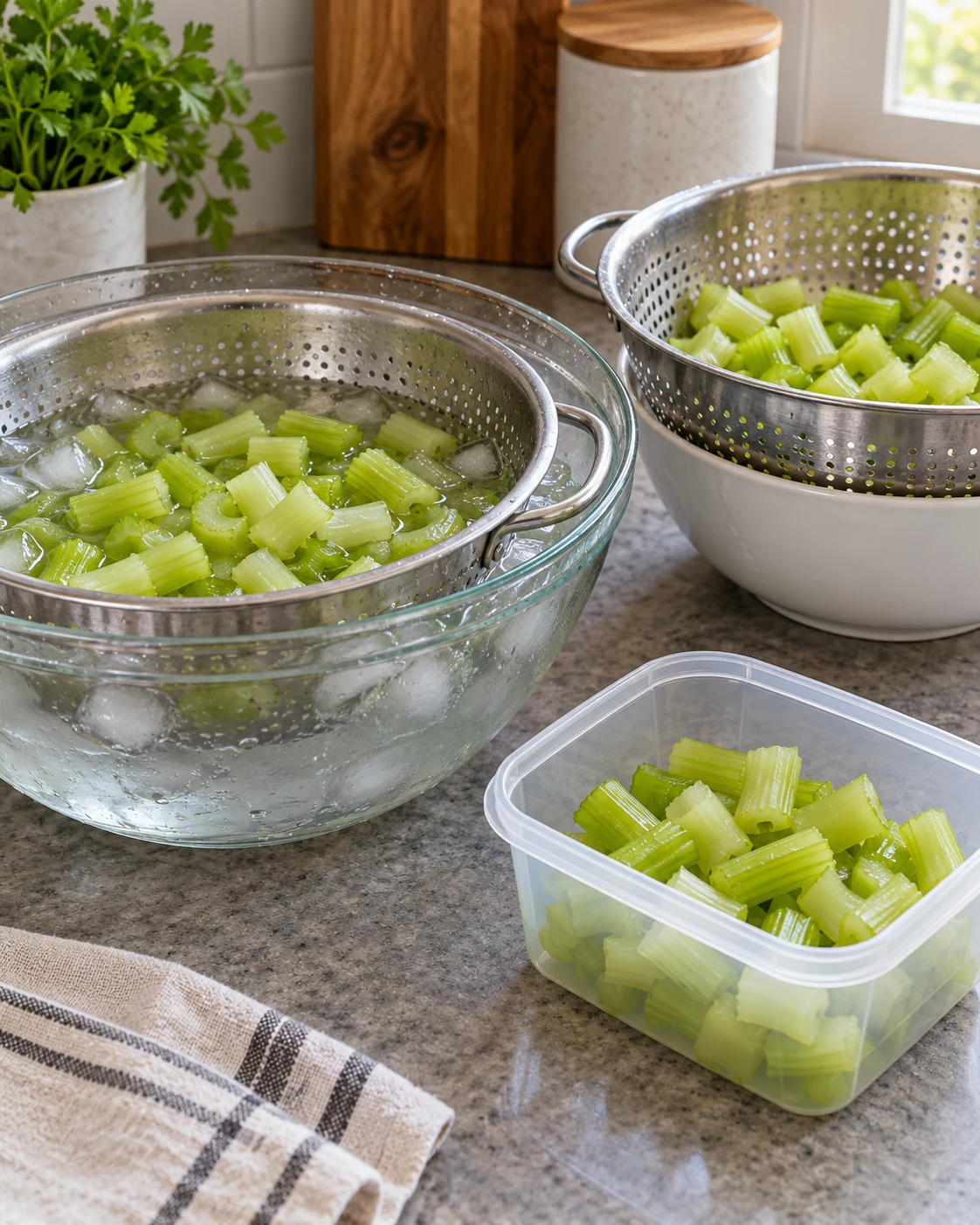
Move the celery straight into plenty of cold or ice water to stop the cooking. NCHFP says cooling should take about the same time as blanching. Drain the pieces thoroughly. Extra water freezes into ice and can reduce quality. Then pack the cooled celery into clean freezer bags or freezer-safe containers in amounts suited to your usual recipes. Follow the celery-specific instruction to leave no headspace, seal and label each package with its contents and date.
Freeze promptly at 0°F (−18°C) or below. FoodSafety.gov notes that freezer storage times are quality guidance; food kept continuously frozen at that temperature can remain safe indefinitely, though flavor and texture decline. Dating helps you use older portions first.
4. Use frozen celery in cooked food
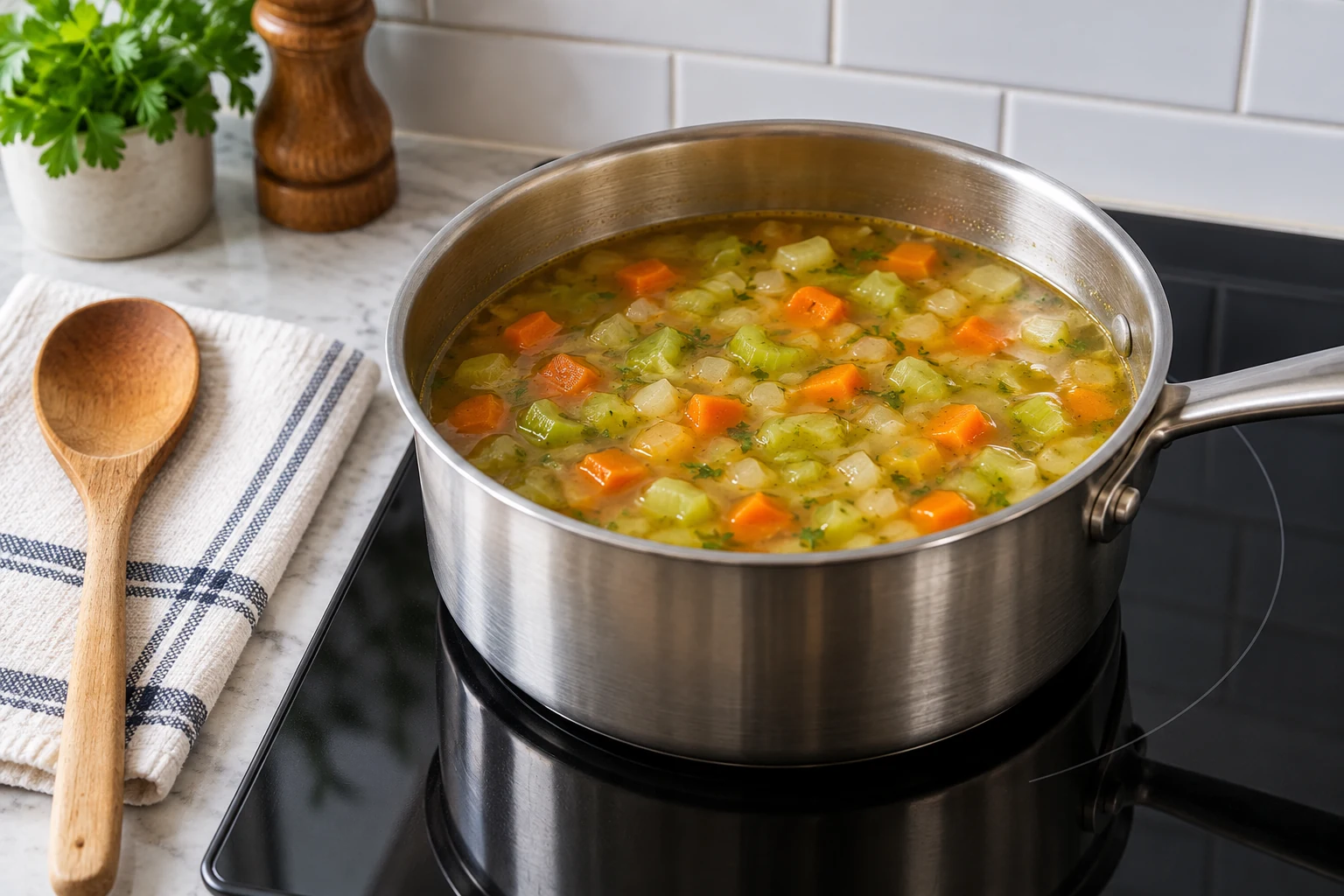
Add a meal-sized portion to soup, stew, stock or a cooked sauce and heat it as the recipe requires. Do not expect the thawed pieces to become crisp again. NCHFP says frozen celery is suitable only for cooked dishes. The soup photo illustrates that end use; it does not replace the blanching and cooling steps.
If you need celery’s fresh snap in a salad or on a snack plate, use fresh stalks instead. Keeping the two uses separate prevents a disappointing thawed texture and helps avoid wasting what you freeze.
Common questions
Can I freeze celery without blanching?
For this quality-focused method, follow NCHFP’s three-minute water blanch. Skipping it does not match its celery freezing directions.
Can I freeze whole stalks?
NCHFP’s tested home-freezing directions specify cutting stalks into roughly 1-inch lengths before blanching. Follow that preparation for this method.
Will frozen celery stay crunchy?
No. Freezing changes its texture. Plan to use it in cooked dishes.