A cold line of air around an exterior door does not automatically mean you need a new door. Find where the closed door leaks, check whether it still fits its frame, then repair the specific seal that has failed. This short routine helps you avoid buying the wrong strip or making the door hard to close.
Quick answer: Close the door on a piece of paper and gently pull it out at several points along the top and sides. Where it slips out freely, examine the fit and existing weatherstrip. Check the bottom separately for a worn sweep or a threshold that no longer meets it. The US Department of Energy (DOE) describes the paper test as a simple way to identify an air leak. This guide covers an existing exterior door, not doors that serve as intentional ventilation openings.
1. Find the leaking edge with a paper test
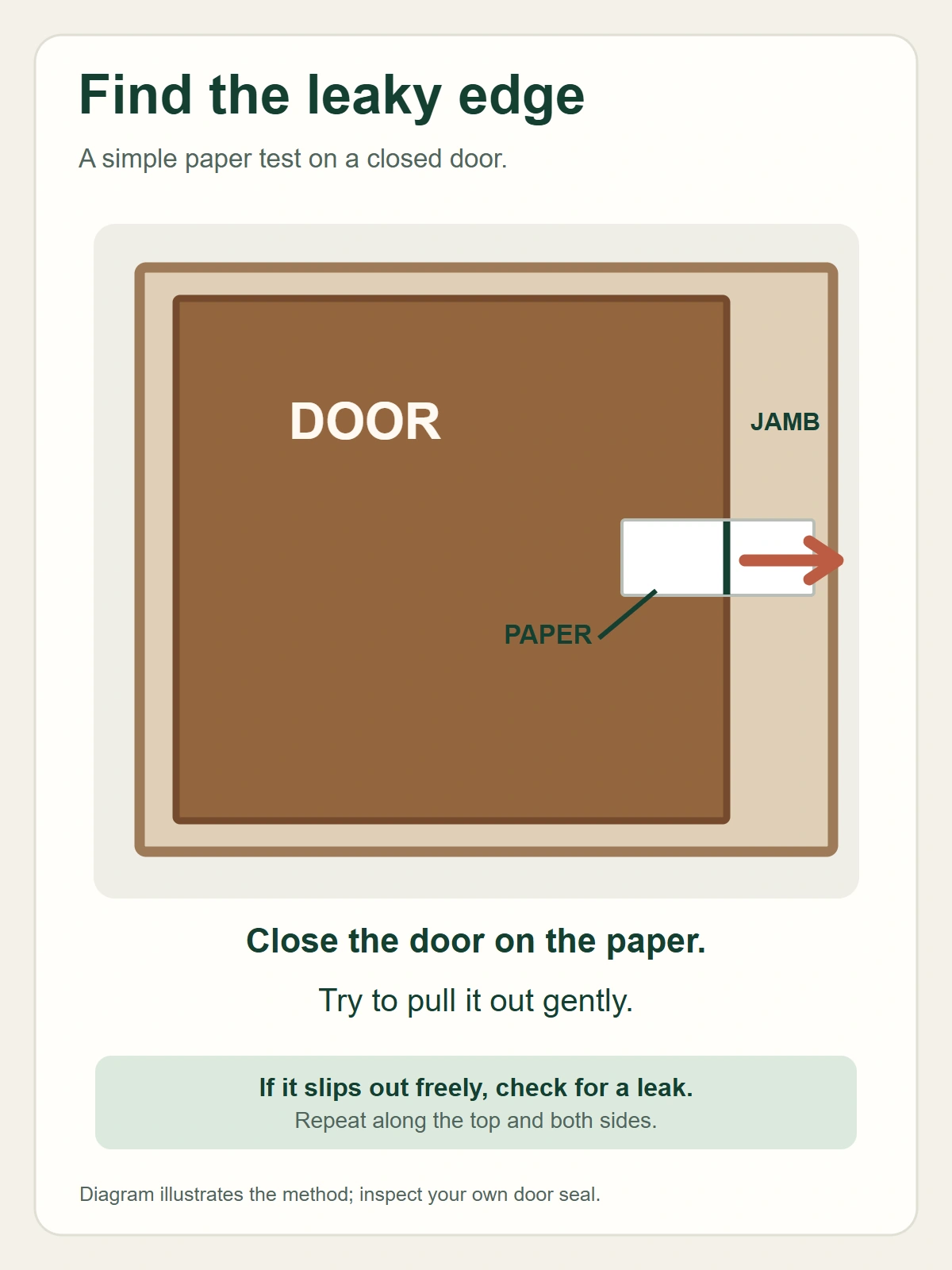
Use an ordinary strip of paper. Open the door, place part of the strip between the door and frame, close and latch the door as you normally would, and pull the free end gently. If it comes away with almost no resistance, mark that location mentally and test a few inches away. The DOE says a paper strip that can be removed without tearing can indicate an air leak. Compare several points rather than assuming the entire perimeter is equally loose.
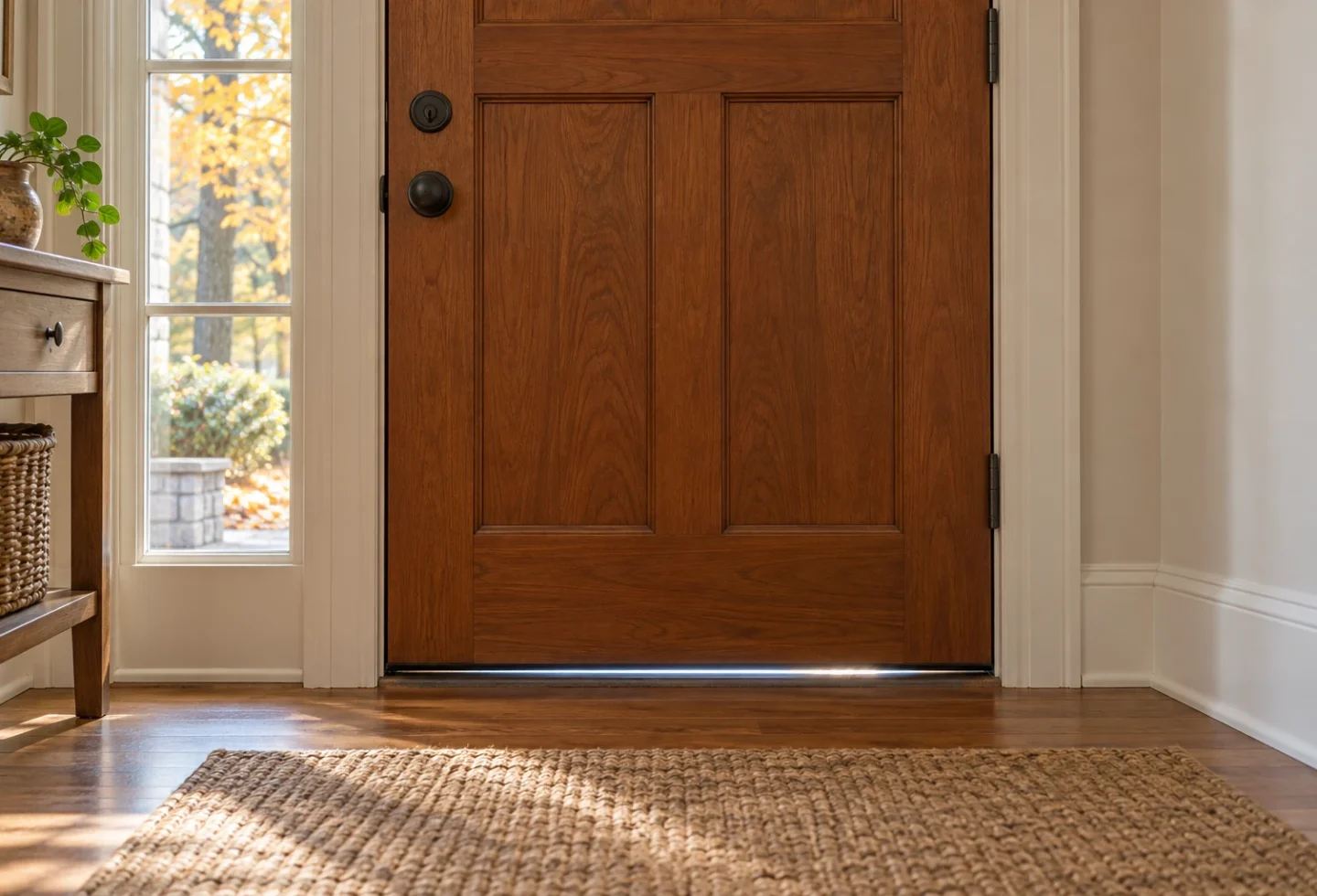
Look at the closed door from indoors. Is daylight visible under it? Is the existing strip cracked, flattened or missing? Also identify where the air comes through: between the moving door and jamb, under the moving door, or through a stationary crack between trim and wall. Those locations call for different repairs. Do not use an open flame to search for drafts.
2. Check the door fit before buying a seal
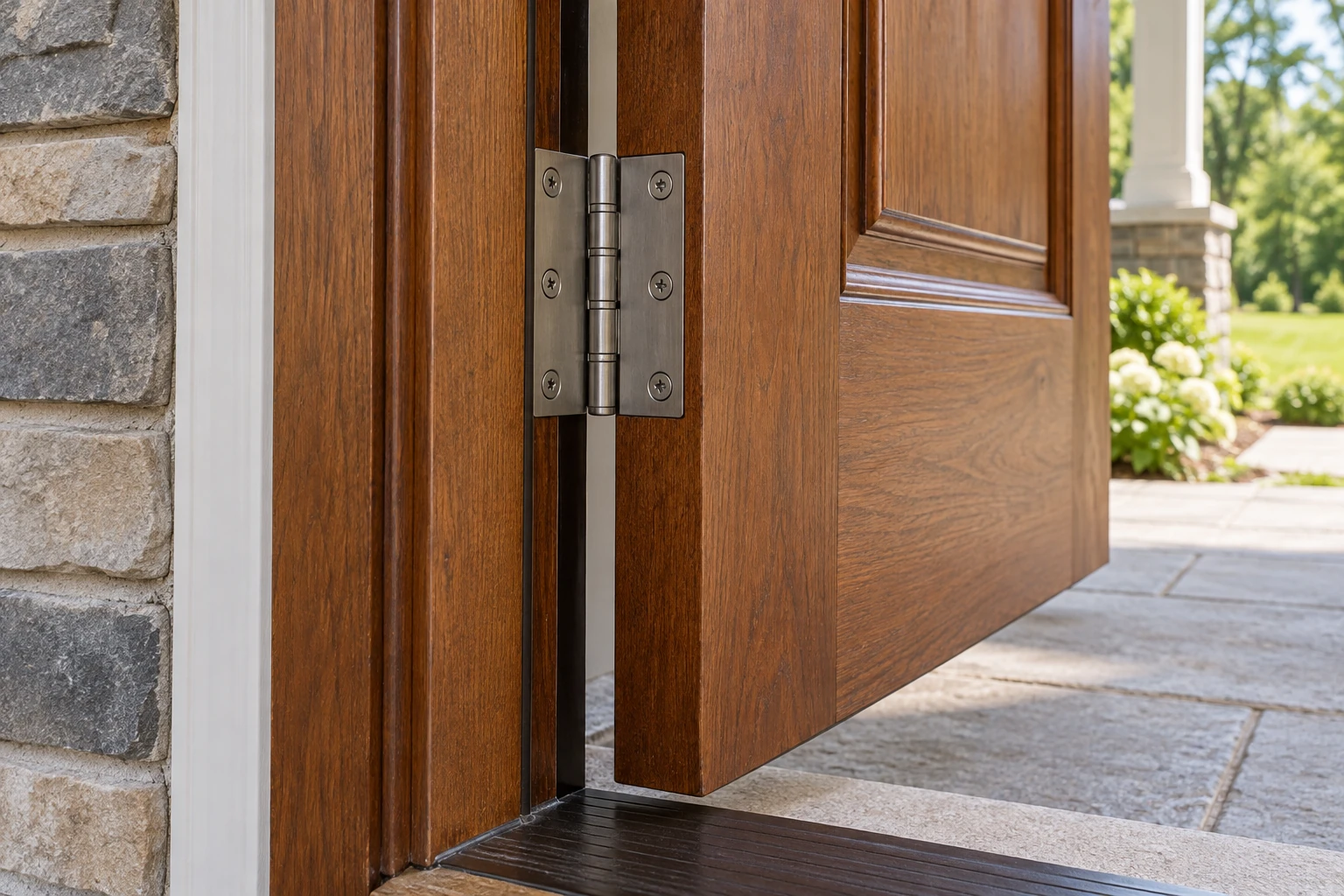
Open the door and check its hinges, screws and latch. A loose hinge can change the gap enough to defeat a good seal. If a screw is merely loose and the wood is sound, tighten the existing hardware appropriately. Close the door and see whether it meets the frame evenly, latches without being lifted and clears the threshold. DOE weatherization guidance calls for checking and adjusting the door before installing weatherstripping.
If the door is warped, the hinge screws will not hold, the jamb is rotten, or the lock no longer engages securely, get the underlying fit or structural problem repaired. A thicker strip will not correct a damaged frame and may make an exit door difficult to operate.
3. Seal gaps along the top and sides
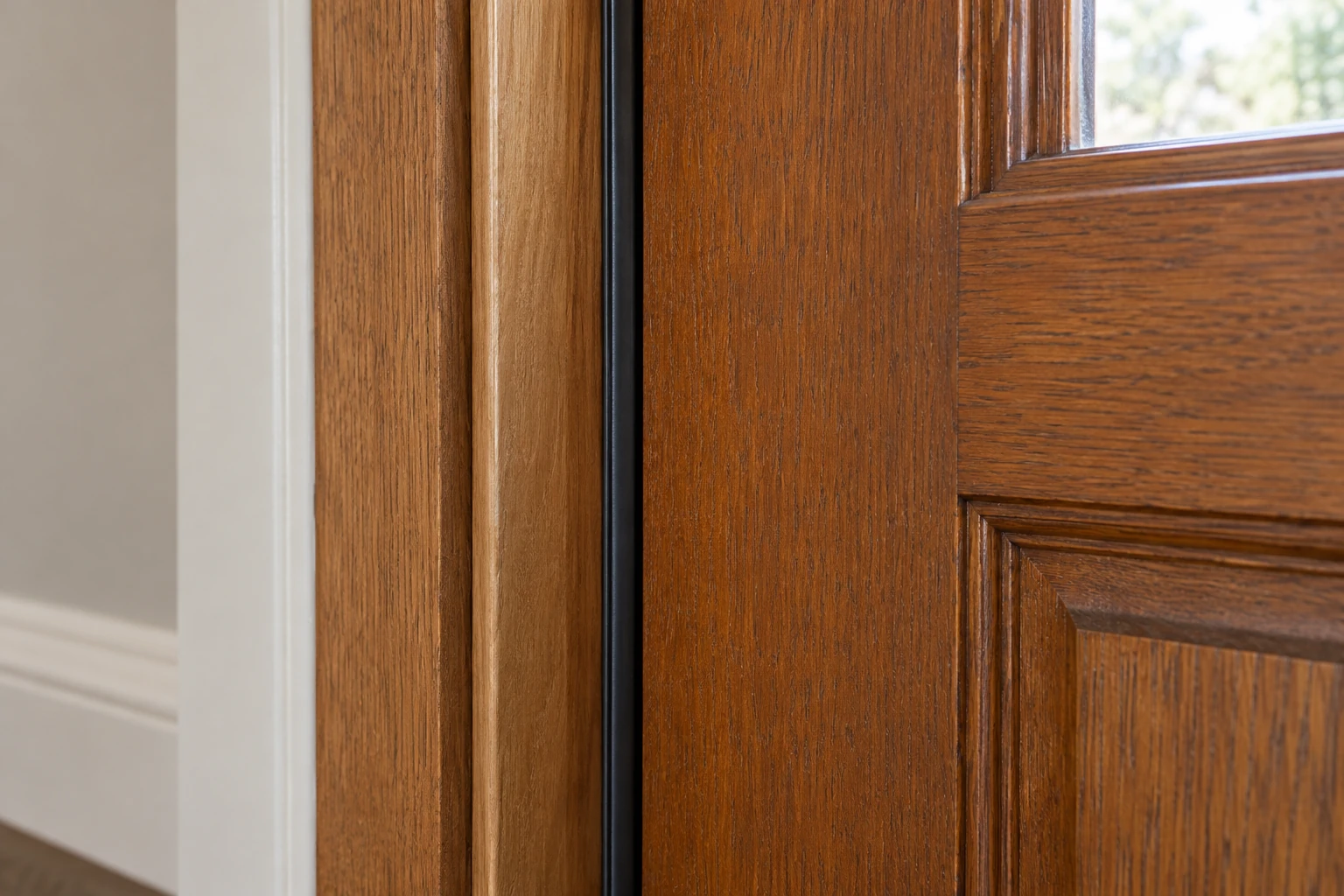
Inspect the existing top and side seal. If it is torn, crushed or missing at the weak point, choose a replacement that suits the door and the size of its gap. Clean and dry the mounting surface and follow that product’s instructions. The seal should make contact when the door is closed while still allowing the door to close and latch normally. The DOE exterior-door job aid distinguishes a useful seal from one that impedes operation.
Use the right material for the right joint: DOE guidance distinguishes weatherstripping for moving parts from caulk for stationary cracks. Never caulk a door shut. If the draft is actually coming through fixed trim or a wall joint, address that stationary crack separately after checking for moisture damage.
4. Treat the bottom gap separately
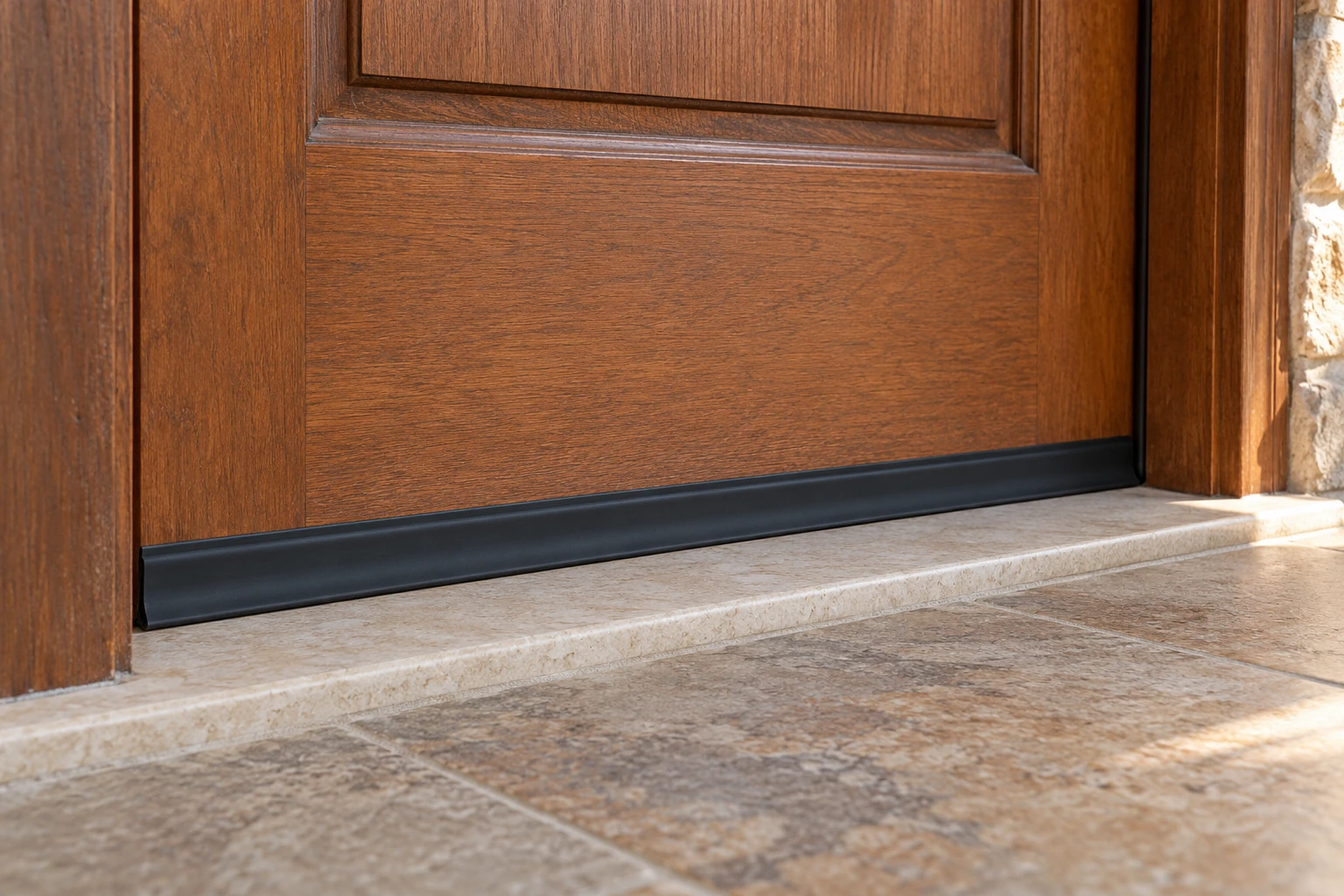
Check whether the current sweep is missing, torn, bent or no longer meeting the threshold. If adjustment is possible, try that first; otherwise select a sweep compatible with the door and threshold. Fit it to make light, continuous contact when closed. A bottom sweep addresses a different gap from weatherstripping at the top and sides. DOE’s exterior-door job aid treats the sweep as part of the air seal and says the completed door must still operate properly.
Open and close the door several times. It must not scrape heavily, fail to latch or obstruct an exit. If a threshold is loose, damaged or letting water in, repair that problem instead of hiding it behind a sweep. Do not block a designed ventilation opening or alter an interior transfer-air gap as if it were an exterior-door leak.
5. Retest, then know when to stop
Repeat the paper test in the same spots. Check the bottom for obvious light and feel for a draft under similar weather conditions. Confirm that the latch and deadbolt work smoothly and the door can be opened promptly from inside. If the draft persists despite a sound fit and correct seals, or you find water damage, rot or a security problem, ask a qualified door or building professional to inspect it. Large-scale air sealing in a home with fuel-burning equipment can also warrant a combustion-safety assessment; DOE explains why air sealing and combustion safety should be considered together.
Common questions
Should I use caulk or weatherstripping around an exterior door?
Use weatherstripping at the moving door-to-jamb joint. Caulk is for appropriate stationary cracks, such as a fixed trim-to-wall joint. Follow the product directions and investigate damp or damaged material first.
Will a draft stopper solve the bottom gap?
A removable draft stopper can be a temporary comfort measure, but it does not repair a worn sweep or threshold. Keep any temporary item clear of the door’s opening path and do not obstruct an exit.
What if I rent?
Document the leaking edge and report a damaged door, lock or threshold to the property manager. Ask before changing permanent hardware; a reversible measure may be more suitable while the responsible party arranges a repair.