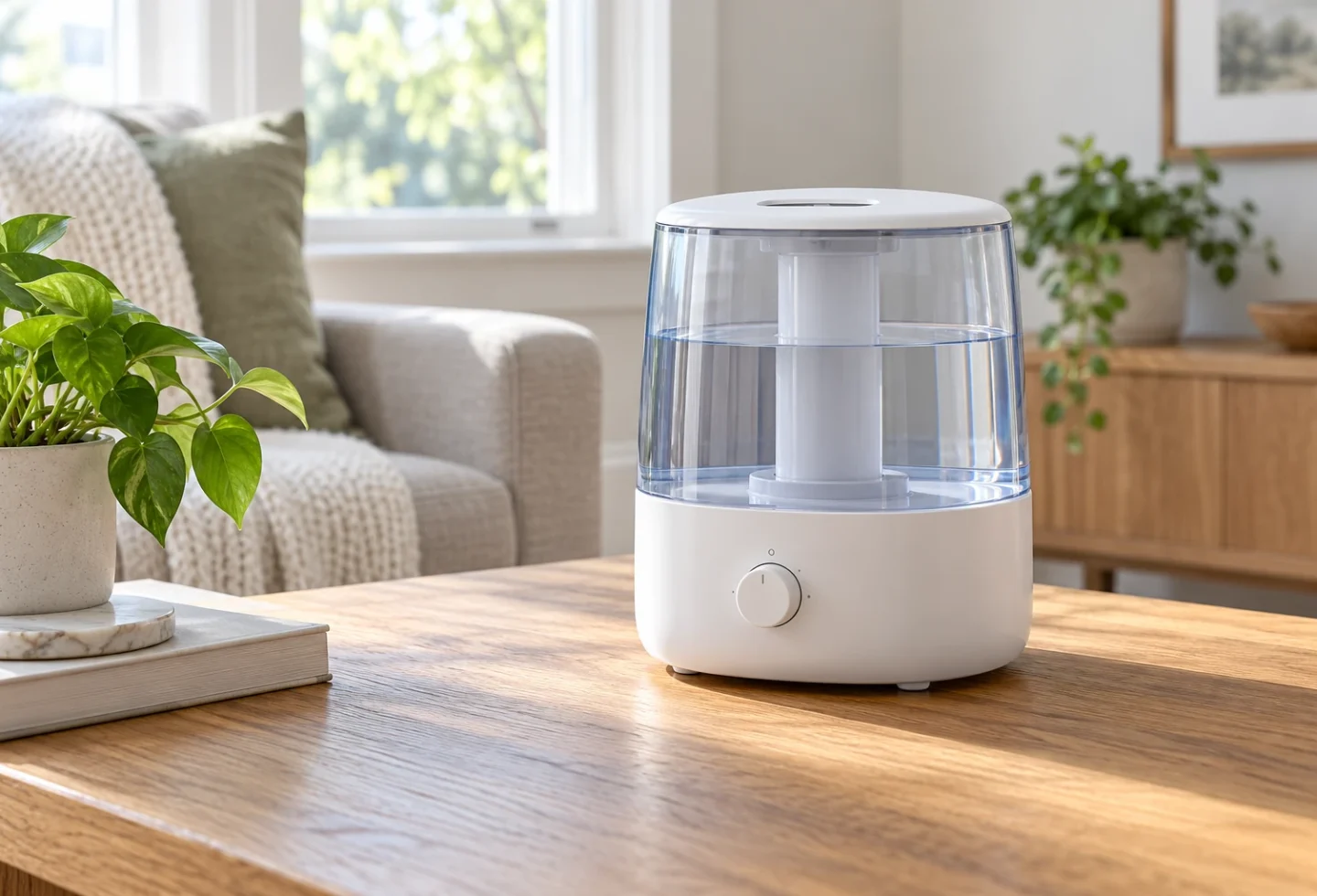
A portable humidifier can turn a dry room more comfortable, but standing water and mineral buildup make it a device that needs routine care. The useful routine is simple: empty and dry the tank daily, clean water-contact surfaces regularly, rinse cleaning products away and use the water recommended for your model.
Quick answer: Unplug the unit first. Empty its tank every day and wipe accessible wet surfaces dry before refilling. For portable humidifiers, the US EPA recommends cleaning every third day. Scrub off scale and film, follow your manufacturer’s cleaning directions, rinse thoroughly after any cleaner and let parts dry before storage. Use low-mineral water if your unit creates white dust.
1. Unplug and empty the tank every day
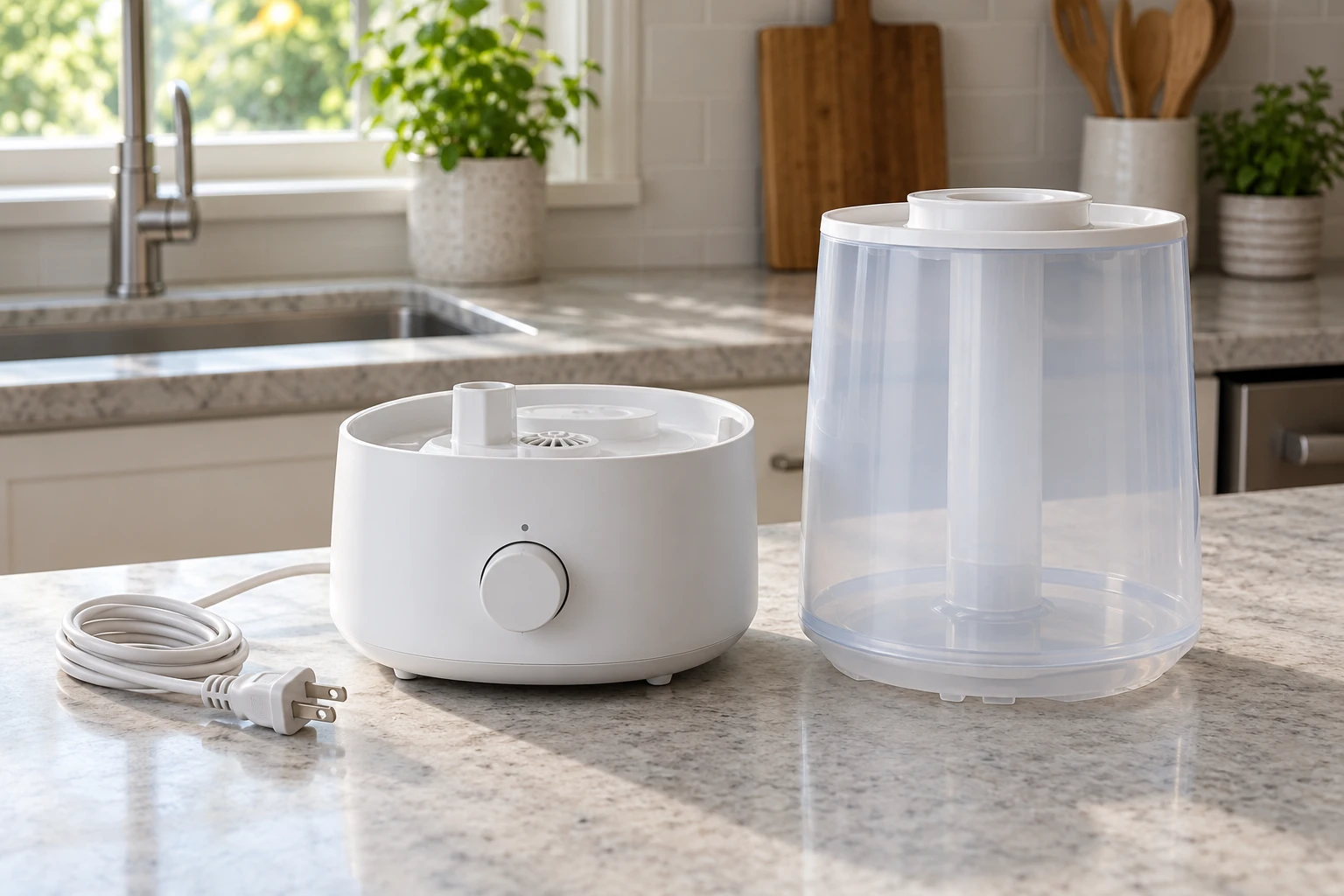
Switch off and unplug the portable unit before handling its tank. Empty any remaining water, wipe accessible water-contact surfaces dry and refill only when you are ready to use it. Avoid leaving a pool in the base. Do not pour water over electrical parts or submerge the base.
The CDC advises emptying all water daily and cleaning according to the manufacturer’s instructions. The EPA likewise recommends daily emptying, drying and refilling for portable units. Console and central humidifiers have different procedures, so use their manuals.
2. Clean the tank and accessible water-contact parts
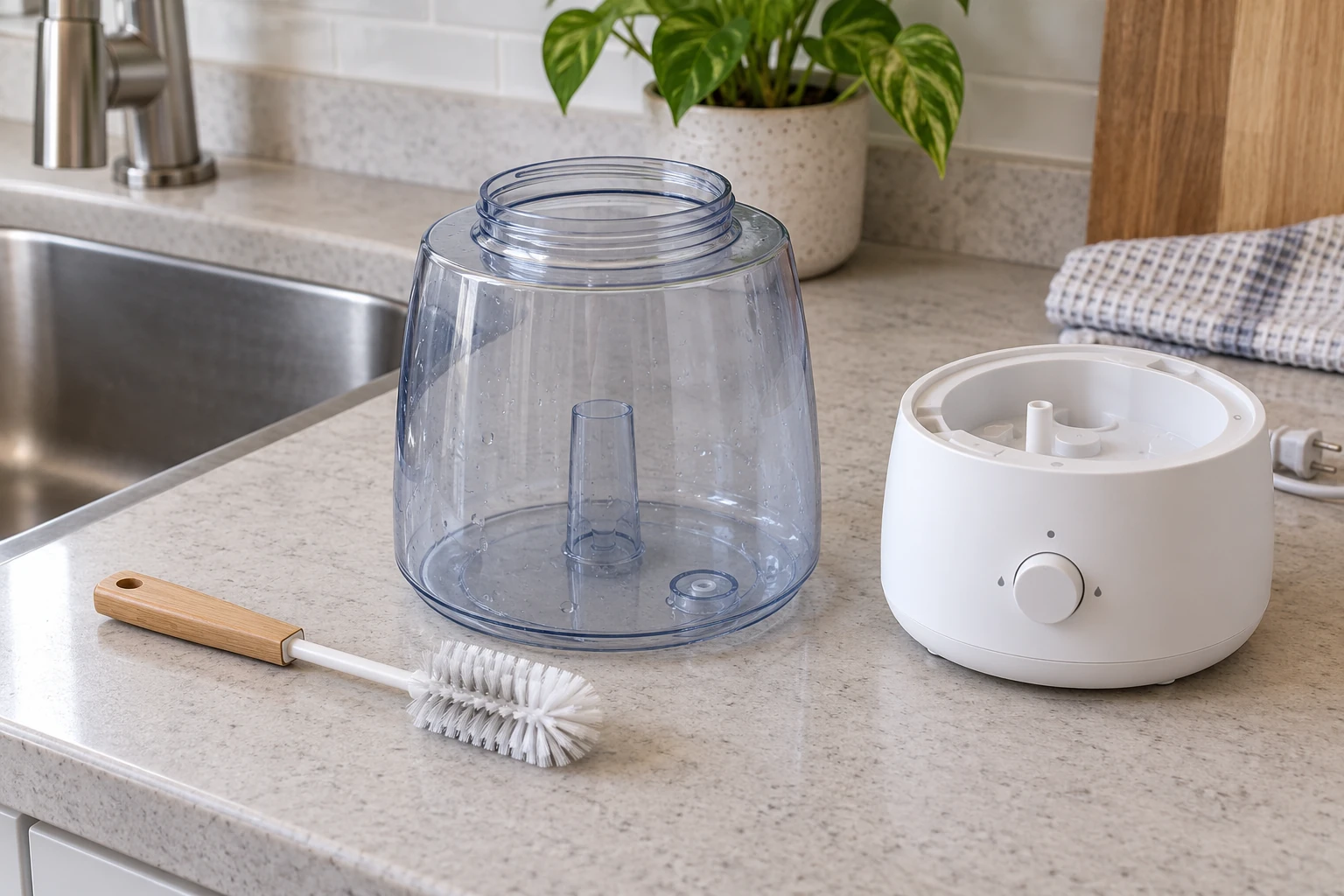
At least every third day, empty a portable humidifier and use a brush or other suitable scrubber to remove deposits from the tank and accessible water-contact surfaces. Follow the model’s instructions for any removable parts and filter; do not force off components that are not designed to detach. Replace filters or demineralization cartridges when the maker calls for it.
For cleaning agents or disinfectants, follow the manufacturer. If no product guidance is available, the EPA describes cleaning water-contact surfaces with a 3% hydrogen peroxide solution. Use only as directed for appropriate surfaces; never mix cleaning chemicals. The important finish is to rinse the tank thoroughly with several changes of water so cleaning residue is not dispersed in the mist. The EPA’s full care guide covers these steps.
3. Rinse thoroughly and let parts dry
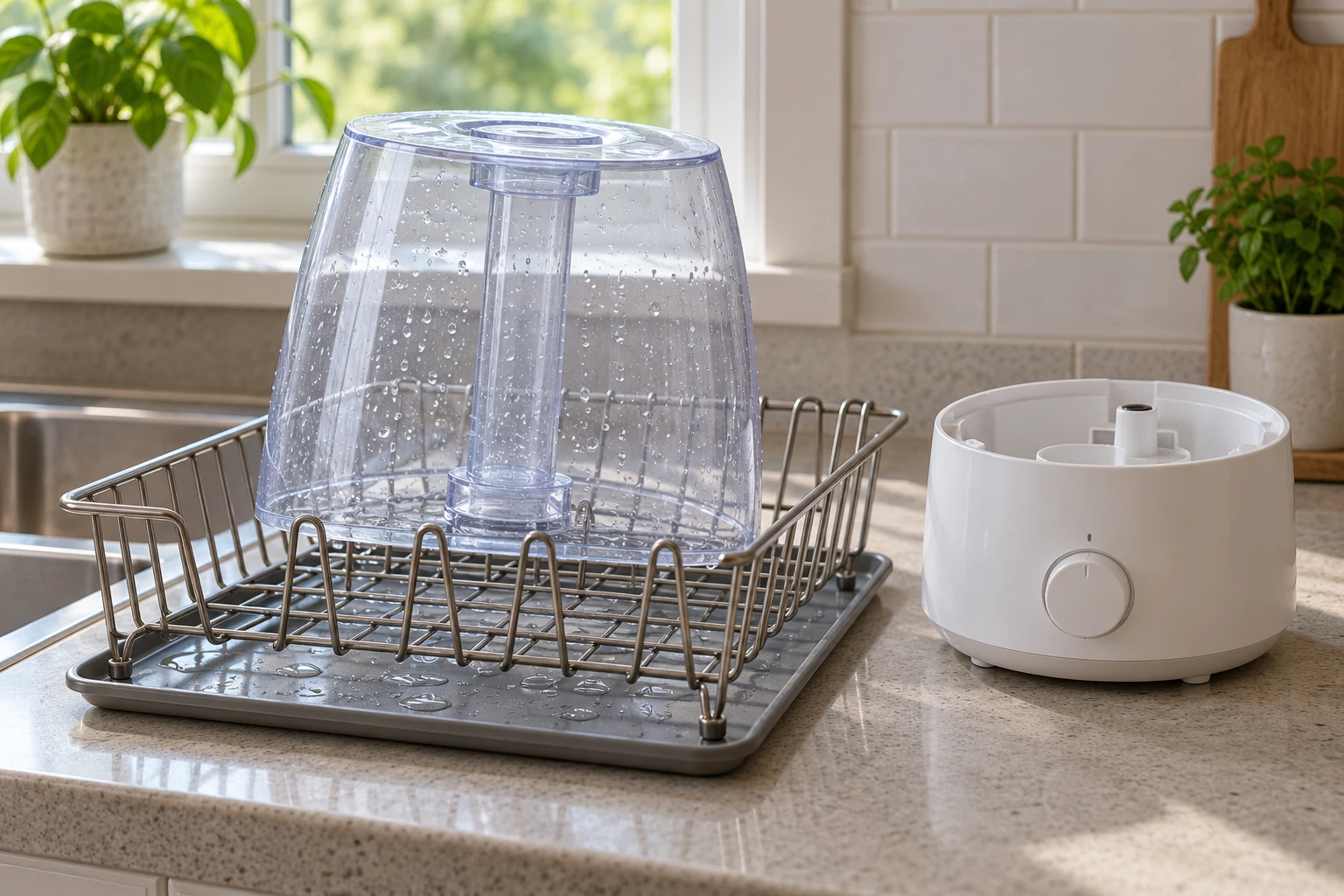
After cleaning, rinse until no cleaner remains, then let removable parts drain and air dry as the maker allows. Dry exterior surfaces before reassembly. The CDC specifically recommends letting humidifiers air dry after cleaning. If the device will be used immediately, refill as instructed once all cleaning residue is gone. If it is going into storage, leave every part thoroughly dry.
If you cannot access persistent film, a filter looks damaged, or the unit still smells musty after proper cleaning, check replacement and service guidance for that model. Do not mask the problem with fragrance or add essential oils unless the device explicitly permits them.
4. Use appropriate water and keep the surrounding area dry
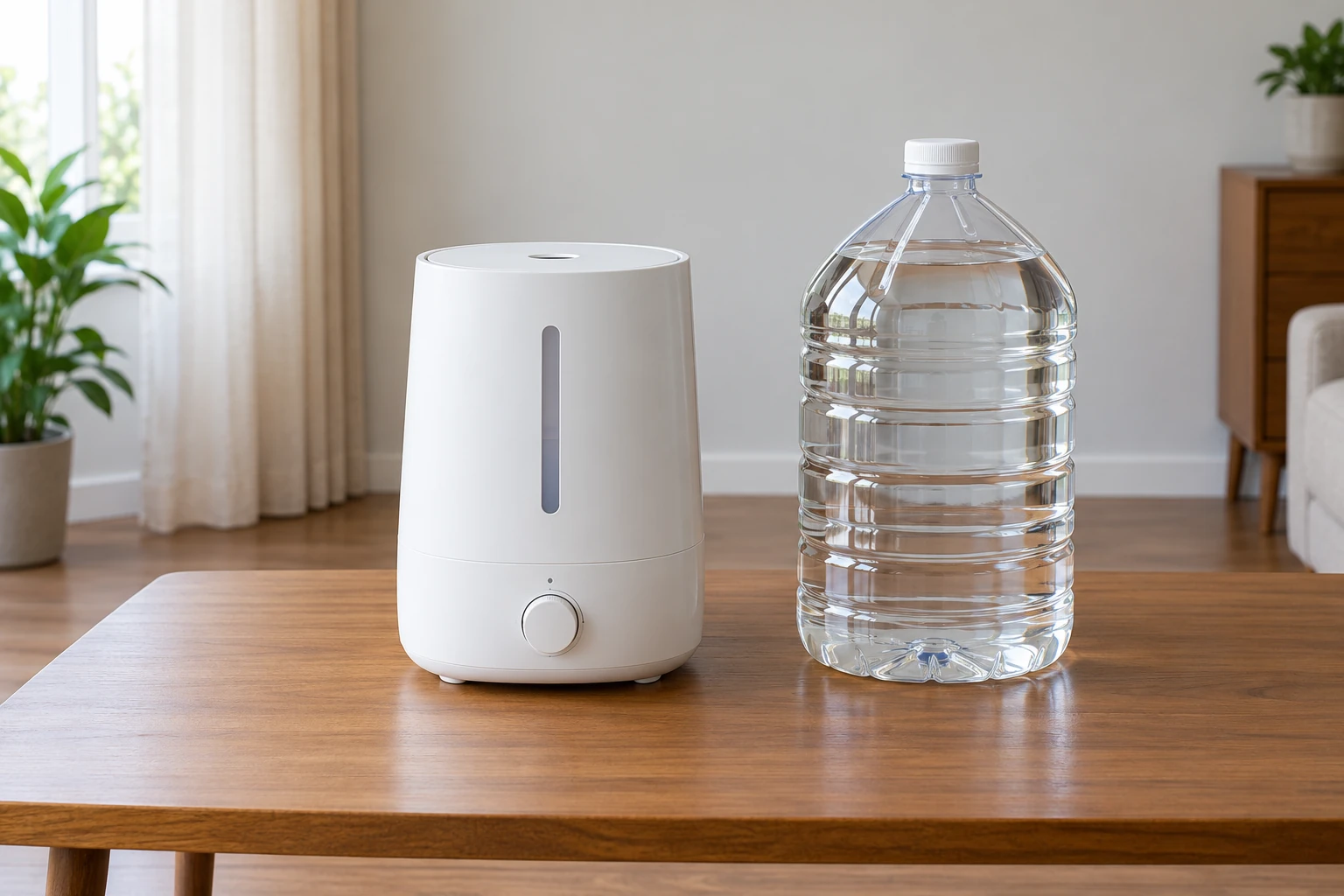
Ultrasonic and impeller humidifiers can disperse minerals from tap water; white dust on nearby surfaces is a clue. The EPA suggests bottled water labeled distilled or an appropriate demineralization cartridge to reduce minerals. A generic “purified” label does not necessarily tell you how much mineral content remains. Follow the water instructions for your model.
Keep the unit on a stable, water-resistant surface where its mist does not wet a wall, curtain or furniture. Reduce output or use it intermittently if nearby materials become damp. The EPA advises keeping indoor relative humidity at or below 50%; condensation on windows or walls is a signal to lower output or stop using the unit. A hygrometer can help you check the room rather than guessing.
5. Dry it before storage and restart clean
At the end of the season, clean the unit as directed, discard spent cartridges or filters according to the manual and let every part dry completely before storing it in a dry place. Clean it again after storage before use. A simple calendar reminder for the every-third-day cleaning is easier to keep than waiting for visible slime.
Common questions
Can I leave water in the tank overnight?
For portable humidifiers, empty the tank daily rather than repeatedly topping up standing water. Let accessible wet surfaces dry before the next fill.
Does distilled water replace cleaning?
No. Lower-mineral water can reduce scale and white dust, but the tank still needs daily emptying and regular cleaning.
Can I clean a CPAP humidifier this way?
No. CPAP equipment has its own water and cleaning instructions. Follow the device and medical-equipment guidance for that system.