When a familiar load suddenly needs a second drying cycle, check airflow before blaming the clothes. A full lint screen is easy to fix; a restricted exhaust duct needs more attention. The safe first step is to identify what kind of dryer you own, because a ventless heat-pump model does not have the same outdoor exhaust path as a vented dryer.
Quick answer: Clean the removable lint screen before or after every load. On a vented dryer, inspect the accessible area behind the machine for lint or a crushed duct, and check that the outdoor vent opens and releases air while the dryer runs. If drying stays slow, the outside vent has little airflow, the duct is damaged, or the machine smells hot or scorched, stop using it and arrange qualified service. Follow your model’s manual for any deeper cleaning.
1. Identify a vented or ventless dryer
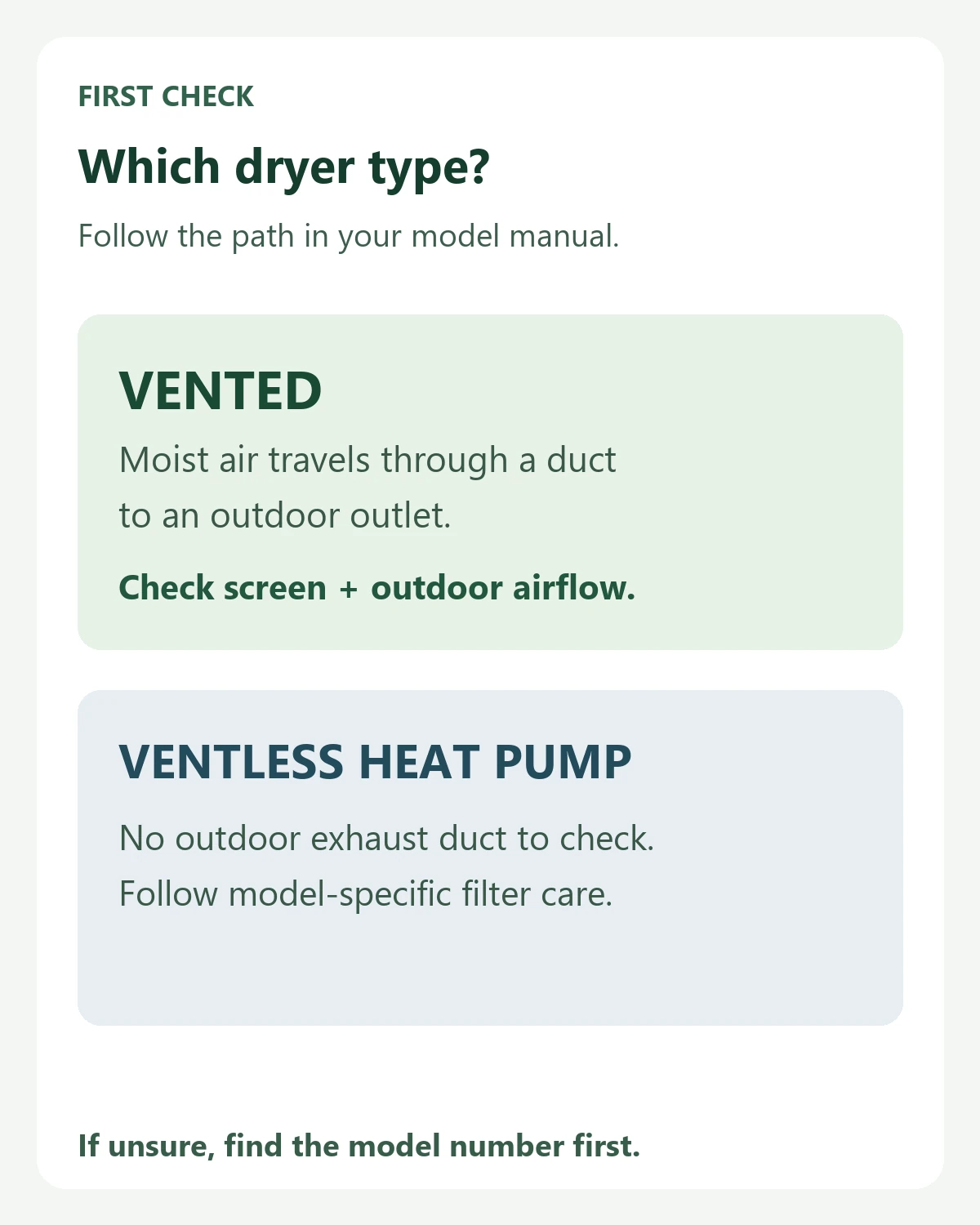
Look at the model label and owner’s manual. A conventional vented dryer sends moist air through a duct to an outdoor outlet. A ventless heat-pump dryer manages moisture differently and typically has no outdoor exhaust vent; ENERGY STAR notes this distinction. Both types have model-specific filters, so the manual is the authority for where they are and how to clean them.
If you cannot identify the model or cannot safely see the connection behind it, do not pull the appliance out just to inspect it. In particular, do not disturb a gas connection. Begin with the removable lint screen, which is the routine step for both types.
2. Clear the lint screen after every load
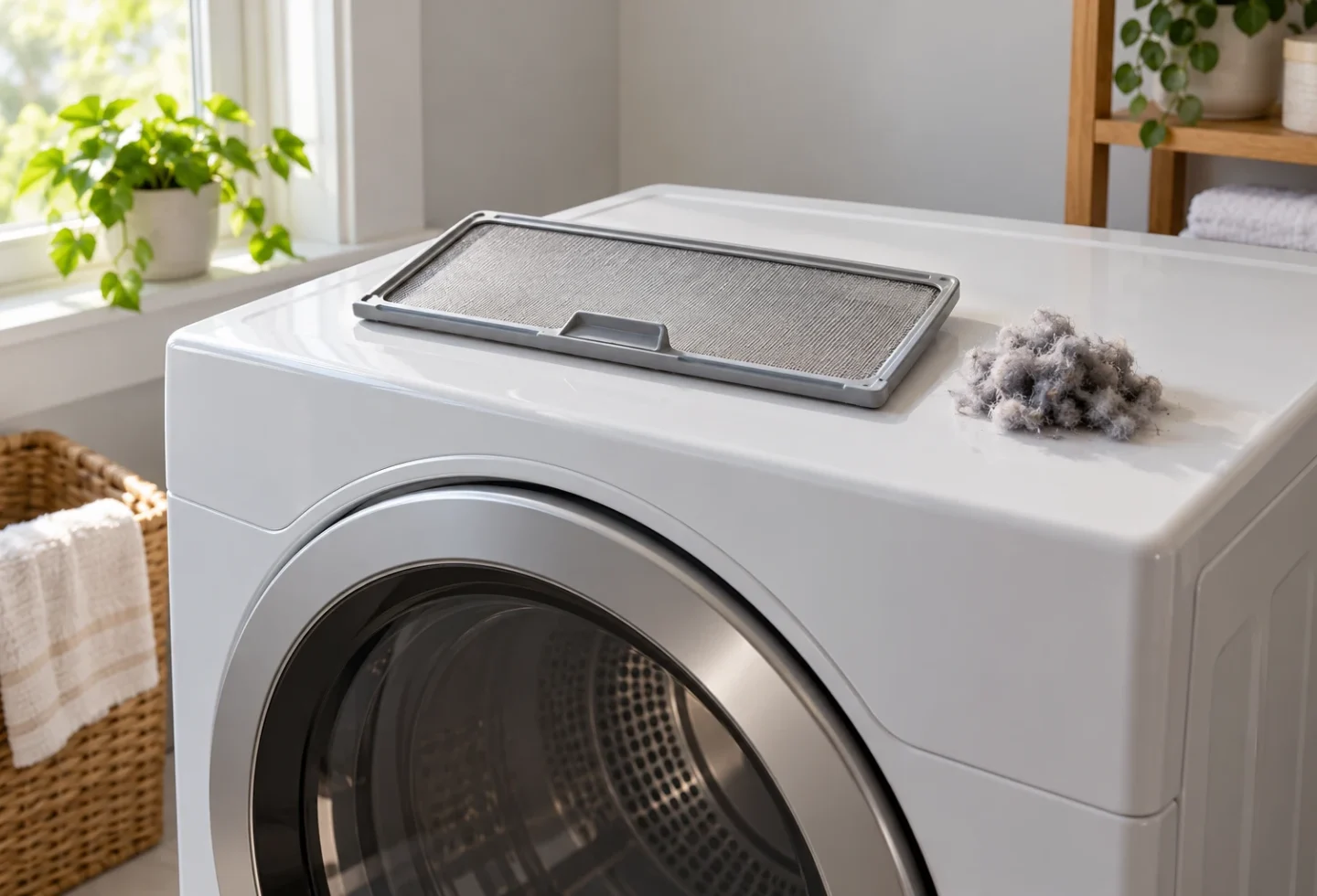
Let the cycle finish, remove the lint screen according to the manual, peel off the lint and seat the screen fully before the next load. Never operate the dryer without its screen. The US Fire Administration recommends cleaning the filter before and after each cycle; ENERGY STAR says cleaning it after every load improves airflow and efficiency. The featured photo shows the screen and removed lint resting on top of a dryer; the screen belongs back in its slot before the machine runs.
Look for tears or a frame that no longer seats properly. Replace a damaged filter with the correct part for your model rather than operating without it. If residue remains on the mesh after lint is removed, follow the manufacturer’s cleaning directions and let the screen dry completely before reinstalling it.
3. Clean only the lint you can reach safely
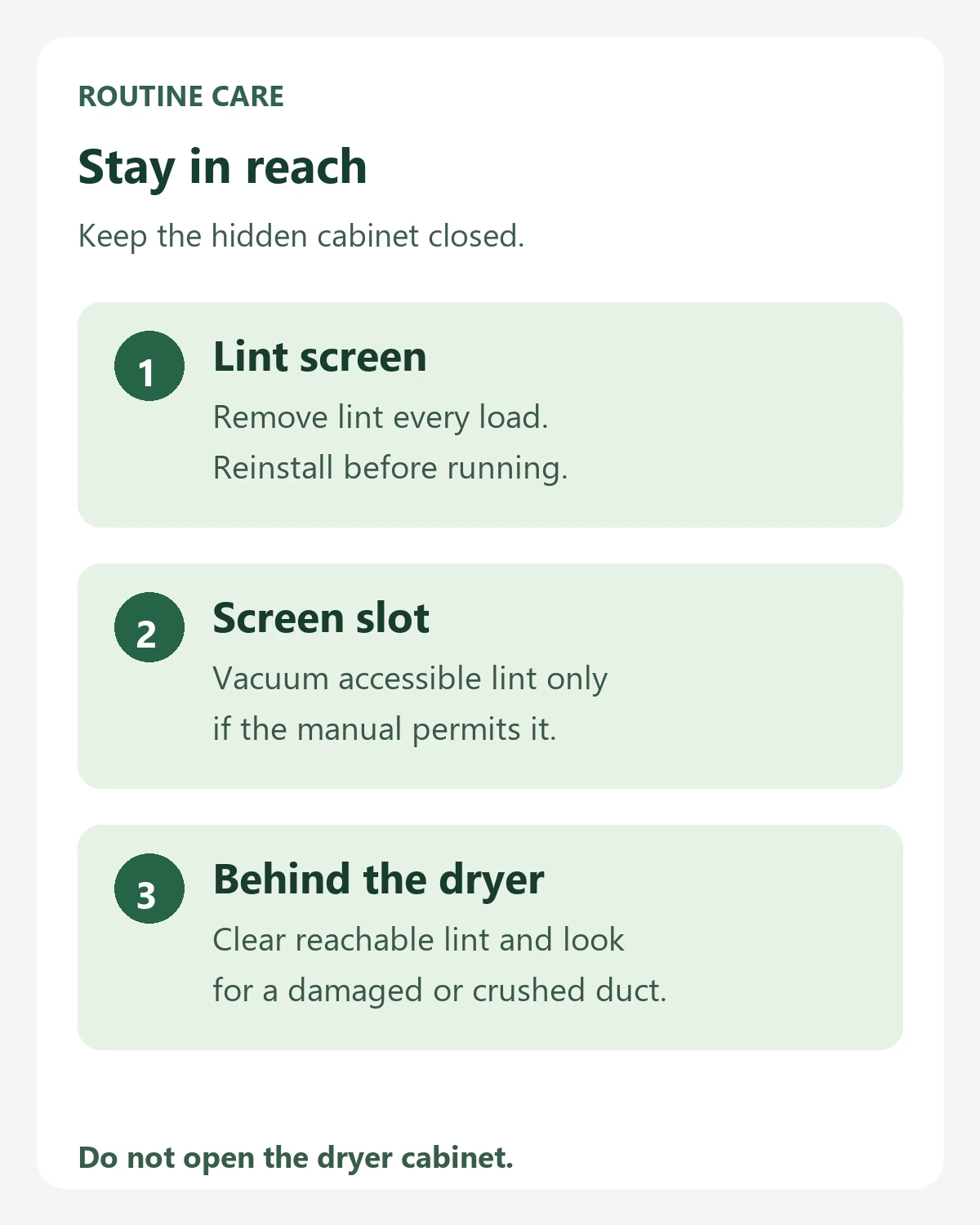
With the machine off and isolated from power as its manual directs, remove loose lint from the accessible screen slot with a suitable vacuum attachment if the manual permits it. Do not force a tool deep into the dryer or disassemble the cabinet. Clean lint from the floor and other accessible surfaces around the machine. The US Consumer Product Safety Commission (CPSC) advises cleaning behind dryers and having a qualified service person clean the interior periodically.
For a vented dryer, visually check any duct you can see without straining, moving a heavy machine unsafely, or disturbing gas or electrical connections. A visibly crushed, torn or loose duct is a reason for repair, not a reason to run another load. Keep combustible clutter away from the dryer area.
4. Check outdoor airflow on a vented model
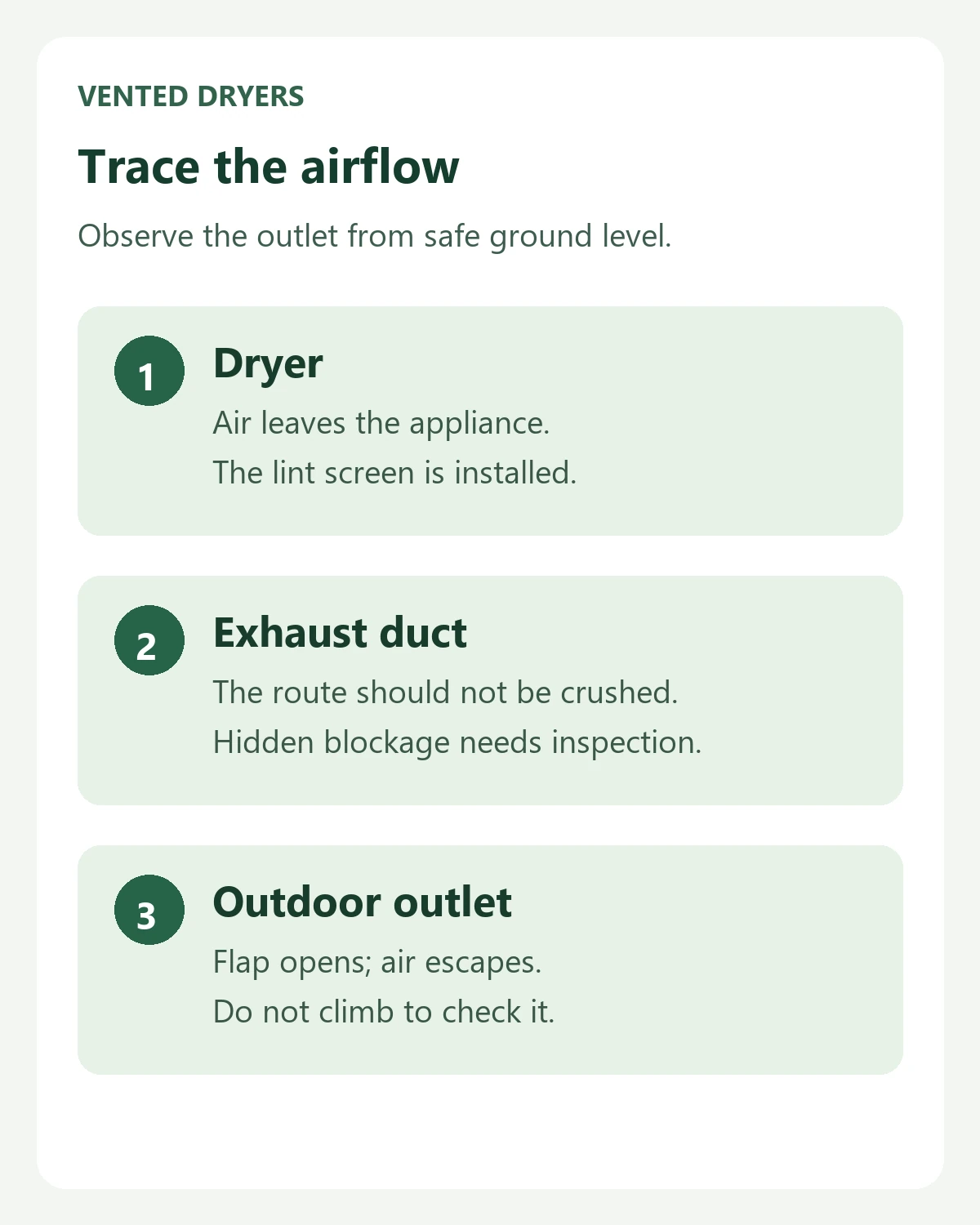
If the outdoor outlet is safely accessible from ground level, observe it during a normal dryer cycle. The flap should open and exhaust air should escape. Do not climb onto a roof or lean from a window to inspect a vent. The US Fire Administration recommends checking that the outdoor covering opens; the CPSC says little or no airflow may indicate a blocked vent or duct.
Check only what you can see and reach safely. A clear-looking outdoor flap does not prove that the full duct is clean. If airflow is poor, the duct route is long or inaccessible, or the vent is on a roof, arrange qualified inspection and cleaning rather than improvising with tools inside the duct.
5. Know when to stop and call for service
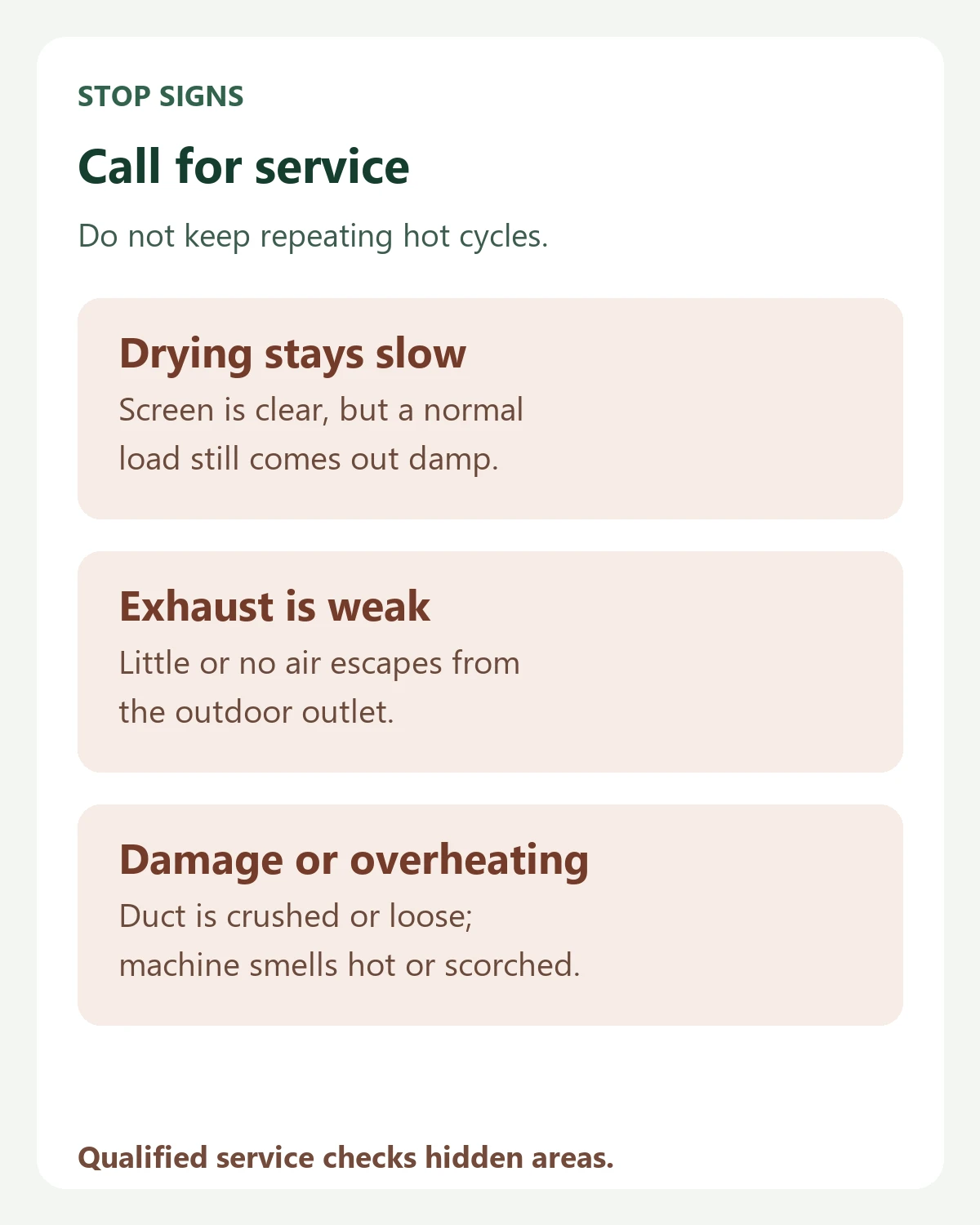
If clothes remain damp after a normal cycle, first rule out an overloaded drum and a full lint screen. If drying time remains unusually long, the CPSC says a blocked screen or exhaust duct may be responsible. Do not keep repeating cycles to work around weak airflow.
Stop using the dryer and seek qualified service if there is little outdoor exhaust, a visibly crushed or damaged duct, repeated overheating, a burning or scorched smell, or any concern about the gas connection. A technician can inspect the entire duct and interior where lint can accumulate. A homeowner’s routine lint-screen cleaning cannot establish that the hidden exhaust path is clear.
Common questions
How often should I clean the lint screen?
Before or after every load, as USFA recommends. Make sure the screen is fully installed before running the dryer.
Does a heat-pump dryer have an outdoor vent to check?
Many heat-pump dryers are ventless. Check your exact model’s manual for its filter and maintenance instructions instead of applying a vented-dryer diagram automatically.
Does an open outdoor flap prove the duct is clean?
No. It is one useful airflow check. Persistent slow drying or a damaged or inaccessible duct still calls for closer inspection.